Tag: Vinod K Lamba

  • Film industry divided as multiplexes run while single screens join strike

    Film industry divided as multiplexes run while single screens join strike

    MUMBAI/DELHI: The one-day strike called by the Film Federation of India and member associations, protesting the 10.3 per cent service tax on the film industry, got a lukewarm response with multiplexes staying open.


    Most single screen theatres , however, remained closed all over the country. The single screen theatres in Delhi, though, did not join the strike.


    On Wednesday, the split in the film industry on the issue of strike came to light as FFI was in support, while Film and TV Producers Guild had distanced from it.


    PVR Cinemas Group President Pramod Arora said, ” What strike? All cinema halls including multiplexes and single-screens in Delhi are open and people are coming in.”


    Agreed Cinemax chief executive officer Sunil Punjabi, “We, multiplex owners, discussed the strike issue at the industry-level and unanimously decided to go ahead with the screenings,” he said.


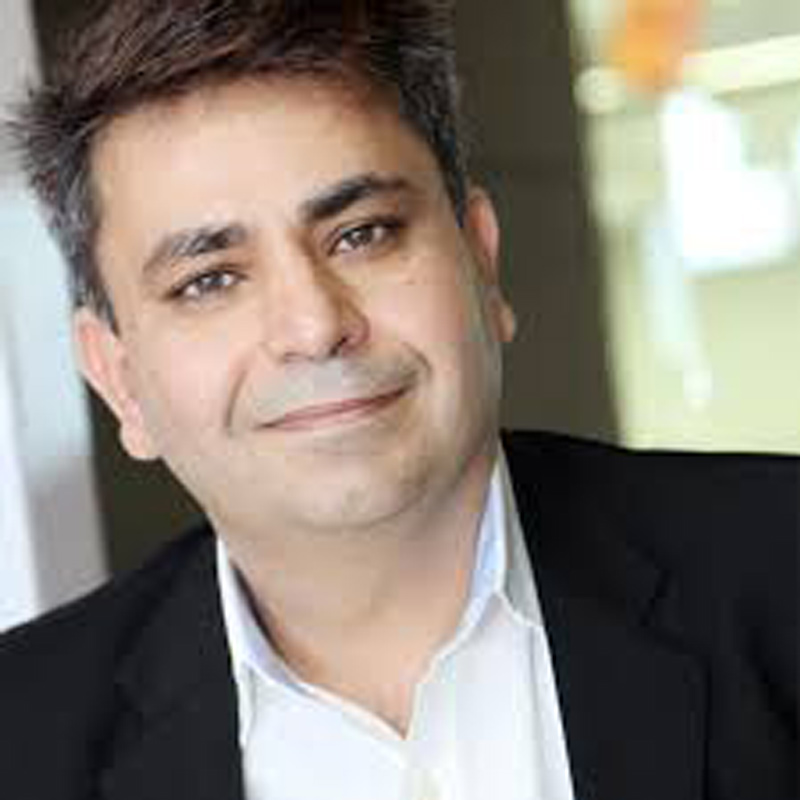
    In retaliation, FFI president Vinod K Lamba said that the strike was a success. “Out of a total of 10,500 plus cinema halls in India, there are a mere 750 multiplexes. In Delhi, there are less than ten single screens.


    All single screen theatres in Bengal, Assam, and the Northeast states remained closed and 500 artistes, cine technicians, exhibitors etc held dharna and road meeting at Chowringhee. The All TV and Artistes Guild in Bengal stopped work for 30 minutes to express solidarity with the strike.


    A total of around 800 persons observed dharna in Chennai where there was no film activity, according to senior FFI member L Suresh. Similarly, there was no activity in Kerala and Karnataka.


    Lamba also said all single screens in Uttar Pradesh including Saharanpur, Bareilly, and Varanasi were closed. In Maharashtra; only the multiplexes remained open.


    Multiplexes have eaten into the share of the single screens and contribute a major chunk of India’s box office business.


    In the CP Berar, CI and Rajasthan circuit, the bandh had little effect. The Central Circuit Cine Association (CCCA) had issued a circular calling off the proposed bandh.


    CCCA President Santosh Singh Jain said, “When the finance minister has already woken up to the travails of the industry and has promised to look into the matter, it does not make sense to go ahead with the bandh.”


    In Mumbai, the main hub of the film business, laboratories, post-production studios and workers affiliated to several associations did not stop work.


    On the workmen front, workers associated with Cine and T.V Artistes‘ Association (CINTAA) and Film Studios Setting and Allied Mazdoor Union have reported to work.


    The film industry have several bodies that are in conflict and are divided on issues. There are four main film associations – the FFI, IMPPA, Film Producers Guild, and Association of Motion Pictures and TV Programme Producers of India (AMPTPP).


    Explains CINTAA President Dharmesh Tiwari, “While FFI and IMPPA are together, the Guild that comprises big-ticket film producers and AMPTPP constitute the other group. Film workers have no allegiance whatsoever to anyone. They are always with producers who provide them employment and today all concerned producers are working. Hence our workers are working too.”


    Also Read:
    Film industry split on stopping work on 23 February

  • Film industry split on stopping work on 23 February

    Film industry split on stopping work on 23 February

    NEW DELHI: Fissures have started appearing amongst the film fraternity on the issue of striking tomorrow to protest the 10.3 per cent service tax, with the Film Federation of India, the apex body of the film industry, reiterating that the plans remain unchanged and the Film and TV Producers Guild wanting that the strike should be deferred.


    FFI President Vinod K Lamba told indiantelevision that he did not give any credence to statements being made by some filmmakers in Mumbai that the strike had been called off, and also regretted that some TV news channels had been playing up these statements. He also questioned the locus standii of the persons who had been saying that the strike had been called off.


    However, Guild Vice-President Mukesh Bhatt told indiantelevision.com in Mumbai that he wished the best to Lamba, but “let me tell you more than 90 per cent of film folks including the film associations across India and the Multiplex Owners Association are with us and will not take part in the strike tomorrow”.


    Lamba said the FFI was an umbrella body comprising various industry associations including exhibitors, distributors, producers and single screen cinemas, and had taken a unanimous decision to go ahead with the strike. “The result would be there for everyone to see day after tomorrow. My only plea to people not participating in the strike is that they should not sabotage the protest.”


    He said though Finance Minister Pranab Mukherjee had given a patient hearing in a meeting over the weekend, he had declined to give any assurances. However, Bhatt was categorical that Mukherjee had wanted the film industry to wait till after the Budget before taking any decision.


    A Guild spokesperson also said messages had been received to the effect that some states like Andhra Pradesh would not be joining the strike. Eminent Tamil filmmaker and FFI Committee member L Suresh is also understood to have advised deferment.


    Earlier yesterday after a day-long meeting chaired by Lamba, it had been announced that it was necessary for all film bodies to join the protest to voice their anger to the government.


    Lamba had told a press meet that apart from Mukherjee, the Information and Broadcasting Minister Ambika Soni had also met representatives of the industry over the weekend but both had been non-committal.


    Apart from the fact that the industry is already over-burdened by other taxes like the Entertainment Tax, the Show Tax, and the state-imposed taxes, it has to fight the menace of video piracy, he added.


    The FFI has been asking the Government to waive the tax. But Lamba said: “To its utter distress, the Finance Ministry through a circular of 13th December 2011 clarified that the tax was applicable under Finance Act.”


    He said that imposition of the service tax would amount to double taxation since the states imposed their own. In any case, taxation was a state subject and, therefore, the imposition of any tax by the centre was unconstitutional.


    Lamba said the strike had the full support of all organisations including Indian Motion Pictures Producers Association, organisations of distributors, exhibitors and even exporters. There will be a complete shut down of theatres, and shooting studios on that day all over the country.


    Others who attended the meet included South India Film Chamber Secretary Ravi Kottarakara, Arijit Dutta and R S Khemka of the East India Motion Picture Association, A R Raju of the Karnataka Film Chamber, Kalyan of the Andhra Pradesh Film Chamber, Hirachand Dand who is Vice President of the Indian Film Exporters Association, and T P Aggarwal who is Vice President of FFI.


    Lamba said that the service tax is generally levied only on the end user, but this was not possible since the rate of admission tickets in cinemas was already very high because of various taxes.


    Kottarakara, who is also Convener of the Sub-Committee set up for the strike, said it was unfortunate that the film industry was equated by the government to shopping or gambling with taxes imposed on normal industries, whereas this was a creative field.


    It was pointed out that at a time when the number of theatres had come down to under 11,000 for a population of over a billion people, the government should have helped to help build more theatres.


    The negative list concept of service tax and the definition of ‘service’ therein intend to consider ‘right to enter any premises’ as an activity liable to service tax. This endangers the box office collection to be eligible to service tax of 10.3 per cent which is already taxed by high rates of entertainment tax. The new approach of negative list continues to consider film distribution rights as liable to service tax.


    The power to levy taxes on luxuries, including entertainment has been exclusively granted to state governments under entry 62 of the State List of the Constitution. The Empowered Committee of the State Finance Ministers on 9 and 10 January 2012 had suggested that all items mentioned in the State List of the Constitution (including entertainment tax) should be included in the negative list so the Centre cannot impose tax on them. Thus, even state governments agree that service tax should not be made applicable on right to enter any premises.

  • Pran is film industry’s choice for Dadasaheb Phalke award

    Pran is film industry’s choice for Dadasaheb Phalke award

    NEW DELHI: The Film Federation of India has urged the Government of India to present the next Dadasaheb Phalke Award, the highest national honour in Indian cinema, to veteran actor Pran.

    FFI President Vinod K Lamba said the industry body had also sent the names of renowned actor Soumitra Chatterjee and senior producer Edida Nageswara Rao forwarded to the Information and Broadcasting Ministry.

    Born on 12 February 1920 at Delhi, Pran Sikand started his career by learning photography in Lahore. A chance meeting with a film producer got him his first break in ‘Yamla Jat’ in 1940. Married in 1945 to Shukla, he has two sons Arvind and Sunil, and one daughter Pinky. At partition in 1947, Pran came to Mumbai and restarted his film career after a brief struggle. He has acted in over 400 films and in each one has a new mannerism and a different style, holding the audience spellbound by his versatile and dynamic acting.

    As a villain, in films like ‘Ram Aur shyam’ people shuddered with fear and hated him, and yet loved him as the good, unforgettable ‘Mangal chacha’ in ‘Upkar’. His film career spanned six decades.

    His favourite hobbies now are watching sports (football, hockey, cricket), reading and looking after his pet dogs. He has five grand children and two great grand children.

    Soumitra Chatterjee (born 19 January 1935) is an iconic Bengali actor known among other things for his frequent collaborations with Satyajit Ray. Soumitra‘s film debut came in 1959 in Satyajit Ray‘s Apur Sansar. As noted on the official website for Ray, “At that time, Soumitra Chatterjee was a radio announcer and had only played a small role in a Bengali stage production.” Soumitra would eventually collaborate with Ray on fourteen films.”

    Chatterjee was cast in diverse roles by Ray and some of the stories and screenplays that Ray wrote were said to be written with him in mind. Soumitra featured as Feluda/Pradosh Chandra Mitter, the famous private investigator from Calcutta in Ray‘s Feluda series of books, in two films in the 1970s Sonar Kella and Joy Baba Felunath. Ghare Baire, an adaptation of Rabindranath Tagore‘s novel of the same name and one of Ray‘s major ventures of the 1980s, featured Chatterjee in a leading role in the character of a radical revolutionary in a love triangle with his friend‘s wife. These roles showcased Chatterjee‘s versatility in playing diverse characters, especially in an urban setting. In Shakha Proshakha, Chatterjee turns out a moving performance in the role of a mentally handicapped son of an aging patriarch on his deathbed and the only source of his father‘s solace, as his siblings squabble.

    Telugu producer Edida Nageswara Rao owns the 30-year old film production house Poornodaya Movie Creations in Tollywood. He has produced films with a classical touch in the 1970s and 80s. He was born to Sattiraju Naidu, in a Telugu Naidu family. He was involved in some of the most memorable movies in Telugu film history like Shankarabharana, Swathi Muthyam, and Swayamkrushi.

    Most of the movies produced by him won the National Film Award for best feature film in Telugu category, Nandi Awards and were screened in several international film festivals. These films were also dubbed and released in the Russian language. He started his career as a theatre actor, film actor, dubbing artist and then ventured into film producing. After getting retired from the film production, he has also worked as Telugu Film producer‘s Council Secretary, Nandi Awards Committee Chairman and National Film Awards Committee member.