Tag: Vinod Dua

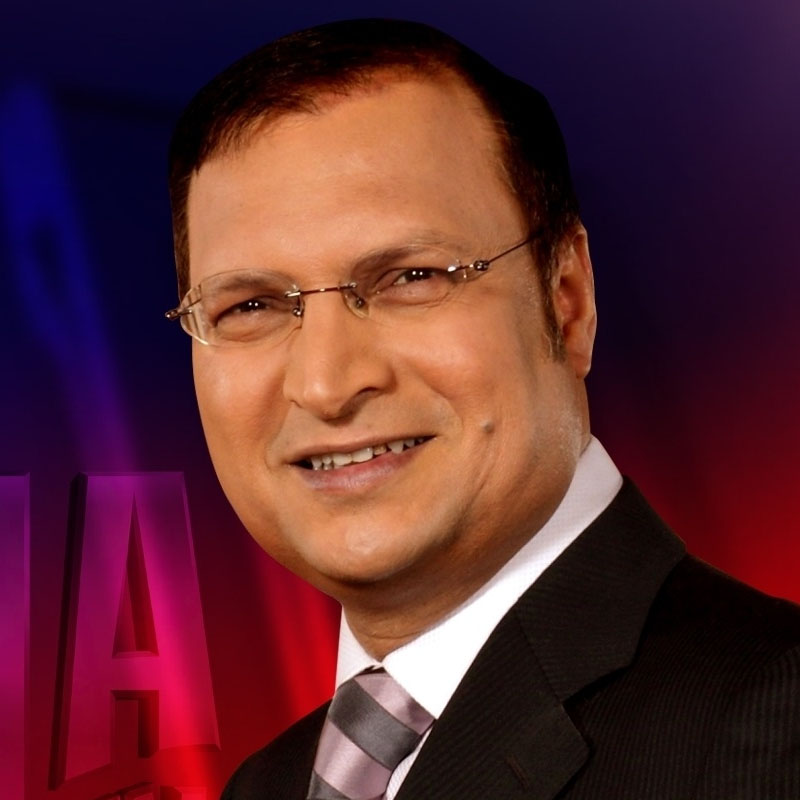
  • Senior journalist Vinod Dua passes away at 67

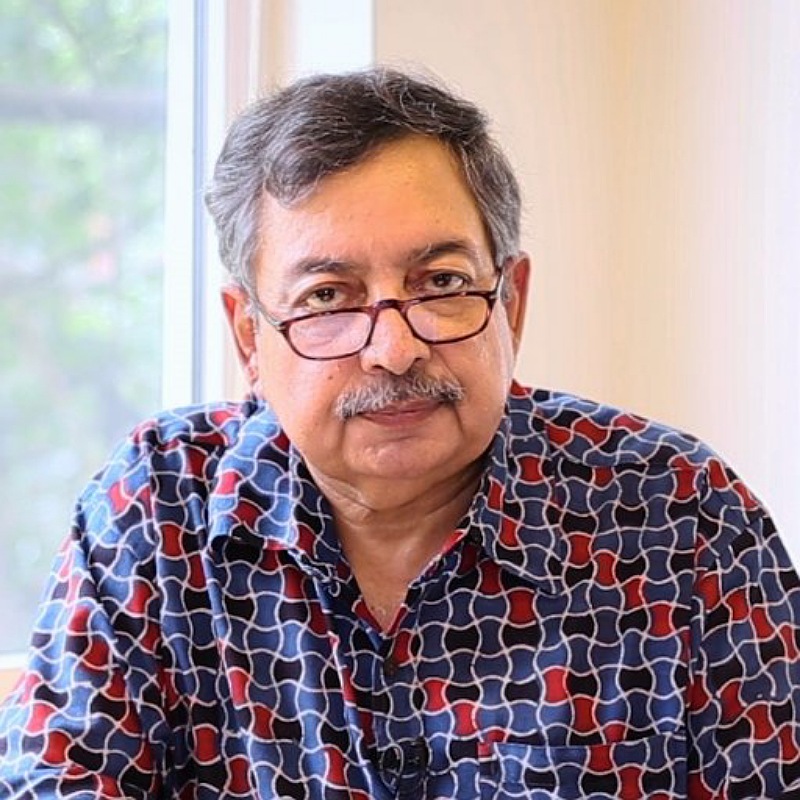
    Senior journalist Vinod Dua passes away at 67

    Mumbai: Senior journalist Vinod Dua has passed away at the age of 67 on Saturday, after a prolonged illness following a Covid-19 infection.

    He had survived Covid earlier this year, but his wife Padmavati ‘Chinna’ Dua lost the battle to the virus.

    The cremation will take place on Sunday, 5 December at Lodhi Crematorium in New Delhi.

    Dua is survived by two daughters, the comic-actor Mallika Dua and Bakul Dua, a clinical psychologist. The news was confirmed by Mallika on Instagram. “Our irreverent, fearless and extraordinary father, Vinod Dua has passed away. He lived an inimitable life, rising from the refugee colonies of Delhi to the peak of journalistic excellence for over 42 years, always, always speaking truth to power. He is now with our mom, his beloved wife Chinna in heaven where they will continue to sing, cook, travel and drive each other up the wall. The cremation will take place tomorrow (5.12.21) at Lodhi crematorium at 12 noon,” she wrote.

    A name in the world of Hindi broadcast journalism, Dua was awarded the Padma Shri in 2008. He used to host “Zaika India Ka” on NDTV India where he travelled and brought stories from across cities. His show “Jan Gan Mann Ki Baat” for The Wire Hindi took a critical stance at the government.

    In his long career, Dua had worked with Doordarshan, NDTV India, The Wire Hindi, Sahara TV, Zee TV as well as SET India.

  • From reporting news to becoming news

    From reporting news to becoming news

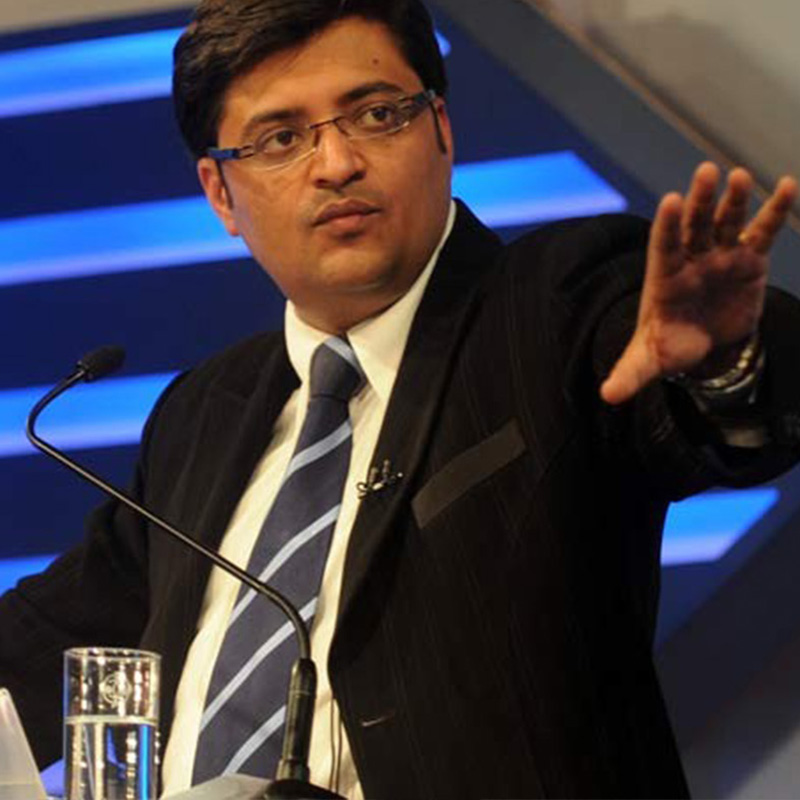
    The journey from reporting news (as an anchor) to becoming news (if Twitter India trends are to be believed) could be many a journalist’s dream. But Arnab Goswami has traversed the path and reached that point in a short period of time. A decade to be precise. And, it’s certainly an achievement for which Arnab definitely needs a pat on the back — if not for anything else, though that list too is long.

    The very fact his resignation — announced by him on Tuesday at an editorial meeting, but the act was actually done over a week back — whipped up media frenzy with social media going on the boil is an indicator that Arnab is a true student of the Steve Jobs school of thinking: damn the status quo. In other words be a disruptor.

    If people say that Arnab changed the rules of the news game in India by resorting to in-your-face and being over the top (OTT), it won’t be wrong. If critics opine that he dumbed down viewers and made tabloid journalism mainstream, then they too won’t be off the mark. Simply because, he did both and in an unapologetic fashion. And, Times NOW and the owners of the news venture, who also control India’s biggest unlisted media company spanning print, radio, music and television, gained much in terms of eyeballs, if not revenue. But then how many electronic news ventures in India are profitable business entities?

    When people say Arnab and Times NOW changed colours to be popular after the present BJP-led government in New Delhi came to power in 2014, they are wrong. Arnab’s style, which began reflecting in how news was served up for viewers on Times NOW and later on ET NOW (he was made in-charge of both the news channels as President-News and Editor-in-Chief ), started gaining popularity much before the present government came to power.Simply because an increasing number of people wanted some spice. No wonder, Arnab declared with aplomb at a recent media conference in Delhi that the “era of polite (TV) anchors was over” and journalism of reporting news as it is without an opinion was “rubbish” as “facts are sacred but opinion is supreme.”

    The US experienced this news-views mish-mash when Rupert Murdoch’s Fox News decided to differentiate itself from legacies like CNN and BBC a few decades back and openly mixed news with views and opinion and even took political sides during elections. Arnab, however, says he’s on the side of the common man — if not on the side of a political thought or belief.

    If the likes of Prannoy Roys, Raghav Bahls, Vinod Duas and later the Rajdeep Sardesais, Vikram Chandras, Zaka Jacobs, Barkha Dutts, Sonia Singhs, Ravishs, etc followed the old school of traditional journalism in India, for good or bad, Arnab realised quickly the new age viewer has little understanding of such traditions as they consume video on the go more often than not where attention time span is short. So, in a way, Arnab also quickly learnt that Fox-isation is the way forward to be heard and be popular. Again, to quote, the man himself, one has to shout to be heard in this country.

    So, the popular quiz show KBC’s jackpot-winning question today could be: What will be the new venture of Arnab Goswami, if the Jains, owners of Times of India group of which Times NOW is a part, let him go ultimately?If Arnab specialises in understanding the new age viewer-consumer and his style is foxy (the pun is intended), then that’s the type of a product he’d like to be associated with in an entrepreneurial avatar — a product that addresses the digital savvy consumer, is world class, slick and, of course, spicy, sensational and very unlike the legacies.

    There would be many funders who would be ready to bet on Arnab at present. And, why not? He’s not only the darling of the masses (at least the English speaking ones), but also the present government.

    So if media gossip says, a certain tech-savvy South Indian businessman-turned-Member of Parliament of the Indian Parliament’s Upper House is putting in money in a fresh news venture with Arnab, it’s worthwhileto lend an ear. If you mix Rupert Murdoch and another Delhi-based TV journalist-turned-entrepreneur, then you have a recipe for an exciting dish. Remember, the government liberalised foreign investment norms in TV news ventures and upped the level to 49 per cent from the earlier 26 per cent earlier this year.

    Whatever Arnab does in the coming days, the nation would want to know (including a rumoured meeting with a media czar-turned-politician) and therein lies his success formula; his on-screen patronising attitude, love for the two S (spice and sensation) and jingoism notwithstanding.

  • From reporting news to becoming news

    From reporting news to becoming news

    The journey from reporting news (as an anchor) to becoming news (if Twitter India trends are to be believed) could be many a journalist’s dream. But Arnab Goswami has traversed the path and reached that point in a short period of time. A decade to be precise. And, it’s certainly an achievement for which Arnab definitely needs a pat on the back — if not for anything else, though that list too is long.

    The very fact his resignation — announced by him on Tuesday at an editorial meeting, but the act was actually done over a week back — whipped up media frenzy with social media going on the boil is an indicator that Arnab is a true student of the Steve Jobs school of thinking: damn the status quo. In other words be a disruptor.

    If people say that Arnab changed the rules of the news game in India by resorting to in-your-face and being over the top (OTT), it won’t be wrong. If critics opine that he dumbed down viewers and made tabloid journalism mainstream, then they too won’t be off the mark. Simply because, he did both and in an unapologetic fashion. And, Times NOW and the owners of the news venture, who also control India’s biggest unlisted media company spanning print, radio, music and television, gained much in terms of eyeballs, if not revenue. But then how many electronic news ventures in India are profitable business entities?

    When people say Arnab and Times NOW changed colours to be popular after the present BJP-led government in New Delhi came to power in 2014, they are wrong. Arnab’s style, which began reflecting in how news was served up for viewers on Times NOW and later on ET NOW (he was made in-charge of both the news channels as President-News and Editor-in-Chief ), started gaining popularity much before the present government came to power.Simply because an increasing number of people wanted some spice. No wonder, Arnab declared with aplomb at a recent media conference in Delhi that the “era of polite (TV) anchors was over” and journalism of reporting news as it is without an opinion was “rubbish” as “facts are sacred but opinion is supreme.”

    The US experienced this news-views mish-mash when Rupert Murdoch’s Fox News decided to differentiate itself from legacies like CNN and BBC a few decades back and openly mixed news with views and opinion and even took political sides during elections. Arnab, however, says he’s on the side of the common man — if not on the side of a political thought or belief.

    If the likes of Prannoy Roys, Raghav Bahls, Vinod Duas and later the Rajdeep Sardesais, Vikram Chandras, Zaka Jacobs, Barkha Dutts, Sonia Singhs, Ravishs, etc followed the old school of traditional journalism in India, for good or bad, Arnab realised quickly the new age viewer has little understanding of such traditions as they consume video on the go more often than not where attention time span is short. So, in a way, Arnab also quickly learnt that Fox-isation is the way forward to be heard and be popular. Again, to quote, the man himself, one has to shout to be heard in this country.

    So, the popular quiz show KBC’s jackpot-winning question today could be: What will be the new venture of Arnab Goswami, if the Jains, owners of Times of India group of which Times NOW is a part, let him go ultimately?If Arnab specialises in understanding the new age viewer-consumer and his style is foxy (the pun is intended), then that’s the type of a product he’d like to be associated with in an entrepreneurial avatar — a product that addresses the digital savvy consumer, is world class, slick and, of course, spicy, sensational and very unlike the legacies.

    There would be many funders who would be ready to bet on Arnab at present. And, why not? He’s not only the darling of the masses (at least the English speaking ones), but also the present government.

    So if media gossip says, a certain tech-savvy South Indian businessman-turned-Member of Parliament of the Indian Parliament’s Upper House is putting in money in a fresh news venture with Arnab, it’s worthwhileto lend an ear. If you mix Rupert Murdoch and another Delhi-based TV journalist-turned-entrepreneur, then you have a recipe for an exciting dish. Remember, the government liberalised foreign investment norms in TV news ventures and upped the level to 49 per cent from the earlier 26 per cent earlier this year.

    Whatever Arnab does in the coming days, the nation would want to know (including a rumoured meeting with a media czar-turned-politician) and therein lies his success formula; his on-screen patronising attitude, love for the two S (spice and sensation) and jingoism notwithstanding.

  • …and journalism just happened to Bhupendra Chaubey

    …and journalism just happened to Bhupendra Chaubey

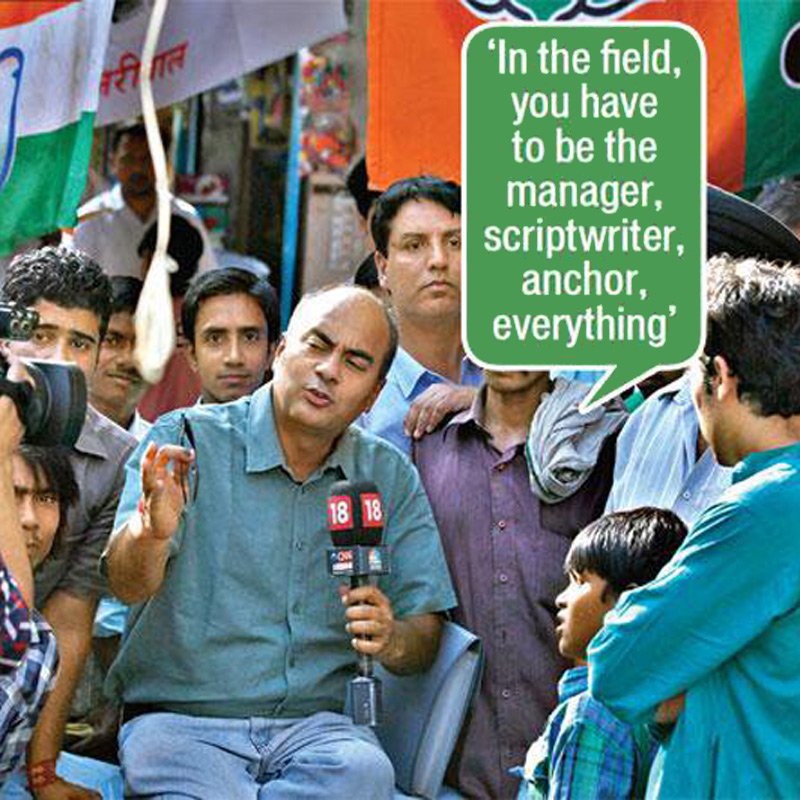
    Sometimes the best things in life which make you stand out are unplanned. Mapping his way from a postgraduate in films to senior journalist in CNN-News18 is Bhupendra Chaubey. Set out to become a filmmaker in life, journalism just happened to him. Being good at theatre, public speaking, essay-writing and elocution, etc, cinema is something that still excites him.

    The Delhi-based graduate heard about Dr Prannoy Roy looking for bilingual people to come on board. Although not too excited by the news to boost his friend’s confidence who was applying for a job at NDTV, Chaubey went along and dropped his CV as well.

    As they did not know anyone working there, the duo randomly dropped their CVs a couple of times at NDTV and forgot about it.  After a few days, not the other guy but Chaubey received a call from the HR for a meeting scheduled with Dr Roy. Declining to meet would have looked mean, and so Chaubey decided to meet him just to convey his regards. The co-founder of NDTV, after going through Chaubey’s CV, immediately offered him a job right there. But, Delhi was not the place where this young budding journalist’s heart was. He wanted to work in Mumbai.

    Bhupendra Chaubey’s resume

    Chaubey has been a TV journalist since 2000, when he started his career with NDTV. In 2005, he left NDTV and was a part of the team that started CNN IBN. As a political journalist, he has travelled the length and breadth of the country and has covered three general elections and assembly elections in a majority of Indian states.

    A graduate in Mathematics and a postgraduate in films, Chaubey has been among the finest political journalists of his generation. He has that unique ability to grasp things at a micro level, and then present them with a macro-level understanding. He is amongst those journalists who depend more on (political) awareness on the ground supplementing it with academic awareness of issues that confront the nation.

    Chaubey moved up the ladder by becoming the executive editor of CNN News18. Today, he hosts the prime-time broadcast Big5 at 10pm. He also hosts a weekend interview show Hot Seat where he puts tough questions to key newsmakers and regularly writes columns for various English and Hindi newspapers, magazines and digital media. He lives in the national capital with his wife and two children.

    Chaubey till date remembers what Dr Roy told him that day: “I think I am seeing a journalist in you. You should give it a shot. If you think you can’t fit in, there is always an option to leave”.

    Thus started his journey with New Delhi Television. One thing led to the next which caught Chaubey’s interest and there was no stopping, then. Dating a girl then who is now his wife, going to Mumbai was still on the cards. “Working with NDTV was phenomenal and an enriching experience. Imagine a newsroom working alongside Rajdeep Sardesai, Barkha Dutt and Arnab Goswami under one roof. Today, they all are in different companies but I have learnt a lot from them,” shares Chaubey.

    Chaubey preferred putting himself as the third generation of TV journalists in India considering Dr Roy and Vinod Dua as the first generation, and Rajdeep, Barkha, Arnab and Ravish as the second generation. “The beauty of entering a different profession is that you start as a novice. As I did not know what was coming my way, each day was a new day. Barkha was an outstanding scriptwriter, and I also learnt a lot about storytelling formats from her. Arnab was a great political mind; all the conversations with him were enriching. Rajdeep was a big superstar even in those days.”

    Remembering his tough days and working in various shifts, the curious reporter credits three people in his life. His wife, who knew a bit about journalism, the one who trained him to think in 10 different ways. “In school, you debate at an elementary level. But, the ability to speak on a topic in multiple ways is something I learnt from her. (The second) Prannoy, the head of NDTV, was my ideal, but I made it a point to hang around Rajdeep (Sardesai) to see what he was doing”. Rajdeep handheld Chaubey and was always a dear friend and editor to him.

    Mentioning the time of during the Coffingate, the then defence minister George Fernandes was the main target of the critics accused in supplying coffins to the Indian army jawans. “One fine afternoon, on a weekday, as I was climbing down the stairs of NDTV office, Sardesai was seated in his car heading to some place”. He asked Chaubey to join him. In the next few minutes, they were right in front of Fernandes’s house opposite to Arun Jaitley’s place without any camera. Sardesai, being a star at that time, the duo was allowed to enter the minister’s house. Fernandes was not giving interviews to anybody because of the heat around the allegations. Sardesai, positioning himself completely on his side by saying a few things about Fernandes which made him feel very comfortable, sectretly messaged a cameraman. While, he was having the conversation with Fernandes, the man with a single camera entered. Sardesai convinced Fernandes to be patient with only five questions and got a 25-minute interview with him. “Rajdeep was sitting behind the camera. So, after George answered his last question, the cameraman was asked to focus only on Rajdeep and he repeated the questions which he had put to Fernandes. He was blessed with a photographic memory. That was my first encounter wherein I learnt how to convert a single cam entity to two cam entity”.

    “He has always motivated and helped me. There is a certain kind of bond and friendship that I have with him. He made me understand the nuances of journalism. That is why when he left NDTV, I too left.”

    “Bhupendra is a dynamic and bright journalist. I wish him all the best for whatever he does in future,” says Sardesai.

    Right after that Arnab Goswami made an exit from NDTV. “Arnab was very keen on me working with him. But, I joined Rajdeep. So, for some time, he was not happy with it.”

    “Now the person who is really helping me and encouraging me to create, enhance and carve a niche for myself is Rahul Joshi. He is an absolutely great guy to work with completely different from any TV editor. I am enjoying working with him.”

    With Google not being efficient in those days, on several occasions, Chaubey has worked under pressure. Not knowing where political parties office were, he used to often dial AskMe service at that time to figure out addresses. It has led him to several wrong addresses, nonetheless. “Pressure and dilemma are there in every work life, every profession, and journalism is no different. The only point is that journalism allows you to take decisions completely on your own. What you do in your journalistic career, only you are accountable for that.  While it is a team game, it is often enormously an individualistic game where it enables you to own your individual skills”.

    One crazy experience that Chaubey cites during his tenure with NDTV was back in 2003 when Uma Bharti was the chief minister of Madhya Pradesh. The day he was supposed to meet her for an interview, Bharti resigned as she wanted to surrender herself in the court of law. She decided to undertake a train journey from Bhopal to Hooghly; it was a two-day long journey. While preparing to return to NDTV, he got a call from Sardesai asking to interview her during the jounery, and there was no option but to accept. “Rajdeep has a peculiar way of talking. I got on the train without a ticket. I remember, at some station, Bharti wanted to take a bath. Being in an express train, one of her followers came arrived with two buckets full of water for her. She simply took the buckets, went inside the loo and poured it on her person and came out in the same clothes”.

    At the Jim Corbett National Park, there was a story of dying elephants which smacked of corporate poaching. Chaubey was asked to follow up, and he obeyed. On reaching there, he recorded an interview with the forest conservator who game some interesting viewpoints. “At that time, we did not have OB vans. The park is 300 kms from Delhi. In my great enthusiasm, I sent the tape back to Delhi with the driver and asked him to return. Rajdeep got so angry with me for this two-way journey.”

    Chaubey’s journey with NDTV was full of twists and turns. He left the network in 2005 and was a part of the team that launched CNN IBN. He joined CNN-IBN (now, CNN-News18) as the chief political correspondent. Before joining CNN IBN, he got a call from Prannoy Roy. He said, “Only a stupid person would think of leaving The New York Times to join The Tribune hinting that NDTV is the NY Times and CNN-IBN is The Tribune.”

    “He comes with abundant energy to work everyday. His energy is infectious and sometimes gets transmitted to those working with him,” says IBN18 Network chief executive producer Rajen Garabadu about Chaubey. “You tend to work harder when you see him work so hard. He reaches on time for an early morning shoot even if he has worked till late the previous day. He remains fully charged and his energy does not fade through the day. Having spent more than two decades in news television, I can say there aren’t too many journalists who can match his energy,” Garabadu said.

    Always hoping to anchor ‘The Big Fight’ which Sardesai used to do, it was a difficult task for Chaubey to leave NDTV. “Prannoy Roy did not like it when I bid adieu to him. But, that is the way some of our media barons are. They expect extreme loyalty, and he thought it was disloyal on my part to be moving away with Rajdeep”.

    Chaubey went back and told this to Sardesai, to which he replied, “One day, we will make it bigger than the New York Times”.

    “Bhupendra is good for his place. There are few editors who can decide and put entertainment in primetime slots which Bhupendra understands well. Earlier, Rajdeep’s blue-eyed boy and now Rahul Joshi’s lad,” says a senior media expert.

    Chaubey has been termed as Rajdeep’s blue-eyed boy on various occasions. Contradicting this remark, Garabadu says, “I don’t think he is. I have worked very closely with Rajdeep for more than 11 years. The editor-in-chief of a channel will work closely with his senior journalists. Anyone who breaks big stories becomes the editor’s blue-eyed boy. And, in that sense, Bhupen did break stories from time to time”.

    Leading a team of bright reporters, Chaubey recollects how challenging it was for him to work with his peers. But, it came out well for him. Always believing in leading by example, he does not consider himself like a studio anchor. “I cannot sit in an AC office and ask everyone else to do the job”.

    One more instance that comes to his mind is when Sardesai wanted Ram Jethmalani as a guest for a primetime show. Chaubey barged into Jethmalani’s car without his permission. “I was not permitted to talk on the phone. So, I went to a place where he was a speaker and parked myself next to his car. When he arrived to board the car, I opened the other door and got inside his car. I requested him to speak to me”.

    On one occasion, Chaubey caught hold of Murli Manohar Joshi when he was passing by, at which he got furious. “Today, he is a good friend of mine. These events toughen you, and CNN-IBN has toughened me even more. Through the years, one improves through the experiences of various kinds,” he observes.

    Chaubey believes that there has been a complete change in the approach to journalism. The entire concept of journalism has been turned upside down. “News has been replaced by views, and the feeling right now is like views are news. Some channels have converted it into a fine art wherein you can just say what you want to and will present only one side of the truth. You would convert it into an opportunity, a scenario where no one else can question you which is a dangerous trend and should not be taking place. These dangers are the result of falling standards of journalism reflected in various forms now”.

    Chaubey himself became news after his CNN IBN interview with the Bollywood star Sunny Leone for which he received a lot of flak. After the drama post telecast, he explained that he was simply doing his job by questioning her. “If anyone felt offended, I am sorry. That was not my intention. My focus was to get, try and figure out who the real Sunny Leone was. In this country, people can object to anything. Viewers thought that my tone was not in good taste but this is the way it is. They just expect filmstars to be treated differently.”

    “In my opinion, he spoilt the interview with Sunny Leone. It was a bit awkward and in bad taste. But, soon enough, he felt it and apologised which was appreciated. The interview was certainly a miscalculation and he realised, adds a senior journalist.

    “The interview became more than what he said. His manner of asking questions, his expression, the tone, etc., made the issue bigger than its actual content. I am sure he did not mean to offend Sunny or belittle her. It was just the manner and a few wording which upset some people. In hindsight, he could have chosen his words better,” adds another senior reporter.

    For people who admire Chaubey and want to be successful, one thing that he follows is “be patient because if there is any profession that will check your patience, it is journalism.” Making a film is definitely on the agenda that Chaubey wishes to pursue. Writing a book is also his plan going forward.

    “Journalism should not be restricted to one platform or source, it should be across sources. I will be very keen if it works out well,” concludes Chaubey.

    “For Bhupendra, keep up the same level of energy as you bring to the newsroom everyday. Keep rocking. For others, there is much more to Bhupendra than what you see on screen. He puts in a lot of hard work which might not be visible on TV,” voices Garabadu.

  • …and journalism just happened to Bhupendra Chaubey

    …and journalism just happened to Bhupendra Chaubey

    Sometimes the best things in life which make you stand out are unplanned. Mapping his way from a postgraduate in films to senior journalist in CNN-News18 is Bhupendra Chaubey. Set out to become a filmmaker in life, journalism just happened to him. Being good at theatre, public speaking, essay-writing and elocution, etc, cinema is something that still excites him.

    The Delhi-based graduate heard about Dr Prannoy Roy looking for bilingual people to come on board. Although not too excited by the news to boost his friend’s confidence who was applying for a job at NDTV, Chaubey went along and dropped his CV as well.

    As they did not know anyone working there, the duo randomly dropped their CVs a couple of times at NDTV and forgot about it.  After a few days, not the other guy but Chaubey received a call from the HR for a meeting scheduled with Dr Roy. Declining to meet would have looked mean, and so Chaubey decided to meet him just to convey his regards. The co-founder of NDTV, after going through Chaubey’s CV, immediately offered him a job right there. But, Delhi was not the place where this young budding journalist’s heart was. He wanted to work in Mumbai.

    Bhupendra Chaubey’s resume

    Chaubey has been a TV journalist since 2000, when he started his career with NDTV. In 2005, he left NDTV and was a part of the team that started CNN IBN. As a political journalist, he has travelled the length and breadth of the country and has covered three general elections and assembly elections in a majority of Indian states.

    A graduate in Mathematics and a postgraduate in films, Chaubey has been among the finest political journalists of his generation. He has that unique ability to grasp things at a micro level, and then present them with a macro-level understanding. He is amongst those journalists who depend more on (political) awareness on the ground supplementing it with academic awareness of issues that confront the nation.

    Chaubey moved up the ladder by becoming the executive editor of CNN News18. Today, he hosts the prime-time broadcast Big5 at 10pm. He also hosts a weekend interview show Hot Seat where he puts tough questions to key newsmakers and regularly writes columns for various English and Hindi newspapers, magazines and digital media. He lives in the national capital with his wife and two children.

    Chaubey till date remembers what Dr Roy told him that day: “I think I am seeing a journalist in you. You should give it a shot. If you think you can’t fit in, there is always an option to leave”.

    Thus started his journey with New Delhi Television. One thing led to the next which caught Chaubey’s interest and there was no stopping, then. Dating a girl then who is now his wife, going to Mumbai was still on the cards. “Working with NDTV was phenomenal and an enriching experience. Imagine a newsroom working alongside Rajdeep Sardesai, Barkha Dutt and Arnab Goswami under one roof. Today, they all are in different companies but I have learnt a lot from them,” shares Chaubey.

    Chaubey preferred putting himself as the third generation of TV journalists in India considering Dr Roy and Vinod Dua as the first generation, and Rajdeep, Barkha, Arnab and Ravish as the second generation. “The beauty of entering a different profession is that you start as a novice. As I did not know what was coming my way, each day was a new day. Barkha was an outstanding scriptwriter, and I also learnt a lot about storytelling formats from her. Arnab was a great political mind; all the conversations with him were enriching. Rajdeep was a big superstar even in those days.”

    Remembering his tough days and working in various shifts, the curious reporter credits three people in his life. His wife, who knew a bit about journalism, the one who trained him to think in 10 different ways. “In school, you debate at an elementary level. But, the ability to speak on a topic in multiple ways is something I learnt from her. (The second) Prannoy, the head of NDTV, was my ideal, but I made it a point to hang around Rajdeep (Sardesai) to see what he was doing”. Rajdeep handheld Chaubey and was always a dear friend and editor to him.

    Mentioning the time of during the Coffingate, the then defence minister George Fernandes was the main target of the critics accused in supplying coffins to the Indian army jawans. “One fine afternoon, on a weekday, as I was climbing down the stairs of NDTV office, Sardesai was seated in his car heading to some place”. He asked Chaubey to join him. In the next few minutes, they were right in front of Fernandes’s house opposite to Arun Jaitley’s place without any camera. Sardesai, being a star at that time, the duo was allowed to enter the minister’s house. Fernandes was not giving interviews to anybody because of the heat around the allegations. Sardesai, positioning himself completely on his side by saying a few things about Fernandes which made him feel very comfortable, sectretly messaged a cameraman. While, he was having the conversation with Fernandes, the man with a single camera entered. Sardesai convinced Fernandes to be patient with only five questions and got a 25-minute interview with him. “Rajdeep was sitting behind the camera. So, after George answered his last question, the cameraman was asked to focus only on Rajdeep and he repeated the questions which he had put to Fernandes. He was blessed with a photographic memory. That was my first encounter wherein I learnt how to convert a single cam entity to two cam entity”.

    “He has always motivated and helped me. There is a certain kind of bond and friendship that I have with him. He made me understand the nuances of journalism. That is why when he left NDTV, I too left.”

    “Bhupendra is a dynamic and bright journalist. I wish him all the best for whatever he does in future,” says Sardesai.

    Right after that Arnab Goswami made an exit from NDTV. “Arnab was very keen on me working with him. But, I joined Rajdeep. So, for some time, he was not happy with it.”

    “Now the person who is really helping me and encouraging me to create, enhance and carve a niche for myself is Rahul Joshi. He is an absolutely great guy to work with completely different from any TV editor. I am enjoying working with him.”

    With Google not being efficient in those days, on several occasions, Chaubey has worked under pressure. Not knowing where political parties office were, he used to often dial AskMe service at that time to figure out addresses. It has led him to several wrong addresses, nonetheless. “Pressure and dilemma are there in every work life, every profession, and journalism is no different. The only point is that journalism allows you to take decisions completely on your own. What you do in your journalistic career, only you are accountable for that.  While it is a team game, it is often enormously an individualistic game where it enables you to own your individual skills”.

    One crazy experience that Chaubey cites during his tenure with NDTV was back in 2003 when Uma Bharti was the chief minister of Madhya Pradesh. The day he was supposed to meet her for an interview, Bharti resigned as she wanted to surrender herself in the court of law. She decided to undertake a train journey from Bhopal to Hooghly; it was a two-day long journey. While preparing to return to NDTV, he got a call from Sardesai asking to interview her during the jounery, and there was no option but to accept. “Rajdeep has a peculiar way of talking. I got on the train without a ticket. I remember, at some station, Bharti wanted to take a bath. Being in an express train, one of her followers came arrived with two buckets full of water for her. She simply took the buckets, went inside the loo and poured it on her person and came out in the same clothes”.

    At the Jim Corbett National Park, there was a story of dying elephants which smacked of corporate poaching. Chaubey was asked to follow up, and he obeyed. On reaching there, he recorded an interview with the forest conservator who game some interesting viewpoints. “At that time, we did not have OB vans. The park is 300 kms from Delhi. In my great enthusiasm, I sent the tape back to Delhi with the driver and asked him to return. Rajdeep got so angry with me for this two-way journey.”

    Chaubey’s journey with NDTV was full of twists and turns. He left the network in 2005 and was a part of the team that launched CNN IBN. He joined CNN-IBN (now, CNN-News18) as the chief political correspondent. Before joining CNN IBN, he got a call from Prannoy Roy. He said, “Only a stupid person would think of leaving The New York Times to join The Tribune hinting that NDTV is the NY Times and CNN-IBN is The Tribune.”

    “He comes with abundant energy to work everyday. His energy is infectious and sometimes gets transmitted to those working with him,” says IBN18 Network chief executive producer Rajen Garabadu about Chaubey. “You tend to work harder when you see him work so hard. He reaches on time for an early morning shoot even if he has worked till late the previous day. He remains fully charged and his energy does not fade through the day. Having spent more than two decades in news television, I can say there aren’t too many journalists who can match his energy,” Garabadu said.

    Always hoping to anchor ‘The Big Fight’ which Sardesai used to do, it was a difficult task for Chaubey to leave NDTV. “Prannoy Roy did not like it when I bid adieu to him. But, that is the way some of our media barons are. They expect extreme loyalty, and he thought it was disloyal on my part to be moving away with Rajdeep”.

    Chaubey went back and told this to Sardesai, to which he replied, “One day, we will make it bigger than the New York Times”.

    “Bhupendra is good for his place. There are few editors who can decide and put entertainment in primetime slots which Bhupendra understands well. Earlier, Rajdeep’s blue-eyed boy and now Rahul Joshi’s lad,” says a senior media expert.

    Chaubey has been termed as Rajdeep’s blue-eyed boy on various occasions. Contradicting this remark, Garabadu says, “I don’t think he is. I have worked very closely with Rajdeep for more than 11 years. The editor-in-chief of a channel will work closely with his senior journalists. Anyone who breaks big stories becomes the editor’s blue-eyed boy. And, in that sense, Bhupen did break stories from time to time”.

    Leading a team of bright reporters, Chaubey recollects how challenging it was for him to work with his peers. But, it came out well for him. Always believing in leading by example, he does not consider himself like a studio anchor. “I cannot sit in an AC office and ask everyone else to do the job”.

    One more instance that comes to his mind is when Sardesai wanted Ram Jethmalani as a guest for a primetime show. Chaubey barged into Jethmalani’s car without his permission. “I was not permitted to talk on the phone. So, I went to a place where he was a speaker and parked myself next to his car. When he arrived to board the car, I opened the other door and got inside his car. I requested him to speak to me”.

    On one occasion, Chaubey caught hold of Murli Manohar Joshi when he was passing by, at which he got furious. “Today, he is a good friend of mine. These events toughen you, and CNN-IBN has toughened me even more. Through the years, one improves through the experiences of various kinds,” he observes.

    Chaubey believes that there has been a complete change in the approach to journalism. The entire concept of journalism has been turned upside down. “News has been replaced by views, and the feeling right now is like views are news. Some channels have converted it into a fine art wherein you can just say what you want to and will present only one side of the truth. You would convert it into an opportunity, a scenario where no one else can question you which is a dangerous trend and should not be taking place. These dangers are the result of falling standards of journalism reflected in various forms now”.

    Chaubey himself became news after his CNN IBN interview with the Bollywood star Sunny Leone for which he received a lot of flak. After the drama post telecast, he explained that he was simply doing his job by questioning her. “If anyone felt offended, I am sorry. That was not my intention. My focus was to get, try and figure out who the real Sunny Leone was. In this country, people can object to anything. Viewers thought that my tone was not in good taste but this is the way it is. They just expect filmstars to be treated differently.”

    “In my opinion, he spoilt the interview with Sunny Leone. It was a bit awkward and in bad taste. But, soon enough, he felt it and apologised which was appreciated. The interview was certainly a miscalculation and he realised, adds a senior journalist.

    “The interview became more than what he said. His manner of asking questions, his expression, the tone, etc., made the issue bigger than its actual content. I am sure he did not mean to offend Sunny or belittle her. It was just the manner and a few wording which upset some people. In hindsight, he could have chosen his words better,” adds another senior reporter.

    For people who admire Chaubey and want to be successful, one thing that he follows is “be patient because if there is any profession that will check your patience, it is journalism.” Making a film is definitely on the agenda that Chaubey wishes to pursue. Writing a book is also his plan going forward.

    “Journalism should not be restricted to one platform or source, it should be across sources. I will be very keen if it works out well,” concludes Chaubey.

    “For Bhupendra, keep up the same level of energy as you bring to the newsroom everyday. Keep rocking. For others, there is much more to Bhupendra than what you see on screen. He puts in a lot of hard work which might not be visible on TV,” voices Garabadu.

  • NDTV India piggybacks legacy to outdo competition

    NDTV India piggybacks legacy to outdo competition

    MUMBAI: Political parties and their prime ministerial picks aren’t the only protagonists of the unfolding election drama; news channels of all hues have joined the fray.

    However, when it comes to election coverage and analysis, certain channels seem to have an edge simply because they’ve been there, done that, long before the others.

    Undoubtedly, New Delhi Television or NDTV is one such, with veteran journalists – Prannoy Roy and Vinod Dua – having co-anchored the first-ever election programme on Doordarshan back in the eighties.

    Leveraging this legacy even as it enters the heat and grime of the upcoming Lok Sabha polls is NDTV’s Hindi news channel, NDTV India.

    The channel has re-jigged its entire schedule to exclusively focus on the battle for the prime ministerial position. From 6:00 pm to 7:00 pm, viewers will be treated to Badi Khabar with Nidhi Kulpati followed by a new show titled National Highway 2014 at 7:00 pm that will feature ground reports from key constituencies and will be anchored by Manoranjan Bharati.

    Newspoint with Abhigyan Prakash aired at 8:00 pm will become Newspoint: Target 272 till the election results are announced.

    Primetime at 9:00 pm will be the same with Ravish Kumar while Rann-neeti at 10:00 pm will have Sikta Deo tracking the changing political strategies of the key players. The last show, Mission 2014, will be aired 10:30 pm onward and will see Kadambini Sharma’s 360-degree coverage of the day’s top election stories.

    Bhuwan Bhatt

    “We will track personalities in the manner in which the US Presidential elections are covered. Our focus this time is to look at the strategies of individual parties and their key leaders. Our objective will be to track the path available to different political formations on their way to the magic 272 mark. This is also one of the most personality-driven elections in recent history,” explains NDTV India managing editor Aunindyo Chakravarty.

    More than the south, the channel will keep a watch out for the Hindi heartland while being in close contact with the Election Commission for real-time turnout figures across states. “While we will be covering the entire country, our focus will be on Uttar Pradesh and Bihar, which could hold the key to these elections,” says Chakravarty.

    With the channel’s market share having risen by a significant 25 per cent in the last LS elections, NDTV India is betting big on its poll coverage and hopes to do even better. So much so, the channel has integrated its website khabar.com with its overall strategy. A special Hindi election microsite is on the cards and so are several interactive initiatives on social media.

    NDTV India is also in talks to use the services of nearly 200 stringers across the country to complement its existing network of correspondents.

    While correspondents will be posted at headquarters, stringers will handle election coverage at the district level. Of the stringers, some will be exclusive to NDTV India while others will be a shared resource between NDTV India and NDTV 24X7. To up its technology quotient, the channel plans to backpack live broadcasting equipment rather than hiring expensive OB vans.

    Isn’t Chakravarty concerned about advertisers, given that NDTV does not subscribe to TAM ratings? “We don’t need to know ratings. We have a better brand and credibility and we also earn better revenues,” dismisses Chakravarty. Hero MotorCorp is already on board as presenting sponsor while Kent-RO and Prateek group are the powered-by sponsors.

    To promote its new shows, the channel will conduct a campaign across Hindi speaking markets closer to elections, the creative for which will be done in-house. “India has a lot of new voters – nearly 12 crore. It is important to reach out to these people and let them know about our shows,” says NDTV senior VP for sales Bhuwan Bhatt.

  • IBN7 revamps primetime with two mega shows as polls come closer

    IBN7 revamps primetime with two mega shows as polls come closer

    NEW DELHI: With the general elections round the corner, IBN7 is revamping its primetime programming with the introduction of two brand new shows with veteran journalists Vinod Dua and Sanjay Pugalia.


    The new programming will mark the return of Vinod Dua in a special election show Vinod Dua Ka Prashnkaal, which will be the first fully interactive prime-time election show on any Hindi news platform. The host will give a platform to viewers to express themselves freely and participate in the election discussions.


    The channel will put out a “Topic of the Day” for a fixed time during the day, inviting viewers to call in with their views and questions. Questions would also be taken from Twitter, Facebook and the channel’s website – IBNKhabar. Additionally, the channel will also integrate a distinct video element called “Open Mike” which will allow on-camera views and questions on the day’s topic. Vinod Dua Ka Prashnkaal will air every Monday to Thursday at 8 pm.


    Another new prime time show, India 9 Baje, will go on air from 18 February every Monday to Friday at 9 pm, and will see Sanjay Pugalia do a round-up of the day’s major news stories. The show will follow a flexible format, primarily consisting of one big debate along with other stories of impact from the worlds of politics, sports, business, international and entertainment news. Sanjay Pugalia with his experience, credibility and vast knowledge of politics as well as political economy, will give viewers a rare combination of the two in his delivery of news.  


    Speaking on IBN7’s new prime-time line up, CNN-IBN and IBN7 MD Vinay Tewari said, “Elections are a complex, engaging and diverse event. It needs solid professionals who understand the complexities, who can simplify it for our audience and who believe in clarity over noise and sensation. We have brought in two of India’s leading journalists to take our primetime programming to the next level and who symbolise our beliefs about news. Vinod Dua, with his experience and unique style, is back to give viewers his take on the elections and engage them in our daily discourse while Sanjay Pugalia, whose understanding of politics and political economy is unparalleled, will debate and encapsulate the day’s major news on India 9 Baje.”


    IBN Network Editor-in-Chief Rajdeep Sardesai said, “We are looking at possibly the most crucial general elections in Indian history. And IBN7 is set to launch two new shows anchored by two of the most influential and experienced journalists in the industry. Amidst the furore of elections, our new prime time line-up aims to help our viewers understand the socio-political scenario better and enable them to make informed decisions. We believe that these shows will add immense value to our programming and enable our network to set the industry standard for years to come.”

  • News channels eye elections

    News channels eye elections

    MUMBAI: Back in the eighties, veteran journalists Dr Prannoy Roy and Vinod Dua took the nation by storm when they co-anchored the first-ever election analyses programs on the then sole television channel, Doordarshan.


    Nearly three decades and the cable and satellite TV explosion later, journalists and news television channels of all hues continue to romance the elections with the same (if not greater) fervour.


    With ongoing elections in four states in North India and one in the North East, and general elections due in the first half of 2014, there couldn’t have been a better time for news channels to engage in a bit of one-upmanship with respect to news and programs around the polls. Indiantelevison.com takes a look…


    India News is airing a campaign called Kissa Kursi Ka showcasing ground events across Madhya Pradesh, Chattisgarh, Rajasthan and Delhi. Citizens are part of the live debates on this program.


    Urdu news channel, Aalami Samay, features a show called Mukhyamantri ke paanch saal which looks at the five years of Members of Parliament and what they’ve done towards roadways, power supply, safety and security among other causes. Another show titled Aapke numainde..unke wade assesses whether these MPs have succeeded in keeping the promises they made before getting elected to office.


    ABP News is well known for its show, Kaun Banega Mukhyamantri while India TV is looking at building a strong team under the supervision of QW Naqvi, who has newly joined the channel as editorial director, to make their coverage of this election a talking point for the general elections coming up next year. “These assembly elections are a build-up to the general elections in 2014; the focus is on capturing viewership now and to be their first choice for news coverage, analyses and insights on elections right till the general elections,” says India TV MD and CEO Ritu Dhawan.
        

    Elections are a bonanza of sorts for news channels, which expect viewership to head north during that time. For instance, India News and Aalami Samay expect their viewership to go up by 15- 20 per cent while ABP is confident of garnering an almost 50-100 per cent increase, largely due to the main shots slated for prime time viewing although election programming is scheduled for the whole day right through the elections.


    India News and News X plan live election coverage from 43 locations, including 16 live OB vans and 16 live units. “Elections are like festivals for every news channel,” says India News and News X CEO R K Arora.

    Not only are elections significant in grabbing eyeballs, they are also important for news channels to make their mark. “Elections should not only be seen as an eyeball prospect, but also as an area where media can contribute in the process of nation building,” says Dhawan.


    While News Nation CEO Shailesh Kumar says: “This poll will also reflect the mood of the nation and take of the people at a crucial juncture when two big leaders (Narendra Modi and Rahul Gandhi) are being projected as the future of this country. A very decisive poll, which has the capacity to shape the geo-political contours of the nation.”


    Advertisers too are part of this gold (read election) rush. For India TV, advertisers come in the categories including Automobile, Cement, Hosiery, Food processing and FMCG.


    Says Dhawan: “The rule ‘Eyeball:Price’ is definitely applicable.”, India News and News X have got on boards brands such as Mircrosoft, Renault, Mahindra, Tata Motors, Idea cellular, Honda Motorcycles, Godrej and Whirlpool on their lists.


    With channels eyeing elections as a good ‘squeeze’ in terms of viewers and advertisers, most of them have also planned exit polls at the end of the elections.


    Coming to the anchors, be it a Deepak Chaurasia or Rajat Sharma or any of your favourite hosts, they are all busy trying to get the best news bytes from specialists, politicians and the public to grab the most number of eyeballs.

  • NDTV ventures into media education biz

    NDTV ventures into media education biz

    MUMBAI: Following on the steps of other media houses like Aaj Tak, Times and Zee, NDTV is foraying entering into the education business space with ‘NDTV Broadcast Training Programme’. The company has join hands with Macaw, the advertising and marketing solutions providing entity of the INCL (India Mews Communications Ltd) Group as the communication agency for creative and media buying services in introducing the broadcast training programme.

    The company is firm that the association of faces like Pronnoy Roy, Barkha Dutt, Vinod Dua and Pankaj Pachauri along with NDTV credits, will add mileage to their programme thereby drawing in large number of candidates.

    The eligibility criteria to apply to the programme is that one should be graduate and below 27 years of age. The first batch will be started from March second from July. The course curriculum, it claims, is career oriented and focuses to groom the aspirants with both theoretical and practical aspects of broadcast media.

  • NDTV lines up special shows to cover elections

    NDTV lines up special shows to cover elections

    MUMBAI: NDTV Networks has lined up special programming to cover state elections. The shows will provide an insight into the relevant issues, gather views and relay the energy and enthusiasm associated with the upcoming elections in six states.

    English news channel NDTV 24X7 will have shows like Campaign Trail, Follow the Leader, Battle Ground. Starting on 17 November at 7 pm on weekdays. Campaign Trail will combine live reports, citizens’ views and aims to get answers from the policy makers.

    Follow the Leader, starting on 18 November, chases some of the biggest contenders in the political arena from sunrise to sunset on campaigning days. The show will telecast every Tuesday and Sunday at 9.30 pm.

    In Battle Ground, Prannoy Roy and Dorab Sopariwala will discuss the real story of the elections – who is likely to win and become the next chief minister, what are the issues that will matter and all the news that citizens need to know. The show will air on 26, 28 Nov and 3 December at 9.30 pm.

    Hindi news channel NDTV India will air Agla CM Kaun?, Youngtantra and Jawab Do. Agla CM Kaun? will take a trip to the places that will be affected by the new political scenario.

    Vinod Dua takes on the politicians one-on-one and gets to the grassroots problems of the common man, in an effort to tell both sides of the story. Vinod Dua enables both, the politicians and the common man, to meet face-to-face and talk about the problems and solutions offered.

    The show Youngtantra turns its attention towards the youth of our country and seeks to encapsulate the ideals of the young and the ambitious.

    In Jawab Do, the current state Chief Minister is pitted against the potential CM and public in a fiery debate where he defends his performance in his current term.