Tag: Vinit Karnik

  • Top 10 trends that will rule sport-ainment in 2016

    Top 10 trends that will rule sport-ainment in 2016

    MUMBAI: Sports in India has received a shot in the arm recently with the growing number of leagues spanning games like badminton, football, kabaddi, wrestling et al. Predicting the Top 10 trends that will rule ‘sport-ainment’ in 2016, GroupM’s specialist business unit ESP Properties (Entertainment & Sports Partnerships) in its report said that elongated presence of emerging sports will be one of the top trends.


    ESP Properties business head Vinit Karnik said, “The Indian sports and entertainment industry is going through exciting times. From gaming to short format videos, 2016 will unapologetically be all about changing the existing norms. With the rise of leagues across various sporting formats and with the increase in co-branded promotions, the opportunities for brands to associate with movies and sports are also increasing. We perhaps could even look at having bi-annual or longer seasons for emerging sports! We have come a long way in how leagues address sponsorship deals, ticketing, fan engagement etc. Gone are the days when brands associated with films for vanilla in-film placements. It is touted to be deeper, richer and more brand-centric than before! On that note, let 2016 be a year of many firsts and innovations!”


    The Top 10 trends in sport-ainmnet in 2016, according to ESP are as follows: 


    1) Emerging sports to have elongated presence: Emerging sporting leagues will offer bi-annual schedules or longer seasons to attract and retain audiences and advertisers.


    2) Rise of music festivals: Music festivals will continue to create sharp differentiation by focusing on specific genres. They will also create successful IPs independent of established and celebrated artistes and offer brands a round-the-year calendar to engage with audiences.


    3) Owned media to compliment paid media: Brands and studios chasing common target consumers will enter into non-cash exchanges where brands will offer content creators their platforms and owned media to extend and expand their reach in exchange for the license to co-promote the film(s).


    4) Shortened, targeted and summarised: Digital will emerge as a powerful dissemination medium for audiences unable to follow live sports or event telecasts. Video clips and short format videos capturing highlights or key moments will emerge as a new avenue to reach audiences who are pressed for time.


    5) Happy sporting; yours digitally: We will see an increase in the number of online e-sports tournaments being hosted in India. And so will the number of youngsters who actively pursue a career as an e-athlete with an ambition of representing India at various e-sports tournaments on a global platform.


    6) Underdogs will come out of the closet: Non-cricketing sports will increase bundle on-air inventory with on-ground entitlements and create a better value for both rights owners and advertisers. Non-cricketing sports are inherently not advertiser friendly when it comes to availability of on-air inventory. Central sponsorship thus acquires critical importance for brands and advertisers and will make a bee line for central sponsorships of leagues.


    7) Brand and film engagements to have a longer courtship: Brands partnering with films will seek longer windows of co-branded association to derive optimal benefits and leverage the multiple opportunities that are offered during the various stages of the script to the screening process of the production of the film.


    8) Influencer marketing – the new buzzword: Brands will seek more credible consumer Influencers and leverage them in the social media space instead of creating high profile TV campaigns using celebrity brand ambassadors.


    9) Broadening the base: Broadcast of non-cricketing sports on high reach national and regional channels will successfully expand the audience base, which in turn will attract more advertisers.


    10) Subtlety is key: Product placement in films will see more thematic and contextual yet subtler integrations replacing passive and overt brand placements. Brands will seek active consumer engagement and not just saliency.


    Karnik added, “The modern sports experience isn’t confined to the stadium. Nearly half of all sports fans prefer to follow their teams digitally and frequently use their laptops or smartphones to look up sports-related content during a game. In this digital sports sphere, marketers are developing clever ways to engage with modern fans. Social media has given athletes a very public and direct line of communication with their fans and brands will be tapping this potential more fervently than before.”
  • IPL 8: MSM rakes in Rs 1000+ crore in revenue

    IPL 8: MSM rakes in Rs 1000+ crore in revenue

    MUMBAI: After defeating Chennai Super Kings by a huge margin in the final of the Pepsi Indian Premier League (IPL) 2015, Mumbai Indians emerged as the champion for the second time! However, it’s not only the Reliance owned Mumbai Indians that is celebrating. IPL 2015 was also a champagne opener for Multi Screen Media (MSM), as the official broadcaster is speculated to earn an unprecedented Rs 1200 crore from the tourney.


    IPL 8 came in right after the ICC Cricket World Cup, which started with substantial performances from team India, which made brands go ballistic. Naysayers speculated that IPL might face the plight of brand’s fatigue. Also the Supreme Court intervention raised several questions over the integrity of the tournament.


    The speculations and controversies were anything but a hurdle for the progressive league feels a senior media expert. “This is the best IPL Sony has ever had since inception. They had Rs 1000 crore before the first ball was bowled. More brands associated with them and hence the inventory was packed. Hence the argument of fatigue and integrity was null and void. In fact, in my opinion, they raised more than Rs 1200 crore so IPL is here to stay and will grow bigger and better,” he said.


    However, a senior official from MSM says that the broadcaster fetched around Rs 1000 crore this IPL, which is on a ‘slightly’ conservative side from the speculated Rs 1200 crore figure!


    Not only in terms of brand engagements, IPL 2015 was a pioneer for cricketainment too, GroupM ESP national director Vinit Karnik told Indiantelevision.com, “This year I think we had the most number of last over finishes. In fact, the number of last three balls finishes was relatively high, quality of cricket was great and naturally the positive aspects reflected in the ratings, which were also higher than before. Overall, IPL just exhibited another year of exquisiteness and left a subtle answer who doubted the longevity of the tournament.”


    “IPL 2015 was an enlightening year, which sent a strong message about the coming generation of Indian cricket. Shreyas Iyer, Hardik Pandya, Pawan Negi showed their talent and that’s the beauty of IPL. This year, the experience was even better because five teams had opportunities till the last ball of the final league match was played and only two teams were declared eliminated before the last week of the tournament. So all this signifies that the tournament is becoming more unpredictable and competitive, which is exactly what cricket lovers want. This IPL is a step back for critics and forward for the tournament,” opined former first class cricketer and veteran cricket analyst Hemant Kenkre.


    MSM holds the rights to the IPL till 2017 until it goes under the hammer again. When asked if there are possibilities of an increase in the broadcasting rights of the tourney, when it comes up for bidding again, Karnik said, “I certainly think it will go up and by a significant margin because the ratings are going up and in two years, it will manage to reach more people, which will naturally add to the value.”


    New sporting leagues in the heart of India are establishing the nation’s vision on sports but all the mushrooming leagues are dependent on a solitary revenue source and that is advertising. The first edition of Indian Super League (ISL) succeeded to garner huge publicity and hence will be in the mind of brands and so will the soon to be played Pro Kabaddi League. With this, the revenue pie is no doubt getting distributed among various avenues.


    When queried if this division of pie could impact cricket and whether BCCI’s low revenue generation in the previous financial year was due to that, Karnik informed, “BCCI’s low revenue was due to lack of international cricket in domestic conditions and has nothing to do with emerging leagues. Cricket in the near future is unlikely to get effected by any other sporting event. The new leagues will find a new source and at the same time new brands will associate with cricket. At this point of time, there is no competition to cricket and events like IPL with safely prevail.”


    MSM, in association with BCCI, launched Fan Park initiative to bring IPL action closer to cities not hosting IPL matches and that venture also saw good success. Apart from that, the broadcaster took the multilingual feed route to target regional audiences but did not monetize it separately and went for similar inventory. However, rumours are rife that after garnering good ratings from the regional feeds, MSM may have different inventories for different feeds in the coming year.


    Overall it remains to be seen if this mix of new and old, cricket and entertainment, brands and viewership continues to propel and establish itself as a goose that laid the golden eggs for fans, broadcasters and BCCI. 

  • Leagues propel Indian sports industry to Rs 48,069 million in 2015: GroupM

    Leagues propel Indian sports industry to Rs 48,069 million in 2015: GroupM

    MUMBAI: From being a country that thrived on a single sport namely cricket, India has come a long way in the last couple of years. The country witnessed a sports boom of sorts with the mushrooming of various sports leagues. And with that came in the moolah in terms of sponsorships and advertisements.


    According to a report by GroupM ESP and SportzPower, the overall sports industry in India has grown by 10 per cent – up from Rs 43,725 million in 2013 to Rs 48,069 million in 2015. However, cricket saw a dip in on-ground and cricket team sponsorship. While on-ground sponsorship fell from Rs 5083 million to Rs 4647 million, team sponsorship was down to Rs 3478 million from Rs 3892 million.


    The growth in the industry has come mainly on the back of the emergence of new sports leagues – Indian Super League, Pro Kabaddi League, World Kabaddi League, Champions Tennis League and Indian Premiere Tennis League. FIFA was the big factor for the increase in TV spends.


    The second edition of GroupM ESP and SportzPower’s report on sports sponsorship captures the emergence of new leagues in India along with other key highlights. The report captures the trends and developments in advertising and sponsorship in the Indian sports industry in 2014.


    Speaking on the future of sports marketing in India, GroupM South Asia CEO CVL Srinivas says, “Sports marketing is finally coming of age in India. Even though cricket has shown the way and continues to be the dominant sport, newer leagues are helping broad base sports and make it a great platform for brands. Digital, especially social media, is helping build a fan following much faster. At GroupM, we made inroads into sports marketing some years ago and are now scaling up our practice.”


    The second edition of report examines:

    • Emergence of five new leagues in India.
    • Advertising investments and sponsorship in Indian sport from four angles: On-Ground, Team Sponsorship (subset franchise fees), Athlete Endorsement, and On-Air spends
    • Investments in sports besides cricket
    • 10 trends in the sports broadcast industry


    Focusing on the key developments that are expected in 2015, GroupM ESP national director, sports & live events Vinit Karnik says, “The key highlights of this report are on-ground sponsorships, team sponsorships and franchise fees, social conversations and endorsements. The sports industry has grown by 10 per cent in 2014 and seen the formation of newer leagues and successful franchises. From a single sports country to a multi-sport country, India is witnessing a boom, which will benefit the sports business ecosystem. In 2015, we predict to see a change in the way consumers interact in the realm of sports and entertainment.”


    SportzPower co-founder Thomas Abraham further discusses the future of sports broadcasting in India. “Other sports are emerging gradually with the onset of many new league styled sport events. Even though FIFA was a big factor in the increase in TV spends in 2014, cricket yet dominated Indian sports TV broadcasting with back to back cricketing sports tournaments like the World Cup and IPL, although there was a rise in viewership of other sports too,” he says.


    Key Observations:


    · From a single sports country to a multi-sport country; India is witnessing a sports boom.


    · The entertainment value adds the necessary pull for the new leagues, as audiences are being offered a wide platter of sportainment that is being relished by one and all.


    · Split beam: India being a diverse regional market with large linguistic preference, networks have begun to offer feeds in regional languages too. This will grow further with split beams leading to ad-versioning with even regional advertisers getting a slice of the pie.


    · TV & Digital: The lines are now blurring. The ICC Cricket World Cup had more than 25 million views on digital. IPL is slated to surpass that in the current 2015 season.


    On Ground


    · Dip in cricket on-ground numbers are mainly due to lesser matches being held in India in 2014 – only eight cricket matches were played in India in 2014 vis-?-vis 21 matches in 2013. IPL also had no new central sponsor, resulting in a flat year for IPL ground sponsorship.


    · New leagues contributed in driving the growth for on-ground sponsorship. While ISL had 10 sponsors at the central level with almost Rs 500 million sponsorship amount; Coca Cola – IPTL was the landmark deal.


    Social Conversation


    · IPL had over 550,000 social conversations. In spite of the first season, ISL had around 200,000 conversations. 


    · PKL (70,000) has more conversation than IPTL (32,000) & HIL (11,000) put together, even though Kabaddi is the least talked about sports in India.


    · Pepsi received 41 per cent visible mentions with IPL, whereas 29 per cent associated with Hero Moto Corp with ISL.


    Team Sponsorship & Franchise Fee


    · Indian cricket team sponsorship price was reduced to Rs 20 million/match from Rs 33.3 million/match with the new sponsorship of Star India. Also IPL 2014 team sponsorship money saw a dip in 2014 from Rs 2750 million to Rs 2537 million, because of the tournament partly shifting to UAE.


    · Other sports have also contributed in growth of team sponsorship & franchise fee due to the new sports league. While Football registered a 227 per cent increase from Rs 265 million to Rs 603 million powered principally by the ISL, it was the emergence of other leagues – notably IPTL, CTL, PKL, and WKL that saw a spectacular 1,064 per cent jump from Rs 70 million to Rs 745 million.


    · Social & search data depicts different trends for different leagues – while the popularity of IPL led the Search and Social data trends independent to each other; Social and Search data for the other leagues were almost parallel to each other.


    Endorsement


    · A 14 per cent dip was seen in overall sports celebrity endorsement from Rs 3822 million in 2013 to Rs 3278 million in 2014.


    · While the new kids like Virat Kohli’s endorsement fee and number of endorsement brands are going up steadily, for the old boys like Sachin Tendulkar, Mahendra Singh Dhoni, Yuvraj Singh and Virender Sehwag, the number of endorsements and fee per endorsement have gone considerably down.


    · Moving off cricket and the top earners are all women of substance. Boxer Mary Kom, tennis ace Sania Mirza and badminton queen Saina Nehwal (in that order) are the Big Three of Indian non-cricket sports brand endorsements.


    · Tiger Woods endorsing Hero Moto Corp is first-of-its-kind in non-cricketing sports industry– Rs 500 million per year.


    · Social & Search Data – While Virat Kohli, MS Dhoni and Sachin Tendulkar were the most talked about & searched on digital media athletes in 2014; Saina Nehwal, Mary Kom and Sania Mirza are keeping the flame alive for non-cricketing sports.


    Year 2015:


    · Non-cricket sports are likely to expand the sports business ecosystem.


    · Live match content is being repurposed in multiple ways to facilitate social consumption. This trend is slated to grow even bigger in 2015.


    · Sporting entities will evolve by building digital and social assets to drive their valuation.


    · Sports businesses are predicted to build strong grassroots engagement through experiential programs.


    · In stadium experience will be more social and thus, more enhanced. Given that 70 per cent of fans bring a mobile device to the stadium or arena, they are expected to use it during a game too.


    · Pro Kabaddi League is the one to watch out for!


    Conclusion:


    In 2015, non-cricket sports are likely to expand on the lines of various trends all around. Live match content will repurpose in multiple ways to facilitate social consumption. Sports businesses will build strong grassroots engagement through experiential programs. In stadium experience will be more social, more enhanced, as a large majority of fans bring a mobile device to the stadium or arena and will be expected to use it during the game.


  • GroupM ESP lists top 10 trends for IPL season 8

    GroupM ESP lists top 10 trends for IPL season 8

    MUMBAI: Move over Cricket World Cup, welcome Indian Premier League (IPL) Season 8! 


    With the home grown league becoming a global reputable property, GroupM ESP (Entertainment & Sports Partnerships), has predicted top trends in 2015.  


    Commenting on the trends for this season, Group M ESP national director Vinit Karnik said that the sports entity has come a long way in how it addresses sponsorship sales and convergence of technology. “From selling tickets to selling an experience, IPL has come a long way. This further extends from the execution of sponsorships across major platforms — all the way to the idea/solution generation phase during the sales process,” he added.


    Karnik also stated that in 2015 teams will continue investing in the in-stadia experience content delivery. With feeds available through internet, Sony’s regional channels, mobile applications etc the content is truly taking the center stage. “It makes sense because if fans aren’t in the stadium consuming content, they’re consuming it somewhere else — work/ home/ in a cafe… wherever,” he informs.


    According to him there will be an amalgamation of technology integration and enhancement throughout the sport. The proliferation of video and statistical information backed by increased social exchange will define the popularity of teams.


    Uniquely positioned at the intersection of media and marketing, GroupM ESP has made the following predictions: 


    1) Smart talent acquisition by franchises increasing competitiveness with teams evenly matched.


    2) Enhanced broadcast production quality with regional language feeds from the broadcaster MSM.


    3) Fan Park idea will heighten interest and involvement in smaller cities and towns.


    4) Digital platforms to create sustained and deep engagement with real time analytics.


    5) Surround content to drive social conversations via social media platforms.


    6) Technology to enhance spectator interactions and engagement inside stadium.


    7) Realistic sponsorship pricing strategies resulting in repeat purchases and a stable sponsor ecosystem.


    8) Apparel as an emerging and popular sponsor category among franchises.


    9) Sponsor’s increased dependence on crowd sourcing to create excitement around their brands .


    10)  E-commerce brands will dominate ad spends on broadcast platform.


    “In all aspects, IPL offers a consumer delight by integrating newest technologies and enhanced fan experience while building affinity with future generations of fans who have moved from passive viewers to engaged amplifiers. We also see a lot of new generation brands jump onto the IPL bandwagon, making it a high spend high visibility and now high engagement business,” concluded Karnik.

  • Research imperative to exploit big sports leagues

    Research imperative to exploit big sports leagues

    MUMBAI: The year 2014 witnessed the emergence of sports as it rekindled the nation’s hope and sports channels played a huge role in creating buzz in the arena of sports.


    The successful league models in Kabaddi, Cricket, Hockey, Football, Badminton and Tennis paved the way to create viable career options for young Indians. However, the key to success remains in monetization and return of investment for stakeholders and the sustainability of their business models.


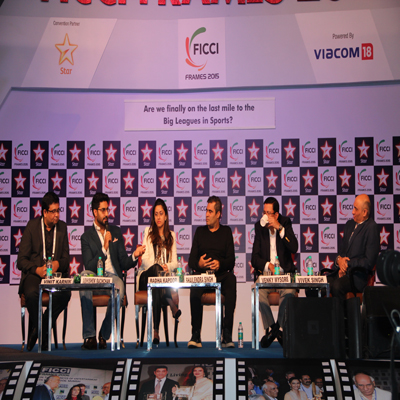
    In a session of FICCI Frames moderated by Group M national director sports and entertainment Vinit Karnik, which had Percept joint MD Shailendra Singh, DOIT media founder Radha Kapoor, KKR CEO Venky Mysore and various sports franchise owner Abhishek Bachchan, panelists spoke on the issues relating to a national policy on sports.


    Infrastructure status to build stadiums and facilities, challenges before rights holders to monetise sports content, franchisees business models and a national curriculum on sports were some of the topics that were touched upon.


    The panel spoke aggressively against federation becoming a regulatory body and intruding into business strategies of a privately owned entity. Speaking on the same Singh said, “The growth is determined by demand and supply, you can make money of something you go for it. India has a large youth population desperately waiting for an opportunity to make a career out of sports but what’s stopping them is poor infrastructure and that is where Narendra Modi is going wrong. The federations are unwanted obstacles headed by corrupts. They make things difficult and people walk off from doing a business. I organised a similar tournament like IPL in 1999 but Dalmiya called it Masala and asked me to stop it immediately. Today BCCI cherishes the IPL.”


    While Venky Mysore, who closely works with the BCCI being the CEO of Kolkata Knight Riders (KKR), emphasised on the commercial sector saying, “While it’s easier to work with the BCCI considering the fact that one has to deal with less number of people compared to the sports ministry, their intrusion in the business and strategic affairs of the franchisee is a bit irrational. KKR has made money out of IPL and we are a debt free franchisee – a fact that I am proud of. For any brand to work in India you need fans and the ratings show that KKR matches always bag the pole position. So every new sport has room but it should not be rushed as the loss is immense.”


    While non-cricketing sports are also emerging in the major sporting league category, making money out of them is difficult for broadcasters, addressing the issue Bachchan said, “When Charu came to me with the Pro Kabaddi concept, I was shocked. But after seeing the ground reality my perception changed. There are more than 1500 Kabaddi clubs in Mumbai desperately looking for an opportunity and a platform to showcase their talent and Star and Pro Kabbadi League opened it up for them. The Indian Super League (ISL) is another example of broadcasters and corporates coming together to put up an exquisite event. Due to the ISL deal that ensures ground level improvement of the sport, more kids are getting the infrastructure they deserve, which will show its relevance 10 years down the line.”


    DOIT Media founder served for more women participation and declared new platforms for women in India. “We are launching a new kabaddi league dedicated to women, which will ensure their participation and it’s just the beginning. Every sport in future may have a female version too because the talent exists but gets rusted due to lack of use.”


    Every major sport now has two leagues but all of them are not profitable for the broadcaster. Kabbaddi changed rules to rope in more revenue generating opportunities and the federation supported it, cricket also did the same with innovations like strategic time out. While it is very important not to lose the authenticity of the sport, generating revenue is a big necessity in order to ensure longitivity.     

  • MTV revamps Coke Studio format; to air all year round

    MTV revamps Coke Studio format; to air all year round

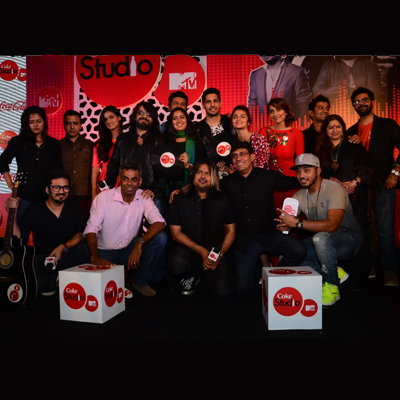
    MUMBAI: An experiment that began with fusion music over three seasons back is all set to return once again. Coke Studio @MTV season four is all set to telecast in a new format this year.


    Speaking to Indiantelevision.com about the same, MTV EVP and business head Aditya Swamy said that the success of the property today lay in the fact that filmmakers have started asking music composers to produce songs, which have a Coke Studio feel to them.


    MTV and Coca Cola have followed two cues to take the show’s new season forward. “Firstly, we have decided to bring audio and video together to refresh audiences through music videos. Secondly, it has been learnt that people are consuming singles rather than albums. Therefore, we will move from episodes to singles throughout the year.”


    The format for this year will see a change. The property will move from seasons to “always on” for one year now. It will be narrated in the form of a story instead of just vanilla songs. The series will begin on 1 March 2015 and will air every first Sunday of the month at 8 pm. 


    The production will include three elements. The first element of the show will include producer profiles and the idea behind the song. Secondly, it will have studio sessions and the setup of the band and lastly there will be a novel element, which will be a stylized video and audio told in the form of a story. Each of these videos and audios will release simultaneously across all MTV platforms. It will be deployed across all audio and video platforms like YouTube, Saavn, Gaana and iTunes by Zee Music. The channel will also be re-releasing two audience favourites “Madari” and “Kattey” with new music videos.


    Speaking about the learning’s the channel has picked up so far, Swamy said that it has been to come up with better innovations. “In the technical sphere we have learnt to produce audio and video side by side. With the response we have garnered, we could find courage to innovate and come up with a format that not only caters to loyalists but also help bring on board new consumers,” Swamy informed.


    Talking about the brand integration concept, Swamy said that the two have seen a long term investment partnership. “People will take to branded content if the music is good, but if the content is not good and is in the consumers face directly they will hate the same,” he opined.


    The global beverage brand Coca Cola owns the IP of the property, which has its presence in other countries like Pakistan and therefore the channel does not resort to other advertisers coming onboard. 


    Speaking about the brand’s association with MTV, Coca Cola India and South West Asia VP marketing and commercial Debabrata Mukherjee said, “We are constantly in touch to come up with engaging content. When we began, we did not realise the groundswell response we would receive. Since 2013 to 2014 we have visited more than 15 cities visiting different colleges as part of our on ground events.” 


    This year Coke Studio will continue bring the live experiences through 50 concerts and outreach programmes reaching 100 colleges across 10 cities.


    Mukherjee informed that the property has become hugely popular over seasons. Sharing some insights, he said Coke Studio @MTV has registered over 150 million+ reach across all three seasons. On social media platforms, it has garnered 64 million view on YouTube and 2.9 million fans on Facebook. He also informed that the brand is open to inviting international artists to India.


    Speaking on the association of the two partners Group M ESP national director- entertainment sports and live events Vinit Karnik opined, “The property has become very much synonymous with the brand. There is also a lot of cult following that consumes this kind of music. At some point in time, it will definitely resonate with the brand and the TG. From a relevance point of view this has worked for the brand Coca Cola as people have become very much synonymous with the brand.”


    The line up for this season includes the likes of Amit Trivedi, Pritam, Papon, Clinton Cerejo, Sachin-Jingar, Ram Sampath, Sneha Khanwalkar, Harshdeep Kaur, Raftaar and Rekha Bhardwaj. 


    When asked about the property’s USP, Bhardwaj said, “Coke Studio @MTV has allowed us artists to treat the platform as our own. It has also helped popularise folk as well contemporary music through fusion. Every episode will feature a single song and will allow us to take our own interpretation to the audiences.”

  • E-commerce to be huge spender this World Cup: Experts

    E-commerce to be huge spender this World Cup: Experts

    MUMBAI: As the 10 day countdown to the ICC Cricket World Cup – this year’s biggest sporting marvel – brands are as excited as cricket fans. The ad revenue for this year’s edition of the World Cup is expected to swell up.


    The International Cricket Council (ICC) already has on board a set of sponsors namely Castrol, Reliance, LG, Hyundai and MRF amongst others. Castrol came on board in 2011, while MRF is an added sponsor for this year. The deals with the other brands were signed for a period of five years and will come to an end and up for renewal post this edition of the tournament.


    Speaking about the brand interest of the World Cup this year, GroupM ESP national director – entertainment, sports and live events Vinit Karnik says, “Apart from the usual suspects and the ICC sponsors, I definitely see the e-commerce segment participating well for this year’s World Cup. In addition to that, automobiles and FMCG will be seen spending well too.”


    Some sports experts opine that each of these brands that came on board for the ICC for five years, could be spending close to Rs 25 – 35 crore per year including this season. MRF, which has been signed on board only for this year, could be spending close to Rs 30 – 35 crore for this edition, which will be held in Australia and New Zealand.


    With Star Sports signing a slew of deals with brands like Yepme.com, PayTM, Raymonds, Nestle, Pidilite, Marico and Lloyd, media experts are pegging the ad revenue from TV alone to be close to Rs 900 – 1000 crore. A rise in the revenue for this year can be attributed to broadcaster, Star India’s move to broadcast the tournament in six languages and offer special pricing for local and regional brands.


    “Star has increased its reach and relevance of the sport by providing local and regional language feeds. Besides just the reach, it will also help garner more viewership numbers and therefore is a brilliant move,” says Karnik.


    According to GroupM’s bi-annual report titled ‘This Year Next Year,’ e-commerce is expected to be a huge spender for this year from a relatively smaller base than more established categories. The reason stated for the spending is due to an increased competition in this sector and no dearth of funding. 


    Speaking on similar lines is Madison Media COO Karthik Lakshminarayan who is also of the opinion that e-commerce will be a huge spender this World Cup. “Apart from that, the other categories include durables and brands that want to reach out to men will be spending for this year,” he concludes.


    With the excitement almost palpable in this cricket crazy nation and no dearth of spending moolah, the World Cup seems all set to lure viewers and advertisers alike.

  • Mumbai Marathon: Media professionals run for a cause

    Mumbai Marathon: Media professionals run for a cause

    MUMBAI: On the day that Mumbai runs, it’s another city altogether. No honking, no mad rush to reach somewhere, but an army of runners, who want to test their limits, painting a healthier sight of the maximum city.

    Keeping aside the usual business suits, a whole bunch of executives right from broadcast companies, media agencies to marketers and advertisers will once again don their running shoes as they join others for the 2015 edition of the Mumbai Marathon.

    The largest marathon in south east Asia, which will take place on 18 January, will see media veteran Bharat Kapadia running half marathon; his 12th marathon, overall. “Last year, I ranked 47th in my category. I started running at the age of 54. I have been training with a group called ‘Be Fit’ and we have been practicing on alternate days from 6 am to 8 am at Juhu Beach,” he says proudly.

    Kapadia believes that for people, who are hesitant to run, it’s all a mind game. “Anybody can run. 75 per cent of it is a mind game. No one is a born athlete. Also, the benefits of running versus that of visiting a gym can’t be compared,” he adds.

    Agrees his follow runner, HDFC Life marketing, product, digital and e-commerce senior executive vice president Sanjay Tripathy. “It is a great way to test your limits and prepare your mind for bigger challenges in the life. One can also see it as an opportunity to meet like-minded people,” he says, while adding that he will be running his seventh marathon for which he has been preparing for three months now.

    For Spatial Access founder Meenakshi Menon running the dream marathon is like child’s play. A regular runner, Menon will be running for her NGO Vanashakti along the likes of film director Namita Roy Ghose. “Lately, running has become sexy so a lot more people are up for the challenge. I believe everyone should run for a cause because the country lacks social compassion and to be great country it is a must,” she opines.

    India chairman and managing director Sunil Lulla will be running the half marathon with two partners of which one is physically handicapped. “I will be running for Children’s Movement for Civic Awareness,” says Lulla who is running his sixth marathon.

    Media agency Vizeum India managing director Yesu Yesudas is running the marathon. And he has taken to social media to raise funds for two of his causes: an old age home and orphanage Swagat Ashram in Mumbai, and a tribal school Vidya Vanam in Tamil Nadu.  “I have a desire to raise Rs 500,000 for these two causes. I am making a personal contribution of Rs 100,000,” he announced on Facebook.  And he went on to urge his friends to contribute Rs 2,000 each to help him reach his goal.

    GroupM ESP entertainment, sports and live events national director Vinit Karnik says that the property has been evolving over a period of time and it is highly commendable. “The organisers i.e. Procam have done a fantastic job and it is one of the most well respected and well organised sports property in India. Right from the registration of the participants to the doubts of the participants on the actual day about their well being is taken care of completely by the organizers,” he highlights.

    This year five new brands, namely Cigna TTK, Jabong.com, Volini, TUI, and India Cares Foundation have associated with the event as health insurance, online retail, recovery, travel and philanthropy partners, respectively.


  • Sporting entities to evolve by building digital and social assets: GroupM ESP

    Sporting entities to evolve by building digital and social assets: GroupM ESP

    MUMBAI: The year 2014 saw the sports landscape in the country being altered as maiden sports leagues were introduced. But what will be the road ahead for the category? GroupM ESP (Entertainment and Sports  Partnerships) has released its top 10 trends for 2015 to look out for in sports and entertainment marketing.


    The report states that with the rise of leagues across various sporting formats and with increase in co-branded promotions, the opportunities for brands to associate with movies and sports are also increasing. Positioned at the intersection of media and marketing, the study predicted the following for the year ahead:


    1) An increased role and usage of celebrities as digital influencers.

    2) Sporting entities will evolve by building digital and social assets to drive their valuation.

    3) A blurring gap between the entertainment and sports category.

    4) “Associative” to “Associative + Integration + Surround + Social.”

    5) From Advertisers to Sponsors.

    6) New avenues for traditional licensing – for example, branded real estate.

    7) TV fiction characters to be seen as brand ambassadors

    8) Non-cricket sports to help expand the sports business ecosystem

    9) Sports businesses to help build strong grassroots engagement through experiential programs

    10) And finally, music concerts to grow bigger than award shows


    Commenting on the trends, GroupM ESP national director Vinit Karnik said, “As we scale up our practice, 2015 will see a change in the way consumers interact with the sports and entertainment category. Sporting entities will evolve by building digital and social assets to drive their valuation and brands will increase role and usage of celebrities as influencers especially across digital assets.”


    He further adds that celebrities have been using the digital medium extensively – from promoting their movies to inviting fans to attend a social cause – celebs have been making use of the medium in a great way. “With millions of followers, celebrities have the power to influence their fans and effectively get their message forward,” Karnik added.


    He informs that in order to increase the fan base, sporting franchisees and leagues will develop fan following around them by efficient use of the digital medium. “With immense focus on digital rights of sporting leagues, digital video sites will be competing with television broadcasters for eyeballs in the near future,” he concluded.


  • Will test retirement impact ‘Brand Dhoni’?

    Will test retirement impact ‘Brand Dhoni’?

    MUMBAI: Mahindra Singh Dhoni’s achievements suddenly seem to be a thing of the past. What immediately comes to mind is Dhoni’s stupendous victory as hugely popular ‘Captain Cool’ of the 2011 ICC Cricket World Cup. 


    Dhoni recently announced his impending retirement from the test cricket format,  to supposedly concentrate better on ODI and T20 formats.  Close on the heels of this news, came the announcement that Dhoni had been declared the team’s captain of the Indian squad, at the forthcoming ICC Cricket World Cup 2015.


    His on-field, cool ‘dude’ charms and his exciting and varied hairstyles, have hitherto made him quite the favourite with various Indian brands. Not surprisingly, late last year, he was the only Indian sports person to figure on Forbes list of the world’s most valuable athlete brands. Ranked at the fifth position, with a mammoth brand value of $20 million, he was darting ahead of sprinter Usain Bolt and even edged football giants like Cristiano Ronaldo and Lionel Messi, who were placed at the sixth, seventh and ninth position, respectively. But will the recent announcement grossly affect his brand value or his new signings? Only time will tell…


    Celebrity and sports management firm, CAA KWAN’s COO, Indranil Das Blah, feels his retirement from test cricket will definitely impact his erstwhile huge brand value. “Being the captain of the Indian test cricket team, he is pretty much the statesman of Indian cricket, but now brands will see him retiring slowly as he winds down his career.” When questioned if his performance at the ICC World Cup 2015 could impact his brand value, he goes on to say, “If the team manages to do well and even win, Dhoni’s brand value could be bigger than ever before. Therefore, if the team is not successful, the captain’s brand value will simultaneously diminish rapidly. So, all rests on the World Cup.”


    The cricketer currently endorses close to 20 different brands in categories ranging from FMCG, telecom to real estate. He also co-owns the Chennaiyin FC team of the Hero Indian Super League, a fitness chain called SportsFit and the Ranchi team for the Hockey India League, along with Sahara India Pariwar. He is the face and his wife Sakshi Singh Rawat, holds a 25 per cent stake in Amrapali Mahi Developers, which is a joint venture between the sports personality and the firm.


    According to Eureka Mobile Advertising’s senior vice president Ganapathy Viswanathan, the move won’t see any impact on his brand fees. “I do not see his brand value being affected. For the simple reason that at the end of the day, cricket has become an entertainment-based game. He is still in the exciting part of the game like ODIs and Twenty20s.  Therefore, I do not see his brand value being diluted. Maybe, it will not go up phenomenally, but it will remain stable.”


    GroupM ESP India entertainment sports and live events national director Vinit Karnik, on the other hand, opines that Dhoni’s brand value will not be impacted in the short term this year, as he will still be playing the game’s marquee events like the World Cup and the Indian Premiere League (IPL). “But subsequently, in 2016, there could be an impact. Post 2015, there will definitely be some correction, even if he does well at the World Cup.”