Tag: Vinay Tewari

  • Vinay Tewari resigns from TV Today Network, Rahul Kanwal and Supriya Prasad get additional responsibilities

    Vinay Tewari resigns from TV Today Network, Rahul Kanwal and Supriya Prasad get additional responsibilities

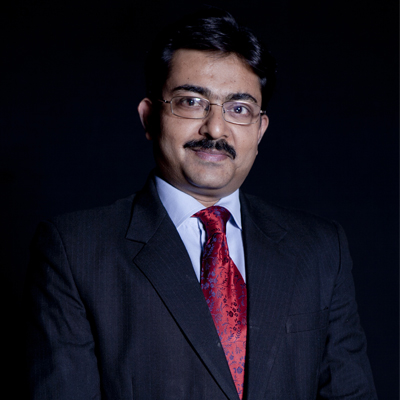
    MUMBAI: In probably what is a restructuring change, TV Today Network’ managing editor Vinay Tewari has resigned from his position to pursue other career opportunities. With this development, managing editors Supriya Prasad and Rahul Kanwal have got additional responsibilities. While Prasad will be in-charge of output functions for the four channels, Kanwal will lead input functions.

    A source close to the development confirmed, “Supriya and Rahul are looking forward to the new responsibilities and are happy about it. Rahul will continue to be a part of the newsroom”. 

  • Vinay Tewari resigns from TV Today Network, Rahul Kanwal and Supriya Prasad get additional responsibilities

    Vinay Tewari resigns from TV Today Network, Rahul Kanwal and Supriya Prasad get additional responsibilities

    MUMBAI: In probably what is a restructuring change, TV Today Network’ managing editor Vinay Tewari has resigned from his position to pursue other career opportunities. With this development, managing editors Supriya Prasad and Rahul Kanwal have got additional responsibilities. While Prasad will be in-charge of output functions for the four channels, Kanwal will lead input functions.

    A source close to the development confirmed, “Supriya and Rahul are looking forward to the new responsibilities and are happy about it. Rahul will continue to be a part of the newsroom”. 

  • Bhupendra Chaubey is now CNN-IBN consulting editor

    Bhupendra Chaubey is now CNN-IBN consulting editor

    MUMBAI: After being elevated to executive editor of CNN-IBN a few months ago, Bhupendra Chaubey has now shifted his role to consulting editor.


    He will now do only one show a week and appear on screen for big days such as elections but will not be looking at hourly/daily management of news. He will also be focusing a lot on the digital space.


    In a series of tweets, Chaubey said that ’24 hour management doesn’t leave you any space to unlearn and learn again.’ He also tweeted ‘Journalism without passion and processes of enquiry isn’t journalism. I believe new age media platforms do provide you with that space.’


    While several media reports suggested that Chaubey would be leaving the organisation, following the footsteps of Rajdeep Sardesai, Sagarika Ghose, Vinay Tewari etc, it seems like he is still committed to Network18.


    Chaubey has been in the field from the past 17 years, starting his career with NDTV post which he joined TV18 in 2005 as chief political correspondent. 

  • Vinay Tewari joins Headlines Today as managing editor

    Vinay Tewari joins Headlines Today as managing editor

    MUMBAI: Taking charge of TV Today Network’s English news channel Headlines Today as the new managing editor is Vinay Tewari.


    Confirming the news to indiantelevision.com, Tewari said that he would be joining the organisation from 1 October. His role would be to build the brand of Headlines Today. He will report to India Today Group chief creative officer and India Today Group digital chief operating officer Kalli Purie.


    Tewari will take charge of a position that was vacated by Nalin Mehta early this year. Prior to this, he was with Network 18 as managing editor of CNN-IBN. He was also assigned the responsibility of IBN7.


    This will be his second stint with the company. He was earlier Hindi channel Aaj Tak’s Delhi bureau head and also had the responsibility of bringing synergy between the Hindi and English news channel.


    He had started his two decade long career in 1993 with the Pioneer before moving to The Times of India. 

  • CNN-IBN elevates Radhakrishnan Nair to managing editor

    CNN-IBN elevates Radhakrishnan Nair to managing editor

    MUMBAI: Radhakrishnan Nair has been elevated as the managing editor of CNN-IBN. He will fill in the post left vacant by Vinay Tewari a few days ago.


    Nair has a career spanning 25 years in the field. He started off with UNI in Kerala. His television stint began in 1995 with TV18, then moved to CNBC-TV18 and has been with CNN-IBN since 2005.


    Until now, he was news director for the English news channel. Nair is a chemistry graduate and a gold medalist in Journalism from the Indian Institute of Journalism in Trivandrum and has done Masters in Communication and Journalism from Kerala University.


    Nair has spent 12 years with TV18 producing various business shows and leading the input-output desk at CNBC. He has also produced programmes for DD, BBC and Sony as well as Asia’s first business channel ABNI.

  • Vinay Tewari quits Network 18

    Vinay Tewari quits Network 18

    MUMBAI: Adding to the list of the latest exits from Network 18, CNN-IBN and IBN7 managing editor Vinay Tewari has quit the company.


    Confirming the news to indiantelevision.com, Tewari said that he is evaluating his future course of action. Unconfirmed media reports state that he may be joining Headlines Today.


    Tewari has been associated with the network for nearly a decade. Prior to that, he was with TV today for three years, The Times of India for eight years and The Pioneer. 


    At Network 18, he was responsible for all special projects and news gathering operations.


    Initially Tewari was handling just the English channel but after Ashutosh quit as managing editor of IBN7 earlier this year to join the Aam Aadmi Party, Tewari was given the mandate of the Hindi channel as well.

  • News channels focus on graphics on D-day

    News channels focus on graphics on D-day

    MUMBAI: At a time when presentation matters as much as content if not more, news channels are leaving no stone unturned to better package their coverage of the elections, ahead of counting day on 16 May. According to insiders, channels are investing close to Rs 1 crore to Rs 1.5 crore in graphics and technology depending on their own internal resources.


    “There are two parts to it: pre-counting day and counting day. In the former, you have to effectively cover all constituencies and make people understand while in the latter, the emphasis is on graphics as well as synergy between getting the information and putting it out instantly,” says NDTV CTO Dinesh Singh. Simply put, maximum energy goes into ensuring that data is collected from multiple sources and punched in quickly to be flashed on your TV screens. More precisely, revamping studio sets, making graphics more elegant, and inflating backend support in terms of OB vans, cameras and servers are all part of this exercise.


    “Satellites, lease lines or 3G supported systems are used to send pictures and videos from the ground to the studio while historical data is put on air through graphics. This can be done either virtually on a green screen or in a real set with virtual graphics,” says Live India head of technical operations Johnjit Singh Ahluwalia. A case in point is Times Now where one can see editor-in-chief Arnab Goswami, belting out statistics in his swanky new studio with the graphics playing out in front of him. CNN-IBN, on the other hand, has tied up with Microsoft for presenting historical data of more than 60 years.


    Speaking of ABP News, the channel put in six months of effort to hire OB vans and extra manpower along with backpack units for larger coverage. New shows have been set up with multi camera facility, apart from extra microphones, cables, connectors and servers. Various mechanisms such as OB vans, leased lines, FTPS and back pack units like Live U and TVU that work on 2G/3G/4G and are equipped with a variety of data cards are used to receive data at the office. “We also focus on error-free transmission and so far, have achieved it. High end studio cameras are hired with a triax setup for outdoor shoots,” says MCCS marketing manager Vikas Singh.


    Network 18 has roped in AC Nielsen as the agency to handle raw counting day data. Planning was done eight months in advance, keeping in mind the pre-polling stage, the polling period, post-polls, counting day, and the results. “Technology plays a key role in the elections. From programmers to data analysts to statisticians, every specialist plays a key role. But more than playing an individual key role, I think the ability to maximise the relevance of technology and to be able to bring all of them together for a common deliverable is the key for in depth elections coverage,” says CNN-IBN and IBN7 managing editor Vinay Tewari.


    NDTV, with a developer team of 21 engineers and around 40 people in the graphics department, started preparations around three months in advance. “Earlier, counting used to be for three days and now, it starts in the morning and ends in the afternoon so the on-screen graphics need to be attractive and studio swanky,” says Dinesh Singh.


    ABP News has divided itself into teams of eight to 10 for production, camera editing, satcom, working for programmes etc. that report to line managers, who in turn report to the main head. Ahluwalia agrees about the importance of technology in election. “These are crucial five or six hours within which you either swim or sink. Most of the investment goes in the actual coverage from the ground and then on the presentation of that data. With little resource, give high quality,” he says.


    The crux of the election is to ensure that you have a good backup for everything in case anything goes wrong. “At various locations, we have a back up like another OB van or a Live U unit, stand-by cables, camera etc. in case of any equipment failure. We had contemplated each and every aspect of technical failure and have been thus able to avoid that. Equipment redundancies are built at various levels of production and post production, including the programme transmission,” says Vikas Singh. Ahluwalia says that most news broadcasters have seen at least one election that redundancies are built into the system with complimenting hardware, servers and machines to give seamless on-air transmission.


    With less than a day to go for counting, channels are all set to turn up some serious heat with not just the information but also the graphics. So, prepare to sit back and enjoy the game…

  • Election 2014: The rise of social media

    Election 2014: The rise of social media

    MUMBAI: India is witnessing an election with several firsts to its credit. Not only is it the first time that a million youth are voting, it is also the first time the campaign spends of political parties are second only to the USA, the first time channels are jostling to show which one is more unique and it is also the very first time that social media is so actively involved in elections.

    IBN network managing editor Vinay Tewari puts it as:  “Today for any big event, social media communication is big. No news channel can survive without social media.” The 2009 Lok Sabha elections did not see as much mobile and social media penetration. So much so, the FICCI FRAMES annual report did not have a ‘new media’ section till 2011. 

    According to the report, the total number of internet users in India is 214 million, out of which 130 million access it through their mobile phones. This is just 17 per cent of the total population of the country!

    “It took a decade for the country to grow from a 10 million to 100 million internet user base and only three years to double (2011 to 2013) that number to 100 million.” says the report.

    According to India Today Group COO Digital Salil Kumar, “The age group of 18 to 24 years and then those above 24 years are the most vocal in the metros but maximum growth is being witnessed from tier two and three towns.”

    The FICCI FRAMES 2014 report says that by the end of 2013 there were nearly 72 million rural Indians who had accessed internet at least once in their lives and 49 million were active internet users. The primary reason that holds them back is unavailability of content in their local languages, which is something channels and mediums are trying to slowly bridge.

    Naturally, channels are pulling out all stops to get viewers hooked onto the second screen. CNN-IBN has a tie up with Microsoft and Google; ABP News and Aaj Tak are using their intense social media following; Times Now and CNBC-TV18 have tie ups with Twitter; while NDTV depends on its own proprietary material such as second screen and its app which has six million downloads.

    Aaj Tak had come up with an innovative campaign last year called E-Election (E-Chunav) where users were asked to virtually vote for their state parties in Delhi, Madhya Pradesh, Rajasthan and Chattisgarh, in order to gauge the mood of netizens. “With a dedicated team in place, we have been leveraging the medium to disseminate news, listen to feedback, hear views of the community and share  them back with audiences on TV, including the panelists on programmes,” says Kumar.

    ABP News started the trend #KBPMSelfie that encouraged voters to send selfies of their inked fingers through Twitter, Facebook and mail, leveraging its popular show Kaun Banega Pradhan Mantri (KBPM). It claimed to have received more than one lakh pictures. "We use social media actively throughout the year and we only see this activity increasing as news consumption on this platform is growing," says MCCS marketing manager Vikas Singh, the company that runs ABP News.

    An important medium for feedback, social media can no longer afford to be clubbed together with TV.  In fact, intensification on social media is not just for the elections but also post elections to retain people.  While Aaj Tak wants to improve its engagement with viewers as well as build brand loyalty among them, ABP News' Singh maintains, "From a channel perspective, it helps us communicate much better with our audience. Earlier if it used to be a one way communication, social media now helps it to become a two way channel. News travels faster and a lot of consumption of news happens through referrals, sharing and comments."

    According to Tewari, “The current focus is only elections. Post that, the interest in politics may decline but creating stickiness is something everyone is doing.”

    Word of mouth has become the biggest marketing tool today. The fact that news travels and gets consumed faster through social media means that it is effectively used for content dissemination and to provide breaking news. ‘Viral’ and ‘trends’ are the new operative words.

    Twitter claims that the buzz around the 2014 election on its platform in the last year has increased 600 per cent while the mention of political parties and candidates since the beginning of 2014 has gone up 10 times.


    Facebook has come up with an ‘I’m a Voter’ campaign urging voters to click the button and tell everyone about their moment of pride.

    This also brings us to the question as to how much of this information can actually be termed dependable? Times Now is doing live sentiment analysis of Twitter feeds while Network 18’s news channels are analysing election data through Microsoft’s technology. However, NDTV group CEO Vikram Chandra feels that these data are not very conclusive. “Though social media is an important factor, it is not necessarily the single factor that will dominate voting decisions. You have to also keep in mind that only a particular segment of the population has access to the internet or twitter. So mood gauging is fine but I am a bit wary of how far you can take it,” he says.

    With ABP News focusing on Facebook (3.9 million), Twitter (5.05 lakh) and G+ respectively while Aaj Tak on Facebook (6.5 million), Twitter (30,000), G+, YouTube, Flickr and Pinterest, CNN-IBN and IBN7 on their own websites first and NDTV depending on the second screen with its own application having 3.2 million followers on Facebook and 1.92 million on Twitter, how much of this information can be relied upon becomes a pertinent question.

    “In the last election, social media was considered a medium of a few. Internet penetration was not so deep. In the current environment, it is considered a major influencer and a lot of recourses have also been deployed by all political parties to influence the voter,” points out Kumar. Online data says that in 2009, the number of Facebook users was 1.6 million which has now crossed 100 million,  while Twitter which had about 0.6 million subscribers, hasn’t really caught up and currently has approximately 40 million visitors. However, it seems to now be making the most buzz.

    “Voting for Lok Sabha #Election2014 in India begins today in what has truly been the country’s first Twitter election” said a Twitter statement on the first day of elections. Even then, the social media user penetration in the country stands at 10.5 per cent of the total population, which is expected to grow to 17.2 per cent by 2017. So, although channels are vehemently focusing on communication through digital media, it still remains a small but actively growing part of the population.

    Quite possible that by then the meaning, use or method of ‘social media’ might change. However, channels are keenly tracking the number of followers, likes, people talking about it and the growth level. As India’s mobile and internet penetration sharpens and connections become better and cheaper, the social media landscape for news will totally change.

  • CNN-IBN, IBN7 and ETV to work in sync for upcoming elections

    CNN-IBN, IBN7 and ETV to work in sync for upcoming elections

    MUMBAI: With the conclusion of an unremarkable 15th Lok Sabha, the lead-up to the general elections has well and truly begun.


    And not just Narendra Modi, Rahul Gandhi and Arvind ‘Aam Aadmi’ Kejriwal but also their media and publicity machinery and news television channels are part of this unfolding political drama.


    With political parties estimated to spend nearly Rs 300 crore on advertisements on television and an additional Rs 400 crore to be pumped in by various brands, according to sources, news channels, especially the Hindi ones, stand to gain a fat load of moolah from election programming.


    Indiantelevision.com kicks-off its special weekly series exploring what news channels have in store for 2014 elections, starting with TV18’s English and Hindi channels CNN-IBN and IBN7, respectively.


    The network – which recently acquired ETV channels including ETV Uttar Pradesh, ETV Madhya Pradesh, ETV Rajasthan, ETV Bihar and ETV Urdu – is looking to dominate election programming through its national and regional channels.


    “Language capabilities play an important role during election time. Our synergy is the widest and now with ETV on board as well, we believe we have an edge,” says CNN-IBN and IBN7 managing editor Vinay Tewari.


    “Our programming line-up will also be extensive and will run over several months in order to do full justice to the scale of the upcoming elections. As a network, we take great pride in the quality and depth of our coverage on elections and thus are investing a lot of time and effort in ensuring that our coverage is unmatched. There is always a huge interest in elections, this year, it’s possibly the highest.”


    Indeed, shows such as Open Mike and Vinod Dua ka Prashnakaal have already begun showcasing public views and opinions.


    Led by editor in chief Rajdeep Sardesai along with Karan Thapar, Vinod Dua, Sanjay Pugalia, Sagarika Ghose, Bhupendra Chaubey, Sandeep Chaudhary, Suhasini Haider and Anubha Bhonsle, the channels will look at broad trends, analyse the importance of regions going to polls and engage in extensive discussions with key experts and political commentators such as Dr. Ramachandra Guha, Swapan Das Gupta, Surjit Bhalla, Kumar Ketkar, Dr. Sanjay Baru, Manini Chatterjee and Prof. Dipankar Gupta.


    The key shows include A Billion Votes / Mera Vote Meri Sarkar – 7 RCR Ki Race (Counting day Specials), The Election Tracker / Agar Abhi Chunav Ho Toh, India Decides / Vote India Vote, Kings & Queens, Campaign Trail, Follow the Leader, Chaupal, Election Gyaan with Ram (with noted historian Ramachandra Guha), MP ka Report Card etc.


    It is learnt that from the last day of polling till the formation of the government, 100 hours of non-stop programming has been planned. This will only help the network achieve the aimed viewership.


    Promotion of these shows will be amplified through a 360 degree campaign that will target key markets including metros and Hindi speaking markets. Print, outdoor, radio and digital will be the focus points.


    The creative for the campaign for CNN-IBN and IBN7 is being handled by Everest Brand Solutions. On the digital front, channels will interact with viewers through social media as well as upload content that will be edited due to restrictive on air timing.


    Going by TAM data during the last general elections, CNN-IBN was the number one channel (Source: TAM, TG: CS 15+, All India; Period: Wk 16-20 ’09, 16th April, 23rd April, 30th April, 7th May, 13th May & 16th May, 06-2400 hrs) on all polling and counting days whereas IBN7 was amongst the top 3 channels (Source: TAM, Markets: HSM; Period: Wk 20 ’09 (16th May ’09); Time 0600-2400 hrs).


    With such a comprehensive strategy, this time round too, the network may stand to be the winner…

  • IBN7 revamps primetime with two mega shows as polls come closer

    IBN7 revamps primetime with two mega shows as polls come closer

    NEW DELHI: With the general elections round the corner, IBN7 is revamping its primetime programming with the introduction of two brand new shows with veteran journalists Vinod Dua and Sanjay Pugalia.


    The new programming will mark the return of Vinod Dua in a special election show Vinod Dua Ka Prashnkaal, which will be the first fully interactive prime-time election show on any Hindi news platform. The host will give a platform to viewers to express themselves freely and participate in the election discussions.


    The channel will put out a “Topic of the Day” for a fixed time during the day, inviting viewers to call in with their views and questions. Questions would also be taken from Twitter, Facebook and the channel’s website – IBNKhabar. Additionally, the channel will also integrate a distinct video element called “Open Mike” which will allow on-camera views and questions on the day’s topic. Vinod Dua Ka Prashnkaal will air every Monday to Thursday at 8 pm.


    Another new prime time show, India 9 Baje, will go on air from 18 February every Monday to Friday at 9 pm, and will see Sanjay Pugalia do a round-up of the day’s major news stories. The show will follow a flexible format, primarily consisting of one big debate along with other stories of impact from the worlds of politics, sports, business, international and entertainment news. Sanjay Pugalia with his experience, credibility and vast knowledge of politics as well as political economy, will give viewers a rare combination of the two in his delivery of news.  


    Speaking on IBN7’s new prime-time line up, CNN-IBN and IBN7 MD Vinay Tewari said, “Elections are a complex, engaging and diverse event. It needs solid professionals who understand the complexities, who can simplify it for our audience and who believe in clarity over noise and sensation. We have brought in two of India’s leading journalists to take our primetime programming to the next level and who symbolise our beliefs about news. Vinod Dua, with his experience and unique style, is back to give viewers his take on the elections and engage them in our daily discourse while Sanjay Pugalia, whose understanding of politics and political economy is unparalleled, will debate and encapsulate the day’s major news on India 9 Baje.”


    IBN Network Editor-in-Chief Rajdeep Sardesai said, “We are looking at possibly the most crucial general elections in Indian history. And IBN7 is set to launch two new shows anchored by two of the most influential and experienced journalists in the industry. Amidst the furore of elections, our new prime time line-up aims to help our viewers understand the socio-political scenario better and enable them to make informed decisions. We believe that these shows will add immense value to our programming and enable our network to set the industry standard for years to come.”