Tag: Vinay Pathak

  • ‘Gabbar Is Back’ earns Rs 36.6 crore at BO

    ‘Gabbar Is Back’ earns Rs 36.6 crore at BO

    MUMBAI: Akshay Kumar’s oft repeated theme of anti-establishment Gabbar Is Back, has benefitted thanks to it being a kind of solo release for the audience starved of  commercial mass film with a popular star this year so far. 


    The film will enjoy a four day weekend in many states while it has a three day holiday run in other states (May Day on 1 May and Buddha Purnima on 4 May). The film opened to average response, dropping further on Saturday. 


    The collections got better on Sunday ending its first three days with Rs 36.6 crore. The negative word of mouth seems to have caught up with the film, which will limit its prospects as the week progresses.


    The other release of the week, Sabki Bajegi Band, remained a nonstarter with five to 10 occupants in the audience on the opening day.


    Jai Ho! Democracy proves to be a major disaster managing to collect just about Rs 18 lakh in its first week.


    Ishq Ke Parinde goes unnoticed causing heartburns to both, the makers as well as the exhibitors.


    Kagaz Ke Fools, it seems, marks the end of Vinay Pathak kind of comedies. The film manages just about Rs 40 lakh for its first week’s run.


    Mr X suffered due to its mediocre script and treatment and dropped to about a little less than 10 per cent of its first week figures in its week two. The film managed a bare Rs 2.4 crore to take its two week tally to Rs 20.95 crore.


    Margarita With A Straw sustains on the lower side, though. The film collects Rs 1.75 crore in its second week, taking its two week tally to Rs 5.25 crore. 


    Ek Paheli Leela adds Rs 30 lakh in its third week to take its three week total to Rs 21.14 crore.


    Dharam Sankat Mein has added Rs 25 lakh in its third week taking its three week tally to Rs 9 crore.


    Detective Byomkesh Bakshy has collected Rs 40 lakh in its fourth week to take its four week total to Rs 27.08 crore.

  • ‘Jai Ho! Democracy’: Freedom misused

    ‘Jai Ho! Democracy’: Freedom misused

    MUMBAI: Jai Ho! Democracy raises some hope because of a few names in its cast and credits. The film is written by Ranjit Kapoor, the co-writer of the all-time classic comedy, Jaane Bhi Do Yaaro (1983), and also has some talented actors in Om Puri, Annu Kapoor, Satish Kaushik and Seema Biswas.

    However, as the film unwinds, rather than entertain, it goes on to belie your expectations.

    There is an incident at the border. A hen lands up in no man’s land and an Indian army cook is asked to go retrieve it. Once in no man’s land, the Pakistani soldiers start firing at him. The Indian troops contemplate whether to retaliate. The media gets wind of the situation and turns it into a ‘on the verge of war’ story.

    Concerned with the media outcry, a committee is set up to look into the matter. The representatives come from various parties and states. The idea is to create comedy through the conflict of communicating due to language barriers. The committee goes by the rule book and instead of discussing the situation, gets entwined into technicalities.


    A contradiction to the committee’s communication problem is displayed in no man’s land where an Indian and a Pakistani soldier come face to face. They have no problem communicating as both speak Punjabi. They start in Punjabi for which no subtitles are deemed necessary. Both soon embark on a nostalgia trip about the pains of partition and crave for an undivided country.

    The film is only 96 minutes long and yet feels like 36 minutes too long. The script is a total let down and its attempts to create humour fall flat. Of the star cast, which turns into caricatures, only Annu Kapoor does the Tamilian politician act well. Rest fill the bill.

    Direction goes the same way as the script: nowhere.

    Jai Ho! Democracy is a let-down and waste of talent.

    Producer: Bikramjeet Singh Bhullar

    Director: Ranjit Kapoor

    Cast: Om Puri, Annu Kapor, Satish Kaushik, Seema Biswas, Adil Hussain, Aamir Bashir, Grusha Kapoor, Benjamin Gilani


    ‘Kaagaz Ke Fools’: Yawn Some

    Kaagaz Ke Fools is a film about a husband-wife relationship, which is always sour. Strangely both love each other but it never shows.

    Vinay Pathak aspires to be a writer but being the honest and principled man that he is, he won’t write anything cheap or filthy. He works for a small advertising agency, writing copy for lingerie and other such products. He is not ambitious while his wife, Mugdha Godse, nurses all the ambitions.

    Producers: Faisal Kapadia

    Director: Anil Kumar Chaudhary

    Cast: Vinay Pathak, Mugdha Godse, Saurabh Shukla, Raima Sen

    Vinay is supposed to be a talented writer but since he won’t break his rules about clean writing, no publisher is willing to publish his work. As a result he is still sitting on the very first book he has penned. Mugdha is a full time nag and the amount of nagging she does to egg him on in his writing would have made any man commit suicide. He loves his wife immensely and tries to placate her every time she starts off.

    There is a gathering at Vinay’s friend’s house where one his friends provokes Mugdha asking about Vinay’s book and how his own book has sold about 1.75 lakh copies. To bring luck, Mugdha even asks a Feng Shui specialist to rearrange her house. Vinay is against all these things and again an argument starts. Vinay is not the suicide type so instead he leaves home trying to find alcohol and shelter in his friend’s house.

    There again he comes across the same friend whose book has sold 1.75 lakh copies. An argument ensues and is about to become violent when Vinay is asked to leave.

    Vinay meets a friendly rickshaw guy who takes him to an illegal bar cum whorehouse cum casino. Here, he is asked to try his luck at game of cards egged on by Raima Sen, a prostitute who hooks her customers from this place. Vinay wins some real money. Seeing a prospective client in him, Raima takes him to a friend’s house to seduce him. Vinay is totally sozzled by then and keeps uttering Mugdha’s name while keeping Raima at bay.

    After some forced sequences which are meant to be comic, Vinay’s book is published, the title having been changed from ‘Ek Thehrisi Zindagi’ to ‘Ek Tharkisi Zindagi’ and, predictably, it becomes a bestseller.

    The problem with the film is that the script is totally contrived. Characters are supposed to be Punjabi and actors trying to use Punjabi slang is hardly funny. Direction is poor with unnecessary cutting and shifting of scenes. Music seems inspired from old time Asha Bhosle repertoire. Cinematography is average. Editing is non-existent.

    Vinay Pathak does what he does in all his films, playing an honest simpleton which, for him, does not take much effort. Saurabh Shukla’s playing of a pucca Punjabi is jarring. Mugdha’s nagging is overdone. Raima makes faces, which cannot be passed off as acting.

    Kaagaz Ke Fools is a poor fare with no hope at the box office.

  • Badlapur: Don’t Miss The Beginning….Noir has its limits

    Badlapur: Don’t Miss The Beginning….Noir has its limits

    MUMBAI: If the title of the film makes you wonder why the tagline is part of the name, it could be because similar titles are not allowed by the producers’ associations and their title registration committee (Badlapur Boys was a recent release). Or, it could be just a smart move because if you miss the beginning, Badalpur will make no sense to you. The cause of what follows relates to the events right at the start.

    Badlapur is a noir film where the hero is the anti-hero taking same route as the criminals who destroyed him. He blurs the line between good and bad. The story has a touch of James Hadley Chase and films like Ittefaq (1969) or the recent one, Ek Villain. 

    Varun Dhawan is a well settled ad agency executive. Having married his college beau, he has a cute son. His family is everything to him. He is just getting over a presentation for a campaign for a bra when shattering news reaches him. His son and his wife, Yami Gautam, were taken as shields by a bank robber duo, Nawazuddin Siddiqui and Vinay Pathak. This robbers had not planned on an escape vehicle and have taken Yami’s car along with her and their son. 

    As a traffic cop is an eyewitness, soon the police posse follows the duo. In the process, the child falls out of the car and not being able to control Yami, Nawazuddin shoots her. While Pathak makes a run for it with the money and gun, Nawazuddin is nabbed. Even while he keeps saying he is just a driver and the other guy killed Yami, he is read a sentence of 20 years in jail. Neither the police nor a private detective engaged by Varun can find out who his partner was. 

    Producers: Dinesh Vijan, Sunil Lulla.

    Director: Sriram Raghvan.

    Cast: Varun Dhawan, Nawazuddin Siddiqui, Yami Gautam, Vinay Pathak, Huma Quereshi, Radhika Apte, Pratima Kazmi

    Varun now has no cause more important than to get the culprits. A one-minute scene with his family and in-laws fails to convince him to start anew. He shifts bag and baggage to Badlapur where Nawazuddin is jailed for twenty years. Also, he has to find the other culprit. This is a long-winded process which you traverse together with the narration. Nawazuddin is right in front of him but there is nothing Varun can do to get his hands on him; Pathak’s whereabouts are not known.

    Varun goes about it clinically, approaching Nawazuddin’s mother and prostitute girlfriend, Huma Qureshi, to glean any information he can. Nobody seems to know anything about the second criminal until a situation is created in the script when Varun helps Pathak’s wife, stranded on a deserted road one night with a flat tyre. The same liberty with the script could have been taken a bit sooner to keep the narration pacey. Varun is now on Pathak’s trail.

    As for Nawazuddin, Divya Dutta comes out of the blue to sort things out for Varun. She is a social worker who helps to resettle criminals. Nawazuddin has been in the cell for 15 years now, making futile attempts to escape time and again. He is now ailing with cancer with a year to live at best. Divya wants Varun to issue a pardon note in his favour so he is freed and can live a year the way he wants. 

    Nawazuddin’s mother also comes to Varun with same plea. He agrees in exchange for the name of the other culprit which happens to be the husband of the woman with a flat tyre he helped one night.

    Sriram Raghvan has based his film on a crime story by Italian writer, Massimo Carlotto, and he is in his element with his favourite kind of cinema. However, Nawazuddin seeking redemption rather than revenge in the climax may disappoint lovers of commercial entertainment. The film has excellent cinematography and the background score complements the proceedings. Music as far as songs go, does not work; the film could very well have done without them. Editing needed to be brisker.   

    As for the performances, Nawazuddin is outstanding and at his most natural. Varun shows he can deliver even while not playing a song and dance role. The girls, Yami Gautam, Huma Qureshi, Radhika Apte and Pratima Kazmi, though having little to do justify their apt casting. Vinay Pathak is fair.

    Badlapur: Don’t Miss The Beginning, being the genre it is, has limited its prospective audience. The film has opened to tepid response, too.

    Qissa: The Tale Of A Lonely Ghost – One for the festivals

    Qissa: The Tale Of A Lonely Ghost (Punjabi) is a film made to earn accolades from the world audience as well as the discerning audience and the student of cinema in India. The film’s genre can’t be easily defined as it moves from India’s partition to male desire for a boy child to supernatural to a story of two star-crossed girls. Since the story revolves around a Sikh family, the language used is Punjabi to keep the flavour of the narration natural.

    Producers: Heimatfilm, Augustus Film, Ciné-Sud Promotion, National Film Development Corporation of India (NFDC).

    Director: Anup Singh.

    Cast: Irrfan Khan, Tisca Chopra, Tillotama Shome, Rasika Duggal.

    Irrfan Khan is a de-stabilised Sikh who migrates safely to Punjab on the Indian side with his wife and daughters during the partition. He is an MCP who craves for a son this time when wife, Tisca Chopra, becomes pregnant again. He already has three daughters. 

    It has been four years since the partition but now Khan is a very successful timber contractor with a lavish mansion for his residence. The fourth child is born but an attempt has been made to keep the gender a secret from the viewer though it’s not tough to fathom this is a girl again. For a moment you are made to believe Khan will kill her. Not so. He decides to believe and pretend this is a boy and rears her as such. The girl, Tillotama Shome, is the apple of his eye as he enrols her for physical training as well as wrestling practice. He also takes her on hunting expeditions. His wife, Tisca goes along with the charade.

    The girl is now 12 and puberty knocks she spots blood on her bed. Khan wants her to keep mum about it! The pretence goes on till Shome and another girl, Rasika Duggal, get entwined. Duggal, a gypsy girls falls for Shome and so does Shome forgetting in her pretence that she too is a girl. Shome has molested Duggal and both their parents are witness. Khan suggests a marriage between the two. This is where the plot gets complicated. Shome is left to fend for herself in this situation. 

    But, Khan has an obsession with a male name bearer for the family and one night, he tries to force himself on Duggal to give her a male child, which Shome can’t. Shome adores her father but not enough to tolerate him forcing himself on Duggal; she shoots her father with the very double barrel he gifted her and taught her to use.

    The film enters a new chapter, it goes on to become a supernatural saga. Khan’s desire for a male heir does not let his soul rest; he is now a ghost haunting his old house. He somehow wants his ‘son’ Shome’s wife, Duggal to bear a son!

    Meanwhile, Shome suffers a lot as the woman in her wants to surface and she can’t keep up with the pretence anymore. She exhibits her femininity for the whole village to see. When the villagers want to hunt her down, Khan enters her body with a purpose to indulge Duggal and, finally, produce a male child. 

    The thing about Qissa is that, after a while, it may look bizarre and morbid. Good of the makers not to indulge in same sex scenes while there was ample scope or, at least, not in the Indian version (after all, NFDC is involved). 

    The film is excellent technically with international names in its credits. Director is gutsy to take up this subject but then such a film is all about making a name, not money. The technical aspects sure are a lesson for a student of cinema. 
  • ‘Bajate Raho’ to Premier On Sunday 8 September, 1:00 PM & 8:00 PM on MAX

    ‘Bajate Raho’ to Premier On Sunday 8 September, 1:00 PM & 8:00 PM on MAX

    MUMBAI: MAX, the Premium Hindi Movies and Special Events channel, invites you to watch the World television premier of the blockbuster ‘BAJATE RAHO’ on Sunday 08th September at 1:00 PM and 8:00 PM Only on MAX.


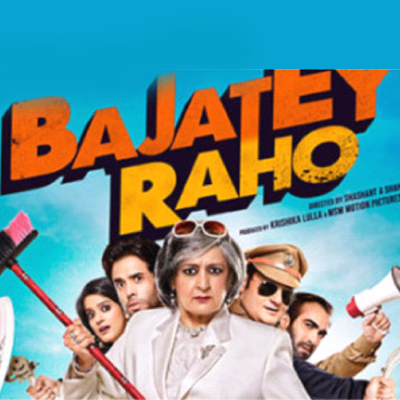
    Bajate Raho is a movie about Mummyji (Dolly Ahluwalia) and her gang of con-artists that include her son Sukhi (Tusshar Kapoor), Ballu (Ranvir Shorey), Mintoo (Vinay Pathak) and Manpreet (Vishakha Singh) who make a plan to cheat a cunning businessman named Sabharwal (Ravi Kisan). The reason for this being that Sabharwal had once conned Mummyji’s husband, which resulted in his unfortunate death.


    This team works together and the entire group plays their parts to get money out of Sabbarwal’s illegal businesses. The comedy caper revolves around how the gang manages to squeeze money from the rich and cunning Sabbarwal

  • Renowned Polish filmmaker Zanussi gets Lifetime Achievement Award as 43rd IFFI commences

    Renowned Polish filmmaker Zanussi gets Lifetime Achievement Award as 43rd IFFI commences

    PANAJI: The 43rd International Film Festival of India commenced today with a promise by Information and Broadcasting Minister Manish Tewari to make India an international destination of good cinema.

    Tewari said the Government was taking a number of steps to nurture the Indian film industry and to promote India as a destination for film shooting. He said that the Government was embarking on an ambitious National Film Heritage Mission during the 12th five year plan to preserve India’s film heritage. Moreover, India has entered into co-production agreements with various countries with a view towards encouraging co-production between India and other countries.

    Goa Chief Minister Manohar Parrikar said the journey started by him 8 years ago had yielded positive results and Goa had been awarded the best film destination in India. He, however, added that a collective endeavour will be made to take this festival to newer heights and to make it truly international.

    Uday Kumar Varma, Secretary in the Ministry, said IFFI had grown from strength to strength incorporating new themes and all efforts will be made to imbibe the spirit of Vasudhaiva Kutumbakam (the whole world is one family) through IFFI.

    The Chief Guest of the event and the Bollywood heartthrob Akshay Kumar said that cinema is very important not only for him but for his entire family. Pitching for good and wholesome cinema, he felt proud that the festival is happening in the centenary year of Indian Cinema.

    Renowned Polish filmmaker Krzysztof Zanussi was conferred the prestigious Lifetime Achievement Award on the occasion by Tewari. The award carries an amount of Rs one million, a scroll, a shawl and a certificate. Known for producing acclaimed films like Camouflage, Family life, and The Silent Touch, Zanussi said amidst standing ovation that this is the most moving moment of his life that he is being awarded for some achievement and promised to make more films in future. He said 21st century will be Asia’s Century and it is his deep belief that it will be India’s Century.

    Goutam Ghose, Chairman of the International Jury and all the Jury members were felicitated by the IFFI. Ghosh said IFFI has gone through many ups and downs but it’s still glowing. He also called for more autonomy for the film body to function in an efficient way.

    Hosted by Kabir Bedi and Perizaad Zorabian, the event showcased the evolution of 100 years of Indian Cinema through a brilliant combo of music, dance and videos conceived and directed by Jahnu Barua, Saroj Khan and Sajjad Ali. Nearly two-hour cultural extravaganza came to a close with the spell-bound renditions of Kailash Kher.

    With the galaxy of stars like Akshay Kumar, Irrfan Khan, Tabu, Om Puri, Jackie Shroff, Vinay Pathak, the opening ceremony was a bit different from the previous festivals. As a part of the international presence, the cine lovers were treated to the company of renowned film personalities like Kim Ki-duk, Michael Winterbottom, Susanne Bier amongst others.

    Academy Award winning Director Ang Lee’s much acclaimed 3D film “Life of Pi” is being screened this evening as the opening film of the 43rd International Film Festival of India (IFFI-2012). The cast and crew of the film including Irrfan Khan and Tabu were present on the occasion.

    In the 43rd edition of IFFI, over a hundred movies will be screened as a part of the Indian Cinema and the World Cinema segments. The Indian Section will bring to the audience movies from across the country in the Indian Panorama (Feature and Non-Feature Section) which is selected by a core jury headed by Buddhadeb Dasgupta for the Feature and M R Rajan for the Non-Feature section. The Indian Panorama will screen twenty feature films with ‘Baandhon’ director by Jahnu Barua as the Opening film, and nineteen films in the non-feature section with ‘Celluloid Man’ directed by Shivendra Singh Dungarpur as the Opening film.

    Apart from the International Competition, the cine lovers at the 43rd IFFI will be treated to a varied line-up of world cinema which will be showcased in sections like ‘Cinema of the World’ which will have fifty-one films from forty-two countries with Ang Lee’s 3D film ‘Life of Pi’ as its Opening Film and Mira Nair’s ‘The Reluctant Fundamentalist’ as its Closing Film. Other sections in the International section include ‘A Cut Above’, ‘Masterstrokes’, ‘Festival Kaleidoscope’, ‘Turkish Currents’, ‘Sketches on Screen’, ‘Retrospective: Susanne Bier’, ‘Special Tribute: Ashok Amritraj’, ‘In Focus: Kim Ki-duk’, ‘Soul of Asia’, ‘Documentaries’ and ‘Homages’.

  • ‘Maximum’ stress on ones senses

    ‘Maximum’ stress on ones senses

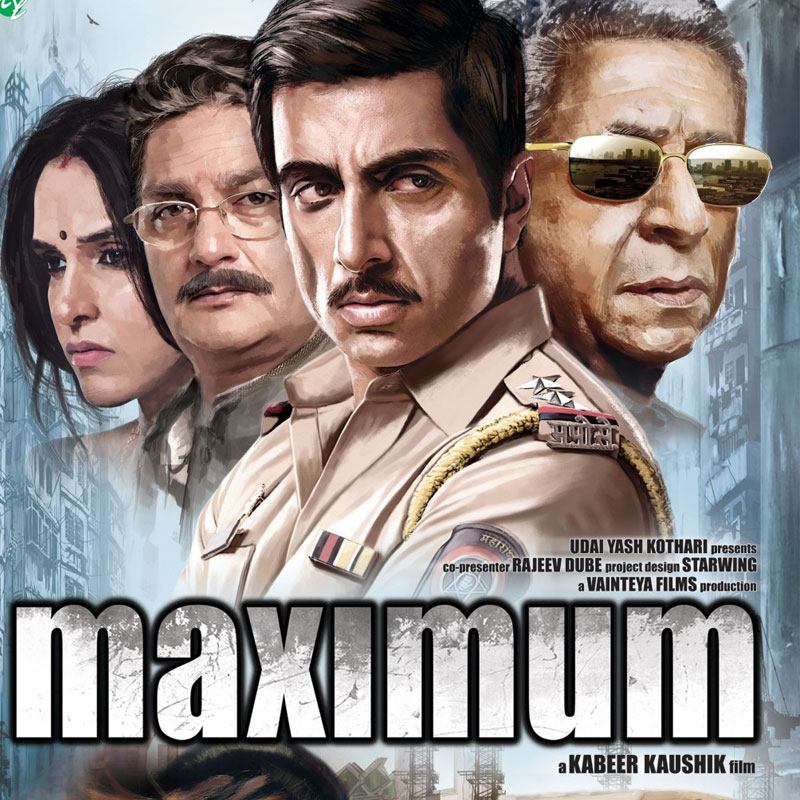
    MUMBAI: In his earlier film Saher, director Kabeer Kaushik took Hindi filmmaking to Lucknow and made a reasonably plausible film. Why the film did not work should have dawned on him though. In Maximum, he imports Lucknow to Mumbai and comes up with a film which has no beginning and an end which makes no sense, with two senior policemen shooting each other in the finale!

    There are no preambles, no once upon a time. As the film Maximum opens, you have this trigger happy policeman, Sonu Sood, shooting at all and sundry with glee. But all cops are normal at home, so we get to meet his family. He has a doting wife (Neha Dhupia), a daughter who can‘t manage her shoelaces and a father (Rajendra Gupta) who adds pathos and human angle to the story by suddenly collapsing of a heart attack.

    Whatever one can understand of the story in the film is that Sonu Sood is a be-all and end-all of cops. He is an encounter specialist of the post-2003 police force of Mumbai and everybody, from fellow cops to politicians to underworld goons to starlets, is scared of him because he has a license to kill and no explanations are sought. He has but one adversary in Naseeruddin Shah, another senior encounter specialist, who wants to be in the place Sonu Sood enjoys. Both have a lobby supporting them, either within the police force or among politicians and builders. Finally, both end up shooting each other at, of all the places, Valsad railway station in Gujarat. The maker has a fascination with trains or probably that is how he defines the pace of life in Mumbai for a scene or sound of local trains is ubiquitous in the film.

    The film is a reunion of Lucknow alumnus in Mumbai in that Sonu Sood is from Lucknow; his dad, Rajendra Gupta, is a professor from Lucknow who has dropped in on Sonu Sood to die on him; politician Vinay Pathak is from Lucknow (and conveniently an ex-student of Rajendra Gupta) and then there is a news channel reporter, also from Lucknow, who is, according to the film, the only and the star reporter on Mumbai‘s TV scene.

    But, then there is a Lucknow reunion wrecker in Naseeruddin Shah. His antecedents are not deemed necessary to be established. He just pops up to spoil Sonu Sood‘s party. It seems that there is a rivalry between Sood and Shah over the body count of the encounter killings both have executed. Both cops, however, have one thing in common; they owe loyalty to opposing politicians, shooting unidentified extras in the day, mingling with big builders in the evening and dancing and making merry with nautch girls in bars at night. That, in general, is the sketch of Mumbai encounter cops for you.

    There is no definite villain in the film. It is about the game of one-upmanship between two cops, two politicians and two builders and that too is given without dwelling on details. As the two cops play their games, Sood has the backing of Vinay Pathak and the news reporter, Aman Sadh, while Naseeruddin Shah has the backing of the all powerful home minister, Mohan Agashe. Someone had to give and it is Pathak who betrays Sood leading to final bloodbath culminating in both policemen killing each other in their fight for supremacy.

    Maximum has no coherent script and comes across more as a live telecast of two warring cops. The story telling skill has been done away with. If the film is trying to tell two facets of a policeman when Sood is a caring husband, son and father at home, it is not relevant or of interest in any way. There is no scope for music but an item number has been forced in and wasted. Sonu Sood performs well but it is pointless as you don‘t know whether he is a hero or an antihero. Naseeruddin Shah has been miscast.

    Vinay Pathak is convincing as a sweet-talking politician. Rajendra Gupta and Neha Dhupia, brought into contribute domesticity to the story, fail to do that as their parts are superficial. Neither dialogue not editing are appealing. The film, even at 106 minutes, is maximum stress on ones senses.

    As for the box office prospects, Maximum has none.

  • Defunct Bombay Talkies reopens after 58 years

    Defunct Bombay Talkies reopens after 58 years

    MUMBAI: Besides marking the centenary of Indian cinema, the year 2012 will also see the revival of Bombay Talkies.

    The iconic studio, which was established in 1934, was closed down in 1954. Owned by Dube Industries, the studio will start with the launch of two films in June.

    As the first public limited film company, Bombay Talkies was registered under the Indian Companies Act and soon emerged as an organised company with well-managed financials, acquiring a reputation for public issues, dividends and bonuses.

    Studio manager Satish Mahajan revealed that the studio had to close down because of financial mismanagement by Sashadhar Mukherjee after the release of the Ashok Kumar-starrer Mahal in 1949. “Last year, we took a conscious decision to restart the company on the occasion of the centenary celebration of Indian cinema,” he added.

    The first film to be launched by the re-emerging studio has been titled Zakhmi that will feature Abhay Kumar, grandson of one of the studio’s original owners Rajnarayan Dube. It will also star Sayali Bhagat along with Mithun Chakraborty.

    Though the second film is yet untitled, those being considered for it are Mallika Sherawat, Tusshar Kapoor and Vinay Pathak.

    Incidentally, the studio had launched some of the biggest stars of Hindi cinema like Devika Rani, Ashok Kumar, Leela Chitnis, Raj Kapoor, Mehmood, Madhubala and Dilip Kumar.

    The newly-opened studio operates from Lokhandwala.

  • Pappu Can’t Dance Saala loses steam after a decent start

    Pappu Can’t Dance Saala loses steam after a decent start

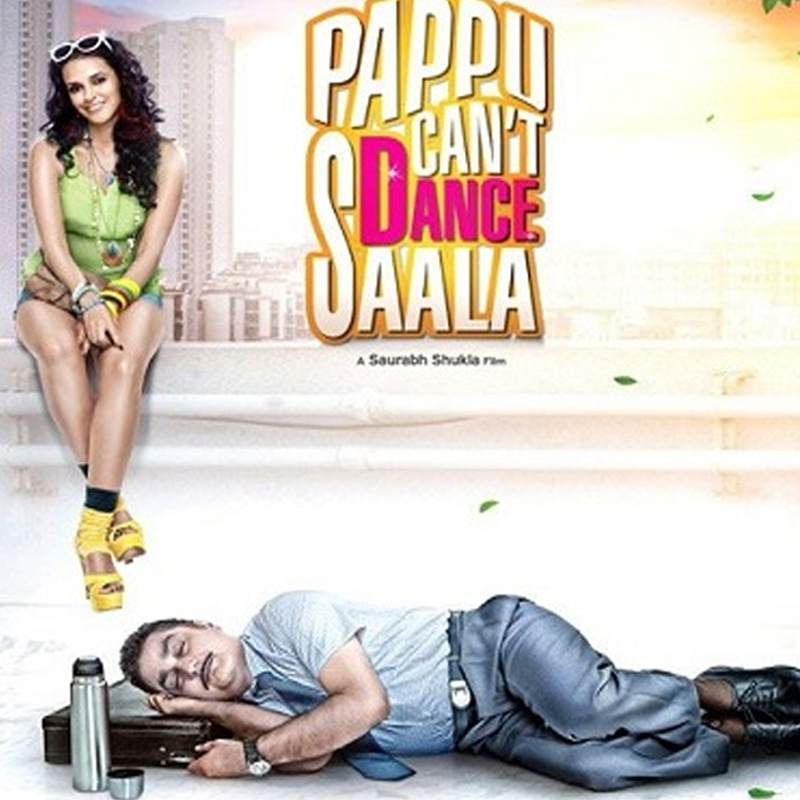
    MUMBAI: Pappu Can‘t Dance Saala, as the title suggests, would be a comedy revolving around Vinay Pathak.


    Producer: Sameer Nair, Saurabh Shukla.
    Director: Saurabh Shukla.
    Cast: Vinay Pathak, Neha Dhupia, Rajat kapoor, Sanjay Mishra, Sai Gundewar, Naseeruddin Shah (Special app.).


    The thing with Vinay Pathak is that while he may fit into the character of a middle class simpleton, he just can‘t go beyond that due to which he ends up doing the same kind of roles with same input.


    Pappu Can‘t Dance Saala is about how a simple man from Varanasi, Vinay Pathak and a street smart girl, Neha Dhupia, a film chorus dancer end up in the same house. They were neighbours in a government housing building, but following a raid by the vigilance department, Neha Dhupia is evicted from her flat. Suspecting Vinay Pathak of having complained to authorities, she muscles her way into his house, also taking over his bedroom.


    The fun begins with the duo‘s petty squabbling and fights; the problem is the fun does not last long enough. As the film progresses, things become repetitive and the interest sags. Script is contrived as per convenience and none of the two main characters possess the ability to carry the film on their own shoulders. There are notmany characters either to share the screen time.


    The script loses steam after a decent start and so does direction, which loses hold on the film. While the dialogues are good at places, the other aspects like music, cinematography are passable.


    Vinay Pathak and Neha Dhupia do well within their limited range. Naseeruddin Shah is good in a special appearance. Rajat Kapoor, Brijendra Kala, Veena Mallik, Sanjay Mishra etc give fair support.


    Pappu Can‘t Dance Saala would find some of its viewers on TV and video but hardly any at the cinema halls.


    Jo Hum Chahein is forgettable


    Producer: Aman Gill.
    Director: Pawan Gill.
    Cast: Sunny Gill, Simran Mundi, Ally Khan.


    Jo Hum Chahein is a family enterprise of three brothers, Aman Gill (producer), Pawan Gill (director) and Sunny Gill (lead actor), who is being launched with this film.


    It is a coming of age story of a young management graduate, Sunny Gill, who reek of overconfidence and always wants to be number one in all the challenges he faces.


    In same vein, he wants to top the performance list in his stock broking firm in Mumbai where he has been accepted as an apprentice and also in the same spirit of challenge he pursues a girl, Simran Mundi to add to his list of conquests.


    Simran, however, is not an easy catch since she has her idea of love well-defined. As it would happen, her reluctance to succumb to his passes only makes him fall in love with her.


    At the same time, in his quest to be at the top of list in his office, he falls prey to his senior colleague‘s ploy, ending up as toy boy for a wealthy widow. What follows is a usual love story, falling in love, the mandatory misunderstanding, the man straying in greed and the eventual positive ending.


    I am not calling it a happy ending because by the time the film ends, you are anything but happy; spent and mentally fatigued is more like it! (Comparing the theme as modern day Shri 420 would be sacrilege.)


    The film rests mainly on just two characters, the lead pair, both new and not at all prepared to carry this film with no twists and turns.


    The script is routine with little drama. Direction is average and the first half has overdose of songs even as the musical score is not much of help. Dialogue lacks punch. Performance wise Sunny Gill is okay with limited range while Simran Mundi is expressionless. Ally Khan did well.


    Jo Hum Chahein is forgettable.

  • Azaan: A montage of post-World War II espionage films

    Azaan: A montage of post-World War II espionage films


    Producer: JMJ Entertainment P Ltd, Alchemia Films.
    Director: Prashant Chadha.
    Cast: Sachin Joshi, Candice Boucher, Ravi Kissen, Arya Babbar, Dalip Tahil, Sajid Hassan, Sami Gharib, Aly Khan.


    MUMBAI: Most films in recent times may have been accused of having poor scripts, pilfered and plagiarised from western ideas; Azaan is the ultimate of such films. It has no script at all. It is just a sort of a montage of a number of post-World War II espionage films transposed in to the electronics/cell phone era.


    There is some sort of anti-India plot hatching somewhere or the other as the film makes it look and one Mr Azaan with the hand of God playing behind him feted to be the saviour. The film is also a sort of a travelogue without a planned itinerary. Wink and the hero is in some other country (the film has been shot in eight countries including India).
     
    Azaan Khan is an ex-army officer. Despite his mixed parentage of an Afghani father and Indian mother, he swears by Mother India and he has been enlisted by RAW (the Indianintelligence agency, Research and Analysis Wing), nothing less, the head of which is some woman for whom a perpetually skewed face passes as acting.


    Azaan Khan’s brief is to find and eliminate a sinister enemy called Doctor (Sajid Hassan), who plans to destroy India with biological weapons through a virus called Ebola. Doctor has the backing of a powerful enemy of India–hinted at as being China. The other tracks are those of Azaan Khan’s younger brother suspected to be a terrorist and the love he finds in Candice Boucher.


    Azaan is all about action and special effects which to an extent helps camouflage lead actor Sachin Joshi’s acting limitations. Candice Boucher looks pretty but is removed from the proceedings just as suddenly as she was brought in. Ravi Kissen is economical with his expressions, using just one throughout. Rest are okay. The script is episodic and there is nothing linear about the narration which, coupled with poor direction, puts paid to any hopes of an interesting action film.The director seems to be fulfilling his fantasy of shooting a ‘Hollywood like’ film. Songs are all in the background and offer no foot-tapping numbers.


    Azaan is a waste of a huge budget befitting a star cast film.


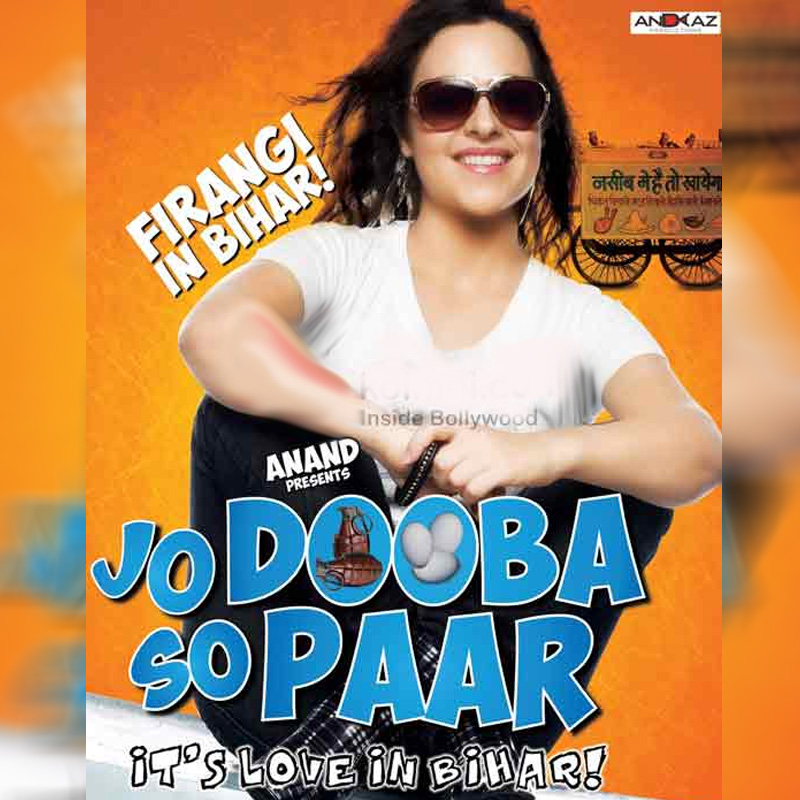
    Jo Dooba So Paar: It’s Love In Bihar: A low-budget earthy comedy


    Producer: Andaaz Production.
    Director: Praveen Kumar.
    Cast: Anand Tiwari, Vinay Pathak, Rajat Kapoor, Sita Ragione Spada, Pitobash Tripathy, Sadia Siddiqui, Dadhi Raj.


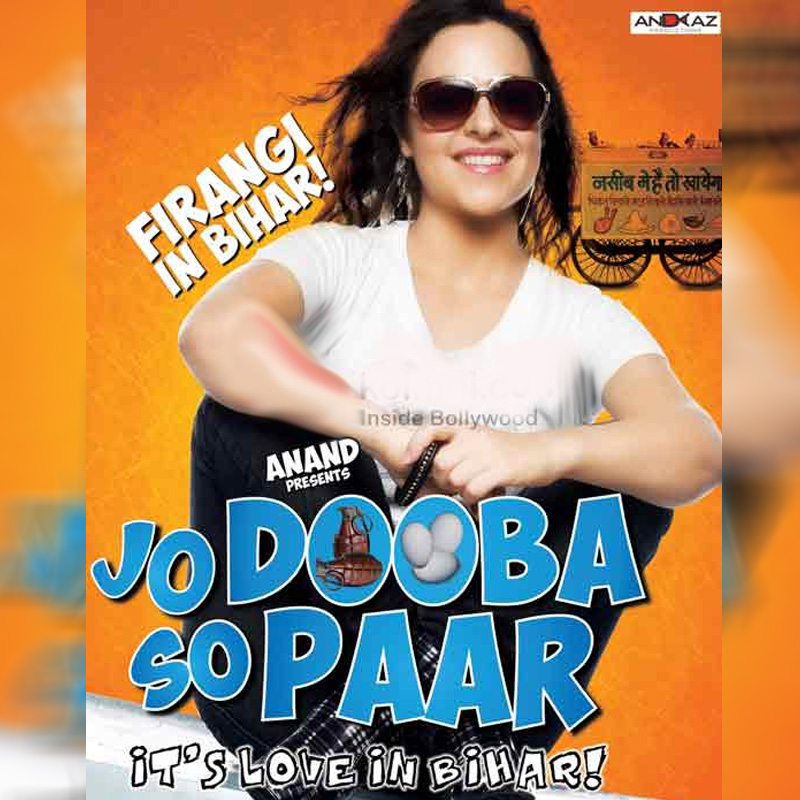
    For low-budget earthy comedies, the Hindi belt hinterland seems to be the preferred location. The television and computer may have now exposed people in the interiors to a lot of what others are exposed to but some things or people still can hold this audience in awe. Jo Dooba So Paar: Love In Bihar is the coming of age of a local young man.


    In the film Anand Tiwari is a brilliant school student who usually wastes his talent for wrong reasons, like spreading laughing gas during exams since his friends are not yet prepared to take the exam. He is booted out of the school and his father, a trucker, wants him to join him in running the truck. As is the wont of all such teenagers, Anand Tiwari is at loggerheads with his father, Dadhi Raj, chiding him for all the illegal things he does with his truck and yet expecting his son to do everything right.


    Things get worse between the two when an American girl, Sita Ragione Spada, enters the scene visiting Bihar to do research on the local art and staying with her uncle. She is white skinned, thanks to her American mother. The young man is besotted and it is love at first sight for him. He does not waste time and approaches the girl boldly and offers to be her guide. He is now head over heels in love and the day he decides to tell her he loves her, going to meet her with a watermelon as a gift, he sees her with a white American, kissing and getting cosy.


    This is when the Bihar angle comes in; the girl is kidnapped by a local mafia, her American boyfriend seeks Anand Tiwari’s help to find her but he is too heartbroken and feeling betrayed by her to agree. Finally, of course, it is happy ending and the boy and his father too are on the same wavelength.


    The problem with the film is that it is far too predictable and there are no high points. Direction is okay while the music provides some variety in the form of local flavour. Dialogue is well penned. Performances by Vinay Pathak and Anand Tiwari are natural with good support by the latter’s bunch of friends. Sita Ragione Spada is fair. Dadhi Raj and Sadia Siddiqui give a seasoned performance.


    Jo Dooba So Paar: It’s Love In Bihar is tolerable but not at multiplex admission rates; maybe later on DVDs and TV.


  • Makers of Jo Dooba So Paar…to appeal against Censor decision

    Makers of Jo Dooba So Paar…to appeal against Censor decision

    MUMBAI: The makers of Jo Dooba So Paar – It‘s Love In Bihar are peeved with the Censor Board.

    The Board has not only made the makers to alter the theatrical trailer of the film, it has also given a ‘U/A‘ certificate to the film.

    Director Praveen Kumar says that by all this, the Board has been unfair. “If we agreed to make the recommended changes, then why did they give us a U /A certificate,” he asks.
     
    It is learnt that the board primarily had a problem with the two words, `maa‘ and `ghanta‘ from the dialogues ‘aise ande to tumhare maa ne diye honge‘ and ‘Sharmaji knows ghanta‘. Hence they recommended the cut of the two words from the theatrical promo.

    The filmmaker‘s problem didn‘t end there as the Board also had an issue over a line on the posters that reads ‘Bihari in love… is se khatarnaak baat to ho hi nahi sakti‘.

    Not wanting to be let down, Kumar has planned to appeal again as the line is very important for bringing out the essence of the film.

    The film, starring Rajat Kapoor, Vinay Pathak, Anand Tiwari, Sadis Siddque, Pitobash and Sita Spada, is scheduled to release on 14 October.