Tag: Vim

  • Rajkummar Rao & Patralekha challenge household norms in Vim’s Equal Vows

    Rajkummar Rao & Patralekha challenge household norms in Vim’s Equal Vows

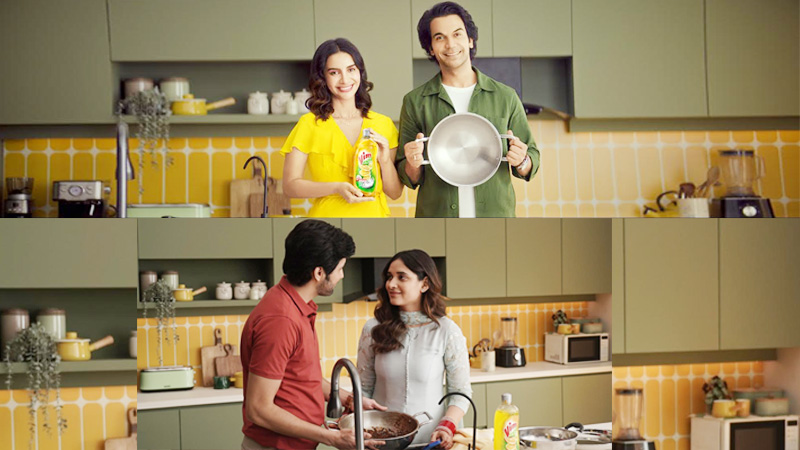
    MUMBAI : Vim’s latest campaign, Equal Vows, takes a fresh look at household equality with film couple Rajkummar Rao and Patralekha Paul Rao. Tackling the age-old divide in domestic chores, the campaign challenges traditional gender roles and encourages couples to share responsibilities as true partners.

    The campaign’s ad film follows a young couple, Isha and Nimit, who host Rajkummar and Patralekha for dinner. When Isha’s mother questions why Nimit is washing dishes, the conversation shifts to the true meaning of partnership in marriage. The film ends with Isha and Nimit pledging to share household duties equally.

    HUL head of home & hygiene Ashwini Rao  said, “Household chores, especially after marriage, often fall disproportionately on women. Through ‘Equal vows,’ we aim to challenge these ingrained perceptions and promote true partnership in relationships.”

    Rajkummar and Patralekha, who embody these values in their own lives, expressed their support for the campaign. “We believe in sharing responsibilities at home Patralekha enjoys cooking, and I do the dishes. It’s a simple yet important way to show mutual respect,” said Rajkummar.

    The campaign extends beyond television and digital platforms, with Vim partnering with Bharat Matrimony to engage soon-to-be-married couples. Celebrities such as Tanvi and Rohan, along with comedian Varun Grover, have also joined the movement, sharing their commitment to equal partnerships.

  • Vim launches its new Nazaare campaign

    Vim launches its new Nazaare campaign

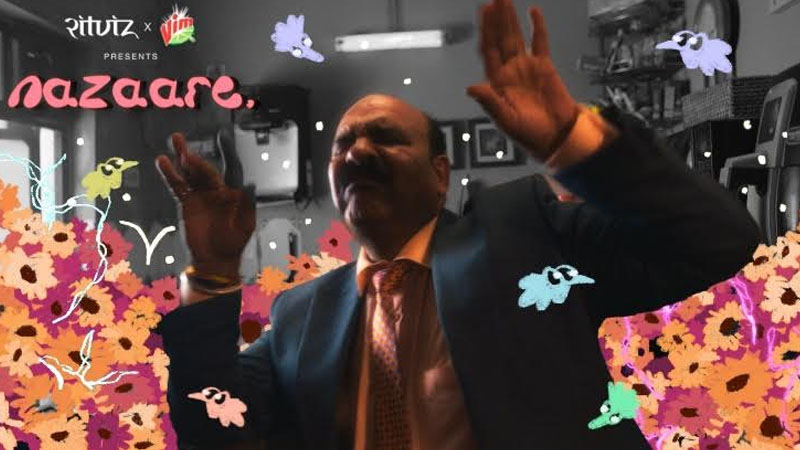
    Mumbai: Vim, a brand by Hindustan Unilever (HUL), has long been the most trusted dishwashing brand in Indian households. Hindustan Unilever’s pioneering home and hygiene brand has introduced a fun and quirky indie music video titled ‘Nazaare’ in collaboration with Ritviz, bringing a fresh spin on the otherwise mundane task of dishwashing. Dishwashing, often seen as a necessary but dull part of daily routine, gets a playful makeover with Ritviz’s upbeat tunes, demonstrating how music can turn even the most mundane everyday moments into something fun.

    The video begins with Ritviz facing a creative block as he tries to bring a tune together to meet his deadline. His dilemma is deepened because his parents also proceed to go out, albeit leaving him with the thought of “finding joy in small things”. As he thinks about it, he goes into the kitchen where an idea strikes him in the middle of his dishwashing routine! He’s quick to capture this moment on his Vim Beats sound band which he later turns into an entire dishwashing song. What’s really interesting is how his neighbours, who are all left to do chores just like Ritviz is, also get up and have fun doing the dishes to this song that is playing out of Ritviz’s home!

    Commenting on the launch, Hindustan Unilever Ltd head of home and hygiene Ashwini Rao said, “This campaign puts a brilliant spin on a consumer insight a lot of us can relate to – Chores at the sink is something everyone puts off for as long as possible but end up being irritated with loads of vessels remaining at the sink. Vim has for the last 30 years helped make this chore easier with world-class products and communication with the belief that everyone can do dishwashing. Ritviz has now come in to elevate the experience even more by creating this tune that quite literally turns dishwashing into a dance party, sparking joy and creativity in kitchen sinks everywhere – you’ll definitely find yourself playing this on repeat as you do your dishes!”

    On his experience with making this song, an Indian pop artist  Ritviz commented “Collaborating with VIM on this music video was a truly unique and exciting experience. It was a challenge to create music inspired by everyday tasks like dishwashing, but I think the result is something truly special. I hope this song inspires people to find joy in even the most mundane activities and to see the beauty in everyday life.”

    To boost the campaign further, Vim is teaming up with over 200 influencers, including celebrities like Amyra Dastur, Nidhhi Agerwal, and Karan Singh Grover who will recreate and repost fun moments from their daily chore routine on Instagram. Their posts will showcase the enjoyable side of dishwashing, encouraging families to join the trend. As the festive season approaches, the campaign offers a fresh take on everyday chores, reminding everyone that these tasks can be a time for bonding and fun. The track is available on all major music platforms, including Spotify, Amazon Music, Apple Music, JioSaavn, YT Music, Hungama as well as on the brand’s official Instagram and YouTube channels. 

  • Vim paves way for a new perspective in its latest campaign

    Vim paves way for a new perspective in its latest campaign

    Mumbai: Women are successful thriving in numerous fields. They have big dreams and take pride in expressing themselves – as homemakers, artists, or as CEOs. Caregiving and household chores are only a part of their responsibilities, but societal limitations of defining them only through chores, obstruct them. Vim’s latest ad campaign – ‘Nazariya Badlo, Dekho Bartano Se Aage’ is a nudge to society to see women beyond archaic roles.

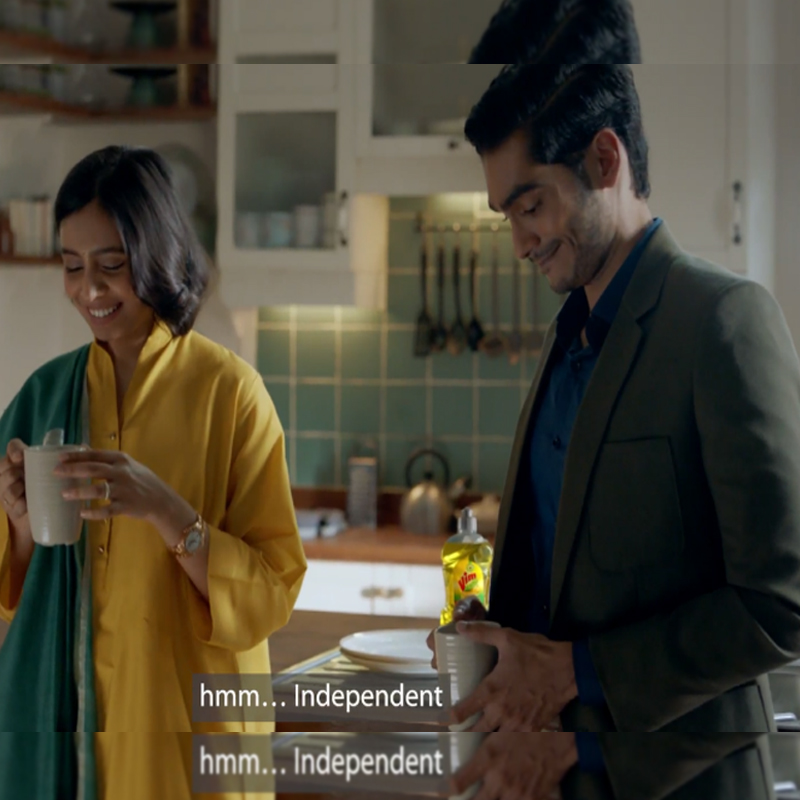
    The TVC is a story of a prospective matrimonial arrangement, where the ‘independent guy’ under the implicit assumption that it is the wife’s job to cook and clean, tries to impress the girl by offering to ‘help’ her with cooking. The girl immediately offers to ‘help’ him with dishes, gently nudging him to be independent in household chores as well, as she could get late from work. The boy’s initial shock and eventual change of perspective drives home the campaign message of ‘Nazariya Badlo, Dekho Bartano Se Aage’. The girl in the ad is not only ‘more than her chores’ but also a change-maker who calls for equal partnership.

    Home Care South Asia – executive director and VP Prabha Narasimhan said, “Vim has helped make the dishwashing process easier and hassle-free over the ages. We are inspired by the successful women around us who excel in whatever they do, being homemakers and decision-makers. They are already way more than chores, but sometimes get limited by society’s definition of chores being a woman’s primary responsibility. If we offload them from these societal stereotypes and the stress caused by them, there is so much more they can and will be. At Vim, that is precisely going to be our endeavour with ‘Nazariya Badlo, Dekho Bartano Se Aage’.

    Lowe Lintas chief creative officer Prateek Bhardwaj said, “This campaign speaks to the mindset that when a man does the dishes, he’s ‘helping’ the woman of the house. An act for which society applauds him, when in fact it’s something that he should be doing as a member of the household. Nudging the society to realize this double standard that exists was at the heart of this campaign. “

  • Geometry Encompass, HUL address sanitation at Kumbh Mela 2019

    Geometry Encompass, HUL address sanitation at Kumbh Mela 2019

    MUMBAI: To address the issue of sanitation, Geometry Encompass conceptualised and created four campaigns for Hindustan Unilever’s home and personal care brands, namely Active Wheel, Lifebuoy, and Vim at the ongoing Kumbh Mela.

    For Active Wheel, it surrounded its campaign around Kalpavas – a 30-day period of living in austerity and following a fixed schedule to transform the inner consciousness. Geometry Encompass recognised that it was a big challenge for the Kalpvasis to wear fresh clothes every day and thus conceptualised a unique ‘Wheel Wash-o-Cycle’ – a drum attached to a bicycle, which rotated on pedalling the cycle, recreating the function of a washing machine. Devotees simply had to fill the drum with water, add their clothes, sprinkle Active Wheel detergent powder, and pedal for 10-12 minutes, to enjoy fresh, clean clothes, free of cost.

    Two such Wheel Wash Stations were set up at the Kalpavasi tent city, each with more than 20 installations of ‘Wheel Wash-o-Cycle’, which use no electricity, save water, and can be easily used by anyone. Active Wheel also ensured an adequate supply of clean water and drainage systems in place. Through this, over 30,000 devotees were able to enjoy the comfort of fresh clothes during the Kumbh Mela. The brand has decided to donate the Wheel Wash-o-Cycles to nearby villages, post Kumbh, thereby continuing to make a difference in people’s lives. Active Wheel will also train the villagers to make the machine themselves, thus reducing the effort needed for manually washing clothes and empowering women to realise their ‘Fresh Soch’. By these efforts, Wheel hopes to help women realise their own dreams and entrepreneurial aspirations, and even earn revenue that they can help their families with.

    Geometry Encompass took the agenda of ensuring sanitation at the Kumbh Mela a step further when it worked with Lifebuoy and conceptualised two innovative campaigns to remind devotees to wash their hands after using the restroom as well as before eating their meals.

    In the first campaign, they developed an innovative ink after 3 months of rigorous research and testing. The ink was developed into a stamp which becomes an active reminder to wash hands. A visual red stamp was marked by over 150 Lifebuoy representatives who stamped 10,000 hands per day. As the devotees put their hands under a tap, the stamp lathered into soap and helped provide superior germ protection, ensuring a hygienic stay at the Kumbh. As a result, there were several attendees who approached promoters to have their hands re-stamped for later, and used a total of 3 lakh stamps to wash 6 lakh hands over the 30 days activity.

    Taking it one notch higher, Geometry Encompass and Lifebuoy distributed thalis, which were engraved with a message – ‘Kripaya pehle sabun se haath dhoyein’ (please wash your hands with soap first). The Lifebuoy branding was a part of the thalis which were distributed at meal centres, to be washed and reused, effectively delivering the message to millions of visitors. Lifebuoy also addressed the issue of washing one’s hands after visiting the washroom by stamping the hands of those using public restrooms with an ink that had a layer of soap on it. The ink dissolved on contact with water, ensuring their hands were washed thoroughly.

    Appreciating Lifebuoy’s efforts, ACMO Dr VK Mishra, nodal officer sanitation Kumbh Mela Prayagraj said, “We appreciate the role played by Lifebuoy as ‘Swasthya Sehbhagi’ (Hygiene Partner) in this grand event to spread the message of hygiene and sanitation. We are hopeful that these initiatives will help drive a behavioral change among the masses.”

    Geometry Encompass also highlighted the efficacy of Vim dishwashing soap by replacing mirrors in public restrooms with thalis washed with the brand. The plates were so clean and shiny that the reflective surfaces acted like mirrors.

    Speaking on the successful conceptualisation and execution of these campaigns, Geometry Encompass CEO Sukrit Singh said, “These campaigns are testament to a fulfilling two decade long partnership with HUL. I am proud that this partnership beyond the realm of advertising, is focusing on behavioural change instead. We, at Geometry-Encompass, strive to create pivotal consumer experiences in all the work we do. The year has just begun and we have already rolled out two of the most talked about campaigns at the Kumbh, I can’t wait for everyone to see what else we have in store!”

    Geometry Encompass managing partner Shankar Shinde said, “Geometry Encompass collaborated with HUL to play a pivotal role in creating impactful, purpose driven campaigns during Kumbh 2019. Be it the Lifebuoy Hygiene Stamp – that washes away germs and preconceived notions about personal hygiene and handwashing, or the Wheel Wash-o-Cycle, that inculcates the philosophy of “Pehno Fresh and Socho Fresh”. Fresh thinking is optimising the mundane task of washing clothes, encouraging women to fulfil their dreams in the time saved. These campaigns, embedded with a strong purpose of helping consumers at large, have helped create a lasting impact for HUL at the Kumbh.”

    Geometry Encompass executive creative director Arpan Jain added, “Being committed to inspiring action through behaviour and experience-led ideas, we’re constantly trying to move away from the idea of ‘sheep dipping’ people in a brand, and instead, focusing on creating behavioural change. While we recognise that habits do not change by just spreading the word; we also need to provide the right reasoning and tools at the right moment! With our Wheel Wash-o-Cycle and Lifebuoy Stamp of Hygiene campaigns, we are doing just that, providing consumers the right reasons and tools to enable behavioural change.”

  • HUL marketing expenses down in Q2-17, HY1-17

    HUL marketing expenses down in Q2-17, HY1-17

    BENGALURU: Indian FMCG giant Hindustan Unilever Limited (HUL) spent 7.6 per cent less towards Advertisement and Promotions expense (marketing spends, ASP) in the quarter ended 30 September 2016 (Q2-17, current year) as compared to Q2-16(year-over-year or y-o-y) on a standalone basis. Also, quarter-over-quarter (q-o-q) ASP declined 3.2 per cent in the current quarter as compared the immediate trailing quarter Q1-17. HUL spent Rs 851.38 crore (10 per cent of Total income from operations or TIO) in Q2-17, Rs 921.04 crore (11 per cent of TIO) in Q2-16 and Rs 879.75 crore (10 per cent of TIO) in Q1-17 towards ASP.

    ASP was also down, both in terms of absolute rupees as well as percentage of TIO during the half year ended 30 September 2016 (HY1-17) versus the corresponding half year period of the previous year. As a matter of fact, ASP in HY1-17 was the lowest since HY1-13.

    HUL chairman Harish Manwani said, “In challenging market conditions, we delivered another quarter of profitable growth. We remain focused on market development, consumer led innovations and an even sharper drive on operating efficiencies. With a good monsoon, weexpect a gradual improvement in market demand and remain positive on the mid-long term outlook for the industry. Our strategic agenda of delivering consistent, competitive, profitable and responsible growth remains unchanged.”

    Trends

    During aneighteen quarter period starting Q1-13 until Q2-17, HUL’s ASP in Q4-15 was the highest in absolute rupees at Rs1,027.89 crore (13.4 per cent of TIO), while in terms of per centage of TIO in current fiscal, it was highest in Q2-14 at Rs954.02 crore (13.8 per cent of TIO). Please refer to Fig A below. ASP shows linear increasing trend in terms of absolute rupees while in terms of ASP as per centage of TIO, the trend shows a decline during the eighteen quarter period under consideration in this report.

    Please refer to Fig B below. HUL’s ASP in HY1-17 at Rs 1,731.13 (10 per cent of TIO) was 4.6 per cent lower than the Rs 1,813.77 crore (11.2 per cent of TIO) in HY1-16. As is obvious, HY1-17 ASP is the lowest over a five year period starting HY1-13 in terms of per centage of TIO and second lowest during the same period in terms of absolute rupees. ASP during the first half period of a fiscal shows a declining trend in terms of per centage of TIO during the period HY1-13 to HY1-17.

    The company’s TIO in the current quarter increased 1.6 per cent y-o-y to Rs8.480.26 crore as compared to Rs8,348.60 crore but declined 3.7 per cent q-o-q  from Rs8,802.82 crore q-o-q. Please refer to Fig C below. TIO represented by the broken light blue line shows a linear increasing trend during the eighteen quarter period under consideration in this report.

    HUL’s Profit after Tax (PAT) in Q2-17 increased11.6 per cent y-o-y to Rs 1,095.60 crore (12.9 per cent margin) as compared to Rs982.06 crore (11.8 per cent margin) and increased by 11.5 per cent q-o-q from Rs 982.17 crore (11.2 per cent margin). PAT shows a linear decreasing trend in terms of percentage of TIO, but indicates a linear increasing trend in terms of absolute rupees during the eighteen quarter period under consideration in this report.

    HUL’s Q2-17 reporton categories

    Home Care: Robust growth with continued momentum on premium laundry In Fabric Wash, growth was driven by the premium segment as Surf maintained its strong volume-led growth. In Household Care, Vim liquiddid well on the back of sustained market development. The water business continued to do well.

    Personal Care: Growth impacted by slowing markets and Personal Wash volumes. In Personal Wash, the performance was impacted by price increases taken during the quarter. Skin Care growth was driven by the BB andCC creams. Hair Care growth was led by the premium brands Dove and TRESemmé. The recently acquired Indulekha brand continued toperform well and was extended to four new states in the quarter. In Oral Care, the overall performance was subdued, though Pepsodent started recovering post relaunch. Lakme Colour Cosmetics sustained its broad based innovation led growth. In Deodorants, Axe Signature continuedto gain ground during the quarter.

    Refreshment: Strong growth led by Tea. In Tea, all key brands grew well driven by focused in-market initiatives. Lipton Green Tea and the Natural Care portfolio registered anotherquarter of high growth on sustained market development. In Coffee, Bru Gold continued to lead premiumisation and performed well. In Ice Cream & Frozen Desserts, Magnum Minis were launched during the quarter.

    Foods: Modest growth in a challenging market. The focus continues to be on market development for the category. Kissan range of premium Jams gained further traction with consumersand Instant Soups led the growth for Knorr.

  • HUL marketing expenses down in Q2-17, HY1-17

    HUL marketing expenses down in Q2-17, HY1-17

    BENGALURU: Indian FMCG giant Hindustan Unilever Limited (HUL) spent 7.6 per cent less towards Advertisement and Promotions expense (marketing spends, ASP) in the quarter ended 30 September 2016 (Q2-17, current year) as compared to Q2-16(year-over-year or y-o-y) on a standalone basis. Also, quarter-over-quarter (q-o-q) ASP declined 3.2 per cent in the current quarter as compared the immediate trailing quarter Q1-17. HUL spent Rs 851.38 crore (10 per cent of Total income from operations or TIO) in Q2-17, Rs 921.04 crore (11 per cent of TIO) in Q2-16 and Rs 879.75 crore (10 per cent of TIO) in Q1-17 towards ASP.

    ASP was also down, both in terms of absolute rupees as well as percentage of TIO during the half year ended 30 September 2016 (HY1-17) versus the corresponding half year period of the previous year. As a matter of fact, ASP in HY1-17 was the lowest since HY1-13.

    HUL chairman Harish Manwani said, “In challenging market conditions, we delivered another quarter of profitable growth. We remain focused on market development, consumer led innovations and an even sharper drive on operating efficiencies. With a good monsoon, weexpect a gradual improvement in market demand and remain positive on the mid-long term outlook for the industry. Our strategic agenda of delivering consistent, competitive, profitable and responsible growth remains unchanged.”

    Trends

    During aneighteen quarter period starting Q1-13 until Q2-17, HUL’s ASP in Q4-15 was the highest in absolute rupees at Rs1,027.89 crore (13.4 per cent of TIO), while in terms of per centage of TIO in current fiscal, it was highest in Q2-14 at Rs954.02 crore (13.8 per cent of TIO). Please refer to Fig A below. ASP shows linear increasing trend in terms of absolute rupees while in terms of ASP as per centage of TIO, the trend shows a decline during the eighteen quarter period under consideration in this report.

    Please refer to Fig B below. HUL’s ASP in HY1-17 at Rs 1,731.13 (10 per cent of TIO) was 4.6 per cent lower than the Rs 1,813.77 crore (11.2 per cent of TIO) in HY1-16. As is obvious, HY1-17 ASP is the lowest over a five year period starting HY1-13 in terms of per centage of TIO and second lowest during the same period in terms of absolute rupees. ASP during the first half period of a fiscal shows a declining trend in terms of per centage of TIO during the period HY1-13 to HY1-17.

    The company’s TIO in the current quarter increased 1.6 per cent y-o-y to Rs8.480.26 crore as compared to Rs8,348.60 crore but declined 3.7 per cent q-o-q  from Rs8,802.82 crore q-o-q. Please refer to Fig C below. TIO represented by the broken light blue line shows a linear increasing trend during the eighteen quarter period under consideration in this report.

    HUL’s Profit after Tax (PAT) in Q2-17 increased11.6 per cent y-o-y to Rs 1,095.60 crore (12.9 per cent margin) as compared to Rs982.06 crore (11.8 per cent margin) and increased by 11.5 per cent q-o-q from Rs 982.17 crore (11.2 per cent margin). PAT shows a linear decreasing trend in terms of percentage of TIO, but indicates a linear increasing trend in terms of absolute rupees during the eighteen quarter period under consideration in this report.

    HUL’s Q2-17 reporton categories

    Home Care: Robust growth with continued momentum on premium laundry In Fabric Wash, growth was driven by the premium segment as Surf maintained its strong volume-led growth. In Household Care, Vim liquiddid well on the back of sustained market development. The water business continued to do well.

    Personal Care: Growth impacted by slowing markets and Personal Wash volumes. In Personal Wash, the performance was impacted by price increases taken during the quarter. Skin Care growth was driven by the BB andCC creams. Hair Care growth was led by the premium brands Dove and TRESemmé. The recently acquired Indulekha brand continued toperform well and was extended to four new states in the quarter. In Oral Care, the overall performance was subdued, though Pepsodent started recovering post relaunch. Lakme Colour Cosmetics sustained its broad based innovation led growth. In Deodorants, Axe Signature continuedto gain ground during the quarter.

    Refreshment: Strong growth led by Tea. In Tea, all key brands grew well driven by focused in-market initiatives. Lipton Green Tea and the Natural Care portfolio registered anotherquarter of high growth on sustained market development. In Coffee, Bru Gold continued to lead premiumisation and performed well. In Ice Cream & Frozen Desserts, Magnum Minis were launched during the quarter.

    Foods: Modest growth in a challenging market. The focus continues to be on market development for the category. Kissan range of premium Jams gained further traction with consumersand Instant Soups led the growth for Knorr.

  • 36% youth watch shows on TV,18% watch shows online: MTV study

    36% youth watch shows on TV,18% watch shows online: MTV study

    MUMBAI: Today’s generation is considered to be full of zest, zing and vim. The youth have their own unique odds which would be irritating to older people but which generation has not manifested such behaviors in the past? The young on-the-go audience is constantly connected to each other and has easy access to the world with information at its finger-tips. This generation’s interests are not one, but many wherein it seamlessly transcends online and offline versions of self. This generation doesn’t believe in discriminating through race, religion, or gender. It firmly believes that with these values, it will be able to build a better India in the future. The youth is dynamic, but not impulsive; is complex, but not chaotic, reveals MTV Youth Marketing Forum.

    MTV is back with the 10th edition of its research titled ‘The Many Me Project’ stressing on what content is consumed and what is published. The survey covered 11,000 young people in the age group of 13 to 25 across 50 plus cities and has reached out to NCCS A, B and C across the age bracket of 13-25 years to increase the robustness of the research. For the 6 month long interactive survey, the qualitative part of the study was conducted in association with Third Eye Research whereas the quantitative segments were handled by Juxt Smart Mandate.

    The investigation was done by undertaking key initiatives the like selfie project, digital shadowing and by studying peerscope and ethnographies of the youth.  The data discloses youth to be multi-dimensional, open minded, brave, witty, inspired, mindful, fun, a sum of many me’s.

    “We have not tortured data”, says Viacom18 head of youth and English entertainment Ferzad Palia in jest. “This data is an eye-opener for all of us. This young generation is not the era of ‘jugaadus’, but they are smart-thinkers and are not looking for shortcuts. The youth wants to strategically work smart and hard. Through this data many important insights will be presenting at the forum which are sure to change the way marketers view the youth of India today”, he further adds.

    A question always arises that where does the youth consume new content from? The youth are discerning about content but not about where they watch it. The study reveals that TV still remains a go to for Indian youth and they’ll not go anywhere other than TV to consume good content. Each device has its benefits and disadvantages and the sources for discovery and consumption may differ. 36 per cent of the youth watch shows only on TV, while 18 per cent watch shows only online. The study shows that young audiences first discover a new show on TV and then watch it online.

    The study shows how the role of technology has changed for multi-taskers with 32 per cent people having the opinion that they have more choices now as compared to 16 per cent in 2014.

    Speaking about the MTV Youth Marketing Forum 2016, Viacom 18 group CEO Sudhanshu Vats says, “As a content powerhouse, it is mandatory for us to understand the pulse of our audience. Hence, MTV’s constant endeavor to understand its primary target audience – the youth, what they are up to and how they feel about various aspects of life – is extremely crucial. For the last 10 years, MTV has been working incessantly to understand every nuance of each interaction young people have amongst themselves and their media consumption habits.  It is these patterns of consumption and interaction which then form the basis of everything we do at MTV. The headline study for this year – ‘MTV Many Me Project’ – has thrown up some fascinating insights into the lives and minds of this absolutely dynamic demographic. I am positive that every single person who has been a part of the MTV Youth Marketing Forum 2016 will now be able to decode the ever-changing youth of India much better!”

    Youth also considers entertainment as enrichment and resonatee that good content always has that hangover effect wherein it urges them to think, share, create and comment. Entertainment and content are not about just filling gaps of time between doing other things, reveals the data. On the one hand, 50 per cent of the young people in the age group of 13 to 17 years and 63 per cent between 18 to 25 years think that they learn a lot about coping with tricky situations through the characters and storylines of their favourite shows.

    The report also reveals how 81 per cent of the youth aspire for eventually becoming self-employed, while 17 per cent of them think of working for a stable organization.  The new high is becoming self-employed rather than just doing a job.

    “The MTV Youth Marketing Forum is our flagship insights series and the idea was to make it as experiential for the attendees as possible. So we thought why not we actually create a teenager’s room? And what better way for you (the audience) to do it than being a part of it? So you are the prop and he (the teenager) is the protagonist. Every element in the room reflects his passion – stuff that he listens to, stuff he plays with, brands he flaunts, etc. It’s not 3D but a 4D stage because you can actually see a live protagonist, a specific boy, who was recruited (we actually did screenings and auditions) only for this activity”, adds Viacom 18 youth cluster head marketing, media and insights Sumeli Chatterjee

    “No other brand does this kind of a research like us. We want to stay ahead of the curve. These insights will be shared across and will help advertisers. 2016 was a more pronounced year than 2014 and had many complexities than we ever thought”, she further adds.

    Palia voices that the study will help the channel and its business partners in building a strong connect with the young audience.

    Click here to view the complete report:

  • 36% youth watch shows on TV,18% watch shows online: MTV study

    36% youth watch shows on TV,18% watch shows online: MTV study

    MUMBAI: Today’s generation is considered to be full of zest, zing and vim. The youth have their own unique odds which would be irritating to older people but which generation has not manifested such behaviors in the past? The young on-the-go audience is constantly connected to each other and has easy access to the world with information at its finger-tips. This generation’s interests are not one, but many wherein it seamlessly transcends online and offline versions of self. This generation doesn’t believe in discriminating through race, religion, or gender. It firmly believes that with these values, it will be able to build a better India in the future. The youth is dynamic, but not impulsive; is complex, but not chaotic, reveals MTV Youth Marketing Forum.

    MTV is back with the 10th edition of its research titled ‘The Many Me Project’ stressing on what content is consumed and what is published. The survey covered 11,000 young people in the age group of 13 to 25 across 50 plus cities and has reached out to NCCS A, B and C across the age bracket of 13-25 years to increase the robustness of the research. For the 6 month long interactive survey, the qualitative part of the study was conducted in association with Third Eye Research whereas the quantitative segments were handled by Juxt Smart Mandate.

    The investigation was done by undertaking key initiatives the like selfie project, digital shadowing and by studying peerscope and ethnographies of the youth.  The data discloses youth to be multi-dimensional, open minded, brave, witty, inspired, mindful, fun, a sum of many me’s.

    “We have not tortured data”, says Viacom18 head of youth and English entertainment Ferzad Palia in jest. “This data is an eye-opener for all of us. This young generation is not the era of ‘jugaadus’, but they are smart-thinkers and are not looking for shortcuts. The youth wants to strategically work smart and hard. Through this data many important insights will be presenting at the forum which are sure to change the way marketers view the youth of India today”, he further adds.

    A question always arises that where does the youth consume new content from? The youth are discerning about content but not about where they watch it. The study reveals that TV still remains a go to for Indian youth and they’ll not go anywhere other than TV to consume good content. Each device has its benefits and disadvantages and the sources for discovery and consumption may differ. 36 per cent of the youth watch shows only on TV, while 18 per cent watch shows only online. The study shows that young audiences first discover a new show on TV and then watch it online.

    The study shows how the role of technology has changed for multi-taskers with 32 per cent people having the opinion that they have more choices now as compared to 16 per cent in 2014.

    Speaking about the MTV Youth Marketing Forum 2016, Viacom 18 group CEO Sudhanshu Vats says, “As a content powerhouse, it is mandatory for us to understand the pulse of our audience. Hence, MTV’s constant endeavor to understand its primary target audience – the youth, what they are up to and how they feel about various aspects of life – is extremely crucial. For the last 10 years, MTV has been working incessantly to understand every nuance of each interaction young people have amongst themselves and their media consumption habits.  It is these patterns of consumption and interaction which then form the basis of everything we do at MTV. The headline study for this year – ‘MTV Many Me Project’ – has thrown up some fascinating insights into the lives and minds of this absolutely dynamic demographic. I am positive that every single person who has been a part of the MTV Youth Marketing Forum 2016 will now be able to decode the ever-changing youth of India much better!”

    Youth also considers entertainment as enrichment and resonatee that good content always has that hangover effect wherein it urges them to think, share, create and comment. Entertainment and content are not about just filling gaps of time between doing other things, reveals the data. On the one hand, 50 per cent of the young people in the age group of 13 to 17 years and 63 per cent between 18 to 25 years think that they learn a lot about coping with tricky situations through the characters and storylines of their favourite shows.

    The report also reveals how 81 per cent of the youth aspire for eventually becoming self-employed, while 17 per cent of them think of working for a stable organization.  The new high is becoming self-employed rather than just doing a job.

    “The MTV Youth Marketing Forum is our flagship insights series and the idea was to make it as experiential for the attendees as possible. So we thought why not we actually create a teenager’s room? And what better way for you (the audience) to do it than being a part of it? So you are the prop and he (the teenager) is the protagonist. Every element in the room reflects his passion – stuff that he listens to, stuff he plays with, brands he flaunts, etc. It’s not 3D but a 4D stage because you can actually see a live protagonist, a specific boy, who was recruited (we actually did screenings and auditions) only for this activity”, adds Viacom 18 youth cluster head marketing, media and insights Sumeli Chatterjee

    “No other brand does this kind of a research like us. We want to stay ahead of the curve. These insights will be shared across and will help advertisers. 2016 was a more pronounced year than 2014 and had many complexities than we ever thought”, she further adds.

    Palia voices that the study will help the channel and its business partners in building a strong connect with the young audience.

    Click here to view the complete report:

  • Q1-2016: HUL y-o-y marketing spends up 22%

    Q1-2016: HUL y-o-y marketing spends up 22%

    BENGALURU:  Indian FMCG giant Hindustan Unilever Limited’s (HUL) Advertisement and Promotions expense (marketing spends, ASP) in Q1-2016 (quarter ended 30 June, 2015) was 22.1 per cent more at Rs 1153.39 crore (14.2 per cent of Total Income from operations or TIO, approximately $181.4 million) than the Rs 944.88 crore (12.2 per cent of TIO) in Q1-2015 and was 12.2 per cent more than the Rs 1027.89 crore (13.4 per cent of TIO) in Q4-2015.

    Note: (1) 100 lakh = 100,00,000 = 1 crore = 10 million.

    (2) All figures in this report are standalone figures filed by the company. The trends are based on the numbers submitted by the company or picked up from the company’s website. For performance of HUL’s various product lines please refer to the attached earnings release for Q1-2016.

    (3) The US dollar figures are approximately based on a conversion rate of 1US$ = Rs 63.57.The converted numbers have been rounded off.

    HUL chairman Harish Manwani said, “In a subdued market environment, the business delivered another quarter of healthy volume led growth and strong improvement in operating margin. We are particularly pleased with the stepped up momentum in personal products and the sustained double digit performance in packaged foods. With the near term outlook largely dependent on pickup in rural markets and commodity costs expected to remain benign with little or no price growth across select categories, our focus will be to drive market development and simultaneously deliver cost efficiencies to sustain profitable volume led growth.”

    Advertising and Sales Promotion trends

    As a matter of fact, HUL’s ASP in Q1-2016 is the highest during a 13 quarter period starting Q1-2013 until Q1-2016, both in terms of percentage of TIO and in absolute rupees. During the period under consideration in this report, ASP in absolute rupee spends shows a marked linear increasing trend, while ASP in percentage of TIO terms shows a slight linear increasing trend, though more marked than until the previous quarter. The company’s lowest ASP was in Q2-2013 at Rs 768.98 crore  (12.2 per cent of TIO) in absolute rupee spends during the period under consideration, while the lowest in terms of percentage of TIO was in Q4-2014 at 11.8 per cent of TIO (Rs 840.34 crore). Please refer to Fig A below.

    If the company follows the trends of the past three fiscals, at least one or more quarter in FY-2016 will see higher ASP in terms of absolute rupees than Q1-2016.

    HUL Revenue and PAT

    HUL reported five per cent growth in TIO in Q1-2016 at Rs 8105.13 crore as compared to the Rs 7716.34 crore in Q1-2015 and reported 5.6 per cent growth as compared to the Rs 7094.01 crore in the immediate trailing quarter. The company’s TIO shows a linear increasing trend as indicated by the broken blue trend line in Fig B below. TIO in Q1-2016 is the highest reported by the company during the 13 quarter period under consideration in this report.

    HUL’s PAT in Q1-2016 was almost flat (higher by 0.2 per cent) at Rs 1059.14 crore (13.1 per cent of TIO) as compared to the Rs 1056.85 crore (13.7 per cent of TIO) in the corresponding quarter of last year and was four per cent more than the Rs 1018.08 crore (13.3 per cent of TIO) in Q4-2015. During the period under consideration, HUL’s highest PAT was in Q1-2013 at Rs 1331.19 crore (20.9 per cent of TIO), both in terms of absolute rupees and in percentage of TIO. While PAT in absolute rupees shows a linear increasing trend as indicated by the broken pink trend line in Fig B below, while in terms of percentage of TIO, the linear trend is declining as indicated by the broken yellow line below.

    HUL Speak: Category and brand growth 

    HUL says that during Q1-2016, its domestic consumer business grew at five per cent, with six per cent underlying volume growth. The growth in the quarter was impacted by the phasing out of excise duty incentives and price de-growth, as the benefit of lower commodity costs was passed on to consumers.

    Soaps and Detergents

    In Skin Cleansing, the performance was driven by the premium segment, with Dove and Lifebuoy Handwash delivering strong growth.

    In Laundry, Surf maintained its strong volume led growth momentum with broad based double digit growth. Rin did well on the bars portfolio, while Comfort Fabric Conditioners delivered another quarter of high growth on sustained market development.

    In Household Care, Vim delivered double digit volume growth, driven by the tubs and liquids formats.

    The quarter witnessed further price deflation across these categories given benign input costs.

    Personal Products

    Skin Care delivered broad based volume led growth across Fair and Lovely, Pond’s, Lakme and Vaseline. Fair and Lovely saw an encouraging response to the newly launched BB cream. Pond’s performance was led by premium skin lightening and facewash while Lakme’s growth was buoyed by CC Cream, Perfect Radiance and new innovations.

    Hair Care maintained its strong volume led growth momentum. Dove growth accelerated further, while Clinic Plus, Sunsilk and TRESemmé continued to deliver robust growth.

    In Oral Care, Close Up grew in double digit, supported by impactful market activation. In Pepsodent, the Gum Care and Clove & Salt variants continued to do well, with the latter been extended nationally during the quarter.

    In Colour Cosmetics, Lakme sustained its strong innovation led performance across the core, Absolute and 9 to 5 ranges.

    Beverages

    Tea delivered double digit growth with healthy volumes, led by Red Label and another strong quarter on Lipton Green Tea. In Coffee, Bru Gold sustained its robust growth momentum.

    Packaged Foods

    Market development continues to be the key driver of growth in this segment says HUL. Kissan delivered one of its strongest quarters as growth accelerated across both ketchups and jams. Knorr grew despite a sharp market slowdown in the quarter, led by instant soups. Ice creams registered double digit growth, driven by sharper in-market execution on Kwality Walls and the extension of Magnum to new cities.

    Water

    Pureit sustained its growth ahead of a slowing durables market, with premium devices delivering another quarter of double digit growth. The category performance continued to be led by modern trade, ecommerce and Perfect Stores

    Click here to read the unaudited financial statement