Tag: Vikram Sarabhai Space Centre

  • V. Narayan to succeed  S. Somnath;  to take over as Isro chairman

    V. Narayan to succeed S. Somnath; to take over as Isro chairman

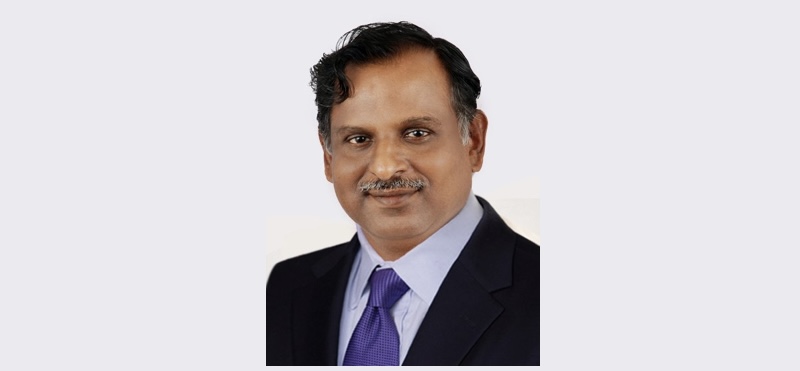
    MUMBAI: There’s a new head at the Indian Space Research Organisation (Isro) and at the department of space (DoS). On 7 January, the  appointments committee of the cabinet sent out a notification announcing the selection of the head of the liquid propulsion systems centre (LPSC)  V Narayan in the organisation as the man for the job. He will also hold the post of chairman of the space commission. He takes over from current Isro boss S. Somnath  on 14 January when the latter’s term ends.

    Narayan was one of the key architects of India’s development of the cryogenic engine, which on the back of which India’s space program – including launch vehicles and space exploration – could move ahead at the pace it has.

    Speaking to NDTV Narayan said: “We have a clear roadmap for India and I hope to take Isro  to greater heights as we have great talent.”

    As  LPSC  director he has been providing techno-managerial leadership which is engaged in the development of liquid, semi cryogenic and cryogenic propulsion stages for launch vehicles. chemical and electric propulsion systems for satellites, control systems for launch vehicles and transducer development for propulsion system health monitoring.

    Narayanan, who is a rocket and spacecraft propulsion expert joined Isro in 1984 and functioned in various capacities before becoming director of the centre. During the initial phase, for four and a half years, he worked in the solid propulsion area of sounding rockets and augmented satellite launch vehicle (ASLV) and polar satellite launch vehicle (PSLV) in Vikram Sarabhai Space Centre (VSSC). He contributed in the process planning, process control and realisation of ablative nozzle systems, composite motor cases and composite Igniter cases.

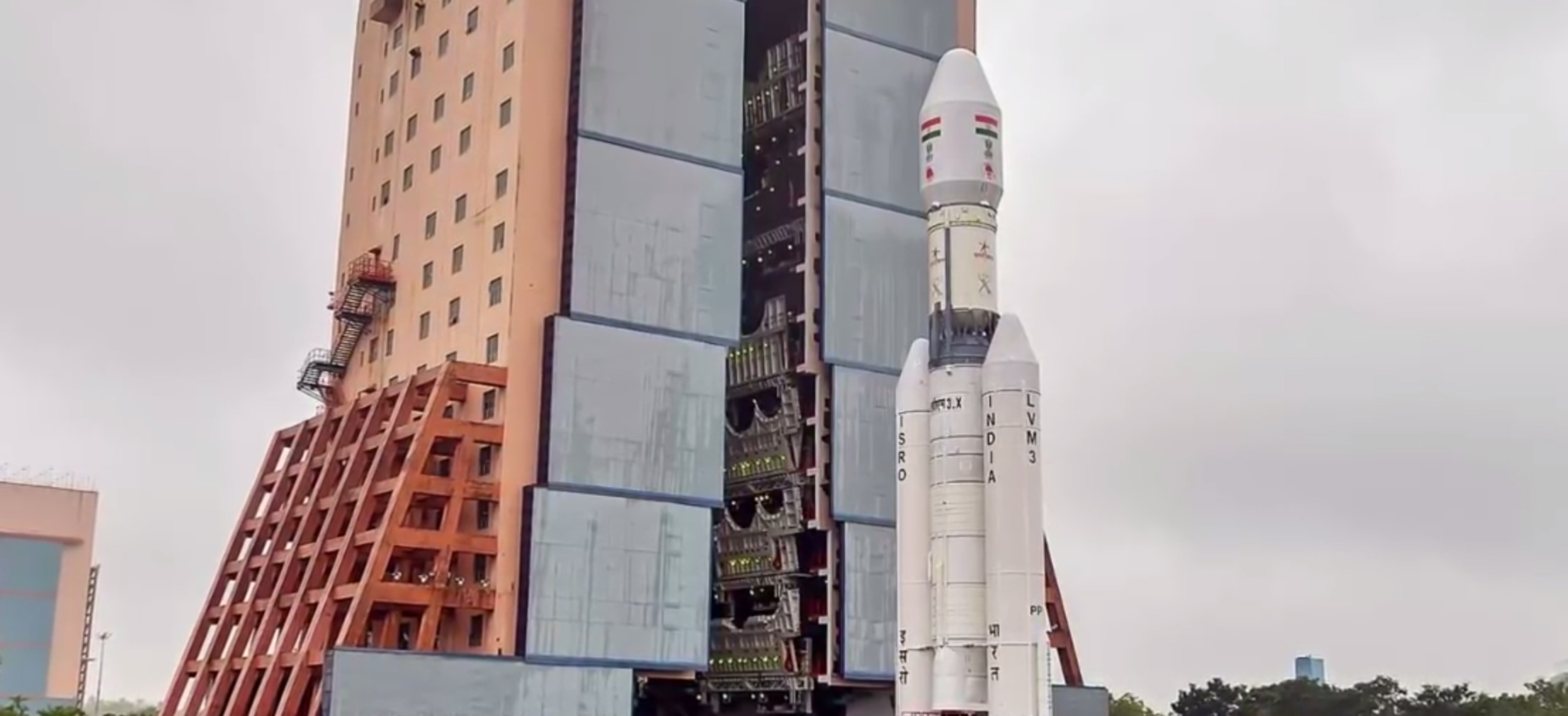
    In 1989, Narayan completed his M.Tech in cryogenic engineering with first rank at IIT-Kharagpur and joined the cryogenic propulsion area in the LPSC. Isro’s geosynchronous launch vehicles namely GSLV Mk-II  and GSLV Mk-III capable of placing two-tonne and on four-tonne class communication satellites in geo transfer orbit have cryogenic propulsion stages as terminal stages.

    As one of the few cryogenic members, working  in this area in the initial stages, he carried out fundamental research, theoretical and experimental studies and contributed in the successful development and testing of cryogenic sub systems namely the gas generator, sub-scale cryogenic engine of one tonne thrust and thrust chamber of 12 tonne thrust. 

    Considering the long-lead time required for the development of cryogenic stage of GSLV MkII vehicle, for meeting the initial flights, few of the cryogenic stage hardware were procured from Russia. Towards this, as an expert in cryogenic propulsion,  he contributed in the development of mission management systems, contract management and the successful flights of GSLV MkII vehicle with procured cryogenic stages.

    For sustained operation of GSLV MkII, initially Isro planned for technology acquisition of cryo stage for manufacturing in India. But due to geopolitical reasons, the technology acquisition could not succeed and Isro decided to develop cryogenic upper stage (CUS) indigenously  Narayanan has played crucial role in the successful development of CUS  and contributed in making it operational for the GSLV Mk II vehicle. 

    For the GSLV MkIII experimental mission with CARE module, he conceived and realised the passive cryogenic stage and contributed for the successful experimental flight. As the project, director of the C25 cryogenic project, he provided techno-managerial leadership and conceived, designed and developed the 25 cryogenic propulsion system of GSLV Mk-III launch vehicle powered by an engine developing a thrust of 200kN. 
    He contributed in establishing the necessary infrastructure and facilities for design, analysis, realisation, testing and launching. Due to innovative approach, the C25 cryo stage was developed under his guidance in the shortest time frame with all successful tests and inducted in the GSLV MkIII vehicle. Subsequently he also made the stage operational. 

    His contribution, made India one among six countries in the world to have the complex and high performance cryogenic propulsion systems and made the country  self-reliant in this area. 
    Narayan parallely completed PhD in aerospace engineering from IIT-Kharagpur in 2001. The work carried out as part of M.Tech thesis titled Cavitating Venturies for Flow Control in Cryogenic Rocket Engines and PhD thesis titled Thrust and Mixture Ratio Regulation Systems for Cryogenic Rocket Engines were directly employed in the development of the Indian cryogenic propulsion systems. 

    Towards the GSLV Mk-III M1/Chandrayaan-2 mission, L110 liquid core stage, C25 cryogenic stage, were delivered for the vehicle under his watchful eye. Propulsion systems for orbiter and Vikram lander which include the throttleable thrusters for soft landing were also developed and delivered for the Chandrayaan-2 Mission, under his guidance. As the chairman of the national expert committee constituted to study the reasons for hard landing of the Chandrayaan-2 lander ship, contributed in pin pointing the reasons and corrective actions required to overcome the observations. Realised and delivered all the propulsion systems for Chandrayaan-3. 
    For the Indian human space flight (Gaganyan) programme, he worked on the human rating of C25 and L110 liquid stages of LVM3 vehicle and the development of propulsion modules for crew module and service module and the cabin pressure control systems. He also focused on the thermal and humidity control systems and the propulsion stage for the test vehicle. 

    For enhancing the GTO payload capability of LVM3 vehicle and meeting the future Indian heavy lift  rockets, Narayan guided the team and designed a Lox-kerosene semi cryogenic propulsion system and provided  techno-managerial leadership for its development.

    He took up the development of improving the C25 cryogenic stage performance with higher propellant (32 tonnes of LoX and LH2) loading with higher thrust (22 tonne) engine. His team is also working on developing the 100 tonne  thrust Lox-CH4 engine and electric propulsion thrusters. He has also made significant contribution in the spacecraft propulsion area. 

    Narayan contributed as the member of two failure analysis committees (FACs) of GSLV MkII D3 and GSLV MkII F02 vehicles and , member secretary of the first Indian cryogenic upper stageeEngine FAC. He  was a member of Isro’s 12th Five Year plan-drafting group and contributed in finalsing the propulsion system development during 12th five year plan. He has also finalised the propulsion road map of Isro for the next 20 years (2017 – 2037). As director of  the LPSC, during the last five  years, he has delivered 164 liquid propulsion systems for 41 launch vehicles and 31 space craft missions. 

    V Narayanan, is currently the chairman of LPSC-IPRC co-ordination committee and chairman of programme management council – space transportation systems.

  • ISRO test fires scramjet engine successfully

    ISRO test fires scramjet engine successfully

    MUMBAI: The Indian satellite launch program got a shot in the arm this morning at 6 am with the Indian Space Research Organisation (ISRO) successfully test firing its Supersonic Combustion Ramjet (scramjet) or air breathing engine from the spaceport of Sriharikota.

    Usually rocket engines carry both fuel and an oxidiser tank on board for combustion, scramjets use oxygen from the atmosphere The newly developed engines make the spacecraft’s weight ligher, smaller and faster – thereby reducing launch costs.

    Two scramjets were used on a RH-560 big sounding rocket that took off from the Satish Dhawan Space Centre. 11 km into space and 55 seconds into flight, the two scramjets were tested for six seconds. And the tests proved successful.

    Scientists from the Vikram Sarabhai Space Centre (VSSC) and Liquid Propulsion Systems Centre (LPSC) who were at Sriharikota had earlier told The Times of India that the Air-Breathing Propulsion System (ABPS) technology scramjets would be used to power the advanced reusable launch vehicle, which can return to earth after depositing the payload into its designation orbit.

    The scramjet test was planned for July 21 this year but was postponed as ISRO was assisting in the search operations to locate the missing IAF aircraft AN-32.

    After a smooth countdown of 12 hours, the solid rocket booster carrying the scramjet engines, lifted off at 0600 hrs (6:00 am) IST. The important flight events, namely, burn out of booster rocket stage, ignition of second stage solid rocket, functioning of Scramjet engines for 5 seconds followed by burn out of the second stage took place exactly as planned.

    After a flight of about 300 seconds, the vehicle touched down in the Bay of Bengal, approximately 320 km from Sriharikota. The vehicle was successfully tracked during its flight from the ground stations at Sriharikota.

    With this flight, critical technologies such as ignition of air breathing engines at supersonic speed, holding the flame at supersonic speed, air intake mechanism and fuel injection systems have been successfully demonstrated.

    The scramjet engine designed by ISRO uses Hydrogen as fuel and the Oxygen from the atmospheric air as the oxidiser. Today’s test was the maiden short duration experimental test of ISRO’s scramjet engine with a hypersonic flight at Mach 6. ISRO’s Advanced Technology Vehicle (ATV), which is an advanced sounding rocket, was the solid rocket booster used for today’s test of scramjet engines at supersonic conditions. ATV carrying scramjet engines weighed 3277 kg at lift-off.

    ATV is a two stage spin stabilised launcher with identical solid motors (based on Rohini RH560 sounding rocket) as the first as well as the second stage (booster and sustainer). The twin scramjet engines were mounted on the back of the second stage. Once the second stage reached the desired conditions for engine “Start-up”, necessary actions were initiated to ignite the Scramjet engines and they functioned for about 5 seconds. Today’s ATV flight operations were based on a pre-programmed sequence.

    Some of the technological challenges handled by ISRO during the development of Scramjet engine include the design and development of Hypersonic engine air intake, the supersonic combustor, development of materials withstanding very high temperatures, computational tools to simulate hypersonic flow, ensuring performance and operability of the engine across a wide range of flight speeds, proper thermal management and ground testing of the engines.

    India is the fourth country to demonstrate the flight testing of scramjet engine. The successful technology demonstration of air-breathing scramjet engines in flight by ISRO today is a modest yet important milestone in its endeavour to design and develop advanced air breathing engines including engines for ISRO’s future space transportation system.

  • ISRO test fires scramjet engine successfully

    ISRO test fires scramjet engine successfully

    MUMBAI: The Indian satellite launch program got a shot in the arm this morning at 6 am with the Indian Space Research Organisation (ISRO) successfully test firing its Supersonic Combustion Ramjet (scramjet) or air breathing engine from the spaceport of Sriharikota.

    Usually rocket engines carry both fuel and an oxidiser tank on board for combustion, scramjets use oxygen from the atmosphere The newly developed engines make the spacecraft’s weight ligher, smaller and faster – thereby reducing launch costs.

    Two scramjets were used on a RH-560 big sounding rocket that took off from the Satish Dhawan Space Centre. 11 km into space and 55 seconds into flight, the two scramjets were tested for six seconds. And the tests proved successful.

    Scientists from the Vikram Sarabhai Space Centre (VSSC) and Liquid Propulsion Systems Centre (LPSC) who were at Sriharikota had earlier told The Times of India that the Air-Breathing Propulsion System (ABPS) technology scramjets would be used to power the advanced reusable launch vehicle, which can return to earth after depositing the payload into its designation orbit.

    The scramjet test was planned for July 21 this year but was postponed as ISRO was assisting in the search operations to locate the missing IAF aircraft AN-32.

    After a smooth countdown of 12 hours, the solid rocket booster carrying the scramjet engines, lifted off at 0600 hrs (6:00 am) IST. The important flight events, namely, burn out of booster rocket stage, ignition of second stage solid rocket, functioning of Scramjet engines for 5 seconds followed by burn out of the second stage took place exactly as planned.

    After a flight of about 300 seconds, the vehicle touched down in the Bay of Bengal, approximately 320 km from Sriharikota. The vehicle was successfully tracked during its flight from the ground stations at Sriharikota.

    With this flight, critical technologies such as ignition of air breathing engines at supersonic speed, holding the flame at supersonic speed, air intake mechanism and fuel injection systems have been successfully demonstrated.

    The scramjet engine designed by ISRO uses Hydrogen as fuel and the Oxygen from the atmospheric air as the oxidiser. Today’s test was the maiden short duration experimental test of ISRO’s scramjet engine with a hypersonic flight at Mach 6. ISRO’s Advanced Technology Vehicle (ATV), which is an advanced sounding rocket, was the solid rocket booster used for today’s test of scramjet engines at supersonic conditions. ATV carrying scramjet engines weighed 3277 kg at lift-off.

    ATV is a two stage spin stabilised launcher with identical solid motors (based on Rohini RH560 sounding rocket) as the first as well as the second stage (booster and sustainer). The twin scramjet engines were mounted on the back of the second stage. Once the second stage reached the desired conditions for engine “Start-up”, necessary actions were initiated to ignite the Scramjet engines and they functioned for about 5 seconds. Today’s ATV flight operations were based on a pre-programmed sequence.

    Some of the technological challenges handled by ISRO during the development of Scramjet engine include the design and development of Hypersonic engine air intake, the supersonic combustor, development of materials withstanding very high temperatures, computational tools to simulate hypersonic flow, ensuring performance and operability of the engine across a wide range of flight speeds, proper thermal management and ground testing of the engines.

    India is the fourth country to demonstrate the flight testing of scramjet engine. The successful technology demonstration of air-breathing scramjet engines in flight by ISRO today is a modest yet important milestone in its endeavour to design and develop advanced air breathing engines including engines for ISRO’s future space transportation system.