Tag: Vikram Sakhuja

  • Digitisation has enhanced industry’s transparency levels: Zeel annual report

    Digitisation has enhanced industry’s transparency levels: Zeel annual report

    MUMBAI: In June 2013, Zee Entertainment Enterprises (Zeel) unveiled its new corporate identity ‘Vasudhaiva Kutumbakam’.


    It was inspired by ‘The World is my Family’ philosophy with an all-new positioning which creatively integrated and crafted with the brand logo. The annual report of the media and entertainment conglomerate for 2013-14 incorporates its ‘One Zee, One Anthem’ philosophy.


    The vibrant and stakeholder-friendly annual report gives an insight into the media house highlighting how its reach and viewership share has grown from strength to strength.


    Zee’s evolution as a global media brand is vindicated by its 730+ million viewers across 169 countries. This apart, it also added one more channel, Zindagi, to its list taking the toll to 33 for its domestic channels. Zindagi, launched on 23 June, showcases content from Pakistan and has the tagline ‘Jodey Dilon Ko’. It also launched another brand ‘&’.


    With the strategy to offer specific content to relevant markets, the powerhouse also added two more international channels to its kitty – Zee Bioskop in Indonesia and Zee Nung in Thailand. It is pushing boundaries forward to realise its vision of being a leading global media powerhouse by the year 2020.


    Apart from this, the company also launched Zee Music Company entering into the country’s Rs 960 crore music market.


    The three key value drivers for brand Zee are pioneering, prudent and predictability. And these have helped it contribute 26 per cent of the corporate brand to the enterprise value as of 31 March 2014.


    In the last five years, Zee’s revenues grew at 15.30 per cent CAGR. The consolidated revenue during FY 2014 grew by 20 per cent y-o-y to Rs 46,024 million.


    In a message to shareholders, Zeel chairman Dr Subhash Chandra highlights that even though there is a question mark on India’s domestic growth and there persists a general climate of pessimism, the company’s experience and expertise has helped it grow and overcome roadblocks to unleash their creativity.


    “Digitisation has been instrumental in enhancing the industry’s transparency levels. The phase I and II roll out restructured the industry’s standards. With consumers ready to pay for quality content, complete digitisation will entail multiple benefits, such as industry growth, transparency and increased ARPUs for industry players,” he said in the annual report.


    54 per cent of revenue is generated through advertisements while 63 per cent of the total distribution expense comes from operational cost.


    Zeel MD and CEO Punit Goenka spoke about the future of India’s M&E industry. “Currently valued at Rs 417 billion, it poised to reach Rs 885 billion by 2018 as per the latest KPMG report. Zee will continue to raise the bar in terms of content innovation, operational excellence and global footprint to sustain its industry leadership.”


    With the total strength of more than 2200 people at the company, the annual report shares views of other management teams as well as outsiders like Shahrukh Khan, Sam Balsara, Rishi Jaitly among many others.


    The 32nd annual general meeting of the company will be held on 18 July at 11 am in Nehru Auditorium in Mumbai.


    Annual reports are not just numbers; they are a piece of handiwork through which a company can promote itself, its prospects to its various stakeholders.  AICL Communications is in-charge of making Zeel’s report more interactive rather than just plain vanilla.

  • GroupM appoints Steve Williams as Maxus North America CEO

    GroupM appoints Steve Williams as Maxus North America CEO

    MUMBAI: Maxus has appointed Steve Williams as chief executive officer North America. The announcement was made by Maxus Global CEO Vikram Sakhuja. Williams will be based in New York and he will join Maxus on 1 June. He will report to Sakhuja and to GroupM North America CEO Kelly Clark.


    Williams is currently president of PHD New York, a position he has held for the last two years. He was previously CEO of OMD Group in the UK, where he led a team of 550 professionals.


    “Steve has a great reputation as a leader and a client partner,” said Sakhuja. “He has a terrific track record of success in both the UK and the US, and he is a perfect fit for the ambitious Maxus culture.”


    “We are confident that Steve will help us take Maxus to a new level,” said Clark. “I know from competing against Steve that he can be a very potent force, so I’m delighted he’s now on our team.”

     “I am excited to be joining Maxus and GroupM. I am thankful for the incredible journey with Omnicom Media Group, but I’m now looking forward to a new journey with Maxus, who are uniquely positioned to grow locally and globally. I love the team’s energy and ambition,” mentioned Williams.

  • Leo Burnett’s Arvind Sharma grills Group M south Asia CEO CVL Srinivas

    Leo Burnett’s Arvind Sharma grills Group M south Asia CEO CVL Srinivas

    It was in early 2012 that CVL Srinivas (fondly called Srini) succeeded Vikram Sakhuja as GroupM South Asia CEO. At the time, GroupM AP CEO Mark Patterson and Srini’s boss had said that he was their first choice for the role, and that he had the skills, personality, relationships and attitude to build the business on strategy, and with his own style and ideas as well.


    For Srini, it was an opportunity to go back to an organization where he had learnt the ropes and mastered the rules of the game. Since Srinivas took charge, a lot of changes were made in the agency to up the ante in the competitive market scenario. Indiantelevision.com’s Guest Editor of the day, outgoing chairman of Leo Burnett, Arvind Sharma spoke to his old friend, Srini, to see how the agency has done so far…


    Srini, it has been just over a year since you took over as CEO of Group M in the country. What was the strategy and what were the priorities you set as the new CEO?


    Clearly, our agency brands are the real heroes in the market. GroupM is only the support structure that leverages the overall scale of the business. The first priority was to help our agency brands to leverage the knowledge and expertise of GroupM, support them with best practices, and help push their business further.


    The next priority was and still continues to be our focus on the New Core, that is,  Digital, Content, Trading, Analytics and Experiential Marketing, with a greater focus on Digital. Digital is no longer a ‘nice to have’ but is an integral part of a brand’s communication strategy, content and plans. We started our digital practice 12 years ago, and have the early mover advantage. However, in 2013, we really scaled it up to a much higher level with the ‘New Me’ initiative, beginning with a change in mindsets. We laid out a three-year plan, and we have made incredible progress in year one.  It is a continuous effort that integrates traditional core media practices with the new core like digital and social media, content, search, analytics, etc.


    Our third focus area has been our younger employees, who really are the future of the industry.  We introduced the YCO (Youth Committee) last year that works very closely with the EXCO (senior leadership) at GroupM. This project was in fact piloted in India. The YCO has made a significant contribution in the very first year. These bright young minds from our agencies and specialist practices are now part of the decision-making process. They are really our feet on the street, bringing in a slew of fresh ideas and insights.


    Did execution of this strategy involve structural changes at the agency? What were they?


    Keeping in mind our ‘New Me’ vision in 2013, there was greater organizational focus on the New Core- Digital, Content, Trading, Analytics and Experiential Marketing. We began embedding New Core talent within our agency brands and will continue the effort in 2014 as well.


    We also looked at a more simplified structure to ensure focus on new core areas. For example, as our business evolved, we realized that certain units need to be restructured to create a lean and agile team. We merged two of our units, Dialogue Factory and Dialect, to build a single activations powerhouse – Dialogue Factory. Today, Dialogue Factory has the expertise to plan and execute any and every aspect of experiential marketing, ranging from high-end luxury events to focussed rural outreach programs.


    Would you share the progress Group M has made in terms of the strategic priorities set by you?


    Our agencies and specialist units have had a significant year. We won over 80 new businesses in 2013 and managed to retain some key clients. We dominated the domestic and international industry awards last year, with our agencies and specialist units winning an award every other day.  All our agencies rank high as per the recent 2013 RECMA ratings. To cap this performance, last year, we were awarded the Porter Prize, making us the ‘only’ media and advertising agency to win the Award.


    Keeping in mind our focus on digital and the new core via ‘New Me’, our digital contribution grew by 50 per cent last year.


    We have rolled out several unique initiatives in the talent space. Over the years, GroupM Aspire has established itself as a best-in-class training and development programme. We have introduced several interesting programmes in Aspire and have linked it to our new vision.  Basis the inputs we got from our Y-Co, we brought in several new welfare measures. We were recently crowned the “Dream Company to Work for” in the Media & Entertainment sector at the World HRD Congress.


    One and a half years later, do you see the need for any tweaks in your strategy?


    In today’s market, GroupM’s agility, coupled with our deep understanding of the market is what is keeping us ahead. Having said that, evolution is the only constant, and as the media landscape changes, bringing us new opportunities and challenges, we will need to evolve ourselves and some of our practices.


    2013 was generally a tough year for the industry. How do you see 2014 panning out?


    While 2013 was a challenging year, it did bring in a lot of opportunities. The slowdown of the economy and uncertainties  surrounding policy put a lot of pressure on our clients and their media budgets, and we did take a lot of course corrective action in the middle of 2013. The year also gave us the opportunity to see some great innovation across planning and buying, developing new proprietary tools, diversifying our talent and building some interesting partnerships.


    We are cautiously optimistic about the media industry in 2014. The GroupM TYNY 2014 forecasts the AdEx to grow at 11.6 per cent with the highest growth percentage for Digital at 35 per cent followed by Television at 12 per cent. Sectors like FMCG, Auto and Retail will continue to be stable. We will see an increase in rural spending by several sectors like FMCG and Telecom, and with that, we also plan to expand GroupM’s offerings geographically. The first half of the year will continue to be uncertain, given the general economic and political environment, however, we foresee a stronger second half with an upsurge in ad spends across categories.


    We will continue to focus on our New Core offerings including Digital, Content, Trading, Analytics and Experiential Marketing. Our agencies have already done some ground-breaking work in the first quarter with branded content and digital media.

  • OMG India CEO Jasmin Sohrabji gets south east Asian responsibility

    OMG India CEO Jasmin Sohrabji gets south east Asian responsibility

    MUMBAI: An increasing number of Indian media professionals are being given more and more regional and global responsibility by large global advertising agency and media groups.

    Now joining the ranks of India-based Maxus Worldwide CEO Vikram Sakhuja, Aegis Group chairman India & CEO south east Asia Ashish Bhasin, is Omnicom Media Group (OMG) India CEO Jasmin Sohrabji. Following a recent restructuring in OMG in the Asia Pacific region, Sohrabji has been additionally made charge of the south-east Asian markets of Singapore, Malaysia, Philippines, Indonesia, Vietnam and Thailand for OMD, PHD and M2M – brands OMG.

    A release issued by the group says that “the restructuring effort is to sharpen focus on the continued growth of the Asia Pacific region.”

    The new structure, which becomes effective 3 June, has two sub-regional assignments covering south east Asia and Greater China being added, in addition to Australia and New Zealand.

    Sohrabji has been given responsibility of India and south east Asia, OMG China CEO Doug Pearce has added Greater China responsibilities overseeing Hong Kong and Taiwan to his roster, while Leigh Terry will continue to lead OMG’s operation in Australia and New Zealand.

    In addition to that, OMG Asia Pac, has a new CEO Cheuk Chiang who is replacing outgoing CEO Barry Cupples (who has got a global position in OMG based out of London). Sohrabji along with Pearce and Terry will report to Chiang.

    Says Cupples: “Asia is vibrant and the lens of the world is on this region. The media and communications industry is being shaped by seismic shifts, and the south east Asia region is at the heart of many of these changes. OMG SEA and India has a strong and talented leader in Jasmin. She has a clear vision that will help in strengthening our eco-system. Jas has our complete faith and trust to be an even bigger star in the new role.”

    Adds Chiang: “Bolstering our regional management capacity with a new sub-regional structure reinforces our commitment to this region. Jasmin is an asset to the senior leadership team and I am confident that under her guidance and vision, our presence in South East Asia and India will get stronger.”

    Says Jas (as everyone in industry is prone to call her): “Setting up OMD India was a huge opportunity and which the India team is very proud of. I am looking forward to the additional responsibility and working closely with the south east Asian team to further strengthen the sub-region.”

    She adds: “All the Asian markets are at very different points in their growth story or their life cycle. There can’t be a one uniform strategy addressing everyone. The India story will be very different from a Vietnam or an Indonesia. Mine is a management role; it will be more collaborative with the other countries that come under me.”

  • ”Media agencies need to powerfully embrace new technology”: Maxus global planning director Nick Vale

    ”Media agencies need to powerfully embrace new technology”: Maxus global planning director Nick Vale

     A broadcast journalist who turned to advertising purely because he loved it, Maxus global planning director Nick Vale enjoys the energy of the ad industry. He started as a TV buyer and has done media agency work and travelled around the world. He has no qualms in taking pride in some of the campaigns he has helped create and today leads the planning function of GroupM’s fastest growing agency.


    Indiantelevision‘s Prachi Srivastava caught up with the dynamic Brit and needled him about topics varying from the role planning in media to the impact of fragmentation and the need for integration to competition within the GroupM agencies


    Excerpts:


    Q. What kind of independence do WPP agencies get as they are also competing with each other?

    A: I think WPP wants its agencies to compete well with each other. Sir Martin Sorell came to us in 2008, when we were facing recession. Everything was getting tougher and he decided against time to really grow and launch a media agency which is incredibly brave. He simply said, “Give me an agency that‘s built for the future.”


    We have set ourselves up to be something more interesting with a point of view that matched the businesses which we are leading into change. We are always looking for ways to think about what‘s next but remain grounded; about what‘s going to be the most important thing and big for our client and help them navigate the complexities of the world in which we are living today. We want to help clients make the right decision on where they should be investing money.


    Q. How is it to work with Vikram (Sakhuja)?

    A: Fabulous! Vikram has the same tremendous energy and enthusiasm, which is very becoming of Maxus as an entity. Thus he fits into it the ethos like a glove working with him is a real pleasure.


    Another thing about his appointment is that we now have senior people spread fully across the globe which is great. While Vikram sits in Mumbai, I sit in London, the CFO sits in Singapore and we have got people in New York. It also goes to show how small the world is now, because Vikram operates a tremendously successful business sitting in Mumbai.


    ‘Vikram sits in Mumbai, I sit in London, the CFO sits in Singapore. This shows how small the world is now, because Vikram operates a tremendously successful business sitting in Mumbai’


    Q. What changes have you seen in the planning process in the developed markets in last 4-5 years?

    A: First thing to say is that the world is increasingly becoming localised. Some 10 years ago we lived in a world where we had a bunch of very developed markets and then we had everywhere else. The very developed markets – from a media agency point of view – started to move into a more strategic area so that there was more emphasis on highend strategic approaches. Then there was the introduction of the discipline of communication planning, which essentially was designed to bring all the pieces of communication together. And that‘s what all the developed markets were focusing on. There were lots of account planners who used to be with agencies.


    What we see now is a much more patchwork – that is in terms of the way the world works. And it is much harder to say that you see there are some businesses or areas, which are more about strategy and others, which are not. We see much more localisation.


    Part of the reason that we have build Maxus the way we have is that we strongly believe that for you to be a powerful agency going forward you need to be a larger conglomerate of local agencies with a strong central presence which is if you like building sharing across those agencies and spreading good practices across those agencies.


    As opposed to a more top down approach where you would have a large room in somewhere like New York or London where you would have lots of skills like product planning and media practitioners who would then dictate what local markets should be doing. The result of this was you created what sounded like very clever great strategic work if you were in London, but it was very difficult to execute and would have little understanding of the sensitivity and culture of the local market.


    And rather than have a job that is about writing central strategy and ensuring that it is delivered locally my role now is to actually look at some of the best works that are coming from the market and ensuring that that work is having an impact on other markets which may have similar types of issues or they have clients that have similar kind of issues.


    According to me the really interesting work is happening in the developing markets and I see really exciting stuff coming from BRICS. And that‘s the market I am looking to. Markets like India are very very important to me. I see very exciting, extremely refreshing work from this market that I don‘t see from more traditional and more developed markets. Those markets have a very set way of working, basically set in delivery of similar type of product and we have become very good machines at delivering that product.


    I see in markets like India work that is genuinely surprising. This market has a different flavor, because it comes from a different culture and it comes from a different view of what good looks like. And for me that‘s incredibly important. A lot of what I do is about nurturing that local goodness as opposed to forcing principles of a more developed market on it.


    Q. What kind of work have you seen that is exciting?

    A. What I see in Maxus is a very powerful embracing of new technology and for me that is crucial because that‘s where the future lies. The future lies in really understanding how we can create communication that is genuinely useful to people and start to create pieces of media that do more than amplifying a brand‘s message. In lots of western markets we have a set of way of doing things.


    In India people are more excited by the possibility technology gives and are starting to create things which are genuinely interesting and creative.


    I saw a brilliant piece work from the Maxus team out of India of a Titan watch which was a light activated watch and we created apps that were light activated and would light when you put them under light and Facebook pages that were only light activated. You could see the pages only if there was a light source and it talked about the watch.


    That‘s not an idea that would necessarily come from some of our western markets. And it was one of Mashable‘s top six branded apps. It also helped achieve sales targets quickly, faster than planned.


    Tanishq the brand from the Tata group wanted to speak to working Indian women and they wanted to create jewellery that appealed to those women. So we decided that instead of going out and researching about what these women want, we created activation where we crowd-sourced jewellery design from common women at home and we asked them to design their perfect jewellery and send it to us. And then we took all that, selected the best work and put it into production. And if you look at a category like jewellery, the cost of design entails a large out going, but with an idea like that, we sourced three years of design.


    ‘I see very exciting, extremely refreshing work from this market (India) that I don‘t see from more traditional and more developed markets’


    Q. So, the planning agency is becoming more of a marketing partner than just an agency that plans spends across mediums?

    A. Absolutely! To really draw a great communication, you need amazing creativity which is genuinely the role of the creative agency. We need to have the understanding of the brand, the business of the client, but you also need deep understanding about the consumer and the consumer experience and communication – and that‘s what the media agency is.


    Increasingly media agencies are understanding that there is a very deep value that that they can bring to the brand and that‘s allowing us to increasingly suggest positions that may not necessarily be rooted in the planning and buying of traditional media space.


    Q. Can you throw light on remuneration for media agencies? Is it also going to be target driven, incentive driven?

    A. All of us increasingly look at a contract which frees you up to create great solutions and work in lots of different ways as opposed to shackling you to deliver the same product to the client. Our objective is to grow the client‘s business and we want to have opportunity to do that. So you might look on a contract where you might be charged at hourly basis or you might have a contract that might have some value-added elements – but the fact is we are no longer tied to working with a client as a percentage of advertising spend.


    Q. In terms of structuring, specialist practices are coming up. 

    A. I think that‘s what we have been doing for sometime now. For the past decade or so the media agencies have been very busy diversifying their offerings and they have done that because they see that‘s where consumers are going. They see that actually it‘s not just advertising which is having a powerful effect on consumers, so it makes sense that if you are going to be a media agency you have to make sure that you are able to deliver across all the different channels and on the media type that is most relevant.


    The world we are beginning to move into today is one where technology is driving much greater media change. We are beginning to build very strong thinking on digital based practices.


    At Maxus we have a division Metalworks and what it does is to create pieces of technology that deliver on client‘s needs and that‘s an interesting space. We have build a flu tracker which tracks Google searches by users and also changes in climate and a number of other things and then uses all that data to predict when people will start to get the flu. And it helps us determine when we need to operate and up the digital communication in channels for our flu products.


    We datamine stuff and are making predictive models that allow us to drive efficiency in advertising, communication. We have got that side which is very clever and future facing in place.


    We have something on the creative technology side as well. For instance in the Sydney office we have a beer fridge. The beer fridge is locked and the only way you can get the beer out is if you tweet the beer fridge. If enough people tweet the beer fridge then the beer fridge will start delivering beer. But that has got a lot of interest as a beer vending machine. It is the case of a real world experience in the digital space. We can take that to principle to clients and create vending machines, which react to things going on in the digital world. You kind of blur the boundaries of what traditional communication used to be.


    Q. How is the business and its structure changing?

    A. The media business is becoming more specialist and increasingly so at an executional level. We are in a business where people are very adept at a few quite specialist things. Whether that be as a buyer who buys space at the best price at the best quality or whether that be on the delivery of something that is more creative, innovative or unusual.


    The challenge is how to have a conductor who is sitting in the middle to ensure and that the orchestra is playing the same tune. And that is what we are building at this moment. The conductor is actually not one individual; he is a blend of three. The three are: the role of the client or the account director, and that is a very very senior person who has a very deep understanding of the client‘s need and the ability to get the orchestra to work together and deliver on those needs. He can be someone who can make things happen.


    The second role is that of the strategic thinker whose job is to think about the longer term and to think about where his brand should be going in the future and ensuring that the brand has what it needs to get to where it needs to, while ensuring that even the short term objectives are met.


    The third role is of the data specialist whose role is to essentially look at the all hard core information that is coming out of the client on a daily or hourly or weekly basis and making sense of it and ensuring that the strategic thinker is aware of what‘s going on and there is genuine rigour in his approach. That his approach is not just about the big idea and how it will be executed over time but that it is genuinely rooted in the way that the business is going. And of course that the execution is being managed by the accounts person.


    Another way of looking at it is that increasingly we are speeding up in the way we deliver media. We are very very fast in the way we turn around communication now. If you look at, say, the search specialist, they are constantly monitoring what people are searching for, they are changing the words people are searching for, they are changing the way they are buying accross search words. If you like, they are a one person agency. And increasingly that‘s the way execution works; its going to move much quicker.


    You have to have fast teams which are continuously optimizing, continuously changing to what‘s going on. And you can have slower teams who are more strategic who are more visionary. And whose job is to ensure that the fast teams are doing work that‘s aiming in the right direction.


    No one has really done what I am talking about but we are going to move towards that over the next couple of years.


    Q. What is the role of the client in such a scenario?

    A. The client has to be actively involved with the various specialists he hires around him, whether it is the creative agency or the media agency or whosoever. His role and involvement are becoming all the more important. Often times, the client briefs an agency and the agency presents three weeks later and only 20 per cent of what is presented is accepted. But if the client is involved all the way, then it is quite likely 80 per cent will be accepted. It is a much much efficient use of resource. I openly call my clients to be involved in strategy and creativity.


    ‘We are hiring people for attitude rather than aptitude and then training them for aptitude’

    Q. What about talent? How are you dealing with that?

    A. I think there is an issue with talent. There always has been that for the past 10 years. How do you encourage really young people to come and work in our business, and I don‘t think that challenge will necessarily go away.


    Increasingly we are hiring people who are very different from the kind of people we might have been hiring sometime ago. People who might be having expertise in something we might have not been involved in sometime ago. Instead of hiring people who are very very good at media, we are hiring people for attitude rather than aptitude and then training for aptitude.


    We need to be open up a lot more to sharing to new ways of looking at things, and we need to hardwire it into the agency. So that we don‘t just have people who are only good at only one thing but can‘t think about anything else. And I guess the challenge is as we become more focused in specific disciplines, we ensure that our people have an attitude to travel and bring more interesting thinking to our clients which may go beyond the scope of what they specialise in.


    Q. What is your view on the mobile device as a communication medium?

    A. The best mobile stuff I see is on dual screening – so it is stuff where you are using your mobile to interact with something else in an interesting way And I am still unsure about things like mobile advertising and mobile banners. I am not sure if I see work in that sphere that is exciting me at the moment.


    It is when people understand that the mobile is a device that was designed to augment you, to make you better and effective as human being, and then create pieces of communication that enable that, it will be effective. I think people who see the mobile as an entertainment device, as a small TV set, I am not very sure I buy it.


    The mobile device allows pinpoint-targeting. At a specific time and space, we can give the user something which makes his life better. Which is quite really cool. Then mobile wallets are becoming quite common and to talk to some body in that wallet is exciting.

  • Shashi Sinha is BARC TechComm chairman

    MUMBAI: The first step towards making the Broadcast Audience Research Council (BARC) operational has been taken with the formation of the television audience measurement body‘s technical committee.

    IPG Mediabrands India CEO Shashi Sinha has been appointed as the chairman of the technical committee of BARC.

    BARC, constituted in July 2010 under the Companies Act, aims to set up a transparent and credible television audience measurement system in India. BARC would be the umbrella body and television audience measurement service providers like TAM Media Research, a joint venture of Nielsen and Kantar, will function under it for the purpose of providing ratings.

    India TV strategist Paritosh Joshi and Hindustan Unilever head of CMI South Smita Bhosale are members of the committee.

    Sinha said, “Setting up of the technical committee is very important for the pushing of BARC but the board (of BARC) is supreme. The Committee will make all the recommendations in terms of how sampling and other technical things should be done. So it will be a recommendation body but the final decision will be taken by BARC board.”

    BARC is headed by Zeel CEO Punit Goenka as chairman. The board includes six broadcasters, two advertisers – HUL executive director home and personal care Hemant Bakshi and ex-P&G India chairman and managing director Bharat Patel – and two agency executives – GroupM South Asia CEO Vikram Sakhuja and RK Swamy BBDO chairman and MD Sunder K Swamy.

    BARC is 60 per cent owned by the Indian Broadcasting Foundation (IBF) and 20 per cent each by the Advertising Agencies Association of India (AAAI) and the Indian Society of Advertisers (ISA).

  • CVL Srinivas replaces Sakhuja at GroupM as South Asia CEO

    MUMBAI: CVL Srinivas, who has put in his papers at Starcom MediaVest Group (SMG), will join GroupM to succeed Vikram Sakhuja as its South Asia CEO.

    At SMG, Srini, as he is fondly known, was designated as SMG India chairman and LiquidThread APAC MD.

    Effective from early 2013, Srini will be responsible for all GroupM operations in India, Pakistan, SriLanka and Bangladesh. He will also join the GroupM APAC executive committee.

    In his new role, Srini will report to GroupM APAC CEO Mark Patterson.

    Patterson said, ” Srini was our first choice by some stretch for this role. In his previous roles in GroupM he excelled and he rejoins us with more and different experiences under his belt which will serve our clients , our people and our ambitions well. We have a world class business in the South Asia region and Srini has the skills, personality, relationships and attitude to build the business on strategy and with his own style and ideas too.”

    “He will add huge value in South Asia, to our business in the wider APAC region and no doubt WW too. I am personally very excited and delighted to work with Srini closely once again as I am sure are many of his colleagues and friends in GroupM,” he added.

    Srinivas said, ” I am really looking forward to taking up this role and going back to an organisation where I learnt the ropes and built a business . Vikram and his team have done a phenomenal job in growing the business and diversifying the service offerings to date I am thrilled to be joining a talented team and working with such a portfolio of powerful media brands and fantastic clients . Mark has outlined a vision for the business regionally and globally that I am excited and challenged about and one I look forward to participating in fully. “

    Sakhjua , former GroupM Asia CEO, was announced as the global CEO for Maxus in July. “It has been a privilege and a joy over the past fifteen years to work with Srini as a client, a colleague and a competitor . Srini brings truly disruptive thinking to the party and to my mind is the best person I can think of to take GroupM South Asia to an increasingly integrated , digital , data driven and addressable age. Welcome back to the family Srini,” Sakhuja said.

    Also read:

    Mallikarjunadas replaces Srinivas as SMG India head

  • Sakhuja right leader to continue Maxus’ global growth story: Dominic Proctor

    MUMBAI: Vikram Sakhuja becomes the first Indian to head an international media agency, being named as the global CEO of Maxus in GroupM‘s latest changing of the guard.

    Sakhuja takes charge of Maxus at a time when the GroupM media agency is riding a strong growth phase amid an economic slowdown. According to RECMA, Maxus is the fastest growing agency and has seen a 43.6 per cent jump in its global billings to $6.875 billion in 2011.

    In an exclusive telephonic chat with Indiantelevision.com, GroupM global president Dominic Proctor said Sakhuja is the “right leader” to “take up Maxus‘ challenge of continuing its growth globally.”

    The confidence in Sakhuja shows how GroupM is looking at moving its talent pool from across the world at a time when technology enables companies to be run from anywhere.

    “We had a discussion with Sakhuja and he wanted to be based out of Mumbai. Logistics is not an important issue in today‘s age,” Proctor said.

    Sakhuja‘s rise is all the more indicative of his individual acumen as he has been given the new position not because India has become strategically important for Maxus but due to his leadership skills. The agency, in fact, has been growing much faster in some of the other matured markets than India.

    “There is nothing India-centric in his appointment. If anything, it is only a symbolic coincidence that he will be based out of Mumbai. Maxus is growing very fast across and India is an anomaly. India, though, is doing well and has the potential to become one of Maxus‘ jewels,” Proctor said.

    In India, Maxus is growing at 25 per cent and posted billings of $570 million in 2011, according to RECMA. The agency, on the other hand, more than doubled its billings in the US where it ended with $2 billion from $900 million in 2010. In Asia-Pacific, Maxus‘s billings stood at $1.94 billion, up 22.4 per cent.

    Much of Sakhuja‘s time and attention will move towards the matured media markets where Maxus gets most of its growth and businesses despite global economic stresses. Agencies are needing to adapt to technology and digital demands in the marketplace. The US, in particular, is going through massive changes. Google, Microsoft, Facebook and Apple are the digital media giants and have spread their tentacles far and wide across the globe.

    Sakhuja‘s global entry is at this opportune moment. Maxus has pocketed a string of new accounts over the last one year including the prized NBC Universal and SC Johnson.

    Sakhuja is not new to media companies. Before joining GroupM in 2002 and rising to the position of CEO for South Asia, he has spent a year in Rupert Murdoch‘s Star India from 2000. He set up the marketing department at Star for its TV entertainment channels, including the launch of Star Vijay and Radio City.

    Proctor believes Maxus has “headroom for growth”. Sakhuja‘s agenda will be “to drive growth in not just billings but also new products and services”.

    According to RECMA, Maxus has been one of the fastest growing agencies over the last few years. “Maxus‘ growth has come mainly from the organic route. We also strike all sorts of partnerships to grow,” explained Proctor.

    Maxus and Motivator South Asia managing director Ajit Varghese is already feeling special. “We will have the added advantage of sitting closer to the global CEO. Clients also will feel excited that they will get the global CEO‘s time and dedicated attention ,” he said.
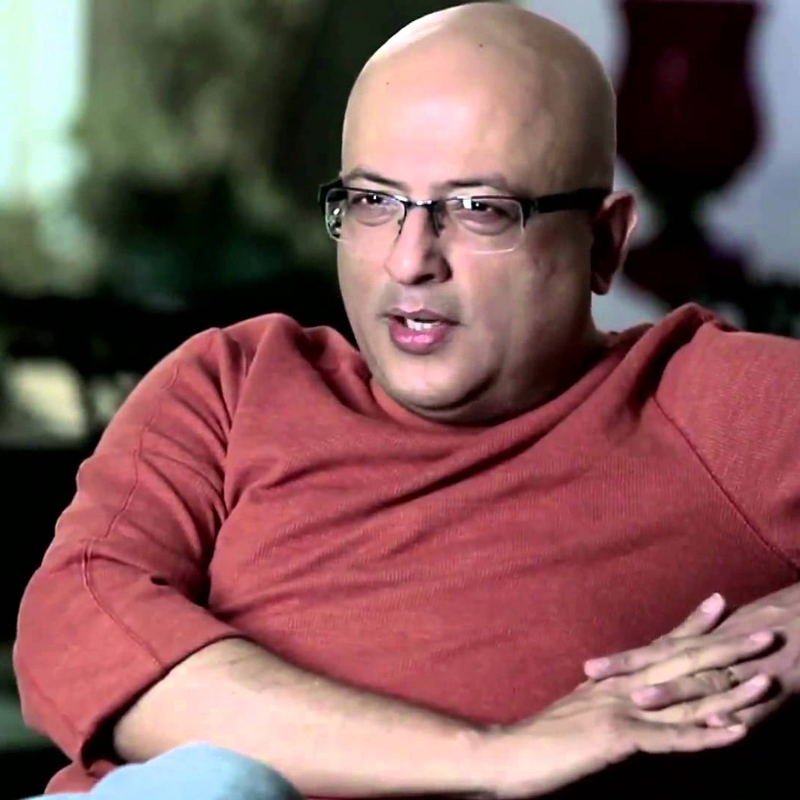
    Verghese, however, feels Maxus‘ growth in India will not directly see any dramatic spurt because of having an Indian global CEO sitting in India. “We are growing pretty strongly and this year have already won four major accounts – Discovery India, Mannapuran Gold Loan, Wipro and Matrubhumi. Our strategy is not just to add size but to work with good brands.”

    The agency’s existing big clients include Vodafone, Hero Future Group, Tata Motors, Nokia and Google.

    Will having the global CEO based out of Mumbai mean less procedural delays for India business? “Maxus is extremely agile as an organisation. Even under Kelly Clark (whom Sakhuja is replacing), we used to get very quick responses. I used to get responses to my emails in two minutes,” said Verghese.
    Also Read:

    Vikram Sakhuja is Maxus global CEO

  • Vikram Sakhuja is Maxus global CEO

    Vikram Sakhuja is Maxus global CEO

    MUMBAI: Vikram Sakhuja, CEO of GroupM for India and South Asia, has been appointed as global CEO of Maxus at a time when it has pocketed a string of new accounts including the prized NBC Universal and SC Johnson.

    Interestingly, this will be the first time that the CEO of Maxus will be based out of India.

    Sakhuja will succeed Kelly Clark who will now be in charge of the Group‘s operations in North America.

    Continuing to be based in Mumbai, Sakhuja will take over the new responsibility after the agency finds his replacement at GroupM.

    GroupM, WPP’s media agency, has carried out a number of changes including GroupM North America CEO Rob Norman who has been named as the chief digital officer of the agency in a newly created position.

    Sakhuja, Clark and Norman will report to GroupM global president Dominic Proctor. Each will begin his new role later this year.

    “Vikram is the perfect candidate to take on the Maxus role from Kelly. Maxus has a great management team and a lot of momentum. I have no doubt that Vikram will continue to build a great agency,” Proctor said.

    He added that Sakhuja will remain in his current role until his successor is announced.

    Sakhuja told Indiantelevision.com, “It is a very exciting opportunity to be leading Maxus which is a young and energetic brand. Being named as global CEO is very humbling.”

    Sakhuja has over 28 years of experience in the industry. He had joined GroupM in 2002 as MD Fulcrum. He was later promoted as MD of Mindshare South Asia and then to CEO for GroupM South Asia. Prior to joining GroupM, he has also worked with Star TV as EVP-marketing, Coca-Cola India as marketing manager brands and Procter & Gamble.

  • Ad Slowdown Looms

    Ad Slowdown Looms

    MUMBAI: A slowdown in the advertising economy looms large amid weakening domestic growth, a sliding rupee and wobbly markets.

    Fears of a crisis worse than the Lehman days in 2008 are spreading fast and wide as India reports its economic growth for the latest quarter at a nine-year low of 5.3 per cent.

    The ad economy will now struggle to match up to the early hope of a 10-12 per cent growth this year.

    Admits GroupM South Asia CEO Vikram Sakhuja, “The slowdown will certainly impact ad spends. We had forecast a 12 per cent growth for the advertising industry in 2012. But now that the economy is going through a slowdown, it will be difficult to assess at this stage the exact extent of impact it will have for the year.”

    A GroupM study pegs the ad industry size at Rs 333.88 billion in 2011, up 13 per cent. It estimates this to grow 12 per cent to Rs 373.97 billion.

    Madison Media has been more conservative with the growth estimates, expecting the media advertising industry to grow 9 per cent to Rs 280.13 billion in 2012.

    Forecasters will need time to make adjustments to their predictions made at the early part of the year. But many of them feel the need to make only minor downward revisions unless the clouds get stormier.

    “A clear pattern in consumer spends is not yet visible. A clearer picture will emerge three months down the road,” says Lodestar UM CEO Shashi Sinha.

    Historically, ad spends have seen cuts when the economic growth has softened.

    Says DraftFCB Ulka Advertising ED and CEO MG Parameswaram, “We have noticed that over the last decade ad spends are broadly aligned with GDP growth numbers. We have seen that when GDP crosses 7 per cent, it has a beneficial effect on ad spends. Similarly when it goes below 5 per cent, it sends signals for a big ad cut. Fortunately we have not gone below 5 per cent, but 5.3 per cent is still bad enough.”

    Media analysts feel the road is going to be bumpy this fiscal. Last month, for example, is a bump for the auto sector. Maruti, India‘s largest carmaker, reported a 4 per cent dip in sales in May while Hyundai Motor, the second in rank, saw a paltry 3 per cent rise.

    The demand outlook is unlikely to improve, made still harsh by a sharp increase in petrol price. External factors and a slow start may upset the Society of Indian Automobile Manufacturers (SIAM) to roll back its forecast of 10-12 per cent sales growth for the fiscal.

    Says ZenithOptimedia CEO Satyajit Sen, “Consumption will get impacted and there will be pressure on price. Being dollar dependent, the telecom handset manufacturers will be hurt. The financial sector will also see a slowdown. Everything, however, will depend on how we recover from the shock of the fourth-quarter economy growth numbers.”

    Print will be hurt the most if this slide continues and companies start shrinking their advertising budgets. Television networks, who depend heavily on advertising as their source of revenue, will also feel the heat.

    Says Sen, “Magazines and radio will feel the pinch while television will be the least affected medium.”

    Multi Screen Media president network sales, licensing & telephony Rohit Gupta agrees that television is more resilient than the other ad mediums. “Television is still the cheapest medium and in hard times we have traditionally seen print and hoarding face ad cuts. Even in the ‘Lehman‘ crisis, television grew by 10 per cent.”

    The mood among Indian industrialists is gloomy as they believe that the economic mess is largely due to government mismanagement and policy paralysis. Despite the European economy getting more desperate and the world, including China, slowing down, a broader ad retreat will not happen if the government starts taking corrective measures.

    Companies, however, have already started making efforts to ensure that their ad budgets drive in efficiencies.

    Says TV Today Network CEO Joy Chakraborthy, “Advertisers are spending but are showing more caution. In case of a slowdown, they will relook at genres and their advertising mix. Sports (read Cricket) may take a hit as it is a high-investment genre. Niche channels may also get impacted.”

    Broadcasters, in fact, will find it difficult to define their terms in case of hard negotiations with media agencies. Advertisers will take a hard look at expensive genres.

    Says Sen, “The price inflation in GECs (general entertainment channels) will be under question mark. However, the genre is still a valid opportunity.”

    Gupta does not agree that mass entertainment channels will feel the pinch. “The categories which are heavy on GECs are not going to cut back their ad spends. FMCGS are doing well and telecom service providers will continue to invest in promotions. Even the auto sector, which has increased its share of ad spends on TV, will be visible as there are many car launches taking place. Retail, finance and the manufacturing sector, which are seeing a slowdown, are, in any case, not heavy on television.”

    News TV broadcasters, however, depend on the financial and retail sectors. They are already struggling to up ad rates due to competition and fragmentation in the genre.

    Joy, however, believes that the situation can‘t worsen for them as news is still a terribly underpriced genre. There are also spike events in the calendar like the Olympics and the elections.

    “News broadcasters will not get affected unless the slowdown really starts biting more broadly. Let us not forget that news has a wider source of advertisers. Local advertisers are also present. The time, however, has arrived for innovative sales,” he says.

    The next two quarters are going to be crucial and companies will swing their ad budgets accordingly.

    Says LG CMO L.K. Gupta, “If the next couple of quarters or so are bad, then companies will draw up alternatives in terms of marketing spends.”

    Advertising will become sales driven. “With the consumer market being hit and inflation staying high, ad spends will definitely take a blow. The bottom line of companies will be under pressure. Advertising in this backdrop will have to be ROI oriented,” says ZenithOptimedia managing partner Sanjoy Chakraborty.

    India is facing headwinds from high gas prices, a slowing global economy and financial crisis in Europe. However, nursing the economy back to health will depend on the government‘s drive to manage the fiscal deficit and introduce policy reforms so that investments flow in. The ad industry can only hope that the situation doesn‘t turn grim.

    (With inputs from Prachi Srivastava & Urvi Malvania)