Tag: Vikram Sakhuja

  • Madison Media’s Vandana Ramkrishna given charge of Kolkata operations

    Madison Media’s Vandana Ramkrishna given charge of Kolkata operations

    NEW DELHI: Madison Media Ace VP Vandana Ramkrishna has been given the additional charge of the group’s Kolkata operations. Ramkrishna, who is based in Mumbai, will now also oversee the Kolkata office in a bid to strengthen the agency's presence in the region. Her key role for Kolkata will be to focus on strategy, digital, business development and ensuring access to Madison World practices of trading, analytics, activation, retail, OOH, sports and content.

    Madison Media has a strong offering in the Kolkata market and services marquee clients like Bandhan Bank, Joy Personal Care and Ganesh grains, amongst others. With this new role, Vandana will directly report to partner and group CEO Madison Media and OOH, Vikram Sakhuja. 

    “Vandana is one of our strongest business leaders and I am delighted to give her the additional charge of the Kolkata office as we make plans to strengthen our presence in the east,” said Sakhuja.

    Ramkrishna added, “I’m delighted to be given the additional responsibility of overseeing the Kolkata operations over and above my current Mumbai portfolio, and look forward to creating a strong foothold for Madison in the Kolkata market." 

    Madison Media group handles media planning and buying for blue-chip clients including Godrej, Marico, Titan, Asian Paints, Viacom 18, BJP, TVS, Raymond, Pidilite, Ceat, Blue Star, McDonald’s, Gaana.com, Timesjobs.com, Tata Consumer Products, Crompton, Indian Oil, Snapdeal, Abbott Nutrition, Cipla Health, Welspun and many others. Madison Media is a part of Madison World which, through its 11 companies, served as many as 500 advertisers last year.

  • Madison Media wins TV business of RSPL Group

    Madison Media wins TV business of RSPL Group

    Delhi: Madison Media begins the festive season with a bang. The agency has bagged the TV business of RSPL Group, the makers of Ghadi detergent. This part of the TV business was previously handled by Wavemaker, a GroupM company. The account will be handled by Madison Media Plus out of Delhi.

    Madison Media & OOH partner & CEO Vikram Sakhuja said, “Ghadi has been an inspiring Local Brand story that has grown only stronger as MNC brands have entered the market. It is a proud moment for Madison to partner with RSPL.”

    Read more news on Madison

    Madison Media Plus CEO Rajul Kulshreshtha said, “We’re happy to have won the account of RSPL Group, a win that has emerged before the festive season begins. We look forward to a great association.”

  • Welspun appoints Madison Media Sigma as its Media AOR

    Welspun appoints Madison Media Sigma as its Media AOR

    MUMBAI: Madison Media has been appointed as the Media AOR for home textile solutions provider, Welspun. The agency will handle the entire media mandate including print, TV, radio, digital, OOH, and activation. The account was won in a multi-agency pitch and will be handled by Madison Media Sigma in Mumbai.

    Welspun retail business CEO Nemisha Ghia says, “Welspun is very aggressive in its expansion plans in domestic business and we aim to be the market leader in branded home linen market in a short span of time. To take this journey forward, we have selected Madison Media as our media partner. Madison is one of the oldest and respected names in the media business in India, and we are confident that this partnership will really help our brands in their accelerated growth path."

    Madison Media & OOH Group CEO Vikram Sakhuja says, “The Home has become an even more important place in today’s new normal. And Welspun has been adding inspiration to Bedrooms and Bathrooms all these years. We are excited about partnering Welspun to create even more magic inside Consumers’ homes.”

    Madison Media Sigma CEO Vanita Keswani says, “We’re excited to be a part of Welspun’s journey, providing home textile solutions in India and across the globe. Looking forward to strengthening this partnership for years to come.”

  • #MediaMinds2| Advertisers must make ethical call on pandering to sensationalism: Vikram Sakhuja

    #MediaMinds2| Advertisers must make ethical call on pandering to sensationalism: Vikram Sakhuja

    NEW DELHI: Publishers of today are under more extensive scrutiny than ever. Consumers are far more aware and aren’t hesitant to question the sensationalism that they are peddling in the name of information and entertainment. Even some of the brands, globally, have started taking cognisance of the matter and have started pulling away ad monies from certain platforms like Facebook for hate speech and problematic content. This has given rise to an interesting discussion in the media and marketing ecosphere around what roles can advertisers play to curb this issue.

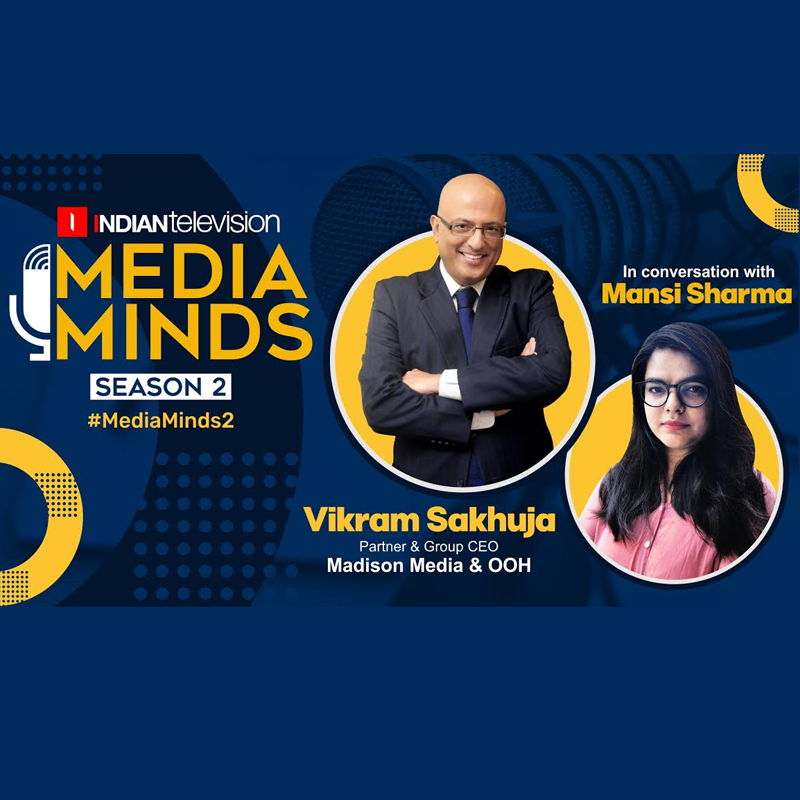
    Madison Media & OOH group CEO Vikram Sakhuja, addressing the question in Media Minds season two, shared that there are two ways to look at the current scenario from an advertisers’ standpoint: brand health and ethics. 

    Comparing the situation to when he started his career with P&G in the late-80s, he stated that at that time the debate was about quantity v/s quality, which was also based on the core idea of the environment in which an ad is seen.

    “When Aaj Tak started, advertisers used to think that most ads on the channel are of undergarments and whether it’s suitable for my brand health to be visible there. At that point in time, the school of proper marketing told me if a consumer is seeing a particular programming, then they are there for a reason. And if they see your ad, it shouldn’t be a problem. In the case of P&G, in the early 90s, the quantity was always more important than quality.”

    He adds that while in today’s time that quality vs quantity debate has got blurred because of tools like social media where ads are no longer seen as an interruption, but there is another debate that has started around what sort of content is surrounding a brand’s ad or branded content. “It is actually very important to actually raise this question even from a brand health standpoint,” he said.

    Addressing the situation from an ethical standpoint, he shares that advertisers have to make the call around whether they want to pander to sensationalism or fake news.

    “Even though it has, maybe, nothing to do with the brand ad that is placed next to it, the reason this sensationalising (happens) is because advertisers are going to come because of more eyeballs. So, if you take an ethical position on that and say, even if the eyeballs come there, I will not pander to that kind of sensationalism, it will, in fact, dry up the oxygen in that room, rather than give them more oxygen. Then you are actually disincentivising those same publishers from trying to take that strategy to monetise their business,” he added.

    He said that as an agency head he will warn the advertiser if there is inflammatory content on a certain publisher’s channel or website, but he will leave the final decision on the brand head.

    Apart from this, Sakhuja talked about his favourite subject – data, the need for a unified metric system in marketing and his plans for his agency going ahead.

  • Covid2019 might push traditional advertising towards negative growth

    Covid2019 might push traditional advertising towards negative growth

    NEW DELHI: The world economy has been brought to its knees by a medical crisis called COVID-19. The pandemic has battered the situation for even the most developed nations, and India, which was already dealing with a bruised economy for the past few quarters has found itself in a bigger soup. The ongoing lockdown has desisted liquidity across industries translating into a tough time for the media and advertising world, which has slowed down the business greatly mid-March onwards.

    DAN India CEO Anand Bhadkamkar tells Indiantelevision.com, “The pandemic has impacted the entire economy and the effects of it are being felt across all businesses. Manufacturing and other core businesses have been affected the most. People have stopped interacting in physical spaces. They are not moving out of their homes. Consequently, the entire economic activity has slowed down considerably. Advertising and communications tend to fuel the growth of commerce massively, thereby, accelerating its growth forward. Now, given that commerce has been badly hit, advertising is suffering equally.”

    DDB Mudra Group CEO and MD Aditya Kanthy shares that advertising reflects and shapes the economy and there has been a slump in the work opportunities because of the situation. “The demand side problems are obvious. Even in categories where there is demand, there are huge supply-side/ supply chain and distribution issues. Liquidity and credit is a challenge. Advertising is dependent on all of these factors. The industry depends on marketers who have the appetite and the means to invest. That is compromised in the current market scenario. It cannot operate in isolation.”

    While there has been a great surge in media consumption, both on digital and television, it is not resulting in ad monies for the platforms, given the market uncertainty. As per BARC-Nielsen data, weekly viewing minutes in week 15 of 2020, starting 11 April, grew by 40 per cent to reach 1,239 billion, as compared to 887 billion during the time period between 11 and 31 January, however, the number of advertisers dropped to 1,021, as compared to 1,378.

    If Madison Media and OOH group CEO Vikram Sakhuja is to be believed, the advertising growth, which was pinned by his firm at around 10 per cent at the beginning of the year,  will take a big hit in this calendar year. “We were expecting around a six per cent growth for traditional and around 28-30 per cent for digital media. However, looking at the current scenario, traditional media might observe a negative growth, while digital will also shrink considerably. We will be lucky if we can see a 1-2 per cent growth this year.”

    He elaborates, “The January-March quarter was already difficult for TV because of the NTO-2.0 and the second quarter is hit by COVID impact. Third-quarter might see a rise if we have a good Diwali season but it will depend largely on the market sentiments then.”

    Bhadkamkar notes, “We were hoping that advertising spends would grow by 10-10.5 per cent in 2020 as per industry estimates. Now, however, this growth is expected to be half of that. And, if the impact continues, the ill-effects would be much larger on the calendar year.”

    “The first quarter has been severely impacted, and recovery might start after h2. Q3 should return with recovery but again, that is only an assumption at the current stage and depends on how COVID 19 situation improves. Certain economists are predicting that the GDP growth (that was estimated at about 4.5 per cent) by May dip up to 1.5-1.9 per cent. If that happens, we will be slipping down by more than half almost. We just have to wait and watch how things pan out. For now, everything seems very tricky. However, from a long term perspective, the outlook for India is definitely positive, once the country starts getting out of COVID 19 downturn.”

    The industry insiders are hoping for some relief and support from the Indian government to pad the losses advertising industry is facing. Recently, AAAI chairman Ashish Bhasin had written to union minister of information & broadcasting Prakash Javadekar detailing a set of recommendations to support the industry.

    Bhadkamkar supports the decision as he says, “The government intervention is necessary for the current situation because the pandemic has affected the advertising industry severely. The letter stresses on how the Government can help in providing the stimulus to the advertising industry and not for any add-on benefits or expecting any specific fiscal measures. At present, the liquidity is getting tighter and there is a lot of slackness in the market. Hence, we need to protect the businesses by providing more liquidity as well.”

    He adds, “Right now, what is needed, is to protect the entire ecosystem because as an industry, advertising generates a lot of employment and more importantly acts as a catalyst for the growth of businesses. In my view, the letter is trying to address this and seek action towards this more so in this immediate period. Once, this lock-down ends and hopefully, we get ahead of the COVID-19 challenge at the earliest, things will come back to normal. But till then, the industry would need that additional support.”

    Kanthy also believes that the government will have to extend support to the whole ecosystem. “The government’s intervention in all parts of the economy is necessary at this time, whether it is on the stimulus or on the tax side. There is a need to put some extra cash in the hands of consumers as well to stimulate some demand. From an industry perspective, it will help us in access to liquidity and credit.”

    Sakhuja adds, “Government support will be really helpful right now so that brands treat advertising as an investment. Also, the government owes a lot of money to media and advertising companies. They need to pay that back as well.”

  • Madison Media launches data-driven marketing and insights platform Datask

    Madison Media launches data-driven marketing and insights platform Datask

    MUMBA: India’s foremost media agency, Madison Media today unveiled Datask, its proprietary consumer-based targeted marketing and insights platform, designed to identify and define personalised experiences at scale across creative, media and CRM. Datask drives customer-forward mar-tech capabilities to a higher level with the confluence of data and technology.

    Datask will help brands understand information about customer demographics and psychographics, including what draws customers in and persuades them to make purchases by bringing all the data together on one single platform, giving brands a cohesive view of customers. It will give brands the ability to centralise and manage their databases, analyse their marketing efforts, inform content management systems, power advertising platforms and thus improve overall marketing outcomes.

    Datask is designed to plan consumer insights, audience segmentation, channel planning, creative development and message distribution, with continuous optimization and measurement with attribution tied to brand performance at every step of the consumer journey. Datask can be integrated with marketing cloud, allowing clients to get the most from their first-party data and Mar-tech investments.

    Madison Media & OOH partner and group CEO Vikram Sakhuja said, “We are committed using insights, data, technology and MarTech capabilities to increase our clients' profits in a sustainable way. Until now, the idea of mass personalisation was more of an aspiration than a reality, Datask changes that. This is targeted marketing at scale and in action and the new platform can be leveraged by all Madison Media clients across multiple disciplines.”

    Madison Media chief digital officer Vishal Chinchankar said, “With Datask, we have created a unified technology platform that intakes disparate datasets, provides normalisation and segmentation on that data, and thus will allow Madison clients to define specific audience segments to which they can provide distinct marketing experiences.”

    Madison Media Group is India’s foremost media agency handling media planning and buying for blue chip clients including Godrej, Marico, Titan, Asian Paints, Viacom18, UBER, BJP, TVS, Raymond, Pidilite, Ceat, Blue Star, Piramal Healthcare, Domino’s, McDonald’s, Gaana.com, Timesjobs.com, Tata Chemicals, Crompton, Indian Oil, Snapdeal, Gowardhan Dairy and many others.  Madison Media is a part of Madison World which through its 11 companies served last year as many as 500 advertisers.

  • Breaking the Digital Code at the 2nd Edition of The Advertising Club’s D-CODE

    Breaking the Digital Code at the 2nd Edition of The Advertising Club’s D-CODE

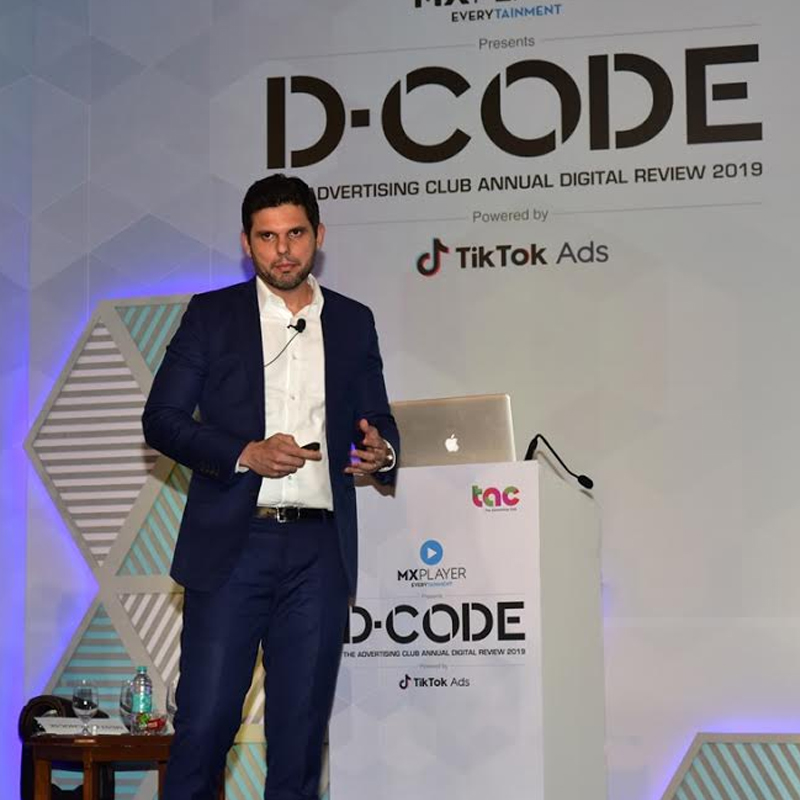
    Mumbai : India’s digital ecosystem has over the last few years taken significant growth strides by playing a decisive role in scripting success stories for many brands. An evening dedicated to showcasing and deliberating on these inspiring stories saw the best media, marketing and advertising brands come together at the value-driven, learning event – The Advertising Club’s D-CODE presented by MX Player and powered by Tik Tok Ads. A curated panel of 13 industry though leaders inspired and stirred conversations by sharing an example of their own best work, one work they admire and 3 learnings they would want to share with the audience.

    Addressing the forum were Amarjit Singh Batra, Managing Director, Spotify; Jogesh Lulla, COO, Corner Stone Sport and Entertainment; versatile Standup Comedian, Musician & Filmmaker, Kenny Sabastian; Karan Bedi, CEO, MX Player; Mustafa Ghouse, Chief Operating Officer, JSW Sports Pvt Ltd; Nirmal Pulickal, Head – Facebook Creative Shop, Facebook; Partha Sinha, Vice Chairman and Managing Director, McCann Worldgroup; Rashi Goel, VP- Consumer Communication Media, CRM & NHW, Nestle; Sachin Sharma, Director – Sales & Partnerships;  Bytedance (Tik Tok); Sidharth Rao, CEO & Co-Founder, Dentsu Webchutney; Srivats TS, VP Marketing, Swiggy; Sumeet Narang, Vice-President – Marketing, Bajaj Auto and Vikas Agnihotri, Country Director, Google.

    Vikram Sakhuja, President, The Advertising Club, opened the evening saying: “With D-Code we aim to break the definitive code of digital marketing. Today, most marketers are exploring various formats, forms and platforms to bring business value using digital marketing and the insights of our speakers today will go a long way in paving the best success stories for the industry in the coming years.”

    Aditya Swamy – Managing Committee Member, The Advertising Club said: “The goal of D-Code is to inspire and be inspired. With a range of speakers from across the eco system showing work by brands, platforms and talent, I hope we were able to raise the bar and give marketers thought starters to crack the Massive digital opportunity.”

    Punitha Arumugam – Managing Committee Member, The Advertising Club said: "26 case studies and 39 tips on digital in one evening was time well spent. We had great feedback from the audience with inputs on how to make D-CODE even larger and better in 2020."

    The five key learnings that the advertising, digital and marketing fraternity can take back from D-CODE 2019 are:

    1) It’s not the output but the outcome that matters in the digital world.

    2) Same customer consumes differently hence platforms matter.

    3) Connect customer data across touch points for a holistic view of the market.

    4) Plan ahead so you can be relevant and always answer ‘what’s in it for me’ for the customer.

    5) Learn to create before you sell as technology changes, but people don’t.

    With a galaxy of the who’s who of the media, advertising and digital industries in attendance, the second edition of D-CODE established once again established that knowledge sharing is the way to success for all.

  • Tariff order implementation: Pay channels’ connectivity drops ranging from 61% to 0.5% across genres

    Tariff order implementation: Pay channels’ connectivity drops ranging from 61% to 0.5% across genres

    MUMBAI: The ongoing flux in the broadcast sector due to the new TRAI tariff order implementation has had a significant impact on the connectivity of pay channels in the country. After the new regulatory framework kicked in on 1 February, pay channels’ connectivity witnessed a drop ranging from 61 per cent to 0.5 per cent across genres. Free-to-air (FTA) channels, however, seem to have benefitted under the new regime so far.

    “NTO deployment is creating massive nightmare for all DPOs, whether it is DTH or cable. The technology is unable to handle the massive data that is getting ported to these boxes. So what’s happening is the technology is collapsing, they don’t know what is happening in the data centres because of which the channels are dropped out,” CEO of a major broadcaster told Indiantelevision.com on the condition of anonymity.

    Chrome DM live data week 7 has reported a major change in consumption patterns across genres. Pay channels from the English news stable, endured a drop in connectivity by 24 per cent, while the FTA channels witnessed a growth of six per cent with Republic TV, News X and Channel News Asia being the biggest gainers. The kids’ genre channels saw an overall drop both across Pay and FTA of 34 per cent and three per cent respectively.  Interestingly, the connectivity of Maha Cartoon Network rose by eight per cent.

    While the connectivity of Hindi GEC channels connectivity reduced by 0.5 per cent, that of FTA Hindi GECs increased by 0.1 per cent. Dillagi was the top gainer in Hindi GEC FTA genre followed by Mubu TV. Among other genres, Hindi movie channels experienced a slight drop in FTA, with Hindi news pay channels sailing in the same boat. Hindi news FTA channels, however, saw a 0.4 per cent growth, with News 1 India, Bhaskar News, News World India and IND 24 being the bigger beneficiaries.

    The regional markets were a reflection of HSM trends. However, the drop in connectivity was lower. Tamil channels across genres were hit by a slight drop ranging from 0.1 per cent to 0.3 per cent.

    “Maharashtra saw a slight drop both across FTA and pay with Marathi GEC being mislaid by 0.5 per cent across pay channels, Marathi movies by 0.2 per cent and Marathi music by 0.1 per cent,” the report stated.

    The Chrome data week 7 has reiterated that the offtake of DPO designed packages continues to be higher, standing at 15.5 per cent rate in urban India. The data added that 73.5 per cent still haven’t gained access to the new packs and continue to receive the 300 odd channels as per their old packs. According to the data, only FTA channels packs have reached 5.3 per cent of the TV homes followed by broadcaster packs at 4.1 per cent and a-la-carte at two per cent.

    “Broadcaster packages offtake has a direct correlation of quantity and price with the India consumer – which is led by Zee (23 channels @ Rs. 39) followed by Sony, Star and Colors. For the Non-GEC category – Discovery, Disney and Times Network lead – however they are a distant second to the GEC offtake across HSM,” Chrome DM founder Pankaj Krishna said.

    “When TRAI channel tariff order is enforced, channel availability per home will reduce from approx. 350 channels to 100+50. So, today most GEC channels have 90 per cent + distribution and about 35 per cent weekly reach. After TRAI these channels could land up having 30 per cent distribution and 30 per cent reach,” Madison Group CEO Vikram Sakhuja said earlier this week at an event.

    In light of the new tariff order implementation, BARC released its weekly TV viewership data only to those that have subscribed to its service. The audience measurement company is yet to state until when it intends to continue doing so.

    “We need to stick to BARC guidelines because that’s the norm or benchmark we have in this country. I think TRAI is also in close conversation with the authorities that how much of migration has happened, how much of it is pending right now and that is why they have extended the deadline to 31 March 2019. Ultimately the system needs to stabilise. Till that time I don’t think the numbers will make any difference to any advertiser,” marketing head of an FMCD major had recently told Indiantelevision.com.