Tag: Vikram Sahay

  • Stalwarts to explore how marketing is embracing technology to shape the landscape

    Stalwarts to explore how marketing is embracing technology to shape the landscape

    Mumbai: The Marketing Conclave (Marcon), one of India’s largest marketing conferences, organized annually by the Internet and Mobile Association of India (IAMAI), is all set to return with its 19 edition on 22 November 2023 at the Taj Lands End in Mumbai. This year Marcon will explore, through a plethora of sessions, the dynamic relationship between marketing and technology. The conference is being co-powered by Whistle Feed.

    This year’s Marcon promises to offer a multifaceted experience with four distinct tracks and more than 30 sessions. With over 75 prominent industry leaders converging on one platform, attendees can anticipate engaging discussions on the latest marketing trends. These insights are designed to provide valuable guidance for advertising and marketing professionals, assisting them in aligning their goals with the ever-evolving and technology-driven landscape of marketing.

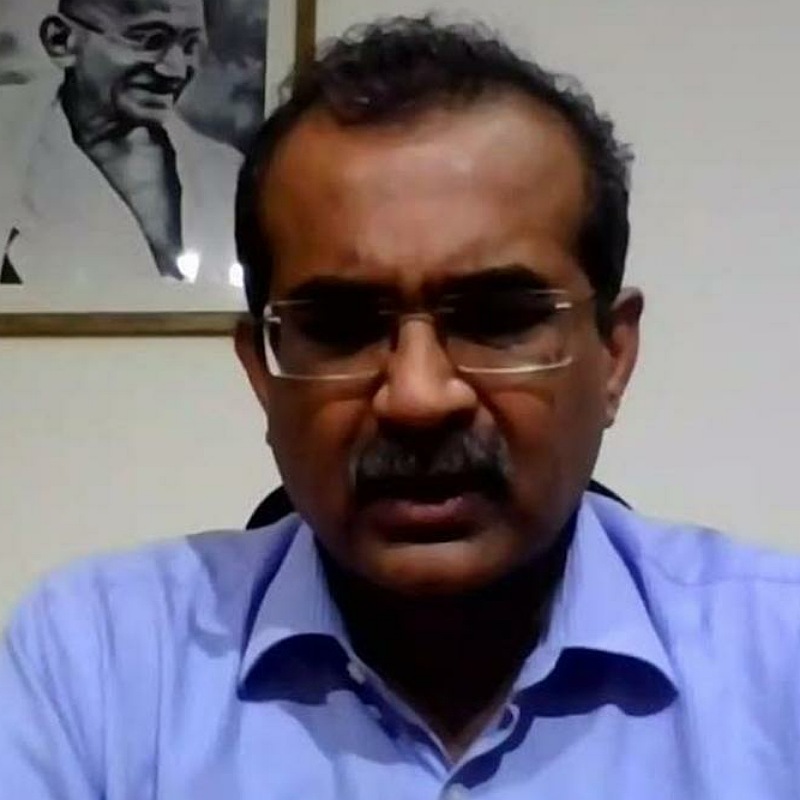
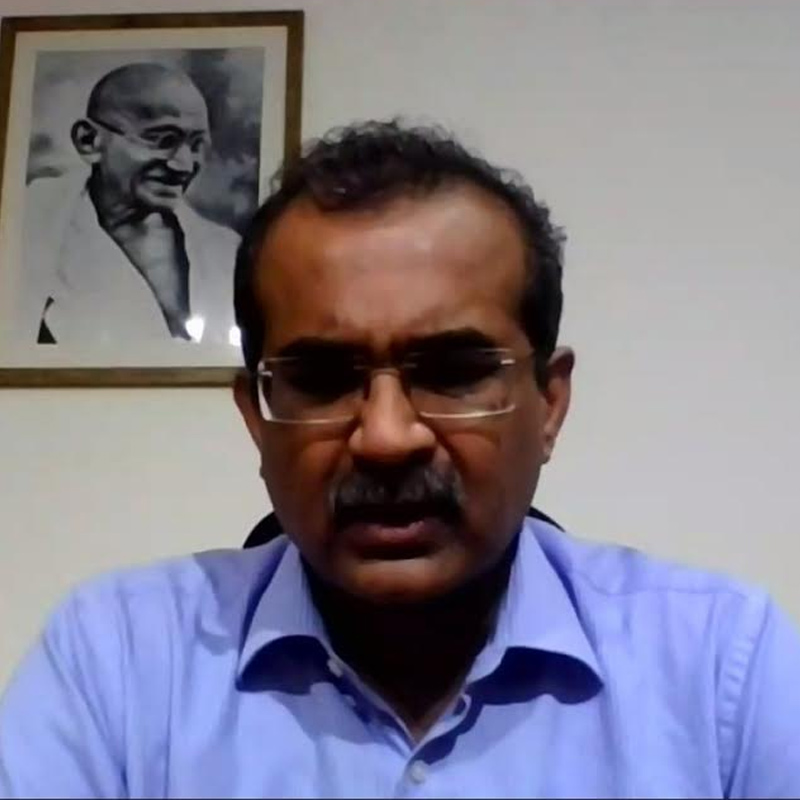
    Marcon 2023 has a lineup of distinguished speakers, who will discuss and deliberate on the Marcon theme. Government of India & Ministry of Information and Broadcasting joint secretary Vikram Sahay will be the Guest of Honour at the conference. He will deliver a keynote address on ‘Empowering Digital Advertising and Marketing: Regulatory Insights and Industry Collaboration for Sustainable Growth’.

    Among other speakers at Marcon 2023 will be industry captains from renowned companies such as Amazon Pay, Mondelez, Adobe, Physics Wallah, DBS India, Inshorts, Airtel Payments Bank, Tata Cliq, PhonePe, Federal Bank, and Hotstar. These key speakers, representing diverse sectors, will share their expertise and insights, contributing to the rich discussions on the latest marketing trends and the evolving landscape of technology in the field. Attendees can look forward to gaining valuable perspectives from these accomplished professionals at the event.

    Marcon 2023 is being supported by key industry players, including Route Mobile, Rocketship Films (A Jagran New Media Initiative), Haptik , Indus App Store, True Balance, Hexawebony, and ValueFirst, among others.

    Also, part of this conference is an award ceremony –  Digital Native Brand Awards, which celebrates and honours businesses and brands that have harnessed the power of digital technology, epitomizes the spirit of digital entrepreneurship, and leverages technology as a core driver of their success.

  • Multiple stakeholders come together to form ASCI Academy

    Multiple stakeholders come together to form ASCI Academy

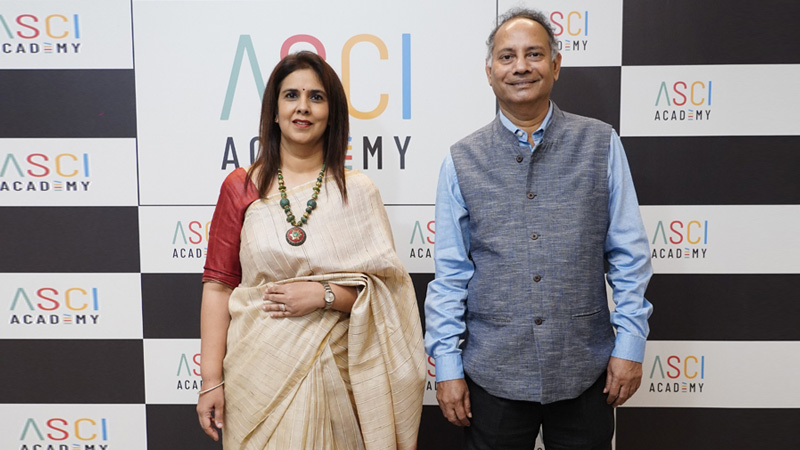
    Mumbai: The Advertising Standards Council of India (ASCI) proudly unveils the ASCI Academy, a pioneering initiative poised to amplify the advertising industry’s capacity to create more responsible and progressive advertising campaigns. Building upon ASCI’s established corrective role which comes alive post ad publication, this  pioneering platform embeds self-regulation right at the point of the inception of  advertisements.

    In today’s digital landscape, characterised by brief campaign durations and a surge in number of advertisers, the ASCI Academy is positioned to empower current and future industry professionals including influencers and students with a foundational understanding of advertising regulations, ensuring ethical practices from the outset.

    The ASCI Academy’s core mission is to cultivate a cohort of advertising professionals dedicated to upholding responsibility in advertising, ultimately upholding consumer trust in brands.

    The academy strategically consolidates ASCI’s extensive thought leadership and educational programs under one comprehensive umbrella. The academy’s spectrum of programs caters to diverse needs, spanning online, in-person, and hybrid formats. From e-learning modules to topical webinars, from deep-diving masterclasses on regulatory nuances to enhancing teaching skills through faculty development programs, the academy covers it all. Additionally, influencer certification programs ensure responsible endorsement practices, while consumer education initiatives foster informed choices.  Through sustained training and research efforts, the ASCI Academy remains steadfast in its commitment to engage stakeholders in the preventive aspects of self-regulation. The ASCI Academy brings together stakeholders united by a shared belief in responsible advertising

    practices. The Academy has over 50 founding partners and supporters including Cipla Health Ltd, Coca-Cola India Pvt Ltd, Colgate-Palmolive (India) Ltd, Diageo India, Hindustan Unilever Ltd, Mondelez India Foods Pvt Ltd, Nestlé India Ltd, PepsiCo India Holdings Pvt Ltd., Procter & Gamble Home Products Pvt Ltd, several leading universities and colleges, prominent Civil society organisations such as Mumbai Grahak Panchayat, Consumer Voice, CUTS, CMS and others, and, industry bodies  like the ISA, AAAI, IAA and ISWAI, as well as research insight organisations.

    Department of consumer affairs secretary Rohit Kumar Singh said, “I congratulate  ASCI on the launch of the ASCI Academy. In the digital age, preventive actions need strong impetus and encouragement, and the training of industry professionals – current and future is an important systemic intervention. The Department of Consumer Affairs is supportive of such efforts by the advertising self-regulator to foster a culture of responsibility in the advertising industry. We hope that the advertising industry engages  deeply with the Academy programs to make their teams better trained and educated on  the aspects of advertising regulations.”

    Ministry of information and broadcasting, joint secretary, Vikram Sahay, who is part of the ASCI Academy’s Apex Council said, “Many congratulations to ASCI on the launch of the ASCI Academy. The Ministry of Information & Broadcasting has always supported self-regulatory mechanisms in the media and entertainment industry. We hope that the  resources and support by the Academy would be extremely useful for the online  advertisers and platforms.”

    Addressing the opening of the academy, ASCI chairman NS Rajan said: “While ASCI has always had a strong corrective mechanism, we also wanted to harmonise the dynamic interplay between creativity and responsibility and address the broader consequences of advertising on society at large. The ASCI Academy is a big step in this direction which will  facilitate a preventive footprint and shape an advertising ecosystem to help the industry  to get it right.”  

    ASCI CEO and secretary general Manisha Kapoor added, “With short campaign durations, it is important that attention is directed at the point of creation of ads, not just after they are published. When the only ads to hit the market are responsible and compliant, it is a win-win for both consumers and industry. Over the next three years, ASCI Academy aims to train 100,000 current and emerging professionals through self-learning and on-campus workshops and sessions, besides programs for research and consumer education. This is a new chapter in self-regulation in India, and we are grateful to all our founding partners for supporting this vision. We hope to add several more believers in this agenda- this is just the beginning”.

  • India’s M&E industry needs to focus on incredible creative endeavours: Disney+ Hotstar’s Gaurav Banerjee

    India’s M&E industry needs to focus on incredible creative endeavours: Disney+ Hotstar’s Gaurav Banerjee

    MUMBAI: Delivering an address at a session of Ficci Frames Fasttrack 2022 called ‘The Magic of Online Curated Content (OCC)’, Disney+ Hotstar head content Gaurav Banerjee said that the time is now for India’s media and entertainment industry to focus on incredible creative endeavours. 

    “We need to do better when it comes to incredible creative endeavours. The time for us to crack the code of creating incredible stories that travel all over the world is now. It is up to all of us to do better, to equip ourselves better. We must note that this is what our potential is. That is when massive success for all of us will follow,” Banerjee added.

    He gave an example of Korean content. The movie “Parasite” won multiple Oscars including best picture, director and screenplay. Recently, a Korean actor won an Emmy. It was a Korean show on Netflix that got incredible followership all over the world.

    He also said that the entertainment industry choosing to do things for profit or a larger social cause is a false choice. “We must do both.” 

    He gave the example of Satyamev Jayate, a show that Star did. When the show returned, he took the decision not to market other shows. Only this show was marketed. Interestingly, nobody complained. Instead, the fact that the show took a position against female infanticide was greatly appreciated. His company always wanted to be part of a large cause. That was when greater success followed. He added that there were two components in the media and entertainment industry – artists and fans. “They want us to do more and do the right thing.” This, he said, had massive business benefits. And even if doing the right thing does not always produce big benefits one must still do it.

    In his address, he mentioned the media and entertainment are accountable to society. “Creativity works in the service of society.” Disney, he said, believes in this contract. When it has followed the reward has happened. But equally, when it didn’t follow there were punishments. In terms of Disney Star’s curated content journey, he said it is notable for how women have been treated over the years. 

    This was never the case earlier even though cinema had existed for decades. The first phase for him was the early 2000s with the K serials and other shows like Sanjivani. The decision was taken to put women at the centre of storytelling. It was not just about entertaining people. This was a big massive change happening at scale. “The impact was massive and significant.” He pointed to a study done by two American scholars from the University of Chicago. They went to homes before they got satellite TV and went back to the same homes three years later after they got exposed to those shows from Star India and other companies. As a result, women’s preference for male children fell by 20 per cent. Women’s tolerance for abuse decreased by 10 per cent. 8 per cent of girls between the ages of 6-10 went to school. “There was a lot of power in this room. Sometimes, we lost sight of it.”

    The Chicago study was phase one. This second phase came around 10-11 years later. The broadcaster decided that it was not enough to just put women at the centre. They need to work and become successful professionals. They were backed by their husbands and in-laws. Star did a show. 

    On TV, people were told that there is no job that a woman cannot do. However, at that time some things were sacred like marriage. This changed with the third phase in 2020. The show Anupama questioned marriage. The storyline, he noted, was powerful. If a woman was taken for granted, was that worth it? At 45, she could start a new life cheered by India.

    When asked a question on TV versus OTT he noted that the creativity paths were similar. All content on Star’s TV channel is put first on OTT. So for example new episodes of Anupama come first to Disney+Hotstar at 6 a.m. Creativity answers are the same. A good show is a good show. The same logic applies to movies. But he also acknowledged that distribution channels make a difference in digital because people use mobile content to watch solo. So edgier themes and shorter stories are more convenient. He added that his team watches a lot of content. They watch Youtube, OTT and TV. Often they call creative people like filmmakers about the possibility of working together. The best way to get a yes in terms of working with Disney+Hotstar is if he calls.

    The keynote address was delivered by the Ministry of Information & Broadcasting (MIB) joint secretary (P&A) Vikram Sahay. He was in favour of the government keeping itself away from the area. Online content curation must have self-discipline and grow. There is self-certification. He noted that people are taking advantage of the low Internet costs. “Today online, curated content is the big thing in terms of reach, popularity. OTT is here to stay. We have been producing some very good original, value-based content.” He added that actors, screenwriters, etc., who were not getting a chance in films now got a space. More people can showcase their talent. He noted that six months back the MIB ministry had developed a mobile game on India’s freedom struggle and this was done with Zynga. It is in English and Hindi. There are prizes to incentivise children. For promotion, a 30-second rap song was created. 

    “Now the game has been launched globally.” While the government around a year and a half back introduced a three-tier system, a grievance mechanism where people can voice their complaints about digital content, he said that this has not inconvenienced any of the OTT platforms. That is because most people are happy when their grievance is heard and they get a response. “We have not heard a single OTT platform complain about the grievance system. Nobody will be inconvenienced or be burdened.”

    During a panel discussion on being asked how the journey of The Viral Fever (TVF) started, Head- TVF Originals Shreyansh Pandey said, “TVF came into existence because a unique set of audience who were not getting entertained from the television or let’s say the shows which were being run at that time – they wanted something fresh, they wanted something new.”

    The actor Divya Dutta, on being asked how it has been for an actor when OTT is booming, said, “It’s a good time for actors. It is the layer of characters now. You get that time when it comes to a series vis-à-vis a short film or a feature film.”

    The filmmaker Nikhil Advani talked about the lack of pressure in creating content and the freedom which follows. He said, “On OTT, the shelf life is longer. The word of mouth stays for a longer time. The pressure to get stars the numbers vis-à-vis a story…this is easy when you have OTT.”

    The actor Sohum Shah also talked about the reach of OTT and its rising popularity. “Films like Tumbbad have reached more audiences because of OTT. As an actor, it also allows you not to get typecast and work like a chameleon. It is also good, especially for female actors. Talent is flourishing because of OTT,” he added.

  • M&E industry must ensure self-classification under IT Rules 2021 happens in right spirit: Vikram Sahay

    M&E industry must ensure self-classification under IT Rules 2021 happens in right spirit: Vikram Sahay

    Mumbai: It is the responsibility of everyone in the media and entertainment (M&E) industry to ensure self-classification of content happens in the “right spirit” under the Digital Media Ethics Code, said the ministry of information and broadcasting joint secretary Vikram Sahay on Tuesday.

    Sahay was addressing the Pixels digital entertainment conference organised by the Internet and Mobile Association of India (IAMAI).

    “Consumers are curious whether the self-classification rule will be able to maintain the level of seriousness and discipline in content creation,” said Sahay. “We are of the view that the content creators and producers are mature enough and have accepted it in the right spirit. There should not be any cause of grievances on account of the fact that it is self-classification rather than pre-certification.”

    “We are in consultation with IAMAI for quite long, essentially in the area of content regulation and IAMAI has played a very important role in putting all the OTT players together and trying to develop a commonality of ideas and interests and that has helped us in trying to come out with Digital Media Ethics Code which was notified in February this year,” he further added.

    The Digital Media Ethics Code was notified in the month of February this year. The rules prescribed a framework to empower consumers to make informed viewing choices and also put in place a tiered grievance redressal mechanism.

    Sahay observed that the digital entertainment sector has witnessed phenomenal growth and has been a source of direct and indirect employment.

    The virtual conference Pixels deliberates upon the business and technology side of the digital entertainment sector with respect to OTT platforms, production houses, and content distributors.

  • India’s OCC providers expected to generate $2.6 billion in revenue by 2025

    India’s OCC providers expected to generate $2.6 billion in revenue by 2025

    Mumbai: The revenue generated by India’s online broadcast and video sector increased by 159 per cent between 2012 and 2019.to reach $483 million. This is expected to touch $2.6 billion by 2025, according to a new report.

    A white paper by Frontier Economics in partnership with Creative First, FICCI, Producers Guild of India and Motion Pictures Association Asia Pacific found that online curated content (OCC) providers’ investment in content and production was not only a significant engine of growth within the media and entertainment industry but also the wider economy. According to it, 60 per cent of production costs are spent outside the specific M&E sector in the general economy to support media companies’ investments, for example on catering, hospitality, construction and legal services.

    The proportion of the Indian population using the internet has almost tripled since the entry of OCC providers in 2012, mainly due to the government’s initiative, but in part due to demand for OCC services drawing people to increase their internet usage; 34 per cent of Indians now use the internet (compared to 12.5 per cent in 2012)

    The research found that the geographic distribution of OCC investment in original titles is broadly proportional to each country’s number of global OCC subscribers, and as subscriber numbers continue to grow in India, so will investment in local and regional content.

    Globally, OCC providers are expected to pump $61 billion into original and licensed content by 2024. They collectively invested $24.7 billion in content in 2020. In 2019, The Walt Disney Company, NBCU, WarnerMedia, and ViacomCBS collectively poured $45 billion into content spending and creation globally (excluding sports).

    The study also showed that 56 per cent of hours watched on Indian OCC services was local content. It also found via a survey that 70 per cent of Indians consider it important that their OTT platforms provide local content.

    Investments in content have a disproportionately large contribution to the GDP as it provides skilled, well-paid employment stimulates economic growth, and supports a country’s exports. Since producing top-quality content is costly and content creation is a risky investment, policies like tax rebates or subsidies mitigate the risk and have been found to significantly increase investments in content, according to Frontier Economics.

    According to it, India’s existing policy framework has encouraged investments in the M&E sector and created a virtuous cycle of content creation and skill development. However, it pointed out that policies that discourage or constrain foreign investment and market entry can disrupt this virtuous cycle. “Protectionist policies intended to shield local companies from international competition could result in local industries that are inward-looking, less innovative and less able to produce high-quality content that is in demand internationally,” it said.

    “A light touch regulation has been our intention, the government being an enabler, rather than bring any brakes to the system of decision making, investment and employment opportunities,” said the ministry of information and broadcasting joint secretary Vikram Sahay on Friday.

    He added “Policy is always an evolving process with time, experience, and learnings. The government has always worked with the industry and other stakeholders, and we look forward to your suggestions and views. The industry has taken the Digital Media Ethics Code positively and has incorporated the spirit of the ethics code diligently in its decision-making process. The grievances received by the Government have drastically come down and it shows that the regulatory mechanism with the self-certification process is working well.”

  • Digital Media Ethics Code will make publishers accountable: I&B Jt Secy Vikram Sahay

    Digital Media Ethics Code will make publishers accountable: I&B Jt Secy Vikram Sahay

    New Delhi: As the government’s stand-off with a few social media companies continues over the new IT rules, ministry of information and broadcasting joint secretary Vikram Sahay said that Digital Media Ethics Code is aimed at addressing the grievances of the common man, and should be viewed as a ‘citizen-centric legislation’.

    “Digital Media Ethics Code is aimed at stopping transmission of content which is objectionable to women or harmful to children. Presence of a regulatory body can control and stop the spread of fake news as well as make the publishers accountable. It is essentially citizen-centric legislation,” he said on Tuesday.

    The MIB joint secretary was speaking at a webinar on ‘Digital Media Ethics Code’ organised by Press Information Bureau, Maharashtra and Goa for improving stakeholder understanding of Part III of the Information Technology (Intermediary Guidelines and Digital Media Ethics Code) Rules, 2021, that came into effect on 26 May.

    India is the world’s fastest growing OTT market and the market is expected to reach $2.9 billion by 2024 which is an annual growth of 28.6 per cent. Sahay said the new rules become all the more important, amid this recent explosion of digital content. “The purpose of the Digital Media Ethics Code is to stop transmission of content which is objectionable to women or harmful to children,” he added.

    Elaborating on how the online news portals are the major source of news among Indians under 35 years of age and that there is a 41 per cent increase in time spent on such news apps, Sahay said, “When there are content regulators like Press Council of India for newspapers and Cable TV Network Act, 1995 for News on TV there has been no such regulation for news on digital platforms. Similar is the case for OTTs which do not have a regulation unlike that of Cinema Halls or Television.”

    The new rules notified on 25 February, came into effect on 26 May recommend a three-tier mechanism for the regulation of all online media. According to the new IT Rules, social media and streaming companies will be required to take down contentious content quicker, appoint grievance redressal officers and assist in investigations. The rules also seek to regulate the functioning of online media portals and publishers, over-the-top (OTT) platforms and social media intermediaries.

    “There will be an inter-departmental committee to deal with unresolved complaints by news publishers or regulatory bodies and for that it is imperative that disclosure of information in public domain regarding grievance redressal by publisher and self-regulating body is done,” said the joint secretary.

    Sahay also added that the I & B ministry will collect basic information about people working on news portals or OTT platforms, in a prescribed format by the stakeholders. “More than 1800 of people working on news portals or OTT platforms have already submitted their details to the ministry, where most of them have submitted voluntarily,” he added.

    Digital news publishers, representatives of film industry, Over the Top (OTT) platforms and online content producers attended the webinar, along with academicians, researchers, students and officers of state government of Maharashtra and Goa.