Tag: Vikram Chandra

  • Nikhil Wagle exits ‘Maharashtra One’

    Nikhil Wagle exits ‘Maharashtra One’

    MUMBAI: The game of musical chairs in the Indian TV news channel business continues. Over the last couple of months there have been many a high-profile exits and reshuffles such as Arnab Goswami, Vikram Chandra, and now Rahul Shivshankar, etc.

    It has come to our knowledge that the renowned journalist Nikhil Wagle has exited from Marathi news channel, Maharahtra One. After serving the channel as its editor-in-chief for almost a year, Wagle is out of the channel.

    The channel is a part of Sadhna Group subsidiary Sharp Eye Advertising, which owns and operates Sadhna News, Sadhna Bihar/Jharkhand, and Sadhna Madhya Pradesh/Chhattisgarh.

    Replacing Wagle as the executive editor is Ashish Jadhav who was the channel’s political editor. According to a source from the channel, Jadhav’s name was recommended by Wagle.

    It is rumoured that Wagle was asked to leave after he asked Hindu Sanatan Sanstha’s office-bearer Abhay Vartak to get out of his show, Aajcha Sawaal. Wagle had received several threats from the Sanathan Sanstha last year.

    Another source from the channel however rubbished sacking information, “There were differences between Nikhil and the management owing to which he decided to resign. The decision of parting ways was taken with mutual understanding.”

    Wagle’s next move is not yet clear but people close to him said he will concentrate on writing a book which has been pending from sometime.

  • From reporting news to becoming news

    From reporting news to becoming news

    The journey from reporting news (as an anchor) to becoming news (if Twitter India trends are to be believed) could be many a journalist’s dream. But Arnab Goswami has traversed the path and reached that point in a short period of time. A decade to be precise. And, it’s certainly an achievement for which Arnab definitely needs a pat on the back — if not for anything else, though that list too is long.

    The very fact his resignation — announced by him on Tuesday at an editorial meeting, but the act was actually done over a week back — whipped up media frenzy with social media going on the boil is an indicator that Arnab is a true student of the Steve Jobs school of thinking: damn the status quo. In other words be a disruptor.

    If people say that Arnab changed the rules of the news game in India by resorting to in-your-face and being over the top (OTT), it won’t be wrong. If critics opine that he dumbed down viewers and made tabloid journalism mainstream, then they too won’t be off the mark. Simply because, he did both and in an unapologetic fashion. And, Times NOW and the owners of the news venture, who also control India’s biggest unlisted media company spanning print, radio, music and television, gained much in terms of eyeballs, if not revenue. But then how many electronic news ventures in India are profitable business entities?

    When people say Arnab and Times NOW changed colours to be popular after the present BJP-led government in New Delhi came to power in 2014, they are wrong. Arnab’s style, which began reflecting in how news was served up for viewers on Times NOW and later on ET NOW (he was made in-charge of both the news channels as President-News and Editor-in-Chief ), started gaining popularity much before the present government came to power.Simply because an increasing number of people wanted some spice. No wonder, Arnab declared with aplomb at a recent media conference in Delhi that the “era of polite (TV) anchors was over” and journalism of reporting news as it is without an opinion was “rubbish” as “facts are sacred but opinion is supreme.”

    The US experienced this news-views mish-mash when Rupert Murdoch’s Fox News decided to differentiate itself from legacies like CNN and BBC a few decades back and openly mixed news with views and opinion and even took political sides during elections. Arnab, however, says he’s on the side of the common man — if not on the side of a political thought or belief.

    If the likes of Prannoy Roys, Raghav Bahls, Vinod Duas and later the Rajdeep Sardesais, Vikram Chandras, Zaka Jacobs, Barkha Dutts, Sonia Singhs, Ravishs, etc followed the old school of traditional journalism in India, for good or bad, Arnab realised quickly the new age viewer has little understanding of such traditions as they consume video on the go more often than not where attention time span is short. So, in a way, Arnab also quickly learnt that Fox-isation is the way forward to be heard and be popular. Again, to quote, the man himself, one has to shout to be heard in this country.

    So, the popular quiz show KBC’s jackpot-winning question today could be: What will be the new venture of Arnab Goswami, if the Jains, owners of Times of India group of which Times NOW is a part, let him go ultimately?If Arnab specialises in understanding the new age viewer-consumer and his style is foxy (the pun is intended), then that’s the type of a product he’d like to be associated with in an entrepreneurial avatar — a product that addresses the digital savvy consumer, is world class, slick and, of course, spicy, sensational and very unlike the legacies.

    There would be many funders who would be ready to bet on Arnab at present. And, why not? He’s not only the darling of the masses (at least the English speaking ones), but also the present government.

    So if media gossip says, a certain tech-savvy South Indian businessman-turned-Member of Parliament of the Indian Parliament’s Upper House is putting in money in a fresh news venture with Arnab, it’s worthwhileto lend an ear. If you mix Rupert Murdoch and another Delhi-based TV journalist-turned-entrepreneur, then you have a recipe for an exciting dish. Remember, the government liberalised foreign investment norms in TV news ventures and upped the level to 49 per cent from the earlier 26 per cent earlier this year.

    Whatever Arnab does in the coming days, the nation would want to know (including a rumoured meeting with a media czar-turned-politician) and therein lies his success formula; his on-screen patronising attitude, love for the two S (spice and sensation) and jingoism notwithstanding.

  • From reporting news to becoming news

    From reporting news to becoming news

    The journey from reporting news (as an anchor) to becoming news (if Twitter India trends are to be believed) could be many a journalist’s dream. But Arnab Goswami has traversed the path and reached that point in a short period of time. A decade to be precise. And, it’s certainly an achievement for which Arnab definitely needs a pat on the back — if not for anything else, though that list too is long.

    The very fact his resignation — announced by him on Tuesday at an editorial meeting, but the act was actually done over a week back — whipped up media frenzy with social media going on the boil is an indicator that Arnab is a true student of the Steve Jobs school of thinking: damn the status quo. In other words be a disruptor.

    If people say that Arnab changed the rules of the news game in India by resorting to in-your-face and being over the top (OTT), it won’t be wrong. If critics opine that he dumbed down viewers and made tabloid journalism mainstream, then they too won’t be off the mark. Simply because, he did both and in an unapologetic fashion. And, Times NOW and the owners of the news venture, who also control India’s biggest unlisted media company spanning print, radio, music and television, gained much in terms of eyeballs, if not revenue. But then how many electronic news ventures in India are profitable business entities?

    When people say Arnab and Times NOW changed colours to be popular after the present BJP-led government in New Delhi came to power in 2014, they are wrong. Arnab’s style, which began reflecting in how news was served up for viewers on Times NOW and later on ET NOW (he was made in-charge of both the news channels as President-News and Editor-in-Chief ), started gaining popularity much before the present government came to power.Simply because an increasing number of people wanted some spice. No wonder, Arnab declared with aplomb at a recent media conference in Delhi that the “era of polite (TV) anchors was over” and journalism of reporting news as it is without an opinion was “rubbish” as “facts are sacred but opinion is supreme.”

    The US experienced this news-views mish-mash when Rupert Murdoch’s Fox News decided to differentiate itself from legacies like CNN and BBC a few decades back and openly mixed news with views and opinion and even took political sides during elections. Arnab, however, says he’s on the side of the common man — if not on the side of a political thought or belief.

    If the likes of Prannoy Roys, Raghav Bahls, Vinod Duas and later the Rajdeep Sardesais, Vikram Chandras, Zaka Jacobs, Barkha Dutts, Sonia Singhs, Ravishs, etc followed the old school of traditional journalism in India, for good or bad, Arnab realised quickly the new age viewer has little understanding of such traditions as they consume video on the go more often than not where attention time span is short. So, in a way, Arnab also quickly learnt that Fox-isation is the way forward to be heard and be popular. Again, to quote, the man himself, one has to shout to be heard in this country.

    So, the popular quiz show KBC’s jackpot-winning question today could be: What will be the new venture of Arnab Goswami, if the Jains, owners of Times of India group of which Times NOW is a part, let him go ultimately?If Arnab specialises in understanding the new age viewer-consumer and his style is foxy (the pun is intended), then that’s the type of a product he’d like to be associated with in an entrepreneurial avatar — a product that addresses the digital savvy consumer, is world class, slick and, of course, spicy, sensational and very unlike the legacies.

    There would be many funders who would be ready to bet on Arnab at present. And, why not? He’s not only the darling of the masses (at least the English speaking ones), but also the present government.

    So if media gossip says, a certain tech-savvy South Indian businessman-turned-Member of Parliament of the Indian Parliament’s Upper House is putting in money in a fresh news venture with Arnab, it’s worthwhileto lend an ear. If you mix Rupert Murdoch and another Delhi-based TV journalist-turned-entrepreneur, then you have a recipe for an exciting dish. Remember, the government liberalised foreign investment norms in TV news ventures and upped the level to 49 per cent from the earlier 26 per cent earlier this year.

    Whatever Arnab does in the coming days, the nation would want to know (including a rumoured meeting with a media czar-turned-politician) and therein lies his success formula; his on-screen patronising attitude, love for the two S (spice and sensation) and jingoism notwithstanding.

  • Vikram Chandra steps down; KVL Narayan Rao is new NDTV group CEO

    Vikram Chandra steps down; KVL Narayan Rao is new NDTV group CEO

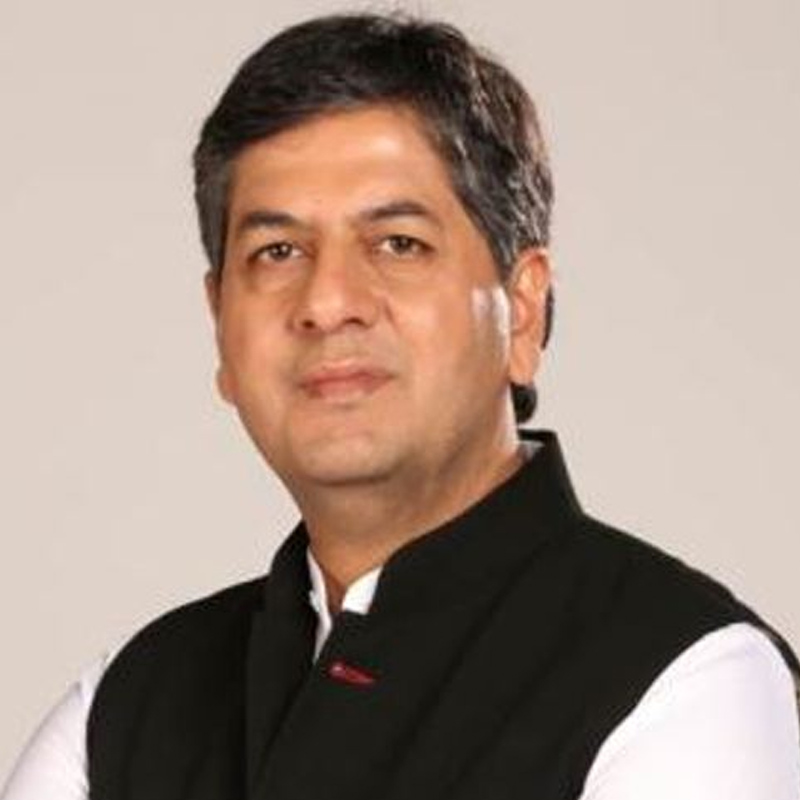
    MUMBAI: The rumours that were making rounds of Vikram Chandra stepping down from his post at NDTV have now been put to rest.

    The NDTV informed the Bombay Stock Exchange (BSE) that the company Board of Directors has approved the decision of Chandra to step down from the position of the group chief executive officer (CEO) and executive director of NDTV with immediate effect.

    Chandra was appointed the group CEO in 2011 for a term of three years which was further extended by another two years. Chandra has expressed the wish to return to full time journalism within NDTV and focus on the TV shows of the Group. Chandra will continue with the Company as Consulting Editor.

    The Board while accepting the decision of Chandra placed on record its appreciation of his valuable contribution as CEO. The Board on the recommendation of the Nomination and Remuneration Committee today approved that the executive vice-chairperson KVL Narayan Rao take over additional responsibilities as the Group CEO of NDTV with immediate effect.

    Rao has been associated with the Company for nearly 22 years in various capacities including Group CEO and has been a key factor in the creation of NDTV.

    Rao has served three terms as the president of the News Broadcasters Association (NBA). He has also been on the Board of Indian Broadcasting Foundation (IBF) and V ice President of the Commonwealth Broadcasting Association. He continues to be on the Board of both the NBA and the IBF.

    Rao is one of the most respected leaders of the news broadcasting fraternity where he has often played a critical role.

  • Vikram Chandra steps down; KVL Narayan Rao is new NDTV group CEO

    Vikram Chandra steps down; KVL Narayan Rao is new NDTV group CEO

    MUMBAI: The rumours that were making rounds of Vikram Chandra stepping down from his post at NDTV have now been put to rest.

    The NDTV informed the Bombay Stock Exchange (BSE) that the company Board of Directors has approved the decision of Chandra to step down from the position of the group chief executive officer (CEO) and executive director of NDTV with immediate effect.

    Chandra was appointed the group CEO in 2011 for a term of three years which was further extended by another two years. Chandra has expressed the wish to return to full time journalism within NDTV and focus on the TV shows of the Group. Chandra will continue with the Company as Consulting Editor.

    The Board while accepting the decision of Chandra placed on record its appreciation of his valuable contribution as CEO. The Board on the recommendation of the Nomination and Remuneration Committee today approved that the executive vice-chairperson KVL Narayan Rao take over additional responsibilities as the Group CEO of NDTV with immediate effect.

    Rao has been associated with the Company for nearly 22 years in various capacities including Group CEO and has been a key factor in the creation of NDTV.

    Rao has served three terms as the president of the News Broadcasters Association (NBA). He has also been on the Board of Indian Broadcasting Foundation (IBF) and V ice President of the Commonwealth Broadcasting Association. He continues to be on the Board of both the NBA and the IBF.

    Rao is one of the most respected leaders of the news broadcasting fraternity where he has often played a critical role.

  • Netflix in partnership with Phantom Films announces original Indian series

    Netflix in partnership with Phantom Films announces original Indian series

    MUMBAI: Netflix in partnership with Phantom Films has announced the launch of a new original series based on the critically-acclaimed best-selling novel Sacred Games by Indian author Vikram Chandra.

    The series will be available to Netflix members globally upon completion.

    Set in Mumbai, the film delves into the city’s intricate web of organized crime, corruption, politics and espionage that lie beneath India’s economic renaissance. It is an epic masterwork of exceptional richness and power that interweaves the lives of the privileged, the famous, the wretched and the blood thirsty. .

    “Over the last few years, I’ve watched with great excitement and pleasure as Netflix has transformed narrative television with its ground-breaking, genre-bending shows,” comments Chandra. “I’m confident that all the colour and vitality and music of the fictional world I’ve lived with for so long will come fully alive on the large-scale canvas provided by Netflix. I’m thrilled to be working with Netflix and Phantom Films.”

    “We are very happy to start this journey with Netflix by producing Vikram’s outstanding story, set in Mumbai ” says Phantom Films Madhu Mantena. “And we are extremely confident that, together we will create some exciting and groundbreaking Television content from hereon.”

    “We are delighted to partner with creative powerhouse, Phantom Films, to bring Vikram Chandra’s epic novel to life with the best Indian and global film talent available today,” adds Netflix VP of international original series Erik Barmack. “Sacred Games reinforces our commitment to bring the authenticity of local stories to Netflix members across 190 countries worldwide.”

  • Netflix in partnership with Phantom Films announces original Indian series

    Netflix in partnership with Phantom Films announces original Indian series

    MUMBAI: Netflix in partnership with Phantom Films has announced the launch of a new original series based on the critically-acclaimed best-selling novel Sacred Games by Indian author Vikram Chandra.

    The series will be available to Netflix members globally upon completion.

    Set in Mumbai, the film delves into the city’s intricate web of organized crime, corruption, politics and espionage that lie beneath India’s economic renaissance. It is an epic masterwork of exceptional richness and power that interweaves the lives of the privileged, the famous, the wretched and the blood thirsty. .

    “Over the last few years, I’ve watched with great excitement and pleasure as Netflix has transformed narrative television with its ground-breaking, genre-bending shows,” comments Chandra. “I’m confident that all the colour and vitality and music of the fictional world I’ve lived with for so long will come fully alive on the large-scale canvas provided by Netflix. I’m thrilled to be working with Netflix and Phantom Films.”

    “We are very happy to start this journey with Netflix by producing Vikram’s outstanding story, set in Mumbai ” says Phantom Films Madhu Mantena. “And we are extremely confident that, together we will create some exciting and groundbreaking Television content from hereon.”

    “We are delighted to partner with creative powerhouse, Phantom Films, to bring Vikram Chandra’s epic novel to life with the best Indian and global film talent available today,” adds Netflix VP of international original series Erik Barmack. “Sacred Games reinforces our commitment to bring the authenticity of local stories to Netflix members across 190 countries worldwide.”

  • FICCI FRAMES: Broadcasting stalwarts feel it is possible to survive the digital wave

    FICCI FRAMES: Broadcasting stalwarts feel it is possible to survive the digital wave

    MUMBAI: Is the past too old to be relevant in the future, and will it actually ‘perish’ if ‘change’ does not take place?

    These questions were discussed by panelists at a session to discuss the formula to Survive the digital wave: Change or perish.

    On the dias were The India Today Group Chairman and Editor-in-chief Aroon Purie, Discvery Asia Pacific Managing Director and President Arthur Bastings Viacom 18 group CEO Sudhhanshu Vats, Disney India MD Siddharth Roy Kapur, NDTV Group Director and CEO Vikram Chandra, and Hungama CEO Neeraj Roy, and the session was moderated by Pranjal Sharma with questions also coming from the delegates.

    “The fundamental is still the same, produce quality and you will have consumers and that’s the way forward as far as I am concerned,” asserted Purie.

    Bastings said staying with the mood of the occurrences is a must. “We cannot only have a channel. We need to have, whatever is there in the ecosystem. Once you have everything you can decide your core business and the rest depending on the performances you can plan your investments,” he added.

    During the course of the discussion, the AVOD model was questioned numerous times. Offering content for free is habit forming which might hurt the ecosystem and what is happening to TV now can happen to OTT too a few years later.

    Vats, whose Viacom’s digital AVOD offering VOOT was launched recently, said: “The consumer is paying. He may not be paying me but is paying for the data. As the payment mechanism develops, bundling can happen. So to say that the consumer is not paying is actually not a correct conclusion.”

    Kapur had a somewhat different point of view as compared to Vats. ‘Waiting for later’ was is not a saleable proposition for him. “We launched 500 channels and did not make consumer pay anything for it. We believe if we form a habit that consumers will later come, pay and watch, does that mean that we open a series of screens and let people walk in for free. I do not think so.”

    “Yes, people are watching movies on mobile phones but that does not mean theatre screens are going away” he added

    Chandra said there was room for profits and opportunities, “It is possible to monetize and it is possible to make profits. But you cannot put archival content, you need to create content exclusively for that very platform and only then will you taste success. The mindset that I will put archival content on digital is a slightly wrong mindset that the broadcasters have been following.”


  • FICCI FRAMES: Broadcasting stalwarts feel it is possible to survive the digital wave

    FICCI FRAMES: Broadcasting stalwarts feel it is possible to survive the digital wave

    MUMBAI: Is the past too old to be relevant in the future, and will it actually ‘perish’ if ‘change’ does not take place?

    These questions were discussed by panelists at a session to discuss the formula to Survive the digital wave: Change or perish.

    On the dias were The India Today Group Chairman and Editor-in-chief Aroon Purie, Discvery Asia Pacific Managing Director and President Arthur Bastings Viacom 18 group CEO Sudhhanshu Vats, Disney India MD Siddharth Roy Kapur, NDTV Group Director and CEO Vikram Chandra, and Hungama CEO Neeraj Roy, and the session was moderated by Pranjal Sharma with questions also coming from the delegates.

    “The fundamental is still the same, produce quality and you will have consumers and that’s the way forward as far as I am concerned,” asserted Purie.

    Bastings said staying with the mood of the occurrences is a must. “We cannot only have a channel. We need to have, whatever is there in the ecosystem. Once you have everything you can decide your core business and the rest depending on the performances you can plan your investments,” he added.

    During the course of the discussion, the AVOD model was questioned numerous times. Offering content for free is habit forming which might hurt the ecosystem and what is happening to TV now can happen to OTT too a few years later.

    Vats, whose Viacom’s digital AVOD offering VOOT was launched recently, said: “The consumer is paying. He may not be paying me but is paying for the data. As the payment mechanism develops, bundling can happen. So to say that the consumer is not paying is actually not a correct conclusion.”

    Kapur had a somewhat different point of view as compared to Vats. ‘Waiting for later’ was is not a saleable proposition for him. “We launched 500 channels and did not make consumer pay anything for it. We believe if we form a habit that consumers will later come, pay and watch, does that mean that we open a series of screens and let people walk in for free. I do not think so.”

    “Yes, people are watching movies on mobile phones but that does not mean theatre screens are going away” he added

    Chandra said there was room for profits and opportunities, “It is possible to monetize and it is possible to make profits. But you cannot put archival content, you need to create content exclusively for that very platform and only then will you taste success. The mindset that I will put archival content on digital is a slightly wrong mindset that the broadcasters have been following.”


  • JNU’s Kanhiaya Kumar & the role of television news

    JNU’s Kanhiaya Kumar & the role of television news

    MUMBAI: “Where the mind is without fear and the head is held high

    Where knowledge is free

    Where the world has not been broken up into fragments

    By narrow domestic walls

    Where words come out from the depth of truth

    Where tireless striving stretches its arms towards perfection

    Where the clear stream of reason has not lost its way

    Into the dreary desert sand of dead habit

    Where the mind is led forward by thee

    Into ever-widening thought and action

    Into that heaven of freedom, my Father, let my country awake.”

    Given the perilous times that we are living in today, no words  resonate more aptly than these lines penned by Rabindranath Tagore more than a hundred years ago.

    Over the past one week, the country has witnessed debates, discussions and dialogues galore after the incident that happened in the Patiala Court on 15 February. That was the fateful afternoon when lawyers condemned students, journalists and cameramen who were present in court. That was the day when Jawaharlal Nehru University (JNU) Students Union president Kanhaiya Kumar, who had been arrested on charges of sedition for allegedly raising anti-India slogans, was supposed to be produced in front of the judge.

    With no journalist being spared by the ‘judges,’ the police force opted to be mere watchers turning a blind eye to what was happening. Anyone who didn’t look like a lawyer was beaten up. This action not only spurred anger across the nation but also marked 16 February as a Black Day wherein journalists displayed solidarity against what had happened in the high profile court complex. Hundreds of journalists decided to walk from the Press Club of India to the Supreme Court at noon on Tuesday to protest against the violence that took place.

    The event also saw some students allegedly raising anti-India slogans. NDTV CEO Vikram Chandra told indiantelevision.com that the unfortunate incidents on that day were deplorable. 

    Said he:  “I strongly oppose the slogan shouting that happened. It was highly inappropriate and shameful. Also, such reactions from the lawyers is disgraceful.”

    Then came claims, claims and more claims. Every news channel talked about the video that came out showing students chanting anti-Indian slogans, which celebrated Afzal Guru. While on the one hand, news channels kept airing the video of the attack by lawyers, on the other a few opted to take a stand on bigger issues of the events that unfolded at JNU. While some covered the attacks by lawyers, some covered the student protests at JNU. Diverse opinions and viewpoints bombarded newswatchers at home. 

    Such incidents make us question the basic right of freedom of expression laid down in Section 19 of the Indian Constitution. In the light of what happened, the lawyers completely mishandled and misinterpreted this basic right. 

    And in this constant tug-of-war between one side or the other, we saw some TV reporters and anchors going overboard and taking it out against each other in public.

    We watched as Times Now editor-in-chief Arnab Goswami conducted his routine debate session, bashing the students and disregarding what had happened. And the vociferous senior journalist has faced much criticism for the way he portrayed the event. 

    What’s more, Goswami has faced flak from senior journalists like NDTV’s Ravish Kumar and India Today Television’s Rajdeep Sardesai, who directly took him on because of his take on the entire issue. Goswami got fiery with the liberals asking them if such sloganeering or glorifying a terrorist as a martyr is freedom of speech or sedition, to speak the language of separatists? He ran out of “patience” while discussing this entire incident when one of the students Omar Khalid interrupted him in his prime time show The Newshour.

    NDTV senior journalist Ravish Kumar voiced his views on nationalism and what its connection is with our democracy. Kumar, in a blank black screen video with only subtitles, fired direct salvos against some anchors including Goswami. Starting with lines like: “In the name of debate, the everyday noise and shouting is either bringing you to light or taking you to darkness. You too must have been wondering.” 

    With just a dark and empty background sprinkled generously with impactful words, strong ideas and an eye-ball grabbing narration, he talked about the way in which TV debates are shaping up today. 

    He said, “Our job is not to provoke or incite, but simply ask; ask questions to those in power. But TV anchors don’t do that, intentionally so, and they shout. Is this how you speak at home, to your family, to your sister, to your wife?” he asked, adding, “Do we get accountability by screaming on television?”

    On the other hand, Sardesai came out with a blog titled: ‘I’m anti national,’ where he tried to convey an important point, and that was to stop dividing people in the name of nationalism. 

    “Yes, I am anti-national because I believe in an expanded definition of the right to free speech as spelt out in Article 19 of the Constitution,” are his exact words from the blog. He opined that the right to dissent is a fundamental right. “People cannot and should not take the law into their own hands. I don’t know yet whether the slogans that were raised were from the students or someone else,” he added.

    Video clips all over the Internet and social media have depicted students yelling out slogans like, Bharat ki barbaadi tak jang rahegi, Afzal Guru Zindabad, Pakistan Zindabad. However, the authenticity of these very videos is still shrouded in doubt. 

    To add to all this comes the shocking news about a Zee News producer Vishwa Deepak resigning from the news channel as a sign of disgust on the alleged biased coverage of the JNU protests and the sedition charges against the students’ union leader.

    He was reportedly a part of the team that produced a show on the night of 9 February, when alleged anti-India slogans were raised at the JNU campus. Deepak stated that the channel had broadcast a video of students raising slogans with a caption that said ‘Pakistan Zindabad’ while no such sloganeering was done and this could be easily figured out from the crowd and the darkness at that time.

    Of course media houses went to town carrying  his resignation letter in its entirety or excerpts from it, rubbing their hands in glee as it gave them fodder to denigrate the Hindi news channel as a handmaiden of the Modi sarkar. 

    Zee News has condemned and denied Vishwa Deepak’s statement saying that he was not associated with the coverage of the JNU crisis. It added that it has submitted the raw footage of the students sloganeering to the Delhi police and is awaiting the latter’s analysis to vindicate its stand. Additionally, it has stated it has no affiliations with any political parties. 

    CNN-IBN senior journalist Bhupendra Chaubey on his part has asked the nation’s journalists to be more vigilant. Said he: “It’s time that all the top editors and anchors across the industry should start looking at the reasons behind so much of hatred and negativity on social media. We should all be careful about what we are putting up on TV in-front of the nation.”

    With so much happening all around the world, it looks like a powder keg situation is brewing. With every passing day unveiling a new façade of the issue, the journalists and the media houses have to be fearless and honest so as to empower the citizens who rely on the Fourth Estate for credible information. 

    Freedom of speech and expression is a sovereign and democratic right of every Indian citizen irrespective of  caste, community, colour and creed. 

    But what if somebody is using the constitutional offering to sabotage harmony and arouse a polarised scenario? Who draws the line? 

    Self regulation based on conscience, morals and ethics seems to be not working, but is a regulatory body constructed under government diktat, a safer option?

    On the other hand, the Press in India has more freedom as compared to many other countries. But how is it helping the nation? If Goswami says no, then Barkha Dutt will contradict with a yes. If Zee News says galat (wrong), Aaj Tak will say sahi (correct). Even as journalists are marching on the road and news channels are resorting to visual effects, is anyone thinking on what the repercussions this will have on the millions following them? Certainly not!

    The Father of the nation Mahatma Gandhi rightly said, “The true function of journalism is to educate the public mind, not to stock it with wanted and unwanted impressions.” 

    That sagacious advice has been dust-binned by today’s trigger happy media. Decibel is the new decorum and views are all that is left in news, and TV ratings are all that matter. It remains to be seen, how long this craftsmanship can continue.

    ’Tis the time to really ponder over where we, as a country are going from hereon…