Tag: Vikatan Group

  • Vikatan Televistas & Motion Content Group set to bring new digital series

    Vikatan Televistas & Motion Content Group set to bring new digital series

    Mumbai: Vikatan Televistas in association with Motion Content Group and YouTube is all set to bring digital daily series Aadhalinaal Kaadhal Seiveer (AKS) for the audience.

    The show directed by Rajiv K Prasad with a screenplay penned by Ve Ki Amirtaraj & Joe George, is a slice-of-life drama that features the lives of six flatmates as they maneuver through the highs and lows of life to fulfill their millennial dreams.

    AKS is being launched as 120 episoder on Vikatan TV’s YouTube channel, building on the learnings of the successful run of Vallamai Tharayo, which also went on to light up the language markets of ETV Telugu and Flowers TV Malayalam, the production company said in a statement.

    “We are constantly innovating to keep our audience entertained, engaged, and informed,” said Vikatan Group MD, B Srinivasan. “Team Vikatan has always been coming up with the most interesting and entertaining ideas. From providing exclusive and innovative video content to the most happening and trending stories for the magazine, we have been giving the best of entertainment for our audience. And now, we are setting up the bar even high. For all who enjoyed Vallamai Tharayo, it’s now time for another enthralling, roller coaster ride of emotions with AKS, focussed on the inter-personal relationship between friends in a chummeryand its impact on their respective families and the society at large, AKS’s narrative will be a first of its kind in the South Indian content space.”

    “We are very excited to launch our newest show AKS in partnership with Team Vikatan,” said Motion Content Group India head Sudip Sanyal. “With this show, we are exploring the depths of relationships set in the young adult space which is vibrant, energetic, and contemporary.  The daily fiction format, which we started as an experiment is now integral to our content strategy and AKS is another step in keeping to the promise of delivering great stories, as a daily show to our digital audience.”

  • PubNation: Actually, local languages are not a discovery of digital era

    PubNation: Actually, local languages are not a discovery of digital era

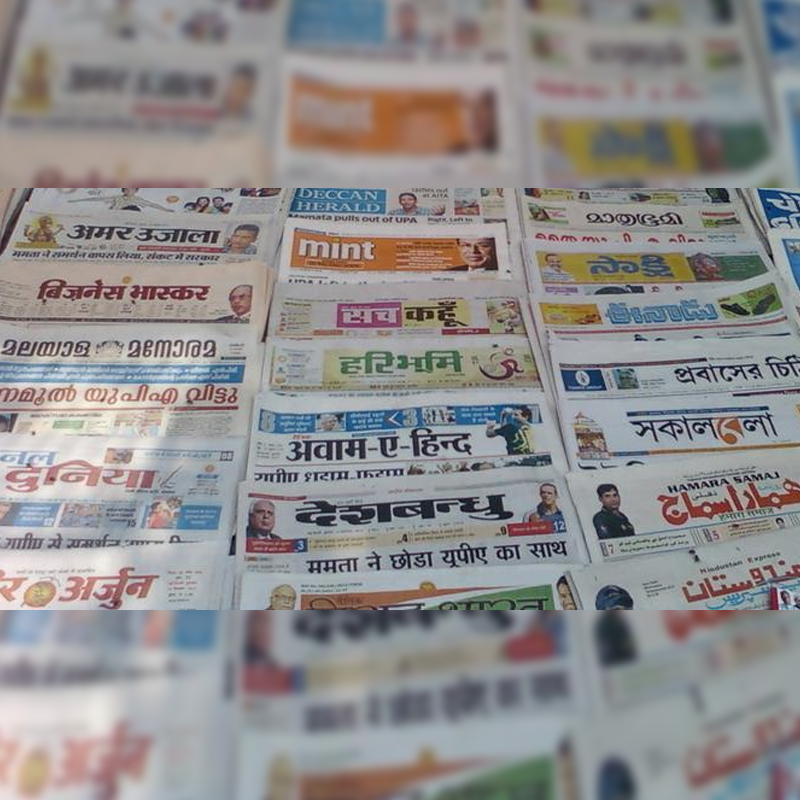
    NEW DELHI: It was in 1492 that Columbus, with his three ships – the Nina, the Pinta, and the Santa Maria – set out from Spain to seek the riches of the Indies. He sailed towards the west for days altogether, his crew getting restless with no land in sight. It was nearly a month later that they reached a new continent, America. What followed were three more tips and lots of exploration. Columbus believed that he had discovered America. But that was certainly not the case. He had only introduced the new world to western Europe. 

    You must be wondering how that story matters here. Well, it does, because for the past few months, many marketers and experts have been claiming that they have discovered the potential regional languages have in India; to promote businesses and increase sales. But is that really the case?

    Vikatan Group MD B Srinivasan (Srini) opines that the saga of the industry discovering regional languages and its potential is quite similar to the tale of Columbus discovering America. “It is not something new. We Indians have always been doing our own thing and we are really good at some of them. The advertisers or the agency can’t really say that they discovered it because there is already some great work happening in that space,” he said at the recently concluded PubNation, hosted by Indiantelevision.com in partnership with Quintype and Gamezop. 

    He aired this view during a panel discussion on the state of the local language market in India. Moderated by Wavemaker India chief growth officer and south head Kishankumar Shyamalan, the session was also attended by Punjab Kesari Group of Newspapers director Abhijay Chopra, Lokmat Media Ltd editorial director Rishi Darda, Mathrubhumi director – digital business Mayura Shreyams Kumar, and Eenadu general manager – marketing Sushil Kumar Tyagi. 

    Srini added, “India has always been a land of multiple diversity and we have been doing a fabulous job (in the regional markets). I am very happy that brands are now beginning to see that with print too. It was always very different when TV came in. Regional television has always taken the lead when compared to English channels. However, that still hasn't changed with English newspapers.”

    It was rightfully pointed out by Srini. The Broadcast Audience Research Association (BARC) report stated that the viewership of regional channels grew from 15 per cent in 2016 to 23 per cent in 2019. Meanwhile, Hindi channels saw a viewership increase of 31 per cent in the same period. 

    Tyagi supported Srini’s thoughts while also sharing some insights. “We launched our Telugu-language news channel in 1995 and penetrated around 30 per cent of overall India. In Andhra Pradesh, we claimed 90 per cent of the audience. Similarly, when we were planning to launch ETV Bangla in 1999, everyone told us that it will not work as Bengal is a prominent part of the HSM (Hindi-speaking market). But we got a phenomenal response from there too.” 

    He added that with Eenadu.net, they are getting great engagement from the NRI community, which goes to show how important regional languages are for Indians. 

    Darda chipped in, “You can look at some interesting data points from a global perspective. If you look at the largest news consumption area, which is the United States, and then look at the top 10 news sites there, eight of them are actually part of either a newspaper group or a television group. Whether it is CNN, Wall Street Journal, or Washington Post. Only two, Huffington Post and BuzzFeed, are independent. Of course, they both are now owned by the same company. Now when you look at the top 10 most read newspapers in India, there's only one English newspaper. The other nine are actually regional local language newspapers. So the future is very clearly going to be with that credible language.” 

    He advised that for any brand, it is extremely important to understand the local nuances and culture. In between the pages is where the opportunity lies in the form of hyperlocal targeting.

    Chopra agreed and noted that Punjab Kesari Group is now decentralising its language offerings with hyperlocal content. “We have been in the market since 1948 and the audience was always there. Now, with digital, we are getting even deeper into the markets. If we just talk about Hindi, there are so many different dialects depending upon the region. So, I have hired a Haryanavi-speaking jaat for our digital channels, who reads the news for that region. I can’t even understand fully what he is saying, but the audience numbers went through the roof. Similarly, we are getting someone native from Himachal Pradesh, who will read the news for the region in their own language.” 

    All these people will be working from their home states permanently, creating a new form of organisational structure that is more agile. 

    In the same vein, Kumar pointed out that Mathrubhumi, too, is diversifying its digital presence as the importance of regional content is amplified now. “We are playing around with a lot of audio and video formats, which is getting us a lot of engagement. User-generated content and network-driven insights, both remain in our focus. We are not digital-first yet, as 85 million people still subscribe to our papers, but the transformation is really happening.”

    The panel opined that marketers and agency personnel should really spend more time in discovering and investing in the hyperlocal capabilities that these digital arms of print publications are equipped with. This will help them in connecting better with their consumers. 

  • Content creators discuss binge-worthy content at Vidnet 2019

    Content creators discuss binge-worthy content at Vidnet 2019

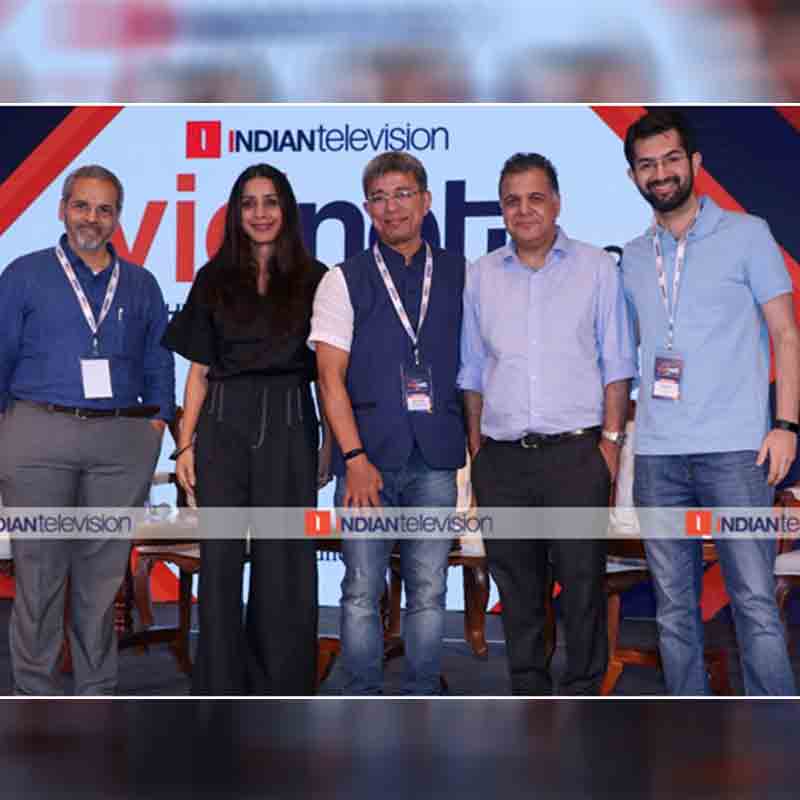
    MUMBAI: Binge-watching has become synonymous to over the top (OTT) platforms and content. Indiantelevision.com’s summit Vidnet 2019 had an interesting panel discussion on creating binge-worthy content. The panel was moderated by Indiantelevision.com founder CEO and editor-in-chief Anil Wanvari while MX Player CEO Karan Bedi, House of Cheer founder & CEO Raj Nayak, Vikatan Group managing director B Srinivasan and Viniyard Films founder Ashvini Yardi were the panellists.

    Wanvari started off by asking the panellists about the shows they have binge-watched on Netflix. Yardi has binge-watched The Boys, Bedi watched The Spy, Nayak binge-watched Unbelievable and Srinivasan has watched Mirzapur.

    Yardi first gave her definition to binge-watching by saying, “If we go beyond the allotted time in our head for the show, that’s binge-watching where we are hooked to the story.” On the other hand, Nayak says that you can’t categorise particular content as being binge-worthy. He said, “If we are creating content that it is good, people will watch it.”

    Yardi argued, “Content can be made for binge-watching. Every online platform has guidelines according to the viewership data they have. For OTT – the first five minutes, in-between and the last seven minutes are very important. Those times are planned accordingly to hook the viewers. On television, we plan according to the breaks. Since OTT doesn’t have breaks, everything is planned from the storyline; it’s not just simple storytelling.”

    Yardi believes that if content creators follow OTT’s format and create cliffs at regular intervals to hook the audiences, they can succeed in creating binge-worthy content.  

    However, Nayak said, “OTT players have those set rules but otherwise also I feel these are the basics that content creators do because we want our viewers to come back on the show. So, we have to create those hooks due to which they stay on television or OTT.”

    Whereas, Srinivasan said, “The character and content are behind the success. Definitely there is a science to it and data involved on how to refine the whole process. But I would say content and characters are important.”

    MX Player has delivered 5 to 6 successful shows in the last six months. Sharing his experience, Bedi said, “Creating content on any platform requires a lot of efforts. On online, there is a huge difference while creating content for AVoD or SVoD platform. SVoD people have already paid and they are watching as they have invested in it. On AVoD, customers move in and out as they have not invested money for viewing there, so the level of hook that content creators need to create is very high.”

    Wanvari also inquired whether the content creators constantly think of hooks or they line-up the story and then get into the hooks. Yardi replied, “We create the story and build the characters first and then get into hooks.”

    She also informed, “Currently, in India, everyone is learning. Most of the platforms are using what they have from parent companies and try to localise the format. It’s not necessary what works on Netflix or Amazon in America will work here because our lifestyle and mindset is different. I feel it’s a trial and error period for OTT.”

    Srinivasan also said, “We are trying to understand what kind of stories work for the OTT platform. We want to create that content. We have enough knowledge of the ecosystem but the biggest constraint would be getting the writers to write in a format that is required for OTT.”

  • Vikatan Group picks Pravin Menon as national ad sales head

    MUMBAI: Vikatan Group has assigned the responsibilities of national head-ad sales to Pravin Menon.

    Menon joins in from Worldwide Media where he was working as GM (South) – ad sales.

    He will report to Vikatan Group MD B Srinivasan.

    Menon said, “Yes I have joined Vikatan Group. My first concourse will be the print diving and then the online print media.”

    Menon brings in over 17 years of experience in the ad sales and marketing industry. He had joined Worldwide Media in May 2007. Prior to joining WWM, he was WWM India Regional sales head for over two years. He had joined Times Group in 1998.