Tag: Vijaya Laxmi Chhabra

  • ‘Our persistent endeavour is to get DD its due rates, which should match the high viewership it has’ : Vijayalaxmi Chhabra – Prasar Bharati deputy director general

    ‘Our persistent endeavour is to get DD its due rates, which should match the high viewership it has’ : Vijayalaxmi Chhabra – Prasar Bharati deputy director general

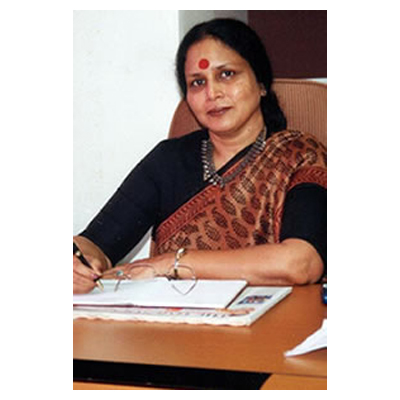
    A day after Prasar Bharati deputy director general Vijaya Laxmi Chhabra struck an “unconventional” cricket marketing deal with Zee Telefilms, we requested an immediate interview and she showed no qualms about fixing one up for the very next day.

    Fighting through numerous client meetings and bargains, Chhabra is a picture of professional satisfaction when she meets us finally, late in the evening.

    “It has been a long but fruitful day,” she offers proudly, while we nurse guilt feelings of having stretched her for another hour with a Q&A session. Determination and confidence personified is this senior bureaucrat who has a street-smart marketing brain ticking behind the officialese.

    Over to Chhabra, in conversation with indiantelevision.com‘s
    Bijoy A K.

    You have completed six years heading marketing at Prasar Bharati. Looking back, what’s it been like?
    When we started under the leadership of the then CEO RR Shah, we had nothing to sell except the prime time news on DD-1. The journey began slowly but with a steady pace and the big break came when we successfully marketed the India-West Indies cricket series in 2001. The division offered to raise Rs 350 million and we went on to raise Rs 550 million. This strengthened the view that more revenues lie in direct marketing of events / properties on an in-house basis by DD. Then the division progressed to make Rs 1.8 billion from the 2005 Pakistan series and Rs 1.4 billion from the 2005 Sri Lanka series.

    Thus we realised our strength and started selling feature films. During those years, neither good films nor good money was coming from private marketing agencies. This changed when the marketing division seized the opportunity of unlocking huge revenue potential on DD through the direct marketing of the films. Presently, we are generating Rs 10 million each from every Friday – Saturday film. Feature films have contributed Rs 1.10 billion to the revenues of Prasar Bharati during the 2005 – 2006 fiscal. Rs 3 billion has come out of cricket.

    Then we took over the prime time segment from the private producers. The slot selling system was discontinued and we established this new system called Self Finance Scheme (SFS) in 2005. This way, we realised that we can generate three times more money than what private producers have been giving us through the old system. Presently, we have taken over 90 per cent of the prime time slots on Doordarshan and we are now in the process of establishing SFS in the mid-day prime time segment.

    The team has been doing a good job. The Mumbai marketing division contributed about Rs 5.6 billion to Prasar Bharati’s recorded revenues of Rs 12.38 billion during the 2005 – 2006 fiscal. So yes, it feels very good while looking back.

    How did the market respond when you started the self-marketing initiative? How did the organisation support you?
    The agencies were not used to the Prasar Bharati marketing system. They used to buy from producers. But once the industry realised our efficiency and productivity, the outlook underwent a change. The entire advertising industry gave us full support. The industry has surely benefited since we provide them a single window system — which is very transparent — for doing deals. The system is very much in place that, even a Rs 1 billion deal can be done in a single day.

    In a government organisation, you really need the support of your seniors to conceptualise and implement new things. I was very lucky in this case. I got tremendous support and encouragement from my CEO KS Sarma and director-general Navin Kumar. They gave me full backing in all my ventures. Whatever I have done and achieved wouldn’t have been possible without their support. My colleagues have also helped and facilitated me in all the different things we did, though there was bit of apprehension in those initial days.

    What is the big idea for Prasar Bharati in 2006? Which are the new initiatives planned in terms of marketing and programming?
    Now since we have recorded some good revenues, a major chunk of investments should be made in creating good qualitative content. Instead of churning out run-of-the-mill stuff and thus replicating the programmes dished out by satellite channels, DD should be making efforts towards establishing its identity in the market.

    Personally speaking, my heart bleeds looking at the kind of programmes the industry produces and consumes. I really miss those Tamasand Buniyaad days. I believe that viewership and money shouldn’t be the only criterion that one should take care of while producing shows.

    But, at the same time, when I say good qualitative content, it also means commercially viable programmes. So speaking about the big idea for the new fiscal, Doordarshan wants to come up with really good qualitative programmes. Some good investments will be made in this sector. Lots of Indian classics are going to be produced this fiscal.

    On the marketing front, the plan for this fiscal is to introduce and establish SFS in DD’s regional Kendras. When we have the necessary know-how and the expertise, why we can’t just do it? Of course, it will be a challenging assignment for us. SFS is already activated in DD Sahyadri. We are yet to finalise the next set of Kendras for this initiative. However, I feel that, SFS will pick up fast in Kendras such as Kolkata, Thiruvananthapuram and Bhubaneswar.

    As decreed in the downlinking policy guidelines issued by the government, the revenue share for cricket — between Prasar Bharati and the channel which holds the rights — is 75:25 in favour of the latter. That means, Prasar Bharati will have to take a cut on returns from cricket, from now onwards. Hence, cricket will cease to be a major revenue driver for Prasar Bharati. How would you handle this challenge this fiscal?
    That is part of the dynamics of the market. It is obvious that with no telecast rights in hand, DD wouldn’t be able to generate the same kind of revenues. But we will try to overcome this handicap by effectively operating SFS. Prasar Bharati is looking to acquire 100 per cent of the slots to bridge the gap it will be losing out on cricket.

    What kind of new revenue streams will you be exploring this fiscal?
    Our efforts will be to beef up the present system. Of course, DTH will play a major role as an additional source of revenue in the new fiscal. With more private players entering the arena, it will be a great challenge for us.
    Speaking about other initiatives, we have already started selling scroll advertisements in our Low Power Transmitter (LPT) stations and High Power Transmitter (HPT) stations. Then, DD’s first ever reality talent hunt show Kalaagaarz has delivered decently. We have also effectively explored the SMS domain through this activity. Kalaagaarz has fetched us about Rs 4 billion.

    ‘Now since we have recorded some good revenues, a major chunk of investments should be made in creating good qualitative content

    How much do you target to garner from the ongoing India-England ODI series and the upcoming Abu Dhabi series?
    No comments at this stage.

    How did the Zee-DD deal to co-market the Abu Dhabi ODI series come through?
    This is crucial for us as the deal would help DD-1 to protect its market rates. If I don’t market this property, we will have to take the money that the rights holder gives us without any questions. We have spent four years establishing good rates for DD-1. All these efforts will go waste if we don’t have a presence in the marketing campaign.

    It is not surprising that Zee agreed to co-market the ODI series with Prasar Bharati. By associating with us, Zee is in a position to reap the benefits of our experience as an efficient marketer of cricket properties. And in its own right, Zee is a big name, and thus, we both will benefit from each other’s expertise and experience. By selling the rights in one package through a joint rate card, we will be making more money. This is because, there wouldn’t be any undercutting of the rates.

    Will you be making efforts to strike a similar deal with Nimbus, which holds the five year India cricket rights?
    It depends on the success of this initiative.

    In a 2003 interview to indiantelevision.com, you had reasoned Prasar Bharati’s decision to create a separate marketing division by commenting that the yield per 10-second spot for DD hadn’t increased. Now, standing in 2006, please explain to us the progress you have made so far through this new system.
    We have gone a long way since then. The best thing that happened is we have stabilised our rates. After Prasar Bharati has taken over the DD National prime time, we have not only stabilised the rates, but also have killed the trend of undercutting. All our bulk buyers have been giving us good rates. Now, as I mentioned earlier, the effort in this fiscal will be to come up with good qualitative content, which would obviously help us to hike our rates.

    Hasn’t the reported improvement in your Tam ratings inspired you to hike your rates recently?
    We have not touched the cart at all. The effective rates of the channel have stabilised and have now gone up. I can’t say we have hiked the rights outright since most of the deals are being done in bulk and for long term. However, our persistent endeavour is to get DD its due rates, which should match with the high viewership it has.

    During an earlier conversation, you had mentioned to us the need for Doordarshan to promote its shows through publicity campaigns. How far have you progressed on this front?
    Outdoors promotion is something we want to get into to promote our shows, but there is nothing concrete in this regard as yet. In terms of channel promotions, the service has been improved. We have structured all our on-air promotions now to give the best service to each producer.

    Are there any unconventional marketing strategies you have initiated in the recent times?
    Not many. The association with Zee to co-market cricket can be considered as one.

    How would you rate the performance of DD’s regional Kendras in the FY 2006?
    I can’t comment much on this since I am not directly connected with the regional operations, except for DD Sahyadri. Each regional channel is working very hard to deliver the best, though. DD’s regional channels have been facing tough competition down South, since the C&S penetration in this region is very high – a fact we have to live with. Performance-wise, DD Sahyadri, which posted revenues of Rs 250 million in the just concluded fiscal, has been the highest grosser among DD’s regional channels.

    What do you have to say about dropping of popular programmes by DD’s regional channels to adjust cricket telecast?
    When you don’t show cricket on DD-1, then there are complaints from viewers and court cases are filed. So, we are forced to show cricket on the channel on public demand. It is just a myth that we do it for money. Those slots that we are forced to drop during cricket also bring us money. Hence, it is not just money. Being the pubcaster, we will have to respond positively to people’s demands, likes and dislikes and in whatever we do, we give priority to public interest.

    Have you started marketing the three World Cup Football matches (two semi finals and final), which you will simulcast with ESPN Star Sports?
    Yes, we have already sold almost 100 per cent of the inventory. We are selling a 10 seconds spot for Rs 60,000. The advertisers we have roped in include Hutch, Pepsi, Nokia, Onida, Tata Motors and Western Union Money Transfer.

    Are you still part of the core team of All India Radio (AIR)?
    Since I am focusing on the marketing of Doordarshan, I am not in a position to devote much of my time to AIR. However, I am part of all key policy discussions. Marketing-wise, whenever we do bulk deals and those relating to cricket, we always include AIR.

    What is your take on the FM radio scene, which is opening up now? How would AIR cope with challenge from the private sector?
    It is a welcome change. Both the public and FM radio players will capitalise on this change. Having worked in AIR for a very long time, I understand the power of radio as a medium. Private FM stations will face tough competition from the AIR stations in respective regions and vice versa. The competition will surely inspire AIR to perform better. So, overall, the changes will do a lot of good to the industry. Speaking about human resources, talented youngsters will benefit from this boom in employment opportunities.

  • “Metropolitan bred media planners and buyers seem to think that all Indian youth think and act like them” : Vijaya Laxmi Chhabra Prasar Bharati director marketing

    “Metropolitan bred media planners and buyers seem to think that all Indian youth think and act like them” : Vijaya Laxmi Chhabra Prasar Bharati director marketing

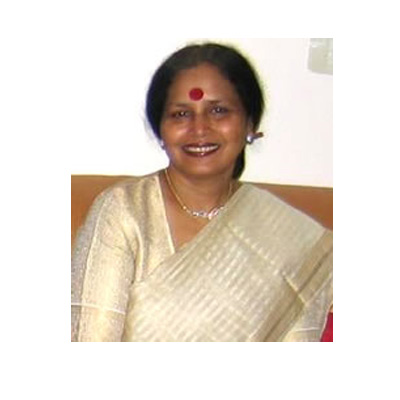
    Her gentle demeanour masks her grit, determination and risk taking abilities. Meet Prasar Bharati director marketing Vijaya Laxmi Chhabra. Originally from Orissa, Chhabra spent the formative years of her life in the steel township of Bhilai in MP. She completed her higher education from Delhi University and did her Masters in International Relations.


    While in college (Indraprastha College in Delhi), Chhabra was actively involved in student politics. “While politics fascinated me, the studios of All India Radio beckoned me. I had to choose between broadcasting and politics,” says the multi-faceted lady who has varied interests and hobbies. Seen in Chhabra’s office are issues of Time magazine, sketches and Kapka Kassabova’s Love in the Land of Midas as well as pneumatic tapes.


    Chhabra went on to clear her UPSC exams in Delhi and was roped in to the programming cadre of the Indian Broadcasting Service. She has been with All India Radio (AIR) in various capacities for 20 years. She claims to have immensely enjoyed creating radio features and documentaries on burning issues. Chhabra was awarded the Commonwealth Fellowship in 1995 and went to London to study commercial broadcasting and its impact on society. After she returned, Chhabra was put in charge of AIR’s commercial service and took over Mumbai FM’s radio channel.


    Chhabra was chosen by the former CEO of Prasar Bharati Rajiv Ratan Shah to set up Prasar Bharati’s Marketing Division in Mumbai. She claims that this was a major turning point in her professional life.


    The change is already visible – the sixth floor of DD Mumbai Kendra office is comparable to the offices of an ad agency or private institution. There is a buzz and there are no signs of the laid-back attitude or mentality of a normal public sector unit. In this interview, Chhabra speaks to indiantelevision.com’s Ashwin Kotian about her plans and vision.


    Excerpts:

    Why did Prasar Bharati decide to create a separate marketing division? A lot of people have misconceptions about the role and responsibilities of this division. Can you clarify the rationale?

    Doordarshan (DD) has traditionally been into slot marketing and has also seen glorious days (in terms of popularity of programmes) due to the efforts of a select group of top producers.


    But, somewhere down the line, we felt that DD was not getting its rightful share due to the slot marketing policy. The yield per 10-second spot hasn’t increased since years despite inflation whereas that of the cable and satellite (C&S) channels has been increasing by leaps and bounds. Various factors such as aggressive media buying (by ad agencies) and distress selling (by marketers) contributed to this dip (or flat) in realisations.


    Moreover, there was no single window control over the huge inventory. The fact remains that DD (and its affiliate channels) has the largest inventory amongst TV channels in India. Even amongst the regional Kendras there are some strong kendras with some great programming properties. The key was to ensure that we package all these strong entertainment brands and properties together; sell them through a single window so as to leverage our unique selling propositions. The emphasis was on getting the best deal and earning the maximum possible revenues that can be channelised in various DD projects.


    Also, DD didn’t have a face (as most of the marketing was done by a third party) that could regularly interact with advertising clients and ad agencies. The point is that we needed to build bridges in order to increase revenues.


    These objectives compelled former CEO Rajiv Ratan Shah to conceptualise the formation of the Prasar Bharati Marketing Division in September 2000. The initiative was carried forward and strengthened by former Prasar Bharati CEO Anil Baijal, current CEO KS Sarma and DD director general Dr SY Quraishi.

    Tell us about the initial days? What were the nature of the assignments taken up by Prasar Bharati Marketing Division?

    A full fledged division was set up in Mumbai. Initially, we started off by marketing in-house programmes or properties that were available – news, re-run programmes such as Malgudi Days, Bharat Ek Khoj, Shrikant, amongst others.


    My team didn’t have any reference guides or existing benchmarks; we had to learn everything on the job and start from scratch. We had to learn the mechanics of packaging, negotiating and delivering value to advertisers.


    One of the first successes that we had was the successful marketing of the Union Budget. We managed to get up to Rs 10 million for a property that had yielded us much less when third party marketing concessionaires were used.


    Another opportunity came our way when the Channel Nine and DD-Metro deal fell through. Again, through innovative packaging, we managed to realise up to Rs 100 million for old popular programmes such as Buniyaad, Yeh Jo Hai Zindagi and Udaan amongst others. These were small steps, but they gave us confidence. We realised that we were definitely moving in the right direction.

    What are the key learnings from the experience of working with Mumbai DD Kendra?

    The key lessons are ‘concept selling’ and maximising value by ensuring that programming and marketing are clubbed together; and the separate departments work hand in hand.


    Our experience with Mumbai Doordarshan has shown us that the public broadcaster can reap rich dividends if this kind of a synergistic approach is adopted. After all, DD and AIR have some brilliant individuals – committed and dedicated professionals such as Mumbai DD station director Mukesh Sharma who has taken Sahyadri channel to pole position among all Marathi satellite channels.


    Along with his team, Sharma came up with some innovative and brilliant programmes and ensured their marketability. Jointly, we tried out several experiments and came up with customised programmes that appealed to advertisers. DD Sahyadri is a tremendous success story and all credit should go to Sharma’s untiring efforts. We took the channel from zero to the No 1 position.


    In fact, all the DD Kendras must try and replicate DD Sahyadri’s success in their respective centres.

    I have 15 young and dynamic officers working with me; they share my enthusiasm, passion and vision to ensure that DD gets its rightful share from the market

    Is your team geared up to accept the challenges?

    I can proudly claim that my team is fully equipped to handle challenging assignments. I have 15 young and dynamic officers working with me; they share my enthusiasm, passion and vision to ensure that DD gets its rightful share from the market.


    We function like any corporate set up. Most of these young boys and girls have been taken from the programming cadre of AIR and DD; but in a short span, they have adapted well to the job requirements and demands. Their knowledge of programming concepts helps them in their marketing efforts.


    Earlier, packages were worked out mostly by the trial and error, but now packages are created scientifically to suit clients requirements and offer value for money.


    We interact constantly with industry professionals; and this helps us fine tune our policies and align them with the industry needs. The best part is that we are transparent and clients are comfortable dealing with us.


    We have focused on providing a one-stop shop for planning and client servicing on the DD and AIR network. We have built up core competencies in every step of the sales chain right from pitching to negotiating to closing deals to executing to realising the monies.

    What are the additional opportunities that your division has looked at?


    Our mandate is to go beyond the routine of airtime selling and developing new revenue streams such as marketing of events.


    I must add that Mukesh Sharma’s progressive outlook has helped us create quality in-house events in Mumbai which have now become brands in their own right. Take for instance – the Godrej Sahyadri Navratan Puraskar; the event earned us Rs 20 lakhs (Rs 2 million); if we had taken an outside agency, we would have earned hardly one third of this amount. Through this exercise, we managed to build the Sahyadri brand too. More importantly, the software remained with us.


    Similarly, we have created other event properties such as DD Awards and New Year programmes. The earnings are in the region of Rs 80 lakhs (Rs 8 million) each for DD awards (held twice already) and New Year’s Programmes (2003-4 will be the second time we shall market it).


    Soon, we would be marketing newly acquired and quality programmes such as India’s No 1 (produced by Siddharth Basu) and Ji Mantriji on DD1.

    Are there some Kendras where you see a lot of potential?

    DD’s Mumbai Kendra is definitely a success story. I see a lot of potential in DD Kolkata and DD Trivandrum and we have already made substantial progress in these Kendras. There is renewed interest even in centres such as DD Ahmedabad.

    Tell us about cricket marketing? You surprised many people with the revenues earned from the India-West Indies series in 2002.

    When we decided to market the India-West Indies cricket series late last year, we didn’t have any benchmark. As always, DD had called for bids with a benchmark for Rs 25 crores (Rs 250 million) but no acceptable bids were received. The ‘corridor gossip’ was that we would be lucky if we made Rs 15 crores (Rs 150 million).


    My team and I took up the gauntlet and promised the top management that we can deliver revenues of Rs 35 crores (Rs 350 million). Of course, we went much beyond and earned Rs 52 crores (Rs 520 million). The point is that unless you take risks, you cannot expect better valuations. Despite the disruptions/truncations in three matches, we collected money for every airtime second sold. There were no disputes with any advertisers. It was a rewarding experience.

    Our effort signifies the great results that can be obtained by clubbing the two Prasar Bharati arms together and marketing them jointly.

    Tell us about the recent success story of the India-New Zealand- Australia series?

    With this series, we created a record of sorts! The sale of ad inventory (for the triangular one day series between India-Australia-New Zealand – 10 matches during October – and two test matches between India and New Zealand) by Prasar Bharati Marketing Division amounted to Rs 906 million. DD managed to get Rs 880 million and AIR netted Rs 26 million. All in three days flat; that is from 4 July to 7 July 2003 (with a weekend in between).

    In fact, this was the first time that we created a combined package whereby DD and AIR were marketed jointly. The scientifically devised package ensured that AIR bagged nearly five times what it got for the India-West Indies series last year.


    Our effort signifies the great results that can be obtained by clubbing the two Prasar Bharati arms together and marketing them jointly. My division will work towards this goal in the near future.


    This is also the first time that we devised a package where spot buyers had to invest on the entire package comprising of both Test matches and one day internationals, both on DD National as well as DD Sports. They could not pick and choose. The rate card was transparent and no negotiations were encouraged. Having said that, we feel that the rates offered were affordable and clients will get optimum mileage by spending Rs 30 million for 150 seconds FCT.


    The packages had been devised through a broad based process based on probable spends of clients and inputs from the advertising industry. While choosing the sponsors, weightage was given to advertisers who continuously invested on Doordarshan Network and other regional channels.


    We also considered the payment track record of the advertisers and their ad agencies, especially during the India-WI cricket series. The goal was to rope in clients who would help us realise monies without any hassles and as early as possible.


    As far as the spot buys are concerned, we adopted a first come first serve basis – but the prospective spot buyers had to take the entire package as I mentioned earlier. We shall be working in close coordination with the DD programming team and production company Nimbus.


    Sufficient care will be taken to ensure that viewers are able to enjoy a high quality cricket telecast. The entire effort will be closely monitored to ensure that there are no hiccups about the placement of ads during the live telecast.


    We shall soon start a promotional campaign on all the affiliate DD channels. You must be aware that we have tied up with several publications for barter deals. We shall leverage such tie-ups and associations during this cricket series.

    After having tasted this kind of success, would you turn your attention to underperforming channels – say for example DD Bharati?

    As far as DD Bharati is concerned, I feel that there is a lot of potential. However, not much data is available on the reach and viewership profiles. It is a niche channel and there are advertisers that will support it. It has a very loyal viewership base.

    Earlier, DD didn’t have a direct interface with the market and there is no point complaining about it. Now, we have taken a few steps forward and the industry is backing us wholeheartedly.

    Do you feel that ad agencies don’t support DD as much as they should or could?

    Earlier, DD didn’t have a direct interface with the market and there is no point complaining about it. But now, we are in regular touch with the entire industry; in constant touch with the market for various in-house properties. The details of DD channels and their programmes are made readily available. Now, we have taken a few steps forward and the industry is backing us wholeheartedly.


    I feel that we have made substantial progress within a short span of time. Ad agencies have also started supporting Doordarshan in a big way with their clients by projecting DD’s reach, TRPs in various target groups. We have also been making presentations with viewership data and highlighting packages to ad agencies and direct clients.


    The Prasar Bharati Marketing Division has been bolstered with branch offices in Delhi, Bangalore, Hyderabad and Chennai. The team is working in close coordination with the station directors and major advertisers in all these four regions.

    What is the general direction in which DD’s marketing outfit is moving?

    You must realise that 90 per cent of our revenues still come from private producers. Eventually, the key will be to lower the proportion of the third party contribution – that is only if they don’t give us more value or the revenues are not in sync with market conditions. We expect all the third party outfits to support us in our intent to increase DD’s share of revenues.


    I admit that it is a challenging task to change the old order. Also, we are still in the process of making a framework for procuring new properties and owning them too. The top management is looking at the various issues and is in talks with the ministry authorities about the related policy issues.


    However, the general direction is very clear and the aim is to ensure that DD gets its rightful share from the market.

    “90 per cent of our revenues still come from private producers. Eventually, the key will be to lower the proportion of the third party contribution.”

    What is your message/advice to media planners and buyers?

    I would request media planners and buyers to unlearn the past and dispel the false notions, perceptions and myths that have been created about DD channels.


    Most of these myths have been created by C&S channels who have benefited at the cost of DD. If media planners go by statistics, we have numbers on our side and eyeballs. The myth about DD homes not having propensity or the mindset to purchase goods and services is nothing but a figment of imagination.


    I would urge the younger lot of media planners and buyers to study the ground realities. They must also learn to distance themselves from inherent biases – for instance most of the metropolitan bred media planners and buyers seem to think that all Indian youth think and act like them. But, the reality is different as India is a diverse country with several cultural, psychographic and demographic differences.


    I must say that the younger generation born and bred in metros,including my children, have a different perception of the India they live in as compared to those who live in smaller towns and villages. But the point remains that consumerism is a constant factor across several markets – big or small – in India.

    Tell us about your hobbies?

    I read a lot. I love history. I am also a serious theatre and movie buff. I loved listening to radio so much that it had become an obsession. In fact, way back in the mid-60’s my father, who is an engineer, used to joke that he would create a small radio for me so that I could take it with me to my examination hall.


    I love to paint. As a mother and a homemaker, I love to cook. In fact, cooking is a passion. It’s a stressbuster. Inspite of my busy schedule, I made it a point to always find time to teach my children. My children (one daughter and a son) still appreciate the time I have spent with them. I consider my family, specially my husband as my source of strength.


    Travel has now become a compulsion. I still love London as the city is associated with some nostalgic and fond memories of my Commonwealth days.


    I also manage to take time out and conduct internal training sessions on media, marketing and advertising.