Tag: Vijay Subramanium

  • Prime Focus joins hands with Pritam and Kwan to create JAM8

    Prime Focus joins hands with Pritam and Kwan to create JAM8

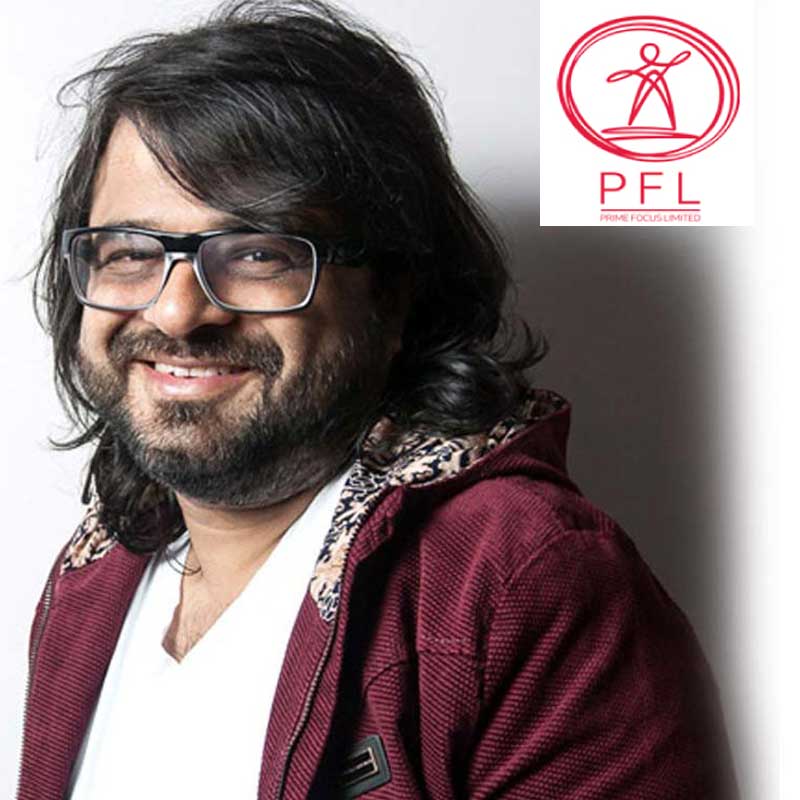
    MUMBAI: Integrated media services company Prime Focus Ltd has announced its collaboration with Jam8, a musical platform founded by Indian music composer/director Pritam, and KWAN, a talent management company to serve as a 360-degree creative solution provider for the M&E industry.

    The move has been made by Prime Focus with an aim to branch out, expand and establish its foothold in the music business. The company in association with Jam8 and Kwan plan to deliver the best in terms of high-quality infrastructure and technology that caters to all kinds of sonic requirement. Having the likes of Pritam and Jam8, his dream project as able partners, this venture will serve as a one-stop platform that will offer solutions to music across all segments covering movies, advertisements and the OTT space, providing the best of quality music output.

    Founder of Jam8 and music composer/director Pritam Chakraborty said, “Jam8 is my baby and helping me nurture it are Kwan and Prime Focus and Kwan. After successfully launching composers who are active in films, television, and advertising…now finally our state of art studio is ready. I am really excited. "

    Prime Focus non-executive chairman Namit Malhotra said, “It’s a great opportunity for us to partner with JAM8. Music is something that I hold very close to my heart. Through this collaboration, we would look to enable new talent to bring about a diversified mix of music for all the audiences. Jam8 is a platform under the leadership of someone like Pritam that can bring the best of talent and produce music that will be enjoyed for years to come and we are thrilled to be partnering in that.”

    Kwan CEO Vijay Subramanium said, "Pritam da has had the vision of jam8 for years and when he discussed it with us, we truly believed that his vision was transformational. The idea and the platform are unique and will create opportunities for musicians across the country to live their dream. It’s been an absolute pleasure to see this dream take shape."

    Prime Focus Business Head Niraj Sanghai said, “Our aim through this venture is to support the abundance of upcoming talent we have in our country. We would like to present these budding youngsters a platform and provide all the best amenities and opportunities to encourage and nurture them. We are proud to associate with Jam8 and we very excited to be part of this initiative”.

  • Bollywood actors hit their stride in web series

    Bollywood actors hit their stride in web series

    MUMBAI: Film actors have found a new cosy space to snuggle into–over-the-top (OTT) platforms. OTT shows till now encouraged unknown faces to be stars but the real Bollywood stars are now taking over.

    Digital platforms experimented with Bollywood actors in 2017 and the trend is set to continue this year, too. Platforms such as Netflix, Amazon Prime, Voot, ALTBalaji and Viu featured popular actors in their web series like Rana Daggubati in Social, Rajkummar Rao in Bose Dead/Alive, Vivek Oberoi and Richa Chadha in Inside Edge, R Madhavan and Amit Sadh in Breathe, Swara Bhaskar in It’s Not That Simple, Lisa Haydon in The Trip and Nimrat Kaur in The Test Case.

    Voot EVP and head content Monika Shergill believes that digital is the way to go across the world. She says, “The opportunity to explore acting in roles that are coming up in digital are phenomenal, the kind of storytelling and performing opportunity that artists are getting are exceptional.”

    Amazon Prime India has seen the most popular faces in its shows. Says director content Vijay Subramaniam: “It always starts with the story. All our casting is driven by what does the story demands. It depends on the character requirement.”

    ALTBalaji CMO Manav Sethi agrees with Subramaniam saying, “We don’t sign actors because of their one-shot success or one-time failure. While scripting, we scout for talents to suit a character. We as a creative shop and storytellers, don’t go behind celebrities, we go behind actors.”

    The ease of restrictions is probably the most alluring part of the digital business. But does a web series work only on the name and fame of a popular actor? Shergill doesn’t agree and says, “Digital is not about faces, it is about high concept stories, disruptive and eye catchy short stories that bring curiosity and serious commitment in viewers to dedicate their 8-10 hours and watch it. An interesting face can bring people to the first episode but after it’s your content that hooks them.”

    However, Shergill feels that digital is extremely challenging in comparison to the cinema because you are just a tap and click away from disappointing viewers. Casting is a very thorough thought process and a big face may not deliver in the continuity of consumption. “We have to convince viewers a 30-60 second trailer that the actor justifies the character.”

    The web is a great kick-starter of careers, feels Subramanium. “To tell fantastic stories, highly compelling with a variety of things and great quality, the web is a great opportunity. The creative talent, both in front and behind the camera, they all recognise this opportunity too. They believe it is a great option to add to their versatility and add one more dimension to their acting, directing, writing or judging talent. Digital is the new way of consumption of entertainment and Bollywood recognises that and want to be a part of it,” he says.

    But does a bigger face need a higher amount of marketing spends? The answer is yes. “When you have a big cast, it works both ways. The name pulls some audience in but because of the name, we also feel to push it out more. So, it is a symbiotic process, the name gives you purchase and you push it more also,” reveals Shergill.

    The pay scale of movies is significantly higher than a web series but these actors have been paid significantly well. However, the payment also depends on the days of working and the schedule. An industry source reported that actors have been paid in the range of Rs 50 lakh to 1.5 crore for a series and far more in the case of A-list actors.

    According to Sethi, signing a known face instead of fresh is more convenient. “It increases the ability to reach to millions of people requiring significantly less effort in terms of marketing and communication, though it increases the cost of production. The difference of cost of production ranges from 25 per cent to 50 per cent after signing a known face,” he reveals.

    It may seem like the actors have no agenda in picking web series but Shergill opines that movie actors go to television either to promote their movies or to host a reality show. She said that web series is like a windfall for them. There are large gaps between their films and they keep twiddling their thumbs until the next film. But, shooting a digital series is a continuous schedule of 40-50 days at maximum and an actor is required to dedicate less than a month sometimes to complete his role. At times, the actors are signed up for multiple seasons of the same show.

    In the year 2018, some popular actors will be seen in great series like Saif Ali Khan, Nawazuddin Siddiqui and Radhika Apte in Sacred Games of Netflix, Swara Bhaskar in It’s Not That Simple S2, Vivek Oberoi in The Family, Irfan Khan in The Ministry at Amazon Prime Video. Khan has previously starred with AIB in several web videos. Shah Rukh Khan’s Red Chillies Entertainment partnered with Netflix to produce eight-episode political espionage series Bard of Blood.

    However, the international digital market is ahead of India. The international actors or the A category actors are not only helming digital series but are also becoming executive producers and producers like in the case of Issa Rae, Nicole Kidman, Reese Witherspoon and Kevin Spacey.

    Web series allow actors to stay in the minds of their audience during gaps between movie assignments while also compensating them well. It’s about time more actors got themselves knee deep into this budding content arena.

    Also Read :

    2017: The year OTTs went regional in India

    Regional OTT content more than just catch-up TV

    Amazon strikes the balance between bingeing and episodic with ‘Breathe’

  • “Broadcasters need to stop relying on advertisers for revenue”: Sameer Nair

    “Broadcasters need to stop relying on advertisers for revenue”: Sameer Nair

    MUMBAI: Broadcasters need to stop relying solely on advertisers as their main source of revenue. Moreover as digitisation reaches the third phase, it is imperative to for them to come up with new content strategies.


    A FICCI Frames session moderated by media analyst and columnist Vinita Kohli Khandekar saw an aggressive discussion by top level media and broadcast executives on the future of content creation keeping in mind the emergence of digital platforms.


    The panel comprised Balaji Group CEO Sameer Nair, Disney India VP and content head Vijay Subramanium, Reliance Broadcast CEO Tarun Katial, Zee TV business head Pradeep Hejmadi and Star Plus GM Gaurav Banerjee.


    There are approximately 815 channels, which places India amongst the top five video consumers of the world and it is crucial to have varied and captivating content, which caters to the need of the viewers. The biggest question that arises from the scenario is – What should be changed to make better content?


    A pertinent point raised by Nair was that channels need to cut down their dependence on advertisers as their main source of revenue and find alternate sources in order to dish out quality content.


    Nair asserted, “The content we have been producing is often termed as trash, which in reality is not because we all remember the content and no one remembers trash. We are a growing industry and content takes time to transit. We have to give it the necessary amount of time as a sudden transition may lead to confusion. Some years back there were 25 million TV homes and now we have 100 million homes. This proves that we are growing. Like every business, content is dominated by economics. We need to stop our heavy reliance on advertisers. Our need to earn high ratings is because of advertiser pressure and that is what is stopping us from aggressively experimenting with content. We need to start discovering other sources of revenue.”


    Talking about the necessities, Banerjee added, “A lot has changed from where we were a few years back. We are a lot more ambitious from what we used to be. The budget for a half an hour fiction show has risen from Rs 7 lakh– 8 lakh to Rs 15 lakh– 20 lakh and that speaks volumes. Television industry’s biggest power is its reach. We reach twice the audience of the biggest viewed film release and hence with the reach comes responsibility, which we should not forget, while making content. The need of the hour is devoting more time and money to research and development. We need to research in depth before putting up any content as it might have its repercussion and have socio-economic fabric of our nation..”


    During the course of the discussion, an issue that was constantly debated was whether films or TV shows make for better content. Firmly defending TV content over films, Banerjee said, “We should have a more distinguished measurement phenomenon when it comes to cinema and we should also not forget the fact that the number of screens is shrinking. There are a lot of opportunities to improve and no reason to rate films over TV content as of now.”


    Supporting Banarjee’s opinion, Katial added, “Films in recent times have lost their purpose and contribute very little in creating a social impact.”


    “What comes from the production house is just a one line concept and the channel gets into it and executes what is shown on TV. Another part that plays a vital role in improvising content is measurement, which comes from research because what TAM shows is post airing analyses and does not favour in deciding if the content is appropriate. So overall, while we are setting ourselves for the new era of TV content production we have to test, try and excel,” said Hejmadi.


    Now it remains to be seen if TV content makers raise the bar and produce quality content instead of jumping for  quantity and following herd mentality. More importantly, the need of the hour also is for broadcasters to discover alternate source of revenue for their business in order to make compelling content.