Tag: viewership

  • R Scape: Understanding the rural consumer

    R Scape: Understanding the rural consumer

    MUMBAI: Last year the broadcast and advertising industries woke up to the rural television audience with Broadcast Audience Research Council India’s rural inclusive data. Now, as several industry experts have been cited as saying that as the rural market has become extremely important for advertisers as it commands almost half of the total television viewership. Not to mention that with improved internet services and  infrastructure in these areas, the need to understand how consumers behave differently in these pockets has become extremely important. Marketers have come to understand that a single brand communication may not work in both urban and rural markets.

    With this understanding comes the awareness of how limited our knowledge is of the evolved rural consumers, and how badly marketers need to develop tools to address the change in the landscape.

    Keeping that in mind, IIM-Ahmedabad, MaRS Monitoring and Research Systems, Decision Point and the Geometry Global I Encompass Network have done an extensive study of consumer behavior in the rural markets to help marketers come up with new strategies to address new challenges in rural marketing.

    Called the R Scape, the study dashboard is able to generate category-level adoption, purchase and consumption-related insights based on inputs such as age, gender and region/ state.  

    R Scape covers 6,000 rural consumers  with near equal split of married men, married women, young men, young women across eight states, which represent all regions across India and over 20 popular categories including deodorant, shampoo, hair oil, lipstick, toothpaste, talcum powder, shaving cream, after-shave lotion, cooking oil, toilet soap, fairness cream, detergent, utensil cleaner, floor cleaner, biscuit, tomato sauce, butter, jam, breakfast cereal, branded aata, shoe, denim, candy, seed, pesticide, banking, life insurance and mutual fund.

    As per the study, the rural consumer segmentation needs to be a function of adherence to village norms and urban centricity, which has created strong differentiation among rural married women.

    Moreover, rural consumers tend to  exhibit lack of brand fidelity attitudinally as well as behaviorally. The biggest divide when it comes to urban and rural consumption is the reason for consumption itself. Hence, the same brand positioning or advertising does not work across both markets. Add to that that rural markets are not homogenous, therefore, reasons to buy and consume categories are often starkly different for consumers from different regions.

  • Nick stays strong at top; ‘Shiva’ leads again: BARC week 3

    Nick stays strong at top; ‘Shiva’ leads again: BARC week 3

    MUMBAI: Viacom 18’s Nick continues to stay strong in its top position in week three of Broadcast Audience Research Council (BARC) India’s all India (U+R) data in NCCS All 4-14 Individuals category with a viewership rating of 86669 (000s sums).

    Cartoon Network follows close at heel with 56852 (000s sums), which is a considerable dip from its last week’s rating of 69169 (000s sums); while Pogo TV stands at the third spot with ratings of 56828 (000s sums).

    Hungama takes the fourth spot with a viewership rating of 50329 (000s sums). Though Disney Channel retained its fifth position in the genre, it is the only channel in the list whose ratings went up from last week’s 41479 (000s sums) to 46137 (000s sums) in week 3.

    When it comes to the five most watched shows in the genre, Nick’s Shiva once again takes the lead with a viewership rating of 623 (000s sums), followed by last week’s chart topper Motu Patlu Deep Sea Adventure with 576 (000s sums) and Motu Patlu Mission Moon with 557 (000s sums) ratings.

    Pogo TV’s Bade Dilwale, Bheem Aur Indiawale took the fourth spot with ratings of 492 (000s sums), while the same channel’s Prem Dilwala Aur Bheem Dholakpurwala followed closely behind a with 490 (000s sums) ratings.

  • Nick stays strong at top; ‘Shiva’ leads again: BARC week 3

    Nick stays strong at top; ‘Shiva’ leads again: BARC week 3

    MUMBAI: Viacom 18’s Nick continues to stay strong in its top position in week three of Broadcast Audience Research Council (BARC) India’s all India (U+R) data in NCCS All 4-14 Individuals category with a viewership rating of 86669 (000s sums).

    Cartoon Network follows close at heel with 56852 (000s sums), which is a considerable dip from its last week’s rating of 69169 (000s sums); while Pogo TV stands at the third spot with ratings of 56828 (000s sums).

    Hungama takes the fourth spot with a viewership rating of 50329 (000s sums). Though Disney Channel retained its fifth position in the genre, it is the only channel in the list whose ratings went up from last week’s 41479 (000s sums) to 46137 (000s sums) in week 3.

    When it comes to the five most watched shows in the genre, Nick’s Shiva once again takes the lead with a viewership rating of 623 (000s sums), followed by last week’s chart topper Motu Patlu Deep Sea Adventure with 576 (000s sums) and Motu Patlu Mission Moon with 557 (000s sums) ratings.

    Pogo TV’s Bade Dilwale, Bheem Aur Indiawale took the fourth spot with ratings of 492 (000s sums), while the same channel’s Prem Dilwala Aur Bheem Dholakpurwala followed closely behind a with 490 (000s sums) ratings.

  • GroupM Malaysia signs up for Kantar’s TV measurement system

    GroupM Malaysia signs up for Kantar’s TV measurement system

    MUMBAI: GroupM Malaysia has subscribed to Kantar Media’s Dynamic Television Audience Measurement (DTAM) service, which is the new television currency for measuring the habits of Pay TV viewers in Malaysia.


    The agreement comes into effect immediately and gives GroupM’s clients access to the system for their 2016 TV planning and buying requirements on Pay TV. The DTAM measurement system was launched in Malaysia in 2015 and was available to media agencies on a free trial basis until December. The system measures viewing behaviour using Return-Path-Data technology (RPD), first introduced by Kantar Media in Europe in 2005 and which has since been implemented in America, Africa, Europe and other parts of Asia Pacific.


    DTAM offers granular information on HD channels and time-shifted viewing – both rapidly increasing viewing trends in Malaysia.


    “Our agency teams successfully trialled the DTAM system last year, testing the metric to ensure it meets the needs of our clients and learning how to mine the data to obtain the most comprehensive insights into audience viewing,” said GroupM Malaysia CEO Girish Menon.


    “Kantar Media’s proven experience in adopting RPD technology has proven to be more effective for multi-channel networks like Astro and will add greater insight to supplement the existing traditional measurement already in the country,” he added.


    “We’re delighted that GroupM Malaysia have recognised the benefits of DTAM to ensure their clients have the best possible insight to inform their media planning and buying decisions,” said Kantar Media Asia Pacific managing director  Nick Burfitt. “Our experience in audience measurement across over 50 markets worldwide will mean that GroupM and their advertiser clients will benefit from best-in- class technology and measurement to inform their decisions both now and in the future.”

  • GroupM Malaysia signs up for Kantar’s TV measurement system

    GroupM Malaysia signs up for Kantar’s TV measurement system

    MUMBAI: GroupM Malaysia has subscribed to Kantar Media’s Dynamic Television Audience Measurement (DTAM) service, which is the new television currency for measuring the habits of Pay TV viewers in Malaysia.


    The agreement comes into effect immediately and gives GroupM’s clients access to the system for their 2016 TV planning and buying requirements on Pay TV. The DTAM measurement system was launched in Malaysia in 2015 and was available to media agencies on a free trial basis until December. The system measures viewing behaviour using Return-Path-Data technology (RPD), first introduced by Kantar Media in Europe in 2005 and which has since been implemented in America, Africa, Europe and other parts of Asia Pacific.


    DTAM offers granular information on HD channels and time-shifted viewing – both rapidly increasing viewing trends in Malaysia.


    “Our agency teams successfully trialled the DTAM system last year, testing the metric to ensure it meets the needs of our clients and learning how to mine the data to obtain the most comprehensive insights into audience viewing,” said GroupM Malaysia CEO Girish Menon.


    “Kantar Media’s proven experience in adopting RPD technology has proven to be more effective for multi-channel networks like Astro and will add greater insight to supplement the existing traditional measurement already in the country,” he added.


    “We’re delighted that GroupM Malaysia have recognised the benefits of DTAM to ensure their clients have the best possible insight to inform their media planning and buying decisions,” said Kantar Media Asia Pacific managing director  Nick Burfitt. “Our experience in audience measurement across over 50 markets worldwide will mean that GroupM and their advertiser clients will benefit from best-in- class technology and measurement to inform their decisions both now and in the future.”

  • Zee’s Ali Zaidi sheds light on the English entertainment genre

    Zee’s Ali Zaidi sheds light on the English entertainment genre

    MUMBAI: The English entertainment genre is passing through a wave of evolution with more entrants, digitization, home-grown content, with acquisition of rights of more international shows and has shaped effectively due to key factors such as literacy, change in lifestyle, etc. The entire genre, both in terms of the share and viewership has grown exceptionally since its inception, by providing a great space for advertisers to target larger audiences and get effective results.


    According to the FICCI-KPMG M&E report 2015, the entire genre enjoys a viewership share of 0.9 per cent  of the total share, higher than 0.1 per cent of English News while the genre’s AdEx share stands at 4.6 per cent of the Rs 17,500 crore ad spends for 2014.


    There is no exclusivity in the TV shows screened on these channels. A majority of the English entertainment channels are just acquiring rights for international shows; hence the need for channels to differentiate exists more than ever. Despite the diverse range of content available on the channels, the genre hasn’t seen a rise in viewership. However, things are expected to change after BARC (Broadcast Audience Research Audience India) stabilizes its data.

    Indiantelevision.com got in touch with Zee Studio and Zee Café’s business head English cluster Ali Zaidi to throw some light on the genre, the challenges that it faces, about original content production in India, and the bouquet’s future plans.


    The genre has seen a decline this year by 0.2 per cent from last year as per the FICCI-KPMG M&E report 2015, while the AdEx share has remained constant. “The genre as a whole is growing day by the day as we have more English literate people in India. English language is getting more common in India which is a plus point for us. The genre will see a positive growth in the coming calendar”, says Zaidi.


    Zee Cafe and its foray into HD


    Zee Cafe has grown from 21-22 per cent to 42per cent while Zee Studio has seen a growth from 7-8 per cent to 13 per cent this year. Zee Cafe has recently been converted to a HD channel. Zaidi says out that the over the years, the demand for English entertainment content has just increased and the audiences are willing to invest their time and money to watch the best and the latest. With this new step, the bouquet is taking TV viewing experience a notch higher. The channel is home to popular shows and is a trendsetter in the industry. There was a demand for a high definition experience of the shows that are aired on Zee Cafe. Due to the technological advancements and with the advance of 4K television in the metro cities, the audience wants a detailed viewing experience. Zaidi says that this conversion is a natural progression for the premium channel.


    Commenting about the response the HD channel has received so far, Zaidi asserts “The response for Zee Café HD has been great. It was a pull strategy rather than push approach. We always want to give the audience a better viewing experience.” The channel will also see a 4K conversion once the market gets digitalised with better availability of infrastructure.


    Original content production in India and simulcast


    Zaidi says, “India has seen the launch of a new channel with home-grown content on it. Successful English entertainment channels are just acquiring rights for international content to be broadcasted in India. Even though our motherland has a huge talent pool, the channels have yet not resorted to use the resources available”. Zaidi backs up this fact by mentioning the immense content available in India, while also pointing out that such decisions lay with the channel heads and it was their call on what kind of content was to be shown to its viewers. 


    Channels have to follow certain ethics and have to be careful about not hurting any person’s or community’s sentiments. Talking about the idea of producing original home-grown content, Zaidi says, “The quality that Hollywood studios are providing right now is something that is far for India to reach for now. A simple fact behind this is that Hollywood studios have a worldwide market to recover the cost, whereas in India, the market is limited and only caters to a niche audience”. He strongly believes that shows would get traction only when the channels provided some different content to which the audience could relate to. Linear English shows should strongly be dependent on their concept and had to be stand out of the box to compete with the existing standard quality of production in the world.


    Zaidi also mentions the quality that is being provided by international studios.  “Quality plays a vital role as you want to retain your audience by giving the best to them. India is not in that position as yet to give that quality, says Zaidi, though he thinks that providing home-grown content and making it popular in US as well as in India at the same time through strategic marketing is a goal that is not too far.


    Zaidi points out that for a simultaneous release, it was important for the production house to ensure that it had a worldwide reach. “It cannot just be Hollywood and India as studios recover costs from various markets. We don’t have that right now and therefore if we get into producing a high budget show, we are unlikely to recover costs”, he adds.


    Perception or Ratings

    According to Zaidi, both the elements are important, because the genre is small in size and caters to a limited audience. Ratings are the indicators of what people are watching as trends, and the genre is represented by a small number when it comes to ratings and that is why perception also plays an important role when it comes to trading.


    “People already know what is airing in the US and that is followed to India. We are talking about an audience that’s well informed. We pick our shows with lot of research and the shows which will work for our viewers in India. One needs to buy the right content and have a programming strategy in place to air the shows at the right time”, mentions Zaidi.


    At the same time he also points out that it all depended on the strategies that a channel followed. Channels have to decide on various factors like how they wanted to acquire the show, how they wanted to place it what timeline were they strategizing for the show, etc.


    Challenges for the genre


    Zaidi says that the biggest challenge for the English entertainment industry is the way it is being represented in the ratings system. He believes that once the rating gets steady, there would be no other major challenge that would affect the genre as a whole. “We are waiting for BARC to stabilize its data and give the right kind of representation. We are sure that it will happen in the assured time period of three months”, Zaidi hopes.


    With Indian audiences getting more television oriented and with everything available on the internet, piracy has been one of the threats to the genre since a long time. Every show and movie faces piracy issues in today’s era. Zaidi strongly believes that the entire industry, be it the studios, content providers, content aggregators or the broadcasters, everyone has to come together and understand that piracy needs to be fought.


    According to Zaidi, though this threat has been around for many years, it does not affect the viewership, as the audience, even after downloading the content, is interested and curious to watch it again on television sets. “There is enough audience that will watch content on the television box and I don’t think piracy will make that kind of a big dent, as people pirate also watch shows on TV”, adds Zaidi.


    The way forward


    Channels need to observe the viewing pattern that is followed in India before broadcasting a show. They need to strategize based on what viewers are expecting, when they will consume most of the content, what time will be convenient for them, which content is followed and viewed for a longer period of time? When they follow these pointers, the channels will naturally get viewers.


    Channels should opt for content acquisition for longer periods of time. “The channels are not in the ecosystem for a short period of time; they are and want to be in the business for years to come. It makes more sense to block content for a longer period of time”, explains Zaidi.


    Talking about the Ad spends on HD channels Zaidi informs that they were growing at 100 per cent year on year, but the base was low. The English genre is expected to grow by 25 per cent in 2016.


    He also points out the Ad spends are not a major problem, because more and more people watch this genre and know that HD definitely gives an opportunity to brand managers to watch this channel. The discussions between advertisers about the content shown on different channels is always helpful to decide which shows are popular and where should they invest in.

  • “Sports like Pro Kabaddi League will make India a sports nation:” Dr Subhash Chandra

    “Sports like Pro Kabaddi League will make India a sports nation:” Dr Subhash Chandra

    MUMBAI: Star Sports’ Pro Kabaddi League has found many admirers and amongst them is none other than Essel Group chairman Dr Subhash Chandra.


    Speaking about Pro Kabaddi League, Chandra said, “Star Sports is doing a great job and is packaging the sport well. It is sports like these, which will make India a sporting nation and not just a cricket nation.”


    When asked if Essel Group was mulling at starting something in the league, he said, “I am sure my sports team would be looking at it.”


    The second season of Pro Kabaddi League has picked up, not only in terms of sponsorships, but also viewership. According to the TAM Sports analysis, the sport has seen a 60 per cent growth in viewership as compared to the last season for the first 26 matches.


    The League, for the first 26 matches, has bagged 1.24 TVR as compared to 0.77 TVR in the last season. What’s more, Pro Kabaddi League season 2 has seen a 13 per cent growth in its average reach as well. This year it registered 4.45 per cent average reach as compared to 3.92 per cent in the last season.


    The Time Spent per Viewer (TSV) has gone up from 15.77 in season 1 to 19.91 in season 2.


    It can be noted that while in season one Pro Kabaddi League was being telecast on Star Sports 1, Star Sports 4, Star Gold, Star Sports 3 and Star Sports 2, in the second season, it is being aired on Star Gold, Star Sports 3, Star Sports HD2, Star Sports HD3, Maa Movies, Star Sports 2, Plus Suvarna and Star Pravah, thus giving it a larger reach and visibility.

  • Pro Kabaddi League season 2 garners 45% growth in viewership

    Pro Kabaddi League season 2 garners 45% growth in viewership

    MUMBAI: Star Sports Pro Kabaddi League season 2 witnessed a stunning opening with a 45 per cent viewership increase as compared to its inaugural season last year.


    The opening game on 18 July between defending champions Jaipur Pink Panthers and last year’s finalists U Mumba, rated 7.2 TVM (BARC panel CS4+), which is 45 per cent higher than the opening game of last season (TAM Panel CS4+).


    This kick-start to the second season validates that viewers have moved beyond the initial curiosity of season one to a deeper level of affinity and engagement with this aspirational Indian sport.


    The appeal of Star Sports Pro Kabaddi League has cut across demographics with the core, urban, youth audiences passionately following the game while women and children continued to contribute about 50 per cent of viewership showing the universal appeal of the sport. The metro contribution was 64 per cent to overall television viewership demonstrating that the urban, millennialist audiences have a strong affinity for the sport. The League scored big on the digital front too. Hotstar, the online broadcaster of Star Sports Pro Kabaddi League, witnessed a massive interest from metros and large cities.


    Star India CEO Uday Shankar said, “We are overwhelmed and delighted to see the Indian fan’s rediscovery and passionate following of the uber-cool, Indian sport of Kabaddi. Star Sports Pro Kabaddi League has grown from strength to strength and while season 1 was about re-discovering the game, season 2 has seen a deepening of engagement and appreciation for the sport and its heroes. We would like to thank our partners International Kabaddi Federation (IKF), Amateur Kabaddi Federation of India (AKFI), Mashal Sports and our sponsors for their tireless commitment towards realizing this great vision.”


    Star Sports Pro Kabaddi League has become one of the most talked-about events on social media. The opening day of the tournament saw #ProKabaddi trending across India, as fans from Jaipur and Mumbai resumed their rivalry in a replay of last year’s final. To date, the Star Sports Pro Kabaddi League season 2 has seen over 230,000 conversations on social platforms driving five billion potential impressions. This is approximately three times greater than last year.


    Additionally, Hotstar launched a series of unique content with shows like Jabaddi where Bollywood veteran Jaaved Jaaferi narrates and reacts to the most entertaining moments of the game on a weekly basis and Ultimate Panga hosted by Rannvijay Singha, who puts Kabaddi’s superheroes through a series of tasks to test their skill and strength.


    Hotstar also associated with VJ Jose to create Tickle Bomb, which are short and funny clips that builds the ‘Kabaddi is fun’ quotient.

  • MIB bars BARC from releasing TV ratings data; TAM to continue process

    MIB bars BARC from releasing TV ratings data; TAM to continue process

    MUMBAI: The newly launched television audience measurement Broadcast Audience Research Council (BARC) India has been asked to stop releasing ratings by the Ministry of Information & Broadcasting (MIB) before the issues related to its registration is sorted. Meanwhile the rival auditor Television Audience Measurement (TAM) informed that it would continue releasing rating insights as per schedule.


    A statement from TAM said, “For TAM Media Research, weekly TV Viewership data release to the industry will continue as normal. Pursuant to the interim order issued by the Hon’ble High Court of Delhi on 12 February, 2014, 1.7(a), 1.7(d), 16.1 & 16.2 of impugned guidelines have been stayed till the disposal of the Writ Petition 494/2014 (Kantar Matter).”


    BARC released the first set of data on 29 April, 2015 and had scheduled the release of its weekly ratings every Wednesday. When queried as to whether BARC would release its ratings as per schedule despite notice from the MIB, BARC India CEO Partho Dasgupta told indiantelevision.com, “We are discussing the matter with MIB and are yet to take a call if we will release the data tomorrow.”


    As per the guidelines, all TV rating agencies shall obtain MIB’s registration. In the case of BARC, which is an industry-led body, its registration process is yet to be completed and hence the release of ratings would set a wrong precedent, sources in the Ministry told PTI. In an earlier report by PTI, Dasgupta informed that the application for registration was filed in November 2014.


    It can be noted that there are numerous stakeholders in BARC who have put in a huge sum of money to ensure that quality ratings are delivered.


    It remains to be seen if BARC and the MIB succeed to come to a consensus and release the second set of data as per schedule on 6 May, 2015.

  • India – Pakistan match registers 288 million viewers

    India – Pakistan match registers 288 million viewers

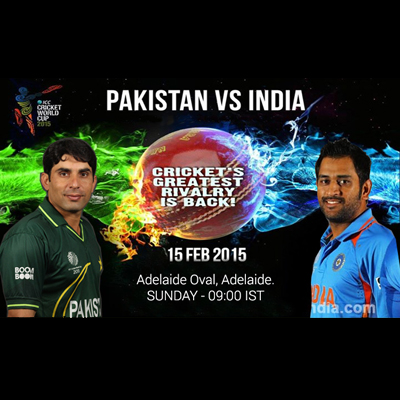
    MUMBAI: The most anticipated clash of the ICC Cricket World Cup 2015 created Indian television history as 288 million viewers (TAM data CS4+ extrapolated to the universe using a standard conversion factor) tuned in to watch India take on Pakistan on 15 February, 2015.


    The game was the most watched television event in India in the last four years, since the finals of the ICC Cricket World Cup 2011.


    The match between archrivals rated 14.8 TVR (TAM data M15+ ABC) across Star network including DD. The match rated 11.9 TVR (TAM data M15+ ABC) on Star network and 2.9 TVR (TAM data M15+ ABC) on DD. The India – Pakistan game delivered across town classes led by the top six Metros rating 17.2 TVR and 1million+ towns rating 15.5TVR (All data TAM data M15+ ABC).


    Star India CEO Uday Shankar said, “Nothing is bigger than the ICC Cricket World Cup and the Indian fans have shown their unflinching faith and passionate following for Team India as they began their World Cup campaign with a bang. As the country’s leading broadcaster, our efforts have been to showcase the best of cricket, have wider coverage, offer multiple languages and take the sport deeper by reinventing the viewer experience. With a host of innovations, we are committed to make this edition of the ICC Cricket World Cup the biggest ever.”


    Star unleashed a host of innovations for the biggest spectacle in the country. The first ever broadcast in six languages of the India – Pakistan game received 76 per cent of the viewership from Hindi and regional feeds and the balance 24 per cent from English validating the multi-lingual strategy pioneered by Star.


    A disruptive ‘Mauka’ ad campaign, which went beyond cricket on the field and leveraged fan passion in a unique way, went viral with over 17 million views online. Star roped in the most prominent voice in Indian cinema, Amitabh Bachchan, for India’s biggest game as he debuted as a commentator with the Star Sports panel of Kapil Dev, Shoaib Akhtar, Rahul Dravid and Sanjay Manjrekar for the India – Pakistan game.


    The India – Pakistan clash at the World Cup took social media in India by storm as 324,000 consumers spoke 500,000 times about the match, generating a potential three billion impressions. The match dominated conversations on Twitter, with 10/10 trends on Twitter Web, and 15/15 trends on Twitter Mobile, India spoke about nothing else. Indian fans were hopeful of India’s victory, and #Indwins was used 90,000 times, starting well before the game ended. The Star Sports campaign #wontgiveitback was used 24,000 times, and the second installment of the ‘Mauka’ campaign was viewed half a million times within hours of its release.