Tag: VidNet Summit 2022

  • VidNet 2022: ‘India lags in terms of content distribution security’

    VidNet 2022: ‘India lags in terms of content distribution security’

    Mumbai: The world’s largest streaming service Netflix with 222 million paid subscribers reported that another 100 million subscribers were accessing its services via shared passwords. The OTT platform is effectively losing billions in revenue every year because of password sharing. Similarly, issues like downloadable pirated content, illegal video hosting websites, password sharing and duplication of copyrighted intellectual property (IP) have created a parallel economy on the worldwide web that is hurting the revenues of video-on-demand platforms.

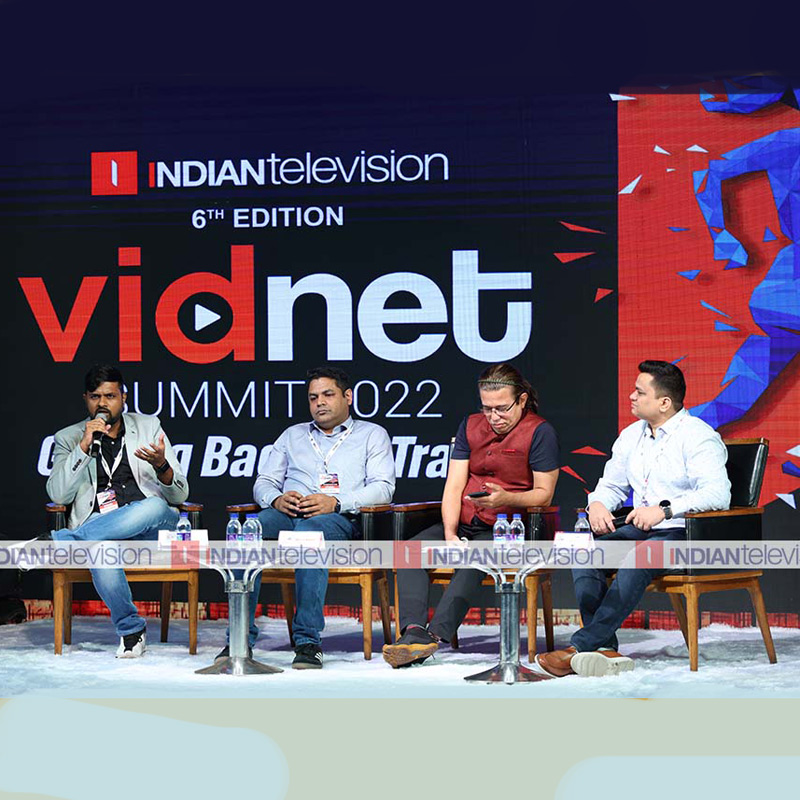
    Recently, IndianTelevision.com’s VidNet Summit 2022 organised a panel discussion on the ‘best practices for securing revenue for OTT platforms’ that included Inka Entworks India global business head Govindraj Basatwar, Epic On and Stream-Sens chief operating officer Sourjya Mohanty and Eros Now chief technology officer Lokesh Chauhan. The agenda of the session was to figure out how OTTs can plug the leakages in their revenue pipeline.

    The two-day industry event was supported by technology partners Dell Technologies and Synamedia, summit partners Applause Entertainment and Viewlift, industry support partners Gupshup, Lionsgate Play and Pallycon, community partners Screenwriters Association and Indian Film and Television Producers Council and gifting partner The Ayurveda Co.

    Epic On’s Sourjya Mohanty started the discussion by explaining that OTT platforms face revenue loss on two fronts. One is the technology front and another is the content front. On the content front, there is the issue of piracy that stems from the fact that certain segment of audiences may not be able to afford the content. “It is important to create protections for the content within the tech stack. This includes an effective digital rights management (DRM) system as well as embedded security features in the video player itself.”

    DRM is the use of technology to control and manage access to copyrighted material. It is a mode of encryption and decryption that determines whether the user who’s accessing the content is authentic or not. “Often platforms ignore these basic security measures and that’s the reason why piracy takes place,” remarked Mohanty.

    On the technology front, it is not just a content leak that causes revenue to be impacted. A platform may come under a variety of attacks ranging from a potential hijack of the app, a distributed denial of service (DDOS) attack, or something as simple as password sharing. Another issue is consumer awareness and education as many believe that it is fine to share password with friends and family.

    Furthermore, Mohanty observed that in the last five years with the proliferation of OTT services the audience is no longer loyal to the platform but rather it chases the content.

    Inka Entworks India’s Govindraj Basatwar was of the view that the best practices in terms of content distribution security are not being followed in India. He stated that distribution also means application security and that 50 per cent of the time subscription business models are hacked at the application level. He explained, “There are MOD APKs of apps available on the internet for download that gives consumers access to the platform’s content for free.”

    MOD APKs are modified versions of android applications. “When you put your application on the Play Store you effectively lose control of who gets to download it. It may be downloaded by an imposter or a genuine user,” said Basatwar. “Hackers usually reverse engineer the application, remove the subscription wall and upload the MOD APK. The MOD APK may be used by consumers without requiring them to share any credentials.”

    Eros Now’s Lokesh Chauhan held the opinion that all platforms are fundamentally prone to attacks and the attacker is constantly evolving. While OTT platforms routinely do jailbreak testing to look for weaknesses in their security but the best way to mitigate attacks is the democratisation of content availability. He said, “The access to content itself should be made readily available at affordable price points. This makes it easier for consumers to access it rather than install something like a MOD APK that is going to infect their system with a virus and make them vulnerable to potential credential hijacks. We have to make people understand that piracy is not worth it.”

    Chauhan also stated that technology infrastructure on an OTT platform has to be dynamically scaled up and down to keep control of costs. This is a big challenge currently for platforms, he said. “The structure for computing, caches, databases etc. should start playing a role in service-level agreements (SLAs).”

    An SLA is the level of service expected by a customer, i.e., the OTT platform, from a supplier i.e., the technology partner. Chauhan noted that these SLAs should factor in the cost of scaling up and maintaining the performance when a spike in usage happens.

  • VidNet 2022: Why do narratives like ‘Gullak’ work on OTT?

    VidNet 2022: Why do narratives like ‘Gullak’ work on OTT?

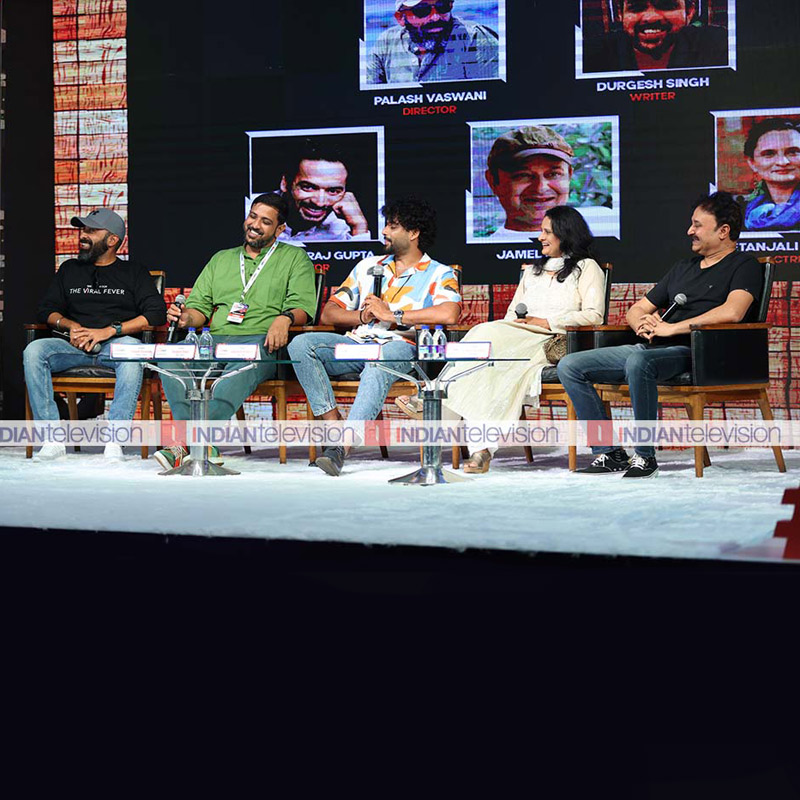
    Mumbai: SonyLiv web series “Gullak” produced by The Viral Fever, which concluded its third season recently, is a revelation for OTT platforms on creating franchises that span multiple seasons and do not lose their appeal. The simple premise of the show revolves around the interactions of a middle-class family ‘The Mishras’ including the father Santosh Mishra (played by Jameel Khan), mother Shanti Mishra (played by Geetanjali Kulkarni), elder son Anu Mishra (played by Vaibhav Raj Gupta) and younger son Aman Mishra (played by Harsh Mayar). The outstanding response to the web series in its third season highlights the importance of good writing when creating for OTT platforms.

    At IndianTelevision.com’s VidNet Summit 2022, held recently, the director, writer and cast of the show for the third season of “Gullak” gave a masterclass on the making of the series. The creators spoke about sustaining the relatable middle-class aesthetic and narrative of the show and the cast spoke about the evolving traits of each character in successive seasons. The session was joined by director Palash Vaswani, writer Durgesh Singh, actor Vaibhav Raj Gupta, Geetanjali Kulkarni, and Jameel Khan.

    The two-day industry event was supported by technology partners Dell Technologies and Synamedia, summit partners Applause Entertainment and Viewlift, industry support partners Gupshup, Lionsgate Play and Pallycon, community partners Screenwriters Association and Indian Film and Television Producers Council, and gifting partner The Ayurveda Co.

    The director of the show Palash Vaswani started the masterclass session by stating that the content we see made for audiences in the Hindi-speaking belt depicts characters holding a gun or presented as caricatures. “Gullak is different because it is not a show about the ten per cent of the population but the other 90 per cent who are underrepresented in the media. This is a life that we’ve all lived and the show is a potent ground for telling stories that have not been heard before. I found the opportunity to tell that story exciting.”

    Writer Durgesh Singh spoke about the moments that inspire the writing of the show. “I was in Bhopal two days back at an Indian coffee house. There were four uncles in their mid-fifties discussing Ukraine president Volodymyr Zelensky. Mind you, they were not talking about the ongoing Ukraine-Russia conflict but they were commenting on how fit Zelensky was at the age of 44,” he shared. “In this country, while infrastructure is developing fast, people’s mindsets and attitudes are changing more slowly. The reason small-town stories are working in cinema, TV and OTT is that people in small towns have migrated to big cities and they want to see the stories that take them to the space where they have spent their childhood. That’s the insight behind the success of ‘Gullak’.”

    Actor Vaibhav Raj Gupta who plays the elder son in the Mishra household ‘Anu Mishra’ spoke about his character arc in the latest season. He said, “Whenever a new season of ‘Gullak’ launches, I go watch the previous season to understand the character arc. Earlier, Anu Mishra has been struggling to earn money and, in this season, he’s finally begun earning. That’s the new dynamic that we explored.”

    Speaking about his inspiration for bringing out the character traits in Anu Mishra, he noted, “I also come from a middle-class household and I have a younger sibling. I’ve noticed how the people at home treat you if you’ve not excelled academically or are an earning member. For example, parents start treating you with respect once you become an earning member. I learned from those interactions and incorporated that experience into my character.”

    Geetanjali Kulkarni, a Marathi theatre actor, who played the role of ‘Shanti Mishra,’ said that season three continues with the arc after her character is diagnosed with diabetes in season two. She reflects that there is a lot more sensitivity to the character interactions in season three, where the characters fight, but there’s also more making up. “There’s a maturity and wisdom in the characters of ‘Gullak’ because the characters are growing older. As a theatre actor, after doing 25-50 shows we start playing around with the material, not necessarily worrying about the lines or people’s responses. Similarly, in the third season of ‘Gullak’, we’ve become more playful with our characters.”  

    Jameel Khan, who plays Santosh Mishra, agreed with Kulkarni and affirmed, “There’s a lot less conflict and yelling in the third season of ‘Gullak’ as compared to season one and two. There was also sensitivity in the season where we paid close attention to every relationship in the family. There has always been a ‘dostana’ between the parents and children in the Mishra household but the third season also brought a sensitivity to the relationship between husband and wife. In a middle-class household, there is an attitude that we must suppress the womenfolk in the household and I find that disturbing. ‘Gullak’ takes a mirror to society in an entertaining manner and reflects their aspiration to move ahead in life.”  

  • Vidnet 2022: ‘OTT has spurred the era of fearless storytelling’

    Vidnet 2022: ‘OTT has spurred the era of fearless storytelling’

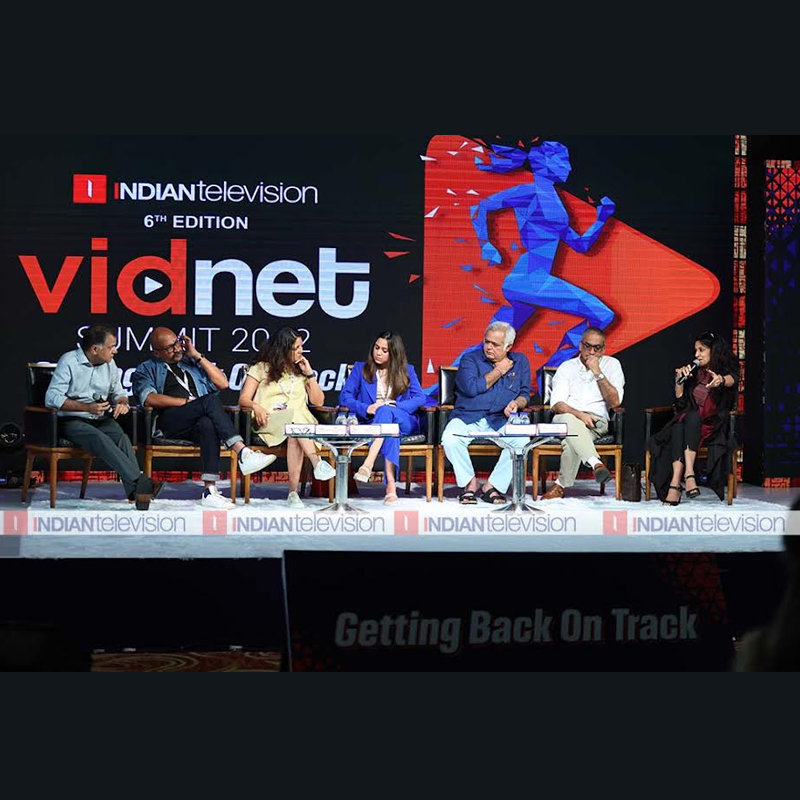
    Mumbai: India has entered a new era of creative storytelling. Whether it is the hegemony of Hindi-language content or big-name stars driving audiences to films, the rules that determined successful content have been broken. The focus in storytelling is on good writing that hearkens back to the 80s and 90s Doordarshan era with fine shows like “Wagle Ki Duniya,” “Hum Log,” or “Nukkad” to name a few. During a panel session on ‘Era of Creative Storytelling’ held recently at IndianTelevision.com’s VidNet Summit 2022, panellists affirmed that while content is governed by certain rules, the ones that have been breakthroughs have always upturned the rules.

    The two-day industry event was supported by technology partners Dell Technologies and Synamedia, summit partners Applause Entertainment and Viewlift, industry support partners Gupshup, Lionsgate Play and Pallycon, community partners Screenwriters Association and Indian Film and Television Producers Council and gifting partner The Ayurveda Co.

    The session was joined by director, writer and producer Suresh Triveni, Excel Entertainment producer Rucha Pathak, Applause Entertainment head of content Deepak Segal, Banijay Asia executive vice president – business and content Mrinalini Jain, film director, writer and producer Hansal Mehta, and Zee Studios head of content Ashima Avasthi Chaudhuri. The discussion was led by House of Cheer founder and CEO Raj Nayak.

    We’ve all heard of the Korean show “Squid Game” but few consumers outside of India have heard of an Indian original production that is not a film. Raj Nayak started off the discussion by asking creators why India’s content has not travelled as much as we would like?

    “I believe that stories have to stay authentic to where they originate from,” said Zee Studios Ashima Avasthi Chadhuri. “Do I need to make a story in English language for it to be accepted globally? No. Do I need to shoot the story in an international setting to make it appealing? No. It is not the language or budget of a production that determines whether the story travels but rather the emotion which must be universal.”

    “Scam 1992” director Hansal Mehta believed that, too often, creators of a show get caught up in figuring out the end result i.e., revenues. They ask complicated questions like ‘is the show accessible to a global audience?’ or ‘projected box office earnings for a film during the weekend’ rather than investing in the creative process. “When we made ‘Scam 1992,’ we didn’t think if we’re making it for Netflix or Amazon Prime Video. Nobody commissioned us to create it. We sold it after the cuts were made and it was picked up by a young OTT platform (SonyLiv). Its success proved that good content is greater than the platform and will find its way to the audience.”

    Suresh Triveni, who directed “Jalsa,” was also of the view that producing the film first and then selling it to the platform (Amazon Prime Video) gave him the creative freedom to tell the story that he wanted. But the question whether commissioned or acquired content works better is something that every creator needs to answer for themselves, he noted.  

    TV and film producers were putting content back in the box, figuratively, by looking at metrics like weekend box office projections and weekly TV ratings, according to Chaudhuri. “Film producers were looking at the Friday (weekend box office) result and TV broadcasters were looking at the Thursday result (TV ratings). OTT is a brilliant platform because the content is here to stay and the audience will find the story at some point in time.”

    There’s also the fact that writers on OTT are becoming more fearless, observed Banijay Asia’s Mrinalini Jain. “We do all sorts of shows and some have a structure that works and others are scripts that we take a punt on. There are writers who are still finding their voices and don’t have a lot of work behind them but they have the conviction. That gives me confidence that maybe I should take a punt on them. There has to be space for flaws and being judged in storytelling because that’s the society we’re living in. Fearlessness in writing is the best thing I’ve come across in the evolution of OTT storytelling.”

    Adding further, Triveni observed that movies and TV shows have been following the business of trends. “I think there is a lack of appreciation of literature in India. We’re not reading enough or going regional in terms of finding our stories. The industry that resides in Bombay is in an echo chamber and we’re busy churning out content. Our variety will come through our literature that genuinely needs to be explored.”

    Addressing the view that there is not enough variety of content on OTT platforms, Excel Entertainment’s Rucha Pathak felt that OTT platforms will undergo the same change in perspective that film creators realised many years ago. “When I was in the studio side of the business, everyone was making films with big name stars and studios realised that to differentiate the script is really important. The film industry saw a merging of commercial and non-commercial cinema and I think the same will happen in the OTT world. Now that I’m on the producer’s side, I know that a good story really depends on the showrunner’s, director’s and writer’s vision.”

    The most asked question during the session was how can writers pitch their ideas to studios and OTT platforms? Applause Entertainment Deepak Segal replied stating, “The writer who comes to pitch their story to us must have conviction. Secondly, as a studio if I’ve put out three crime thrillers then I’m not looking to create another one. During the pitching stage, we also need to understand the myriad factors that the story will bring to the table. Then it is up to the platform or studio to decide whether they have the wherewithal to do the show.”

    Speaking from personal experience, Segal also remarked, “Don’t pitch a story by saying that it is a big project because then we’ll say I’m not the studio to make this happen. Studios are never looking to undercut creators and will pay whatever cost is required to make the show. Also, don’t ever pitch a film script and say it can also be turned into a web series. There’s a different way of writing a feature film versus a web series versus a TV show. Luckily, we learnt about character arcs and tropes that are being used in the web series format from the adaptations that we created.”

  • VidNet 2022: ‘Over half of global online video services are subscription funded’

    VidNet 2022: ‘Over half of global online video services are subscription funded’

    Mumbai: Over half of the online video services worldwide were subscription funded at the end of 2021, according to a study. The key findings of the study pointed out that while there are more subscription funded over-the-top (OTT) services worldwide, advertising is a much larger revenue stream for video-on-demand platforms. Advertising revenue will also outpace subscription revenue over the next five years nudging many global OTT players including Netflix to introduce an ad-supported plan on their platforms. These insights and more were revealed in the session ‘Trends in Global OTT’ presented by Omdia senior principal analyst – digital content and channels Tim Wescott at IndianTelevision.com’s VidNet 2022 Summit on Thursday. 

    The two-day industry event was supported by technology partners Dell Technologies and Synamedia, summit partners Applause Entertainment and Viewlift, industry support partners Gupshup, Lionsgate Play and Pallycon, community partners Screenwriters Association and Indian Film and Television Producers Council and gifting partner The Ayurveda Co.

    Omdia is a research firm that focuses on technology, media and telecommunications sector and connects the dots in the global media ecosystem. 

    Wescott shared that there were 5671 online video services available at the end of 2021. This includes video sharing services like YouTube, subscription video-on-demand (SVOD) services like Amazon Prime Video, Netflix and transactional video services like Apple iTunes. “We have seen a plateau in terms of the number of online video services that peaked in 2019. New services are being launched all the time that are replacing old online video brands. Some services have been shuttered because they haven’t managed to turn a profit.”

    There were slightly more OTT services in 2021 as compared to 2020. There are 2222 subscription funded online video services followed by just over 2000 AVOD platforms and 1362 transactional video-on-demand services. There were just over 1000 dedicated sports streaming services, 600 virtual pay TV operators and 463 free video-on-demand services. Free VOD services are either promotional channels or are public broadcaster funded services.

    There are an estimated 127 online video services in Central and Southern Asia out of which 51 are AVOD services and 45 are SVOD services. “Despite the publicity of SVOD, advertising is the larger revenue stream and has been since 2010,” said Wescott. “It is going to outgrow subscription as a source of revenue for online video services over the next five years.”

    The online video world is dominated by YouTube and Facebook. A lot of OTT streaming services have started offering advertising including HBO Max, Peacock, Hulu, Disney+ (later this year) and Amazon Prime Video. “We heard recently that Netflix is considering adding an advertising tier,” noted Wescott. “It comes as no surprise as advertising supported plans are already being rolled out by other OTT players. We forecast that online video advertising is going to outstrip linear advertising in 2022. It is a very strong source of financing that will continue to grow.”

    The number of global online video subscriptions have seen dramatic growth since 2015 with the launch of more streaming platforms. Amazon Prime Video and Netflix launched globally in 2012 followed by Disney+ and Apple TV+ in 2019, HBOMax and Peacock in 2020 and Paramount+ in 2021. “We will continue to see subscription growth, especially with the advent of SVOD platforms of US studios. Earlier, these studios used to sell content directly to OTT players but now they view them as competitors.” 

    Omdia also conducted a consumer study in eight countries including India to understand consumer preferences when it comes to OTT services. They found that in most countries the arrival of SVOD services had decimated pay TV subscriptions. For example, SVOD services in the US have undercut existing pay TV in terms of pricing and have led to dramatic decline in pay TV subscriptions. The opportunity to watch on demand and binge watch content is something consumers have enthusiastically embraced, according to Wescott. The picture is similar in other countries where pay TV hasn’t declined as much as in the US but there are more SVOD subscriptions in most cases.

    India is slightly different from other markets because the pricing differential between SVOD and pay TV is not the same. In India, SVOD is a premium service whereas pay TV tends to be cheaper. There are also a lot more pay TV households than SVOD in India, though that is also because a lot of people get their television services via fraudulent operators.

    “While there is an increasing array of SVOD services being launched every year, clearly not every household is going to subscribe to all these services,” observed Wescott. “Our research shows that people use free ad funded services the most. So, YouTube is the number one choice in many countries including India. Before 2021, YouTube was the biggest online video service followed by Facebook Watch and then the free ad-supported tier of Disney+ Hotstar. Amazon Prime Video and Netflix are in the middle of the rankings among top ten OTT services. “Netflix has famously said that they’re competing with sleep for the consumer’s time but in reality, all online video services, whether they are AVOD or SVOD are competing for the consumer’s attention,” said Wescott.

    When Omdia asked consumers what they rated highly in a SVOD service, most respondents overwhelmingly said that original exclusive content i.e., content that is not available anywhere else was the most important aspect of any OTT. Consumers also wanted to watch the most talked about TV series that they had yet to catch up on. The depth of the content catalogue is rated as the next most important aspect for consumers of online video services. Advertising or lack of ad-supported content was also a big deal for some consumers but not as much as having original content.

    Omdia’s Wescott also shared some exclusive data at VidNet Summit 2022. The data showed that the number of original productions that were transmitted in 2021 by streaming services including Amazon Prime Video and Netflix were less than the previous year. There were also fewer hours of original content last year. Netflix produced the most original content coming up at 1767 hours. “The main reason for the decline in original productions is due to the production hiatus that began in 2020 due to the pandemic. We see that disruption working into the delivery pipeline for players such as Netflix and Amazon Prime Video. However, if you compare what Netflix is putting versus a typical US linear TV service then it is still a considerable amount of original content.”

    More global OTT platforms are commissioning originals locally. Netflix commissioned content in 47 countries in 2021 that were outside the US. Netflix’s most successful hits are being produced outside the US in languages other than English. In the last five years, Spain (Spanish shows) has been the biggest source of drama content for Netflix followed by India. “When Netflix came to India it wasn’t able to get as much local content as it would have liked and thus was obliged to originate content,” said Wescott. “Also, audiences in India prefer local content. While they will watch content from other countries, what they’re looking for is local content.”

    Similarly, India ranked as an important market for Amazon Prime Video, as most of its original drama productions outside the US, have been made in India in the last few years. Many direct-to-consumer services are offering a broader range of content and not just original content, even though they are increasing their original productions. US studios are expecting their new films to be a very important part of their SVOD service. Studios like Disney, Paramount, Universal and Warner Bros are planning to release their films exclusively on their SVOD services after the theatrical release. They also have deep libraries of film and TV content. Recently, Amazon completed the acquisition of legacy movie studio MGM and has access to 50 per cent of all James Bond titles.