Tag: Vidnet 2022

  • ‘We’re a company of technologists and storytellers’: Disney+ Hotstar’s Content Head Gaurav Banerjee

    ‘We’re a company of technologists and storytellers’: Disney+ Hotstar’s Content Head Gaurav Banerjee

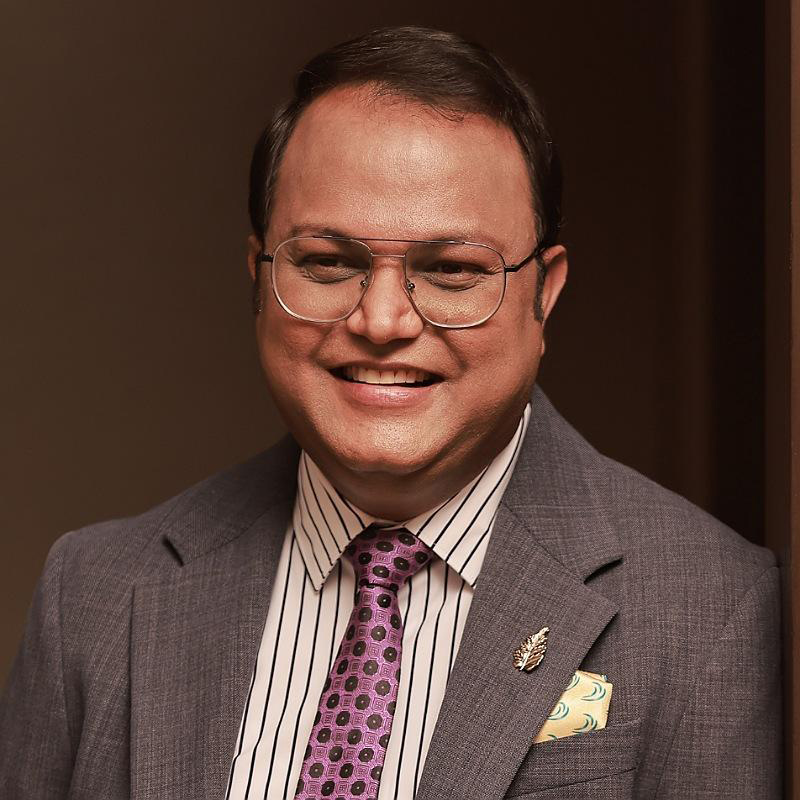
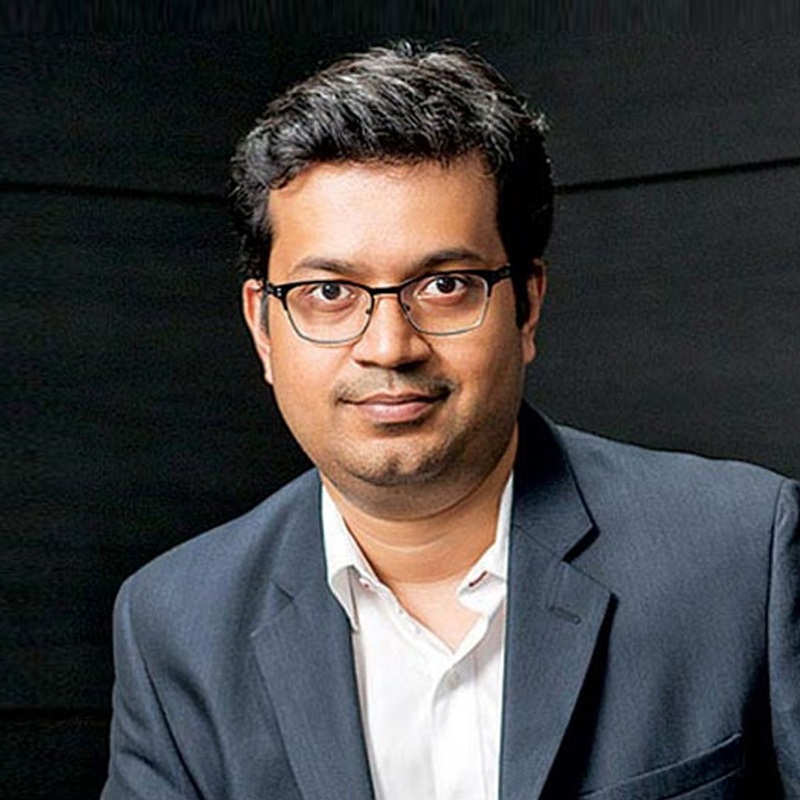
    Mumbai: Gaurav Banerjee has successfully straddled the realms of television and digital to deliver the most popular content in India. He runs Star India’s content studio that has delivered nine out of the top 15 web series and six out of the top 10 Hindi TV shows in the country. On the TV side, he’s responsible for popular shows such as Diya Aur Baati Hum, Sasural Genda Phool and on the digital side he’s responsible for hits such as Aarya and Special Ops amongst others.

    He began his career at Star TV Network as a primetime anchor and senior producer at Star News. He launched the Bengali news channel of the group Star Ananda in 2005 and later moved to lead the content strategy of the network’s regional entertainment channels in 2008. Banerjee was responsible for expanding the network’s reach in two key markets West Bengal and Maharashtra with the channels Star Jalsha and Star Pravah, respectively. In 2009, he led the content strategy for the Hindi entertainment channel Star Plus as general manager. He propelled Star Plus into a leading brand with hit shows like Yeh Hai Mohabattein and Mahabharata. In 2015-16, he took charge of Star India’s content studio and refreshed the storytelling approach for Star Plus and Star Bharat.

    Transforming India’s Content Landscape

    Banerjee is a man on a mission to transform India’s content landscape. He is leading Disney+ Hotstar’s foray into original content and has produced several Hotstar Specials that appeal to the unique tastes of digital audiences. While media executives are accustomed to treating television and digital as disparate creative ecosystems, Banerjee’s view is that good content can find its audience on any medium.

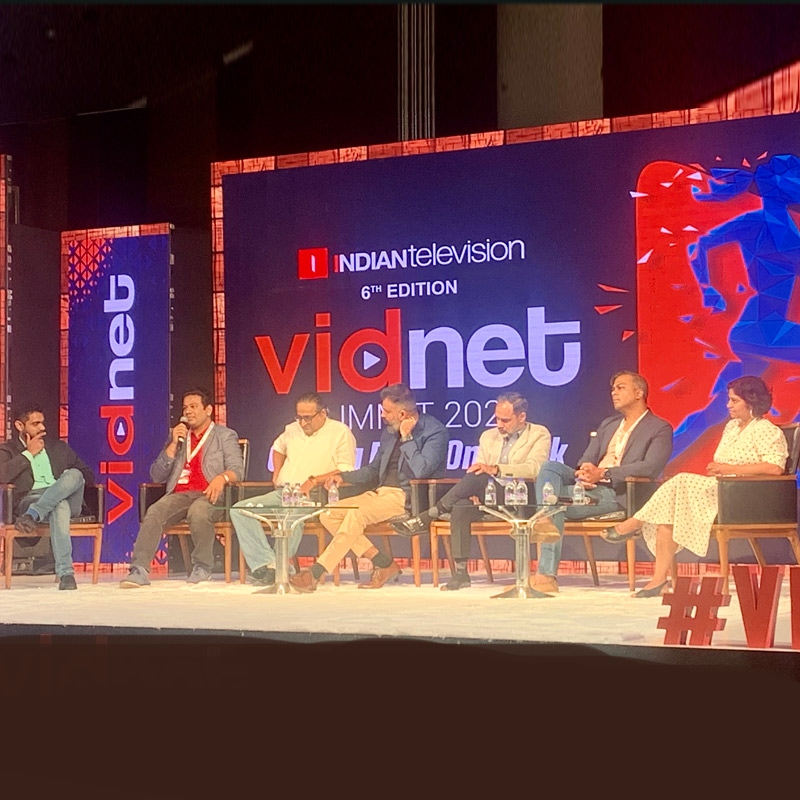
    Disney Star head content for HSM entertainment network and Disney+ Hotstar Gaurav Banerjee joined The Adaptation Company creative entrepreneur specialist and producer Sunil Doshi for a candid fireside chat at an event held recently in Mumbai. He spoke about driving the storytelling agenda at Star India, the advantage of being a legacy media company, producing innovative content for Disney+ Hotstar and helming Star India’s writers’ program.

    Edited Excerpts…

    Sunil Doshi: The traditional wisdom says that creating stories for television medium and creating stories for OTT medium are two different things. How have you successfully straddled both these words making Disney+ Hotstar a leader with enviable subscriptions?

    Gaurav Banerjee: We’ve always thought of ourselves as a storytelling and content company. When we’re looking at a script, we want to understand three simple things. First, how is the story going to be fresh to us and our viewers as well? Second, whether it might be relevant to our audience. Third, who is the storyteller and why is he/she excited to tell this story.

    We’ve always approached our scripts essentially using this process. We don’t think too much about distribution in the beginning phase because linear television and streaming are just different ways of distributing content. We’re comfortable with the idea that consumers can choose what technology or distribution platform works for them best. There may be format related choices depending on the media (some formats sit better on TV while others sit better on digital) but those are second order questions.

    Fundamentally, Star has a rich tradition of storytelling that goes back two decades. When we entered digital, we wanted to be native to the digital world and so, we expanded the brief of what we were as a company. Today, we’re a company of technologists and storytellers. The journey we have traversed has taken us from being a company with a consumer and storyteller mindset to a company that understood the product, technology, engineering and storytelling.

    Sunil Doshi: The economic models of streaming are changing. There is global inflation and war in Ukraine. There are streaming platforms that are gaining subscribers and others that are losing subscribers. Amidst all of this do you see Disney+ Hotstar as a technology company or a creative company?

    Gaurav Banerjee: I think Disney+ Hotstar is both. We see ourselves as a content platform that is always thinking about how to create technology that is intuitive for our viewers in India today. As we were building this platform eight years ago, we realised to achieve the scale we needed to reside on mobile phones. This was different from what was happening in the West where streaming was happening on connected TVs in people’s homes. The fact that we were mobile-first meant that our technology needed to be different.

    We were a legacy media company thinking about streaming. There were two advantages to this. First, we knew India’s consumers because we were the biggest broadcaster in the country and second, we understood storytelling having done it for two decades. The fundamentals we arrived at to be a platform that had scale were three things. First, we needed to have a big presence in live sports. Second, we needed to have a big presence in the movie business. Third, we needed to have a really big presence in drama.

    From day one, our content portfolio has tried to traverse and build on these three pillars. I’ve been in TV for 22 years now and these are the big pillars of Indian television. These three pillars take care of most of the entertainment needs of consumers.

    Sunil Doshi: You’ve dealt with technology. Now, you’ve done some exciting content innovations at Disney+ Hotstar where traditional TV content is feeding streaming content. What is your creative team doing to spot such opportunities?

    Gaurav Banerjee: Star is an interesting company with a great culture. While in some ways we’ve been leaders of entertainment in this country, we’ve always thought of ourselves as challenges.

    When we entered the digital space, we felt that there was a bias working against us. We were this legacy media company that has entered the streaming space and was not accustomed to the industry jargon or ways of working. We didn’t create this ecosystem or arrive here first. But we asked some fundamental questions and reimagined this world.

    The first decision we took was that streaming is something that can and should happen at scale. Therefore, the kind of content that is made for streaming should be high quality but cater to all audiences and not some niche.

    We took two strategic decisions, first, we decided to put our best content on streaming platforms. So, our linear TV content is first available on Disney+ Hotstar for paying subscribers. We observed that a lot of fans of the show will catch up on the latest episode during the day without waiting for it to be telecast at 10 pm on Star Plus.

    In a traditional setup, if we had taken such a decision, I would be worried because I’m doing something that’s threatening the ratings and viewership of the TV show. However, we changed the way we incentivized creative teams to focus on building a great show and not where consumers are supposed to watch it.

    There was a real feeling that TV shows, TV producers, and TV actors are in some way not good enough for digital. As someone who’s coming from a television background, we were clear that we were not going to participate and fuel this bias against TV content in any way.

    That’s why I’m incredibly proud of our Anupama prequel that’s streaming on Disney+ Hotstar called Namaste America. The show reveals when the first cracks appeared in Anupama’s marriage before the events in the TV series transpired. Another popular franchise Bigg Boss was doing well for our regional channels in Telugu and Tamil. Here, we felt a digital-only version with Stars like Kamal Haasan and Nagarjuna would work and both those seasons have done well. There are franchises such as “Special Ops” where we did a spin-off series that was just four episodes which worked on digital. We’re open to more experiments on OTT like Namaste India, Bigg Boss and Dance+.

    Sunil Doshi: I consider Star television as a thought leader as they have created so many iconic IPs. In the near absence of TV schools and film schools in our country, where is the new talent that is going to fuel creativity on digital and television going to come from?

    Gaurav Banerjee: We look at ourselves as an IP creation company. If we keep creating high-quality IP and continue to capture the imagination of audiences then monetisation will follow. That also means that we’re in the business of finding the best creative people, the best creative ideas and jostling with them in a healthy environment. The writing and creative community deserve our empathy because as an executive I’m looking at several scripts every day but they’re working on 1-3 stories and putting pen and ink to paper. We need to be conscious that we’re doing a good job of finding the best creative talent and treating them with empathy.

    When I was a student, I wanted to get into the creative business and understand how to make a TV show or film. This was in the year 1998 and after coming out of college I discovered there were only two places in India of any repute where you could learn to become a filmmaker or TV producer. One of them admitted 15 people and the other admitted 18 people. There were just 33 seats and I hoped to get one of those 33 seats. The luck of the draw.

    I got lucky but I realised this is a small number for an industry that is so big. For several years, I struggled to find new writers to bring to television. The belief we had as broadcasters is that there is a market need and so someone will come and build these institutions to feed this market. But nobody came. I urged both the institutions known for TV and filmmaking to start a course that teaches students how to write TV series. But that did not happen. How is the industry going to get better if no one is going to share knowledge, best practices and learn from each other?

    Star India put together a budget, teachers and a syllabus and a website to launch the program. We hired people and essentially, I asked all my writer friends in the industry to come to take classes and get the program going. We hired someone to put together a syllabus as this was a specialised program. I don’t know how many other companies are there where you can go to the CFO and say we’re spending a few X crores and there’s going to be no monetary return at the end of it. With a new show, you can get some revenue but with the writer’s program, no money is immediately going to come. It was just something to set up these budding writers and hopefully, if they become good writers, they might write something for us in three to four years but not necessarily.

    The great thing about our company and my pitch was that as long as the industry improves and there’s great writing then it is understood that we will also improve. That’s how we created the Star writers’ program and we had about 35-40 writers on our payroll over the last three to four years. While it undoubtedly has had its share of problems, it is also something that we’re very proud of.

  • Ullu to continue making edgy content: Vibhu Agarwal

    Ullu to continue making edgy content: Vibhu Agarwal

    Mumbai: OTT platform Ullu, launched in 2018, will not move away from creating edgy adult content, said founder Vibhu Agarwal at an event held recently. Instead, Agarwal has launched a Hindi general entertainment channel (GEC) ‘Atrangii’ accompanied by a catch-up OTT platform to cater to the family audience.

    “When I entered the OTT space, I sought to create content that is fresh. All OTT platforms were creating the same kind of content, whether it is a suspense or a thriller. As a businessman, I wanted to enter a white space that no one has addressed before,” said Vibhu Agarwal.

    The platform had found itself on the wrong side of public opinion after it was accused of featuring ‘edgy’ and ‘sleazy’ content to its audiences. It was reported that Agarwal was moving away from creating edgy adult content with a Ullu 2.0 strategy after the ministry of information and broadcasting introduced The Information Technology (Intermediary Guidelines and Digital Media Ethics Code) Rules, 2021.

    Agarwal said, “We have built a certain audience and subscription base, based on the kind of content that ULLU makes. The content is not wrong because there are people watching it. We’ve offered a buffet of shows including horror, suspense, thriller and brought many good actors into the ecosystem with shows like ‘Tandoor,’ ‘Peshawar,’ ‘Cyanide’ and others.”

    “That’s why we are launching our second OTT platform and entering the GEC space that’s going to bring both live and catch-up content for audiences,” he added. “The content on this platform will be separate from ULLU and will be more in line with GEC content. This will not be a ‘saas-bahu’ style GEC because again we’re looking at an unaddressed white space. Instead, the channel will feature limited series that will focus on the quality of content.”

    Agarwal said that the ministry of information and broadcasting has been open minded when it comes to the kind of content served by OTT players. “The IT Rules that came out on 24 February 2021 don’t bar OTTs from showcasing any kind of content. They have only asked for the classification of content where OTT platforms should showcase a disclaimer on the nature of content that they are showing. They have also mandated the creation of a self-regulatory body for addressing grievances when it comes to content on OTT platforms.”

    The pandemic led to an increase in content consumption on OTT platforms. Agarwal observed that the three-month release slate of OTT platforms was condensed to 15-25 days to cater to the demand for content. ULLU platform itself ensured to release a new web original at least once or twice a week. Going forward, he stated that the platform has a plan to release up to three originals per week.

    Agarwal predicts that, while regional OTT platforms are subscription-driven businesses right now, they will all switch to an advertising-led model due to the intense competition in the OTT space. “When you speak about investing in regional content, most national OTT platforms are only investing in South content because they are able to monetise it easily. I believe that regional OTT platforms that serve content in languages such as Gujarati, Punjabi, Haryanvi, Bhojpuri etc. will have to become advertising video-on-demand platforms. Only the global players with deep pockets will be able to remain subscription-driven. Most Indian owned platforms will have to shift to an AVOD model whether they cater to Hindi-speaking audiences or any other regional language.”

    “Ullu content will be distributed in international markets as well but not via the app,” stated Agarwal. “There is a large international Indian audience that would like to watch our content which is dubbed in English. The problem is to activate payment gateways in international markets. The viewership and subscription outside of India is limited because of few payment options. Also, most of our consumption occurs on mobile platforms, whereas in the US and UK mobile data is not as cheap. Audiences there watch content on devices such as Roku that are more popular. That’s why we are planning to distribute our content via local agencies.”

    Agarwal noted that 80 per cent of OTT platforms don’t pay enough attention to technology which is the biggest enabler of OTT user experience. “The app should be user friendly and every feature should work,” he said.

  • Vidnet’22: Shining a light on the art of OTT filmmaking- What’s different?

    Vidnet’22: Shining a light on the art of OTT filmmaking- What’s different?

    Mumbai: The OTT sector in India has witnessed a massive surge in viewership during the pandemic era with a host of new players and paid subscribers tuning into the online streaming space. With manifold growth across metrics, the sector continues its bull run even post pandemic, even as the next growth wave is expected to come from tier II, III, and IV cities and regional language content.

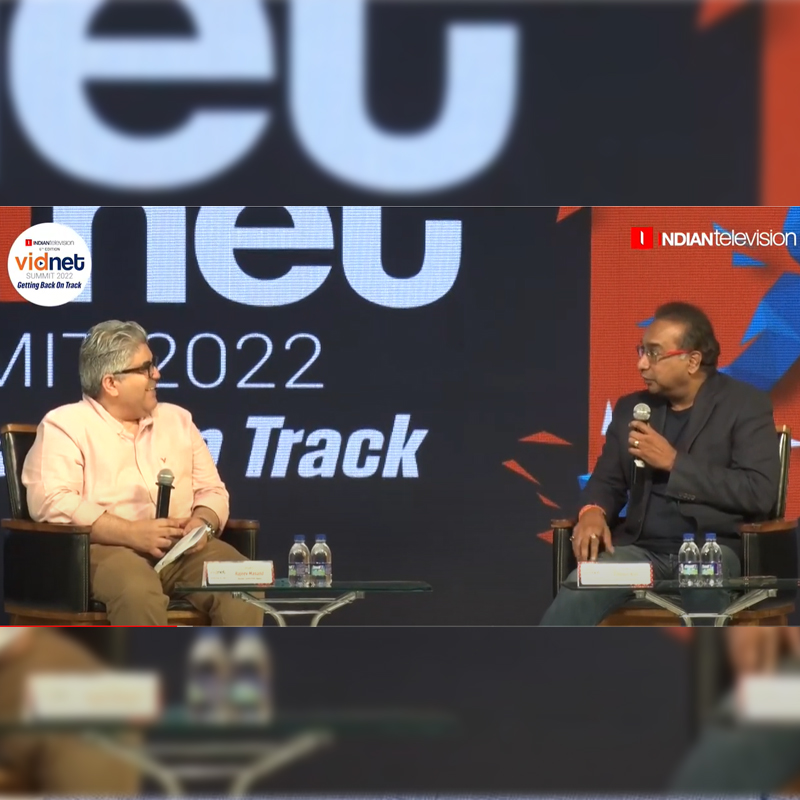
    To discuss the role of OTT in influencing the content preferences in our country, Applause Entertainment CEO Sameer Nair, and Dharma Cornerstone Agency COO and renowned film critic Rajeev Masand got together for a fireside chat on the ‘Art of Creating Diversified Content and Secret of Mastering Them’ at the Vidnet 2022 summit organised by IndianTelevision.com in Mumbai last month.

    Mumbai-based content studio Applause Entertainment led by CEO Sameer Nair has been betting big on the web series format since its inception in 2017. The company struck gold with several of its recent shows such as Hansal Mehta’s “Scam 1992,” Pankaj Tripathi-starrer “Criminal Justice,” “Hostages” to name a few on various OTT platforms. Nair acknowledges that in the last four to five years the single biggest revolution that has happened in the business of content is via the streaming platforms globally. “TV was always fundamentally limited by its nature- a linear medium with geographic and language boundaries and appointment viewing,” he says in response to Masand’s query of whether he sees OTTs replacing linear television in India ever.

    Nair goes on to say that these being early days for the OTT medium, every operator will go through its fair share of teething troubles trying to find their own business models. Along the way, there will be challenges on how to make content better, to improve storytelling and take our content to other markets and how budgets can be bettered.

    The biggest discovery or learning in the emerging medium has been in the writing. “If you can imagine it, then you can probably shoot it,” declares Nair. “Its not the star cast, it’s not a ‘big name’ director, it’s not a budget- the key lies in the writing. If it’s written well, chances are it may turn out well. After that everything falls into place.”

    The other thing about this business, Nair adds, is that it’s not ‘star-dependent.’ “We have done some 36 series so far and it’s primarily been a collection of ensemble cast,” Nair asserts.

    Referencing the massive hits and popular web shows delivered by the studio, Masand proceeds to ask Nair about “the process of knowing what’s worth pursuing”. While there’s no such “green light” moment, idea sources can be wide-ranging- from an original script or a book, or a foreign series or movie that they wish to adapt, Nair says. The journey from idea to screen, after a particular idea has been greenlighted is a process that takes time and effort, even before one starts filming.

    Expounding on the studio’s hit vehicle “Scam 1992,” Nair says, “From the moment we bought the book rights from Sucheta (Dalal) to the time the series released, it took three years in the making. And all through this period we were on board, we stayed the course, and that’s what is important- to take it across the line.”

    Over time, most platforms have developed their own particular character, when it came to content, noted Nair in response to a query from Masand on making platform-specific content. He added that when they first started out, it was only about making shows for the audiences and not about which streamer it should stream on. “We don’t have as much of a ‘platform-theory’ as trying to understand what genres to go after, where are programming trends headed and what are people watching more of.”

    Now, of course, we get lots of inputs from platforms themselves because they have so much data, insights and understanding, Nair continues. “I think a lot of this is connected to essentially, ‘social-signalling’,” noting that it’s important to have one’s ears to the ground.

    The other significant thing, Nair points out, is the scale at which you want to take an idea- whether it will be a big-budget show. That’s a decision which is full of risk in their business, considering the show is first created, produced and executed before finding a buyer platform for it. “So we have to be very sure and everything has to be planned in detail- the genre, the writing, the casting, the money we are going to be spending over it etc.”

    In that sense, we complement the platform’s services and aid in their pain point by taking over the complete production and directorial decisions pertaining to a show. This allows them to focus on other things to worry about like, gaining subscribers, increasing paid user base, marketing etc, he adds. The studio usually has a pipeline of 12 to 15 shows lined up in various stages of production, reveals Nair on the company’s plans to expand its content library of shows.

    The kind of content being produced and the price point are the chief issues, according to Nair. And then it depends upon how the entire market dynamics works. Deliberating on the recent Netflix stocks crash, Nair observes, “Using any one player, even if they are the leader, as the bell weather for how the entire industry works may not be the right way to do it. Because different businesses have different models of operation.” Larger players like Netflix and Amazon Prime, he says without naming the giant streamers, have very long investment horizons with long investment cycles and diversified businesses. So that becomes a very different dynamic, as compared to securing only streaming.

    On a macro level, the numbers can only increase hereon, as the OTT market continues to grow, Nair observes. Along the way, there is bound to be discovery of various operable models like ad-supported, subscriber-supported models or lower-end content or upper end content catering to every available market.

    On adapting books and shows, Nair says it makes business sense to adapt a good story. “The reason why great stories exist is because they have been retold. So what we do is re-visualise a good story and adapt it according to our cultural sensibilities, while staying true to the original plot.”

    “Measuring success on streamers is sketchy, one way to go would be to check if the platform is happy with the show’s outcome or performance,” says Nair. “We look at the social noise around it and the audiences are happy overall. Another critical way is the data insights provided by the streamer- they have a lot more information, on new subscribers added, drop-off points etc which give a better clue on a show’s performance.”

    “The way forward for the studio is working with debutantes or first-time filmmakers, we are also finding our way around this evolving landscape of the streaming business. For the industry in India, the language content will become more pan-Indian, and the audience for this content will grow. The onus is on us to make the most of this space,” Nair signs off.

    To tune in to the entire conversation, click on the below link:

  • Vidnet’22: Industry experts talk about availability of original content remain unexplored in OTT space

    Vidnet’22: Industry experts talk about availability of original content remain unexplored in OTT space

    Mumbai: Over the top, commonly known as OTT, has come a long way in the last five years. According to a new report by independent transaction advisory firm RBSA Advisors, India’s streaming market is predicted to be worth $15 billion by 2030 and out of which the video market will grow to $12.5 billion size and the audio will be $2.5 billion.

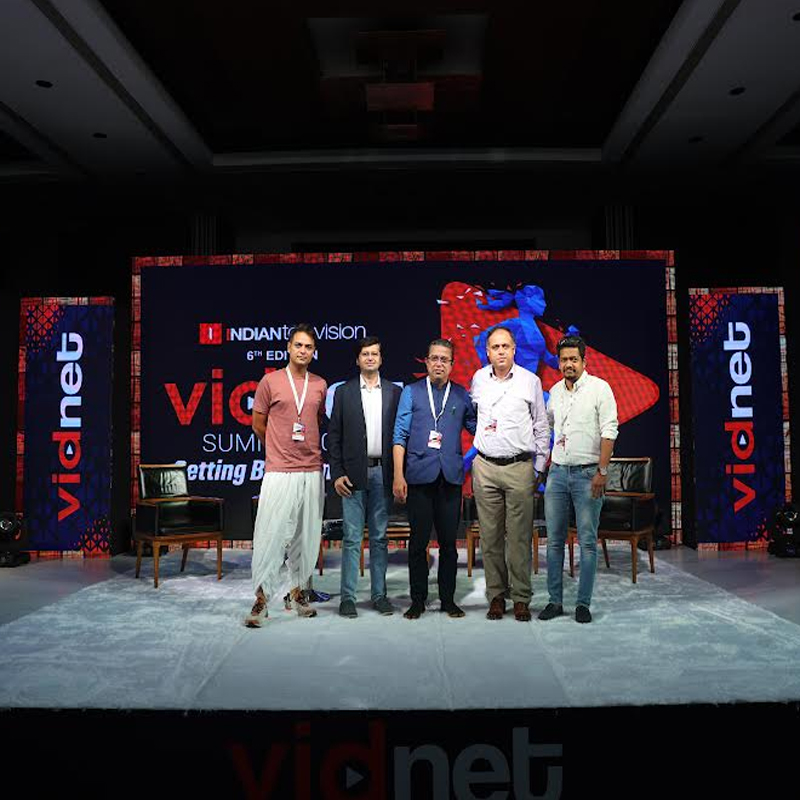
    During the sixth edition, Indiantelevision.com’s pioneering Vidnet Summit held in April brought together the industry experts to deliberate views on the evolution of OTT space and how the new order will be.  

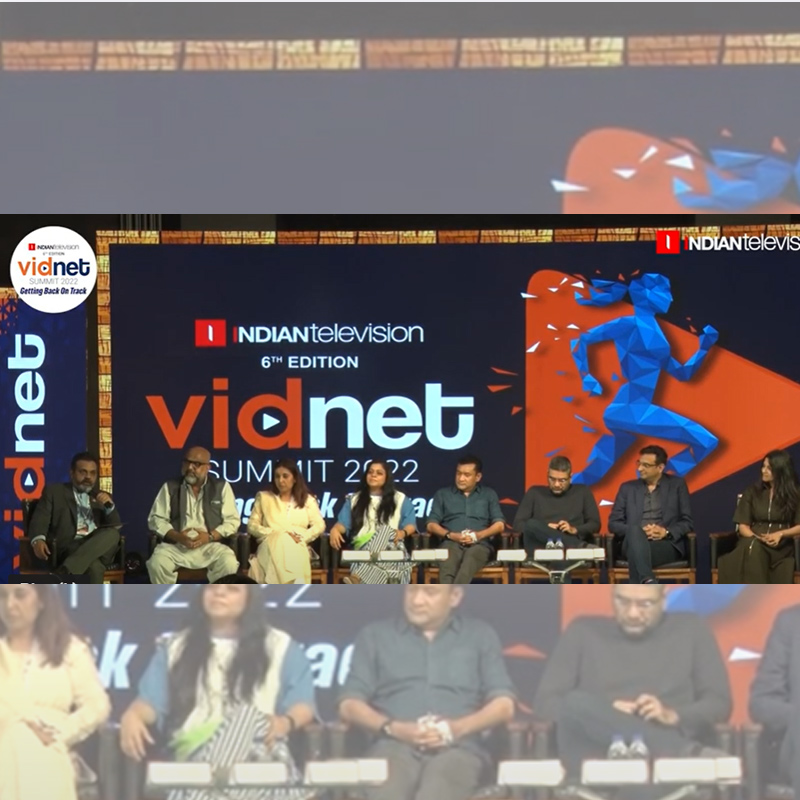
    The experts such as Lyca Productions CEO Ashish Singh, Fremantle India Television Productions managing direct Aradhana Bhola, MX Player chief content office Gautam Talwa, Indian film direct and screenwriter Ken Ghosh, Eros Now head of content Puja Rajadhyaksha, Juggernaut Productions OTT president and COO Samar Khan, Ullu head-content strategy and business alliances Nivedita Basu and moderated by Bodhitree Multimedia Ltd managing direct Mautik Tolia were among the panelists present during the discussion of the topic ‘The Evolution Of OTT Content: The New Order’, recently held in Mumbai.

    Reminiscing the initial days of OTT, Tolia highlighted how challenging it was to produce OTT content, to ensure that it reaches the right audience in the market.

    “When we started our first Youtube show, it was twelve-minutes long, we were so worried if the audience would watch it, how would they deal with buffering, will they like it? and other challenges,” he said.  

    Further, he also put some light on the evolution of the OTT space, he named a few shows like Mirzapur, etc., which really helped the industry become bigger.

    Opening up the conversation, he asked Khan about how he’s seeing the new order or second phase of OTT taking place?

    Specifically, pointing out the challenges that the second phase of OTT is presently struggling with, he said, “If we look at the content required on an annual basis across the top OTT platforms- the biggest challenge is to find new stories for the next phase of OTT. If all the platforms launch just one show per month, on an average the industry would require 85-90 shows every year. But where are the stories?”

    In addition, he said, “the second challenge is to find talent to tell those stories on screen.”

    However, Rajadhyaksha disagreed with Khan. She said, “there’s a lot to be explored in the country.” She feels that OTT creators are not struggling with the content, there will be a surge in the regional content. She added, “As the mindset of the young Indian audiences is evolving, topics like women empowerment, cultural and inspiration stories,etc., are yet to be explored. So, finding new stories is not a challenge.”

    Basu who has recently joined Ullu thinks that stories are around us all the time, creators need to present them beautifully to leave an impact. Quoting the example of stories like Gullak, Mai, she said, “We don’t really need to hunt for something new but to present what is there with all our heart.”

    During the conversation, she also revealed that Ullu will launch a new Hindi GEC.

    Revealing this, Basu said, “We are going to launch a new Hindi GEC in future. While I announce this news, you all may think that there’s no space for a new GEC but we see a space. We are coming up with a completely new phenomenon where audiences will get to see OTT type content on TV.”

    Taking the conversation to the creators side, Tolia said, “In the initial days, there was a lot of passion to create. But now, as the OTT space is evolving, there’s a hassle to create new content within short deadlines.”

    Throwing up the next question to Ken, he asked, “As the industry has taken up a speed, now directors, writers and actors are working on multiple projects at the same time. With this speed, how will enthusiasm sustain?”

    Ken answered, “Yes, that’s true, creators are now pacing up, working more than one project simultaneously. But to sustain, industry needs to go slow.”

    “There is no need to make fake deadlines and there’s no need to run behind the stars but to invest the right amount of time in the content making process,” he said.

    Taking the discussion ahead, he asked Gautam how do we not fall into the trap of just creating content without understanding the needs of the audiences? Gautam answered, “content fatigue is there. It is important to have clarity on who you’re making content for.”

    Tolia asked Gautam, “compared to other platforms, MX Player has been extremely prolific. How are you able to churn out the number of shows you do with the same quality?”

    Gautam asserted, “We spend a good amount of time, well planned out, and give so much attention to writing.”

    Singh, who has closely seen the industry evolve over the last six-seven years, thinks that OTT has changed the dynamics of the industry from revenue point of view, from production point of view and in all other spheres.

    He said, “In the last few years, we have only learnt what OTT is! We are just on the tip of the iceberg, there’s a lot to explore. And in the coming years, we have a lot to create and present”.

    “We are one-sixth of the population and we are yet to make our own Squid Game, Money heist and a lot more,” Singh added.

    Shifting the conversation to the unscripted content on OTT, Bhola said that there’s a lot of space to grow even in the unscripted content space.

    Calling herself a radical optimist, she said, “We cannot say that there are no new stories. In fact, this is the best time to create content. However, we need to focus in terms of coming up with new seasons, we need to go slow.”

    Concluding her statement Bhola said, “There’s a lot of room to create content in India. We are super rich in terms of culture and we have a lot to create and show to the world.”

    Watch the entire panel discussion on The Evolution Of Ott Content: The New Order by clicking on the link here:

  • Vidnet’22: How OTT is accelerating tech infrastructure investments

    Vidnet’22: How OTT is accelerating tech infrastructure investments

    MUMBAI: How has the exponential growth in consumption of OTT content impacted the tech – especially hardware – infrastructure needs of those running streaming platforms or serving video entertainment to consumers?

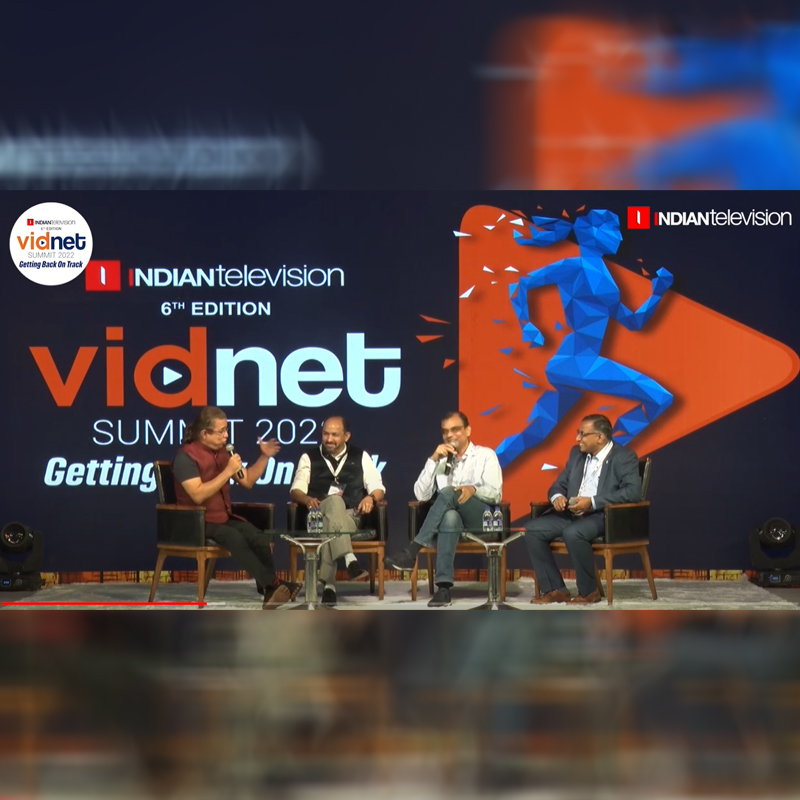
    That was the main question that was discussed during the tech session at the sixth edition of Indiantelevision.com’s pioneering Vidnet Summit held in end April. Titled Rise of Digital Revolution – Accelerated Growth Led by Disruptive Innovation in the world of OTT, the session featured Dell Technologies medium business leader Radhesh Shankaranarayanan, Sony Pictures Networks India head of Sony LIV Technology Manish Verma,  NXTDigital COO Rouse and Indian Television Dot Com founder, CEO & editor-in-chief Anil Wanvari as the moderator.

    Ten years from now, this period will be called the digital revolution period across the globe, expounded Shankaranarayanan, referring to the industrial and information revolutions which transformed the world in every way in earlier centuries. “There was a pressure or push to move into digital before this, but the pandemic has actually accelerated the digital drive completely.”

    Specifically pointing out to the media and entertainment ecosystem he opined that production houses have suddenly seen a huge amount of video content business flowing into them and, as a result, the  demand for Dell workstations and servers has  skyrocketed.

    “Earlier this segment used to be very niche in terms of technology adoption, but today I have seen so many production houses mushrooming in the last couple of years,” he revealed. “I am currently talking to at least 400-odd production houses in the country- right from Delhi to Trivandrum. Hence we want to be as close to  content creation that’s happening. We are really keen on offering even more of them solutions which will help them keep pace with the burgeoning needs by offering them workstations with the fast video processing power they need.”

    What demonetisation has done to the payment industry, I think the lockdown has done for the OTT industry, added SPNI’s Manish Verma.

    “We have seen consumption increasing crazily during the lockdowns and it has essentially increased in three different areas. One is the premium VOD (video-on-demand) service, people have actually started paying for content where earlier they used to find means to not to pay. Second is sports, which is a very good driver of consumption for us, we offer multiple live sports. That’s where we have seen good consumption happening and that’s always been there.”

    Third big area was interactivity- KBC Play along, wherein users can play the same KBC on their devices, while the show is on air, adds Verma. “All three areas require a lot of backend infrastructure, which has increased exponentially for us. We need to make sure that our backend infrastructure is scaled properly to handle the traffic, so that when concurrent users are coming in there is no latency.” 

    Another phenomena that is happening is the shift in devices from personal mobile viewing patterns to consumption on bigger screens such as smart TVs for a better viewing experience, he noted.

    NXTDigital’s Rouse Koshy offered his perspective on how his cable network was impacted on the tech infrastructure front by the increase in video consumption.

    “The pandemic didn’t hit us as hard as these guys (OTT platforms) hit us!” he expressed. He went on to add that in the last one and a half year, the company started digitising and coming up with combo products such as broadband with video etc.

    “Now in the last six months we have also started aggregating all OTT platforms and selling it as a bouquet.” This transformation is going to be a challenge, admitted Koshy as cable TV operators have a different mindset and to train them to transform is going to be a “humongous exercise.”

    4K adoption will need to further demand for tremendous processing power houses of workstation going forward, noted Shankaranarayanan,  even as 8K is still distant.

    “I am seeing this as another huge additional spend coming in hardware, software and cloud infrastructure along with 5G opening up a totally new experience,” he explained

    Going forward, we see this trend of gaming and music, apart from entertainment genres as a part of OTT platforms, revealed Koshy, which would further accelerate hardware needs at the consumer end.

    With 5G emerging, we will need to further scale up infrastructure, bandwidth requirement, affirmed Verma in response to Wanvari’s observation about the telecom spectrum transition happening globally which is expected to hit India in the next 12 months or so.

    When it comes to Metaverse, it’s too early for us to say how it’ll take off, Koshy confessed, and whether it will end up as a fad. Shankaranarayanan was more optimistic about the surge in hardware infrastructure investments  that the metaverse era is going to bring with it. “The compute power is going to be huge, and for that the Dell  has products which can cater to the requirement so consumers can have a seamless experience,” he highlighted.

    Watch the entire panel discussion on the Rise of Digital Revolution –  Accelerated Growth Led by Disruptive Innovation in the world of OTT by clicking on the link here: 

  • VidNet 2022: Advertising On OTT – the way forward for the industry

    VidNet 2022: Advertising On OTT – the way forward for the industry

    Mumbai: The OTT ecosystem in India is growing every day with new players coming into the fray and novel, edgy content being churned out. The way we look at online streaming is also changing. Today the market has 40 odd players including regional players. For these platforms to sustain, there are two ways- one: is the AVOD, that’s advertising-supported and the second is the SVOD which is subscription-supported. In a market like India, SVOD remains a challenge. Even as the OTT subscription market in India continues to grow at a gradual pace, it remains an exciting prospect for an increasing number of marketers and advertisers who are keen to promote their brands and ads on these emerging platforms.

    The sixth edition of IndianTelevision.com’s annual VidNet Summit took an in-depth look at the way forward for the OTT ecosystem and all the platforms on it, and the opportunities and the challenges in the space.

    The two-day summit had technology partners Dell Technologies and Synamedia, summit partners Applause Entertainment and Viewlift, industry support partners Gupshup, Lionsgate Play and Pallycon, community partners Screenwriters Association and Indian Film and Television Producers Council, and gifting partner The Ayurveda Co.

    Day one of VidNet 2022 saw an interesting mix of sessions on the subject of advertising on OTT from industry experts and stakeholders on the various panels. The panel on ‘Advertising On OTT – Connecting The New Brand Order’ oversaw bristling conversations from panelists that included MediaCom chief product officer Averill Sequeira, Swiggy head of brand marketing Saurabh Nath, Zee Entertainment Enterprises chief revenue officer-Digital & SMB, South Asia Gaurav Kanwal, ITC head media & PR Jaikishin Chhaproo, Byju’s brand and creative strategy vice president Vineet Singh and Syska Group head of marketing Amit Sethiya. The session was moderated by Madison World vice president Kosal Malladi.

    Today data has become a complete commodity with large OTT players like Netflix, Prime Video, Zee5, Hotstar, Sony liv etc coming in, observed Malladi. Recently Netflix declared that it has decided to support advertising. The advertising revenues on these platforms in the last four years have grown by 400 per cent, Malladi shared. So will the subscription model stay or perish in India? Also, as brands are the numbers large enough for advertising on AVOD?

    According to Zee’s Gaurav Kanwal, the OTT industry in India is in its infancy. “There’s a huge AVOD play for sure, with increased reach more brands will come on board. On the SVOD side, as the economy progresses, people will pay for varied content that they can watch at their convenience. We already have about 70 million people paying for content on various OTTs across the board,” he said while adding, “As we evolve as an ecosystem, the pricing models will evolve as well and then we shall see a massive upswing in the SVOD subscriptions. It will be difficult to sustain only on the back of SVOD so an advertising-supported hybrid model will be the way forward.”

    Speaking about how OTT has caught the attention of brands, Syska’s Amit Sethiya said, “We have started exploring OTT from the last three to four years and the money that we are putting in it is increasing year on year in the entire media mix. From single-digit investment in the medium about four years back the brand has now expanded to double-digit investment. We are in a position to fetch incremental audiences with this new avenue and connected TV is aiding the entire process.”

    The role of agency here is more of a consultant or facilitator, rather than a gatekeeper in bringing the two worlds of brands and the rich, emerging ecosystem of OTTs together, MediaCom’s Averill Sequeira averred. “Am very bullish about the OTT sector, the pace at which they are growing, especially the phenomenal growth, regional OTTs and the void they have fulfilled in terms of quality content. They have opened people’s minds to new forms of storytelling.”

    Sequira spoke of two ways to validate OTT reach and audience. “As far as programmatic is concerned it is simpler as you’re buying the audience and not inventory on the platform. But where programmatic is not available, she encouraged all stakeholders to actively seek metrics such as search volumes, brand recall, and social chatter to serve as ‘proof of the pudding’.”

    On what attracted FMCG brands to OTT, ITC’s Jaikishin Chhaproo explained that their primary target audience is women. “We knew most women were missing the first telecast of their favourite shows and watching repeat telecasts. When that consumption moved to OTT they could watch it at their convenience on hand-held devices, rather than by appointment viewing as on TV. OTT provided that platform seamlessly,” he said, adding that “the other huge chunk of their TG is the youth 18-40, who watch differentiated on OTT only and who aren’t interested in appointment viewing. This age group that forms the core TG of FMCGs is also present on OTT.”

    Swiggy’s Saurabh Nath pointed out that for a food tech brand, the consumer journey is key as there are specific times of the day when food is relevant to their lives. “One can only increase their ‘desire to action’ by building awareness via advertising but one cannot expect immediate action. The kind of marketing that we are talking about is changed and is different when it comes to tech and D2C from that of FMCGs as the cycle is much more condensed,” he said, adding that, “the attribution for the FMCGs was very clear, that the brand will build over a period of time.”

    Nath shared three-pointers on brand equity for any brand to perform well- saliency, meaningfulness, and differentiation. Putting the ad on an OTT may give the brand salience but the outcome in terms of recall, engagement and differentiation will depend on one’s campaign relevance. The industry stakeholders agreed on the importance of “tracking the right metric” for the same.

    For D2C brands like edtechs, content marketing is the way to create love for the brand, affirmed Byju’s Vineet Singh, adding, “We need to figure out what works for us and what doesn’t as marketers first- Brand recall, salience, relevance etc.” Going back to basics is important such as understanding what our requirement is, instead of unnecessarily complicating. We’ve evolved from a world where just pushing the narrative is going to work. Creative excellence from a brand is important.”

    Investments in content continue to burgeon as viewers’ insatiable appetite continues to demand more and more. With all agreeing that OTT’s a high-growth industry with everyone wanting ‘a piece of the OTT pie,’ panelists agreed that the end goal/objective has to be clearly defined for the brand or a particular campaign. Cookie-cutter branding is not going to work for brands.

    It was agreed that OTT platforms need to take some responsibility too, even as marketers need to own it, for ‘passive integration’ will not work. With nearly 18-20 percent of FMCG’s money for television going to OTTs today, expectation setting needs to be clear and realistic.

  • VidNet 2022: How can Indian OTTs reach 100 million subscriptions?

    VidNet 2022: How can Indian OTTs reach 100 million subscriptions?

    Mumbai: In 2021, OTT paid subscriptions in India touched the 70-80 million mark, according to the latest report by Boston Consulting Group. The subscriber numbers remain in flux with high levels of churn and potential marketing efforts are required to generate and acquire new users. The streaming giant Netflix has also reported a decline in its subscriptions for the first time in a decade. The company recently reported that it lost 0.2 million subscribers in the first quarter of 2022. In such a scenario, what can OTT platforms do to drive new subscriptions and reach the magic 100 million subscribers in India?

    That was the agenda for the panel discussion at IndianTelevision.com’s VidNet Summit 2022 held on Wednesday. The two-day summit was supported by technology partners Dell Technologies and Synamedia, summit partners Applause Entertainment and Viewlift, industry support partners Gupshup, Lionsgate Play and Pallycon, and community partners Screenwriters Association and Indian Film and Television Producers Council and gifting partner The Ayurveda Co.

    The conversation was joined by Endemol Shine India CEO Abhishek Rege; International Media Acquisition Corp chairman and CEO Shibashish Sarkar; Swastik Productions and One Life Studios founder and chief creative officer Siddharth Kumar Tewary and Mzaalo (Xfinite Global Plc) COO Vikram Tanna.

    Speaking in this context, Abhishek Rege pointed out that the 100 million is merely an arbitrary number and what OTTs should look at is the revenue model. To entice new customers OTT platforms are offering free trial subscriptions, non-paywalled content and lowering the price of subscription plans, which is eating into their bottom line.

    He gave the example of Amazon’s Kindle device and added, “There was a Kindle available for $79 that served ads and then you paid a little bit more to get the ad-free version. That’s the kind of space we need to look at as OTT players and content creators if we want to land up at better revenues.”

    Mzaalo’s Vikram Tanna observed that for a long time the consumption of media in India has always been subsidised by advertising. The trend continues today with devices like DD Free Dish that offer TV channels for free. “When you look at the mass audience the solution to the problem lies in technology. They are the future consumers for us all. I believe we need to figure out how to make free content profitable. Can you reward the community for consuming content and return a part of the revenue that you earn back to them?” he pointed out.

    Mzaalo is a part of Xfinite Global Plc, which is a decentralised entertainment ecosystem. They have a digital token called XET that is listed on the cryptocurrency exchange. Tanna stated, “We believe in equal distribution of value creation among stakeholders of the ecosystem. Since content drives commerce and we all remember moments rather than the entire content piece, we tried to figure out if you can buy, sell and resell NFTs of content. Of course, they will have multiple other utilities.”

    Tanna concluded his remarks by adding that to reach the magic 100 million target the two pillars that will drive the growth of OTTs will be content and technology.

    Speaking from a content standpoint, Swastik Productions’ Siddharth Kumar Tewary said, “We’re just at the tip of the iceberg of what’s going to happen in terms of content. Content is the biggest driver of subscribers on OTT platforms and he felt that one piece of content doesn’t necessarily reach 100 million people. Platforms need to give the audiences all varieties of content to consume, similar to TV. The only difference is that content consumption on TV was led by appointment viewing and now people can watch anytime they want.”

    He added, “Every platform is different and serves a different audience. While the numbers will come, whether it is SVOD or AVOD, not every platform may be necessarily targeting 100 million subscribers.” Sharing a metaphor, Tewary noted that there are brands that cater to the masses and brands that cater to the classes across categories and we don’t compare them purely by the numbers to understand how big they are. So why should we judge OTTs that way?

    Commenting on whether the growth of OTTs is being driven by content or distribution partnerships, Rege also stated, “The content that we have served to OTT audiences is scaled up and has succeeded not to an extent, though not as much as we’d like.”

    He added, “Content on OTT is certainly different from mainstream TV. Over time an audience that is used to TV needs to be slowly nudged to OTT with simpler content. For them, jumping into OTT content that is nuanced will not get absorbed quickly. However, there is a demand for different types of content on OTT platforms compared to TV.”

    International Media Acquisition Corp’s Shibashish Sarkar believes that compared to 100 years of print, more than 30 years of TV, OTT which is only six years old is still a nascent media and will continue to grow, defying expectations. He questions the way audiences are segmented and served content across platforms.

    “Historically, on TV, we like to segment the audiences as tier 2 and tier 3. These descriptions of audiences don’t hold anymore,” he affirmed. “Going back six months, three out of four blockbusters were South Indian dubbed films. They were attracting audiences in a small town in Rajasthan as well as in Nariman Point in Mumbai. Divisions like language barriers, genres and other content divisions have become redundant,” Sarkar added further.

  • Vidnet 2022: Gen-Z, millennials driving OTT consumption pattern along with non-urban audience, says Carat report

    Vidnet 2022: Gen-Z, millennials driving OTT consumption pattern along with non-urban audience, says Carat report

    Mumbai: The OTT ecosystem in India has been evolving by leaps and bounds in recent times with amazing and diverse content being churned out on the plethora of platforms on the connected web today. Even as the OTT subscription market in India continues to grow at a gradual pace, it remains an exciting prospect for an increasing number of marketers and advertisers who are keen to promote their brands and ads on these emerging platforms.

    IndianTelevision.com organised the sixth edition of its Annual Vidnet Summit with an aim to have an in-depth look at the way forward for the OTT ecosystem and all the platforms on it, and the opportunities and the challenges in the space. The two-day summiit had technolgy partners Dell Technologies and Synamedia, summit partners Applause Entertainment and Viewlift, industry support partners Gupshup, Lionsgate Play and Pallycon, community partners Screenwriters Association and Indian Film and Television Producers Council and gifting partner The Ayurveda Co.

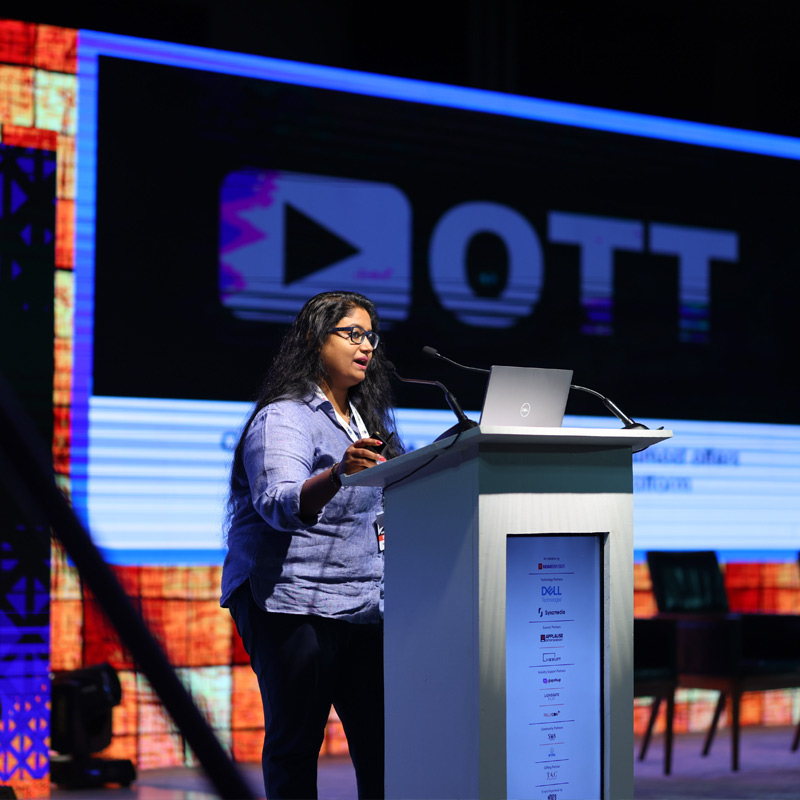
    The first day of Vidnet 2022 saw an interesting mix of sessions on the subject with bristling conversations from industry experts and stakeholders on the various panels. The day’s sessions kicked off with an informative report on ‘OTT Consumption & Advertising Trends’ presented by Carat India associate vice president- strategy Sayami Podder. The report provided insights on the key factors that have driven the growth in the space such as OTT first releases, low subscription cost, regional content, live events and Connected TV. The report also looked at who is driving the growth and estimated that the large potential audience base of 70-80 million paid subscribers comprises the age group of 15-35 years, while amongst women consumption is driven by the 25-35 years age group.

    The report also estimates that the viewing time spent on these streaming platforms have gone up from two hours pre-covid to 4.45 hours, even as the minutes of consumption have spiked from 181 to 204 billion minutes in 2021.

    Video consumption of non-fiction content beyond television on streaming platforms is also on the rise, as per the report, with the viewership for such series on Netflix alone growing by over 250 per cent.

    Digital viewership of non-cricket sports too saw an increase of 310 per cent, according to the report, while the IPL audience is expected to become even bigger with a 20-30 per cent spike in match watch time over IPL 2021 on Disney+ Hotstar.