Tag: Vidnet 2019

  • OTT creators and producers, up close and personal at Vidnet Masterclasses 2019

    OTT creators and producers, up close and personal at Vidnet Masterclasses 2019

    Delhi Crime, Kota Factory, Criminal Justice, TVF Bachelors, Permanent Roommates, Ghoul, Bard of Blood, Sacred Games, Verdict, Little Things, Thinkstan and Mirzapur are just some of the shows that we all watch, love and are inspired by in the last few years that are the content of this, ‘New Wave’ of Indian original shows on OTT platforms Netflix, Amazon, Hotstar, AltBalaji, YouTube and others.

    If you too want to be a writer, creator or director with his idea and vision seen as a reality on any of these platforms then read on.

    On a grey Mumbai morning on 4 October 2019, I got a chance to meet all these brilliant minds behind all these path-breaking shows and ask them questions and learn from them the creator's first-hand knowledge of how these shows were conceived, written and created for all of us to view.

    If you were not present in these two esteemed rooms where all these discussions took place, here is a brief summary from memory, dear reader of what I learned from these Masterclasses.

    I begin with the man about whom I had heard vaguely from people in the industry. A man who from his corporate boardroom job had made the transition and written this hard-hitting gangster Saga that is as good as anything from Hollywood and a truly Original Indian masterpiece on Amazon Prime produced by India’s premiere production house Excel Entertainment.

    Puneet Krishna, the creator of the Epic gangster saga ‘Mirzapur’ got it made on the strength of his concept and what on paper is a mind-boggling 195 speaking characters in one show.

    The biggest learning from Puneet who answered everyone’s questions with such humility was, “I do not have a writers’ room, my writers’ room is my bedroom where my brother and I conceived and wrote this show that is Mirzapur.” Puneet wrote the basic outline for the entire show in four days and Season 2 will be out soon.

    On a personal note, Mirzapur is a show I loved and I did get to tell him face to face that after I had seen it, I felt that all other shows of a similar genre, looked like Kiddy Disney shows to me, he laughed and told me a big thank you.

    From Mirzapur to Om Shanti Om was the next talk with the experienced screenwriter, teacher & lyricist of over 400 Bollywood songs Mayur Puri. He sang the lyrics of two of his famous songs and I was shocked to learn the real double meanings to them which I cannot even mention here, but rest assured I will pay closer attention to these seriously talented lyrics when I hear them next! But on a more serious note Mayur who is from a small town and has truly worked his way to the top gave the room the most enlightening advice when he said that there is no Special Cult ‘Illuminati’ type zone of people with power in film, TV or OTT who meet every night to discuss who will make it through in this big bad world of Bollywood. He said, “If you have a concept or story or lyrics or anything just go out there & put it out to the world.”

    Patrick Graham, a British national, who is a Bandra boy was inspired by the torture chambers set up in Kashmir to make Ghoul. He spoke with his editor Nitin about the use of several techniques of the horror genre and stay away from cliches.

    Nitin Baid, one of India’s top editors, ended the conversation with how he edited Gully Boy with Zoya Akhtar in a most unique way away from India somewhere in Europe.

    Lunch break was a nice long line of hungry delegates where a lot of people in both rooms got to meet and greet each other. If you want to know, the line was so long that I started with dessert first & then my food!

    Post lunch was director Raghav Subu & editor Gourav Gopal of the current new age cult show Kota Factory by TVF.

    Kota Factory is a show I have not seen but have heard in glowing appreciation from various people from within the industry.

    Did you know that Raghav, on pure instinct, decided the show would be in B&W, a decision he was not sure of and hence shot it with 2 cameras – one in colour & one B&W. Days before the launch, he informed the backers of the show that it will be in B&W and they were fine with it!

    There was also a rather interesting take on all the drone shots used in the show and how they were used to tell the story in a far more constructive way.

    Danish Aslam was up next with his young DOP Jay Bhansali. Danish, who has been to film school, assisted big directors, made a film & so much more, was giving a crash course on guerilla filmmaking and how he had to unlearn everything he learned in film school to move forward in the real world. His was a no holds barred take on what you have to do to convert your ideas into reality in the limited budgets & time constraints. Those who are NOT in the top 2 per cent of makers who get to make a Sacred Games or Made In Heaven with lavish budgets have to adhere to make the most of what we have with our stories and ideas.

    I would strongly recommend that you see his Masterclass if and when it comes on YouTube and learn from what he showed by several examples of his own footage to the rest of us with his shows It’s Not That Simple and Time Out and how he & his DOP shot some of the footage on the streets in unique ways with no lights or fancy equipment. His was a real-time learning lesson for future makers of content on the web.

    From here I managed to rush to the other room where I caught and wished had heard the full soul-bearing method & methodology of actor, writer & director Dhruv Sehgal (for the record you could only attend one Masterclass but I paid for both & hence managed to jump between both rooms).

    Upon entering the room, Dhruv was speaking and there was an image on the large display screen on stage, of a cheap blue bed sheet on a table, a laptop and a pizza box in a Mumbai home and how Dhruv was telling the enthralled audience in the room of future aspiring writers and creators about his office space that was his room in Mumbai and how he wrote his show, ‘Little Things’ in that humble room of his which made to Netflix and all our rooms across the planet.

    Tea Break – Somewhere at this point, while eating cake, I met the organisers of Indiantelvision.com and was asked by the organizer and owner Anil Wanvari if I would be interested in writing a review/critique of the event.  Which I agreed to do and now I am an actor who is about to become a first time writer!

    For the record, I always wanted to be a writer since my film appreciation course and with all the films I have been watching since age five and with the current amount of content I watch daily, here was my chance. So I say 'YES' looking at the man. I have no idea what I was doing saying yes to him in all honesty, but do let me know if I did alright dear readers.

    Anil tells me casually to do a 500-word piece on the event. I am on word 1326 as I type this!

    BUT,

    I have saved the best for the last and I hope you are still with me dear reader and have not gone on to check your phone for all the notifications popping on your screen from Instagram or Facebook and other social media platforms that have been calling you all this while. I am trying to explain in as concise a manner all that I learned and absorbed on that day at the Westin hotel in Mumbai.

    The last session of the day at 5 pm on 4 October 2019 was a tough choice. In one room were the multiple writers of Sacred Games & in the other room the one that I did not move from for some strange reason was the writer, director, creator, and if I can say with no doubt in my mind, a genius of a man  Richie Mehta. He has given us all the most important show (in my personal opinion) of this decade – Delhi Crime.

    Delhi Crime is a show that I first urge all of you who have not seen, to see today, right now if you can. Those of you who are worried or afraid to see it let me assure you.  The graphic violence of the incident that every Indian never wants to feel again is not depicted in the show (necessary spoiler for all those who have not seen the show) but what is shown in the show in painstaking detail is how the Delhi Police captured the criminals who committed the most heinous crime in the collective memory of India to date.

    This is a procedural drama that should be mandatory in all training academies in India and how this one man from Canada single-handedly researched the show for four years and how he managed to bring the reality of it to the viewers.

    Richie Mehta is a zen-like man with a soft-spoken voice and a crystal clear thought process.

    While he was on stage, this frail man in a jeans and T-shirt took off his floaters (I have not seen those in years on anyone’s feet since college) and sat barefoot on stage, first took everyone’s questions in the room as notes on his phone all of them methodically and then began to answer the questions in a systematic manner on how he made Delhi Crime or rather how he made it with so much authenticity that made the show look so real to all of us who have seen it.

    He explained how he studied the case files, the hours of interviews with the Delhi Police, his observations while he waited in police stations and spoke to the senior officers, traffic police constables and other officers in charge of the case, how they told him facts about the case and other cases because nobody ever bothered to ask them these basic questions that Richie asked while he did the research for the show. He also had to keep an objective viewpoint to the show while he shot it with his Danish DOP with no Netflix on board (which came in much later after the show was made).

    What I learned most from this unique human being was that he had no big aspiration with what he was making apart from a duty-bound conviction to tell the story with utmost honesty.

    In conclusion, here is what I learned from all these brilliant minds on that day.

    All that matters is your idea, your conviction, your belief in the idea, and the desire to make it. Nothing can stop you.

    The industry has gone through a paradigm shift in its outlook to content. Especially when it comes to OTT platforms, they are looking for the next big idea more than you know. It's not about stars, nepotism, contacts, money or power. It's about the idea and that can come from anywhere in this current set up whether you are from the industry or from outside from a small town or a big city. It can be made into a show whether you are an experienced old-time writer or a first-time corporate who has a show in his mind. It can come from you who is reading this or from me who is writing this for you, the new world of content for OTT is open to us all, so write it down and get it made, or wait for Vidnet 2020 to get inspired.

    (The author is a TV actor. The views expressed in this article are his own and Indiantelevision.com may not subscribe to them.)

  • Telcos are great partners for OTT discoverability and monetisation

    Telcos are great partners for OTT discoverability and monetisation

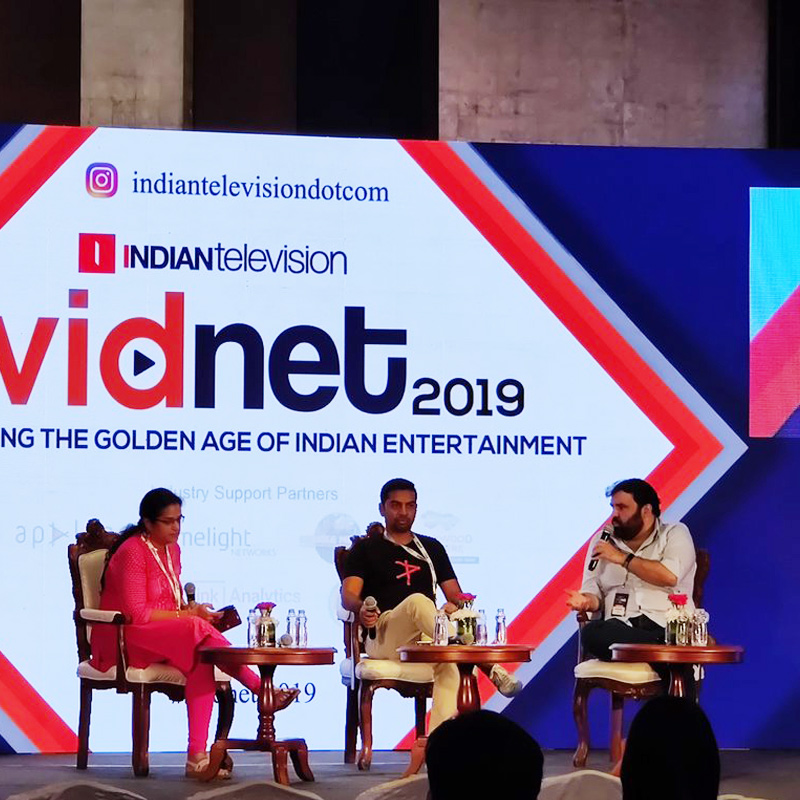
    MUMBAI: With an explosion in the smartphone market and rise in the number of OTT channels operating in India, telco-OTT partnerships are well-strategised and the most beneficial for content platforms to gain eyeballs and drive monetisation asserted a panel speaking on the topic of “Captive Audiences of the Telecom Trace” at the recently concluded Business and Tech Track of Indiantelevision.com Vidnet 2019 summit.

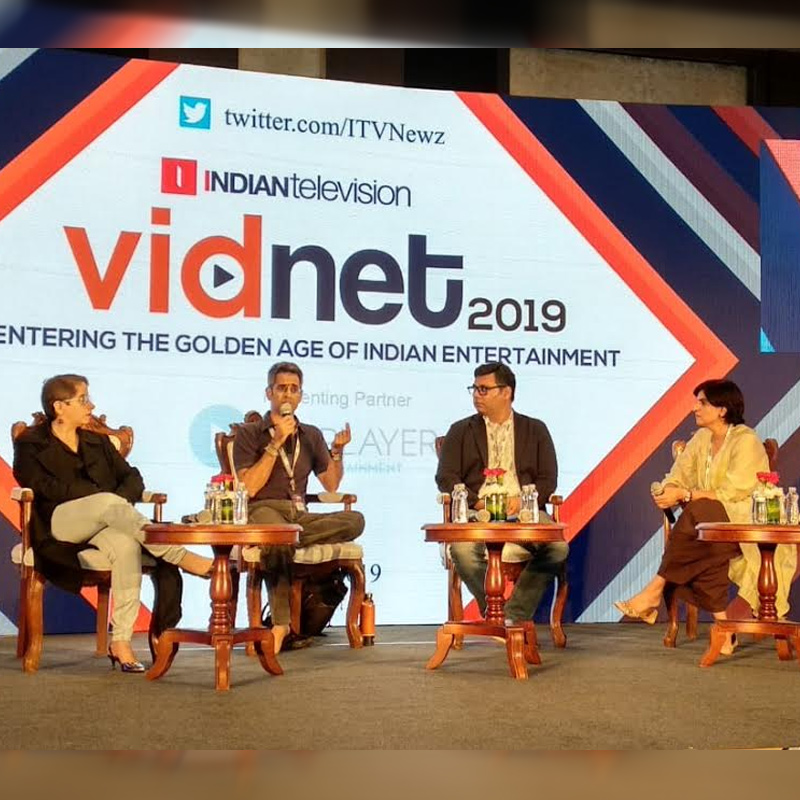
    Sitting on the panel, moderated by Elara Capital VP – research analyst (Media) Karan Taurani, were ZEE5 Global chief business officer Archana Anand, IndiaCast Media Distribution group CEO Anuj Gandhi, Apalya Technologies founder & CEO Vamshi Reddy, Lionsgate South Asia MD Rohit Jain, Shemaroo Entertainment COO digital Zubin Dubash, and Hungama Digital COO Siddhartha Roy.

    Roy mentioned that as aggregators, telecom companies are greatly positioned as single payment option for most of the OTT channels and Zubin Dubash vouched for the ability of telco partners to get greater traction on content sites and drive up numbers.

    Taking the example of Ditto TV, the VOD service from ZEE, Archana Anand shared that partnerships with telecom companies have always been fruitful for the ZEE network’s OTT offerings, for both consumer acquisition and marketing.

    She said, “I think, back then, we were the first ones to go across and do partnerships with the telcos and we created quite a stir in the market because of the lovely sachet pricing we were offering. The telecom partners ensured that they are paying on behalf of the consumers and it gave us brilliant traction. I believe, we managed to get the highest subscriber base in those days.”

    Anand added that there can’t be a better distribution network than telcos as it also translates into a ‘fantastic payment mechanism’. “With all the hesitancy around credit card payment, etc., the direct carrier billing is something that the consumer can be confident about and adapt easily.”

    Vamshi Reddy seconded her thoughts as he quipped that telcos can become the easiest ways for the industry to build a monetisation model around the whole content consumption. He noted that with fragmentation happening in the OTT space, the telecom partners can provide a universal experience to users in a seamless manner.

    Gandhi, however, highlighted that in the long run, the issue of ownership of the consumer can arise. “This challenge will take some time to settle, but from a pure bundling perspective, the discoverability on TV is extremely easy, and that is something that the OTT platforms are struggling with. Telcos can help in solving that.”

    To this, Anand noted that today there is a great symbiotic relationship between the OTT platforms and the telcos as the former wants to own the content and the latter, the consumer. But the platforms need to be mindful of the fact that it gets constant data from its partners and also keeps on communicating with the consumers through in-app notifications to ensure scalability of the partnerships in the long run.

    Jain added another dimension to the conversation as he noted that while telecoms are great in helping the OTT content reach the smaller screen, there is a wide array of opportunities lying in the big-screen space, which the OEMs can latch on to.

    He said, “In some ways, this is life coming to a full circle as all of these (telcos, OEMs, etc.) are actually (equivalent to) DTH and cable companies. All we need now is an ecosystem to emerge and thrive and whoever does a good job of aggregating content will eventually become the winner.”

  • Every platform needs a centrality to its content: VOOT’s Gourav Rakshit at Vidnet 2019

    Every platform needs a centrality to its content: VOOT’s Gourav Rakshit at Vidnet 2019

    MUMBAI: Viacom18’s digital venture VOOT is set to expand the horizon of its business with new moves such as the upcoming launch of its subscription-based model in this calendar year and the full-fledged commercial launch of VOOT Kids. While it will maintain equal focus on the advertising-led platform, Viacom18 Digital Ventures COO Gourav Rakshit thinks it is an opportune time to enter the SVOD play.

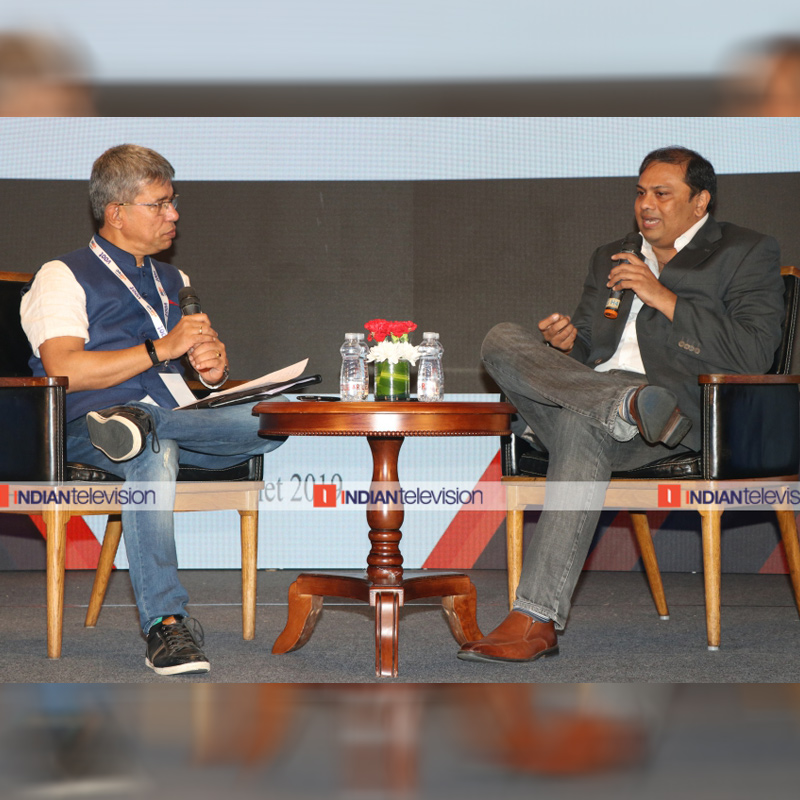
    At Indiantelevision.com’s Vidnet 2019, Rakshit spoke on industry issues as well as VOOT’s content strategy going forward in a candid fireside chat with Indiantelevision.com founder, CEO and editor-in-chief Anil Wanvari. Wanvari set the tone of the discussion by asking his lessons from Shaadi.com and his view on the industry as an outsider.

    Rakshit said that Shaadi.com was obviously a fascinating journey for him as he gained more insights on the history of India and communities of the country. It also helped him to touch India at a very core level while they signed up about 10-15k people every day which largely represents middle-class India.

    “I think from a learning point of view one of the things I can definitely bring is data science and AI models being used in match-making. They are very advanced. People talk about recommendations on OTT space. So, the order of magnitude of the algorithm on Shaadi is much higher than you have to in this space. Another thing is we ran the entire business on subscription model creating sufficient value to reach premium customers.”

    However, he also shed light on the new things he had to face as he switched industries. “I did underestimate the long-gestation period of content between concept, and execution or original launch. At Shaadi.com we were one week away from the idea of execution. This industry has to think where the ball will be one year from now. So, it definitely has a layer of complexity,” he added further.

    The other challenge is the supply-demand quotient. There has been a sudden burst of appetite but the growth in content creators can’t keep pace. However, he believes this is a short-term problem.

    According to him, the OTT industry is still finding its footing. The industry also has to discover the right price points. “As you start to move from the extremely western psychological demographic to what we call India, then Bharat, the nature of the content that we produce and we are going to put on these platforms needs to be fundamentally different. There, I think the broadcast industry, which has sharpened over years of understanding what these consumers want, is going to have an edge both by virtue of the library of content and understanding the sensibilities of the users. In the near term, clearly, the highest disposable income is with people that have a westernised psychography,” he said.

    He also added that every platform needs a centrality to its content that people want to consume and pay for. “We do daily digital soaps which are only available online and do exceedingly well. We have a base of extremely loyal people. In fact, we just concluded a season a few months ago. It is called Silsila and that had a massive fandom. So appointment-driven viewing on the internet as opposed to the only premise we are able to which is binge-watch is where we see a compelling case,” he also noted.

    Rakshit noted that the one thing that digital offers but television is unable to provide is on-demand viewing. According to him, if consumers are able to choose when they want to watch something then they can choose what and how they want to watch, and then they will be looking for something which is closer to their own liking. Hence, there has to be an understanding of writing what these new-age consumers are looking for.

    According to Rakshit, VOOT has an interesting content line up that is ready to hit the market. Moreover, the entry of fibre-to-home services will also help the platform at an ecosystem level. He also mentioned that as the industry progressed, the price discovery of subscription-based services would also be helpful for the platform.

    Speaking on VOOT’s kids’ strategy, he said, “It’s a departure from pure-play video streaming and primarily because we recognise that the target group in that is in the age group of 4-8 years and they are not using their own phones. They are using the device of their parents with their explicit permission. As a form of engagement, we got multiple-choice questions, audiobooks sort of narrative as well as large-format books which people can read in electronic media. Our early indications are that parents like that.”

  • Indian content creators must find out right stories to reach global audiences

    Indian content creators must find out right stories to reach global audiences

    MUMBAI: Over the top platforms have opened up the doors for content creators to share their creativity across the world. Despite the influx of major companies such as Netflix and Amazon Prime Video in India, content creators are still figuring out how to make their stories go global.

    At the stage of Indiantelevision.com’s Vidnet 2019 summit, some of the successful creators spilt the beans on their strategies. The creators of Delhi Crime, Lunch Box and Bard of Blood believe that stories that resonate and connect emotionally with the global audiences do travel. 

    The panel discussion ‘Making Indian Stories Travel’ in the creators’ track was moderated by BookMyShow VP content and strategy Manisha Singh Katial and the panellists were MUBI India content advisor Guneet Munga, Delhi Crime creator, director and writer Richie Mehta, and Red Chillies Entertainment chief revenue officer Gaurav Verma. 

    Katial opened the discussion by stating, “Yes, stories that are good do travel. But they also have to be culturally connected and I think that also becomes the challenge. Something that culturally connects with you resonates more, and something that connects with you emotionally, definitely works. I do feel making stories that travel is a challenge because it depends on the content that one is creating.”

    Katial asked Mehta to share the feedback he received on Delhi Crime. “The feedback for Delhi Crime is global. I have been hearing that the story has travelled quite far, and seems to have resonated with people all over the world. I knew this when I was conceiving the project.”

    He further elaborated, “I was in Delhi when the crime happened. So I reacted to it as somebody in India would. Then I left and went to Toronto and there I realised that this wasn’t just an ‘Indian’ thing, this was a humanitarian issue for the planet’s citizen. When I pieced together my work I figured out that it could have deep meaning for the Indian audience.”

    Mehta’s aim was to show a positive representation of India through his story. “It is the worst thing that has ever happened in this country and if you can spin that around to make a story of the extreme positive environment, especially for somebody outside with no knowledge and understanding about India, I certainly want to make it like that,” he said.

    Monga, the creator of Lunch Box, also expressed that content creators have tried to represent Indian beyond Bollywood’s depiction. Distribution has been the challenge previously. She said, “Across the world there are different sets of distribution, buyers and strategies. So it was not the same release day of films worldwide. Lunch Box released over two years around the world. And it is important for us to understand there are many layers to this.”

    Monga said that films can travel either because of its content or because of the choice of distribution partners. Sometimes a really good film is unable to travel because it does not have the right access. “So having the right access and having that distribution division, which is not just diaspora, is important. I feel with Netflix coming in India the lines are merging and now people will be able to see what India is with all its languages and colours, all its type of filmmaking and storytelling.”

    Katial commented that while having partners like Amazon and Netflix is great, it is also necessary to think internationally. To this, Verma added that one should not try to attempt an international story with the pressure that one has to appeal to seven billion consumers because emotional stories will connect to people. The best way to dazzle the audience is through content and script. Verma also opined that the industry is facing the issue of lack of talent. OTT platforms need writers who can understand the audiences’ need. 

    The panellists also said that apart from appealing stories and subjects, subtitles and dubbing of the content in different languages are also extremely pivotal in reaching global audiences.

  • OTT series’ directors, editors share experiences, learning at Vidnet 2019’s Masterclasses

    OTT series’ directors, editors share experiences, learning at Vidnet 2019’s Masterclasses

    MUMBAI: Indiantelevision.com’s Vidnet 2019, for the first time, conducted Masterclasses for aspiring directors and editors of the OTT space. Masterclasses brought directors and editors of successful series like Ghoul, Gullak, Rangbaaz, Kota Factory, It’s Not That Simple, Criminal Justice and Delhi Crime to share their experiences and learning as creators.

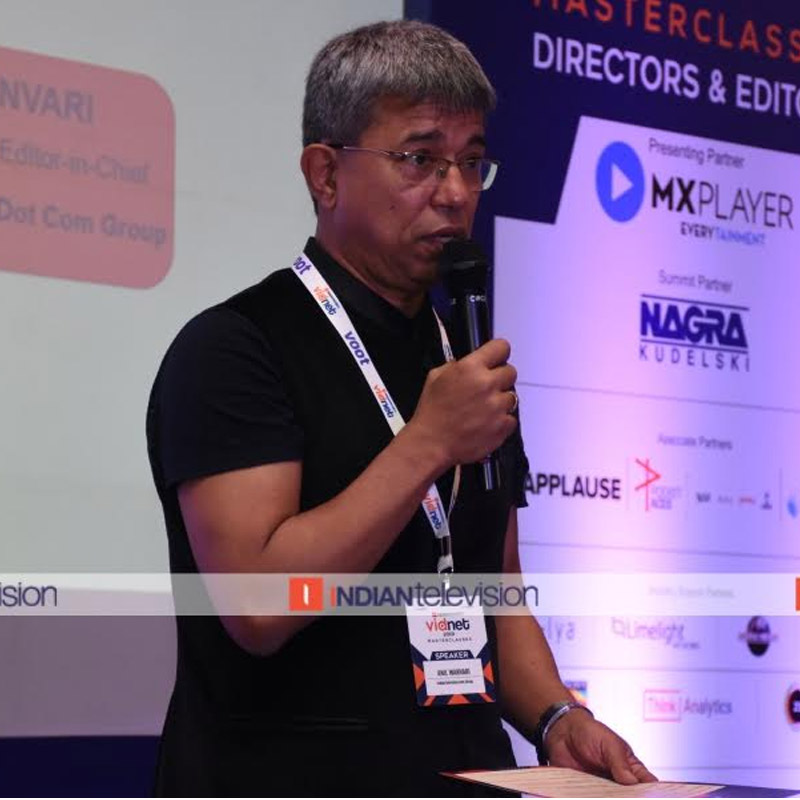
    The initiative is an attempt to help the audience learn from the OTT industry’s best creators on creating successful web series. In the opening remark, Indiatelevision.com founder and CEO Anil Wanvari said, “This is the first time that we have organised Masterclasses and our vision is to create a platform and to build a community for aspiring creators."

    The first Masterclass was held by the makers of Netflix’s Ghoul. Creator, writer and director Patrick Graham shared insights on the process of making Ghoul which was initially written as a film and later converted to three-episode original premium content for Netflix. Graham also revealed that he took six months to write and research on the script of Ghoul and the post-production took three to four months. He said that horror is the most untapped genre in India and the concept of military horror was never attempted. Ghoul editor Nitin Baid briefed the audience on how he started working on the psychological horror-thriller and his experience while working with Graham on the project.

    The next Masterclass was conducted by Sachin Pathak, director of Rangbaaz S-2 who shared his experience on how he started his journey in the industry and how he got the opportunity to direct Rangbaaz S-2 for ZEE5. Pathak said that experience is the best teacher on shooting-related challenges.

    Another interesting Masterclass was on SonyLIV’s Gullak. Amrit Raj Gupta who directed Gullak began his journey in 2013 as an intern in TVF. He also directed TVF Bachelors season one and two. Amit Kulkarni editor of Gullak, Tripling S-2 and TVF Bachelors shared his two pence with the audiences. The duo said that the major challenge while creating content for OTT is to deliver satisfactory shots within a limited time span.

    Kota Factory director Raghav Subbu and editor Gourav Gopal Jha enlightened the audience on their recent success. TVF's Kota Factory premiered on YouTube this year and the show grabbed attention for being the first black and white web series. Subbu revealed that the idea of doing black and white web series hit him two weeks before the shoot and the team was slightly sceptical about it. They shot the show with two cameras- one for black and white series and another for colour series so that they have a backup if the concept didn’t work. They also explained motives behind having excessive aerial shots in the show and creating characters which resonate with the viewers. Subbu said that it is the responsibility of the director to turn the script into live characters on the screen. He said, “I follow the thought which says there is no good or bad film, there is a good or bad director and I come from that school. It’s important that the association with the script and directors works well.”

    At the Masterclass, Danish Aslam who directed It’s Not That Simple for VOOT touched the practical aspect of directing a show for an OTT platform. He explained the differences between shooting a film and a web series. He said, “The storytelling format is a crucial differentiating factor – episodic versus long-form storytelling. India has more daily soaps which stretch beyond 100 episodes. The concept of seasons is completely new in our country.”

    Aslam also explained how to keep the spark alive between episodes. He also gave some examples from his experience in addressing the challenges one faces while working on the limited budget and time constraints on OTT platforms.

    Vishal Furia, director of Criminal Justice and Lapachhapi, a Marathi Film, threw light on the concept and making of Criminal Justice and the research he conducted to bring the actual story from paper to screen. He too commented that the horror genre is not so evolved in India.

    The last and the most interesting Masterclass was taken by Delhi Crime’s writer, director and creator Richie Mehta who informed that he took four years to research on the subject and connected with most of the characters to understand their views. Mehta answered the audience's questions like how much fiction was added to the show, realism of the scene, deciding the point to start and stop the story, and psychological impact while researching and writing for Delhi Crime.

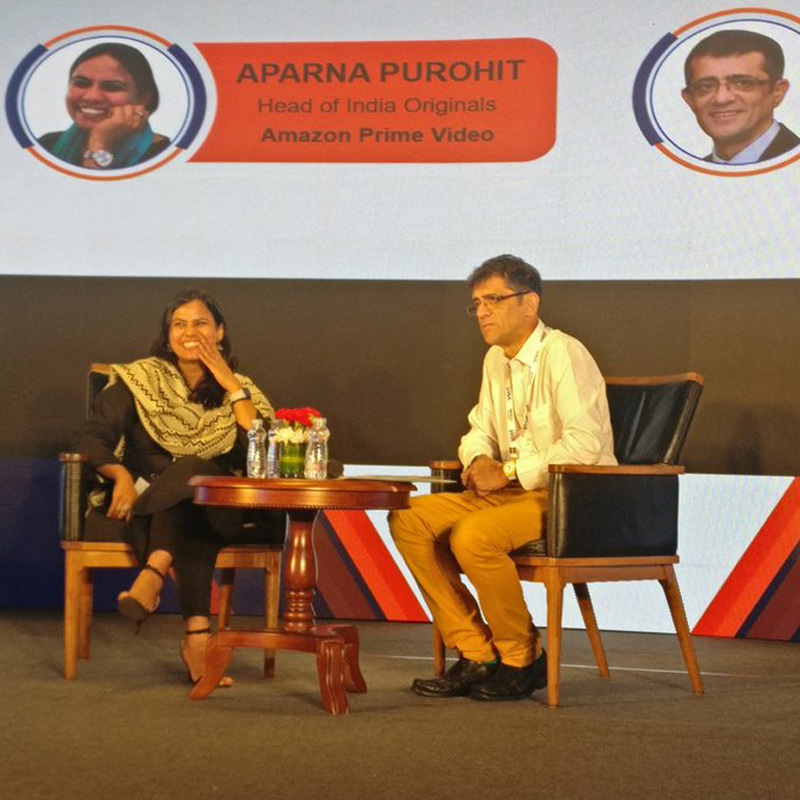
  • Line between international & Indian content blurring: Amazon Prime Video’s Aparna Purohit at Vidnet 2019

    Line between international & Indian content blurring: Amazon Prime Video’s Aparna Purohit at Vidnet 2019

    MUMBAI: Sensing the wide array of opportunities in the Indian video streaming market, major international platforms have dived in to take a share out of it. Amazon Prime Video is one of the players which have built an impressive slate of local content with hits like Breathe, Made in Heaven, Mirzapur and The Family Man amidst the intense streaming battle. As the platform has a presence across the world with a large international content catalogue, Amazon Prime Video India Originals head Aparna Purohit said the line between Indian and international content is blurring.

    At the stage of Vidnet 2019 organised by indiantelevision.com, Purohit shared her interesting insights on the market in a short but freewheeling chat with The Linus Adventures founder and chief evangelist Sunil Lulla, a media veteran with extraordinary experience in the industry.

    “The lines between here and there, international and India (content) are blurring. The Marvelous Mrs.Maisel, Jack Ryan connects with us as much as Made in Heaven, Breathe, The Family man trends across the world. So, I think those lines are blurring. But I really want to tell stories of us. We are a nation of storytellers,” Purohit said.

    Lulla started the chat curious to know the stories she is chasing now. Purohit said she is always after good, compelling, exciting stories that are deeply rooted within Indian but has resilience across the world; stories that will transcend boundaries of ethnicity, caste, religion, gender, etc.

    “Different people get excited about different stories. Fortunately, we have a full range of stories. My father can get excited about the stories we have, my three-year-old niece can get excited about stories. We have romance, psychological thriller, and political satire so we hope we are getting everyone excited,” she added as the chat progressed.   

    She also added that the platform has a full array of stories including exciting unscripted shows that are coming up in the comedy genre. Moreover, the platform’s popular series Inside Edge is returning for a second season along with an exciting period drama, a musical romance.

    She also added that Amazon recognises that people like to consume content in the language they prefer. In addition to Hindi content, the platform is now creating a directory of content in regional languages. It already has content in ten languages. She also pointed out that shows like The Family Man have actors from the south, up north, Kashmir and Maharashtra.

    “For us everything is customer-backward. It’s our customers that make us relevant. We try to see what is the need gap that exists,” she answered when Lulla asked about Amazon’s meaning of relevance in India.

    “Even for me understanding the consumer is extremely important. I would not say our consumer is just one kind of a person. An educated working liberated woman like me, a smart, entrepreneurial person like you, it could be a retired government official like my father sitting at home and watching our content, it’s like my uncle sitting in a remote town – our audience is varied. Now we have footprints in 400 cities of the country,” she commented on the importance of consumer understanding.

    There have been talks on how Amazon Prime Video and Netflix are spoiling the Indian market with their deep pockets and increasing the cost of content for others. Purohit said creative people can never be owned and they never have the intent of owning anybody.

    She said that what they are doing is trying to create a cinematic TV experience. Every show is like three and a half or four films. No matter who looks at the show, Indian or internationally, it should never look like it isn’t international.

    As saas-bahu saga is largely tagged as TV content, Lulla asked how this filtration has been done. Purohit said that they will also have shows involving families where there will be mothers-in-law, fathers-in-law, and daughters-in-law.

    “We just got started. We just touched the tip of the iceberg. There are so many marvellous stories to be told. There will be an ecosystem where writers and creators will be respected. We will tell all kinds of stories that can never get a platform,” she added further on probable progress in the next five years.

    “The interesting thing about this medium is that it’s not formulated. It's not driven by any options like box-office. So, we can cast any actor. We can truly cast a character freely,” she said towards the end of the engaging session.

  • Pocket Aces founders discuss digital journey, jobs for writers and attention to consumer

    Pocket Aces founders discuss digital journey, jobs for writers and attention to consumer

    MUMBAI: Digital entertainment company Pocket Aces began its journey in 2014 and today it has four successful brands under its umbrella – Filter Copy, Dice, Gobble and Loco. The company’s founders Ashwin Suresh and Anirudh Pandita took the audience through their journey at Vidnet 2019 organised by Indiantelevision.com on 3 October. The duo shared their thoughts on the journey of the company, challenges and experiences working with YouTube and OTT platforms in an interactive session with Hungama Digital Entertainment VP Soumini Sridhara Paul. At the event, they also expressed that the lack of data available on OTT platforms is the biggest challenge as content creators are used to looking at data to improvise and come up with successful content. 

    Pandita said, “Early days are always tough. It has been about trying and finding out more about the consumer; what is really changing in the world. That's something on which we spent a lot of time during the last six to nine months.”

    Sharing some of his experiences, Suresh said, “One of the things that we remember from the early days is that every time we meet writers, they will always meet us with a sense of hope, they were just hoping against hope for the positive responses from the industry. The industry or an ecosystem should create more jobs; we have to create more opportunities for writers to tell their stories. We have to find writers who can align with the audience because I think there is merit in thinking from a consumer point of view and if the consumers tell us that we want to look at certain types of content, we have to matchmake between writers who can create that or creators who can create that and the audiences. That's how we position ourselves in the industry.”

    Pandita said, “I think we are very focused on figuring out the distribution angle and we recognise there are creators who needed it for them. Every person has to share something, which probably can be made into a film or a short story. These guys couldn't do it earlier as there was no platform like YouTube channels, Facebook, etc. Now there are many distribution channels which will distribute their stories.”

    The duo also shared its experience on working for YouTube and OTT platforms, “We didn't think that we have content that we should have put up somewhere. We thought reverse and said that whatever people are watching how do we reach them and we asked what kind of content made distribution easy on the platform. In the beginning, we learnt from short-form content and that gave us insights for long-form.”

    Suresh said, “I think the best part about working with OTT platforms is the fact that they have the ability to move quickly and to build things that are even complex. So Little Things got picked up by Netflix in season 2. Even as we've been working with them after that what's amazing about platforms like Netflix is that whatever the show needs, they will make available everything possible, which is truly very refreshing for somebody who's been in the film business for a few years.”

    Replying to Sridhara’s question on whether Pocket Aces wants to be seen as a tech-driven media company or media-driven tech company, Pandita said, “We will evolve with technology as it is always a tool to get our final outcome. We look forward to even the older TV, cable or satellite companies that are seeking to resolve any issues. Anywhere we see that opportunity, we will bounce on.”

  • Content creators discuss the challenge of acquiring and maintaining OTT audiences at Vidnet 2019

    Content creators discuss the challenge of acquiring and maintaining OTT audiences at Vidnet 2019

    MUMBAI: The fourth edition of the Indiantelevision.com’s Vidnet had a successful run of the marquee “Creators Track”, on the first day of the two-day-long video and content conclave that wrapped up on Thursday in Mumbai. The track had some of the finest creators, writers, and directors from the OTT world speaking on many important topics like how to write good stories and how to make them travel beyond national boundaries.

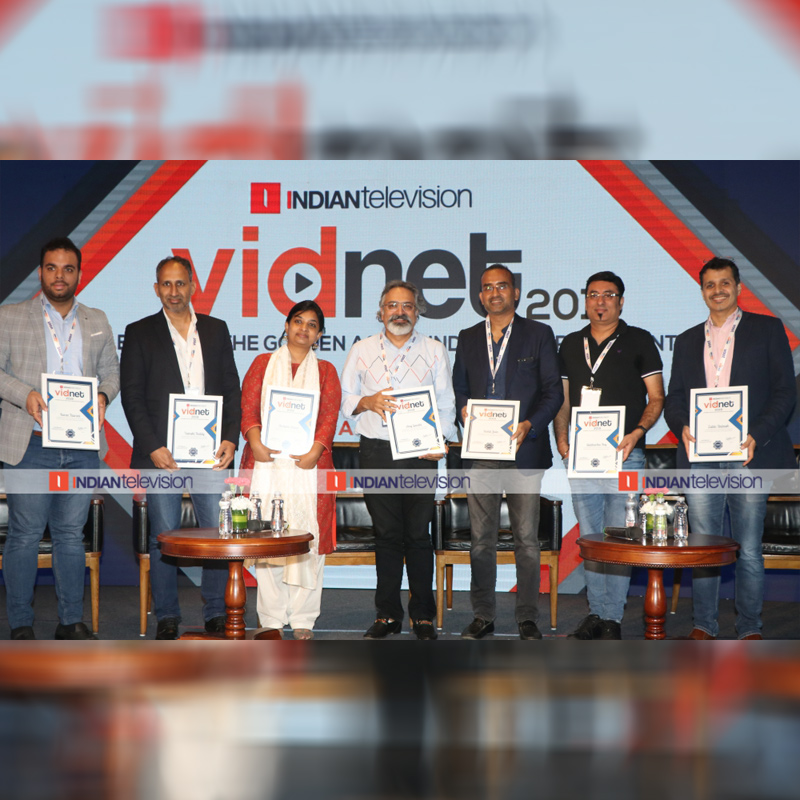
    The day-long conference was opened by Indiantelevision.com founder, CEO, and editor Anil Wanvari and some of the speakers by an auspicious lamp lighting ceremony. 


    Following which, Wanvari in his opening remarks said, “India’s video ecosystem had never been so exciting in the last two decades. Similar excitement was seen during the satellite boom period in the early 90s. With OTT today, a similar phenomenon is happening where lot of Bollywood professionals are making content for OTT just as how the industry created content for satellite channels . I believe that the content boom has still not hit India and we are at the beginning of content boom on OTT platforms. With OTT coming into the picture, there will be more opportunities for content creators in our country.”

    The first panel discussion of the day was around “Unlocking a Story’s Potential” between Zee Studio Originals VP creative and head Ashima Avasthi, MX Player chief content officer Gautam Talwar, BBC Studios business head Sameer Gogate and Vista India CEO Rajiv Raghunathan. The session was moderated by Bodhitree Multimedia co-founder and director Mautik Tolia.

    Discussing the importance of localisation, synopses, subtitling, dubbing, and visuals in helping subscribers discover and enjoy stories they love, the panel emphasised on ways to aggregate content on OTT.

    Raghunathan said, “OTT is the most exciting thing that happened to us. The platforms are evolving every day. Some OTT players have identified certain niche segment which is working well for them while other players are still figuring out what will work for them.”

    Avasthi noted that there can’t be a better time for content makers than today. Sharing her strategy for the OTT platform she said, “The mantra is to look into the stories and develop something which has strong character. The stories or content does well is only because of the character. Audiences tend to forget story or plot of the show but they remember the characters which they like. So, we focus on stories which are very character-centric. Even on OTT, the advantage is that we are able to bring our created characters to the larger audience.”

    The panelists also spoke about the initiatives taken by them towards localised content. They discussed how, with OTT, catering to specific TG has become easy and focused. They also informed that acceptance of fiction format has also taken up in our country via OTT platforms.

    Next panel discussion, “Empowering the Creative Vision” had Friday Filmworks head-digital content and IP Devendra Deshpande, Yoodlee Films producer and Saregama India VP films and TV Siddharth Anand Kumar, and Ellipses Entertainment managing partner Tanuj Garg, in discussion with moderator Film Companion’s Sucharita Tyagi, discussing how streaming platforms are backing storytellers in translating their vision on the screen. They elaborated on the key role the platforms play in identifying and promoting content that resonates with the audience.

    Next up was another panel discussion on “The New Creators’ Breed” between TVF global head-business & content Rahul Sarangi, Swastik Productions and One Life Studios producer and managing director Rahul Kumar Tewary, BToS Productions partner and independent director Angshuman Ghosh, Monozygotic Solutions co-founder Rajiv Laxman, WPP national business head-motion content group India, and Rose Audio Visuals Pvt Ltd director Goldie Behl, moderated by WWM Content Studio VP Vidyut Patra. The panelists shared their thoughts on how the new-age creators are transforming the way Indian audiences consume content.

    They elaborated that OTT platforms are chasing content creators for two reasons; one is to acquire and retain users on their platforms in the best way through content, and second there are no such parameters to measure success on the platform and that is the reason why they invest so much money. They also understood that due to the geographical and demographic masses of the country the platforms are willing to go to much length for finding the new creators.

    The panelists agreed that this is the best time for the content creators, as now they can try whatever they want. Later it can be a bit difficult as very soon the platforms will figure out what’s working for them.

    This session was followed by an insightful panel discussion on “Making Indian Stories Travel”, in which the speakers talked about the processes—both creative and technical—which can take Indian content to foreign screens. Sitting on the panel were MUBI India content advisor and producer Guneet Monga, creator, director, and writer Richie Mehta, and Red Chillies Entertainment producer and chief revenue officer Gaurav Verma. The discussion was moderated by BookMyShow VP content and strategy Monisha Singh Katial.

    To make Indian content travel around the world, the panelists said that subtitles and dubbing of the content in different languages is important. Apart from this, they also noted that appealing stories and subjects play an important role in reaching to the wider audiences across the world. The panelists agreed that the only way to dazzle audiences on OTT platform is through content and script.

    The proceedings of the day were taken ahead by a fascinating panel discussion on the topic of “Redefining Storytelling with Technology” between Endemol Shine India CEO Abhishek Rege, SonyLIV SVP and head-original content and partnerships Amogh Dusad, and Monozygotic Solutions co-founder Raghu Ram. Moderating the panel was TVFPlay head Vinay Pillai.


    The moderator began the discussion by giving a background on how technologies are helping content to evolve. The panel gave an understanding that technology has helped in two ways, one is in the making of content and the other is in translating that content to the consumers. The panelists also informed that technology has not influenced the way of storytelling but it has definitely influenced the way content is consumed.

    The discussion was followed by a “Deep Dive with Pocket Aces” on how to build and run a successful media tech company between Pocket Aces founders Ashwin Suresh and Anirudh Pandita, and moderator Hungama Digital Media Entertainment VP Soumini Sridhara Paul. The founders of the company threw light on the inception of the company in 2014 and its journey. They shared their experience of early days’ challenges faced by startups.

    The day continued post-lunch with a panel discussion on the very interesting topic of “Creating Binge-worthy Content”. On the panel were MX Player CEO Karan Bedi, House of Cheer founder and CEO Raj Nayak, Vikatan Group managing director B Srinivasan, and Viniyard Films founder Ashvini Yardi. Moderating the panel was Indiantelevision.com founder, CEO, and editor-in-chief Anil Wanvari.


    The panelists shared their individual perspectives on what makes content binge-worthy. The panelists said that it is important to hook the audiences for the first five minutes, and last seven minutes. They also informed that efforts to hook the audience on AVoD are more than SVoD as the former has more migrating audiences.

    Next item on the list was a panel discussion on “India’s New-age Writers” between writers Ameya Sarda, Suhani Kanwar, Sagar Haveli, and moderator Tulsea content & creatives Samabesh Das. The panelists being the first generation writers of this golden age of OTT platforms find themselves being bogged down by the huge responsibility that comes with being a content creator. The trio also believes that on OTT there is a challenge to create content in more interesting and better ways to hook the audience. Another challenge which they highlighted is to execute the demands coming every now and then.

    The day was concluded by “Conversation with Creators” section, in which teams from ‘Afsos’ and ‘Bard Of Blood’ talked to the moderators about the whole creative and technical process of creating the series.


    First in was Afsos co-creators Anirban Dasgupta and Dibya Chatterjee in conversation with OML managing partner Gunjan Arya, who shared their experience from being writers to show-runners.

    The day was concluded by Bard Of Blood author & creator Bilal Siddiqi and director Ribhu Dasgupta talking about creating this exquisite thriller with The Story Ink founder and chief storyteller Sidharth Jain. The duo shared their experience on making of show for the first time on the OTT platform. Bard of Blood is Red Chillies’ first show for Netflix while Emran Hashmi and Dasgupta debut on OTT platform as an actor and director respectively. 
     

  • OTT players stress the need to create massy content for robust future at Vidnet 2019

    OTT players stress the need to create massy content for robust future at Vidnet 2019

    MUMBAI: The ‘Business and Tech Track’ of the fourth edition of Indiantelevision.com’s two-day-long video and content conclave, Vidnet, became a raging success with some of the most successful and powerful names from the digital video industry coming together and highlighting the challenges and opportunities that they are dealing with right now. A special screening of “The Hitler Chronicles: Blueprint for Dictators” and “The Bisexuals” was also organised for the attendees. 

    Organised on the first day of Vidnet 2019, parallel to a ‘Creators Track’, the ‘Business and Tech Track’ hosted a number of panel discussions and fireside chats to present an in depth image of the functioning of the video ecosystem.

    The proceedings of the day were opened by a powerful speech by Indiantelevision.com founder, CEO, and editor-in-chief Anil Wanvari who discussed about the challenges that the current OTT ecosystem is facing ranging from getting users to subscribe to preventing piracy. He urged those present in the audience to work on more massy content to create and support robust businesses for the future.

    The first item on the agenda was a panel discussion titled “Making Indian Entertainment Great”, which highlighted some of the constraints that shroud the video industry, ranging from the technological to the artistic aspects of the business. On the panel were Zee5 India head-AVOD, SEO, news & stories Yogesh Manwani, Sony Pictures Networks India business head-digital Uday Sodhi, Viacom18 business head-digital AVOD ventures Akash Banerji, Viu India country head Vishal Maheshwari, Balaji Telefilms group COO and Alt Balaji CEO Nachiket Pantvaidya, and HOOQ India’s managing director Zulfiqar Khan. The session was moderated by Nepa India’s managing director Esha Nagar. 

    The panel also insisted that there is a need to create more regional and massy content by OTT platforms to create a better ecosystem. They also pressed the need for better investments in technology. 
    Khan revealed that his company is shifting focus to more AI-led content and ventures. He said, “We hope to be the first platform to have fully machine-dubbed localisation of content.” 
    Following this was a presentation by Think Analytics SVP Richard Dowling on “The Power of Personalised Search and Recommendations.” Dowling shared a few case studies from his firm as he talked about how personalised content can help in gathering better audience.

    Next on the list was another panel discussion on “Captive Audience of the Telecom Trace” between ZEE5 Global chief business officer Archana Anand, IndiaCast Media Distribution group CEO Anuj Gandhi, Apalya Technologies founder and CEO Vamshi Reddy, Lionsgate MD south asia Rohit Jain, Shemaroo Entertainment COO digital Zubin Dubash, and Hungama Digital COO Siddhartha Roy, moderated by Elara Capital VP – research analyst (media) Karan Taurani.

    The panel unanimously agreed that getting associated with telcos can help OTT platforms in getting more audience, however, the challenge of who owns the consumer will remain for the foreseeable future.

    “I don’t believe there is a better platform than telcos. Direct carrier billings allow the consumers to stay confident. It also allows us the marketing might. They really help us find our audiences,” Anand said.

    Reddy also noted, “Telcos bring in a universal and seamless experience across content. The consumer doesn’t have to go to 10 platforms and enjoy the experience. Eventually it should evolve into a payment mechanism.”

    Zubin Dubash noted that this association between platforms and telcos is going to go on as the core of this partnership for telcos is not to own the content but to increase the guzzling of mobile data.

    Afterwards, NAGRA product line management director Diroshan Ratnarajah gave an interesting presentation on “Combating OTT Streaming Piracy”. He outlined some pressing and pertinent problems that exist in the online video space, which can impact the monetisation as well as content discovery process on streaming platforms.

    He highlighted that fighting piracy will require a joint effort from all the players in the industry and development of robust, scalable, and high-performance security platforms.

    The proceedings of the day were taken forward by a panel of ZEE5 India head technology Tushar Vohra, Hoichoi TV technology head Aloke Majumder, ErosNow CTO Lokesh Chauhan, NAGRA product line management director Diroshan Ratnarajah, and MX Player chief of product, tech and operations Vivek Jain, moderated by Castle Media CEO Ru Ediriwira.

    They discussed about “The Challenge of Content Protection” in the new age media scenario. The panel agreed that there is a need for the whole ecosystem to come together to fight the menace of piracy as it might only increase with robust changes happening in the system. They also talked about the importance of fingerprinting of content.

    Vohra said, “We need to get together because the lines are really blurring. As now there are new business models, content producers are being paid on the basis of number of streams and number of minutes watched.”
    Jain insisted that enforcement of piracy laws in India needs improvement so that not only can pirated content be identified easily but also pulled down immediately.

    The “Business and Tech Track” of Vidnet 2019, continued post-lunch, with a fireside chat between Indiantelevision.com founder, CEO, and editor-in-chief Anil Wanvari, and Viacom18 Digital Ventures COO Gourav Rakshit. The duo discussed how the nature of the content in India is evolving with the audience sensibilities.

    Following it was panel discussion on “Fine-tuning Models of Monetisation and Consumer Engagement”. On the stage were Vimmi co-founder and co-CEO Eitan Koter, ALTBalaji SVP and head marketing Divya Dixit, Google industry head-media and entertainment Sandeep Ramesh, MX Player SVP and revenue head Virat Jit Singh, Merkle Sokrati SVP Sampath Rengacheri, and myNK co-founder Deepak Jayaram. The panel was moderated by PwC India partner and advisory leader entertainment, media, and sports Raman Kalra.

    The panel discussed the different opportunities and challenges that AVOD and SVOD mode of subscriptions come with and what role does technology, content, and telcos play in the system. This panel also indicated that a massy approach to content generation will help in driving better revenues.

    Next in line was a fireside chat between Amazon Prime Video head of India originals Aparna Purohit and moderator The Linus Adventures founder and chief evangelist Sunil Lulla who talked about how Amazon Prime India is working towards improving content on the platform.

    Purohit shared that it is the best time for writers as well as actors and directors to be in the industry as not just Prime but all other platforms are looking for good stories to be told. 
    It was followed by a short Q&A session with the cast of MX Original series, produced by Applause, ‘Hello Mini’—Gaurav Chopra and Anuja Joshi. The duo not only talked about the show but also unveiled its official trailer.

    The day ended with a screening of “The Hitler Chronicles: Blueprint for Dictators”, and “The Bisexuals”, which were first telecasted on Hulu, by myNK co-founder Deepak Jayaram. 
     

  • Vidnet 2019 set to lead engaging discussions on the OTT industry

    Vidnet 2019 set to lead engaging discussions on the OTT industry

    AMUMBAI: As over-the-top (OTT) platforms have started capturing audiences from tier II, tier-III cities, beyond the top metro cities, all major players in the ecosystem have upped their investment significantly. Both international and homegrown players are trying to win more consumers with original content, innovative marketing strategy, and right distribution partnerships. 

    Despite the fact that the market is thriving, certain challenges like content protection, regulatory issues, monetisation, lack of measurement system are bothering video streaming services. Indiantelevision.com's flagship event Vidnet 2019 summit is ready to facilitate conversations on the opportunities and challenges of the ecosystem.

    Various studies have also indicated the bright future of video streaming in India. A recent PricewaterhouseCoopers (PwC) report said that India’s video streaming service is set to grow at a compounded annual growth rate (CAGR) of 21.82 per cent to reach Rs 11,977 crore by 2023. Moreover, media agency Zenith also predicted that by 2021 Indian consumers will spend 79 minutes per day on mobile internet, up from 54 minutes today.

    The summit is hosting panel discussions on OTT streaming piracy, OTT-telco relations, challenge of content protection, monetisation, consumer engagement, technology’s influence on storytelling along with other topics.

    Red Chillies Entertainment Gaurav Verma, The Linus Adventures founder and chief evangelist Sunil Lulla, House of Cheer founder and CEO Raj Nayak, Viacom18 Digital Ventures COO Gourav Rakshit, ZEE5 Global chief business officer Archana Anand, Viu India country head Vishal Maheshwari, Sony Pictures Networks India digital business head Uday Sodhi, IndiaCast Media Distribution group CEO Anuj Gandhi, Amazon Prime Video India originals head Aparna Purohit will participate in the sessions along with other veterans from the industry.

    "It is still day 0 in the Indian OTT landscape and the category has already witnessed exponential growth fuelled by affordability, accessibility and availability of data. Most of the growth in the category is on the back of marquee Indian originals and catch-up content from network TV. With evolving audience preferences, content consumption has now become device and screen agnostic, presenting significant growth opportunity for the category," Viacom18 Digital Ventures COO Gourav Rakshit said.