Tag: Vidnet 2018

  • Content is not a commodity you can win with price war: Sameer Nair

    Content is not a commodity you can win with price war: Sameer Nair

    MUMBAI:  He’s been in the television space during its golden age, worked with leading broadcaster Star India and production house Balaji Telefilms and witnessed the changing landscape in the Indian media and entertainment industry. Media veteran Sameer Nair is now looking at new age content for streaming platforms as Applause Entertainment CEO.

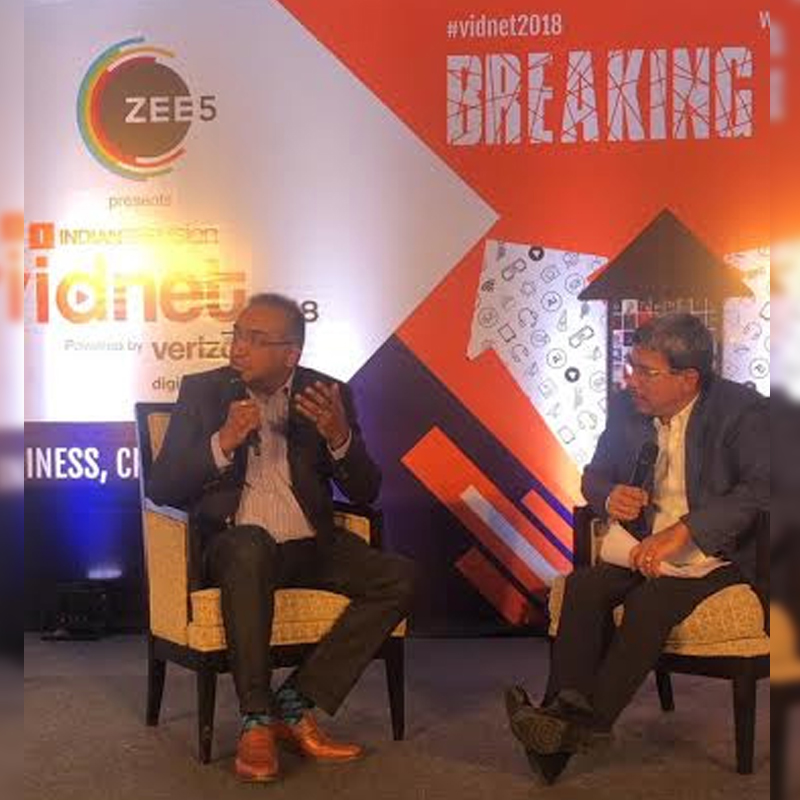
    At the stage of Vidnet 2018, the Aditya Birla Group chairman Kumar Mangalam Birla’s content studio CEO spoke on the state of the industry, Applause Entertainment’s plans in a fireside chat with Indiantelevision.com founder, CEO and editor-in-chief Anil Wanvari.

    187 million cable homes have made TV very powerful and matured, according to him. In addition to that, now the country has got around 500 million mobile phones leading to a flood of screens everywhere. As people are glued to these screens more than ever using in some way with a massive change in consumption habit, this creates an opportunity for everyone to be in the space.

    “I come from a time where we used to have people watching 4-5 hours of television a day. It’s probably down to an hour. But in the meantime, people are finding more time on screens to consume all sorts of content. So, I think the number of hours spent, time spent, is bound to grow. If you are able to do different things, it’s a good time to be in this space,” he commented.

    He saw the industry at a time when TRP was the benchmark to measure the success of a show. Now those days are gone when 10,000 boxes spread across India tried to tell what 600 million people were doing. The emergence of data gives much more accurate consumer feedback which Nair thinks is also “scarier”.

    Though there is no foolproof formula for success in this business, Nair thinks one should start making content with a reasonable understanding of market and audience. Moreover, working with focus groups of few people who want to watch ‘X’ or ‘Y’ to create content would be tricky. However, after creating content, data and audience reactions play a bigger role.

    Nair is vocal on the importance of finding a need gap by looking at things that are missing in the market. While drama series content on TV is dominated by daily soap opera, he thinks what India lacks is high-quality drama series. Though all the K-shows made huge money, according to him, in a diverse market like India, there should definitely be something more than just tele-novella.

    “Now the opportunity is to do more stories. I mean it’s just not drama, there are short forms, animation, and there are kids, all sorts of things happening. We are currently focused on doing dramas. But when you look at the market, when you see the opportunities that are there, I think it’s a good time to be a creator, no matter what you create,” he added.

    To grab more eyeballs in the burgeoning OTT space, there has been an upsurge of investment in content. Platforms with deep pockets are burning cash to make good content. Nair thinks it’s good for the industry to take up the value of content. According to him, it’s not only about monetisation but about the ability to build a business, a consumer habit. However, he also added that spending Rs 5 crore per episode cannot make that alone.

    “Content is not a commodity you can win with a price war. You have to win that with a great story, you have to reach out to consumers, you have to connect with them and then you could spend Rs 300 crore making it or Rs 10 crore. In recent time you have seen the examples in Bollywood too where small budget films have done well. The focus is got to be on that,” he said.

    Talking about Applause Entertainment’s near-term plan, he said it is working actively with the creative community, buying rights for international shows to adapt them into Indian context. It is also acquiring books to adapt them into series as well as original writing. They are also having conversations with platforms about who can carry these.

    It bought rights of two BBC productions The Office andThe Night Of to adapt. For the former, it has already made 28 episodes. It also bought the right of Debashis Basu and Sucheta Dalal’s The Scam. It is also working with Goldy Bahel and Abhimanyu Singh.

    “The way I see it is there are so many platforms, so many consumers, such a huge need gap for content, that I don’t regard myself a competitor. I am part of that mix. You are putting out ten shows, maybe you take one from me, you are putting out 100 shows, and maybe you take ten from me, that kind of thing. And we are essentially focused on helping build this industry,” he said.

    He said as broadcasters have been doing the same kind of shows for last 18 long years, the whole format is sort of fixed as producers also know what they are doing. But for new age content, writing 10-12 episodes and creating season after season is new.

    Nair thinks TV will be not dead in a hurry. While TV is making a lot of money, it’s not like that OTT does not have any room to grow. Moreover, even different models are emerging other than SVoD and AVoD in the OTT ecosystem. Hence, he reaffirms OTT and TV will exist together, at least in the next ten years.

  • Vidnet2018: Regionalisation, localisation the way forward for the OTT industry

    Vidnet2018: Regionalisation, localisation the way forward for the OTT industry

    MUMBAI: Over the top (OTT) is no more a baby. The ecosystem has been eating and growing slowly, taking centre stage in several media and entertainment related scenarios.

    On the stage of Vidnet 2018, hosted by Indiantelevision.com, experts from India’s leading OTT platforms were present. ZEE5 India CEO Tarun Katial, Amazon Prime Video India business director and head Gaurav Gandhi, YouTube India entertainment head Satya Raghavan, Voot head marketing and partnerships Akash Banerji and Hotstar consumer and revenue lead Prabh Simran Singh shared their key learning in a session named ‘Lessons from Battlefronts’.

    Moderator of the session, Indiantelevision.com founder, CEO and editor in chief Anil Wanvari made the prelude of the session saying that it has been few years since the OTT ecosystem started in India and how it has been challenging since then. He also mentioned YouTube has been a pioneer much before any other platform. Another leading platform Hotstar came in later. He started the discussion asking market leader YouTube's Raghavan what have been the lessons over the years in terms of consumers, consumption and the way the market is playing out.

    While asked what the industry has learnt, Raghavan mentioned a very important point that is obviously putting consumer the “queen” before anything. He shared how consumer taste and presence dictate the core of content.

    “Second is that it takes a whole village to build this entire ecosystem. It was only when accessibility opened up and all of us saw that it’s not just that 100 or 150 million people who are out there to consume a content. The depth is just amazing that this country has as evident by television. So when we saw access open up, when we saw consumers coming up from every part of the country, creation started to follow. Today, there are creators on YouTube who are uploading content from over 400 locations in the country,” he added.

    Gandhi, now with Amazon Prime Video India, saw the OTT industry very closely since a nascent stage. According to him, people are hungry for good stories and Prime Video goes bigger with every original show. Added to that, he thinks going regional is essential for streaming services given the diversity of the Indian market. He also highlighted the fact that adding value to service makes customers want to pay.

    “I think given how diverse we are for streaming, regional is essential. The more you go regional, the bigger counts you get. We have now six languages of content. We have seen tremendous growth there. We have introduced Hindi UI, we will be following up it with Tamil and Telugu very soon. So, regionalisation and localisation is the second big thing,” Gandhi commented.

    Agreeing with Gandhi, Katial also highlighted the importance of going more regional and adding more languages to the library. While tech giant Google has been promoting voice search lately, Katial also believed that both in the top and bottom end of the market, searching by ‘type’ is not the way to go. Considerably, ZEE5 has voice search available in 12 languages.

    Voot’s Banerji added to these insights that delivering a good viewing experience for consumers is essential along with good content. Banerji also added that as a platform Voot believes that the depth of content in the library is important along with the width.

    For Hotstar, live sports has been very critical in building its business. Breaking the myth that sports is a large screen experience, Prabh Simran Singh commented that consumers also love to watch it on the small screen. Rather than screen, moment matters. He also added that uni-dimensional focus on business model helps as Hotstar built both SVOD and AVOD category side by side.

    All the experts also agreed on the polarised nature of the Indian market. While there are consumers wanting low bandwidth video, there are plenty of them wanting HD quality video. One segment may fit into AVOD business model, another one for high-end subscription. Smart TVs are emerging as an important device for consumption at the same time with feature phones priced at Rs 1500. While young audience still dominates digital space, consumption of spiritual content in older age group, educational content among kids are likewise prevalent.

    “There is no one type of customer, there are so many kinds of customers and it is how we fulfill their desire. The biggest challenge we have is how our storytelling can keep pace with people’s desire and provide the kind of content they want,” Gandhi commented.

    However, a comment from Raghavan sums up the most unique nature of OTT industry here. According to him rather than a battlefront, the Indian market is an amazing place to partner and collaborate with multiple players in the entire value chain.

  • Vidnet2018: OTT industry says innovation the need of the hour

    Vidnet2018: OTT industry says innovation the need of the hour

    MUMBAI: In the last couple of years, over-the-top platforms have emerged as mainstream entertainment source going beyond “mail-metro-millennial” phenomenon for a sizeable population in India despite television still holding its dominance.

    The beauty of the Indian market is its diversity enabling opportunities for various business models and content in several regional languages along with Hindi and English. However, with the growth of the industry, new challenges in different areas including technology and regulations are cropping up. To delve deeper into the issues, experts across the entire ecosystem came together at Vidnet 2018 hosted by Indiantelevision.com powered by Verizon which had ZEE5 as title partner. The long day summit became a perfect stage to discuss relevant issues concerning the industry as well as to gain new insights.

    At the beginning of the event, a very interesting session with Hulu Japan CCO Kazufumi Nagasawa moderated by Indiantelevision.com founder and CEO Anil Wanvari set the tone for the day. The spokesperson shared the state of Japanese OTT market which is super crowded as well. But in contrast to the Indian market, most players are focused on SVoD service in Japan. However, Hulu Japan stands with 1.8 million paying subscribers with more than 50,000 hours of content. The session was followed by Verizon Digital Media Services EMEA and India managing director Taylor Riese who also said they are listing the challenges in the market with infrastructure in India.

    The attraction of the day was definitely the power packed session with speakers from the most popular OTT services and digital video platforms in India. ZEE5 India CEO Tarun Katial, Amazon Prime Video India business director and head Gaurav Gandhi, YouTube India entertainment head Satya Raghavan, Voot head marketing and partnerships Akash Banerji, Hotstar consumer and revenue lead Prabh Simran Singh shared their key learnings.

    Gandhi debunking the myth that Indians don’t want to pay for digital content saying that if customers see value in product they won’t mind paying and Katial mentioned an important fact that content cost in OTT is not going to be same as TV. While the session was named as “lessons from battlefront”, all the experts more or less agreed that the Indian market gives best opportunities for partnerships and collaborations.


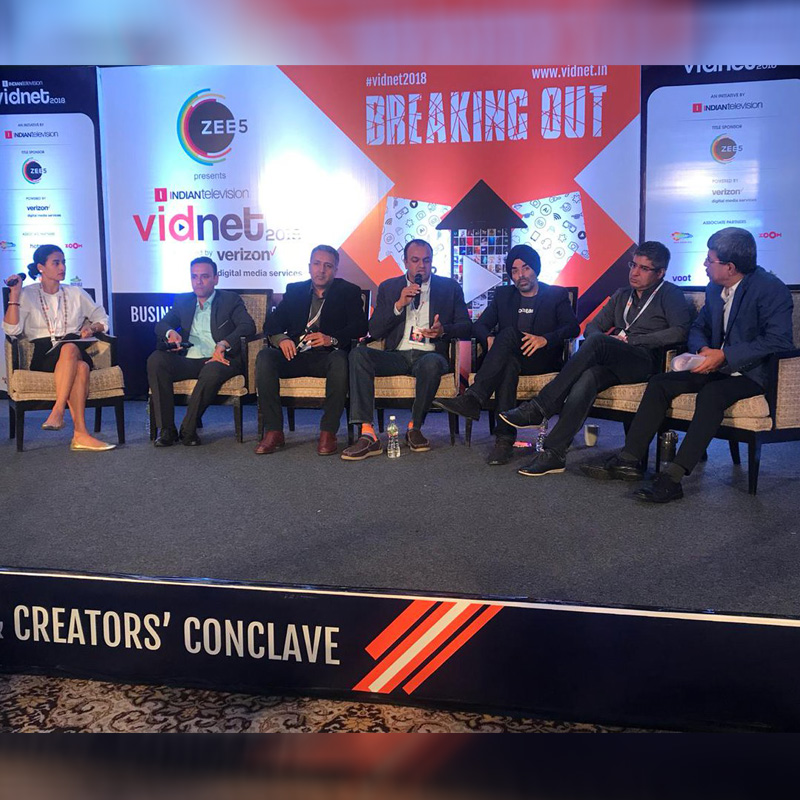
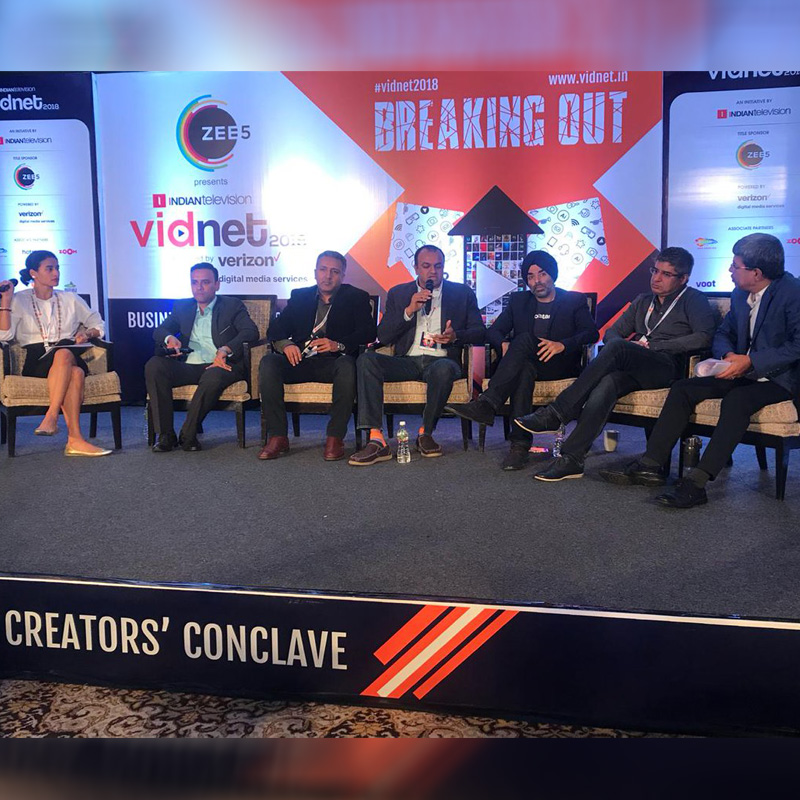
    In another impacting session, Green Gold Animation founder and MD Rajiv Chilaka, Pocket Aces founder Ashwin Suresh, Contiloe founder Abhimanyu Singh from, SVF Entertinment president Ravi Sharma and Goldi Behel discussed the power of local storytelling. While five of them have been a part of the experience in creating versatile content targeting a particular audience, they highlighted how the time is perfect for content creators to be in the space owing to the new digital mediums. Applause Entertainment CEO Sameer Nair, another veteran in the production business, mentioned another important fact that content is not a commodity that someone can win with a price war, rather it has to be won with a good story.

    Other than content, topics like the need for unified video measurement for better data was discussed in presence of IPG Mediabrands India CEO Shashi Sinha, MX Player CEO Karan Bedi, BARC India COO Romil Ramgarhia and Eros Now COO Ali Hussein.  Sinha said industry stakeholders need to arrive at a consensus for unified measurement to be a reality in India. Interestingly BARC India COO commented their technology is fully equipped to measure digital video.

    Content is king but it cannot conquer customers alone if distribution is not well enough. Nowadays people watch OTT content via various devices including basics like smart TVs, smartphones. Telcos also bundle OTT apps with their services to acquire more consumers as well as make it easy for those platforms to spread out. Questions related to making better innovations in distributions were discussed by ALT Balaji COO Sunil Nair and Viu head monetisation and distribution Sameer Gogate.

    Even the confab delved deep into the creator’s brains, tech strategies as various production houses, cloud servicing companies were also present in the conference to discuss their play. Ongoing issues like how to regulate OTT platforms were also discussed by two eminent lawyers, Abhishek Malhotra and Nidhish Mehrotra. Other industry stalwarts including Eros Now COO Ridhima Lulla, Hotstar EVP and chief marketing officer Sidharth Shakdher, Facebook entertainment partnerships head Saket Jha Saurabh, Arre co-founder and CEO Ajay Chacko, ZEE5 business head Manish Aggarwal, Vertice Entertainment founder and CEO Varun Mathur also shared key insights through different sessions.

    Though the ecosystem is evolving, it will take more time to say what’s going to work or what not.

  • OTT conversations to take centre stage at Vidnet 2018

    OTT conversations to take centre stage at Vidnet 2018

    MUMBAI: Indians have now warmed up to over-the-top media services making them even mainstream at times. In the last couple of years, the OTT industry has witnessed rapid growth thanks to several factors like cheaper data and affordable smartphones. Many new players are experimenting in this area leading to higher competition. From high-quality content to high-end technology, marketing OTT players are leaving no stone unturned to grab more eyeballs.

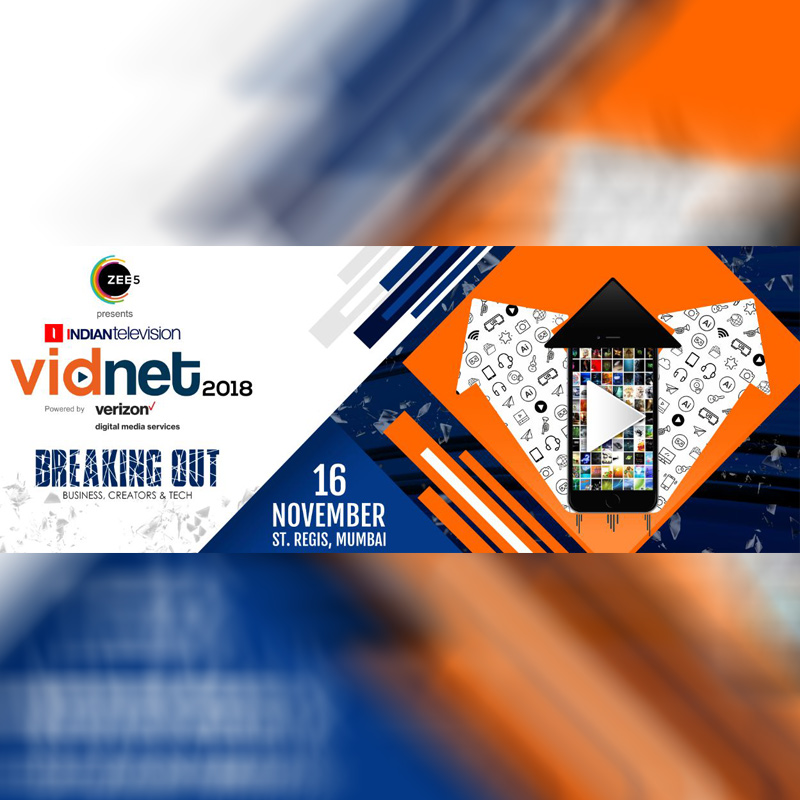
    At a time when the industry is thriving, Indiantelevision.com is again bringing together all the stalwarts in the ecosystem on the stage of Vidnet 2018 at The St.Regis, Mumbai on 16 November. The experts from platforms, production studios, advertising agencies, data analyst firms, creators, technology and investors will discuss the state of the industry, address the issues and find solutions. ZEEL’s digital venture ZEE5 is the title sponsor of Vidnet 2018 and the event is powered by Verizon.

    As the market is at the stage of development right now, there are several questions that need to be answered. The focus of the conference will be on these topics broadly – what could be the leanings from other countries like US, China and Japan; which business models will work out properly; what is the content trend in domestic and international market; how to increase user engagement; uniform data measurement metric; importance of data, AI, machine learning, cloud technology and how to combat piracy.

    Amazon Prime Video India director and country general manager Gaurav Gandhi, Balaji Telefilms group CEO Sunil Lulla, Hulu Japan chief content officer Kazufumi Nagasawa, YouTube entertainment head Satya Raghavan, ZEE5 India CEO Tarun Katial along with many other experts will speak on the compelling issues chalking out the right direction in the ecosystem.

    According to KPMG Media and Entertainment Report 2018, the industry with more than 30 players is expected to grow at a CAGR of 45 per cent to reach Rs 13,800 crore by the end of FY23. Till now advertising revenue is the dominant contributor in the market, subscription revenue is nonetheless expected to be about 33 per cent of the total revenue in the space by end of FY23.