Tag: Videocon d2h

  • Dish TV, Videocon d2h merger impacted global TV subscriber numbers

    Dish TV, Videocon d2h merger impacted global TV subscriber numbers

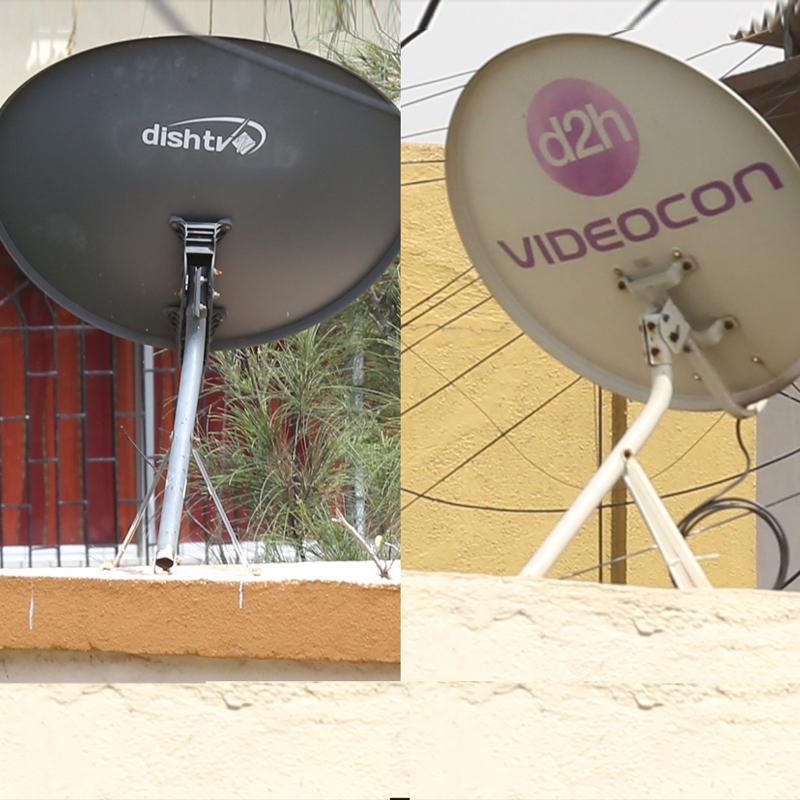
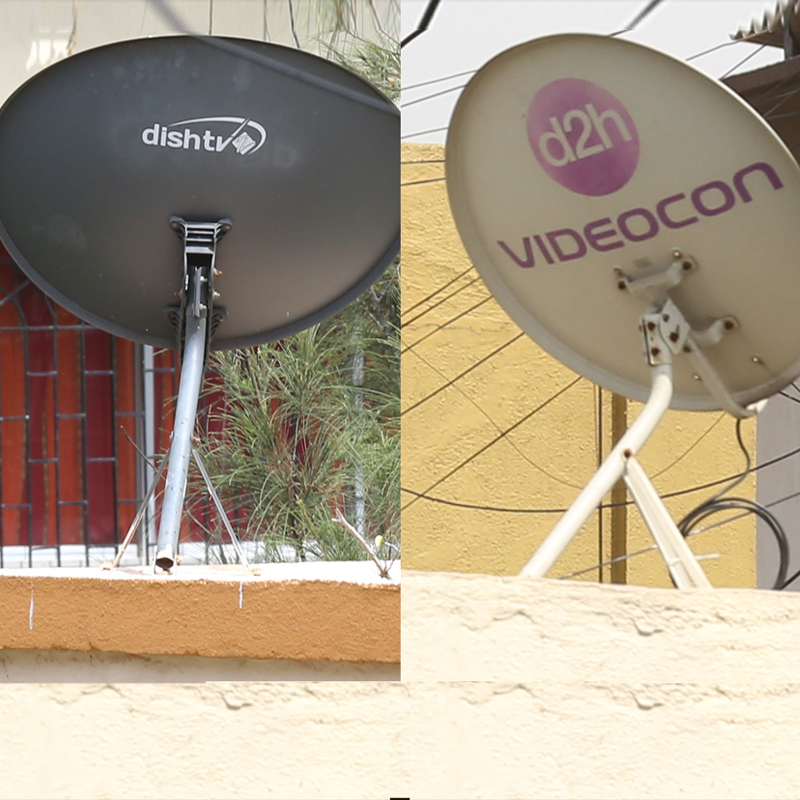
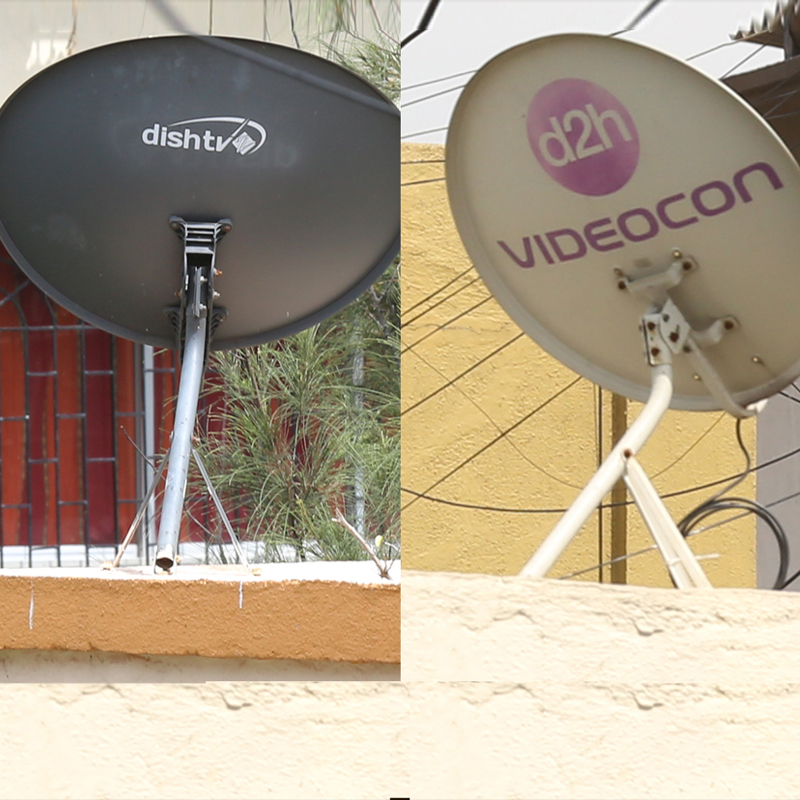
    MUMBAI: The merger of India’s two direct-to-home (DTH) players, Dish TV and Videocon d2h partly played a role in the loss of over five million subscribers or 1.14 per cent in the first quarter of 2018, as per the global report of TV subscribers released by Multiscreen Index.

    Excluding Dish TV and Videocon d2h, the index rose by just 1.49 million subscribers, or 0.36 per cent, which is the lowest quarterly increase Informitv has seen. The average quarterly gain over the previous three years has been around 4.5 million, or 1.15 per cent.

    Before the merger, it was reported that Dish TV and Videocon d2h will have a total 29.51 million subscribers. After merging in March, the enlarged Dish TV had 6.90 million more subscribers than it had the previous quarter, although overall there appeared to be an apparent loss of 6.51 million from the previous combined total.

    Informitv Multiscreen Index editor William Cooper said, “Traditional television subscriber numbers are flat or falling for some services and tracking them through mergers and acquisitions, together with changes in reporting methodologies is increasingly complex. Only 48 of the 100 services in the index reported subscriber gains in the first quarter. That does not include some services that only report figures once or twice a year.”

    Dish TV in India emerged with 23 million subscribers, sending it straight to the top of the Multiscreen Index, ahead of American operators Comcast with 21.21 million and DirecTV with 20.27 million.

    AT&T still has more subscribers overall in the US, with a total of 25.32 million including U-verse and DirecTV NOW. AT&T has the largest number of subscribers as a group, with 38.89 million across the Americas, up by 93,000.

    Satellite services in the US continue to see subscriber losses, with DirecTV losing 188,000, and Dish Network losing 185,000 subscribers. The top 10 services in the US lost 212,000 subscribers in the quarter, with only three of them reporting gains. The largest of these was from the online service DirecTV Now, which added 336,000 subscribers, taking its total to 1.42 million. Sling TV from Dish Network added 91,000, for a total of 2.30 million.

    With Sling TV and DirecTV Now regularly reporting subscriber numbers, the report now accounts for online distribution as a separate category, in addition to cable, satellite and telco networks. With a total of 3.71 million online subscribers in the index, it is far smaller than satellite, which still leads with 182.12 million subscribers.

  • Dish TV reports profits in first full quarter post merger with Videocon d2h

    Dish TV reports profits in first full quarter post merger with Videocon d2h

    BENGALURU: Indian direct to home (DTH) behemoth Dish TV India Limited (Dish TV) reported profit after tax (PAT) of Rs 22.5 crore for the quarter ended 30 June 2018 (Q1 2019, quarter under review). Dish TV and Videocon d2h were merged on 22 March 2018 and hence Q1 2019 was the first full reporting quarter for the merged entity. In the immediate trailing quarter – Q4 2018, the company had reported more than four times the PAT of Q1 2019 at Rs 118.2 crore, but that could be attributed to differed tax to the extent of Rs 147.1 crore. In Q1 2019, the company reported differed taxes to the extent of Rs 1.8 million.

    Since results of the year ago quarter are not comparable, a quarter on quarter (q-o-q) comparison of the numbers of the joint entity has been done here. Operating profit or EBITDA in Q1 2019 was Rs 556.8 crore as compared to an adjusted EBITDA of Rs 400.6 crore in Q4 2018. The company says in its earnings release that adjusted EBITDA is EBITDA adjusted for merger expenses to the tune of Rs. 600 million booked in Q4 2018 that have been excluded while calculating adjusted EBITDA.

    The company reported an eight percent q-o-q increase in operating revenue for the quarter under review at Rs1,655.6 crore as compared to Rs 1,532.4 crore in Q4 2018. Dish TV says that subscriber additions picked up speed during the first quarter. The net number of 301 thousand additions took Dish TV’s subscriber base to 2.33 crore.

    The company says that higher revenue is attributed to an 8.1 percent q-o-q increase in subscription revenue for Q1 2018 at Rs 1,489.3 as compared to Rs 1,377.1 crore. Incrementally higher HD viewership, lower discounts at package levels and a price hike across a majority of recharge packages brought about this increase in subscription revenues during the quarter. Dish TV says that 44 percent of all subscriber additions were of High Definition and that in total, HD subscribers formed 17 percent of the total net base of the company. ARPU for the quarter increased to Rs 214 from Rs 201 in the previous quarter.

    Dish TV CMD Jawahar Goel said, “Price hikes initiated during the quarter were a result of some pricing power gathered over the months. It is a positive sign and should stand us in good stead in the year ahead. The first quarter often sets the pace for the full year. Our performance in the first quarter gives us the confidence to deliver in line with our expectations going forward.”

    “We remain positive on achieving the Rs 5.1 billion synergies that we have envisaged from the merger for the current fiscal. Part of the estimated synergies are going to be due to a more rational programming cost. Our interactions with our broadcasting partners so far reinforce our belief in the strength of the new Dish TV platform,” added Goel.

    Let us look at the other numbers reported by Dish TV

    The merged Dish TV’s consolidated total expenditure reduced 2.9 percent q-o-q in Q1 2019 to Rs 1,098.9 crore from at Rs 1,131.7 crore in Q4 2018. Cost of goods and services in Q1 2019 increased 1.7 percent q-o-q to Rs 884.1 crore from Rs 868.9 crore. Employee benefit expense during the quarter under review reduced 13.7 percent to Rs 57.7 crore from Rs 66.8 crore in Q4 2018. Finance cost in Q1 2019 increased 33.5 percent q-o-q to Rs 177.5 crroe from Rs 132.9 crore. Other expenses in Q1 2019 reduced 19.9 percent q-o-q to Rs 157 crore from Rs 195.97 crore.

  • Merged Dish TV reports maiden numbers for fiscal 2018

    Merged Dish TV reports maiden numbers for fiscal 2018

    BENGALURU: The merged entity comprising of two Indian DTH players – Dish TV India Ltd reported its maiden fourth quarter and fiscal numbers for the periods ending 31 March 2018 (Q4 2018, quarter under review, FY 2018 year or fiscal under review). The two entities of the new behemoth Dish TV India Ltd were – Dish TV India Ltd and Videocon d2h Ltd before the merger. Dish TV and Videocon d2h had reported profit after tax (PAT) of Rs 82.12 crore and Rs 30.44 crore respectively for fiscal 2017. Individual revenues in fiscal 2017 were Rs 3,014.38 crore and Rs 3,071.73 crore for Dish TV and Videocon dh2 respectively. On 22 March 2018, Videocon d2h had merged with and into Dish TV India Ltd with the appointed date of the merger being 1 October 2017, or for the latter half of financial year 2018. The post merger consolidated operating revenue of Dish TV post merger for FY 2018 was Rs 4.634.16 crore and consolidated net loss was Rs 84.50 crore. Subscription revenue was Rs 4,216.7 crore. Consolidated total comprehensive loss (TCL) for FY 2018 was Rs 81.33 crore.

    Dish TV’s fiscal 2018 numbers are not comparable with FY 2017 in the form presented by the company for FY 2018. Financials of Dish TV India Ltd for the quarter ended 31 March 2018 thus represent three months’ financial performance each of Dish TV India Ltd and Videocon d2h Ltd. Similarly, financials of Dish TV India Ltd for the year ended 31 March 2018 represent 12 months’ financial performance of Dish TV India Ltd and six months financial performance of Videocon d2h Ltd. Both companies had reported separate financials for the quarter ended 31 December 2018 (Q3-2018, immediate trailing quarter, previous quarter).

    Subscriber numbers

    The merged company – Dish TV India Ltd had a subscriber base of 2.3 crore with a market share of about 37 per cent at the end of Q4 2018. This makes it the largest private DTH player in the country. ARPU (average revenue per user) of the merged entity for Q4 2018 was Rs 201. For Q3 2018, individually Dish TV had reported ARPU of Rs 144, while Videocon d2h had individually reported ARPU of Rs 208.

    Let us look at the other numbers reported by the merged Dish TV

    Simple consolidated EBIDTA for fiscal 2018 was Rs 1316.02 crore (28.4 per cent of operating revenue). Total expenditure for FY 2018 was Rs 4,786.23 crore. Employee benefit expense during the year under review was Rs 209.61 crore. Operational cost in fiscal 2018 was Rs 2,476.60 crore. Finance costs were Rs 396.37 crore. Other expenses were Rs 620.82 crore.

    Dish TV’s numbers for the fourth quarter

    Since the Dish TV-Videocon d2h merger happened in the third quarter of fiscal 2018, a year on year (y-o-y) comparison would not be an apples-to-apples comparison. We have compared how it fared in the fourth and third quarters (quarter over quarter or q-o-q) of 2018.

    The merged Dish TV India Ltd consolidated revenue from operations reduced 5.1 q-o-q in the quarter under review to Rs 1,532.37 crore from Rs 1,614.33 crore in Q3-2018. Consolidated total revenue reduced 5.7 per cent q-o-q to Rs 1,545.11 crore from Rs 1,638.50 crore.

    The merged entity reported consolidated PAT of Rs 118.21 crore (7.7 per cent of operating revenue) as compared to a loss of Rs 118.21 crore in the immediate trailing quarter Q3 2018. Consolidated simple EBITDA in Q4 2018 was 19.5 per cent lower q-o-q at Rs 400.65 crore (26.2 per cent of operating revenue) as compared to Rs 497.84 crore (30.8 per cent of operating revenue). Adjusted consolidated EBITDA (Dish TV claims that a onetime merger expense of Rs 60 crore was accounted for in Q4 2018) was 7.5 per cent lower q-o-q in Q4 2018 at Rs 460.65 crore (30.1 per cent of operating revenue) as compared to Rs 497.84 crore). Consolidated TCI in Q4 2018 was Rs 119.86 crore as compared to a consolidated TCL (total comprehensive loss) of Rs 166.31 crore in the previous quarter.

    The merged Dish TV’s consolidated total expenditure was almost the same at Rs 1,611.80 crore in Q4 2018 as compared to Rs 1,612.36 crore in Q3 2018. Operational cost in Q4 2018 increased 2.2 per cent q-o-q to Rs 866.36 crore from Rs 847.74 crore. Employee benefit expense during the quarter under review reduced 0.7 per cent to Rs 66.856 crore from Rs 67.30 crore in Q3 2018. Finance cost in Q4 2018 reduced 7.3 per cent q-o-q to Rs 132.94 crore from Rs 143.38 crore. Other expenses in Q4 2018 reduced 1.5 per cent q-o-q to Rs 195.97 crore from Rs 198.92 crore.

    Company speak

    In Dish TV’s earnings release, the company’s CMD Jawahar Goel said, “There is significant growth potential both in the short and the long term when it comes to acquiring new subscribers. While in the short term, digitisation will continue to feed subscriber additions, government schemes focused on bridging the urban/rural divide, increasing farm incomes and electricity connection to rural households will create demand for new televisions and pay-tv connections in the years to come.”

    On the merged Dish TV, Goel said, “It’s time to now put all thoughts to action and deliver what is expected from two leading platforms when they come together. I am happy to share that merger integration across functions has been successfully completed and new roles, responsibilities and key deliverables have been well received by our team.”

    “I see a new sense of passion and urgency all around in the company and believe that we have everything we need to surge ahead,” added Goel.

    Three well recognised and powerful brands- Dish TV, d2h and Zing are now being marketed under the Dish TV India Ltd umbrella. Dish TV group CEO Anil Dua said, “Revenue would be further fortified through Value Added Services, some of which have already been cross rolled-out on all three brands. With demonetization, poor rural demand and merger related distractions behind us, we are confident of a sharp turnaround in our operating and financial performance in this fiscal.”

    Also Read :

    Videocon d2h, Dish TV merger comes to fruition

    Dish TV-Videocon d2h to bank on economies of scale

    Videocon d2h delists from NASDAQ, merger with Dish TV likely on 22 March

  • Dish TV-Videocon d2h to bank on economies of scale

    Dish TV-Videocon d2h to bank on economies of scale

    MUMBAI: The  long-awaited fusion of Dish TV and Videocon d2h  finally saw the light of day  on 22 March 2018. The pioneer in the direct-to-home (DTH) sector, Dish TV, and the fast-growing Mumbai-hqed and Dhoot family promoted service came together making Dish TV Videocon  d2h the largest pay TV operator in India and among  the top three in the world.

    The merged TV distirbution platform  will benefit from economies of scale while leveraging the individual strengths of the two services. One of the biggest attractions for the Jawahar Goel and Essel group promoted Dish TV as the acquirer was Videocon’s significantly higher average revenue per user (ARPU) as compared to Dish TV. While the former had an ARPU  of Rs 210, the latter’s ARPU stood at Rs 155-160. The combined ARPU is expected to be Rs 180. Owing to competition from Free Dish and other operational roadblocks, Dish TV had a lower ARPU but things are on the upswing, according to Dish TV CFO Rajeev Dalmia.

    Going forward, the acquirer, Dish TV, plans to keep the two brands independent in order to explore the regional opportunities as stated by Dish TV group CEO Anil Dua in an interaction with Indiantelevision.com.

    For any merger of this magnitude, integration is a big challenge and Dish TV is no exception. To ease matters, the company is concentrating on cultural integration in a bid to get the ship in order. The management undertook a cultural survey with 2000 participants so as to ease the pain of integration. Though still it has only been more than a month since the merger, the two operators’ office premises, logistics and warehouses have already been combined. Dua reiterated that the combined entity would draw synergies to the tune of Rs 510 crore through revenue aggregation and cost savings.

    In case of geographical capability, both brands bring different strengths to the table. The consolidated entity is expected to become a pan-India behemoth with its combined 29 million subscribers with Dish TV contributing with 16 million subscribers and Videocon d2h pitching in with  13 million users as on 31 March 2018.

    “Dish TV’s has always had benchmark content cost in the industry while Videocon’s content cost has been on the higher side,” said Dua acknowledging the disparity. Dish TV’s cost of content is 30-31 per cent of subscription revenue currently while the number for Videocon is higher at 36 per cent. He pointed out that the combined cost of content will be lower and hover around 30 per cent. “We want to maintain the cost of content as a percentage of total revenue—including advertising, carriage fees, value-added services along with other income—for the combined entity at 28 per cent,” added Dalmia.

    One of the key blocks of the merger is restructuring and assigning promising personnel to important positions. The management, which conspicuously does not feature anyone from Videocon, has appointed two marketing heads—one for each brand. Dish TV has put in place a common business head for North India and East India for the brands while also having a common business head for South India and West India.

    “We have one national service head for a common model of service across the country. Moreover, Ranjit Singh will continue to be the legal head for both brands,” Dua pointed out.

    Post merger, Dish TV wants to exploit the regional strengths without limiting the strength of the individual brands. The DTH operator has retained two independent brands as they have two marketing heads and two separate sales teams for each brand.

    Also Read:

    Videocon d2h, Dish TV merger comes to fruition

    Dish TV announces fresh Videocon d2h Nasdaq delisting date

  • Videocon d2h adds comedy VAS service from Shemaroo

    Videocon d2h adds comedy VAS service from Shemaroo

    MUMBAI: To add a pinch of fun, Dish TV has added a new value-added service on its Videocon d2h platform. Comedy Active service is being offered in partnership with Comedywalas, a division of Shemaroo Entertainment.

    Comedy Active service is being offered to the subscribers with a free preview of two months after which they can continue to enjoy at a nominal subscription price of Rs 35 + GST.

    “We are thrilled to extend Comedy Active service on our Videocon d2h platform after having received a positive response from our viewers on Dish TV Platform. With this announcement, Comedy Active service is now available to our entire subscriber base of 29 million. We have always focused on enhancing our product portfolio and value-added services to bring uninterrupted 24×7 entertainment to our viewers. Our partnership with Shemaroo to launch Comedy Active Service on Videocon d2h platform reiterates our commitment to providing unique content and best TV viewing experience for our viewers,” Dish TV India group CEO Anil Dua said.

    Along with original content created especially for this service, Comedy Active will also offer most popular comedy shows of all times like Tu Tu Main Main, Chamatkar, and Ye Jo Hai Zindagi.

    “We are very excited to launch Comedy Active service with Dish TV on its Videocon d2h platform. Comedy shows on television are a way for audiences to de-stress from the otherwise hectic life. Comedywalas is an initiative by Shemaroo to bring together high-quality comedy content by curating and creating, rib-tickling programmes. We also use our exceptional programming expertise and associate with stalwarts in comedy to produce some original comic gems. We are sure that this right mix of classic and new comedy shows will be loved by the audience,” Shemaroo Entertainment CEO Hiren Gada said.

    “We have always focused on delivering the best value proposition to our customers along with novel entertainment initiatives. The launch of Comedy Active service on our Videocon d2h platform reiterates our commitment to bring handpicked quality content for our viewers of all age groups. Taking ahead our existing partnership with Shemaroo, we are sure this new offering will add to the fun and laughter amongst our viewers across the country,” Videocon d2h marketing head Sugato Banerji said.

    Also Read :

    Dish TV sharpens focus on Tamil Nadu

    Dish TV announces fresh Videocon d2h Nasdaq delisting date

  • OTT platforms boost appeal of English entertainment

    OTT platforms boost appeal of English entertainment

    MUMBAI: The over-the-top (OTT) space in India is exploding with broadcasters and new players taking the plunge to entertain the country. In such a scenario, even English entertainment content players aren’t far behind.

    With over a dozen channels in the genre and now even direct-to-home players contributing with value-added services (VAS), the market is likely to witness a significant jump in the number of consumers, hours of content consumed and revenue. Excluding VAS, the ad sales revenue for the English entertainment and movies market is Rs 600-700 crore.

    “Proliferation of OTT players has aided the appeal of English content in India, be it Hollywood or general entertainment. This is visible in the growth numbers for the English category, which has seen a growth in viewership in FY 18 as compared to FY 17,” says Sony Pictures Networks India EVP English channels Tushar Shah.

    Tata Sky has recently launched Tata Sky World Screen – a handpicked bouquet of international entertainment content. The VAS will not only feature Hollywood movies, but also prime content from across geographies and multiple languages like Arabic, Russian, Spanish, French and many more. The ad-free service will allow subscribers to view select series and movies from across the world round the clock. It is priced at Rs 75 a month and Tata Sky aims to drive up average revenue per user (ARPU) with international content.

    Tata Sky chief content officer Arun Unni says that the service targets a segment in which the genre is popular and is open to consume new content. “This kind of an offering doesn’t exist in the market. It is an alternative for those who are either already exposed or would not want to go on the purely digital option and even for those who do, they might find interesting and compelling content,” he adds.

    Critics claim that OTT is eating into traditional media. In an earlier interaction, Shah said, “There is always a churn between different platforms around the world. But this hasn’t led to viewership shrinking. Instead, it has grown by 54 per cent for the SPN English category between 2016 and 2017. The English movies genre overall has grown by 67 per cent in 2017.”

    Videocon d2h started a VAS named ‘Hollywood’ and ‘Hollywood HD’ long time back. The service was earlier priced at Rs 45 per month but now it has been reduced to Rs 38 per month excluding tax. The content is being sourced from seven top studios in Hollywood – Disney, Warner Bros, NBC Universal, Fox, Sony Pictures, Lionsgate and Paramount.

    According to FICCI Frames report, in 2017, English entertainment and other genres saw a reduction in their viewership because of rural panel weightage enhanced by the Broadcast Audience Research Council.

    OTT platforms in India have reached scale and now provide something for a vast array of audiences. Be it Eros Now with its huge library of Indian films, Zee5 with its wide regional offerings, Sony Liv and Hotstar with their TV content and premium sports while Hollywood rules the English entertainment offering.


  • Songdew TV launches  to promote independent music

    Songdew TV launches to promote independent music

    MUMBAI: Songdew.com, which has been promoting independent musicians, has launched its TV channel today. The online music publishing platform has struck a deal with Videocon d2h exclusively. The channel will show the best of independent music and live acts from across the country.

    The overabundance of music channels may pose a question of the new channel’s relevance. But the main factor playing to its strength is that it is the only channel dedicated to independent music.

    Speaking to Indiantelevision.com, Songdew director Sandip Tarkas says, “Differentiation is not at all a problem for us as we already have a differentiated content. While other channels are funky, we are not.” The channel will give a fresh outlook on music among the various Bollywood-dependent channels.

    The idea behind Songdew.com dates back four years ago when two batchmates Sandip Tarkas and founder of Songdew Sunil Khanna had been in talks about a music channel. They went to a music conference where artists were lamenting about lack of common resource to publicise their music. That’s when the idea of Songdew.com was ignited.

    “More than 28000+ talented musicians and bands creating outstanding music, lack a platform to present their creation to music lovers in India. Songdew TV is a giant step in that direction and we are delighted to partner with Videocon d2h as our first DTH platform,” Khanna says.

    The music channel will be promoted primarily through its own media such as the website and the app as well as through the Videocon d2h homepage. The new synergy will provide artists multiple levels of cross-platform promotion including promos of unplugged music.

    “Music connects people. With this insight, we launched Songdew TV on Videocon d2h. Besides offering fresh music to young viewers, it is also our way of promoting new musical talent across the country,” an official spokesperson from Videocon d2h said.

    Also Read:

    Jio Music, Saavn to merge; RIL to invest $100 mn in combined entity

    Dish TV adds 30 new Tamil channels


  • Dish TV announces fresh Videocon d2h Nasdaq delisting date

    Dish TV announces fresh Videocon d2h Nasdaq delisting date

    BENGALURU: Dish TV India Limited (Dish TV), as successor to Videocon d2h, announced a revised timetable for the anticipated delisting of Videocon d2h American depositary shares (ADSs) from the Nasdaq Global Market (Nasdaq). The timing of the global depositary shares (GDS) effective date (as defined below) has been revised and will no longer occur on 5 April 2018.

    A Dish TV filing says that it is intended that the Videocon d2h ADSs will be voluntarily delisted from Nasdaq following the close of trading on 11 April 2018. As such, the last day of trading of Videocon d2h ADSs on Nasdaq is expected to be on 11 April 2018 and the delisting of the Videocon d2h ADSs from Nasdaq is expected to take effect on 12 April 2018. As soon as practicable following the effectiveness of the delisting from Nasdaq, Dish TV will file a Form 15F with the SEC to deregister with the US Securities and Exchange Commission and terminate its reporting obligations under the SEC Act of 1934. It is currently anticipated that, subject to approval by the UK Listing Authority, the new Dish TV GDRs issued in exchange for the Videocon d2h ADSs will be admitted to trading on the Professional Securities Market of the London Stock Exchange plc on or about 13 April 2018.

    As per the second updated mandatory Exchange notice, effective as of 12 April 2018 (the GDS Effective Date):

    (i) all outstanding equity shares of Videocon d2h as of the scheme effective date, including equity shares underlying Videocon d2h ADSs, will be mandatorily exchanged for new equity shares of Dish TV. In such mandatory exchange, 857,785,766 new equity shares of Dish TV will be issued in exchange for the outstanding equity shares of Videocon d2h as of the scheme effective date. The number of outstanding equity shares of Videocon d2h as of the scheme effective date was 424,997,937. Accordingly, the share exchange ratio will be 857,785,766 divided by 424,997,937 (the share exchange ratio), which is approximately 2.01832925 new equity shares of Dish TV for every 1 equity share of Videocon d2h (rounded to eight decimal places);

    (ii) holders of Videocon d2h ADSs will be entitled to receive on a mandatory basis such number of new Dish TV GDS  that equals the share exchange ratio multiplied by four, which is approximately 8.07331699 new Dish TV GDSs for every 1 Videocon d2h ADS (rounded to eight decimal places).

    Also Read:

    Videocon d2h delists from NASDAQ, merger with Dish TV likely on 22 March

    Dish TV re-evaluating Videocon d2h merger

    Videocon d2h, Dish TV merger comes to fruition

  • Videocon d2h, Dish TV merger comes to fruition

    Videocon d2h, Dish TV merger comes to fruition

    MUMBAI: The long drawn out merger of direct-to-home operators Dish TV India Ltd (Dish TV) and Videocon d2h Ltd (Videocon d2h) has finally come to pass.

    A release issued by Dish TV that taking further steps for effecting the scheme of arrangement for the amalgamation of Videocon d2h with Dish TV, the companies, earlier during the day, filed the copy of the order dated 27 July 2017 passed by the National Company Law Tribunal (NCLT) along with the approved scheme in Form INC-28 with the Registrar of Companies, Mumbai.

    “Accordingly, post completing all the steps pursuant to the scheme, Videocon d2h has merged into and with Dish TV on 22 March 2018, the effective date of the scheme,” the release added.

    The combined entity, to be named Dish TV Videocon, will have approximately 29 million subscribers, making it the second largest DTH company in the world. There was a halt in the merger scheme about two months ago when Dish TV wanted Videocon d2h to clarify some of the insolvency proceedings against it.

    Dish TV CMD Jawahar Goel said, “We are extremely pleased to announce that the D-Day is finally here. Today, Videocon d2h and Dish TV have become one entity. This amalgamation positions the new entity for exceptional future growth and profitability and puts on us the responsibility to lead the DTH industry in India to the next level.”

    “It has been a long journey and I would once again like to put on record, through these pages, our appreciation for the Ministry of Information and Broadcasting, the National Company Law Tribunal, the Competition Commission of India, the Securities and Exchange Board of India, the NSE, the BSE, NASDAQ and all other stakeholders for showing their trust in us. I would also like to express our gratitude to the shareholders of both companies for standing by us through the transaction and believing in the company,” he added.

    A meeting of the board of directors of the company is scheduled to be held on Monday, 26 March 2018, to inter alia consider and initiate necessary incidental actions in relation to the scheme of arrangement for amalgamation of Videocon d2h into and with Dish TV.

    The merger paves way for the creation of the largest listed media company in India taking into consideration the last reported full-year revenue and EBITDA numbers of the two DTH players on a pro-forma basis. Dish TV and Videocon D2h reported separate revenue and EBITDA numbers that, at a pro-forma level, added up to Rs 60,862 million and Rs 19,909 million for financial year 2016-17.

    The two companies had entered into definitive agreements in November 2016 for amalgamation of Videocon D2h into and with Dish TV through a scheme of arrangement amongst Dish TV, Videocon d2h and their respective shareholders and creditors.

    The proposed transaction had been notified to the Competition Commission of India (CCI) for its approval and CCI had given its approval for the proposed transaction vide its letter dated May 4, 2017.

    On May 12, 2017, in a meeting convened by the NCLT, the shareholders of the company had also approved the scheme for amalgamation of Videocon D2h into and with Dish TV.

    Subsequently, the Mumbai bench of the NCLT, at a hearing held on 27 July 2017, had approved the scheme under the provisions of Sections 230-232 and other applicable provisions of the Companies Act, 2013. The appointed date for the scheme was therein fixed as 1 October 2017.

    Dish TV Videocon is expected to provide better synergies and growth opportunities through enhanced after-sales, distribution and technology capabilities. Aon, Deloitte and PwC have been roped in to help it with project management for seamless integration of core functions, processes and technology infrastructure.

    It has been a long journey for Dish and Videocon d2h since they announced the intent to merge in November 2016. Last year, it received the nod from both the Ministry of Information and Broadcasting and the National Company Tribunal Law to go ahead to create the giant DTH player.

  • DTH focus shifts to ARPU from subscriber numbers

    DTH focus shifts to ARPU from subscriber numbers

    MUMBAI: In the last six months, the direct-to-home (DTH) industry has faced lots of challenges. The industry saw big DTH players consolidate, shutting down of a player and fights between DTH operators and broadcasters.

    In the early days, customer acquisition was the key for most distribution platform operators but, currently, their eyes are set on cost-efficiencies.

    An industry source tells Indiantelevision.com, “The biggest worry in the market right now is the elephant in the room, which is Reliance Jio. In the last three quarters, DTH growth has been very muted and is not growing as actively as it should have. The challenge for DTH players right now is pushing up the average revenue per user (ARPU) and push high definition (HD) subscription. Tata Sky, for instance, is pushing HD channels to 110 and trying to create HD packs. It is not trying to increase the subscriber base but planning towards increasing the ARPU.”

    Tata Sky came up with a Make My HD pack for as low as Rs 30 per month and a regional HD Access pack at Rs 50 per month for users subscribed to regional SD channels. The channel targeted the south market with a special pack at Rs 290. Dish TV campaigned for HD in all homes by removing the access fee on it and advertising a cost as low as Rs 169 per month (excluding taxes). Countering DD FreeDish, the oldest DTH player also introduced a free to air (FTA) pack with a price translating to Rs 32 a month.

    After more than a year of twists and turns, Dish TV and Videocon d2h are set to formalise a merger to create India’s largest DTH company valued at around $2.4 billion and the world’s second largest in terms of subscribers with 29 million, just behind AT&T’s DirecTV. According to the original plan, Dish TV shareholders will own 55.4 per cent in the combined entity, to be named Dish TV Videocon, while Videocon d2h shareholders will hold 44.6 per cent in the company.

    “After the deal, there will be group content deals since they are thrice strong with Dish TV, Videocon d2h and Siti Cable. If they go to the broadcaster for the content deal, the pricing leverage will be much higher,” the source adds.

    India accounted for 65 per cent of revenue for regional pay-TV channel groups in 2017, led by large local channel businesses owned and operated by 21st Century Fox, Sony and Viacom as per a Media Partners Asia (MPA) report.

    “The whole landscape is undergoing a change. The cable operators are facing many challenges and are punching back hard. They are focussing on growing ARPUs from the rural market in phase 3 and 4 and the subscriber base. ARPU in the rural market is still very low which is around Rs 40-45. If they make it equal to urban around Rs 70-75 with a subscriber base of 1 million, then also it will give them an extra Rs 35 million every month. So everyone is working on a strategy, but they are not saying it upfront,” the source points out.

    Videocon d2h saw ARPU at Rs 208 for Q3 2018 (September – December 2017), higher than the Rs 212 in the previous quarter. Dish TV’s ARPU stood at Rs 144 for the same quarter, lower than Rs 148 in the trailing quarter. The highest ARPU among listed companies was with Airtel Digital TV with Rs 233.x

    Dish TV CMD Jawahar Goel says that the industry is on the pay channels’ side. “The MSOs have different pricing in the market. Whereas for DTH it is a very steep charge and this is the reason for the shutdown of Reliance BIG TV,” he says.

    KCCL CEO Shaji Mathews says that if DTH had been launched in India in the year 1997 as envisaged by some of the leading media companies, cable TV would have been a minority player today. “Ever since its launch half a decade later, DTH thrived on the deficiencies in analog cable. Another decade later when digitisation commenced, again DTH pitched to take a share from cable and become the majority player. However, cable withstood the challenge and retained its position at the end of 2017,” he says.

    The scenario emerging is that of media players consolidating to face the challenge from telecom. However, Mathews says that in this fight, historically, cable TV has been the partner that media companies can rely upon. “The polarisation is evident from the exit of non-media Videocon and Rcom, though the latter has other reasons also,” he highlights.

    Media Partners Asia VP Mihir Shah shows two reasons for growth in the industry. “As BARC continues expanding its coverage, it has pushed up the value of rural reach for broadcasters, which today is primarily delivered through DTH. With this merger, the DTH market has consolidated with top three players accounting for 90 per cent share of the paying subscriber base. These two structural developments will improve DTH’s subscriber economics in the coming year,” he said. “Warburg Pincus’ investment in Airtel Digital last year and now Dish TV-Videocon d2h merger going through serves as a confident booster for the sector.”

    The active DTH subscriber base in India is over 50 million as of December 2017. Sun Direct is a major DTH player in the south holding about 40 per cent of the area. Southern subscribers also make up 97 per cent of its total. Sun Direct took up an HEVC media solution from Harmonic to increase its HD channel number to 80 recently.

    On 16 February, Star had issued a disconnection notice to Bharti Telemedia for non-signing of the subscription agreement, non-payment of subscription fees and non-submission of subscribers reports. However, even before the broadcaster gave effect to its disconnection notice, the DTH operator decided to temporarily discontinue Star India channels from its subscription packs from 8 March as it had not been able to arrive at mutually acceptable terms with the broadcaster.

    “Due to failure to arrive at mutually acceptable terms with Star India, with effect from 8 March 2018, all Star network channels will be temporarily discontinued from your packs,” the DTH operator informed its subscribers.

    In the latest update, the Telecom Disputes Settlement Appellate Tribunal (TDSAT) has asked Star India and Airtel DTH to negotiate and enter into an agreement. The tribunal also directed the DTH operator to pay all lawful dues in accordance with the agreement by the due date as indicated in Star’s letter dated 7 March, except the amount of Rs 9.8 crore.

    As competition within the industry as well as the fight for the pie continues with MSOs, DTH players will have to focus on giving value add at reasonable rates. Increasing ARPUs will also enable the red to turn black on the company balance sheet, which is what most of them are currently sweating about.

    Also read:

    TDSAT tells Airtel DTH, Star to negotiate

    Airtel Digital TV disconnects Star India channels

    Madras HC gives split verdict in Star India versus TRAI case