Tag: video streaming

  • YuppTV Scope partners with ION broadband

    YuppTV Scope partners with ION broadband

    Mumbai: Single subscription video streaming platform YuppTV Scope has partnered with ION broadband to offer OTT services to its users.

    YuppTV Scope offers users a unified interface to all premium OTT apps such as SonyLIV, Zee5, Epic On, and YuppTV using a single subscription, while eliminating the task of accessing multiple apps. ION broadband has an audience base of four lakh customers and around 25,000 access points in more than 60 cities across the country and aims to provide a traditional TV-like experience for consumers in a seamless manner.

    “We are delighted to announce our partnership with ION broadband. This partnership further highlights the growing customer base for OTT platforms across genres,” said YuppTV founder and chief executive officer Uday Reddy. “Users will be able to enjoy YuppTV Scope’s unique and seamless video entertainment experience using a technologically advanced, all-encompassing platform and enjoy a traditional TV-like experience’’

    ION broadband provides cutting-edge internet solutions to suit its various segments like retail, hospitality, campus wi-fi, corporate, smart city, airports, and public wi-fi.

    “OTT consumption has been on the rise in India, owing to the pandemic. We are committed to keeping in touch with the changing trends and offering relevant services for our vast customer base and providing them with a traditional TV-like experience in a seamless manner,” said ION brand management business development Vielas Salunkke. “ION broadband is delighted to collaborate with YuppTV scope and believe that the platform will revolutionise the way content is consumed in the country.”

  • SonyLiv’s new comedy show ‘Chalo Koi Baat Nahi’ to take off  20 Aug

    SonyLiv’s new comedy show ‘Chalo Koi Baat Nahi’ to take off 20 Aug

    Mumbai: SonyLIV is set to launch a satirical comedy show titled “Chalo Koi Baat Nahi” on 20 August. The six-episode show is co-created by comedians Amit Tandon and Gursimran Khamba and it focuses on issues of a common man centered around media, trains, sports, hospitals, schools, and the environment.

    The show will be hosted by Vinay Pathak and Ranvir Shorey, who will be coming together on-screen after almost a decade. It also features Kavita Kaushik, Karan Wahi, Suresh Menon and Atul Khatri alongside talent from the digital world such as Ankush Bahuguna and Kriti Vij amongst others. The show, originally in Hindi, will be dubbed in two languages – Tamil and Telugu.

    “Bringing diverse content to the digital space, SonyLIV aims to widen its reach and cater to the viewing interest of the audience,” said Sony Pictures Networks India, head – content, Sony Entertainment Television and digital business, Ashish Golwalkar. “We also strongly believe that relatable comedy shows in the entertainment space is the need of the hour. And Chalo Koi Baat Nahi, a satirical sketch comedy with great performances put up by the artists. The show interestingly captures the challenges of the common man while bringing in loads of laughter. As showrunners, Gursimran Khamba and Amit Tandon have been successful in creating an out and out family entertainer.”

    “It’s been truly fun and rewarding an experience working on Chalo Koi Baat Nahi. It’s unlike any other comedy-drama; it’s old school and the kind of show you can watch with your whole family,” said the showrunner Gursimran Khamba. “Besides, it’s a very classical format – In this show, we look at subjects like education, environment, etc. in India. The show brings to light important challenges that we face on a daily basis in an entertaining and light manner. Viewers can expect laughs, a lot of fun cameos from familiar people will help one unwind at the end of a hard day.”

    “It has been such a tremendous experience creating this show, working with Gursimran and a very talented crew that has given their best,” said the showrunner Amit Tandon. “There are about four sketches in each episode making it a total of 24 sketches and that increased the complexity of casting and production processes and involved a lot of switching between locations. It’s been a journey that we won’t forget, and we hope the audience enjoys watching it as much as we did making it.”

  • Industry leaders discuss security challenges faced by OTT platforms

    Industry leaders discuss security challenges faced by OTT platforms

    KOLKATA: Of all the challenges, piracy is one major issue that has been bothering the over-the-top ecosystem for a long time. Video piracy tends to eat a major chunk of streaming services’ revenue, advanced security integrations can help the platforms to curb the piracy threat.

    Indiantelevision.com in its next webinar in partnership with Synamedia will host a discussion on security challenges faced by OTT platforms and content owners and how leveraging solutions can reduce piracy and increase platforms’ revenues. The webinar is set to take place on 1 October at 4.00 pm.

    Read more news on OTT

    Some of the esteemed speakers include Synamedia intelligence and security operations vice president Avigail Gutman; ZEE5 India technology head Tushar Vohra; SonyLIV technology head Manish Verma.

    The panelists will discuss different types of streaming piracy, how to employ a layered security approach using a strong conditional access and OTT security baseline along with other issues.

    Don’t forget to tune in to know more! Register here

  • Paytm Insider introduces interactive streaming to its creator tools

    Paytm Insider introduces interactive streaming to its creator tools

    KOLKATA: In a latest update to its self-publish ticketing solution, Paytm Insider now provides video streaming capabilities with interactivity for events. Organisers can create, ticket, host events and control engagements during the event from the same self-publish creator tool in use for listing events by thousands of creators and artists across the country.

    Events on interactive streaming come with live chat, emoji reactions and various engagement options during the event such as Q&A sessions, polls and fill in the blanks. Videos can be live streamed from a streaming software and creators can also plug in pre-recorded content with ease. The latter comes handy for event formats with high production values such as music concerts. The solution supports 4K resolution videos and 360-degree VR videos as well, enabling organisers to think beyond webinar formats.

    Paytm Insider CEO Shreyas Srinivasan says, “Over the last few months, we’ve released product updates that helped ease the transition from listing physical events to ticketed digital event solutions for organisers. Our next set of features focus on raising the experience of a digital event. Our intent is not to replicate a physical event experience online but go after its core premise. At the end of the day, events are social experiences and the more we bring the sentiment of community and conversation, the faster a user will acclimatize to and adopt digital events.”

    Paytm Insider’s pilot events with interactivity have included a virtual-reality based music concert  'Retrofuture' featuring Nucleya, Anish Sood and Ritviz which 6000+ fans from all across India tuned in for, a live quiz 'Tough Questions' with popular comics Kanan Gill and Abish Mathew, and a listening session with Nikhil D’Souza on the launch of his new EP – 'Waqt'.

  • Over 10 mn paid for OTT video subscriptions in 2019: FICCI-EY report

    Over 10 mn paid for OTT video subscriptions in 2019: FICCI-EY report

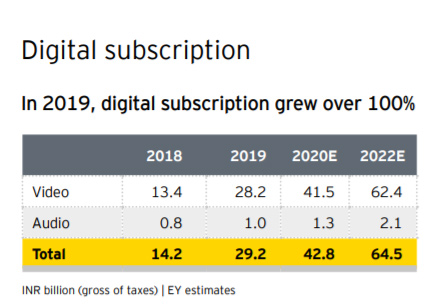
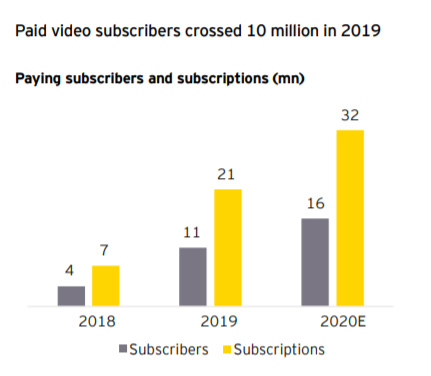
    MUMBAI: The Indian media and entertainment industry has moved beyond the era where consumers are not willing to pay for premium content online. Although the number of paying consumers remains low compared to overall users, the growth is visible, according to FICCI-EY 2020 report. In 2019, over 10 million subscribers paid for 21 million OTT video subscriptions for the first time. Overall digital subscription also grew over 100 per cent to reach Rs 29.2 billion.  

    Video subscription revenues grew 111 per cent in 2019 as premium content – originals and sports – went behind the paywall and amounts paid by telcos on behalf of their customers to content owners increased significantly. Audio subscription grew comparatively slower at 18 per cent in 2019 as platforms are still in the customer acquisition phase and several free products are available. However, the percentage of paying subscribers to total OTT consumers remained less than five per cent and one per cent for video and audio, respectively.

    One of the key drivers for the growth of video subscription is a cricket-heavy 2019, with Hotstar creating an annual sports pack at Re 1 per day. The report also mentioned that increased television subscription prices due to the implementation of the NTO in February 2019 led to certain viewers, mainly English content viewers, preferring to subscribe to relatively more affordable OTT services. Moreover, over 1600 hours of original content were created for OTT platforms across films and episodic content, which led to increased demand.

    There were several moderations in subscription packages also. Free/trial access to leading OTT platforms was provided by telcos and MSOs, bundled with data or television subscriptions, of between one and six months. Major players including Netflix introduced several sachet packs.

    The entry of Spotify, Apple Music, YouTube Music, etc. boosted the growth of audio streaming subscription during 2019 along with increasing smartphone penetration in India. The number of music streamers has increased to 180-200 million from 150 million in 2018.  However, paid subscribers remained below per cent, due to the prevalence of free options across all the large streaming platforms as well as music availability on YouTube. 

    The report predicts that overall digital subscriptions will grow at a CAGR of 30 per cent until 2022. 

  • ZEE5 is India’s ‘most desired video streaming brand’ as per TRA

    ZEE5 is India’s ‘most desired video streaming brand’ as per TRA

    MUMBAI: ZEE5 has emerged as ‘India’s Most Desired Video Streaming Brand’ as per TRA’s recently-released Most Desired Brands 2020 report. In today’s world, with mobile phones and connected devices driving the majority of digital content consumption, leisure binge-watching has become a norm and, ZEE5 is leading the category in its debut year as India’s Most Desired Video Streaming Brand.

    The award showcases ZEE5’s leadership position in content, reach, and distribution, as well as the enormous popularity of the variety of shows and movies available for viewing on the platform. It surpasses all the other OTT platforms who are the well-known veterans of the industry.

    ZEE5 India CEO Tarun Katial said: “It is a very proud moment for us. A young start-up at heart and being in the business for over two years, we have managed to engage with India’s ever-growing appetite for entertainment and serve them with their favourite content in 14 Indian languages. We are extremely delighted and honored to be adjudged as India’s Most Desired Video Streaming brand by TRA. ZEE5 today has become ‘Super App’ of India with a depth of offering across content types, genres and languages that is hard to beat. We believe that with our unrelenting focus on producing quality content, building a robust distribution network and technology advancements, we will endure to entertain our audience and continue being the top streaming platform in India on any device at any time.”

    TRA Research CEO N. Chandramouli said: “Desire is a longing for a brand irrespective of its need, and the success of a brand is highly dependent on the desire quotient it emanates. The brands which feature in this list have been able to exude a deep magnetic pull that impacts the consumer at a subliminal level. TRA’s syndicated research is based on our proprietary Brand Desire Matrix which measures consumers’ expressions of desire on 36 intangible attributes of a brand”. MDB 2020 lists 1000 brands across 326 Categories and 39 Super-Categories.

  • Every platform needs a centrality to its content: VOOT’s Gourav Rakshit at Vidnet 2019

    Every platform needs a centrality to its content: VOOT’s Gourav Rakshit at Vidnet 2019

    MUMBAI: Viacom18’s digital venture VOOT is set to expand the horizon of its business with new moves such as the upcoming launch of its subscription-based model in this calendar year and the full-fledged commercial launch of VOOT Kids. While it will maintain equal focus on the advertising-led platform, Viacom18 Digital Ventures COO Gourav Rakshit thinks it is an opportune time to enter the SVOD play.

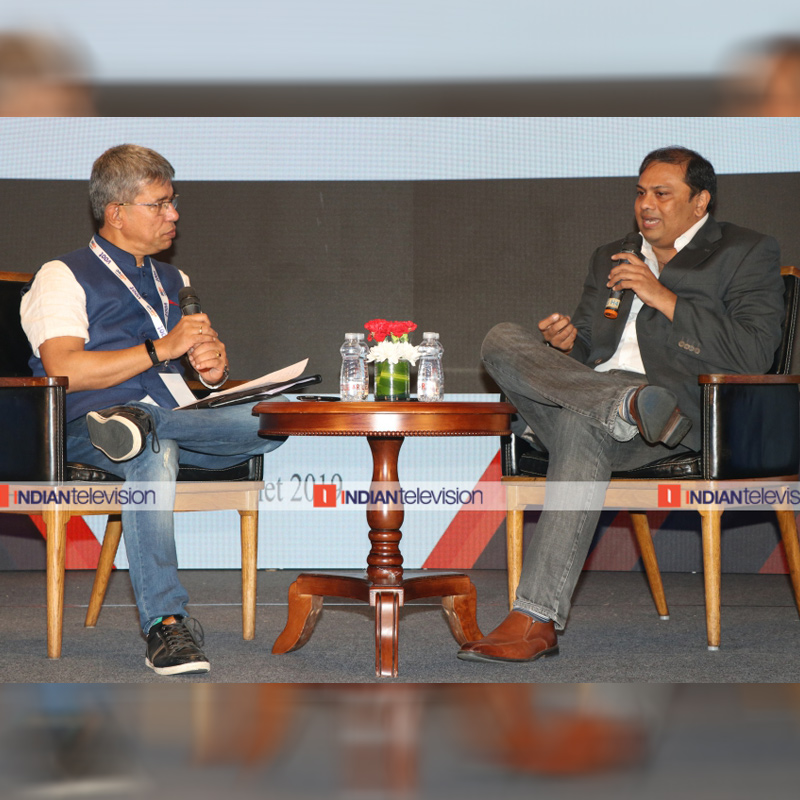
    At Indiantelevision.com’s Vidnet 2019, Rakshit spoke on industry issues as well as VOOT’s content strategy going forward in a candid fireside chat with Indiantelevision.com founder, CEO and editor-in-chief Anil Wanvari. Wanvari set the tone of the discussion by asking his lessons from Shaadi.com and his view on the industry as an outsider.

    Rakshit said that Shaadi.com was obviously a fascinating journey for him as he gained more insights on the history of India and communities of the country. It also helped him to touch India at a very core level while they signed up about 10-15k people every day which largely represents middle-class India.

    “I think from a learning point of view one of the things I can definitely bring is data science and AI models being used in match-making. They are very advanced. People talk about recommendations on OTT space. So, the order of magnitude of the algorithm on Shaadi is much higher than you have to in this space. Another thing is we ran the entire business on subscription model creating sufficient value to reach premium customers.”

    However, he also shed light on the new things he had to face as he switched industries. “I did underestimate the long-gestation period of content between concept, and execution or original launch. At Shaadi.com we were one week away from the idea of execution. This industry has to think where the ball will be one year from now. So, it definitely has a layer of complexity,” he added further.

    The other challenge is the supply-demand quotient. There has been a sudden burst of appetite but the growth in content creators can’t keep pace. However, he believes this is a short-term problem.

    According to him, the OTT industry is still finding its footing. The industry also has to discover the right price points. “As you start to move from the extremely western psychological demographic to what we call India, then Bharat, the nature of the content that we produce and we are going to put on these platforms needs to be fundamentally different. There, I think the broadcast industry, which has sharpened over years of understanding what these consumers want, is going to have an edge both by virtue of the library of content and understanding the sensibilities of the users. In the near term, clearly, the highest disposable income is with people that have a westernised psychography,” he said.

    He also added that every platform needs a centrality to its content that people want to consume and pay for. “We do daily digital soaps which are only available online and do exceedingly well. We have a base of extremely loyal people. In fact, we just concluded a season a few months ago. It is called Silsila and that had a massive fandom. So appointment-driven viewing on the internet as opposed to the only premise we are able to which is binge-watch is where we see a compelling case,” he also noted.

    Rakshit noted that the one thing that digital offers but television is unable to provide is on-demand viewing. According to him, if consumers are able to choose when they want to watch something then they can choose what and how they want to watch, and then they will be looking for something which is closer to their own liking. Hence, there has to be an understanding of writing what these new-age consumers are looking for.

    According to Rakshit, VOOT has an interesting content line up that is ready to hit the market. Moreover, the entry of fibre-to-home services will also help the platform at an ecosystem level. He also mentioned that as the industry progressed, the price discovery of subscription-based services would also be helpful for the platform.

    Speaking on VOOT’s kids’ strategy, he said, “It’s a departure from pure-play video streaming and primarily because we recognise that the target group in that is in the age group of 4-8 years and they are not using their own phones. They are using the device of their parents with their explicit permission. As a form of engagement, we got multiple-choice questions, audiobooks sort of narrative as well as large-format books which people can read in electronic media. Our early indications are that parents like that.”

  • Flipkart Video ropes in Neha Toteja as senior director and head

    Flipkart Video ropes in Neha Toteja as senior director and head

    MUMBAI: E-commerce giant Flipkart has appointed Neha Toteja as Flipkart Video senior director and head. She will be P&L owner for Flipkart's upcoming video OTT service Flipkart Video as has been updated on her Linkendin profile.

    Toteja will be leading a cross-functional team to build a premium, personalised and curated content viewing experience for Flipkart's customers.

    The leader of the upcoming player in the crowded Indian streaming market has an experience of nearly two decades. She has had stints at several companies like Fox, Reliance Entertainment, EY, Times Network, Star TV Network. Prior to her current role, she was associated with international e-commerce giant Amazon.

    Toteja holds a prestigious MBA degree from the premium institution London School of Economics and Political Science. 

  • ByteDance plans to invest in Indian content startups

    ByteDance plans to invest in Indian content startups

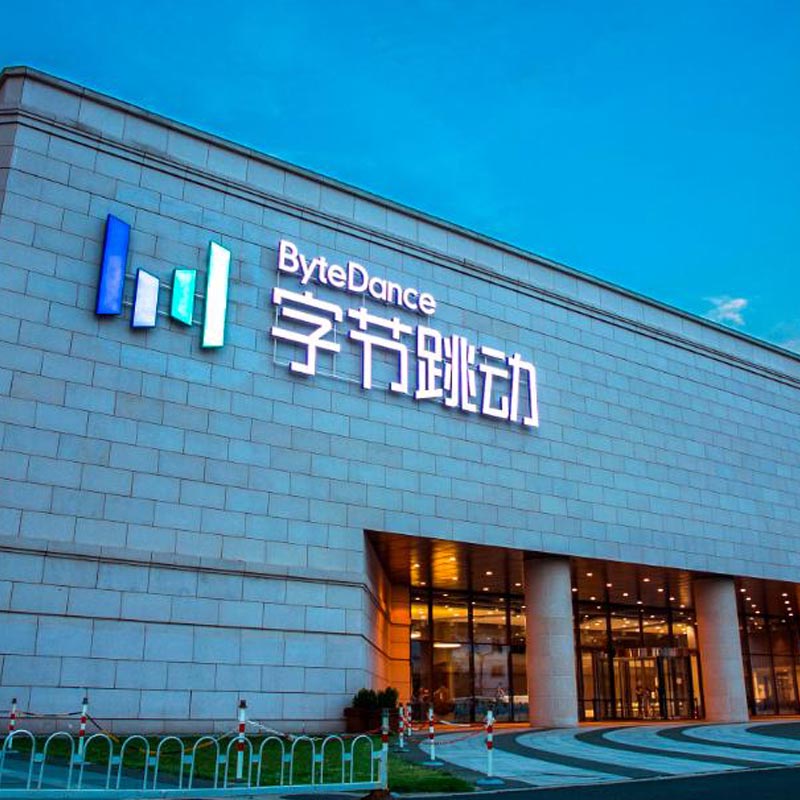
    MUMBAI: ByteDance, the parent company of popular video sharing app TikTok, has plans to delve deeper into the Indian content market. In order to create a bouquet of apps to target new audiences, the Chinese company will invest in Indian content startups.

    As per a Mint report, ByteDance has set up a team to scout for companies in content, social commerce, and education technology. While China’s domestic consumer internet market slowly hits saturation, numbers of Chinese funds are turning their attention to startups in India.

    “They (ByteDance) have been toying with this for a while and have had a lot of people come from China to meet Indian startups," the Mint report said quoting a source. “It has an ecosystem in China, and they want to create something similar in India—an ecosystem of different content platforms," the source added.

    ByteDance entered the Indian market in September 2017 through its live-streaming app Vigo Video but gained prominence with the launch of TikTok. ByteDance also launched local-language social media app Helo around the same time.

  • India gives “poor” video streaming experience on smartphones

    India gives “poor” video streaming experience on smartphones

    MUMBAI: Despite India gaining momentum for video streaming on smartphones, the country still lags far behind on global standards — falling in the poor territory characterised by frequent stalling during video playback and long loading times even for low-resolution video, an OpenSignal report revealed on Tuesday according to ET Telecom.
    OpenSignal’s video experience metric, a first-of-its-kind measurement in the mobile industry, was derived from an International Telecommunication Union (ITU)-based approach for measuring video quality.
    For the analysis, OpenSignal examined 69 countries spread throughout the globe to see how they stacked up in video experience.
    “Our tests sample video at multiple resolutions accessed from multiple content providers, and they weigh three main criteria: the load time before the video begins playing, the stalling rate characterised by stops and stutters in the video playback, and the level of picture resolution,” OpenSignal said in a statement.

    When it comes to overall mobile video experience, India joins Iran and the Philippines below the “Fair” threshold into “Poor” territory (0-40), according to the report.
    The best video experience was recorded in the Czech Republic.
    According to the report, countries with extremely powerful LTE networks in terms of download and upload speeds, availability and coverage, aren’t always providing the best video experience.
    In general, European countries tended to rank higher than their counterparts in the Americas, while Asian and Middle Eastern countries are scattered throughout the rankings, the report pointed.
    “Eleven of the 69 countries we analysed earned a very good rating on OpenSignal’s video experience scale, meaning mobile video loaded quickly and rarely stalled even at higher resolutions,” the report added.
    A score that falls within 75-100 is Excellent, 65-75 is Very Good, 55-65 is Good, 40-55 is Fair and 0-40 is poor.
    While no country fell into the Excellent (75-100) category for average video quality, South Korea (with top download speed of 45.58 Mbps) was the fastest of the 69 countries analysed in the report.

    The vast majority of the 69 countries fell into a relatively narrow range of scores between 40 and 65, earning them either fair or good ratings.
    “It means for much of the world, the typical mobile video experience leaves something to be desired. Video load times are sluggish; stops and stutters mid-stream is common to varying degrees; and connections often have trouble coping with higher-resolution formats,” the report noted.
    Judged by the user experience rather than rote measurements, the mobile industry still has work to do when it comes to video.