Tag: video streaming

  • Ajit Mohan takes over Snap’s APAC operations

    Ajit Mohan takes over Snap’s APAC operations

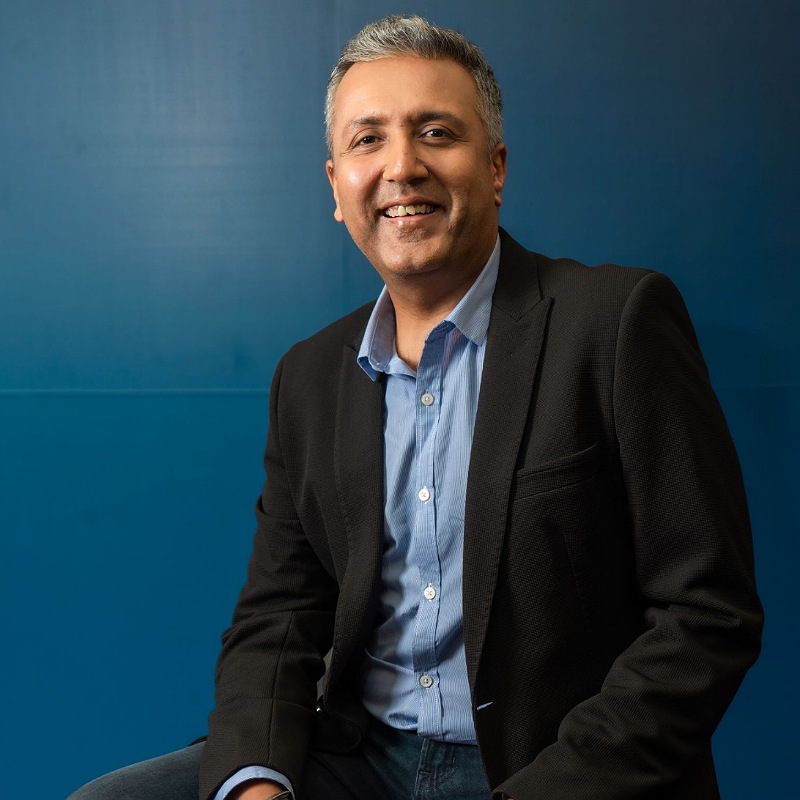
    Mumbai: As reported by Indiantelevision.com on 3 November, Meta India country leader Ajit Mohan had quit and was reportedly set to join Snap. In a LinkedIn post, Mohan has confirmed joining the APAC team of Snap.

    His LinkedIn post reads, “After almost 4 years leading Meta (Facebook) in India, I am stepping down from my role. I am grateful to the company for the amazing opportunity to lead its efforts in one of its most important countries and I am absolutely proud of the work the team and I have done to create impact for people, creators and businesses around the country. “

    He goes on, “When I took on this role, my objective was to build a team and a company that would be a valuable ally to India and play a useful role in fuelling its economic and social transformation. This is exactly what we have managed to do in the last four years.”

    He confirms, “Am also excited to share that I am going to lead the Asia Pacific region for Snap and be a part of the company’s executive team. Can’t wait to get started!”

    Mohan had joined Meta (the erstwhile Facebook) as the managing director for the India market in January 2019. He was preceded by Umang Bedi who quit in October 2017.

    Prior to Meta, Mohan was CEO of Star India’s (now Disney Star’s) video streaming service Hotstar for four years.

  • A third of consumers borrow money or use savings to cover the costs of media subscriptions in UK: KPMG

    A third of consumers borrow money or use savings to cover the costs of media subscriptions in UK: KPMG

    Mumbai: KPMG statistic reveals that nearly a third (29 per cent) of people have borrowed money or used their savings to cover the cost of media subscriptions since the beginning of 2022. 17 per cent of consumers stopped subscribing to a video streaming service to pay for higher food bills this year. Over a third (35 per cent) of respondents said that the number of subscriptions they pay have increased during the pandemic, but 64 per cent are now cutting back because they are worried about the general increase in the cost of living.

    Almost a third (29 per cent) of individuals have struggled to pay for their media subscription services since the start of 2022, with people needing to borrow money or use savings to pay their bills, according to new KPMG research. The survey of UK consumers conducted by OnePoll found that 15 per cent have missed or defaulted on a payment for a media subscription service in the last three months.

    Many media companies have also been affected by rising costs, which they have had to pass on to their customers. The data revealed that consumers have seen their bills for all media subscription services rise this year. 60 per cent of people have seen their mobile phone bills increase. 74 per cent have had their TV subscription bill go up; 68 per cent are paying more for a video streaming service; and 71 per cent have seen a rise in the cost of a music streaming service.

    When asked why they were cancelling media subscriptions, nearly half (48 per cent) said it was because the company put their prices up and it became too expensive.

    The cost-of-living crisis is also having an impact: two-thirds of consumers (64 per cent) said they are decreasing the number of media subscriptions they pay for because they are worried about the general increase in the cost of living and want to save money. This was the primary reason given by all age groups.

    Many people have stopped subscribing to some services to pay for higher food bills this year, which are expected to rise at a rate of 15 per cent this summer, according to the Institute of Grocery Distribution2: Due to rising food prices, 19 per cent have given up a video streaming service, 15 per cent have dropped a TV provider, 14 per cent have stopped paying for a music streaming platform, and 15 per cent have cancelled a mobile contract.

    KPMG UK head of TMT Ian West said, “While consumers and media companies alike are feeling the pinch, organisations’ customers will value them in the long term if alternative payment options or plans can be introduced to help them continue to use their services – especially for essentials such as mobile phones. Unfortunately, the current crisis is unlikely to disappear anytime soon, and I hope that this industry adapts to support their customers in times of difficulty.”

    Focusing on younger age groups, they were found to have the highest number of subscriptions and pay the most in total for their combined media subscription services:

    At the beginning of the year, 18–24-year-olds had on average 21 different media subscriptions, whereas the over-65s had just 13.

    19 per cent of 18–24-year-olds are spending £151–£200 per month, compared to just 3 per cent of 55–64-year-olds and 5 per cent of those over the age of 65.

    Therefore, this younger group is more exposed to fluctuations in prices, which could explain why three quarters (74 per cent) of 18–24-year-olds are planning to end a subscription in the next six months, while only 21 per cent of those aged 55–64 and 32 per cent of those aged 65 and over think they will do so.

    Price increases are disproportionately affecting the young; in the case of mobile phone bills, 90 per cent of those aged 18 to 24 have seen their monthly bill increase this year, compared to 39 per cent of those aged 55 to 64.

    With video streaming services, 90 per cent of the 18–24 age group have seen an increase in their monthly payments, compared with 41 per cent of 55–64-year-olds.

    KPMG UK head of consumer markets, leisure and retail Linda Ellett said, “It is evident that younger age groups will cut back most on their media subscriptions. This can be partly attributed to the fact that they are likely to have a comparatively lower disposable income than other demographics, and typically exhibit less loyalty and more switching in other purchasing behaviours. It’s also evident that younger age groups have more subscriptions and were spending higher amounts in the first place, meaning they have greater flexibility in being able to make changes to save money.”

    Other key findings include:

    Video streaming companies are most vulnerable to a drop in subscriber numbers, with over a fifth (22 per cent) of consumers saying they will reduce the number of these services they pay for in the next six months.

    This figure was 18 per cent for TV providers, 16 per cent for music streaming and 14 per cent for mobile phones.

    Analysing how much people are cutting back overall, 8 per cent have reduced their monthly spend on media subscription services by £1–5; 18 per cent have cut it by £6–10; 12 per cent have cut back by £11–15; and 5 per cent said they have reduced their bills by £16–20 per month.

    West added, “The dip in subscriber numbers seen so far is merely the tip of the iceberg. The data reveals that since the start of the year, consumers have been paying for roughly the same number of media subscription services, with the average number declining from 14.2 to 14 overall. Clearly, people haven’t scrapped too many services yet, but are likely to do so in earnest in the second half of 2022.”

  • OTT, broadband, and ARPU chase

    OTT, broadband, and ARPU chase

    Mumbai: The adoption of streaming in India has happened in stages driven by affordable handsets, cheap data, and most recently the pandemic. While the first two aspects set the stage for global streamers like Amazon Prime Video and Netflix to enter the country, the next few years saw both existing as well as new network and non-network players intensifying the scene.

    Despite Netflix’s admittedly ‘frustrated ambitions,’ India continues to be an attractive market for international OTT brands. NBC Universal’s hayu launched last December, AMC+ in March 2022, and the entry of HBO Max is on the cards. The ‘mainstreaming of streaming’ in India, however, depends in a big way on ‘Bharat’ which will power the next wave of OTT adoption through the ‘regional OTT-local ISP/wired broadband’ combine. And now is the time for it.

    What changed?

    The obvious increase in on-demand content consumption aside, what the pandemic changed at a more fundamental and universal level was that India seems to have reached the point of no return in the context of broadband adoption. Between 2016 and now, broadband has become a utility, and ‘2020’ is to be credited exactly for that.

    This also explains why despite the prepaid tariff hike in November 2021 that led to the gross loss in subscriptions, clean up of low paying, dormant users, and movement to postpaid resulted in higher ARPUs (average revenue per user) for telcos across. A look at the past 10 months of Telecom Regulatory Authority of India (Trai) data shows that wired broadband has grown consistently, while mobile and fixed broadband fluctuated.

    In fact, the sharp rise of 8.24 per cent last December was reminiscent of the increased demand for wired broadband fuelled by work from home, online education, e-commerce and other digital services, as well as online video during the pandemic.  The requirement for cheaper, faster and uninterrupted data, saw wired broadband subscriptions growing by 3.42 per cent post the second wave.

    Mutual advantage

    The shifting of broadband consumption from offices to homes, mobiles to CTVs and urban to rural is bound to create more regional prospects for VoD content providers, as well as smaller ISPs and MSOs that are struggling to maintain their individual existence. The OTT opportunity has contributed significantly to ensuring that players like OneOTT and ACT that thrive on a strong tier 2-3 play in addition to the metros are counted in the league of Reliance Jio, Bharti Airtel, and Vodafone Idea today.

    “We all know that wired broadband is more reliable in terms of speed and quality compared to wireless. But to wire, the whole country is Capex sensitive,” Microscan business head–ISP and director Playbox TV Samson Jesudas says. “The penetration of wired broadband is therefore just about 20 per cent in India. Hence we should appreciate big telcos who are investing huge amounts to wire up the whole country. At the same time, we should ensure the survival of other ISPs in the country.”

    Struggling on account of dropping ARPUs as a result of data prices going down, increased customer acquisition cost, high payback of over 12 months, as well as churn issues, ISPs are in greater need than ever to explore other value-added services as revenue options. In such a scenario, OTT can be the catalyst to promote wired broadband.

    “Today, all telcos and ISPs are bundling OTT content along with their broadband plans. Cable operators have upgraded themselves to ISPs or franchisees of ISPs. Logistically they are in best position to give quality and timely service to end subscribers,” observes Jesudas. “In fact, there has to be a major consolidation of these LCOs and ISPs by telcos and large ISPs,” Jesudas adds.

    In addition to tech and content, partnerships with ISPs are an integral part of ErosSTX’s OTT platform Eros Now’s B2B strategy.

    “Today, content makes up for over 82 per cent of internet consumption which also means more consumption of data and increased ARPUs for ISPs. In other words, ISPs have emerged as a medium for consumers to consume more data,” remarks Eros Now senior VP distribution and alliances Manpreet Bumrah. “We work together with ISPs on innovative modulation of engineered subscription plans with a win-all proposition for the entire ecosystem which includes OTT, ISPs and consumers.”

    Elaborating on the prospects for MSOs, Bumrah shares that there are over 750 million mobile internet consumers in the country today which establishes the fact that India is riding on the internet. However, only 25 million households have access to wired broadband. “With the cable connected to around 200 million houses, there is a huge opportunity for the entire digital media and entertainment ecosystem to grow at the household level,” he says. 

    According to Global Infocom Networks partner and director Harshal Dalal, local ISPs are moving ahead from being vanilla broadband service providers to becoming digital service providers today. “Along with OTT which is proving to be a major stepping stone, diversification is being carried out through other offerings such as insurance and travel & tourism,” he notes.

    Currently associated with over ten OTT platforms, the Global Infocom Networks has been providing quality and cost-effective solutions to ISPs. It aims to bring more awareness to them in terms of customising their offers and penetrating tier 2 and 3 cities in 2022.

    The promise of 100 million ‘TV Nevers’

    In a further boost to digital India, the recent budget promised great leaps in rural broadband connectivity through the government’s flagship programme – BharatNet. It aims to bring broadband to 361,000 villages across 16 states, including 1.37 lakh gram panchayats by 2025.  The new infra-sharing guidelines are also making it feasible for smaller MSO/ISPs to reach remote areas of the country. 

    Commenting on the possibility this creates, Bumrah says, “As internet bandwidth improves, the consumer experience will improve which will further accelerate the uptake of the internet in the country including by the 100 million ‘no TV households’.”

    According to the economic survey released on 31 January, 5.46 lakh km optical fiber cable (OFC) has been laid as of September 2021, a total of 1.73 lakh gram panchayats (GP) have been connected by OFC, and 1.59 lakh gram panchayats are service ready under BharatNet. Combined with the global push for affordable broadband led by the ITU, BharatNet has the potential to revolutionise the telecom sector much in the same way as Free Dish has transformed the broadcasting industry in recent years.

  • Content discovery is overwhelming nearly half of American audiences: Nielsen report

    Content discovery is overwhelming nearly half of American audiences: Nielsen report

    Mumbai: A nearly 20 per cent increase in unique programme titles over the past three years has almost half of the American audiences (46 per cent) feeling overwhelmed by the growing number of services and platforms that makes it more difficult to find the content they’re looking for, revealed audience measurement firm Nielsen’s inaugural ‘State of Play’ report.

    According to the report, consumers now have over 817,000 unique programme titles as of February 2022 vs more than 646,000 as recently as December 2019. The increase in content also comes with an increase in consumption, as 18 per cent of Americans are now paying for four streaming services vs the seven per cent who did so in 2019.

    In February of this year, content from streaming platforms accounted for just under 29 per cent of consumers’ total time with TV, ahead of broadcast programming (26.4 per cent) for the fourth straight month, according to Nielsen’s The Gauge, its monthly total TV and streaming snapshot. In total, Americans watched nearly 15 million years’ worth of streaming video content last year.

    When asked about whether bundled streaming services might make it easier for consumers to find the content they are seeking, 64 per cent of respondents indicated they wish there was a bundled video streaming service that would allow them o choose as few or as many video streaming services that they wanted.

    “The inaugural State of Play really underscores the fact that we’ve entered the next phase of streaming, based on the trends we have been detailing about streaming over the past few years,” said Nielsen SVP product strategy Brian Fuhrer. “We’ve moved from infancy into adolescence and all the complexities that one would expect at that point. It’s not just that streaming is increasing year over year. Now consumers want access simplified and the explosion of services has renewed discussions around bundling and aggregation. Ultimately, these challenges signal an opportunity as the industry harnesses streaming for long-term business growth.”

    ‘State of Play’ highlights the increasing boom of video content in both linear and streaming in recent years. Overall, Americans increased their average weekly time streaming video by 18 per cent, with a year-over-year increase from 143.2 billion streamed minutes to 169.4 billion between February 2021 and February 2022.

    The report reveals two other key takeaways: streaming service consumption is expected to grow, with 93 per cent of Americans reporting they will increase their paid streaming services or make no changes to their existing plans over the next year, and over the last three years there was an 18 per cent increase in all available video content.

    However, due to a nearly 20 per cent increase in unique program titles over the past three years, nearly half of audiences (46 per cent) feel overwhelmed by the growing number of services and platforms that makes it more difficult to find the content they’re looking for.

    Amid the seemingly overwhelming choices provided by new streaming platforms, subscription video on demand (SVOD) now accounts for 53 per cent of minutes streamed. Of the four hours, 49 minutes per day that the average American spends watching content, 1:22 of that is through connected TV (CTV).

    In addition to providing streaming consumption trends and consumer sentiment, ‘State of Play’ details how the streaming landscape has broadened beyond traditional SVOD services. Ad-supported VOD, multichannel video programming distributors (MVPDs) and virtual MVPDs (vMVPDs) have grown to account for 35 per cent. The percentage of homes with YouTube TV—the vMVPD with the highest household penetration—has grown by over 160 per cent since 2020.

    The ‘State of Play’ report leverages Nielsen TV measurement and streaming data, insights from Gracenote a Nielsen company, and findings from an online custom survey of the US video streamers.

  • There is strong demand for our content in India: NBCUniversal’s Hendrik McDermott

    There is strong demand for our content in India: NBCUniversal’s Hendrik McDermott

    OTT streaming service hayu was launched in 2016 in the United Kingdom, Ireland, and Australia targeting major English-speaking markets to advance the unscripted reality genre. The content on the service was provided by NBCUniversal, one of the world’s leading unscripted production companies, that adds 2000 hours of unscripted content every year primarily through their flagship pay TV brands in the United States – Bravo, E!, and Oxygen.

    Today, hayu platform boasts 10,000 hours of content all focused on reality TV. While the content library swells predictably each year, the platform’s strategy is focused on bringing that content to more English speakers across the globe. It does this in three ways, launching in new English-speaking markets, increasing its distribution reach, and onboarding platform partners.

    In 2017, hayu launched in the Nordic region (Norway, Sweden, and Denmark) and then into the rest of Europe. The service was launched in Canada and Benelux in 2018. The expansion continued to Southeast Asia including the Philippines, Hong Kong, Singapore, and finally India in December 2021.

    Leading hayu’s charge across the globe is NBCUniversal managing director of direct-to-consumer global Hendrik McDermott, who’s been at the media and entertainment company for over 16 years. Based in London, McDermott is responsible for the territorial expansion and P&L including subscriber acquisition, retention, customer lifetime value, and revenue growth. The platform hayu has completed six years since its launch and is currently present in 29 countries.

    In an exclusive conversation with IndianTelevision.com, McDermott shares his focused strategy for hayu’s international expansion and approach to the Indian market.

    Edited Excerpts:

    On the launch in India three months ago

    Our research showed that there’s a huge appetite for reality TV in this country. As we look at our addressable base (English-speaking audiences), 33 per cent of that base are huge fans of reality TV in some shape or form. Out of that group of people, three-quarters are very interested in subscribing to a US content service. That’s a very high percentage in our addressable base. So, there is a strong demand for the content that we have in this market.

    On monetising unscripted content via subscriptions

    We view our platform as a premium service. Our research shows that people are happy to pay for content and they don’t want advertising on the service. Our platform is an ad-free service and we do not have advertising on our platform in any of our other markets so it’s something that we’ve stayed true to in India. That’s the area (subscription) we hope to grow for now.

    On distribution strategy and partnering with Prime Video Channels

    Partnerships are a hallmark of our strategy and we’re very active in partnership discussions. We are partnered with every kind of platform you can imagine including cable platforms, satellite platforms, OTT platforms, and telcos. In every market that we’re present, we have at least one platform partner. We launched with Prime Video Channels here in February but we have a longstanding partnership with Amazon in other markets as well.

    The types of integrations that we do differ from market to market. For example, in Canada, which is a cable TV-led market, we partnered with all the cable TV operators and built a bespoke app that sits on their set-top-box. The Nordic markets are much more SVOD-led and so we’ve done integrations with the other SVOD platforms. We’re open to all kinds of different partnership conversations. We are partners with almost every App Store and Smart TV across Apple, Google, Roku, etc.

    In India, I can’t speak about specific partners but we are in active conversations for further distribution. The deal with Amazon is a structure where the partner platform ingests our content and we’re open to that. We’re looking to bundle with different smart TV and telco operators as well.

    On a localisation strategy for India

    We are an English language service. The content itself is very topical and when our new shows come out it is written about in the newspapers. We prioritise the speed at which the content comes to our platform and therefore our shows air in India on the same day as the US within two hours of broadcast transmission.

    In India, we’re subtitling some of our content knowing that there is a desire to watch content in local languages. About 4000 hours of content has been subtitled to Hindi.

    On beating the competition in the unscripted content space

    We bring our US-based shows that feature some of the most popular and famous people in the world. These are franchises like “The Real Housewives” and “The Kardashians.” These are premium franchises targeting a specific demographic. We’re not a general entertainment service so we’re not going to try and address the entire market. Our target audience is young, female, and English-savvy.

    Obviously, we’ll sell our service to anyone but we do tend to skew more females than males with 90 per cent of our user base outside of India being female. We also understand that this is a mobile-led market but we’re trying to keep our platform available to as broad a selection of people as possible. So, we’re present on all devices.

    On growing the platform in India

    The performance metric that we’ve been looking at is our viewing engagement i.e., how much content is being viewed by people on our platform. I think that’s important at the launch phase because we’re brand new to the market. Our benchmark in terms of average viewing per person per month varies between 16-20 hours of content. That is broadly speaking the performance of our content in other markets. We’re pleased to note that in India the average at the moment is 17 hours per person per month which is within our target performance.  

    On marketing the service in India

    Marketing in India is no different from other markets. When we launch our service, we were very active in building brand awareness since the brand is new to the market. This includes pay TV advertising and out-of-home advertising that we’ve been active in starting from December. Then we’ll shift our tactics towards digital because globally we’ve seen it is much more common to get people to subscribe to services via digital. You will see our presence on social media channels, influencers, podcasts, and everything else. Once we’ve invested in building our brand, we can shift our tactics to drive subscriptions via digital.

    On making the customer onboarding journey as frictionless as possible

    Our service is accessible via numerous touchpoints. We have a whole suite of apps, 13 different apps, and have made it seamless for people to connect with the platform in any way they want. The simplest is the web where there is a basic sign-up flow. In this market, we offer two subscription packages i.e., a three-month package and a 12-month package. Adding more payment options is in our product roadmap for the coming months. Payment modes like Paytm will be enabled over the course of the year.

    On driving viewership via connected TVs versus mobile devices

    Even in markets where we’ve had integrations with cable TV platforms, the primary viewing of our content genre is happening on the small screens. This includes mobiles and tablets but also to a certain extent laptop computers. While there is some variation from market to market, this is consistent across the board. In India, we found that about 50 per cent of the viewing is happening on the mobile phone. It also skews towards Android devices over iOS devices. Mobile viewing in this market is broadly speaking higher than we’d see in other markets.

    On hayu’s upcoming content slate

    We recently launched a new franchise called “Below Deck Down Under” that’s exclusively on hayu platform. In May, we have a big premiere when the “Real Housewives of Beverly Hills” returns to the platform with season 12. On an annual basis, we add about 2000 hours of content and on any given day four to ten new episodes are coming in from our partners in the US.

  • ‘Lock Upp’ garners 15 million views in 48 hours

    ‘Lock Upp’ garners 15 million views in 48 hours

    Mumbai: MX Player and Altbalaji’s new reality show “Lock Upp” has garnered 15 million views within 48 hours of its launch, according to the streaming platform. “This made it the first digital reality show to achieve such a massive opening in its launch week,” said the statement. 

    The show which released on 27 February features Kangana Ranaut as the host and brings together 13 controversial celebrities in a jail for 72 days. 

    The celebrities include Nisha Rawal, Munawar Faruqui, Poonam Pandey, Kaaranvir Bohra, Swami Chakrapani, Siddharth Sharma, Anjali Arora, Babita Phogat, Shivam Sharma, Sara Khan, Payal Rohatgi, Tehseen Poonawalla and Saisha Shinde.

    “While television has run its course on the over hashed sentiment of unity amid differences of opinions, ‘Lock Upp’ is a reality format that is quite the opposite — it pits celebrities and influencers who are known for very strong views on various issues in a hostile environment that has bare minimum amenities. The show has attracted a huge following even amongst international viewers because of its distinct look and feel,” said the statement.

  • Eight months into launch, Zee5 Global surges forward in the US

    Eight months into launch, Zee5 Global surges forward in the US

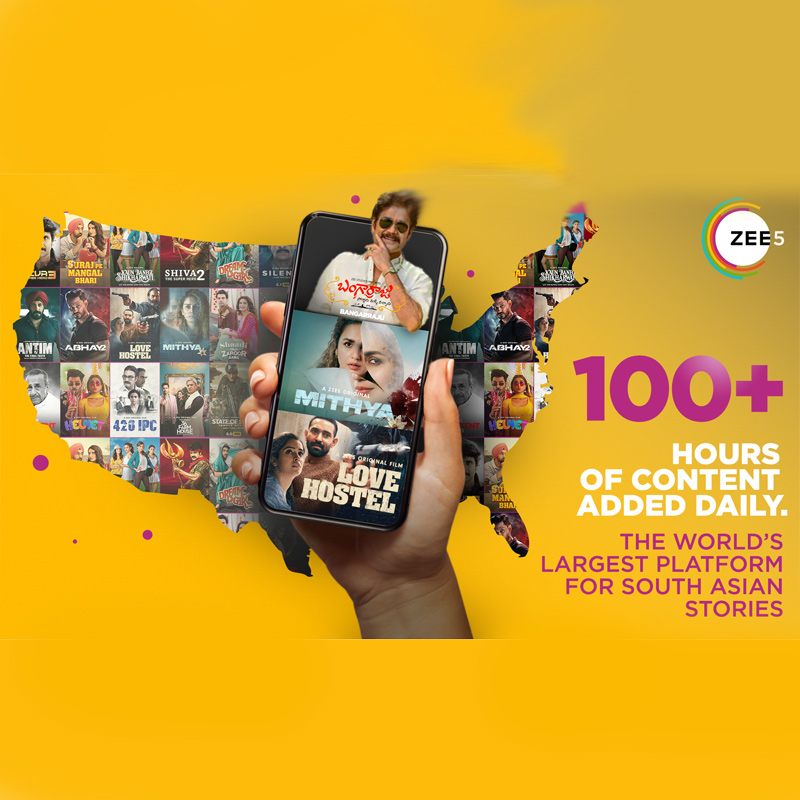
    Mumbai: Eight months into launch, Zee5 Global has bolstered its presence in the US market, with a record rise in subscription revenue and engagement among the South Asian populace, the platform announced on Monday.

    The streaming platform revealed the US is now the second-largest market for Zee5 after India and the largest contributor to the platform’s international subscription revenue and viewership. It has recorded a growth of 15 per cent month on month in its viewers and subscriptions on the back of a wide array of original shows catering to the South Asian communities. The US now drives over 40 per cent of its international subscriptions, it said in a statement.

    While Hindi continues to be the driver, the platform has seen double-digit growth in other language content, including Bengali, Telugu, Punjabi, and Tamil across states. Telugu content for instance has seen strong traction, especially in Colorado, North Carolina, Missouri, and Texas. Bengali content on the other hand has done well in Kansas, Louisiana, Connecticut, and New York.

    “I am very glad to see the strong response to Zee5 in the US, especially within such a short span of time,” said Zee Entertainment’s president digital businesses and platforms Amit Goenka. “The US is a high priority market for us and material to our International Strategy, and this early momentum inspires much confidence as we plan for the days ahead.”

    Zee5 Global chief business officer Archana Anand said, “As the only standalone destination for South Asian content in the US, Zee5 Global has grown at an exponential rate in the last eight months and surpassed every milestone. By bringing in the biggest stories and stars from the region as well as ensuring new content every minute and as it releases in India, we will continue to delight our viewers here with the very latest content from back home in the language of their choice.”

    The OTT platform is currently catering to key South Asian language-speaking communities, including those from Pakistan and Bangladesh with over 170,000 hours of content. It launched as many as 51 new Originals across languages in 2021 and plans to double its original content releases this year.

  • Netflix ends 2021 with 222 million global subscribers

    Netflix ends 2021 with 222 million global subscribers

    Mumbai: Netflix has announced its financial results for the fourth quarter of 2021. The company reported revenue of $7.7 billion registering a growth of 16 per cent year-on-year.

    The streaming giant added 8.3 million global paid subscribers in Q4 bringing its paid memberships up to 222 million at the end of 2021.

    It reported full year revenue of $30 billion – a growth of 19 per cent year-on-year while operating income of $6.2 billion rose 35 per cent YoY. Netflix added 18 million subscribers in 2021 compared to 37 million subscribers in 2020. The company observed that more than 90 per cent of its paid net adds in 2021 came from outside the US and Canada (UCAN).

    Netflix added 2.6 million paid subscribers from the APAC region with strong growth in both Japan and India. It generated $871 million in revenues from the APAC market with a subscriber base of 32.63 million, and reported 1.2 million paid adds from the UCAN region, 2.5 million from the EMEA region and 1.0 million from LATAM region.  

    “In December, we lowered our prices in India across all four plans. India is fairly unique because pay TV pricing is very low. We believe these new prices will make Netflix more accessible to a broader swath of the population – strengthening our value perception. Our goal is to maximize long term revenue in each of our markets,” it said in a statement. 

  • Prime Video to stream live cricket in India starting 1 January 2022

    Prime Video to stream live cricket in India starting 1 January 2022

    Mumbai: Amazon Prime Video has entered the live cricket streaming play starting 1 January 2022 with a test series between New Zealand and Bangladesh. In November, Prime Video secured the exclusive live cricket rights from New Zealand Cricket, the governing body for professional cricket in New Zealand.

    As a part of the multi-year deal, international men’s and women’s cricket matches played in New Zealand – across ODI, T20, and tests – will be available exclusively on Prime Video.

    Prime members will be able to exclusively stream the series between the Indian and New Zealand Women’s Cricket Teams in February 2022, as well as, the Indian and New Zealand Men’s Cricket Teams presently scheduled for November 2022. This is in addition to matches that are presently scheduled to be played between the Men’s teams as a part of Bangladesh’s tour of New Zealand in January 2022, South Africa’s tour in February 2022, Australia’s tour in March 2022, and Netherland’s tour in March/ April 2022.

    “Cricket is undoubtedly the most loved sport in India and our collaboration with New Zealand Cricket underlines our commitment to give our customers what they want. The upcoming series will be Prime Video’s first foray into live cricket in India,” said Prime Video India country head Gaurav Gandhi. “The New Zealand cricket -team has built a reputation of being one of the finest in the game and undoubtedly cricket fans in India will be delighted experiencing the exciting sporting action live exclusively on Amazon Prime Video. We are excited to start our live cricket journey in 2022 – an action-packed year that will see both Indian women’s and men’s teams tour New Zealand.  Today is truly Day 1 of our sports journey.”

    “Starting January 2022, New Zealand cricket has a new home in India – Amazon Prime Video – and we are looking forward to bringing New Zeland’s summer game to our fans and cricket lovers in India as they catch us live on the service,” said the captain of the New Zealand national team Kane Williamson. “India’s love for cricket and entertainment is well-known around the world. I am thrilled that Prime Video will be exclusively streaming all the exciting on-field action to our fans in India.”

    “The passion and love of the Indian cricket fan is quite unmatched! The country and cricket fans have a very special place in our hearts,” said the captain of the New Zealand Women’s cricket team Sophie Devine. “With a new, exclusive home on Amazon Prime Video, we hope to engage and delight viewers across the country. I am excited to play against the Indian Women’s Cricket team this summer. They are a worthy opponent, and I can bet it will be an intense cricketing season between our teams.”

    “It’s a very exciting time for cricket broadcasting as we move into live cricket being streamed exclusively on a service as widely followed as Amazon Prime Video in India,” said New Zealand Cricket chief executive David White. “Cricket is followed closely in India and our association with Amazon Prime Video will help us extend our reach and connect with fans and followers in the country. We are delighted that the viewers in India will be able to watch all the tours coming up in 2022 live on Prime Video, and look forward to offering all the on-pitch excitement to viewers in an immersive and engaging manner.”

    To watch the matches, Prime members can go to the Prime Video app on their respective devices and will see matches shown in a carousel for live cricket or they can search for ‘New Zealand Cricket’ in the search bar.

  • Sling TV partners with Eros Now as part of South Asia expansion

    Sling TV partners with Eros Now as part of South Asia expansion

    Mumbai: The app-based streaming service Sling TV has announced plans to continue expanding its South Asian offering with the addition of video streaming platform – Eros Now.

    Following the launch, Sling’s international subscribers will have access to Eros Now’s over 1,500 titles – including top web originals and films. The Eros Now library on Sling will continue to grow over the coming months to over 6,000 film titles and will be available in Hindi, Kannada, Marathi, Telugu, Tamil and other regional languages, said the statement.

    Sling TV is a provider of international and multicultural programming, with content from 27 countries in over 20 languages. “Sling TV is the leading American provider of South Asian content and continues to perfect our offering to connect consumers to the content they love,” Sling TV vice president of international Liz Riemersma. “Eros Now offers an expansive web originals and film collection for our South Asian customers, and will make a fantastic addition to our Desi Binge bundle.”

    Eros Now service will be available to customers with the ‘Desi Binge package,’ which includes other leading South Asian content like SonyLIV and Voot, as well as the Hindi pack and the Hindi mega pack at no additional cost to customers. Customers may also purchase Eros Now as a standalone service or as an add-on to another Sling TV service for $ five per month.

    “Indian content is hugely popular in North America. With Eros Now packaged and bundled on a popular service like Sling TV, the audiences will get access to the best catalogue of Indian films and original series,” said Eros Now chief executive officer Ali Hussein. “This partnership also dovetails nicely into Eros Now’s strategy of building audiences on the large screen in North America and further accentuates our strong distribution in the region.”