Tag: Video services

  • UK SVoD growth up; people spending more time on streaming platforms: Omdia’s Research

    UK SVoD growth up; people spending more time on streaming platforms: Omdia’s Research

    Mumbai: According to a research report released recently at Connected TV World Summit, Omdia’s senior director Maria Rua Aguete said, “The number of people paying for video services in the UK has increased 11 per cent over the last year and quarter on quarter since April 2021.”

    According to Aguete, despite the UK cost of living crisis, UK people are tending to spend more and certainly no less in streaming video services. In terms of dealing with rising costs, consumers prefer to cut other expenses than their own home entertainment in order to deal with the rising cost. As the survey reveals, cuts in other spending has allowed them to subscribe to extra services.

    Currently, the average UK household has 2.6 pay subscription services at home, 2 Svod services and 0.6 Pay TV. Although the churn rate has increased significantly in the last 12 months.

    Despite Netflix results showing a decline in global subscriptions (200,000 in Q1 2022), Netflix remains the UK’s favourite video service. It is also still the most popular SVOD service in the domestic market, the USA.

    80 per cent of households in the UK have an online subscription. YouTube and BBC iPlayer tops the chart as most favourite online video services in the UK followed by Netflix. Netflix’s Svod service is still in the race with 15.5 million subscribers.

    Other most popular services in the UK are: Amazon Prime Video with 10 million subscriptions and Disney Plus with 7.5 million subscriptions.

    Churn has increased significantly in the last 12 months:

    45 per cent more subscription video services were cancelled in the last 12 months, while overall there were 20 percent more consumers cancelling their services compared to last year, but counteracting this trend, the number of services cancelled and re-subscribed to in the last 12 months has grown by 84 per cent meaning that although more people are churning, more people are subsequently resubscribing with 50 per cent more re-subscribers in the UK now.

    According to the reports, online video subscriptions will reach 2 billion in 2027. The biggest growth in the last six months comes from: Disney, Now TV, Netflix and Amazon Prime with 21 percent, 18 percent, 8 per cent and 5 per cent respectively.

    Those with four streaming video services per home are the ones churning less than those who took more than seven SVOD services are among the highest churners.

    Looking forward, Omdia expects that Netflix, currently in the lead in the streaming video race (Q1 2022), will still lead in five years’ time (2026) Aguete adds: “With the lowest churn rate across all streaming video services and highest lifetime value per customer, Netflix will continue and surpass Disney by 2026.”

  • Eros Now partners with Live Satellite Media to bolster presence across India

    Eros Now partners with Live Satellite Media to bolster presence across India

    Mumbai: South Asian entertainment platform Eros Now has partnered with Mumbai-based Live Satellite Media, part of the ABS group to ensure delivery of video services across all parts of the country. As part of the deal ABS Subsidiary, Live Satellite Media will distribute and enable Eros Now subscriptions through various modes, including unique bundling, prepaid codes, and API integration of the SVOD platform across its extensive customer base. 

    “We will do bundling of various OTT apps and will distribute to ISP, MSO, LCO & other platforms all India. This will be a unique distribution of bundling of all OTT platforms under one company,” said ABS Group CMD Atul B Saraf. “And, by partnering with Eros Now, we can offer a unique experience of OTT platforms to our customers. We will leverage our 30 years of distribution network management experience to ensure the service reaches the multicultural and multilingual audience at large.”

    A noted multi-system operator- ABS Group carries a strong presence in Mumbai for 30 years. Live Satellite Media was founded in 1996 to distribute corporate advertisement on cable networks across India with over 2000 MSO affiliated to it. In 2004 India’s only health & wellness channel was launched by the group with 100 per cent in-house production with more than 1000 hours of library. In 2008 through its subsidiary ABS Media Service had distributed various satellite channels on all platforms for carriage fees & revenue as pay channel. ABS also owns various other companies such as ABS digital cable, ABS broadband services.

    The company is now in the process of finalising as many as six OTT platforms. “We should be able to close it by next month,” said Saraf, who has been in the Satellite and Cable TV Industry for over 30 years. In 1994 he founded Seven Star Satellite Cable Network in Mumbai which became one of the biggest Independent Multi System Operators.

    Talking about the partnership, Eros Now, senior vice president – distribution and alliances, Manpreet Bumrah said, “This partnership is unique and enables us to tap into Live Satellite Media’s massive distributions network of customers and serve them with Eros Now’s enormous library of Bollywood movies, originals, music, short-format content, and more.” 

  • Tata Sky upgrades to Ericsson’s platform to enhance video services

    Tata Sky upgrades to Ericsson’s platform to enhance video services

    MUMBAI: Direct to home (DTH) operator Tata Sky has upgraded upgraded and expanded its entire DTH platform to the Ericsson’s video compression platform AVP 4000 System Encoder.


    The upgrade enables Tata Sky to substantially increase the bouquet of channels offered to subscribers while maintaining the highest quality of viewing experience.


    Tata Sky CEO Harit Nagpal said, “For Tata Sky, it is of utmost importance to consistently deliver a high quality viewing experience to our subscribers. The Ericsson AVP 4000 System Encoder allows us to enhance picture quality, offer increased volumes of channels and content and launch new services, such as OTT, on the same platform.”


    Ericsson head of region India Chris Houghton added, “Ericsson is committed to helping its customers overcome the challenges of satellite spectrum scarcity and meet increasing quality expectations of Indian consumers. The AVP 4000 System Encoder is designed to overcome today’s bandwidth and delivery constraints by providing the necessary flexibility, velocity and agility to deploy new services within an extremely competitive landscape.”


    Four out of the seven DTH operators in India are based on Ericsson’s video compression technology. In March this year, Ericsson supported Tata Sky to launch the first commercial 4K video service in the subcontinent. Customers subscribing to the 4K service could watch video up to four times the resolution of the standard high definition (HD) video currently available.


    According to Ericsson, the total mobile video traffic over the next six years (2015-2020) will be more than 17 times that of the last six (2009-2014). With availability of more content for an ever – increasing number of video-enabled devices, it is critical to maximize video delivery over available bandwidth and multiple networks. 

  • Are Android STBs a step too far for India?

    Are Android STBs a step too far for India?

    MUMBAI: Even as the cable and television industry prepares to take on digitisation, there’s another advanced technology which has arrived rather quietly on Indian shores.


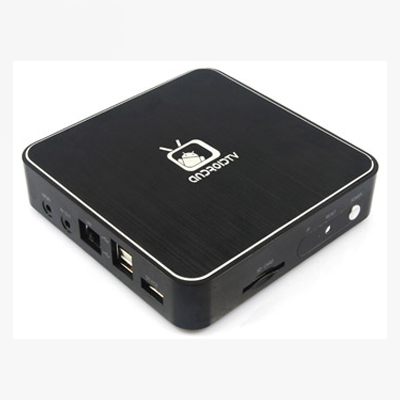
    We’re talking Android set top boxes (STBs) from Willett STB Technologies which are in the market since sometime last month. These hybrid STBs carry all the applications available on the Android Play Store and allow customers to switch seamlessly between television and the internet. Given the recent buzz about Google bringing YouTube on TV, such a technology may just be what the doctor ordered. However, for a variety of reasons, the Android STBs don’t seem to be finding enough traction in the industry.


    Speaking to indiantelevision.com, Willett STB Technologies director Deepak Wadhwa refuted the MSOs’ claim that STBs are not upgraded to carry YouTube as a Video-on-demand (VoD) service on television. “The STBs come in different models and frankly, we are ready with the technology. The Android box is the answer to this new development.”


    However, Wadhwa was quick to point out that the problem lies in MSOs’ unwillingness to accept the technology. “The MSOs are not ready to promote the boxes. Even though we are ready with the upgraded technology, there are deployment issues,” he said.


    So what was keeping MSOs from adopting the new technology? A major reason, according to Wadhwa, was the cost, where each Android STB carried a price tag of Rs 4,000. Additionally, customers would have to pay for video services.


    The Willett Android 4.2 STB is a hybrid box, with both Android and DVBC features. “The box allows customers to switch between Android play store and TV channels. It also converts a normal TV to a smart TV,” informed Wadhwa.


    Elaborating on the cost factor, he said: “The MSOs are already tied up with MPEG2 boxes. Also in smaller cities, where people are used to viewing TV at Rs 75 to Rs 100, they are opposing STBs which cost Rs 1000, so accepting the Android boxes seems a far thing to imagine.”


    Meanwhile, an MSO defended cable operators’ stance saying: “These OTT boxes don’t give us revenue which goes to the service provider instead. So why should we use them?”


    Media consultant Sanjeev Hiremath opined: “As far as the cable industry is concerned, technology gets adapted step-by-step. No one is ready to take two steps at a time. Obviously, the advantage of the Android box is that you can incorporate the experience of OTT service also in that. So then you can avoid cable and can directly take a broadband connection and experience both TV and the world of internet. If customers are not ready to pay Rs 1000-2000 for normal STBs, of course they will not buy these at double the rate.”
    Maybe, India needs to work towards faster adoption of new technologies just as it has in developing them…