Tag: Video-on-demand

  • Robust growth in Korea’s premium VOD sector, led by Tving

    Robust growth in Korea’s premium VOD sector, led by Tving

    Mumbai: The premium video-on-demand (VOD) landscape in South Korea grew subscribers, revenues and engagement at robust levels in 1H 2024 according to analysis conducted by ampd, the digital measurement platform owned and operated by Media Partners Asia (MPA). The Korean SVOD market added 705,000 net new subscribers in 1H to a total 20.8 million by end of June 2024 while premium VOD revenues, including subscription and advertising, grew 11 per cent year-on-year to $922 million and viewership grew five per cent Y/Y to 103 billion minutes.

    Tving led subscriber growth in 1H 2024, contributing 34 per cent share of SVOD category net additions to 4.2 million total subscribers. Tving’s growth is anchored to popular tvN and JTBC network dramas, variety and originals. The introduction of a new advertising tier helped drive user growth in 1H 2024, with MAUs >11.5 million. Netflix remains the premium VOD category leader with 43 per cent share of revenue and 37 per cent of viewership. Tving is gaining pace, growing share of premium VOD viewership by six points Y/Y to reach 30 per cent, capturing 15 per cent of premium VOD revenues. Beyond premium VOD, viewership across AVOD, SVOD and live streaming platforms on mobile devices totalled 534 billion minutes in 1H 2024, up 24 per cent Y/Y. YouTube is the overall VOD category leader and continues to gain share, reaching 80 per cent of total VOD viewership in 1H 2024.

    ampd’s lead analyst & head of insights Dhivya T commented: “Local content captured 77 per cent of premium VOD category engagement and 75 per cent of customer acquisition in 1H 2024, with key drama and variety hits from Tving , Netflix , Coupang Play and Disney+. An abundance of local drama and variety releases across major VOD platforms drive viewership, with over 200 titles contributing to 80 per cent of Korean content demand in 1H 2024. Tving led hits across scripted and unscripted titles, carrying 10 of the top 15 titles (seven shared across platforms) in 1H 2024. Other key platforms include Netflix with seven of the top 15 titles. Disney+ originals Coupang Play’s sports and originals also broke through. CJ ENM produced six of the top 15 titles in 1H 2024.”

    Premium VOD viewership share in South Korea (1H 2024)

    Source: ampd

  • India’s OTT video market to reach $3 bn in 2022; estimated to double by 2027: Report

    India’s OTT video market to reach $3 bn in 2022; estimated to double by 2027: Report

    Mumbai: India’s OTT video market will reach total revenues of $3 billion in 2022 and is expected to more than double to $7 billion by 2027, according to Media Partners Asia (MPA).

    In the recent analysis, MPA looks at the online video and broadband distribution trends in the Asia Pacific (APAC) market.

    The online video market in APAC is expected to grow 16 per cent year-on-year to reach $49.2 billion by the end of 2022. MPA forecasts that the industry will continue to grow by 8 per cent YoY to reach $72.7 billion by 2027.

    Subscription video-on-demand (SVOD) is expected to contribute 50 per cent to overall revenues, followed by user-generated-content (UGC) advertising video-on-demand (AVOD) platforms which will contribute 37 per cent and premium AVOD that will contribute the remaining 13 per cent.

    “APAC’s largest markets including India, Indonesia, Japan, Korea and Thailand will be increasingly important to global platforms,” observed MPA executive director Vivek Couto. “Each of these markets require local content and distribution strategies with long-term investment.”

    The APAC region remains the largest contributor to global online video customers and its users are emerging as a significant contributor to revenue growth. In its recent quarterly results, streaming giant Netflix reported a loss in subscribers in every market (United States-Canada, Europe Middle East and Africa, Latin America) except APAC where it reported paid net additions of one million.

    Also Read: Netflix to launch cheaper ad-supported plan for early 2023

    Indian Scenario

    As per the analysis, India’s OTT video market is in the second phase of its growth as competitive intensity is set to grow between global giants and newly capitalised local players. Telco reach remains critical in the market along with AOVD business models and low-average revenue per user (ARPU), high volume SVOD services.

    In terms of SVOD business, Netflix, Disney and Amazon lead, with the three players having 56 per cent aggregate of the APAC market excluding China in 2022. Netflix will have 33 per cent share followed by Amazon Prime Video at 12 per cent and Disney+ including Disney+ Hotstar at 11 per cent.

    Netflix’ s share of online video subscription revenues has declined from 35 per cent in 2021 while Disney+ and Disney+ Hotstar services are building scale, local content investment and monetisation in markets such as Australia, India, Indonesia and Thailand while also expanding in high ARPU, strong local markets such as Japan. A third of Disney+ revenues come from India, however, where it has recently lost digital rights to the highly successful Indian Premier League (IPL) cricket franchise to Viacom18.

    Prime Video leads the Japan SVOD category while also growing rapidly in India and is now set to expand in key Southeast Asia markets in the fourth quarter 2022.

    In India, new local players with deep pockets are gearing up to grab market share, led by a newly recapitalized Viacom18, backed by strategics Reliance, Bodhi Tree and Paramount while domestic incumbents Zee and Sony are merging to create a strong TV/online video business.

    Going forward, Viacom18’s new streaming platform, leveraging IPL cricket and local entertainment, will emerge as an important player in the AVOD space in particular, grabbing material share over time as it leverages massive reach via Jio mobile and connected TV.

    Ad-supported SVOD models will launch across Asia Pacific in 2023-24, led by Netflix and Disney+.

    Broadband distribution landscape

    The total addressable market (TAM) for high-speed broadband continues to expand rapidly in Asia Pacific with greater 4G, 5G and fiber-enabled connectivity.

    Excluding China, the combined 4G and 5G users will reach 78 per cent of the population across APAC in 2022 while fiber-driven fixed broadband penetration will reach 31 per cent.

    Teclos, connected TV (CTV) operators and pay TV operators remain important aggregators of SVOD, freemium and AVOD services, contributing between 20 to 80 per cent to OTT video platform reach, depending on the market.

    The rising CTV penetration and big screen consumption of online video content is helping fuel advertising growth across YouTube and premium SVOD platforms, led by broadcast video-on-demand (BVOD) players in particular, while also bolstering demand and monetisation at SVOD platforms.

    “Investors are increasingly focused on enhanced scale, improved monetization and real profitability across global, local and regional online video platforms. In this context, the role of Asia Pacific continues to have a critical role in the future of the global online video industry,” said Couto.

  • GroupM launches Finecast in India, brings ‘addressable TV advertising’ to Indian advertisers

    GroupM launches Finecast in India, brings ‘addressable TV advertising’ to Indian advertisers

    Mumbai: GroupM, the media investment group of WPP on Tuesday announced the launch of Finecast in India, a ‘first-to-market addressable TV service.’ It would enable advertisers to target households with relevant TV ads across multiple TV channels, pay-TV platforms and set-top boxes, a range of video on demand (VOD) services, over-the-top (OTT) providers, and game consoles.

    The evolving consumption habits of the audience have given rise to complexities in planning and reaching audiences on TV. Finecast attempts to solve this challenge by providing a single point of access to the whole addressable TV ecosystem, managing distribution and frequency holistically across broadcasters and screens to deliver relevant ads wherever they are viewing content, said the company in a statement.

    “Our key partnerships with best-in-class data providers facilitate intelligent segmentation of audiences by socioeconomics, life-stage and financial behaviours providing highly precise TV audience profiles. This enables Finecast to show different ads to different households who are watching the same TV program, thereby making their advertising more effective and driving cost efficiencies,” it further said.

    “As the largest media advertising company in the world, GroupM is able to create the scale of partnerships required to find relevant audiences in the fragmented TV landscape,” stated  GroupM South Asia CEO Prasanth Kumar. “With finecast, we have partnered the top content providers, broadcasters, platforms and data providers in India to build this market that will inevitably add more value to GroupM’s clients in India.”

    Finecast’s model includes partnerships across leading broadcasters who develop high-quality premium and brand-safe content, as well as distribution platforms with further partnerships to be announced later this year.

    “There is no better time to watch TV, as the ad experience is ore in line with audience content and behaviour preferences,” remarked GroupM president data, performance & digital products Atique Kazi. “We know TV still reigns supreme in India people are just changing the way they consume content. Finecast gives GroupM’s clients a holistic view of, and access to, their audience, regardless of where they are watching.”

  • Prime Video announces K-drama slate; brings 10 new titles on the service

    Prime Video announces K-drama slate; brings 10 new titles on the service

    Mumbai: Following the success of “Parasite” and “Minari,” Amazon Prime Video has launched a Korean content slate to capture the booming interest in Korean dramas (K-dramas) in genres like romance, mystery, thriller, and horror. Starting from 21 October, a repertoire of K-dramas will be available on the streaming platform.

    “Video streaming has brought a host of varied cultures into our living rooms. Users are now enjoying watching content from different regions of India and from around the world, finding resonance in stories, characters, and cultures,” said Amazon Prime Video India head of content licensing Manish Menghani.

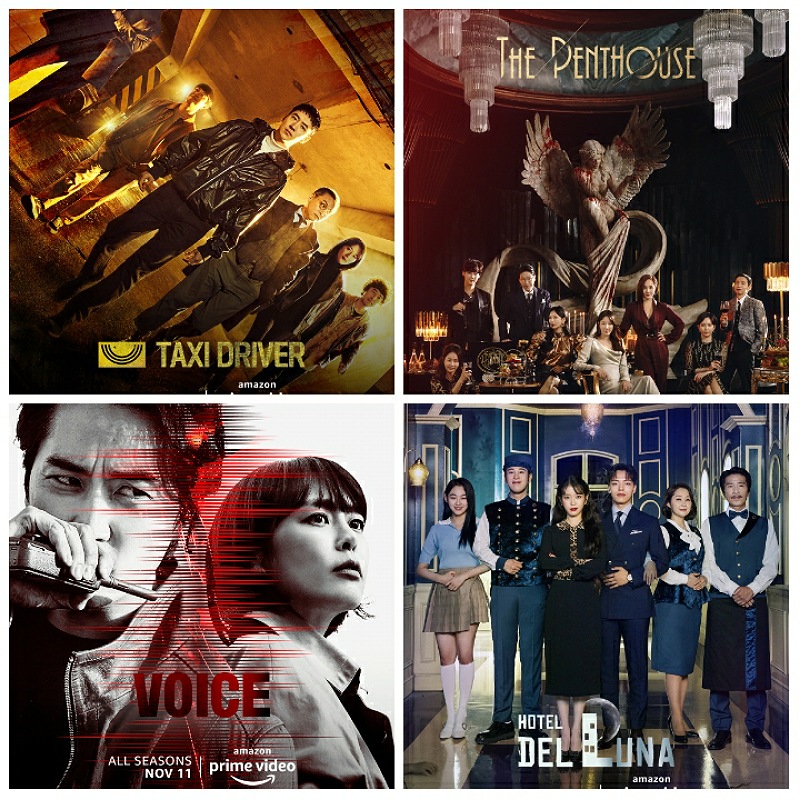
    The shows launching on the service include “True Beauty,” which dwells on the classic makeover of a young high school girl, bullied for her appearance; “Strangers from Hell” that will transport the viewers to a dingy apartment building with shady neighbours and a series of mysterious events, and the new season of a high-octane action-packed series, “Taxi Driver” featuring Lee Je-Hoon and Esom. While the saga of the supernatural will continue with Lee Dong-Wook and Cho Bo-Ah starrer “Tale of the Nine Tailed,” “Hotel Del Luna” will introduce a mix of eeriness and a gripping plotline.

    Prime Video will continue to release Korean titles until the end of November. “The Penthouse: War in Life” season one to three will begin streaming on 28 October, followed by “Mr Queen” and “Secret Garden” on 4 November, “Voice” seasons one to four on 11 November, and “Doctors” whose release date is yet to be announced.

    “Korean content, in particular, has made significant inroads into India’s mainstream popular culture. Our users were highly appreciative of Korean films like ‘Parasite’ and ‘Minari’ on Prime Video – the films saw viewership from across the length and breadth of the country,” Menghani further said. 

    “The announcement marks our efforts to program for evolving consumer choices for immersive content. We will continue to curate a compelling library of content that is diverse, resonates with our audience, and gives them the choice to explore stories from around the world,” he added.

  • Times Network partners with Yupp TV, expands global presence of Hindi channels

    Times Network partners with Yupp TV, expands global presence of Hindi channels

    Mumbai: Times Network on Tuesday announced its partnership with Yupp TV. 

    As a part of the association, the broadcast network is set to launch its Hindi channels Times Now Navbharat and ET Now Swadesh in the US, Canada and key international markets.

    “We are thrilled to expand our content portfolio by introducing our recently launched Hindi news channels to our global viewers on Yupp TV,” said Times Network chief operating officer and executive president Jagdish Mulchandani. “Our best-in-class entertainment and English news channels are strongly positioned in over 100+ countries and we are now excited to present compelling news content in Hindi language for viewers across international markets.”

    Yupp TV is one of the world’s largest internet-based TV and on-demand service provider. With 25,000 hours of entertainment content catalogued in its library, it brings a diverse range of South Asian content with more than 250 TV channels, over 5000 films and 100+ TV shows in 14 languages.

    “We have seen a huge scope for Indian television with Hindi language in these markets and Times Network channels will be a great value add for our brand,” said Yupp TV founder and chief executive officer Uday Reddy. “Yupp TV users can now watch their favourite Hindi content globally, giving them more entertainment options to choose from.”

  • Madison Digital wins AVoD mandate for Zee5

    Madison Digital wins AVoD mandate for Zee5

    Mumbai: Madison Digital, a unit of Madison World has won the advertising-based video on demand (AVoD) mandate for home-grown video streaming platform Zee5. 

    The agency will handle media planning, social media, and creative development for Zee5’s B2B marketing function, said the statement.

    Zee Entertainment Enterprises Ltd chief operations officer of revenue Rajiv Bakshi said AVoD is a fast-growing OTT category and through its strong adtech and martech stack, Zee5 has paved the way for marketers and advertisers to engage with viewers through creative and innovative ways. “As a consumer-first brand, built on the back of our profound consumer understanding, the aim has always been towards providing customised and effective campaigns across multiple cohorts and segments. We have partnered with majority of brands across all industries, for multi-scale advertising, branded solutions and influencer-based marketing campaigns. We look forward to a successful partnership with Madison to further communicate our success story, distinct product offerings and fuel our growth in India,” Bakshi added.

    “Zee5 has seen a tremendous amount of growth over the last few years. The brand has been coming up with impressive originals suited for the Indian market. We are extremely happy to partner with Zee5 in growing the AVoD business for the platform,” said Madison Digital & Madison Media Ultra CEO Vishal Chinchankar.

  • ‘Den of pirates’: Why OTTs should tackle Telegram soon

    ‘Den of pirates’: Why OTTs should tackle Telegram soon

    KOLKATA: There is no dearth of OTT platforms in India, and which one is the most popular is a matter of debate. But what is very evident is Telegram’s overwhelming popularity as an alternative to providing free access to any new movies or shows launched on these platforms. The wide availability and easy access to pirated shows is making the messaging app more appealing day by day to a section of internet users. Even as OTT platforms burn mounds of cash to roll out premium content, such piracy could eat up a significant revenue going forward.

    Soaring popularity of Telegram

    Make a list of all recent popular shows or original movies that dropped on streaming services – Scam 1992, Mirzapur Season 2, Ludo, Naxalbari – and you’ll already find every single one of them on Telegram. Students who don’t earn yet but are keen to watch these programmes, thus, go the pocket-friendly way by downloading the Telegram app. And another section of users who have subscription to a few OTT platforms but don’t want to shell out money to watch just one show on a different, unsubscribed platform, use the app as well. Moreover, the simplicity in downloading content both in terms of mechanism, required time and data – unlike Torrent – has made it a den of pirates.

    “Telegram is a vast source of VOD content; many groups offer updated content of newly released movies and series, even with subtitles in different languages. We have seen certain titles appear on Telegram within a few hours of release. Pirates are increasingly using such groups as a way to easily share, exchange and sell this content without being exposed to malware prevalent on the dark web,” Synamedia chief intelligence manager-security Ted Rose said.

    During a webinar hosted in late October by Indiantelevision.com, SonyLIV technology head Manish Verma also acknowledged that Telegram is evolving as a potential threat. He added that it is very important for the platforms to stop piracy with content acquisition and content production costs increasing – be it for original content or live sports events.

    How pirates use the platform

    Synamedia’s Rose shared that streaming pirates are increasingly using Telegram groups as a way to distribute links to consumers. In fact, streaming of live events can be found on the messaging app as links that direct users to open internet streaming websites. The app can only share files that are stored on its cloud service or links to other sites.

    On the other hand, there are Telegram groups that share stolen M3U links to different subscription-based pirate IPTV networks. These links are updated daily and usually contain information on the content available on each pirate network. Rose went on to share that pirates have taken to Telegram, as well as the dark web, to share and sell OTT subscribers’ stolen credentials.

    “It is really a game of cat and mouse. If there are repeated claims of infringement, Telegram will shut down a group. Removal of a channel can be more difficult for a pirate to recover from, although some pirates can pre-empt this by notifying consumers in advance of backup channels they can use should the first group or channel be removed,” he added.

    Surge in piracy during Covid2019

    With a massive uptick in the use of streaming services during the pandemic, Telegram piracy has also seen a huge surge as well. As sporting events came to a halt in the wake of the crisis, pirates were scrambling for other ways to fill the revenue gap. As a result, OTT providers with premium VOD content and originals emerged as hot targets at that time.

    According to data shared by Markscan, a firm that provides digital IP protection to entertainment companies, piracy on telegram skyrocketed by 1092 per cent, or about 11 times, during lockdown.

    How can the law help?

    Although there are anti-piracy laws in India, it is tough to track the breach happening on Telegram due to encryption. Moreover, it becomes more difficult to take legal steps as the platform itself is legitimate despite the fact that there is pirated content available, according to Kaushik Moitra, partner at Bharucha and Partners.

    Moitra explained that Telegram is not under liability to take pirated content off until someone files a complaint. Hence, it is not possible for Indian law enforcement to actively track the infringement. He noted that the onus is on individual OTT platforms to track whether or not any illegitimate link is being circulated on the messaging app so the latter can take it down immediately. However, he mentioned that Telegram will be put on notice if the OTT platforms opt for John Doe order for pre-infringement injunction.

  • Facebook Watch has its work cut out in video content creation

    Facebook Watch has its work cut out in video content creation

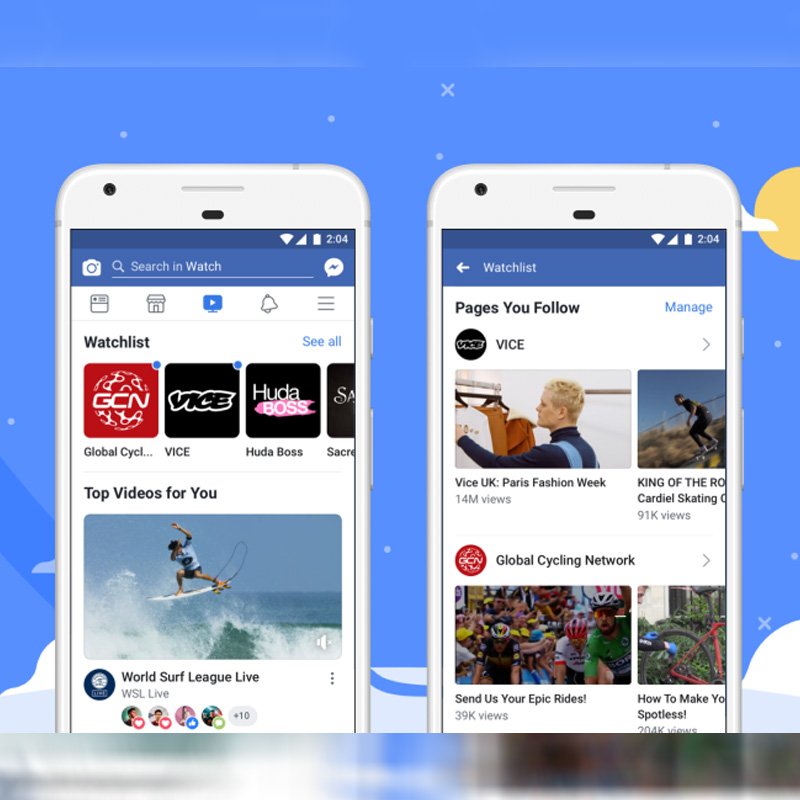
    MUMBAI: Tech giant Facebook, with over 2.2 billion monthly active users, is quickly reshaping the world’s digital ecosystem. Despite Wall Street’s disappointment with its Q2 results, the company generated $13 billion in ad revenue during the period. Now, Facebook has opened up another avenue to increase its advertising revenue by gaining a stronger foothold in the crowded online video space. It is very evident that the Mark Zuckerberg-led organisation is investing in video more seriously than ever before, rolling out Facebook Watch globally. This, at a time when video viewing has become a core digital activity among internet users. A recent Zenith report forecast that global consumers are bound to spend 84 minutes a day watching videos online by 2020.

    While Facebook remains the unquestioned king of social media, Facebook Watch has had its work cut out with the likes of Amazon, Netflix and YouTube dominating the online video space. Despite the challenge, the sizable user base of the platform is a worthy asset to enhance its new product. Moreover, Facebook’s latest offering is likely to delight digital marketers and advertisers.

    Last year, Facebook launched this video viewing hub in the US. Initially, it tested with a limited group of publishers and creators. The early aim was to offer longer form episodic content many of which were created by traditional media and production companies and social media stars. Later, it expanded the range of content as well as options for content creators.

    After experimenting with the service for one long year, the social media giant finally made it available everywhere. As the Indian market holds a very important position in the company’s business, its foray into India’s streaming market is a good move at a time when digital advertisement revenues are growing rapidly. According to KPMG 2018 report, digital advertising saw a 35 per cent growth in FY18 over FY17.

    As YouTube is the largest digital video platform in the country with 225 million monthly active users (MAUs), it is undoubtedly the main rival for Facebook Watch. While YouTube is the go-to place for video, users log on to the social networking platform to connect to peers and family rather than to watch video. On the other hand, users log on to Facebook several times every day but YouTube is not a habit of users. In addition to that, Facebook knows users emotions far more than the Alphabet-owned video hub, making it easier for targeted marketing. Hence, it is certain that the new video service of the platform is going to throw a potential challenge to YouTube.

    “Obvious advantages aside, Facebook will have to up the ante pretty quickly to seriously compete with YouTube. Competition is good for the industry. And this development bodes well for both, advertisers and audiences,” The 120 Media Collective founder and CEO Roopak Saluja commented on the upcoming war.

    Several people are speculating about the future market share of Watch in online video space but what matters more is user engagement. To increase overall profitability, higher user attention is highly co-relatable as it signals they are finding value in the service.

    “Indian digital consumption market is growing at breakneck speed. While market share remains to be one of the top tracked parameters for a brand’s success, one must understand, if the market has grown by 10x in the past two years, adaptation, acceptance and stickiness to the app matters more than the market share,” said White Rivers Media chief executive officer and co-founder Shrenik Gandhi.

    However, Facebook wants to differentiate its new video service with altered formula. It wants to connect people through videos rather than focusing on passive consumption. The aim is to turn Facebook Watch into a service where people can watch videos together, discuss about content, even if they are accessing it from different corners of the world through separate devices. For example, it has features like Watch Party which lets people watch alongside friends.

    “Facebook Watch is a big move which shall lead to more aggressive video viewing habits of Indians. As Mark Zuckerberg had predicted, 90 per cent content on social media shall become video content in a few years, it makes sense to have a separate section dedicated to curated and fan videos. It’s high time brands make video content creation as a part of not only hero strategy, but also hub and hygiene.  Time will come, when brands will have to adapt to videos or perish on social media,” Gandhi commented on Facebook Watch’s impact on digital advertisers and marketers.

    Vidooly co-founder and CEO Subrat Kar also thinks that from a marketing angle, it will be a great medium for advertisers to run a mid roll ad for the right audience, just like on YouTube. Facebook only allowed running ads in the newsfeed. He also adds after global rollout of Watch now the platform is actually taking the option to original content producers.

    “Facebook uses a lot of AI and algorithm to figure out what is the most interesting point of content. While watching a video on Facebook, the ad comes on exactly at the most interesting point. This is one interesting thing you can experience on Facebook, not on YouTube. Facebook knows well what the emotion of an audience is.  Going forward, it will open new avenues for marketers and lot of traction because metric on Facebook is 3-second viewing,” Kar added.

    While established content creators or media houses with a good number of followers can leverage the new service well, it remains to be seen how it will help small-scale content creators to create a fan base from scratch. User-generated content attracts a large number of users to Facebook, even more than YouTube. But since the monetisation model of Watch is not clear yet, it would take time to pick up the interest of content creators.

    “For content creators, the monetisation model for YouTube is very clear. You could be a massive media company or you could be a creator in a room with a fan following, YouTube will take 45 per cent tax on whatever the revenue. I believe Facebook’s rev share split is along the same lines. At the moment, Facebook Watch is more geared towards monetisation for organised content creators and media companies or established content creators who command a sizable audience, whereas YouTube has advantages in terms of building a following from scratch. Will Facebook be able to do the same thing? That is the question. They have everything aligned to be able to, that is for sure,” Saluja said.

    Saluja said that five years ago YouTube had the largest bouquet of content from broadcasters like Star, Sony, Viacom and Zee. They aren’t present on the platform any longer because they did not want to share a good amount of earnings with Google. “So what remains to be seen is whether Facebook will open up easy monetisation for amateur content creators looking to build a fan base. Because, much like they’ve done over the past few years, there are latent possibilities waiting to be leveraged. Facebook needs to open up the tap another notch every now and then,” he added.

    This move also could be Facebook’s secret weapon to drive into live sports streaming more actively. In theUS,  Watch already streams popular sporting events including some baseball and basketball games. The platform even got an exclusive WWE show. Already, the social media giant acquired the right of the streaming premier football tournament La Liga in India. Last year also, the social network made a $600 million bid to acquire digital rights to show Indian Premier League cricket games in the country, but failed. There’s a possibility that the company could get more aggressive about acquisitions now.

    Facebook Watch, the new asset of the tech leader definitely has promising opportunities to emerge as a service to watch videos. With a user-friendly interface, it can attract more consumers also. But the very first thing Facebook needs to do is proper marketing to create more awareness about the video service, especially when users from its domestic market are also not totally aware of it. It can be said YouTube’s new rival has a long way to go.

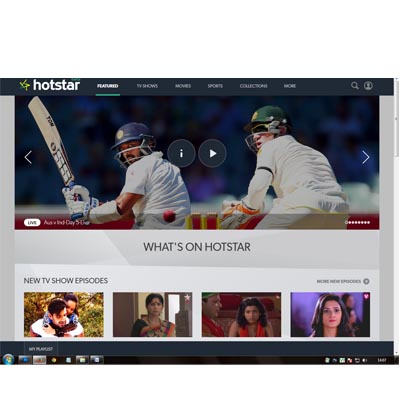
  • We are fundamentally changing storytelling: Hotstar CEO Ajit Mohan

    We are fundamentally changing storytelling: Hotstar CEO Ajit Mohan

    Ajit Mohan is not your flashy kind of guy. Quiet, unassuming normally, he opens up and the words flows easy when it comes to talking about his pet project—the fast-growing Star India-owned OTT service Hotstar. Over the past three years, he has gradually—with the support of Uday Shankar and Sanjay Gupta and, of course, the Murdochs—grown the service, setting new download, watch time and quality records.

    With huge money riding behind the cricket rights that Star India has acquired, Mohan is going to play a crucial role in helping monetise what some are calling very expensive acquisitions. Moreover, the global big boys are gearing up to carve out huge slices of India’s one-billion-plus mobile populace. Netflix, Amazon, Facebook, YouTube and JioTV are the majors with deep pockets that will pull out all the stops in terms of content—local and global originals—to gain traction. But Mohan, while respectful of the other players, is quite clear that he and his team will be digging in their heels and will battle without yielding any quarter.

    He was in Bali at APOS and he had a conversation with MPA’s Vivek Couto on stage. Excerpts from the interview:

    So, what’s the latest that has happened that has got the team excited?

    We crossed 7.1 million concurrent users last week. We are gunning for the largest number of concurrent users online. To the best that we know, it is eight million. And that is the number we are aiming for in this IPL. At 10 million, many elements of the internet ecosystem will be tested and challenged. We want to get to eight million before we get to 10 million. If I circle back three years ago when we launched Hotstar, 1.5 million was what was testing what the internet ecosystem could take. I think a lot of different parts of the networks are really geared up. I think we are a much better tech company than we were three years ago. I do believe there is a path to 10 million but I don’t want to jinx it.

    Tell us a little bit about your journey at Hotstar.

    A good friend of mine who works for one of the global tech companies told me in 2014 when I was about to take up the position: “Many broadcasters have gone down this path. You should try it. Because it’s good to try things in life. But in six months, you will probably figure out that this is probably not for a media company.”

    And, for me, if I step back and think about what’s happening in Asia, a few things stand out. I think the global tech majors have done an amazing job in shaping many markets. But I think they have also been quite successful in seeding this narrative that there is no future for old media companies. We are establishing that, especially at Hotstar, that the narrative is not true. That if you really build a service that has its DNA in storytelling and you build technological capabilities around it. I think, the future is very much for people who are grounded in stories but who have the aggression and forward-looking approach in building real technical capabilities. And I genuinely believe that one of the myths that has been broken is the belief that it would be short-form content that would work on the mobile. And most of the world is seeing the internet for the first time on a mobile. I think that has been turned on its head. The consumers’ appetite is for great stories; it’s for curated long-form content, the kind of stories that have worked for the last 40-50 or 400 years. And for me that is the big proof of concept that Hotstar has provided for the rest of the world that it is for us to shape this future. That we are very much at the centre of the story.

    What is the transformation that is taking place at Hotstar?

    While our DNA is in storytelling, we were quite conscious that we needed to become a technology company. Over the last three years, we have worked to build serious technological capabilities inside the company. I don’t think it is possible to outsource technology or to build a service by a patchwork of technology partners. Today, we have more than a 100 engineers who work at Hotstar. We are looking at doubling that in the next six to nine months. And, for me, even the scale that we are able to do today is because we have people inside the company, who are tuning technology to address the scale that’s being driven by the demand from consumers.

    I think the second point is I do believe that great stories shine, one way in which we have been different than even some of the pioneers in streaming is we did not look at stories from the lens of “it’s the same content and it is on a different screen. Or it’s the same content that’s on broadcast that is available on demand.” I think we have looked at it saying we can change the format of storytelling. We can create new experiences. As an example, in cricket, what we did was we created a new proposition where consumers could come and watch a match but they could also play a game while watching the match. And more than 20 million people who have taken part in the watch and play feature. So, all of a sudden, the proposition is not watching the same content, it’s fundamentally changing storytelling. That is core to what we are doing at Hotstar.

    Unlike other tech companies in the world, I don’t think we have the desire to do everything. We have not turned around and said look now we are really doing well in one genre, now let’s get into food; and let’s be a food app, an ecommerce app. We believe the biggest opportunity is in video. And it fundamentally is creating experiences around video, and we have obsessively been focused on doing that one thing really well.

    What kind of content is being consumed nowadays? Is it primarily sport?

    We have been more vocal about the sports numbers, but the reality is that most of our consumption is on TV shows and movies. Then there are days when there is a large cricket match, the scale is dramatic for that day. But if I look at it over a year, then 75-80 per cent of our watch time still comes from outside of sports. We’re not a sports platform. What’s special is that we are bringing together TV shows, movies, sports, news—all on a single platform. In less than one year of introducing news on our platform, we are already one of the largest video destinations for news in India.

    One of the interesting challenges we have is we have made the choice to put everything in a single service and I think that’s a challenge some of our peers may not have; we have a lot of diverse content. And as much as one of our objectives is to match the right content to the right users, one of the challenges we face every day is the risk of alienation. Because India is not a single country with the appetite for the same stories everywhere. For instance, if we serve a Tamil movie to someone whose language is Hindi, you are signalling to the user that you don’t understand him.

    So, we have an interesting technology challenge of leveraging the scale of bringing everything together and yet create a platform that a set of users feels is deeply personal and intuitive.

    We are finding that at the beginning of Hotstar a lot of people were coming in and looking at it as a catch-up destination. They would see an episode of a TV show if they did not watch it on TV. More and more people were introduced to the proposition of the platform, to start looking at it as a primary screen. Today, hardcore users are watching as much time in a month or more in a month as much as the core user of that television show on broadcast TV. It no longer is a catch-up destination. For a lot of people, it is the primary screen.

    What is the demographic of the user today?

    Maybe it is no longer conventional wisdom. There is a belief that content is for millennials, whoever they are, and in Asia almost every one is a millennial, it is a very young audience. The content on TV would be very different from what works for on demand or on the mobile. The average age in India is 26-27, they are young audiences. What works on TV works well on Hotstar as well.

    I think it is fundamentally about great stories. There is no format for millennials that anyone has cracked so far that stands out. The second thing that does stand out— maybe because we have cracked some of the classical streams of distribution in the cable and satellite industry—we are not seeing that people are consuming one set of content. We have consumers who are watching Game of Thrones as well as a Tamil movie or Homeland and a Hindi TV show. I think some of the stereotypes that have been created in broadcast television is that there are users for a certain kind of an Indian TV show; there are users for an American TV show.

    We are finding that those boundaries, those stereotypes don’t exist. People’s appetite does not seem to conform to the constraints we have set from a distribution point of view in the old world. We are seeing, on average, between 45 and 60 minutes a day in terms of people coming in and spending time. And that’s where I think of the constraints of three years ago when data costs were high especially relative to what they were used to paying for pay TV and the bandwidth was very patchy. That’s changed: there is no fear of data charges anymore. If you leave aside what we in India call masala content, our belief is that we are doing watch time every day on Hotstar maybe the same or more than what YouTube does in India. For me, it is a big shift from what the environment was three to four years ago.

    How’s the advertiser client looking at you following your direct to brand strategy, which has potentially cut out the agency?

    The proposition that we have offered to the advertisers for the past couple of years, we believe it works from a consumer point of view as well. Brands have been built on TV because consumers were paying attention. And in the transition from linear television to video-on-demand services, a lot of advertisers got excited about the great data that was available: you can slice and dice audiences, you could target specific audiences. But I think what was lost in that process and I think now there is consciousness of that: you had a lot of awareness about of your users, you could play around on dashboard, but those consumers are not paying enough attention. It is difficult to pay attention to a two-minute video when you are scrolling around stuff. 

    And, therefore, our big pitch to advertisers was this marries the best of what worked for TV, real engagement, with the audience understanding that comes with digital. And if I bring together the best of both worlds, we have a proposition for you as an advertiser that is fairly unique.

    It’s not been easy. I think the tech companies have done a fabulous job of building that— some of them only self-serving. It’s been our mission to tell people that it is possible to build brands on digital by bringing the power of engagement and data.

    We launched the Hotstar ad server a few weeks ago that allows smaller advertisers to connect with us directly. Our objective is not to cut out the agencies. Agencies have been great partners for us. They have had huge belief in what we are doing. But I believe Google and Facebook have done a phenomenal job; you do have to have a platform for smaller advertisers who may not have the scale of the marketing spend or even the capabilities to hire these types of agencies. It is early days and we are saying that a small advertiser in a small town of India or an early-stage start up should have the same access to Hotstar as the largest marketer, which is Unilever.  

    We have been successful in commanding a premium because of the advertiser proposition I spoke about. But I think as the market expands dramatically, I think it is an open question where will CPMs land.

    What is your view on subscription?

    On the subscription side, just as there was skepticism that India was ready for online streaming, there is skepticism whether Indians will pay for it. And we are taking on the mantle and as a leader we are saying: if you create differentiated content, we do believe subscription can take off in India. And I think that party started with American shows and movies. We do believe that we have the best English proposition in India. We believe that the best American films and TV shows, and live sports and local TV shows being made available to users before they watch on TV, I think we are going at it a lot more aggressively. The early focus of the first three years was on building the platform, getting tech right, building up the scale. We have 15 million users this month, that is massive scale.

  • ‘Regional VOD, cashless subs among 2017 trends’

    ‘Regional VOD, cashless subs among 2017 trends’

    MUMBAI: The video on demand streaming industry in India is only blooming, with a host of developments in this year. The digital eco-system has seen production houses like Balaji Telefilms, Indian broadcasting networks such as Star India, Sony Pictures Networks, Viacom18, Zee, etc and few international players like Netflix, Hooq, Amazon Prime, Spuul, etc entering this space which caters to the varied tastes of a very heterogeneous Indian audience. The demand for customized viewing of digital content in India is only increasing. Various factors such as smartphone penetration, launch of 4G, data cost coming down, better infrastructure, diverse library of content offerings not only in Hindi and English but also in several regional languages, etc are the key factors that have driven the rise  of video content this year.  

    In the year 2017, according to the Akamai & NASSCOM report on the future of internet in India, the mobile video content to grow at an 83 per cent CAGR in next 5 years. OTT has not only arrived, it is here to stay, and the advent of 4G and improved bandwidth speeds have only re-enforced this. With increased competition between the video on demand apps, regional content that appeals to particular states will be the key to capture user share.

    Online video subscription numbers fluctuate dramatically every month. The number of unique online video viewers will grow from 66 million in 2015 to 355 million in 2020. E-payments and mobile wallets are getting more popular among the millennials in the country. Digitization of cash will accelerate over the next few years.

    Spuul India’s Rajiv Vaidya opined:

    Cord Cutting

    Today’s viewers have a choice of a host of viewing platforms to choose from, including digital television, internet, tablets and smartphones. Revolutionary app-powered devices like Roku, Apple TV, Chromecast and other streaming devices lets viewers watch their favourite shows across a variety of screens. According to the Akamai & NASSCOM report on the future of internet in India, the mobile video content to grow at an 83 per cent CAGR in five years. Every major television manufacturer now offers “smart” television sets, with integrated internet features that provide access to a host of on-demand streaming media directly. OTT has not only arrived, it is here to stay, and the advent of 4G and improved bandwidth speeds have only re-enforced this. This surging popularity of OTT platforms has challenged the exclusivity that linear television enjoyed till quite recently. Broadcasters have begun witnessing the market trend of “cord cutting”, with a sizeable segment of viewers tuning out from cable subscription and completely switching over to OTT platforms. In fact the millennials have grown up watching shows online, and will possibly never subscribe to paid television services due to multiple streaming options now available and multiple generations that are accustomed to on-demand services. Looking at trends in the US, 2010 was the first year that regular pay television saw a quarterly decline in subscription numbers (this was reported by WSJ, back in 2012). We’re still a while away from that but a small pocket of users in India (usually in the larger cities) are exploring their options when it comes to cord cutting.

    Let’s go regional

    With increased competition between the video on demand apps, regional content that appeals to particular states will be the key to capture user share. According to the Akamai & NASSCOM report on the future of internet in India, about 75% of the new internet users consume content in local language. The real trick in winning the market is to capture the Tier III towns and the rural areas. According to the Frost & Sullivan report a large percentage of video-on-demand viewership in India is fragmented across states and languages. We have seen a lot of growth in regional content on the video on demand apps, fuelled by demand from both local viewers and the international diaspora. According to Internet and Mobile Association in India (IMAI), the Internet user base will cross 500 million by 2018, with rural Internet users alone being almost 210 million.

    Micro transactions and cashless transactions

    According to the Frost & Sullivan report there are 66 million unique connected video viewers in India, of which 1.3 million are paid video subscribers. Online video subscription numbers fluctuate dramatically every month. The number of unique online video viewers will grow from 66 million in 2015 to 355 million in 2020. The country is heading for a cashless economy with a colossal change in the way netizens make their day to day transactions. E-payments and mobile wallets are getting more popular among the millennials in the country. Digitization of cash will accelerate over the next few years. Non-cash payment transactions, which today constitute 22 per cent of all consumer payments, will overtake cash transactions by 2023. Digital payments instruments will drive the growth in non-cash payments, according to Google BCG Report. Micro-transactions will form a substantial portion of the industry, with over 50 per cent of person-to-merchant transactions expected to be under INR 100 the study said. The report predicts that the value of remittances and money transfer that will pass through alternate digital payment instruments will double to 30 per cent by 2020.