Tag: Video monetisation

  • Merzigo has reached the leading position in Turkey with a 40% market share, says Yigit Dogan Celik

    Merzigo has reached the leading position in Turkey with a 40% market share, says Yigit Dogan Celik

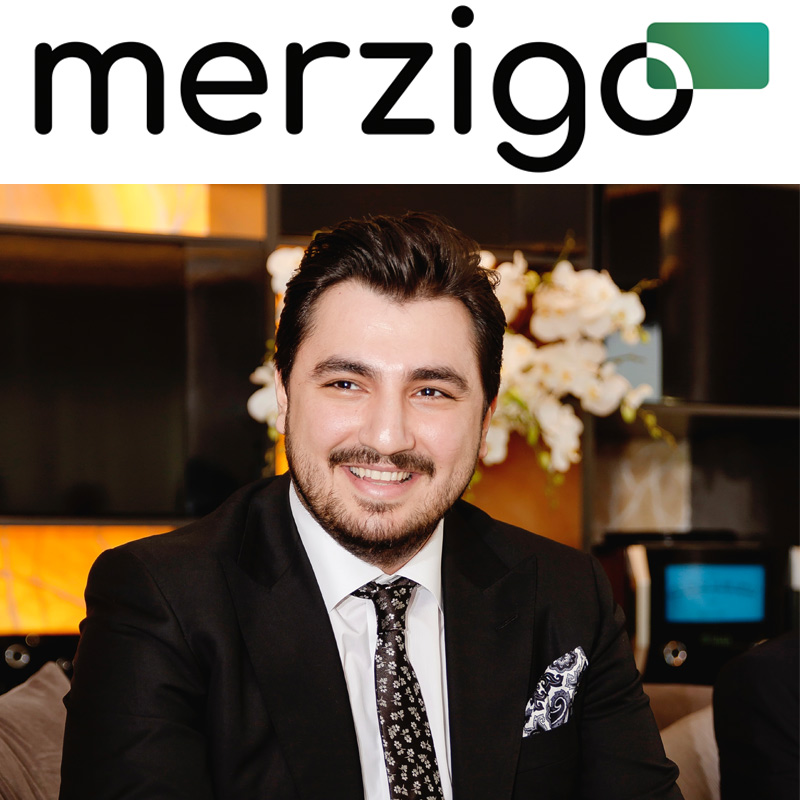
    Mumbai: Merzigo, a leading Turkey-based technology company that offers video monetisation and channel management solutions for producers, broadcasters, and distributors in the global advertising-based video on demand (AVoD) market, has been a key player in presenting riveting content across the globe. The man behind the success story of the firm is Merzigo’s chairman and founder Yigit Dogan Celik.

    Born in 1988 and a graduate of MEF International School (in Istanbul, in the year 2007), Celik studied law at the University of East Anglia and business administration at Regent’s University (in the UK, in the year 2012). He kicked off his career in 2014 as a country representative at Havelsan, a prominent software and development company.

    In 2015, he went on to establish his own business and serve as the co-founder and head of sales at Merzigo. He became the chairman of the board of directors in 2019 at the content syndication company.

    Celik also continues to draw attention in Turkey and Europe with Key Networks Group’s continued investments in the OTT industry, production, and distribution. PowerHouse, an incubation centre under Key Networks Group, regularly invests in different technology and AI projects.

    He took important and strategic steps that contributed to the level of success that Merzigo has achieved today. His decisions led the organisation towards leadership in the digital marketing sector, both domestically and globally.

    In an interview with Indiantelevision.com, Celik discusses Turkey’s content market, Merzigo’s presence at Mipcom 2022, his interest in Indian content, and much more.

    Excerpts:

    On the objective behind such a big presence of Merzigo at Mipcom 2022

    Merzigo is a video monetisation and digital solution company for content rights owners, production houses, and broadcasters across the globe. We are already doing business with clients in the Americas, Europe, the Middle East and North Africa (MENA), and Asia through our offices in Istanbul, Mumbai, and London.

    At Mipcom 2022, our main goal is to focus on initiating new partnerships with potential clients and strengthening our position in the markets we are already active in. Our aim is to reach out to the ever-increasing base of partners and showcase our strong content offering. We expect to increase our already strong footprint globally and create stronger and more meaningful partnerships with our existing clients and newer prospects. We aim to further expand our global clientele so that Merzigo can become the leader in the AVoD market.

    On achieving the success you have at 34, about your journey pre-Merzigo and after setting it up

    Merzigo was founded in 2015 as a response to the market’s video monetisation needs. Our technological approach, expertise, and our own solutions helped us rapidly increase our market share and provide our domestic and international clientele with the best services available. As per our strategies, we have reached the leading position in Turkey’s market with a 40 per cent market share.

    Also, in line with our global vision, we continue to increase our market share to strengthen our position. As of 2022, Merzigo continues its activities under the newly restructured Key Networks Group, reaching a total of 400 employees. Merzigo’s leadership and knowledge in the digital sector’s monetisation and knowledge are elevated to a new level by these global strategies.

    On the Turkish adex market – whether it’s small or large, how advertising has evolved over time, especially in terms of digital video and AVoD, and how it is growing today

    Merzigo has a global presence. You can say that we are present wherever YouTube is present. We have been in the AVoD business since our establishment, and we have witnessed the market’s growth towards a more positive stance towards the AVoD model. We believe this shift will only accelerate due to the global landscape and the growing importance of accessibility. As you know, even major subscription video on demand (SVoD) platforms are considering AVoD plans that include advertisements. Hence, we believe we are on the right track. 

    On witnessing a tapering off of CPMs post opening up after the lockdowns

    Cost per mile (CPM) is a good indicator of how valuable advertisers find your videos and audience for achieving their own business goals. Your revenue will not be equal to your CPM times your views because CPM reflects what advertisers pay, not what you earn. Advertisers can control which geographies they’d like to reach with their ads. Different locations will have different levels of competition in the ad market, so CPMs will vary by geography.

    If there’s a shift in where most of your views are coming from, you may see a shift in the CPM. For instance, if you previously had views from a geography with higher CPMs but are now getting more views from geographies with lower CPMs, you may see a decrease in your CPM.

    On partners’ asset monetisation that you are managing on Turkish digital video platforms, which ones have managed to generate maximum revenue and why, and why have the others failed

    Survivor Turkey, The Voice Turkey, Turkey Got Talent, Fox TV in Turkey, and globally published Turkish series such as El Sultan (Magnificent Century), El Poder del Amor, and various international series channels launched in India, and from Spain, we signed a deal to monetize RTVE series are among our top channels.

    We also took over the management of some of Turkey’s leading free TV channels, multiplying their revenues per year by 10-fold during our first year. We are providing content in the following languages: Turkish, Spanish, Arabic, Romanian, Portuguese, English, French, Serbian, Italian, Urdu, Hindi, German, and Polish. Our content offerings are a perfect blend of emotion, drama, and variety, which are synonymous with almost all cultures in the world.

    On explaining your interest in international content – especially Indian

    Gripping stories, powerful characters, and edge-of-the-seat entertainment will ensure the viewers’ loyalty and stickiness. We aim to push the boundaries of entertainment by presenting new concepts and engaging content across genres to our audience. We pick up topics that are relatable to almost all cultures in the world and present gripping stories that are a perfect blend of emotion, drama, and variety. We bank on stories, which at their very core are stories about humans – their emotions, challenges, love, relationships, victories, defeats, and courage.

    Our strategy is to strike a good balance of content that works well with our audience and experiment with new and disruptive ideas constantly. And India being one of the world’s oldest and most diverse cultures, its series are a perfect blend of emotion, drama, and variety, which are synonymous with almost all cultures in the world. We believe there is tremendous headroom for growth for international content – and particularly India content – and hence we look at this as one of the key priorities for our content distribution.

    On your app being currently gestated: how will it be different from others, and what is the competition like

    ‘Baslat’ (meaning “start”) is our own OTT AVoD platform, which will be launching in Turkey in January 2023 on all platforms such as the web, phones, and smart TVs. Baslat will have an entirely different vision and intend to stand out in the AVoD market, offering an innovative and unique viewing experience for audiences in Turkey, as the viewers will be able to access premium content & original production for free. SVoD platforms in Turkey are increasing with new players entering the market, increasing the production budget and cost.

    Today, there are more places than ever to consume content. There’s a huge demand for variety in content, and audiences are more interested in the type of content and stories they can relate to. With the rise of OTT players, our focus is on how we can meet the needs of our viewers and focus on delivering different concepts and good stories to cater to the needs of both live and on-demand videos across different devices.

    On the target audience, and how will you monetise it

    We have always adapted to market demands and expectations, maintaining the standards that we have established over time and delivering high-quality content to audiences.

    The series dubbed in Turkish is a perfect blend of emotion, romance, family, and socially relevant issues that will immediately resonate with mainstream audiences. We will ensure content for all age groups.

    The most important issues are viewers’ habits when it comes to video consumption as well as piracy. We will be encouraging people to watch the content they wish to watch on a legal yet free platform. Our revenue model for Baslat will be through advertising sales.

  • Insider’s view on how to bridge video monetisation to optimise revenues

    Insider’s view on how to bridge video monetisation to optimise revenues

    Mumbai: Most common reasons for video revenue loss for publishers in India range from factors including inventory control, underutilisation of video advertising, traffic quality and not taking advantage of the latest technologies available. 

    Some of these issues and their solutions were discussed during a webinar- ‘Bridging Video Monetisation to Optimise Revenues’ organised by Indiantelevision.com in association with Aniview on Tuesday. The virtual panel discussion was moderated by Indiantelevision.com Group founder, CEO, and editor-in-chief Anil Wanvari.

    Experts discussed, how better content experience, fuller transparency, a self-service platform with better control on the video player, along with having an experienced team to operate the platform could drive higher revenues.

    According to end-to-end video advertising and monetisation solutions provider Aniview, business director-APAC, Matthew Bray, currently India is the fastest-growing internet advertising market in the world, and video remains the most popular ad format. “It’s the sixth-largest market in consumption of video ads,” said Bray about the video advertising landscape in India.

    Amongst the reasons for the loss in video revenue, Bray cited poor content experience, heavy player, player loading issues, inventory loss, lack of transparency on traffic insights among others. Non-adherence to Google policies and underutilisation of Google Adx are other primary causes of video revenue loss, Bray said. “Many publishers in India leak video revenue & underutilise their own video content on a regular basis,” he said, adding that full control over a video player can lead to an increase in revenue. “Google will likely remain the dominant SSP for video.”

    According to HT Digital’s Prasad Sanyal, underutilisation of inventory plagues almost all publishers in India. “We are looking at avenues where we can have more control over our video assets & monetise them better,” he added.

    By running a video player in these placements publishers can make better use of their own video content to engage their users and create more ad opportunities. While it not only allows full control over ad placements, player behaviour, and ad breaks, it leads to the creation of better quality traffic that drives higher CPMs. When deployed correctly this can even lead to significant revenue lifts. Aniview cited Jagran as a successful case study, as it has more than doubled its revenue on some ad placements on article pages by deploying Aniview.

    “With Aniview we got a white label solution. There are the cities, and tier-2, tier-3 segments too, for all of which we need to create separate segmentation as per the category,” shared Jagran New Media, AVP and head-ad monetisation and strategic partnership, Dinesh Joshi. “We also produce a lot of text content, but definitely video is going to be big in the near future. Jagran is working on branded content on the video side, we have to work on the monetisation front too.”

    HDFC Bank, vice president, and head- digital marketing, Jahid Ahmed, said, regulations apart from basics like viewability can give a lot of confidence on rolling out a video across platforms. Also, the decision on which video is to be used where- that also plays a significant role, he added.

    Social Beat co-founder and director Vikas Chawla highlighted the need to scale up the inventory for advertisers to see it as a viable option to do large campaigns.

    “Most of us have invested in analytics significantly, but we have a long way to go before advertisers get comfortable with us,” added HT Digital Streams’ Prasad Sanyal.

    Manorama Online’s general manager (digital) Sathyajith Divakaran shared, “We have an OTT platform which is exclusively video-led and we only encourage video ads. We are clear in what we can offer as ads as we know which shows attract a certain kind of audience. It is just that the video inventory available is not utilised fully despite having a number of partners on board.”

    According to Matthew Bray, Video is going to keep growing in India & in order to sell the inventory created one needs to have a system that they can properly control. “Then you see better yields and more video views because you can control the content,” he said, adding that there are exchanges in India that are having trouble moving video content because there isn’t enough inventory being created.

    Sharing that increasingly they are evolving to a point where they know what to do with their inventories, HT Digital’s Sanyal said, “At HT we are getting to a stage where we should be able to drive more revenues out of videos & also do better videos in the process. We hope to deliver better value to our readers and viewers.”

    HDFC Bank’s Jahid Ahmed said that every platform is evolving in its own space and it’s great to see such platforms coming up that helps publishers in their cause. He added, “It’s right to outsource such expert work instead of all platforms trying to do everything by themselves. For discoverability of our product-led videos, if some platform smoothly integrates with our CMS & gives good info to our users, then why not,” added Ahmed.

    Talking about the near future Ahmed said, “Digital is growing significantly at 35 to 40 per cent Y-O-Y, and within digital, video-led content consumption is one key aspect we are focused on. Video along with a combined vernacular, with personalised elements like geography/ gender, is the way to go.”

    All the panelists were in agreement on the significance of video content in today’s times.

  • Webinar: Bridging video monetisation to optimise revenues

    Webinar: Bridging video monetisation to optimise revenues

    Mumbai: Websites in India lose revenue due to various factors including inventory control, under-utilisation of video advertising, traffic quality, and not taking advantage of the latest technologies available. Although Google is the largest sell-side platform in India, many publishers do not fully follow Google policies. Many publishers also do not even properly utilise their own AdX account to run video ads, resulting in consistent revenue leakage.

    Some of these issues, and their solutions will be discussed at the webinar – ‘Bridging video monetisation to optimise revenues’ – being organised by Indiantelevision.com in association with Aniview on Tuesday, 3 pm onwards.

    The virtual event will be attended by Jagran New Media, AVP and head-ad monetisation and strategic partnership, Dinesh Joshi, HDFC Bank, vice president and head- digital marketing, Jahid Ahmed, Aniview, business director – APAC Matthew Bray, HT Digital Streams, chief content officer, Prasad Sanyal, and Social Beat co-founder and director Vikas Chawla. The discussion will be moderated by Indiantelevision.com Group founder, CEO, and editor-in-chief Anil Wanvari.

    Apart from discussing the most common reasons for revenue loss for publishers in India, the webinar will throw light on the latest Google Policy in India, publisher Ad Ops, the latest video technologies, and how publishers can better utilise their own AdX. 

    The role of Aniview, which provides end-to-end video advertising and monetisation solutions will also be discussed. The virtual event will also highlight how a self-serve player platform like Aniview can address some of these challenges that publishers tend to face. Publishers can make better use of video players to self-manage traffic that is typically sold as out-stream inventory. By running a video player in these placements publishers can make better use of their own video content to engage their users and create more ad opportunities. When deployed correctly this can lead to significant revenue lifts.

    To join the discussion, register: https://indiantelevision.com/events/aniview/event-platform/registration.php

    The event will be live-streamed LIVE on YouTube and other social media handles of Indiantelevision.com.