Tag: video

  • ITV Network strikes a festive chord with Rasrang ad engagement platform

    ITV Network strikes a festive chord with Rasrang ad engagement platform

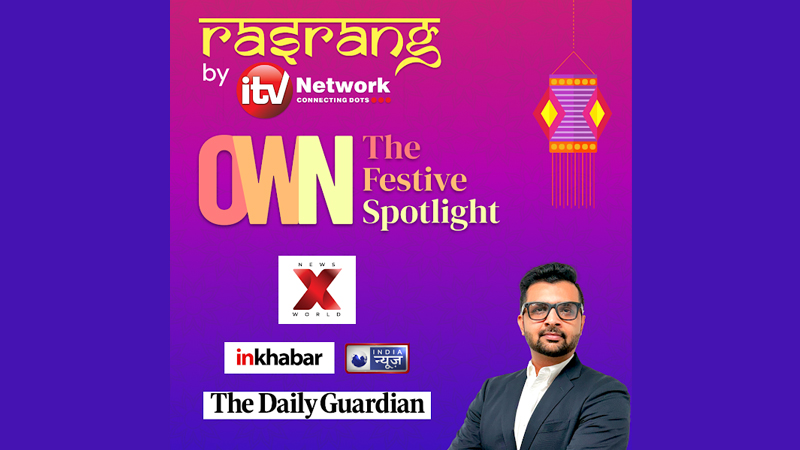
    MUMBAI: Festivals in India aren’t just about lights, laddoos and laughter, they’re also prime time for brands to shine. ITV Network has now rolled out Rasrang, a festive-special ad engagement platform designed to help advertisers hit the right note with over 100 million users across India. With Navratri, Diwali and Christmas just around the corner, the timing is more than auspicious.

    Rasrang blends data-driven targeting with editorial storytelling, giving brands both cultural resonance and measurable impact. Built on the scale of ITV’s flagship platforms including Newsx, Newsx World, India News, Inkhabar, The Daily Guardian and The Sunday Guardian the offering provides a multi-platform push across web, social, video and marquee live events. Brands can tap into 8,500 plus audience cohorts spanning entertainment, auto, BFSI, health, fitness, fashion, travel, sports and tech, while leveraging premium ad formats like Display, Video, Spotlight and AdTalk.

    What sets Rasrang apart is its promise to deliver not just eyeballs, but ROI with recall. According to iTV, its digital properties already generate 100 million impressions monthly across websites, social media, YouTube and events. This reach, paired with Rasrang’s precision, positions campaigns to ride India’s festive frenzy while staying relevant to regional cultures and consumer aspirations.

    The ethos remains rooted in iTV’s DNA of fearless journalism, incisive analysis and credible storytelling, now extended to brand partnerships. As the festive calendar kicks into high gear, Rasrang pitches itself as the stage where advertisers can not just be seen, but remembered, a platform where data meets diya, and campaigns celebrate alongside the country.
     

  • Reverie Language Technologies’ video campaign appeals for language equality

    Reverie Language Technologies’ video campaign appeals for language equality

    Mumbai: Reverie Language Technologies, a leader in Indian language localisation and user engagement technology solutions, has launched a video campaign to raise awareness about India’s digital language divide.

    Today, enterprises want to engage with the next billion digital citizens, but a majority of the non-English-speaking Indian population may find the internet has little to offer in the languages they speak at home. Reverie is bridging this gap with its state-of-the-art technology, powered by AI and ML, by providing all 22 official Indian languages with a presence on the Internet.

    The video highlights how most of the Indian population is unable to fulfil even their fundamental rights like the right to education and the right against exploitation because the internet is really siloed for them.

    The brand campaign is headlined by a video delineating how demarcated the Indian internet is for Indian language-literate Indians, limiting basic rights for almost 90% of the population.

    The New Education Policy 2020 recognises all Indian languages as ‘Bharat Bhasha’ and acknowledges the role of mother tongues in schools as a cornerstone in enabling access, retention, and preventing dropouts. Reverie Language Technologies aims to facilitate this by ensuring that the content is contextually localised, keeping in mind the aesthetics of Indian languages.

    “The video campaign is our humble effort to bring out that while the growth of the Indian Internet rides on our Indian-language literate digital citizens, the kind of Internet they deserve is a far cry. If we view the larger picture, the citizens are either categorised as browsers or ones that depend on OTP or QR verification, depriving them of the seamless Internet that English-literate citizens experience. Despite the massive strides India has made in the digital world, our natively literate citizens are still struggling to bridge the digital language divide and reap the benefits of the Internet and all it has to offer. Significant changes will not occur if languages on the Internet are not implemented through India-owned standards for our native languages. Through our campaign, we hope to build an equitable Internet for India,” said Reverie Language Technologies co-founder and CTO Vivekananda Pani.

    Amongst the nine pillars the government’s vision of a ‘Digital India’ infrastructurally thrives on are data, devices, and languages. With the advent of smartphones and cheap data plans, the first two have been achieved. However, language equality is the key to digital transformation – it must be accessible without any entry or engagement barriers.

    Imbalances in the information available in different native languages online affect who and what gets represented, and by whom. By partnering with businesses and government organisations, Reverie is filling this void by retaining the essence and nuance of all 22 official Indian languages across industries such as banking, fintech, education, healthcare, and gaming.

  • Inuxu Digital Media Technologies appoints Rohan Joshi as head of partnership for Adgebra

    Inuxu Digital Media Technologies appoints Rohan Joshi as head of partnership for Adgebra

    Mumbai: Adding fuel to the rocketing speed of its expansion in India, Inuxu Digital Media Technologies has appointed Rohan Joshi to strengthen Adgebra’s strategic positioning in the adtech industry.

    Exclusive advertising strategies are being adopted by named and fabled digital brands in 2022–23. The advertising industry is currently exploding with competitive opportunities. Inuxu feels that it is the right time to introduce Joshi. In his new role as head of partnerships at Inuxu Digital Media Technologies, Joshi will strengthen advertisers, media agencies, and brands’ relationships and revenue streams for Adgebra.

    He has experience of more than 12 years. These 12 years are a growth story of when and where he developed media industry relationships within Mumbai and many non-metro markets in the West India region. Joshi previously led the Pune & ROM portfolios in the West region for Times Internet. He has outshined with intrapreneurial qualities that play an imperative role in building a team and the company’s position in the digital ecosystem.

    The digital spend in India is projected to be more than Rs 35K crores by 2023, and it is expected to boom in the next five years. Innovation, targeting, delivery, and ROI are the critical differentials with Adgebra, and that’s what most brands are looking for. Introducing a partnership lead will enable the organisation to better communicate its differentials with the brands, advertisers, and agencies and will bring lasting value to the table.

    On his appointment, Joshi quotes Adgebra’s position as, “Adgebra is a fantastic ad-tech platform that has distinct local attributes as compared to many other platforms competing in the market currently. It is a leading multilingual-multimedia ad platform. The young and vibrant leadership team, especially the boundless motivation provided by Rohit Bagad, Sumeet Dubey, and Shashikant Anpat, led to a perfect mix of innovation and audience targeting, which is reflected in the product. This makes me want to work my tooth and nail towards closing valuable partnerships for the platform. Inuxu, being a large organisation, has a great company culture with a distinguished work environment that allows me to independently contribute more than I have.”

    “Adgebra is known for its performance with high-impact ad units, and I am looking to promote these and also create invaluable partnerships. I will be working closely with the new-age marketers and onboarding them for the innovative features across metros and the emerging markets in India,” he adds.

    Welcoming Joshi into Adgebra’s leadership team, Inuxu Digital Media Technologies chief business officer Sumeet said, “Adgebra is strengthening its position as India’s largest multilingual native advertising platform. Joshi’s position presents brands, agencies, and advertisers with an opportunity to have a direct view of the best of Adgebra and its unique offerings. We investigate our potential to further scale the business and reach local brands by focusing on these relationships. With Joshi coming on board, we are sure to accelerate growth and build progressive partnerships. With his unique self-motivated, proactive, and action-oriented personality, he is certainly a stimulus to our partnership’s forefront. This appointment reinforces the company’s belief in the potential of Indian markets and is expected to propel regional demand.”

    Adgebra empowers businesses to connect, engage, and win the trust of billions of digital consumers. Adgebra caters to native, video, and rich media ad formats and presently reaches over 500 million monthly active users via its network of 2000+ partner publishers managing 30 billion+ monthly ad serving opportunities.

    Adgebra is the only digital ad tech platform that supports and serves ads in 10+ different Indian regional languages. Adgebra is monetizing millions of daily active users for top publications and news aggregators like DailyHunt, Sharechat, ABP, Lokmat Media, TV9 Network, Manoramanews, LiveHindustan, NavbharatTimes, Maharashtra Times, and more.

  • It’s Network18 ahoy for Palki Sharma as managing editor

    It’s Network18 ahoy for Palki Sharma as managing editor

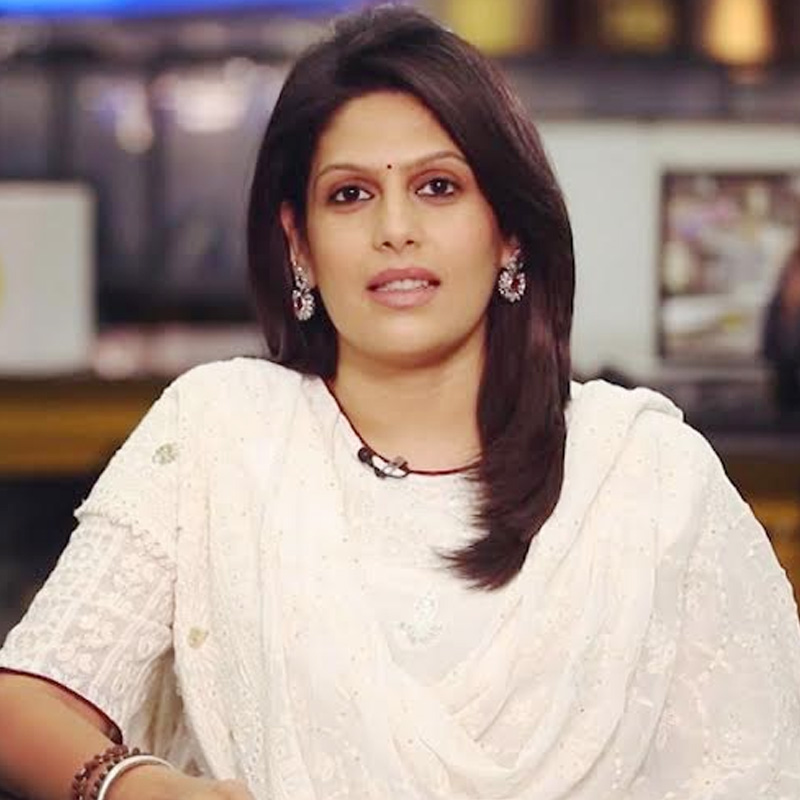
    Mumbai : She built her name as a savvy on-air anchor on the programme Gravitas and as managing editor of Zee Media’s English news channel Wion. Now Palki Sharma has hopped on to Network18 Media as managing editor. She will be heading a new video project which is slated to be multi-platform. This will be her second stint at Network18, where she has previously worked in various capacities.

    “I am excited to join hands with Network18, India’s largest news network, to launch a futuristic project with a global footprint, that will transform the news experience and make India proud,” says Sharma. “It will be a content innovation lab that challenges traditional news formats and experiments with the latest technology and interactive tools to make news stories intelligent, interesting, and accessible for the global audience.”  

    Sharma will build and direct a video project that will cover all aspects of news reporting and presentation. The news product will aim to attract a new generation of viewers for the company.

    Adds Network18 group business news CEO Smriti Mehra: “Palki is a distinctive journalist and editor, thanks to her persona, voice, and audience connect.”  

    She further adds: “The news product she will lead will cater to audiences across platforms. It will help the network expand its footprint, along with imagining new formats of showcasing news content.”

    Sharma has over 21 years of experience in media, having worked for the ITV Network, Network18, Doordarshan News, and The Hindustan Times.

    Gravitas, a popular prime-time English news program, as well as the highly regarded digital program Gravitas Plus on Wion, were both hosted by her. She also created and oversaw the Wion Global Summit, an annual channel event held in Dubai.

    Palki has interviewed several national and international heads of state during her two-decade career. She has also covered major stories and events on the ground, such as the ongoing conflict in Ukraine, the Quad Summits in Tokyo and Washington, DC, and many more.

  • Short-form video app, Tiki will grow its users to 60 mn in 2022, says CEO Ian Goh

    Short-form video app, Tiki will grow its users to 60 mn in 2022, says CEO Ian Goh

    Mumbai: The growing insatiable hunger for online videos will augment the long-term growth of short-form video market and likely increase the monetization opportunity for the industry to worth $19 billion by 2030, according to a recent report by global consulting firm Bain & Company.

    Similarly, Resheer, the management consulting firm’s report highlighted that India has approximately 640 million internet users and 550 million smartphone users spending nearly 1.3 trillion hours online. Smartphone users also spend about 4.8 hours per day on their devices, with an hour spent watching videos on average. This is second to China, which also has a huge consumer-base for smartphones and internet users. The report added that India is currently witnessing 300 million users of short video apps; it could rise to 600 million by 2025.

    While discussing the short-form video app Tiki’s CEO Ian Goh about the market opportunities of short-form video, he believes that visibility and recognition are the biggest challenges that creators are facing currently. He adds, “To grow the community, they need to support one another.”

    After the government’s imposition of a ban on the Chinese app TikTok, it has been observed that other Indian short-video apps have grabbed almost 97 percent of the former’s user base and considerably expanded the addressable market for short video apps, thanks to aggressive marketing strategies & user acquisition. 

    The Redseer also shared that the Indian apps have successfully retained 67 per cent of the TikTok subscribers by acquiring influencers and have added another 30-35 per cent of new users in the past year.

    Singapore-based DOL Technology’s Tiki, which was launched in 2021, is a “glocalised” platform that aims to redefine the standard for short video creation & sharing. It has millions of monthly active users in India. Since the last few months of operations, Tiki has become a platform where people come for the content but stay for the community. Tiki aims to cultivate an environment of “authentic entertainment, peer-to-peer support, and community.” 

    The platform’s vision is to help India’s talented content creators make a living doing what they love. Until today, Tiki has successfully on-boarded thousands of verified creators who produce great content for Indian users. Tiki also allows users to become verified Tiki creators through an easy-in-app application verification process. 

    In its quest to become the most preferred short-video app in the country, Tiki is developing two competitive mega-genres: Show-Yourself and Short Series, and sub-genres under them. The Show-Yourself genre includes lip syncing, dancing, music, dubbing, dress-up, etc., while short series feature melodrama (romance, friendship, family, patriotism, mystery, horror, action, etc.) and comedy (sketch comedy, spoofs, parodies, pranks, standup, epic fails, etc.).

    Tiki operates on three broad models:

    1. Content First Platform—Aids in the journey of true content creators.

    2. Real Original Content: Supports locally made, original, high-quality content that honours Indian values and cultures and that is also entertaining, inspiring, and educational.

    3. Community: Tiki’s platform for fostering relationships between creators and fans.

    The short-video app is focusing on the right kinds of tools, effects, filters, and video-editing capabilities to help create better content and retain top creators on the platform. In addition to that, the app is also trying to build stronger communities to promote Indian artists and creators.

    Indiantelevision.com caught up with Tiki’s CEO Ian Goh to find out more. He is an entrepreneur with a passion for building and launching tech ventures across Asia.

    He previously launched OYO’s business in Malaysia both on the demand (revenue/sales) as well as supply-side and extended it to other Southeast Asia (SEA) markets. He was also a pioneer in oBike-a Global Dock-less Bicycle Sharing startup for the Asia Pacific Region & Rush-a Scooter and Powerbank sharing startup.

    Goh grew up in a city in Borneo, Malaysia and pursued his education in Singapore and pursued his business degree at the University of Melbourne. He currently resides in Singapore.

    Edited Excerpts:

    On the trends being seen in the content creator economy in the country

    Ian: According to a recent report by RedSeer, short-video apps are expected to double their monthly active user base to 600 million by 2025 and to 850-900 million users by 2030. Today, everybody is a content creator, and people from tier two and three cities are also joining the league, aspiring to become professional creators.

    With a plethora of creators, the originality of content is lost under the pile of crawler content. Visibility and recognition are the biggest challenges for creators. Therefore, if they need their communities to grow, they need to support one another. They form their own communities, doing social good and trying to get recognised by a larger audience.

    On the idea of Tiki

    Ian: I have always been passionate about short videos. While there are other short video apps in India, we wanted to bring something that could help the creator economy and build a community of true talent. We found a gap in India in terms of the short-video creator economy. There are creators in every corner of the country, and many times, creators are left without a platform that appreciates them.

    Local creators also deserve a better platform for exposure. Therefore, we created an app that is “Made in India” for the real Indian content creators. We are the pioneers of promoting original content creators, which makes us stand out in the cluttered zone.

    On the Tiktok ban benefited Indian short video apps

    Ian: The sudden ban on TikTok created a void for Indian creators. It was a golden opportunity for many platforms to venture into the Indian market, but the creators were not well served. So, while the ban may have benefited Indian short video apps, it is difficult to say that it benefited Indian creators. Creators are still facing many obstacles: the growth of talented creators; plagiarised content; and no creator community.

    On Tiki’s USP vis-a-vis competition

    Ian: Today, online creators have the advantage of pursuing what they love and monetizing through their talents. But they desire more than easy money. They want their originality to be honoured and to earn their own fame with their talents. Tiki is a platform that fulfils the creators’ demands. We are the creators’ first platform.

    We prioritise 100 per cent original content. Every piece of content that goes on Tiki cannot be copied from anywhere else. No one can copy others’ content and put it on Tiki. We also focus on the power of community and have created a community of real talent who meet up with each other and support one another to become a star. Our monetisation model is fair and open. We bank on a fan economy, where a user can give stars to the creator.

    On Tiki’s 3-pillars that aim to empower the content creator community
    Ian: Tiki empowers its creators based on three broad pillars: Fame as a Service, Star Monetisation, and Creator-oriented Community.
    Fame as a Service: Based on Maslow’s Hierarchy of Needs, self-actualisation and esteem are at the top. Tiki translates that as fame for creators on the platform and even outside. Humans are always seeking to accumulate social capital. Tiki has designed a creator ecosystem in which everyone can be verified to join. Anyone can rise through the ranks to become a White V creator, then a Gray V, and finally a Blue V top influencer on Tiki.
    Tiki innovated and continues to manage the ecosystem so that the truly talented can break through. Tiki helps its verified creators along their hero journey by providing 100 percent of its traffic, constantly updating functions and stickers, and helpful managers, all in order for creators to fully express their creativity, be famous, and popular. Tiki calls it Fame as a Service (FaaS).

    Star Monetisation: Instead of the traditional black box model of paying creators, Tiki innovated a performance-based mechanism that is transparent and fair to the talented ones.

    Creator-oriented Community – It’s never only about getting famous and making money. Creators are also here to make friends and socialise with others. Now they’ve formed over 500 family guilds on Tiki. Some are holding panels to share video shooting skills, others are organising offline meetups for a shared interest or a charitable event. Every month, the Tiki community organises over 1000 offline meetups and 20,000 online meetups.

    For instance, three family guilds had offline cleanups and tree planting on Earth Day. Tiki sponsors verified meetups for creators to entertain and learn within the community. Tiki provides creators with a safe and family-like community to explore more opportunities and benefits with their peers.

    On Tiki’s monetisation model
    Ian: At Tiki, we don’t follow the traditional black box model of paying creators; we’ve innovated a performance-based mechanism that is transparent and fair to the talented ones. The money they earn is only defined by the stars they gain from users. Star is a feature Tiki designed for users to send to their favourite creators or content.
    Different from the “like” culture, which has been inflated and even abused on many other platforms, Star on Tiki can be viewed as a thoughtful and sincere vote from a user to a creator. Star can be earned via short videos, profile pages, and live broadcasting. Further, we would like to explore the fan economy, social commerce, and brand collaboration as monetisation models for our creators.

    On efforts to create an environment of authentic entertainment, peer-to-peer support, and community

    Ian: We are a “Make in India for India” platform that focuses on improving the Indian creator economy. We aim to create a platform where local talents are appreciated for their originality. For this, we have generated software that can detect the copied content. We have an experienced local team headed by Abhishek Dutta to do creator verification to make sure all verified creators are real and upload original content.

    On Tiki’s plan to reach 60 million users by the end of the year

    Ian: Tiki started with only 120 content creators in the beginning but now boasts of having over four lakh content creators on board in a matter of 1.5 years in India. Our aim is not to scale up to 120 million users overnight. We focus a lot on time spent on the app and the retention rate of users.

    The industry average for time spent on short-form video apps is 20 minutes. People spend close to 22 minutes on Tiki every day. Therefore, by the end of 2022, we intend to reach 60 million users. We will continue to empower local creators and bridge the online and offline gap via community meetups.

    On the strategy that ensures that only original content is on Tiki

    Ian: Short video platforms are in abundance in India, and many of them do not emphasise the originality of the content. Different from the flood of crawler content on other platforms, Tiki stands strong for locally made, original, high-quality content that honours Indian values and cultures and is also entertaining, inspiring, and educational. Tiki manages to do it with its in-house developed creator verification system and strict content moderation standards.

    On the content that works on Tiki

    Ian: Our insight tells us that crawler content, vulgar content, non-original content, and even indecent content are prevailing on many other platforms. That’s where we want to position Tiki differently.

    Tiki discovered and developed two competitive mega-categories: ‘Show-Yourself’, and ‘Short Series.’ The ‘Show-Yourself’ genre is all about showcasing one’s talent. It includes lip syncing, dancing, music, dubbing, fashion, etc. While the ‘ShortWhile Short Series’ category features bite-sized video stories, sub-genres include: melodrama (romantics, friendship, family, patriotism, mystery, horror, action, etc.) and comedy (sketch comedy, spoofs, parodies, pranks, standup, epic fails, etc.). All the content on Tiki is original and created by real local creators in India.

    On the whitespace of tier two, and three cities

    Ian: India is on the cusp of the golden age of short-form video platforms. The size of the short video market is expected to grow from 240 million to 650 million in 2025 as many tier two and three cities’ users are embarking on the journey of content creation. Instagram has become too saturated to grow an easy follower base. Many short video creators can amass five million Tiki followers but only 20,000 on Instagram. With our real creator ecosystem, we believe many new talents will be discovered through Tiki.

    On whether a shakeout is imminent given the competition

    Ian: There is healthy competition in the creator space, and we have to stick to our USPs to support the creators. The shakeout would happen to those that do not add value to the stakeholders.

    On the potential Tiki sees in social commerce and branded content

    Ian: According to EY India, social commerce currently accounts for one per cent to 1.5 per cent of overall e-commerce. The share of social commerce is expected to go up to six per cent by 2025. Social commerce is not a competitor to e-commerce but an important extension of it. Tiki sees potential in social commerce in the near future, but first it’s about building a healthy creator-user ecosystem.

    On fundraising plans

    Ian: Yes, we are open to funding and looking for investors who share the same vision and cherish the same values as us—creators deserve a better platform to thrive through their talents. Investing in Tiki is investing in the creator economy.

    On the challenge of scaling up rapidly

    Ian: There are many short video apps in India claiming to be number one in the market. However, we believe that the challenge is not about its speed or scale but whether it’s sustainable or not. We want our creator and content ecosystem to grow consistently, benefiting our creators. We want to be a powerhouse for the Indian creator economy.

    Therefore, our challenge is to scale up while remaining sustainable. We will stick to our creator first principle, providing our creators with monetisation channels and helping them grow and thrive.

  • Josh partners with Germany’s international broadcaster Deutsche Welle TV to explore international content

    Josh partners with Germany’s international broadcaster Deutsche Welle TV to explore international content

    Mumbai: Josh, India’s fastest-growing and most engaged short-video app has entered into a one-year strategic partnership with Deutsche Welle, popularly known as DW, Germany’s leading international broadcaster to provide high-quality content to users on Josh in an engaging short-video format. Through this partnership, DW aims to bolster its reach across Bharat with news and informational content, leveraging the Bharat-centric platform that Josh is.

    Speaking on the partnership, Josh’s Head of Creator and Content Ecosystem Sunder Venketraman said, “We are looking forward to our partnership with DW TV, as we strive to leverage Josh’s reach and deep engagement with Bharat to bring to the users of Bharat news and infotainment from a global perspective. Through this partnership, we aim at empowering our users with the knowledge and global awareness using engaging formats and narratives while also ensuring to meet the local language content needs of our audience.”

    Commenting on the collaboration, DW’s Distribution Manager – DW in Asia Daniel Schulz and DW Distribution Representative for India, Sri Lanka, Afghanistan and Bangladesh, Jaya Oberoi said: “At Deutsche Welle, we aim to produce versatile content which is not only entertaining and educative but a conversation starter. Our partnership with Josh presents us with a unique opportunity to connect to a much younger and vibrant audience in India. The timing couldn’t be better as we are planning to expand our bouquet on regional languages with DW’s flagship programs in the coming months. We are excited to be joining hands with Josh, in our journey to distribute DW videos to the heart of India.

    As DW looks at significantly expanding its presence in India, the partnership with Josh enables DW to engage more meaningfully through their content thus making news more informative and engaging. The collaboration further elevates the objectives of both brands as they aim to cater to the demand for high-quality infotainment content in a format that is snackable and engaging while also meeting the local language needs of the users. The international content from DW will be available to users in English and Hindi.

    DW will be bringing information and content on diverse topics such as current affairs, climate change, history, health, and unique human interest among others, from around the world to users on Josh. 

  • GUEST COLUMN: Why Software as a Service puts video service providers in control

    GUEST COLUMN: Why Software as a Service puts video service providers in control

    How can we increase market share? Can we meet the demands of consumers who want to watch high-quality video on any screen, anywhere, anytime? What should we do to protect our content, and build new revenue streams?

    These are some of the critical questions video service providers are continually asking themselves and us. And the Software as a Service (SaaS) model is proving it has what it takes to address these burning issues by allowing providers to quickly launch, scale and update streaming services and keep focusing on the right questions to stay competitive.

    Scaling ambition

    SaaS puts customers firmly in the driving seat. Flexible, affordable, and scalable – with the onus on the software provider to host and maintain the service – it means providers can start small and pay as their ambitions scale, whilst reaping the benefits of new product enhancements, features and functionality added as frequently as multiple times a day.

    Some early adopters are already turning their backs on inflexible, bespoke technology deployments and instead embracing SaaS solutions. Interestingly, we are finding these are not just those born-in-the cloud streaming services that might first spring to mind but also more traditional pay-TV providers and telcos.

    One particular factor driving SaaS demand is the increased appetite for TV advertising. Where once the focus was on subscriber acquisition and market share, broadcasters and other service providers are now demanding the flexibility to create new Avod and Fast services that help counter the cost of content. For example, a leading provider in southeast asia is deploying Synamedia Iris, our SaaS addressable advertising solution, to manage, deliver and measure advertising consistently across its entire subscriber base including set-top boxes with one-way connectivity. Synamedia Iris is a key area of focus at our R&D centre in Bengaluru along with the development of our other SaaS solutions, including Synamedia Go.

    Increasing modularity

    Until now, service providers have had little alternative to customised, complex deployments involving heavy Software Design Kits and pre-defined, sequential phases of testing with no overlap between phases. It sometimes takes many months for acceptance testing to support the launch of a single feature or a new device. In today’s rapidly evolving business and technology environment, that’s simply unsustainable.

    By contrast, the SaaS model offers flexibility, agility and Opex models that come with public cloud, service-based delivery and DevOps. With a modular suite of solutions, providers can start small, only paying for what they need, then easily add more packs or services as their needs evolve.

    And SaaS isn’t just for the big players. Its effects are disruptive because the entry barrier to these new levels of experimentation and creativity has been lowered and its modular nature opens up opportunities for smaller and non-conventional businesses.

    Our SaaS transformation

    At Synamedia, we are living and breathing multi-tenant SaaS internally and witnessing its power first-hand. As one example, in just the first six weeks of 2022 we made 130 discreet feature drops into production in our Synamedia Iris addressable advertising solution. In the previous generation software-based solution, we had releases every six months and our customers typically added two or three months of testing on top of that.

    In a rapidly changing world, this velocity and agility is game changing for us and more importantly for our customers. It has impacted every department in our company including the way we sell, support, and contract with customers. Where once our platform deployments were bespoke for each customer, with the SaaS model any customisation now only needs to happen at the edges.

    The result is our pace of change of product delivery has increased an order of magnitude over the last year. Importantly, we have also evolved our development approach to one that considers the complete customer experience. We are now more focused and efficient when releasing new features and everything is delivered with built-in market validation.

    Keeping pace with change

    Our industry is a late adopter of SaaS and one of the main reasons is that it requires changes not just within the vendor community but also within the user community. Put simply, users cannot realize the benefits of SaaS without changing their operating model to accommodate a high velocity and multi-tenanted approach, most notably acceptance testing.

    Those that don’t change will be outmanoeuvred by more agile competitors, maybe not in the short run, but inevitably over time. Those that adopt SaaS will give their subscribers a better service and will benefit from a much lower cost of ownership.

    Importantly, the product won’t just be better from a user experience and feature functionality perspective: releasing software in small batches that can be easily verified and backed out as necessary dramatically increases quality as well.

    And, finally, well-designed cloud-based APIs support a new level of openness that gives users the option of integrating point solutions or procuring suites of solutions from their preferred software suppliers. This openness is something that Synamedia has embraced strongly for its own solutions.

    Delivery the SaaS way has shifted Synamedia’s cultural mindset, and our internal teams have had to reorganise to support different priorities and responsibilities. In this golden age of content, where consumers want to change what and how they watch in the blink of an eye, it’s time for video service providers to buckle-up, rev-up the SaaS engine and make sure they’re not lagging behind.

    The author is Paul Segre, CEO, Synamedia

  • Taco Bell teams up with Microsoft to leverage gaming boom

    Taco Bell teams up with Microsoft to leverage gaming boom

    Mumbai: Leveraging the surge in popularity of video games, Taco Bell, a Mexican-inspired restaurant brand has partnered with Microsoft’s Xbox to offer consumers a chance to win “Age of Empire IV” PC game copies.

    The brand has promised to give about 200+ copies every week till the end of January, with a lifetime validity on purchase of the Ultimate Cheese Taco.

    “As the youth spends significant time perfecting and exploring the gaming spectrum, snacking becomes a strong companion that gamers enjoy during gaming sessions,” said the brand in a statement. “Customers who place an order at Taco Bell for ‘The Ultimate Cheese Taco’ or the meal for two at dine-In, take away or delivery are eligible to participate in the lucky draw.”

    All a customer needs to do is place the order and share a 10-digit valid phone number to mark their entry. Winners will be announced at the start of every week through brands digital media channels, Taco Bell App, and personalised SMS communication.

    Director of Burman Hospitality- Taco Bell’s exclusive franchise partner in India Gaurav Burma said, “As the youth increasingly leans towards gaming with excessive time spent indoors, the industry now witnesses a significant growth in the country. This expansion is the fuel for our collaboration with Microsoft’s Xbox to provide our consumers with a unique chance to win game copies of the iconic game Age of Empire IV. We believe this partnership is yet another innovative way to strike a chord with the youth and strengthen our position in their minds.”

  • India tops global Instagram installs in October: Report

    India tops global Instagram installs in October: Report

    Mumbai: India has topped the charts in recording the largest number of installs of social media application – Instagram, according to the latest report by Sensor Tower. As many as 39 per cent of the total app downloads were from India, followed by Brazil at six per cent.

    The social media app was the second most downloaded non-gaming app worldwide, while the short video platform Tik Tok remained at the top with more than 57 million installs for October 2021.

    The countries with the largest number of installs were from Douyin in China at 17 per cent, followed by the US at 11 per cent, reports Sensor Tower. The app was, however, banned in India by the government, along with 58 other mobile applications which were developed by Chinese firms on account of national security.

    Apart from Tik Tok and Instagram, other apps including Facebook, WhatsApp, and Telegram rounded out the top five most installed non-gaming apps worldwide for the month as per the data.

  • Flipkart collaborates with Moj for video and live commerce

    Flipkart collaborates with Moj for video and live commerce

    Mumbai: Home grown e-commerce marketplace Flipkart has collaborated with short video platform Moj to enable video and live commerce experiences at scale. The collaboration will help Flipkart to scale video commerce in the country and engage the next 200 million e-commerce customers.

    Moj currently has over 160 million monthly active users. Besides making e-commerce accessible to millions of first-time users, this collaboration also incentivises content creators in the Moj ecosystem by enabling new commerce-led revenue streams to deepen socio-economic impact.


    “The strategic collaboration between Flipkart and Moj will play a key role in onboarding the next 200 million e-commerce users while creating an ecosystem that benefits all stakeholders involved – from brands and sellers to content creators,” Flipkart senior VP and head corporate development Ravi Iyer said. “Given the diverse cultural fabric of our country and with the intention to offer an inclusive e-commerce experience to every consumer, we continue to bridge the gap between audiences through our regional language interface experience which has played a key role in onboarding first-time consumers. Moj’s wide reach through the Indic languages it operates in is another step in this direction.”

    Mohalla Tech Pvt Ltd (parent company of Moj) chief financial officer Manohar Singh Charan said, “The creator economy led revenue streams are globally seeing a massive upsurge and this collaboration with Flipkart is a step towards developing a concrete revenue stream for creators in India, while also enhancing the social experience of our users on the platform. This also opens the universe for creative in-app integrations towards personalized marketing. The seamless amalgamation of content and commerce will push brands to reimagine how they connect with their consumers and ignite the digital social commerce revolution in India.”