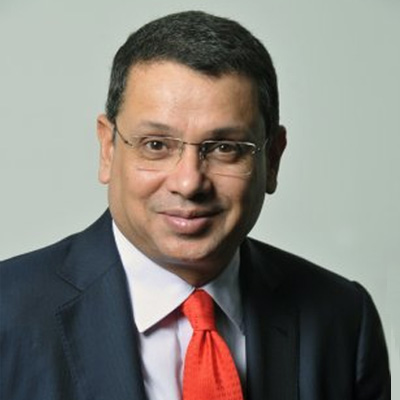
Uday Shankar had to wrestle with a thorny problem as soon as he took over as Star India CEO: How to be more successful than his predecessors Peter Mukerjea and Sameer Nair?
Grown up as a journalist and in TV news for long, Shankar did not take long to take tough business calls in the television entertainment broadcasting business. He parachuted out of the Balaji Telefilms’ joint venture agreement as the popular long-running ‘K’ soaps were running out of steam and were turning out to be “expensively” priced. He brought in a bunch of young producers to connect with the changing India at a time when new players like Viacom18 (Colors), 9X (Mukerjea’s venture after quitting Star) and NDTV Imagine (headed by Nair) were making their entry.
Shankar also quickly realised that Star’s creative, marketing and distribution strategies were not in sync to capture the new markets that had come into the C&S homes. He designed Star’s new strategy and laid out a clear road map for the Rupert Murdoch company’s growth in India which at that stage was heavily dependent on the flagship Hindi general entertainment channel (GEC) Star Plus.
Asianet was acquired to get a footprint in the lucrative South Indian media market and Bengali and Marathi GECs were launched. He next launched the second entertainment channels in Hindi to house them under the ‘OK’ brand.
Shankar knows well that India is a growth market and has, thus, decided to reinvest in the business aggressively to build a Star network that would grow and thrive in the future as well. “While we will always try to keep a very sharp eye on the profits, we will not be greedy about profit margins,” he says.
In the third and concluding part of the interview with Indiantelevision.com’s Sibabrata Das, Shankar talks about how Star India is ring-fenced today to stay as a strong leader in the TV entertainment business and is ready to grow in a digitised environment.
Excerpts:
Q. How challenging was it for somebody who came from a news background to conquer the entertainment broadcast business as CEO of Star India? Or was the transition easier because TV news in India had imbibed entertainment content in its culture?
Listen, the news that I was part of is very different from the news of today. I launched Aaj Tak which was a financially very healthy company. It did high quality news, it had a large number of viewers and it was profitable. Hence, it could invest in content. Today, the scenario is very different.
I think too much is made out of this whole thing of news versus entertainment. At the end of the day, the viewer is the same. In a way, news allows you to engage with the consumer in a very dynamic environment and it gives you those insights. Those insights helped me.
The other thing that helped me is that as a news editor or journalist you get to develop some understandings and insights about the Indian society which in all humility I think the entertainment guys lack completely. Their reference to India is a few films, a few shows and little stories that they pick up in newspapers. Sometimes I see what is portrayed in our films and stories and dramas about India is completely unrealistic. And that is what my advantage was in this aspect. Because I had done so many years of journalism, I understood India very well. My general understanding of this country, both as a journalist and as a student of social sciences, was fairly evolved. I think that helped.
Q. When you inherited the chair, Star India had slipped into some sort of a management mess. What were the ills that you had to correct?
No ills. Star was a great company even then and it had a solid leadership. It had an amazing brand; I don’t think there is or there ever will be a media brand in this country that would be as big as Star. The problem is that it was the victim of its own success. There was a sense of complacency that had set in.
The other thing that had happened is that there was a disconnect that had developed between the channel and its viewers. The cable and satellite (C&S) TV universe had penetrated deeper into the countryside. And our creative, marketing and distribution strategies were not in sync to capture the new markets that had come into the C&S homes. I think that was the biggest challenge which I had to tackle. And that is what we have done slowly – by going regional, by creating stories which are more diversified and realistic. We got content which echoed the new sentiments, the new aspirations and the new women. We brought that into Star Plus by way of ‘Rishta Vohi Soch Nayi’.
I also think that we changed the talent mix inside the channel and also the mix of the producers outside the channel. We brought in a bunch of young producers who were producing their first shows at that time. They brought in a fresh pair of eyes and a certain amount of freshness of creativity – and I would like to think that they were better connected. So that’s what helped.
Q. Was there a need to bring about changes in Star Plus in phases? Are we seeing the Aamir Khan show as part of that content evolution?
I don’t see those as different phases. I see them as a journey of evolution for a company, a channel, an entertainment network and for me as a professional.
We were doing a certain kind of stories, we were reaching out to a certain kind of audiences and were addressing a certain kind of market. Slowly, we wanted to expand and diversify in all these three areas. First we started doing different kinds of dramas and then a different kind of non-fiction shows which finally evolved into ‘Satyamev Jayate’ (the Aamir Khan show launched in May 2012 and aired on Sunday mornings). However, it would be a mistake to say that ‘Satyame Jayate’ was the first such step that we took. As early as four years ago, we did a show with Kiran Bedi called ‘Aap ki kacheri…Kiran ke saath’ and in 2009 had ‘Sacch ka Samna’. In drama, we launched Kaali – Ek Agnipariksha.
I go back to the philiosophy that I carry from my journalism background – we must constantly try out new things and must constantly innovate. Because the biggest story of yesterday becomes stale today. And that is something which is deeply ingrained in me.
Q. When you earlier spoke about sports broadcast, you mentioned about drama becoming a bit of a commodity. What made you say that?
Anybody who has the money and an idea can go and create a drama – lease the producer, the writer and the studio. But even if you have the money and the idea, you can’t go and create a sporting property because it is locked in IP. You have to have the teams and the sporting board has to back you up. In that sense, the access to drama is commoditised. But that is not the case with sporting content. If you want to create a cricket tournament, you can’t do it unless the BCCI is supporting it. And BCCI won’t go and support any cricket tournament.
|
‘My bosses and I are very clear about one thing: reinvesting in the business far more aggressively than taking out profits because India is a growth market and we are building a network that would grow and thrive in the future as well. This is the most critical phase of building the network. If we don’t continue to invest aggressively and ahead of the curve in a market that is so dynamic and evolving and segmenting, then the market forces might overtake us. While we will always try to keep a very sharp eye on the profits, we will not be greedy about profit margins‘
|
Q. Is entertainment content limited by the fact that India is primarily a single TV household country? That is a bit of a concern. There is mature adult explicit content that you can’t do in a single TV household. Even otherwise, you can’t do that in multiple TV households because not everybody in his or her bedroom wants to watch adult content; the content consumption habits are heavily determined by our cultural systems. I am not sure whether Star as a network would want to do such kind of content even in multiple TV households.
But what is bad is that the government, the regulator and a bunch of self-styled policemen want to act on behalf of the audiences. They act as guardians thinking that the audience is a mass of retarded, dumb, unintelligent people who do not know what is good for them. You go and show them one kiss and it is as if the whole culture of India will collapse. It doesn’t work like that. And these are the people who either have a vested interest and say this because they want to control media or their mindset is so corrupt and regressive that they think that because they have a dirty mind, the whole world has a dirty mind.
Q. But isn’t the growth of niche content limited by single TV households in India?
Surely, because niche content means content that is of interest to a very small set of people. It is difficult to have a business model for niche channels in an analogue cable environment where there is bandwidth constraint. A channel on health, education, classical music and serious political drama will not interest a large number of people and youngsters. Older audiences are not generally interested in science fiction; nor are women in crime or thriller-based shows. In a single TV household you will have to do content which appeals to a large common denominator.
In Star Plus, for instance, we don’t want to put content that won’t deliver reach; it simply doesn’t work for us. But digitisation will change this whole content game. We can then create a channel only for youth or for older men or for teenagers. And audiences having digital cable can choose individual channels; in an analogue system they have to take the whole bunch of channels and pay for it. Why will a family having no youngster in the house want a youth channel? And if there is no old parent living with me, I wouldn’t want a channel meant for old people.
Q. Star Plus made an effort in creating a Sunday morning band and we have seen other channels follow that. Is it possible to drive in audiences regularly in these time slots?
I hope so. I do think that on Sundays there is an appetite that we as content providers are not able to satisfy. Sunday content is generally not satisfying except for a movie that gets shown once in a while.
The quality and quantity of Sunday content is not adequate. Broadcasters should step in to fill that gap with all kinds of programming. What matters is the emotions that your content triggers, the stories that you tell and the connect that you build.
Q. Haven’t all Hindi entertainment networks evacuated the afternoon band?
This is kind of sad but reflects our economic compulsions. The advertising market is tough, rates are under pressure, subscription incomes aren’t going up much and the programming costs are up. That is why broadcasters have to do all kinds of things. But it is not good in the long run. There are a large number of people who tune in to watch TV in the afternoons. It is an audience that all of us had built over a period of time. I guess broadcasters have all had to take short sighted and tactical steps.
 I also think that there is another challenge. The creative capacity, particularly in Mumbai, is not developed enough. Or not broad enough to cater to the prime time, afternoon and the weekend needs of such a large number of Hindi entertainment channels. So somewhere the capacity construct is also influencing. You are not getting high quality content. At least that is what our experience has been.
Q. Hindi GECs are almost entirely depending on prime time for ad revenues. As we are in the midst of an economic slowdown, is this the wrong time to make that shift and cultivate other time bands?
There are challenges in opening other time bands. But there is never a right time and there is always a right time. The last few months have not been great for advertising. That has pulled back broadcasters from experimenting with the afternoon slots. But I see this as a short term tactical withdrawal.
Q. Since Star is as you say an amazing brand, why did you create the OK brand for your second channels in the Hindi general entertainment and movie space?
Though we have a big portfolio, each market in India is segmenting and new competition is coming. We were getting restricted because in Hindi we had only one channel and Star One was not doing well. When we were looking at fixing Star One, we thought why should we limit the company to just one brand. Though Star is an awesome brand property, we decided to create one more brand. That is how the OK brand was born.
Q. Is Star being identified as premium and the OK brand with a more general appeal?
I don’t see the positioning of Star Plus or Zee TV or Sony as any different but pretty much similar. If at all, we see Star Plus to be the channel that’s identified more closely with people who are more aspirational and OK with those who are satisfied with life. That is the only distinction we think we can make.
Q. Is this more in tune with a flanking strategy?
I don’t believe in flanking strategies at all. It is a very boring and owner-driven mindset. Viewers do not understand anything of that; they want to go to a channel and a programme that they like. Everything competes with everything in this market. It is a very dynamic and fluid market where one remote changes everything. Flanking is perhaps a product conceived by somebody who has been influenced by a military mindset and didn’t understand media much.
|
‘The C&S TV universe had penetrated deeper into the countryside. And our creative, marketing and distribution strategies were not in sync to capture the new markets that had come into the C&S homes. I think that was the biggest challenge which I had to tackle. And that is what we have done slowly – by going regional, by creating stories which are more diversified and realistic‘
|
Q. Do you see the need of a second channel, particularly in a digital environment which will lead to further audience fragmentation?
It will always help in segmenting the market. But there is no question of a second GEC. Who knows? The viewer doesn’t. That is why we have decided to keep Life OK totally separate from Star Plus. A large number of viewers may not be even aware that the two channels are owned by the same company.
In a market where there is Star Plus, Life OK, Zee TV, Colors, Sony, Sab and Sahara, everyone competes with everyone. At an ownership level, you might have two channels. But in the marketplace, the two channels are relevant only when they are the only two channels.
But yes, second channels help in aggregating audiences. And it is becoming increasingly difficult to address the entire Hindi heartland through one channel. Demographic segmentation is also taking place.
Q. Was Movies OK conceived because Star had a vast movie library and a new channel gave it more ad inventory to sell?
India is a very movie crazy market. TV attracts more audiences than cinema theatres for movies. We beefed up Star Gold. We thought we should go deeper into that market and so launched a second movie channel. In any case, we had invested in a big enough movie library.
Movies OK gives more fizz to the OK brand. And opens up ad inventory.
Q. Will we see more launches in the OK brand?
It is always an option. In Hindi entertainment content, we have already got Life OK and Movies OK. Unless there is some clarity on the digitisation front, I am not sure we are going to launch more channels in the near future. We have a huge challenge on the sports front and need to build it after the deal (buyout of Disney’s stake in ESPN Star Sports) finds the necessary regulatory approvals. We also need to consolidate Life OK and Movies OK.
Q. What led Channel [V] to shed its Bollywood music content to become a youth GEC from 1 July?
In the ‘90s, Channel [V] and MTV connected to the youth through music offerings. But now music has become a commodity; it is accessible across many devices including FM radio, mobile and online sites. So we needed a different proposition to get to the youth segment. We came up with the idea of capturing their aspirations through regular TV viewing formats and dramas; we thought this way we would integrate more deeply with youth and address them more effectively.
The other route some music broadcasters have taken is some kind of non-fiction content which reduces youth to being sex-starved and having non-thinking minds. Reality shows like Roadies (MTV) have painted the youth as a group that is sensually-driven. We have not gone through that path. We believe the youth is interested in society, career and education.
Q. How is Zeel’s Ebitda margins from non sports business (Q1 Fy’13 at 34%) higher than Star’s which market estimates say is around 25-27per cent?
First of all, I am not commenting on Ebitda margins because Star doesn’t discuss its financials. But my bosses and I are very clear about one thing: reinvesting in the business far more aggressively than taking out profits because India is a growth market and we are building a network that would grow and thrive in the future as well. This is the most critical phase of building the network. If we don’t continue to invest aggressively and ahead of the curve in a market that is so dynamic and evolving and segmenting, then the market forces might overtake us. While we will always try to keep a very sharp eye on the profits, we will not be greedy about profit margins.
Q. Will digitisation increase content costs with many more channels being launched?
Yes, but your earnings should also go up. If you have more channels, you will have more inventory to sell and your subscription income should be more if you succeed.
Q. Will Star launch new channels or enter into new regional markets?
No, I don’t see any immediate plans. In regional markets, the carriage capacity is even more constrained. Even if digitisation happens with contracts, its impact will not be felt for at least 2-3 years after the implementation.
We might do small channels here and there. We just launched a movie channel in Kerala (in July) to take our bouquet of Malayalam channels to three – Asianet, Asianet Plus and Asianet Movies. In Tamil Nadu, we have Vijay TV which is a very successful Tamil GEC but is still not the leader. There is an opportunity to make it grow bigger. In Kannada, we have Suvarna which is doing very well now and is the No. 1 channel in prime time. But it is still not the unqualified leader in the Karnataka market. So there are certain unfinished agendas that we have to first complete before we launch something new.
Q. Sun TV network is seeing some sort of market share erosion due to cable TV distribution being challenged by state-owned Arasu Cable. It is also losing control over movie studios in the state. Will Star be aggressive in Tamil Nadu to capitalise on this opportunity?
Everybody has been talking about it (market share erosion) but it has not happened yet. And I don’t see that happening in a hurry, if at all. Don’t forget that despite everything, Sun has built a very loyal viewership profile. It also has many channels and is, thus, able to segment the market very well.
The shift in viewership you are talking about is marginal, not gigantic. There would always be a bit of an opening in that market but it would be a mistake to swing to the other extreme. Sun has some very strong content and some very successful channels. And those are not easy to take away.
I won’t launch anything where we don’t have clarity on breaking even and making the business profitable. Otherwise, it doesn’t make business sense. And right now there is no business model.
Q. When Star expanded into regional-language markets why did it look at Bengali and Marathi GECs?
Though the states of Bengal and Maharashtra form part of the Hindi TV viewing population, they are also distinct linguistic markets with strongly driven local creative communities. While Gujarat and Punjab are also attractive markets, the creative class does not work in the local language. Mumbai is more attractive for them and they find it lucrative churning out Hindi content. We, thus, decided to launch Bengali and Marathi GECs first.
Q. Why are broadcasters pressing for a new television ratings system under the aegis of BARC?
Television advertising is cheaply priced today. TAM (the sole TV audience ratings agency in India) does not map the entire C&S universe and only a part of India is measured. We want the ratings coverage to spread out into more areas and socio-economic demographics.
The ratings system should primarily be for a broadcast market. BARC will reflect this need of the broadcasters and allow them to monetise the eyeballs that they deliver more effectively.
Also read:
‘BCCI rights great opportunity to build Star‘s sports biz‘
‘Cross-media regulation has only discouraged clean, legitimate players in DTH & cable‘