Tag: Viacom18

  • How to make your content viral?

    How to make your content viral?

    MUMBAI: How often do we hear the term ‘viral’? From the germination of an idea to its execution, the only target people want to achieve is making it go viral. Be it a concept or a new initiative, grabbing the maximum number of eyeballs or reaching out to the masses remains the crucial part.

    This subject was fielded by panelists consisting of Viacom18 Media group CEO Sudhanshu Vats, Twitter CEO Rahul Jaitly, The Viral Fever creative producer Shreyansh Pandey, Yash Raj Films VP Ashish Patil and AIB G. Khamba at Eemax Global Conclave 2016.

    They spoke on the topic everyone is currently excited and interest in — digital. ‘Making the viral go around’, the speakers brainstormed whether they have found or cracked any formula of making their content visible. What echoed in unison was a big ‘no’ by the panelists.

    Adding some perspective to it, Patil said, “That is the stupidest brief I can ever get for making content that should go viral.” Agreeing to that was Khamba who resonated with Patil’s thoughts. “No, we cannot do it. We try to do the best that we can with our content. Fun is the formula for us.”

    Taking the discussion a notch higher, the moderator was curious to know what the starting point is for each one of the players post the brief. “The starting point is the consumer. We don’t go about making it viral, we just hope that it happens. One should not let their ideas remain in a box. Anything can be successful and (go) viral in no time like music for eg, Coke Studio. What goes viral is not matter of functions or data,” said Patil.

    Pandey added, “Two things that are primarily important which lead to something going viral is content and experience of the user. Obviously, it varies with platforms. How users latch on to the content and what they do with it decides the virality.”

    Jaitly opined the starting point for the social media platform is knowing their audiences and their taste. “Truth and personality is what we ride high on. At Twitter, we have a software measuring not the tweets but spikes.”

    “Adding to that, authenticity is also equally important,” added Vats.

    So, what is the process of developing content and the velocity to make it viral? “What excites the consumers is the first step. Delivering it with truth, authenticity and entertainment like some nice music, champions, etc. is the second step. Third comes the right people you want this content to reach out to,” opined Patil.

    Jaitly also seconded his opinion, and said “In India, Bollywood, sports and politics content does very well for us and our strategy is to build across these ‘edges’.”

    At TVF’s office, one of the walls read “Ideas are a piece of shit.” Pandey said, “TVF’s core is story-telling. The process starts with writing posts. You should know the reaction expected by your target audience based on your observation.”

    With branded content getting popular every passing day, advertisers are partly convinced about investing in this new digital era. Developing in the right direction on the brief is one way to win the trust of the brands. Khamba shared, ” How do you work with brands is also important. Brands develop trust on the brief. Finding the trigger of the theme and delivering to the brands by value is equally crucial.”

    Patil, Pandey and Khamba also agreed on the point that the brand parameters had changed. They have started to build on the bigger theme than simply pumping money on a concept for eg, a Truly Madly Creep Qawali.

    With the sense of maturity coming amongst the advertisers, the panelists also expressed their thoughts on the need of having a measurability on content. “Majority of the return on investment comes from brands on board. The rest from talent usage, syndication, merchandising, etc. The commitment of how many views can a certain content get cannot happen.  We have to go in with our eyes open,” said Patil.

    With its reach across the globe, Jaitly opined how he has heard the pressure on revenues more in India than any other country which is something Twitter has done by providing a base for story-tellers without brands to come on board. On the other hand, Vats drew some light on their existing digital platform Voot which follows an advertising model. The VOD platform, within four months of its launch, has done well for Viacom18 Network by having 15 million active users with over 50+ brands, Vats shared, “The ‘average time spend’ on our platform is 45 minutes per user. For us, it’s about how many are watching, what content are they consuming and for how much time are they staying.”

    He further added, “There will be models going forward that will help reach the consumers. The data is crucial right now but it will come down eventually. Also, the payment gateways will evolve to make subscription easier for the viewers. Measurement cannot be ignored if you want to grow. Money follows measurement.”

    The session ended with the panelists discussing the way ahead for each of their platforms. While Patil opined that there is a new breed of celebrities on YouTube coming up, the opportunity of spin-off content is possible. “We want to create IPs and take it beyond TV or digital. Merchandising is also where we see a lot of good opportunities, he said. Pandey resonated with Patil’s thought about extending IPs and added, “Brands are difficult to get and people don’t want to pay. Extending IPs is what we would look at as the dollars lie there.”

    Khamba was of the opinion that on-ground engagement has always been fun for them and they will continue with that and sustain it going forward. “We will do high numbers and branch out,” added Khamba.

    Whereas, for Twitter, Jaitly shared that, going forward, the social media platform will enable users to share and watch live shows from across the country. He said, “The Twitter of future will open shows and videos live stream from across the country.”

    The panelists concluded by sharing that digital in India is only bound to grow and prove profitable to people who play it smart. As its always believed by most of the players in this business, the consumer remains to be the king.

     

  • PEMRA Indian content ban to impact broadcasters

    PEMRA Indian content ban to impact broadcasters

    MUMBAI: 21 October, 15:00 hours is going to be a landmark day in the history of south Asian media and entertainment. Reason: that’s the day when the Pakistan Electronic Media Regulatory Authority’s  (Pemra’s) order issued on 19 October banning all Indian content on Pakistan media will come into effect.

    The authority’s order is directed at all FM radio licence holders, landing right holders, and satellite television channels operating in Pakistan. Most TV and FM Radio channels air substantial amount of Indian content, sometimes going up to as much as 50-60 per cent.  That was trimmed down to six per cent following the Pakistan crackdown in September, when the old regulation promulgated during General Pervez Musharaff’s reign was activated.  And now, the latest order has reduced that to zero.

    However, PEMRA, in its order, says that Pakistan’s TV and FM radio services can continue to air up to 10 per cent foreign content from nations other than India. The authority has threatened defaulters with punitive legal action.

    Pakistan’s No 1 TV show was Indian import Naagin which was aired by Filmazia and helped its rise in the ratings pecking order while shows such as Yeh hai Mohabbatein helped boost the viewership of channels such as Urdu1 and shows such as Kumkum Bhagya  were rated highly on Geo Kahani. Among leading entertainment channels in Pakistan are: Colors, HumTV, Ary Digital, PTV Home, Geo Entertainment, APlus, ATV and Geo Kahani.

    According to Pakistan TV executives, the impact of banning Indian content is going to be felt by India’s music labels and TV channels. “Close to about Rs 25-30 150 crore of exports are going to vanish for Indian music and TV companies,” says an industry observer.

    However, they expect the official ban to continue for only a while, once the political heat between the two nations cools down. “We have already requested that Indian broadcasting companies from whom we have acquired the content to understand this force majeure which has been put on us,” says a Pakistan TV executive. “It is an act of the government over which we have no control, and we have to comply. Of course, our viewers are not going to be happy with such a sudden call to action and their favourite Indian TV shows going off just like that, and our ratings will probably  drop. But, we have to deal with it, positively as, it is in the two nations’ interest.”

    In the meanwhile, Pakistan channels are looking at filling the gap created by Indian content going off-air with Turkish and American content.

    Among the Indian TV networks which will feel the brunt of the ban include Viacom18, Zee TV, Sony and Star India.

    Of course, music labels will also feel the impact, but to what extent was not clear at the time of writing.

    The point of concern is whether the Pakistani ban will lead to a spurt in piracy of Indian content online and offline. “This is what Pakistan probably has in mind,” says a media specialist. “The official ban will lead to revenue losses on account of trade, but the piracy losses could probably be in multiples. And if Pakistan so desires it can  magnify the problem.”

    (Updated on 20 October; the figure of losses that Indian broadcasters would suffer was upped to Rs 150 crore after discussions with broadcasters and theatrical film distributors.)

  • PEMRA Indian content ban to impact broadcasters

    PEMRA Indian content ban to impact broadcasters

    MUMBAI: 21 October, 15:00 hours is going to be a landmark day in the history of south Asian media and entertainment. Reason: that’s the day when the Pakistan Electronic Media Regulatory Authority’s  (Pemra’s) order issued on 19 October banning all Indian content on Pakistan media will come into effect.

    The authority’s order is directed at all FM radio licence holders, landing right holders, and satellite television channels operating in Pakistan. Most TV and FM Radio channels air substantial amount of Indian content, sometimes going up to as much as 50-60 per cent.  That was trimmed down to six per cent following the Pakistan crackdown in September, when the old regulation promulgated during General Pervez Musharaff’s reign was activated.  And now, the latest order has reduced that to zero.

    However, PEMRA, in its order, says that Pakistan’s TV and FM radio services can continue to air up to 10 per cent foreign content from nations other than India. The authority has threatened defaulters with punitive legal action.

    Pakistan’s No 1 TV show was Indian import Naagin which was aired by Filmazia and helped its rise in the ratings pecking order while shows such as Yeh hai Mohabbatein helped boost the viewership of channels such as Urdu1 and shows such as Kumkum Bhagya  were rated highly on Geo Kahani. Among leading entertainment channels in Pakistan are: Colors, HumTV, Ary Digital, PTV Home, Geo Entertainment, APlus, ATV and Geo Kahani.

    According to Pakistan TV executives, the impact of banning Indian content is going to be felt by India’s music labels and TV channels. “Close to about Rs 25-30 150 crore of exports are going to vanish for Indian music and TV companies,” says an industry observer.

    However, they expect the official ban to continue for only a while, once the political heat between the two nations cools down. “We have already requested that Indian broadcasting companies from whom we have acquired the content to understand this force majeure which has been put on us,” says a Pakistan TV executive. “It is an act of the government over which we have no control, and we have to comply. Of course, our viewers are not going to be happy with such a sudden call to action and their favourite Indian TV shows going off just like that, and our ratings will probably  drop. But, we have to deal with it, positively as, it is in the two nations’ interest.”

    In the meanwhile, Pakistan channels are looking at filling the gap created by Indian content going off-air with Turkish and American content.

    Among the Indian TV networks which will feel the brunt of the ban include Viacom18, Zee TV, Sony and Star India.

    Of course, music labels will also feel the impact, but to what extent was not clear at the time of writing.

    The point of concern is whether the Pakistani ban will lead to a spurt in piracy of Indian content online and offline. “This is what Pakistan probably has in mind,” says a media specialist. “The official ban will lead to revenue losses on account of trade, but the piracy losses could probably be in multiples. And if Pakistan so desires it can  magnify the problem.”

    (Updated on 20 October; the figure of losses that Indian broadcasters would suffer was upped to Rs 150 crore after discussions with broadcasters and theatrical film distributors.)

  • MIPJunior: Can Indian animation make its mark?

    MIPJunior: Can Indian animation make its mark?

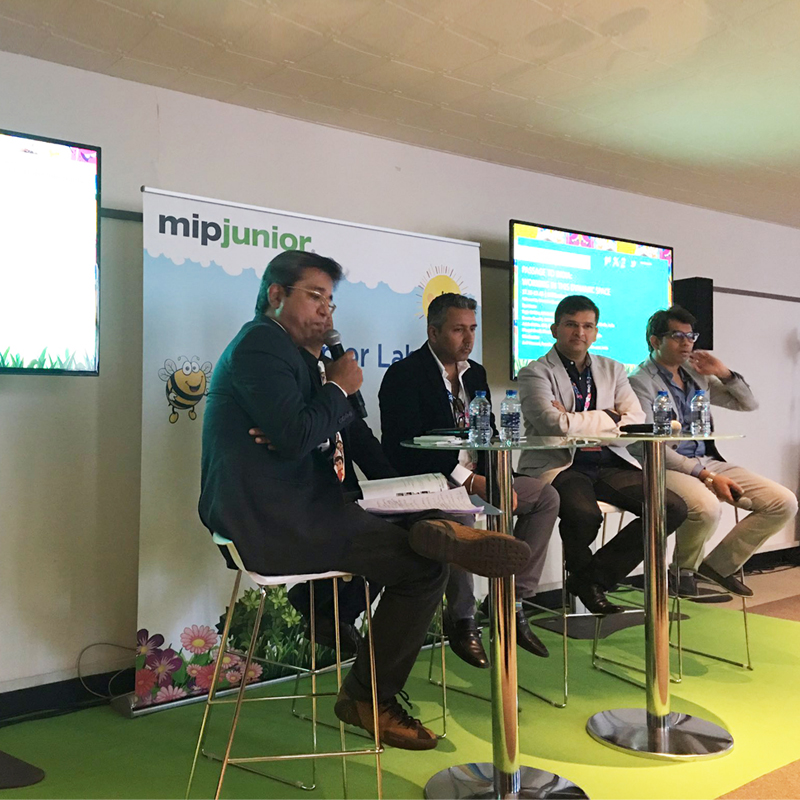
    CANNES: As the MIPJunior Lab got filled with an inquisitive audience, “The Passage to India” session began with the moderator, Indiantelevision.com founder, CEO and editor-in-chief Anil Wanvari, giving facts and figures about the kids broadcasting space in India.

    Wanvari started off by mentioning the humungous size of the 0-14 year population group – at 350 million at last count, which is expected to touch 375 million or so by 2020. Which is why the Indian market is attractive, he pointed out for kids programming and animation. Highlighting statistics from 2015 data, he stated that localization is helping the 20-plus kids channels operating in India up the local-international ratio from 10:90 to 80:20. With that wide a ratio and language dubs of each channel, content from the US dominates the television market with about 44 per cent, Japan 17 per cent, India 16 per cent, the UK and France four per cent, Canada one per cent; and if compared to statistics of 2014, it was 42 per cent, 17 per cent, 13 per cent, seven per cent and four per cent, three per cent, respectively.

    These statistics clearly paint the picture of how locally produced shows are being favoured not just by the audience but also the broadcasters. The top six to eight spots of the kids genre are occupied by locally produced programmes such as Motu-Patlu and Chotta Bheem, among others.

    Wanvari pointed out that kids genre accounts for six minutes per cent of total viewership and most of the kids content is in animation format the production cost of which per 30 minutes is between Rs 1.5 to six million.

    After introducing the panelists – Green Gold Animation founder and CEO, Rajiv Chilaka, Viacom18 Digital Ventures COO Gaurav Gandhi, Cosmos-Maya founder, Anish Mehta, and Graphiti Multimedia director and COO Munjal Shroff, Wanvari threw the question to the panelists asking what makes the prospects of the Indian animation sector so bright this time around; earlier attempts have failed.

    He also queried them about how the Indian animation space has changed over the years, in which areas are the opportunities available for international players, and what content works for broadcasters and digital platform for kids.

    Chilaka mentioned, “Back in 2001, there was only one channel catering to kids segment and now, there are 25-plus channels which showcase content produced locally as well. Over the years, the quality of animation, the technology, the services provided all have improved, and to support that, are the increased budgets.”

    Speaking about the international market, Shroff commented, “Through our show ‘Kulveera’, we did a case study with Cartoon Network UK wherein we produced a pilot episode and gauged the response of the audience and it was interesting to see that kids loved the show.” So, as long as one’s series has a strong storytelling going on, the place from where the content originates hardly matters.

    Mehta’s animation studio Cosmos-Maya has been doing wonders and, at present, has three co-production deals going on. “Our co-production deals are with Italian, French and German companies. We will be launching the French co-produced show ‘Captain Cactus’ which was made in association with Euope’s well-known film maker Olivier Jean-Marie,” expounded Mehta.

    “Over the period of 20 years, our work has evolved from being a service company to IP production, and finally we are at a stage where we can co-produce.”

    With the advent of digital platform, and Voot being probably the biggest kids SVOD service, Gandhi added, “It’s said that, in next three years, more homes will be have the streaming device than television sets. We are an open market, and ready to buy any good content.”

    Mehta also stated that, for co-productions to work, it’s necessary that one needs to understand the demographics. “Personally, after doing research, we follow a mixed model which blends well with both the countries.

    Since ‘Captain Cactus’ is a co-production between India and Europe, the animation style and narrative is set according to the tastes of audience of both the countries.”

    The session was wrapped up with Q&A round wherein many people were interested in learning more about how can they work with not just Indian animation studios but also on how their content can work across the various platforms.

  • MIPJunior: Can Indian animation make its mark?

    MIPJunior: Can Indian animation make its mark?

    CANNES: As the MIPJunior Lab got filled with an inquisitive audience, “The Passage to India” session began with the moderator, Indiantelevision.com founder, CEO and editor-in-chief Anil Wanvari, giving facts and figures about the kids broadcasting space in India.

    Wanvari started off by mentioning the humungous size of the 0-14 year population group – at 350 million at last count, which is expected to touch 375 million or so by 2020. Which is why the Indian market is attractive, he pointed out for kids programming and animation. Highlighting statistics from 2015 data, he stated that localization is helping the 20-plus kids channels operating in India up the local-international ratio from 10:90 to 80:20. With that wide a ratio and language dubs of each channel, content from the US dominates the television market with about 44 per cent, Japan 17 per cent, India 16 per cent, the UK and France four per cent, Canada one per cent; and if compared to statistics of 2014, it was 42 per cent, 17 per cent, 13 per cent, seven per cent and four per cent, three per cent, respectively.

    These statistics clearly paint the picture of how locally produced shows are being favoured not just by the audience but also the broadcasters. The top six to eight spots of the kids genre are occupied by locally produced programmes such as Motu-Patlu and Chotta Bheem, among others.

    Wanvari pointed out that kids genre accounts for six minutes per cent of total viewership and most of the kids content is in animation format the production cost of which per 30 minutes is between Rs 1.5 to six million.

    After introducing the panelists – Green Gold Animation founder and CEO, Rajiv Chilaka, Viacom18 Digital Ventures COO Gaurav Gandhi, Cosmos-Maya founder, Anish Mehta, and Graphiti Multimedia director and COO Munjal Shroff, Wanvari threw the question to the panelists asking what makes the prospects of the Indian animation sector so bright this time around; earlier attempts have failed.

    He also queried them about how the Indian animation space has changed over the years, in which areas are the opportunities available for international players, and what content works for broadcasters and digital platform for kids.

    Chilaka mentioned, “Back in 2001, there was only one channel catering to kids segment and now, there are 25-plus channels which showcase content produced locally as well. Over the years, the quality of animation, the technology, the services provided all have improved, and to support that, are the increased budgets.”

    Speaking about the international market, Shroff commented, “Through our show ‘Kulveera’, we did a case study with Cartoon Network UK wherein we produced a pilot episode and gauged the response of the audience and it was interesting to see that kids loved the show.” So, as long as one’s series has a strong storytelling going on, the place from where the content originates hardly matters.

    Mehta’s animation studio Cosmos-Maya has been doing wonders and, at present, has three co-production deals going on. “Our co-production deals are with Italian, French and German companies. We will be launching the French co-produced show ‘Captain Cactus’ which was made in association with Euope’s well-known film maker Olivier Jean-Marie,” expounded Mehta.

    “Over the period of 20 years, our work has evolved from being a service company to IP production, and finally we are at a stage where we can co-produce.”

    With the advent of digital platform, and Voot being probably the biggest kids SVOD service, Gandhi added, “It’s said that, in next three years, more homes will be have the streaming device than television sets. We are an open market, and ready to buy any good content.”

    Mehta also stated that, for co-productions to work, it’s necessary that one needs to understand the demographics. “Personally, after doing research, we follow a mixed model which blends well with both the countries.

    Since ‘Captain Cactus’ is a co-production between India and Europe, the animation style and narrative is set according to the tastes of audience of both the countries.”

    The session was wrapped up with Q&A round wherein many people were interested in learning more about how can they work with not just Indian animation studios but also on how their content can work across the various platforms.

  • Sumner Redstone pushes for CBS-Viacom merger

    Sumner Redstone pushes for CBS-Viacom merger

    NEW DELHI: The maverick Sumner Redstone, not letting age dim any of his business acumen, is at it again. Earlier this week he sent a strong message to investors and potential takeover tycoons that he favours a merger of American media companies CBS Corp and Viacom Inc.

    Redstone-family controlled National Amusements, the company that owns 80 per cent of voting shares in CBS Corp and Viacom Inc, on Thursday proposed a merger of the two entities saying it would not support the acquisition of either media company by a third party or surrender its control of either firm.

    National Amusements in a letter to both companies’ boards conveyed that a merger would “offer substantial synergies that would allow the combined company to respond even more aggressively and effectively to the challenges of the changing entertainment and media landscape,” a Reuters report, based on information from Bengaluru and New York centres, said, adding both companies acknowledged receipt of the letter.

    Redstone had split CBS from Viacom 10 years ago as investors saw CBS as a slow-moving company catering to an older audience, while Viacom, whose networks include Nickelodeon and MTV, was considered more youthful. But CBS shares have outperformed those of Viacom over the last five years.

    According to the Reuters report, Shari Redstone, Sumner’s daughter and an owner of National Amusements, has favoured recombining CBS and Viacom under the leadership of CBS Chief Executive Officer Leslie Moonves.

    But for a deal to happen, the Redstones will have to assure Moonves he will have full autonomy over the combined entity, Reuters said basing their observations on unnamed sources.

    Industry speculation that the two companies might come together again increased in recent weeks after the Redstones prevailed over a power struggle that resulted in the departure of Viacom Chief Executive Officer Philippe Dauman.

    CBS’s management and independent directors “will take appropriate actions to evaluate what is in the best interest of the company and its shareholders,” a representative told Reuters. Viacom said it expected its board to form a special committee of independent directors to consider this offer.

    In its letter, National Amusements said the optimal deal would be an all-stock transaction giving holders of each company shares in the combined entity of the same class they currently own.

    Any transaction would require the approval of both boards. Sumner and Shari Redstone will not vote on the deal as directors of Viacom and CBS or participate in deliberations, according to the letter. David Andelman, a CBS director, also will not participate in the process, the Reuters report stated.

    It is within National Amusements’ rights to refuse considering any other acquisition of either company, two lawyers familiar with the matter said on Thursday.

    In India, Viacom Inc has a joint venture with Mukesh Ambani-controlled Network18 group christened Viacom18 that oversees TV channels like MTV, Nick and Hindi language entertainment channel Colors.

  • Sumner Redstone pushes for CBS-Viacom merger

    Sumner Redstone pushes for CBS-Viacom merger

    NEW DELHI: The maverick Sumner Redstone, not letting age dim any of his business acumen, is at it again. Earlier this week he sent a strong message to investors and potential takeover tycoons that he favours a merger of American media companies CBS Corp and Viacom Inc.

    Redstone-family controlled National Amusements, the company that owns 80 per cent of voting shares in CBS Corp and Viacom Inc, on Thursday proposed a merger of the two entities saying it would not support the acquisition of either media company by a third party or surrender its control of either firm.

    National Amusements in a letter to both companies’ boards conveyed that a merger would “offer substantial synergies that would allow the combined company to respond even more aggressively and effectively to the challenges of the changing entertainment and media landscape,” a Reuters report, based on information from Bengaluru and New York centres, said, adding both companies acknowledged receipt of the letter.

    Redstone had split CBS from Viacom 10 years ago as investors saw CBS as a slow-moving company catering to an older audience, while Viacom, whose networks include Nickelodeon and MTV, was considered more youthful. But CBS shares have outperformed those of Viacom over the last five years.

    According to the Reuters report, Shari Redstone, Sumner’s daughter and an owner of National Amusements, has favoured recombining CBS and Viacom under the leadership of CBS Chief Executive Officer Leslie Moonves.

    But for a deal to happen, the Redstones will have to assure Moonves he will have full autonomy over the combined entity, Reuters said basing their observations on unnamed sources.

    Industry speculation that the two companies might come together again increased in recent weeks after the Redstones prevailed over a power struggle that resulted in the departure of Viacom Chief Executive Officer Philippe Dauman.

    CBS’s management and independent directors “will take appropriate actions to evaluate what is in the best interest of the company and its shareholders,” a representative told Reuters. Viacom said it expected its board to form a special committee of independent directors to consider this offer.

    In its letter, National Amusements said the optimal deal would be an all-stock transaction giving holders of each company shares in the combined entity of the same class they currently own.

    Any transaction would require the approval of both boards. Sumner and Shari Redstone will not vote on the deal as directors of Viacom and CBS or participate in deliberations, according to the letter. David Andelman, a CBS director, also will not participate in the process, the Reuters report stated.

    It is within National Amusements’ rights to refuse considering any other acquisition of either company, two lawyers familiar with the matter said on Thursday.

    In India, Viacom Inc has a joint venture with Mukesh Ambani-controlled Network18 group christened Viacom18 that oversees TV channels like MTV, Nick and Hindi language entertainment channel Colors.

  • Viacom18’s Rishtey Cineplex now in Europe, N America

    Viacom18’s Rishtey Cineplex now in Europe, N America

    MUMBAI: Viacom18 has announced its plans to launch its Hindi movie channel, Rishtey Cineplex’ in the international markets.

    Kicking off with high-impact launches in Europe and North America (US and Canada), the channel is an extension of the well-established Rishtey brand, and will be targeted at global film enthusiasts.

    To be launched in Europe on 29 September and in North America in October, Rishtey Cineplex will appeal to the sensibilities of global film enthusiasts with its blockbuster content.

    The channel will showcase the best from Viacom18’s wide library of films as well as newly acquired movies from across genres. The channel will air audience favourites like, Bajirao Mastani, Airlift, Pyaar Ka Punchnama 2, Kapoor and Sons, Ki & Ka and upcoming films like, Force 2, Ae Dil Hai Mushkil amongst others.

    Viacom18 group CEO Sudhanshu Vats said, “The Indian film industry has grown in terms of both reach and revenue and is now the largest producer of movies in the world. Our cinema, led by Bollywood movies, continues to increase its pull with the overseas Indian diaspora. Rishtey Cineplex, Viacom18’s first premium Hindi movie channel, has curated an impressive repertoire of Indian titles. It is our endeavour, to take Indian cinema, as a holistic entertainment package, to our loyal viewers in Europe and North America; allowing us to further strengthen our presence in these regions.”

    Viacom18 Hindi mass entertainment, CEO Raj Nayak said, “Rishtey Cineplex has every ingredient that a movie buff would want to be engaged with. Global audiences today celebrate Indian films, and with the channel’s launch in Europe and North America, we are bringing this celebration to their living rooms. Indian films now have a universal appeal, as a result of which they taste tremendous success in International markets. The trend in consumption has been extremely encouraging and we are certain that the viewers will lap-up our content offering with great zeal.”

    Along with films, the channel will showcase many interesting concepts including vignettes from various Film Festivals, behind-the-scenes trivia and coverage of exclusive Red Carpet extravaganzas amongst others.

    IndiaCast gorup CEO Anuj Gandhi said, “After Colors and Rishtey, we now introduce our brand new offering, Rishtey Cineplex for the viewers in Europe and North America. The Indian and the South Asian expatriate population is growing across the world, and so is their love for Indian films. Our offerings have always resonated with such audiences catering to their intrinsic viewing needs. With Rishtey Cineplex we are looking forward to strengthening our relationship with our partners along with our audiences.”

    Viacom18 has planned an extensive marketing blitzkrieg with a high-decibel launch for Rishtey Cineplex in these markets. A focused 360-degree marketing plan is being orchestrated tapping mediums such as print, radio, outdoor, cinema, digital, cross-channel promotions,and on-ground activations in select locations.

  • Viacom18’s Rishtey Cineplex now in Europe, N America

    Viacom18’s Rishtey Cineplex now in Europe, N America

    MUMBAI: Viacom18 has announced its plans to launch its Hindi movie channel, Rishtey Cineplex’ in the international markets.

    Kicking off with high-impact launches in Europe and North America (US and Canada), the channel is an extension of the well-established Rishtey brand, and will be targeted at global film enthusiasts.

    To be launched in Europe on 29 September and in North America in October, Rishtey Cineplex will appeal to the sensibilities of global film enthusiasts with its blockbuster content.

    The channel will showcase the best from Viacom18’s wide library of films as well as newly acquired movies from across genres. The channel will air audience favourites like, Bajirao Mastani, Airlift, Pyaar Ka Punchnama 2, Kapoor and Sons, Ki & Ka and upcoming films like, Force 2, Ae Dil Hai Mushkil amongst others.

    Viacom18 group CEO Sudhanshu Vats said, “The Indian film industry has grown in terms of both reach and revenue and is now the largest producer of movies in the world. Our cinema, led by Bollywood movies, continues to increase its pull with the overseas Indian diaspora. Rishtey Cineplex, Viacom18’s first premium Hindi movie channel, has curated an impressive repertoire of Indian titles. It is our endeavour, to take Indian cinema, as a holistic entertainment package, to our loyal viewers in Europe and North America; allowing us to further strengthen our presence in these regions.”

    Viacom18 Hindi mass entertainment, CEO Raj Nayak said, “Rishtey Cineplex has every ingredient that a movie buff would want to be engaged with. Global audiences today celebrate Indian films, and with the channel’s launch in Europe and North America, we are bringing this celebration to their living rooms. Indian films now have a universal appeal, as a result of which they taste tremendous success in International markets. The trend in consumption has been extremely encouraging and we are certain that the viewers will lap-up our content offering with great zeal.”

    Along with films, the channel will showcase many interesting concepts including vignettes from various Film Festivals, behind-the-scenes trivia and coverage of exclusive Red Carpet extravaganzas amongst others.

    IndiaCast gorup CEO Anuj Gandhi said, “After Colors and Rishtey, we now introduce our brand new offering, Rishtey Cineplex for the viewers in Europe and North America. The Indian and the South Asian expatriate population is growing across the world, and so is their love for Indian films. Our offerings have always resonated with such audiences catering to their intrinsic viewing needs. With Rishtey Cineplex we are looking forward to strengthening our relationship with our partners along with our audiences.”

    Viacom18 has planned an extensive marketing blitzkrieg with a high-decibel launch for Rishtey Cineplex in these markets. A focused 360-degree marketing plan is being orchestrated tapping mediums such as print, radio, outdoor, cinema, digital, cross-channel promotions,and on-ground activations in select locations.

  • Ad Club new committee appointed

    Ad Club new committee appointed

    MUMBAI: At the recently concluded annual general meeting, The Advertising Club unanimously elected Colors CEO Raj Nayak as its President for the second consecutive term.

    The new managing committee is as follows:

    • President| Raj Nayak, CEO, Colors, Viacom18 Media Pvt. Ltd.

    • Vice President| Vikram Sakhuja, Group CEO, Media and OOH, Madison Communications Pvt. Ltd.

    • Secretary | Ajay Kakar, Chief Marketing Officer, Financial Services, Aditya Birla Group

    • Jt. Secretary | Bhaskar Das, Group CEO, Zee Media Corporation Ltd.

    • Treasurer| Shashi Sinha, CEO, IPG Mediabrands

    • Office Bearer | Ashish Sehgal, COO, Zee Unimedia Ltd.

    • Member |Mitrajit Bhattacharya, President and Publisher, Chitralekha Group

    • Member | Partha Sinha, Vice Chairman and Managing Director, McCann

    Worldgroup

    • Member | Pradeep Dwivedi, Chief Corporate Sales & Marketing Officer, Dainik Bhaskar Group | DB Corp Ltd.

    • Member | Ramesh Narayan, Managing Director, Canco Advertising Pvt. Ltd.

    • Member | Vikas Khanchandani, Chief Business Officer, Reliance Broadcast Network Limited

    • Member | Viral Jani, Head TV Partnerships, Twitter India

    • Co-opted Member | Partho Dasgupta, CEO, Broadcast Audience Research Council

    • Co-opted Member | Punitha Arumugam, Director, Agency Business, India and South East Asia, Google India Pvt. Ltd.

    • Co-opted Member | Ajay Chandwani, Director, Percept Limited

    • Immediate Past President | Pratap Bose, Founder, Social Street

    Expressing his pleasure at his re-election, Nayak said, “I am extremely honored & humbled at the love bestowed upon me by the industry. I hope to continue working even more vigorously to realize The Ad Club’s agenda of acting as a catalyst in developing our vibrant and dynamic industry.”

    Publicis Worldwide CEO South Asia and AAAI president Nakul Chopra welcomed the announcement saying, “I am delighted that Raj has been elected President Ad Club for another term. A dear friend, a respected colleague – Raj has always worked for the good of the industry via various forums. I look forward to working closely with him to further the already strong relationship between The Ad Club and AAAI.”

    Zee MD and CEO and IBF president Punit Goenka added, “I am most certain that with his rich experience, acumen and industry knowledge, Raj will continue to take ‘The Advertising Club’ to greater heights. The very fact that he is re-elected, speaks abundantly about his contribution made to the club and to the industry. Over the last year, the club has certainly been a catalyst in developing the industry and with its interactive platforms and properties, it has served as a brilliant platform for industry professionals to interact and exchange thoughts. I wish Raj all the success in this role.”

    Showing his excitement about the announcement, K Swamy BBDO Chairman,MD and IAA president India chapter, IAA Global Senior Vice President Srinivasan Swamy said, “I was delighted to hear that Raj was reelected to lead The Advertising Club. His passion and energy levels are infective. He has brought in many senior names‎ to join the committee and I eagerly look forward to next phase of accelerated growth for the Club under his stewardship.”

    Industry stalwart Madison world chairman Sam Balsara also expressed his pleasure by saying, “I am delighted that Raj has agreed to continue as The Ad Club President. This augurs well for the members of the advertising, media and marketing community in general and members of The Ad Club in particular. Raj is everybody’s favorite person and is uniquely positioned to discharge this onerous responsibility which he has kindly agreed to, despite his hectic and I am sure taxing work schedule”.

    Industry veteran GroupM South Asia CEO CVL Srinivas commented, “Its great news for the industry that Raj Nayak has been re-elected President of The Advertising Club. Raj brings a lot of style and substance to whatever he does. His boundless energy, passion and commitment is so amazing. I wish him the very best and look forward to another great year with him at the helm”.