Tag: Viacom18

  • ATF 2017 attracts Indian  content studios, both big and small

    ATF 2017 attracts Indian content studios, both big and small

    MUMBAI: Singapore-based Reed Exhibitions’ Asia TV Forum (ATF) is round the corner and the buzz around the event only seems to be ramping up. This year, the forum will see around 60 countries from all over the globe. From 28 November to 1 December 2017, more than 90 thought leaders will deliver fresh insights at over 24 ATF conference sessions, discussing present-day issues such as big data, movement in the over-the-top (OTT) scene, new monetisation strategies, unscripted entertainment formats and kids content.

    Indiantelevision.com founder Anil Wanvari has been working on developing opportunities for India’s animation and live action sector – whether for TV or OTT – over the past three years at ATF as its representative for the regions of India, Pakistan, Sri Lanka and Bangladesh.

    “We have seen the presence from south Asia grow from a small 20-30 to around 140 this year since I was given the task of working closely with the region’s content creators, buyers and distributors,” says Wanvari. “I and the team which works with me have been happy to help catalyse their presence on Asian and global stages. ATF has a strong presence of smaller buyers, producers, distributors from the region apart from the big name players from Europe and the US. It has become a must visit event for the content executive.”

    The major Indian satellite TV networks Sony Pictures Networks India, Star India, Indiacast-Viacom18, and Zee Telefilms have their syndication and licensing teams exhibiting in the Marina Bay Sands venue. Other noteworthy exhibitors include: format and content syndication company GoQuest, Swastik Productions’ One Life Studios which is hawking its mega budget Porus and homegrown formats, One Take Media which is selling its kids animation and cookery shows, film and digital content creator and distributor Rajshri Entertainment, infotainment channel EPIC TV, kids content pioneer Green Gold.

    “This is probably the highest exhibitor strength India has managed at ATF ever,” says Wanvari. “The country’s content selling industry has come a long way despite the oft repeated statement that our TV shows are not good enough to cut the international grade.”

    Among the initiatives that Wanvari and Reed Exhibitions have supported is the building up of delegations from India and south Asia. The first of these has been the one which has been growing under the umbrella of the Media & Entertainment Association of India (MEAI). The association’s secretary Ankur Bhasin has cobbled together a delegation of 11 small and medium enterprises (SMEs) consisting of 13 delegates in the content creation and distribution spaces.

    Says Bhasin, “Fueled by improved connectivity and mobile explosion, Asia-Pacific is experiencing the fastest growth worldwide in terms of growth of time spent consuming media online – about 6.7 per cent consistently year on year compared to global average of 2.9 per cent. Although the average consumption of three plus hours per day for the Indian audience and about six hours per day for Chinese viewers is still relatively low compared to western countries, with over 60 per cent of the world population concentrated here, that is a substantial change on how media is being consumed. It is no surprise that this explosion is resulting in a growing demand for content in the APAC market.”

    Wanvari points out there are many commonalities in culture that India shares with east Asian countries like Singapore, Malaysia, Indonesia, Vietnam, Japan, south Korea, Sri Lanka, Pakistan and Bangladesh. “We all share Asian sensibilities and values,” he says. “Hence, we can relate to each other’s content.”

    Bhasin believes ATF is a very important market to target Asian buyers as well as to look for co-production opportunities. “Increasingly, there has been demand from MEAI members to focus on markets in the east and this has resulted in a growing delegation to ATF from MEAI. MEAI hopes this will materialize into a pavilion next year to give a fixed presence to the delegation being put together by the association with the support of Anil and his team,” Bhasin adds.
  • Our work culture fosters leaders: Viacom18’s Sudhanshu Vats

    Our work culture fosters leaders: Viacom18’s Sudhanshu Vats

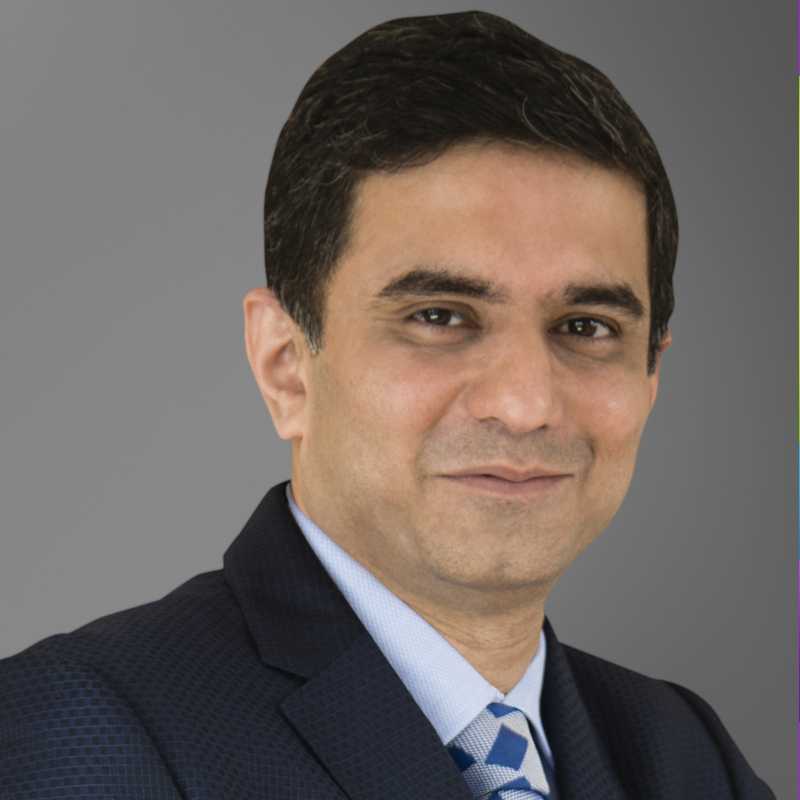
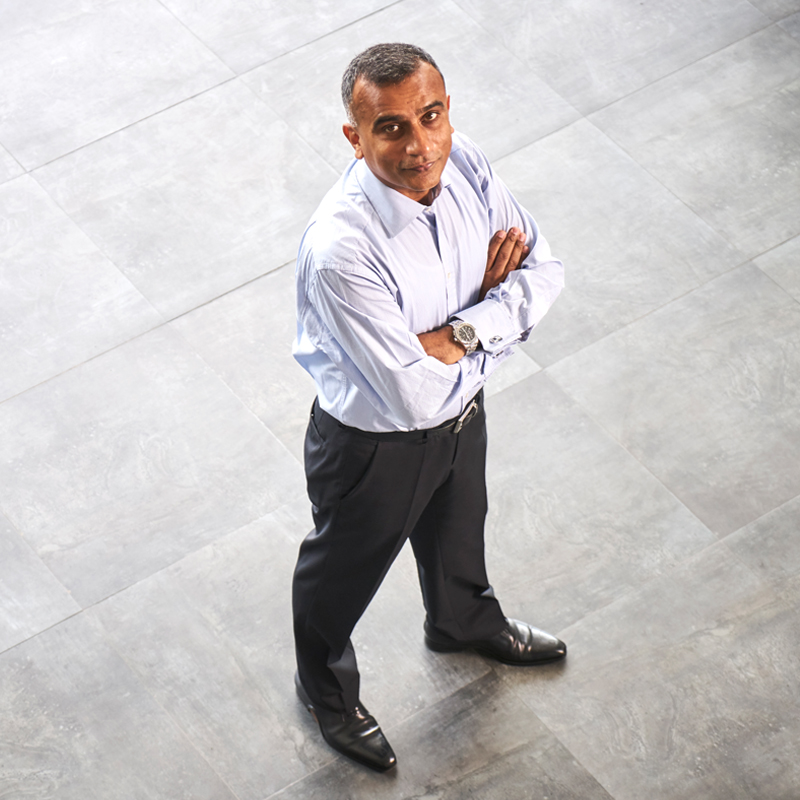
    Over the last decade, Viacom18 has broken new ground in myriad ways. The company has grown to 44 channels and five lines of business from a three-channel operation back in November 2007. Sudhanshu Vats, the group CEO of the company, is a proud man but is far from being satisfied. Looking back, he says the most defining moment for Viacom18 has been the launch of Colors, at a time when the Indian market was deemed to be over served. The launch of Voot in 2016, according to him, is another big moment in the company’s timeline.

    Viacom18 was formed as an equal joint venture between global entertainment giant Viacom Inc. and Raghav Bahl’s Network18, which was subsequently bought by Reliance Industries. The network launched its flagship general entertainment channel, Colors, in 2008, capturing the number 1 rank within nine months of launch.

    Over the course of the decade, the company has diversified into four additional lines of business—films, digital, experiential, and merchandise—creating an entertainment ecosystem that reaches out to audiences across demographics and geographies.

    Launched in 2011, the film business of the media house has become profitable since the 2015 fiscal. For this business, the network has tied up with several companies, with Viacom-owned Paramount Pictures and Lionsgate Movies among them, to release their movies in India.

    In the live entertainment segment, the company already has intellectual properties, including Supersonic and Chuckle Festival. The consumer durables and merchandising arm of the business, launched in 2009, is the second largest merchandising and licensing operation in the country.

    “Our vision to be India’s most-admired M&E company is reflected in our intent to open new worlds for our audiences. Whether through our shows such as Balika Vadhu, Shakti, Lakshmi Baramma, Angels of Rock, Voot Original Untag or movies like Bhaag Milkha Bhaag, Queen, Toilet Ek Prem Katha; a strong undercurrent of social messaging drives a lot of our content,” said Vats on the occasion of Viacom18’s 10th anniversary.

    Identifying regional TV and digital as the new areas of growth, Viacom18 is launching Colors Tamil in February 2018 and a premium offering of its VoD platform Voot in mid-2018. In keeping with its focus on regional entertainment, the network plans to offer digital original regional content on the steadily growing OTT service and dial up its thrust on regional movies as well.

    The network is also aggressively making its push in the kids’ ecosystem. It has taken its homegrown characters to the silver screen and to digital screens via Voot Kids.

    Said Vats: “As we go forward, we have to make content discovery as seamless as possible. We need to work on recommendation engines. It is all about partnerships. In the digital business, we partner with 42 players. It is all about taking your partners along for the ride.”

    Vats is convinced that it is the corporate ethos which has been ingrained into those at Viacom18 that has made the difference. He elaborated: “We are proud of our ability to nurture and manage a multi-brand, multi-platform and multilingual network while growing at a blistering pace and fostering a winning culture based on a shared set of values.”

    So to what does Vats attribute the success to? He said: “What drives our success the most is our culture. And it is our ability to build our culture, where we foster innovation, where we foster openness, where we foster enterprise and entrepreneurial spirit. It is this culture that builds our leaders.”

    With its focus on creating magic for fans and crafting an inclusive organisational culture, Viacom18 is all set for its next decade of growth.

  • Netflix expects rapid content growth from India

    Netflix expects rapid content growth from India

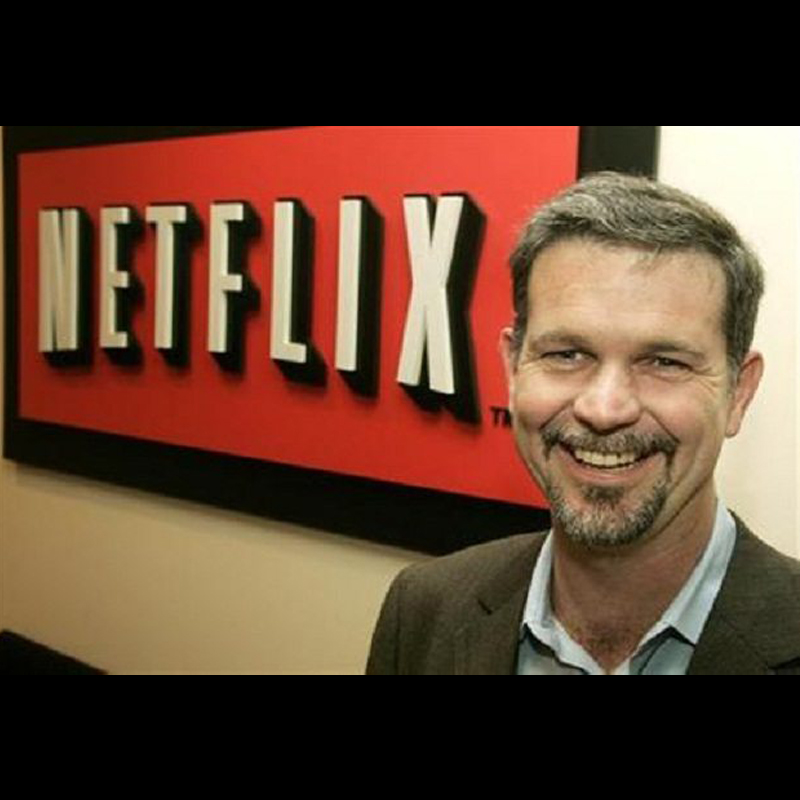
    MUMBAI: When Netflix CEO and president Reed Hastings comes calling—and it was his second visit to India this year—you know it means serious business. On a content partnership and library programming hunt, the video-streaming service’s team met up with several Indian media houses, including Shah Rukh Khan-promoted Red Chillies Entertainment and other independent production houses last week.

    Hastings and the Netflix team had a meeting late last week with the editorial team of Network18, a part of Viacom18, an equal Indian joint venture of the US media giant Viacom and a group company of India’s oil-to-energy-to-telecoms-to-broadcast conglomerate Reliance Industries Limited (RIL).

    Netflix later clarified on Monday to Indiantelevision.com that Hastings met up with the editorial team of Network18 before his interview was conducted on the business news channel last week and that no business was discussed.

    Incidentally, Viacom18 not only sits on a huge library of Indian language programming and the ability to produce fresh shows but is also active in the studio business having produced several Hindi blockbusters. Its latest production Padmavati, though, has run into a history vs. fiction controversy and, according to an official statement from the company, the 1 December 2017 release of the film has been voluntarily deferred.

    Both RIL chief Mukesh Ambani and Hastings believe that digital holds a great future for content distribution. Ambani on Friday at the Viacom18 10th anniversary bash here extolled the “synergies” that can come from the talent in the “Viacom18 family and digital distribution” (of Voot and Reliance Jio) where there’s “no limit to growth”. Hastings, in an interview to CNBC-TV18 channel last week, said Netflix “makes TV watching so easy because it is on the internet.”

    Expect Rapid Content Increase from India, says Hastings

    Excited about the one billion plus Indians who “are just wild about entertainment and television market,” Netflix CEO Reed Hastings is betting big here and wants to source more content—originals and Bollywood related—even as his team hunts for partnerships. 

    “You should expect rapid increase (in Indian content on Netflix), dozens of series a year from now will be underway,” Hastings told business news channel CNBC-TV18 in an interview aired late last week when asked to give a sense of investments being made in content from India for the rest of the world. “Of course, there are the global shows we have like Narcos, filmed in Columbia, popular all around the world. We have got a new German original Dark…and then we are adding more Bollywood films. We are also adding Sacred Games and originals that we are doing here in India.”

    Though he has “never completed a whole Bollywood movie” having sampled several of them, Hastings said he does “get the subtlety” of the content and it was fascinating to see the “breadth of entertainment (in India) and how that works”.

    According to Hastings, Netflix is a comparatively new player in India, being active for just two years, but would be indulging in producing more content for the Indian market and simultaneously the world too.

    He also did not envisage that uneven bandwidth infrastructure in India could pose problems to streaming services. “We launched in Mexico five years ago, which had a relatively slow internet, and it has just accelerated tremendously because people want to watch Netflix, YouTube, other content sourced online and it is moving to the internet life,” he said. “In India, in last two years with Reliance Jio, just the biggest explosion in bandwidth (has happened) that the world has ever seen. It is just incredible what is happening here in India. As we go to other countries, (we are) saying an investment like Reliance Jio is transformative for the society.a”

    Though Netflix globally is spending crazy amounts on content and customer acquisition—its content budget is approximately $8 billion—analysts say the company is also adding to its liabilities.

    Despite reporting an impressive earnings report for Q3 of 2017 in October, analyst Ryan McQueeney of US’ Zacks Investment Research pointed to some shortcomings: “Netflix’s third-quarter report revealed that its long-term debt now totals $4.89 billion. This is up nearly 46 per cent from the $3.36 billion in long-term debt that it started the year with, and it marks a 106 per cent growth in debt from the end of the year-ago period. Investors should also note that Netflix said its total liabilities have reached $13.62 billion, up from $10.91 billion at the end of 2016 and $9.82 billion in the prior-year quarter.”

    However, such criticism hasn’t deterred Netflix or its co-founder yet. “Content is best when it really has a local flavour, but then it is approachable by other people,” Hastings said in the CNBC-TV18 interview, adding, “We have an American comedian, Hasan Minhaj, who does stand-up in California and he is popular all over the world now on the Netflix platform. Same is with Narcos. So you get all these interesting crossovers.”

    Netflix relies a lot on data and technology to source and create content. Pointing out that the 110 million-member global company has reached its position because it was producing content that people were “excited about”, Hastings said that they use artificial intelligence to help them figure out what was best.

    “We call it informed intuition. While we want the creatives to have a lot of data but ultimately, it is a judgment call of a human being with a creative vision and that is the intuition. The intuition is the most important part but we would like it to be informed by how other shows have done,” he explained.

    Like a true champ, Hastings did not shy away from giving credit to his competitors where due. “Hotstar is doing a great job here in India. They are leading in the subscription internet category. There are a lot of other global internet companies, YouTube, Facebook, Amazon and Apple. So there are many competitors – the traditional media companies and the entire internet sector. And what that is doing is everybody is bidding to have the most valuable content. So the prices now for creators are increasing,” he told the TV channel interviewer.

    Netflix-Red Chillies Partner For Multilingual Spy Series

    A new multilingual Netflix original series, based on the book Bard of Blood, in partnership with Shah Rukh Khan’s Red Chillies Entertainment has been announced. Penned by young Indian author Bilal Siddiqi, the book will be brought to life as an eight-episode high-octane political espionage thriller series for more than 109 million Netflix members around the world.

    Khan said in a statement, “We have always tried to create world-class content and entertainment from India. Netflix has shown that Indian stories have a global audience and we would love to use this platform and its reach to tell more stories.”

    Set against the backdrop of the Indian sub-continent, the multilingual series will tell the story of an expelled spy, Kabir Anand, who is recalled from his new life as a Shakespeare professor in Panchgani to save his country and long-lost love. A combination of combat skills, intellectual background and personal circumstances propel Kabir to avenge the past and face his deadliest enemies in a race against time. The series will be shot on location and the characters will interact in Hindi, Urdu, English and other languages.

    “We believe in the global vision of Red Chillies to create groundbreaking content out of India. It’s exciting to deepen our relationship with Red Chillies and expand our slate of originals in India,” Hastings said.

    In a series of tweets, dwelling on the partnership, Khan said “Netflix and Red Chillies chill” and later joked “think will cast Reed Hastings in the series too. He is a natural.”


  • Viacom18 celebrations: Mukesh Ambani sets the roadmap for next 10 years

    Viacom18 celebrations: Mukesh Ambani sets the roadmap for next 10 years

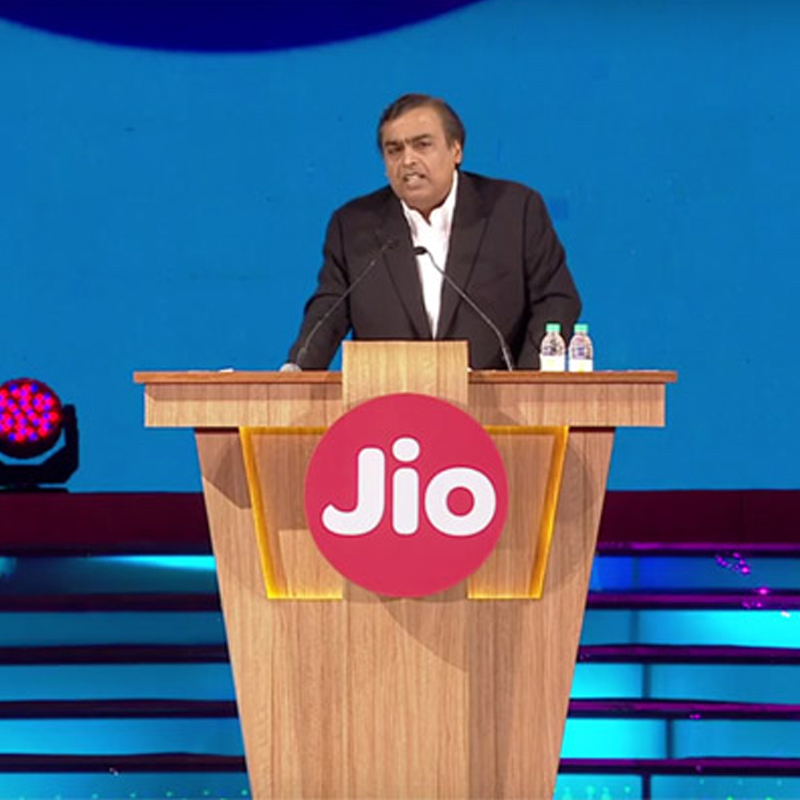
    MUMBAI: Indian television channel owners better watch out. Mukesh Ambani is riding into town and he means business. He sounded his intent at Viacom18’s tenth anniversary celebrations which, were held over the weekend in Mumbai’s NSCI Dome. He came in for a bit post 9 pm. And he was there for a few minutes on the massive stage that was flanked by large LED panels all around the dome. However, what he said, as a joint venture partner of US network Viacom, is what should make other TV industry entrepreneurs sit up and take note.

    Clearly laying out the roadmap for the group for the next 10 years, Ambani, India’s richest man, said: “The digital industry in India and the entertainment industry is going to grow manifold. The next decade is going to be the golden period of the entertainment industry and all of you should contribute and learn from this opportunity. This is a once-in-a-lifetime opportunity. And for all of us–Sudhanshu (Vats, the group CEO of Viacom18) told us we are in the storytelling mode–I think collectively for all of us, the entire Viacom18 team, has the responsibility to win the hearts of 1.3 billion people. (With) the synergies that can come from the talent in the Viacom18 family and digital distribution, there is no limit to growth. It’s been over three years since Viacom18 is part of the Reliance group along with Viacom. But I have to tell you. I was, too, obsessed with Jio and I had told Sudhanshu that once I am done with it I’ll be there. The birthday gift I am giving you is I will give you some of my time and support.”

    Obviously, Ambani is looking at replicating the aggressive growth that he has got from his 4G enterprise Reliance Jio. “I think that what we have achieved in Jio in the last two years is take India from 154th in the world to number one in the world in mobile data consumption. Last month on Jio alone, the video viewing was 200 crore hours. And this is just the beginning,” he said.

    Ambani also extolled the young leaders – the average age at Viacom18 is 32 and he urged Sudhanshu to keep at it that over the next decade – “to have courage to dream big, the determination to realise their vision, to have curiosity and the ability to learn.You have to learn something new everyday. And I believe that empathy is required of everyone–to see and understand what the other feels. It is not about yourself, it is about everybody else. These are three principles, which have helped me. I believe for leaders and the team at the top, the job is to win the hearts of our people.”

    Ambani erred when he said that he remembered in 1997 when Colors was launched (he obviously meant 2008), there was skepticism if a third entertainment channel could succeed. “Today as you stand here, the success is all yours – the entire ViacomTV18 team,” he said. “Today is the day to remember the founders and founding team of Viacom18, which includes Raghav Bahl and others.”

    The tenth anniversary celebrations had performances from many artists associated with Colors’ entertainment shows right from Manish Paul to Malaika Arora Khan to Parthiv Gohil to Mouni Roy to Bharti Singh to Raghu Dixit to Kailash Kher, among many others. The party was attended by the crème de la crème of the industry, including Sony Pictures Networks India CEO NP Singh, Star India MD Sanjay Gupta, Dentsu Aegis CEO Ashish Bhasin, Madison World chairman Sam Balsara as well as actors, producers and directors.

    For many, it was an evening to remember.

  • Viacom Inc misses EPS forecast but revenue beats expectations

    Viacom Inc misses EPS forecast but revenue beats expectations

    Even as its India business, Viacom18, celebrates its 10th anniversary, Viacom Inc’s stock on Nasdaq came under pressure after missing the earnings per share (EPS) forecast for the fourth quarter ended September 30, 2017. The company also reported financial results for the fiscal year ended September 30, 2017.

    The EPS for the quarter stood at 77 cents as against Wall Street’s estimate of 85 cents. For the corresponding period last year, the EPS were 69 cents.

    During the fourth quarter of 2017, Viacom reported operating income of $705 million as compared to $332 million during the quarter in 2016. Net income for the quarter under review was $674 million, a significant increase over last year ($252 million).

    Despite missing the EPS estimate for the quarter, the company did report revenue of $3.32 billion. This is better than its revenue of $3.23 billion from the same quarter of the previous year. It also beat out Wall Street’s revenue estimate of $3.24 billion for the fiscal fourth quarter of 2017.

    Viacom President and chief executive officer Bob Bakish said, “In the fourth quarter and full year, we made strong progress against our plan to fundamentally stabilise and revitalise Viacom, with top line gains in both Media Networks and Filmed Entertainment segments driven by continued execution on our strategic priorities. We saw significant ratings increases across the portfolio, which drove sequential improvement in domestic advertising; our international business continues to expand, delivering double-digit revenue increases; and Paramount is demonstrating growth across multiple revenue streams as it rebuilds the theatrical slate and continues to grow its TV production business.”

    He added that the company had completed several multi-year renewals of major distribution contracts, including the recent agreement with Charter, which secure broad, long-term carriage of Viacom’s networks for subscribers and expand its relationships with distributors through new advanced advertising and content production partnerships.

    The company established a stable base while reducing debt and improved free cash flow during the quarter.

  • People are Viacom18’s strongest competitive edge, says Rajesh Kamat

    People are Viacom18’s strongest competitive edge, says Rajesh Kamat

    The mood is celebratory at Viacom18’s offices as it readies for its invite-only tenth anniversary bash at Mumbai’s NSCI Dome on the evening of 17 November. The Reliance-Viacom joint venture satellite TV network is ranked among the top five–and probably in the top three in the Hindi GEC space–in the country. It achieved this in a span of just a year of its launch in 2007  whereas others took longer and some even folded up trying to do so. It has maintained that position as it enters its second decade of existence under the leadership of CEO Sudanshu Vats.

    The genesis of Viacom18’s explosive growth lies with the birth of its Hindi GEC Colors in 2008.  The man who was tasked with conceiving it was Rajesh Kamat, by the then Network 18 promoter Raghav Bahl, and group CEO Haresh Chawla.  A Star India veteran, Kamat was heading global studio Endemol India when he was handpicked for the job in a genre that was already hyper competitive. Along with programming head Ashvini Yardi he used three Ds (disruption, differentiation and distribution) to blaze a trail for Colors, which it continues to do even today.  He left the network in 2011 to become a part of  CA Media, a  media fund with his former bosses at 21 century Fox that has invested in a handful of media ventures. He has since followed up with another one last year called Emerald Media.

    Indiantelevision.com reached out to the now Singapore-based Kamat to get his perspectives on the birth of Colors and what makes Viacom18 tick – even today.  He responded enthusiastically to our questions on the subject. Read on to share the excitement of one of the most in-demand TV and media executives from India.

    Raghav Bahl chose you to run Colors, the first brand under the Viacom18 umbrella. Why do you think he made that choice? What were the challenges at launch time and as the company grew?

    While there were many more capable professionals in the industry, I must admit that it was my good fortune that Raghav found me worthy of the challenge. I am thankful to Raghav and Haresh (Chawla) for having given me an opportunity to prove myself.

    It is always a challenge to launch a new product in a market where the established players have been around for a while. To launch in a year wherein one has to compete with established players and multiple new GEC launches was an uphill task. We were clearly the underdogs and underdogs need to give it their 200 per cent to just get noticed. We were up against media giants that had the financial muscle as well as the marketing reach of their network.

    While the journey was full of multiple challenges, the first was to put together an offering that we believed would get the sticky consumer to give up their loyal shows on competing channels. We had to disrupt the viewing pattern of a single TV household by offering every member of the house a reason to switch from their most watched show to ours. In a cluttered distribution environment, to get seen itself was one of the biggest challenges. And all of this had to be done keeping an eye on the budgets!

    While we did launch successfully, the bigger challenge following that was maintaining that success for the long run all of which we achieved with our 3D strategy of differentiation, disruption, and distribution and an incredible team that executed that strategy to perfection.

    What enabled Colors to achieve the success that it did?

    Colors’ success can be attributed to a mix of disruptive and differentiated programming, accompanied by aggressive marketing and distribution strategies. Right from the launch, Colors broke the mould with its programming with shows like Balika Vadhu and Uttaran, which were differentiated social dramas and Khatron Ke Khiladi and Bigg Boss, which were scale reality shows scheduled in daily prime time. These shows, put together, completely disrupted viewing habits across single-TV households. In the same vein, our distribution strategy, too, was not just about making the channel available but also ensuring that it was seen. Hence, for Colors, we applied a neighbourhood strategy, wherein we were tactically placed right before or right after a leading GEC channel.

    Our differentiated content, distribution and marketing catapulted Colors to the number 3 position in its very first week and the number 1 position, 9 months after launch, breaking Star Plus’ stranglehold on the position after nine years of unchallenged dominance. Colors continued its successful run for the next three years growing into a vibrant and well-recognised brand reaching 140 million households. But, in all this, the true measure of success for me was that Colors has been the only GEC to date to have reached a monthly operating break-even starting month 15 of launch.

    You were the first CEO, when Viacom18 launched its first Hindi general entertainment channel in 2008 for two years and later promoted as the COO of the group. How would you define those three years at Viacom18? What were the nostalgic moments of that journey?

    Viacom18 can be described as an organisation that breeds a spirit of entrepreneurship and believes in rewriting the rules of the game. It’s not always easy to offer complete freedom, an open culture, empowerment to people and yet continue to operate as a professional set-up with a high success rate. My three years at Viacom18 were amongst the best years of my professional life.

    As for the nostalgist moments on my journey at Viacom18 …I must admit that there are plenty–finalising the name Colors, the debate on whether to go ahead with an English name for a Hindi GEC channel, the launch press conference in Bangkok pulled off by Sonia, Sandeep and Gogate, the weekly 3am calls on Tuesday with Ashvini and Vivek after the ratings came in, the constant debate with Simran on the inventory-pricing strategy, the now popular channel ID and music presented for the first time by Monica, the disruptive marketing plan by Rameet and Iyer, Cheryl helping us ensure that we didn’t go black on air in spite of late tapes, leading  the company into its first distribution joint venture Sun18 with the help of Gaurav, Dhananjay ensuring we didn’t get arrested in spite of all the cases filed against us during Bigg Boss. Each of these are moments that still give me goose bumps.

    During your time at the company, Colors had a number of big-budget reality shows. In retrospect, do you think it was the way to go?

    Yes, absolutely that was the way to go. In a heavily cluttered space, if you have to make an entry and get noticed, then you really have to create an impact. It was the reality shows like Fear Factor and Bigg Boss that put Colors on the consumers’ radar. These shows were mounted on a huge canvas and were critical for us as they helped the channel to get into consumers’ homes and get their attention. These shows also paved the way for consumers to sample our other shows like Balika Vadhu and Jai Shri Krishna, which would eventually be the shows that they consumed on a daily basis. The fact that these reality shows are still airing on the channel and rating well is testament to the fact that it was the right decision.

    With the tenth anniversary of Viacom18 around the corner, what, according to you, keeps the company going?

    Viacom18 led by Sudhanshu (Vats) and Raj (Nayak) is a network of firsts and has been a thought leader on several counts. Colors has grown from strength to strength in the past nine years and has been a real asset for Viacom18. Brand Colors today has become one of the flagship brands for the company and has now extended to multiple regional languages as well as English. The network has always encouraged differentiated programming and that I think is what keeps it going. But their strongest competitive advantage and biggest strength is the people who work there; a team of exemplary professionals who are exceptionally creative and gets the pulse of the audience, which helps them create the magic we see across screens.  

    How did your experience at Viacom18 help you grow as a professional?

    In my journey first as the CEO of Colors and then as the COO for Viacom18, I have had all kinds of challenges thrown at me.  Each of these challenges have only helped me mature as a professional and as an individual. While I had managed teams before, Viacom18 was my first experience at managing a board with two shareholders. I had to quickly learn the fact that success is not only about launching a successful brand but more importantly about how that can be translated effectively into building shareholder value. This really helped me move into the next phase of my career of being an investor in media companies.

  • ARK Infosolutions wins Digital Studio award

    ARK Infosolutions wins Digital Studio award

    NEW DELHI: Value-added distributor for technology products ARK Infosolutions has bagged two awards for the best national distributor (production) and best regional distributor (Production) (West) at the 2nd Digital Studio India Channel Partners Awards 2017.

    “This is an endorsement of our commitment towards technology innovation,” said ARK CEO Rishi Khemka.

    ARK was recognised as an industry leader in technology innovation. The awards honoured both individuals and businesses, who were making impactful changes within the technology industry. Award winners were selected based on the innovative use of technologies and products that they offered.

    The awards is an initiative by Digital Studio Broadcasting and Production in India, an ITP publication. There were close to 120 nominations, of which 70 were shortlisted for the final round.

    The jury members included Walt Disney India executive director and head of technology Manas Ranjan Mati, Viacom18 vice president and CTO Rajasekharan Harikrishnan, cinematographer R.M. Rao, and FurtureWorks Media MD Gaurav Gupta.

  • Viacom18 ditches FTA in UK, now entirely pay

    Viacom18 ditches FTA in UK, now entirely pay

    MUMBAI: With the launch of its two channels, MTV Beats and Colors Rishtey, on Virgin Media Viacom18 has transitioned from free-to-air (FTA) to entirely paid platform. Viacom18’s channels will now only be available with a subscription on Sky and Virgin Media.

    Talking about leaving the Freeview platform, IndiaCast Media Distribution group CEO Anuj Gandhi says, “We are currently steering our business in a new direction in Europe and have decided to go pay and as a result, current channels will no longer be available on any free to air mode but will continue to be available on paid platforms.”

    The company gained significant viewership via Freeview, which reaches 11 million homes untapped by pay TV. Freeview contributed to 10 percent of its eyeballs in the UK. Rishtey and Colors at times received as high as 41 percent viewership contribution from it.

    Viacom18 channels on Virgin Media are in the mix pack which reaches to over 2.7 million subscribers. The growth is expected to be in line with Virgin’s growth forecasts.

    Viacom18 has a mix content strategy for its UK consumers. Curated programmes from India make up the bulk of its content while a tiny part is local programming. “Viacom18 is exploring further investments in local programming which will happen in the next fiscal, ” he reveals.

    On the advertising front, 90 percent comes from UK based companies. It has three sets of distinct advertisers. First – the local ethnic home-grown businesses, second – the mainstream multinationals and third is Indian companies that export to NRI audiences.

    Advertisers are clamoring to get airtime especially during Big Boss. “As a matter of fact, all our channels currently are utilising 100 percent of the available inventory and we are not even in our peak season, he adds.

    The buzz-creating idea of Viacom18 is to make sense to three categories of people living in UK – the first generation, their children/youth who have less exposure of content being produced in India as they have a variety of options to choose from and last one being people who have moved here in last few years as an intra company transfer or project based.

    While keeping the three categories in mind, Gandhi says that sometimes even small trade or local event associations give a higher ROI as compared to a high profile above-the-line campaign.

    Selecting the right marketing mix is crucial when you are in a niche market. That said, even the language used for communication will ensure success or failure.

    Viacom 18 partnered with Virgin Media in April 2011 to launch its General Entertainment Channel, Colors, on the cable platform. Colors has been available on Sky since January 2010. When launched, Colors was included in Virgin Media’s new Asian Mela bundle which comprised 11 TV channels, including ARY Digital, B4U Movies, B4U Music, SET Asia, MAX, Star Plus, Star News, Zee Cinema, Zee Punjabi, Zee TV and Colors TV, along with popular Asian radio station Sunrise Radio and priced at £11 a month.

  • MIB, Prasar Bharati mulling B-school help on DD & FreeDish biz models

    MIB, Prasar Bharati mulling B-school help on DD & FreeDish biz models

    MUMBAI: The government is exploring seeking help of an Indian Institute of Management to suggest ways on revitalising Doordarshan, including studying the existing business model of national broadcaster’s FTA DTH service DD FreeDish and whether further suggested improvements could be implemented.

    According to government sources, the move is part of ministry of information and broadcasting (MIB)’s efforts to shore up the bottomlines of Prasar Bharati, an autonomous body that manages India’s two pubcasters, Doordarshan and All India Radio.

    A B-school may be roped in to study the business model of DD FreeDish — that at present auctions slots on the platform to private broadcasters too — and explore whether if private sector TV channels are bumped off DD can generate revenue on the strength of its own channels, many of them also distributed terrestrially.

    As per some media reports, DD not only put on hold the latest round of e-auctions for slots on FreeDish in August 2017 on an advisory from MIB, but has also stopped renewing agreements of TV channels, which are presently on the DTH platform but are faced with a blackout once their annual contract comes to an end.

    A top Prasar Bharati official is said to have made a presentation to MIB minister Smriti Irani recently on how the DD set-up could be revitalised, including rejigging the business model for DD FreeDish, amongst other things.

    Though most big private sector broadcasters like Star India, Zee, Viacom18 and Sony, all having their channels on FreeDish, have not yet officially reacted to DD FreeDish keeping in abeyance the e-auctions for administrative reasons, smaller TV channels may feel the pinch. One of them, Cinema 24×7, has moved the telecoms and broadcast disputes tribunal TDSAT seeking interim relief as its contract expired in September 2017 and, according to its petition, it failed to get clarifications from DD on future auctions.

    The magic of DD’s FTA platform was discovered by TV channels a couple of years back with the battle for a slot intensifying in the last one year or so, egged on by BARC India starting to measure non-urban and rural audience. On DD FreeDish, it’s not pubcaster’s channels that top the list in terms of audience ratings, but mostly those belonging to the private broadcasters.

    A TV executive, on the condition of anonymity, explained that while Doordarshan, as a statutory body, survives on annual grants from the government, in 2016-17, DD FreeDish recorded revenues of about Rs 2641.7 million, a 47 per cent increase from a year ago. Hence efforts to revamp the current business model for DD FreeDish, having almost 52 per cent rural viewership that attracts private TV channels willing to pay hefty carriage fee, could prove detrimental for the pubcaster’s revenue, the exec added.

    Former MIB minister Manish Tiwari, while criticising DD’s reported moves to change the existing revenue models for DD FreeDish by putting on hold a transparent mechanism like e-auctions, told Indiantelevision.com, “DD FreeDish benefits from the presence of private TV channels on its platforms as it provides diversity of content to non-paying rural audiences.”

    ALSO READ ;

    WOW Cinema petitions TDSAT on delayed auctions for DD FreeDish slots

    Govt to help revitalise DD under ‘autonomous Prasar’, dubs censors as ‘facilitators’ within law

  • MIB secy Sinha, Viacom18 CEO Vats to speak at CASBAA convention in Nov

    MIB secy Sinha, Viacom18 CEO Vats to speak at CASBAA convention in Nov

    MUMBAI: Regional multichannel TV and digital video trade body CASBAA has announced the key themes (and workshop programme) for the CASBAA Convention 2017 to be held in Macau, from 6-8 November.

    The line-up for the convention has been designed “to capture the urgent issues facing our industry at a time of the most dynamic market changes seen in more than 20 years,” said CASBAA CEO Christopher Slaughter.

    CASBAA represents 100 corporations across 20 markets in the Asia-Pacific, from China to Australasia, Japan to Pakistan and encompassing over 623 million Pay-TV subscribers and 2.5 billion broadband connections (source: MPA).

    The full implications of the digital video revolution are at the top of the convention’s agenda, including solutions to the potentially devastating impact of digital piracy, the on-going opportunities presented by local, regional and global OTT platforms and the challenges arising from the mountains of detailed digital data now being assessed by broadcasters, carriers, technology vendors and advertisers alike.

    “The blue-chip list of Pay-TV operators, content creators, broadband carriers, investors, sponsors and regulators attending the convention guarantee unrivalled access to the Asia Pacific Pay-TV and Digital Video decision makers,” said Slaughter.

    In the meantime, through a series of ‘Masterclass’ panels and presentations, the convention programme will deliver:

    – Real-time case studies focused on the crucial battle against on-line piracy, including a few “Wins!”
    – A fresh look at the best performing business models for Pay-TV
    – Deep-dive presentations on the vital security technologies and regulatory “fixes” under debate across Asia Pacific and around the world
    – Close examinations of the new ecosystems and revenue streams now available for the monetisation of emerging digital video markets
    – New insights on the impact of soon to be launched broadband satellite services across Asia

    Plus Understanding the Viewer: a series of closely moderated conference sessions shedding fresh light on the complex worlds of digital media and programmatic advertising.

    The key speakers at the convention include:
    – Samuel Scott, Columnist, The Promotion Fix @ The Drum
    – Hosi Simon, Global General Manager, VICE Media
    – NK Sinha, Secretary, MIB, Government of India
    – Dr Ros Lynch, Director, Copyright & IP Enforcement, UK Intellectual Property Office
    – Sudhanshu Vats, Group CEO, Viacom18
    – Birathon Kasemsri Na Ayudhaya, Chief Content and Media Officer, True Corporation
    – Jeremy Butteriss, Managing Director for Global Partnerships, APAC, Google