Tag: Viacom 18

  • Abhishek Rege elevated as Endemol CEO

    Abhishek Rege elevated as Endemol CEO

    MUMBAI: Another big news has come right after Endemol Shine India managing director and CEO put down his papers. The COO of the production house, Abhishek Rege, is being elevated as the new CEO. 

    A source close to the development confirmed the news to Indiantelevision.com that Dhar will be starting his own venture and Rege will helm the company.

    Rege has been associated with Endemol for more than seven years now. He worked with Endemol in 2007 for three years as head of commercial and legal before joining Viacom 18 as director business operation, international business. 

    Then he rejoined Endemol in 2012 as chief operating officer of the television section and later was promoted to chief operating officer of the production house in September 2016. 

  • Viacom 18 announces 3rd edition of Nick Kids Choice Awards 2017

    Viacom 18 announces 3rd edition of Nick Kids Choice Awards 2017

    MUMBAI: After two successful blockbuster editions, Nickelodeon is all set to roll out the orange carpet for one of the most awaited event in the kid’s calendar -‘Nickelodeon Kids Choice Awards 2017’.

    The one of a kind extravaganza, which saw Bollywood’s biggest names like Shah Rukh Khan, Deepika Padukone, Varun Dhawan and Alia Bhatt match steps with the adorable nick toons Motu Patlu, Dora, Shiva in 2016, is back. The upcoming edition of the Nickelodeon Kids Choice Awards 2017 is set to be the penultimate family entertainment destination with the stunning and versatile Alia Bhatt, Ranveer Singh and the uber-cool Nicktoons headlining the landmark kids’ entertainment extravaganza. The star-studded awards night is set to come alive in December 2017.

    KCA empowers kids by making their favorites win across numerous categories such as Best Film, Best Song, Best TV Show to name a few. Last year saw the King of Bollywood Shah Rukh Khan win the title of Icon of the Year and the stunning Deepika Padukone win the best actress award for Bajirao Mastani. Kala Chashma, was voted as the best song by kids while Temple Run was nominated as the best mobile game and Leander Peas received the Nickelodeon Khiladiyon Ke Khiladi Award.

    This year will also see the endearing Nick Toons Motu Patlu, Shiva, Dora, BOOTS, Doggy Don, Ninja Hatori and Gattu Battu have a fun time and match steps with celebs attending the awards show. The high decibel experiential event also attracts the biggest sponsors in the industry with the likes of Dabur Red Paste, Lifebuoy, Choki Choki, Funskool, Yellow Diamond Rings and Fru Juicy Jelly partnering with the event in 2016.

    Viacom18 kids cluster business head Nina Elavia Jaipuria said, “Kids are at the center of all that we do at Nickelodeon. We have once again curated an unmatched family experience with Nickelodeon Kids’ Choice Awards that is not only a category first but more importantly also empowers the young generation by recognising their choices. The iconic awards show will once again be staged at an unparalleled scale at the Dome, making it an apex entertainment destination that will allow us as well as our advertiser brands to connect and engage with kids and parents.”

    Nickelodeon Kids Choice Awards 2017 will once again see the iconic Green Slime Mania that has taken the world by storm. 2016 saw the Badshah of Bollywood Shah Rukh Khan, Varun Dhawan and Alia Bhatt turn Green! It’s time to see who amongst the superstars will be slimed green in this year’s supersonic edition of Nickelodeon’s Kids Choice Awards 2017?

  • MAELS 2017: Free traditional media from regulations, don’t impose these on OTT services

    MAELS 2017: Free traditional media from regulations, don’t impose these on OTT services

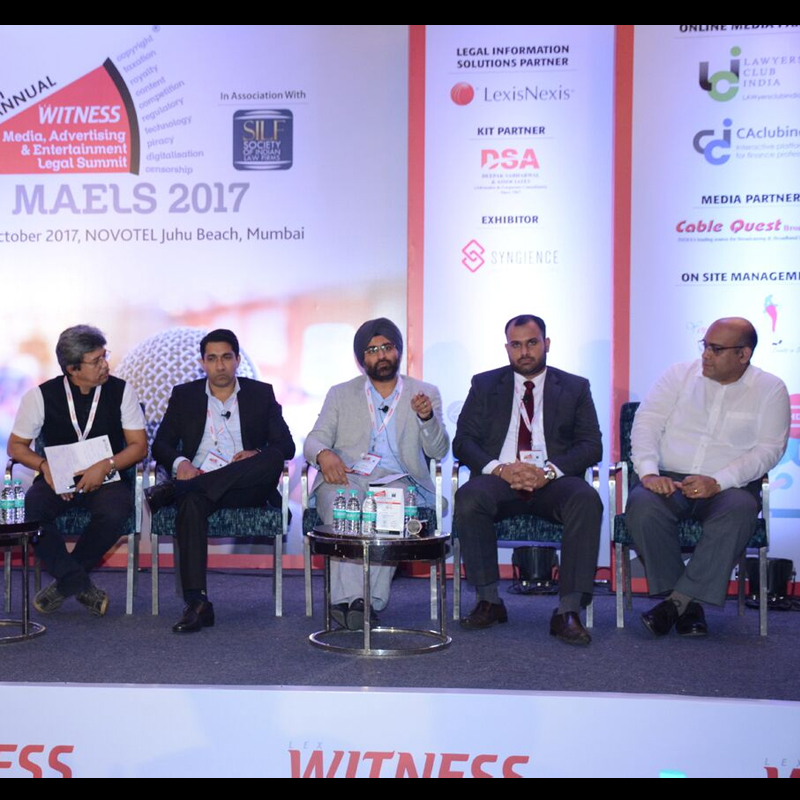
    MUMBAI: Traditional linear television needs to be free from the chains of regulations, and OTT entertainment platforms need to be left clear from any fresh legislation. That was the conclusion of the second panel at the sixth annual Media, Advertising and Entertainment legal summit 2017 which focused on whether the fresh emerging digital communication and entertainment should be allowed to function unfettered.

    The panel discussion on “The New Digital India Wave – An Untamed Beast” moderated by Castle Media CEO Vynsley Fernandes featured Indiantelevision.com founder, CEO and editor-in-chief Anil Wanvari, Alpha Partners associate partner Kunal Arora, Viacom 18 senior vice-president head business and legal affairs Anil Lale, Dhir & Dhir Associates’ partner KPS Kohli and Sony Pictures Entertainment head legal Ayan Roy Chowdhury.

    Wanvari began the discussion by giving a lay of the OTT landscape, emphasising that streaming services, social media platforms, and communication tools such as Snapchat, Skype, Whatsapp, Hike and Messenger, among other, are here to stay and they have seen very rapid uptake.

    “The next six months to a year are really going to see their adoption accelerating even further, courtesy dropping bandwidth prices – which are going to be shaved even further because of competition amongst the telcos,” said Wanvari. “This is going to lead to video consumption becoming more affordable for the masses and the explosion in data consumption will be like we never even imagined.”

    Wanvari pointed out that many of the OTT services have been promoted by broadcasters the services of which are already governed by the Programme Code, the Copyright Act, the Cable TV Regulations Act, and they adhere to strict standards and practices to ensure that they don’t go afoul of the law.

    “Broadcasters rely on self-regulation, and if there is a violation, the Broadcast Complaints Council ensures that the violator is brought in line,” added Lale.

    Arora stated that, as of now, there are no specific regulations governing OTT services – especially the communications services, though a consultation paper was floated by the Telecommunications Regulatory Authority of India (TRAI) in 2015.

    “One concern that I hear from the industry for the non-communication space that content can’t be regulated absolutely, while, for the communication-based OTT, it becomes quite essential to govern the content. For non-communication space, regulation is important from the pricing perspective. Just to keep things moving in the same direction, regulation should be drafted to make sure that the growth of the OTT sector doesn’t hamper or restrict the growth of the traditional sector, ” he added. “Also, with the amount of content flowing over the internet and on OTT services, monitoring and policing each one’s content could be very challenging for any government.”

    Fernandes interjected here saying that technology can intervene here, especially in cases of national security. “In the valley, the government could ask all traditional media to shut down during the time of crisis,” he said. “But, can digital media be controlled so as the servers are located outside India and don’t fall under the country’s jurisdiction?” he questioned.

    To this, Wanvari stated that the controls lie with the authorities as an order from either the TRAI or the home ministry or telecom ministry to the telecom and internet service providers can result in the complete shutdown of the internet in a geographical area which is under threat and totally defuse it.

    “There is this argument of a lack of a level-playing field between traditional media and digital media. There are two kinds of players,” said Arora. “Those which are international, and those which are promoted by indigenous players or groups. You see the more edgy content on the international OTT players, whereas the Indian ones are relatively adhering to the programming and content regulations as mandated for TV.”

    Kohli said, “For digital media there is no regulation. Their content is far more attractive to at least the younger generation because there is a little more skin and possibly abusive language. The traditional media is bound by rules and regulations, and hence it is controlled.”

    Lale mentioned that television has very few controls at the subscriber end, and the Indian families, as a whole, have to watch a little mature content, hence broadcasters have to be more careful. “On digital, because the content is available on your phone or laptop, the content is under your control. If you look at the AVoD service, you will not find content which is more mature – exactly as on TV – but, while on SVoD, you will get content like Games of Thrones. Hence, the payment also comes in this matter. GoT is the example that how regulations should be separated for digital and linear TV,” he said.

    Chowdhury said, “In India, whether we are paying to the service provider or we are paying to the government, in the form of direct-indirect taxes, levy or premiums, we pay for everything. So, there is no reason for the consumer to not shift from non-paying audience to paying audience. Also, the access cost is very less, so it is happening.”

    The panel was totally in agreement that there are enough regulations in place right from the Indian Penal Code, the Copyright Act, to haul up violators, if any, even on the piracy front. “The basic issue of piracy is enforcement. We don’t need a separate regulatory body for OTT services. We have self-regulation,” said Kohli. The government has the EMMC and IPC and various acts to stop the piracy on the web. But, the issue is who’s going to execute, whether you go to the police and enforce it, or is there any technical way of enforcement.”

    Roy Chowdhary proferred that, “Basically, enforcement should come from technology but telecom providers don’t want any controls as more data that is consumed the more they earn. But, if they are not open to cracking down on it, we can turn to blockchain which has an answer to it, which to a large extent curtails piracy.”

  • Nickelodeon ad sales grew 20%, launches ‘Gattu Battu’

    MUMBAI: Ruling the genre from August 2014 to date with 31 per cent market share is not one man’s game. Growing from strength to strength are Viacom 18’s children’s networks — Nickelodeon (19 per cent), Sonic (10 per cent) and Nick Jr (2 per). 

    The other two networks Disney and Turner stand at a 33 per cent and 27 per cent market share, respectively. Reaching out to 32 million kids every week, Nickelodeon is the undisputed leader across various slices, TGs, Dayparts (weekdays and weekends), NCCS and Geographies. The channel sees a 28 per cent contribution from South as a region. When it comes to viewership, the channel gets 65 per cent traction from the Urban whereas 35 per cent come from Rural.

    The franchise’ revenue has gone up 20 per cent y-o-y. Sonic’s yield has increased by 40 per cent y-o-y whereas, Nickelodeon’ yield has increased by 25 per cent y-o-y.

    “Nickelodeon’s team has steered the channel as the ruler from 2014 in the kids category. The channel has been leading with a five per cent gap from two of its competitors Hungama and Cartoon Network. The fantastic news is that Sonic is at 10 per cent market share with 252 TVTs. In fact one of the weeks Sonic took over Disney. We are all up there growing, crawling, reaching there,” said Viacom18’s kids cluster EVP and business head Nina Elavia Jaipuria.

    According to the Ormax Small Wonder Study, six out of 10 characters that are widely loved by kids come from this channel.

    “When new kids comes to a channel, we normally drop time spends or when you have lesser reach on your channel, the time spent goes up. Therefore, we feel happy that we have the highest reach and have maintained our time spent. The kids are loyal to us which means that we have a great channel affinity, content affinity,” added Jaipuria.

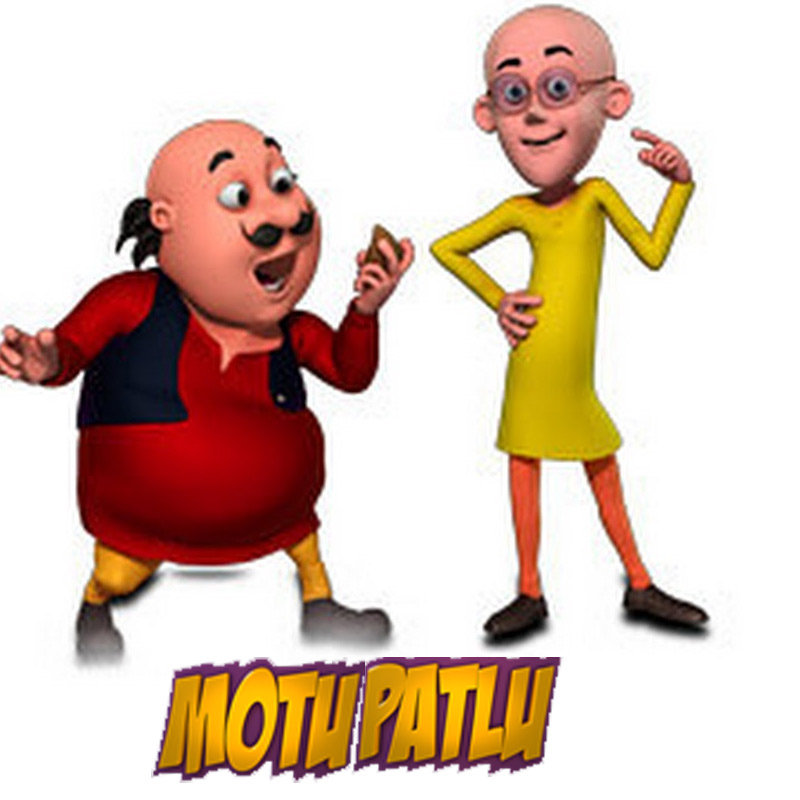
    The network released its full length feature film titled Motu Patlu: King of Kings which has done wonders. The movie has made its way to small screen and will air on the channel soon. Viacom also plans to launch a new Motu Patlu in Dragon World by June 2017. Apart from this, the channel will add new episodes to Motu Patlu and Ninja Hattori, which is getting updated after a year.

    Nickelodeon

    With an average time spent of 90 minutes on Nickelodeon, it is all geared up to launch its fourth local franchise. After a successful year with home-grown toons like Motu Patlu, Pakdam Pakdai and Shiva, Nickelodeon intends to magnificently captivate kids with its new fully owned IP Gattu  Battu on 1 May. The show will air throughout the week.

    “Nickelodeon has managed to sustain its leadership for the longest time is because of the width and depth of library. I think it is about creating enough content library and therefore the fourth local show so that we have width. But, that is not enough. We need depth due to which we have created libraries with 200 episodes for our local shows. It is a whole lot of investment but they have a huge shelf life which gives us ratings that can monetize the top-line,” added Jaipuria.

    Gattu Battu is a story of two best friends who own an investigative and security agency in a small town called Vishrampur.  While Battu is the sixth sense behind every case to be solved, his friend Gattu is the courageous and righteous one. Their hilarious and brilliant cover-ups is what forms the heart and soul of this show. Gattu and Gattu are joined in their fun escapades by Ting Tong, their goofy and adorable sidekick with a flair for martial arts. They together along with Dr. Bhatawadekar and his gadgets come together to fight the notoriously funny villain Sher Singh.
    The unique investigative home-grown animated show from the house of Nickelodeon is an ultimate blend of action and comedy and is sure to provide a fun filled entertainment experience for kids.

    “After launching three blockbuster ‘Made in India’ shows and creating an eco-system around them, we are delighted to bring to them yet another winning series, Gattu Battu, that they will surely embrace and make a part of their daily lives. There were no characters that bring a blend of crime thriller combined with comedy for kids – Gattu Battu fills this whitespace,” added Jaipuria.

    The show’s launch is followed by an expansive marketing campaign which will have promotions with an extensive cross channel plan, large scale on-ground, ambient engagement and interesting on-line interactivity. Adding to this will be the on-ground initiatives like retail and mall partnerships (Phoenix, Ambience, Viviana etc), multi city promotions etc. The channel has associated with Mc Donald’s to air the show promos across 300 screens. Gattu Battu themed games, van activations in Tier 2 cities and meet-and-greets at various gaming zones such as Funcity will introduce the duo as well as allow kids to engage with the characters.

    Sonic

    Viacom18 made a bold move last year by placing Nick’s iconic teen adventure program, Shiva as part of Sonic’s programming henceforth. The change is in line with Nickelodeon’s need for a strong second channel. This led to a huge spike in its viewership and therefore, the channel has grown from four per cent market share to 10 per cent.

    “We have done everything possible when we launched a new show. We did games, malls, mass media, school content program, etc to make Shiva the next big thing after Motu Patlu and Pakdam Pakdai,” added the channel head.

    The channel has been delivered mainly because of three shows — Pakdam Pakdai which gives the channel 25-27 per cent share in local content, Oggy and the Cockroaches and Shiva.

    On the digital front, the channel plans to engage more with kids by creating several digital assets. “The websites are rocking with it. We have 407 games on the websites out of which 200 are local content games with 15 new ones in the pipeline,” said Jaipuria.

    Rocking the summer with exciting content line-up, the channel will add new episodes to its famous shows- Shiva, Pakdam Pakdai, Oggy and the cockroaches, etc. The marketing strategies for these shows will matchup with Gattu Battu’ plans. The channel will place blimps of the characters at several places in partnership with malls and will also do van activations in tier 2 cities.

    Nick Jr

    The 24 hour pre-school channel for toddlers has the best content with iconic, world renowned shows like Peppa Pig, Dora the Explorer, Paw Patrol, etc. Dora continues to be the face of the channel.

    Nick HD+

    The best of local and international shows like Motu Patlu, Pakdam Pakdai, The legend of Korra, Dora the Explorer, The Penguins of Madagascar, Rabbids Invasion, etc., are available on high definition on this channel. It does not simulcast the content from other channels in the bouquet. The channel also has a block on the channel called Teen Nick, where the channel plays sitcoms.

    Some channels may not bring in advertising revenues. “A lot of these channels are here to stay because they create large-scale perspective, foundations, and gives us a base of consumer products and subscription revenue.

    Ad sales and revenues

    The franchise has been contributing the network’s bottom line year after year. The ad sales over the last year have grown by 20 per cent. The channels have also seen a rate increase. Three years in a row, the franchise has given 30 per cent and 20 per cent to the top line. The subscription revenues have also grown by 10-15 per cent y-o-y. The cluster has also delivered on the bottom line and has doubled from last year.

    The franchise provides various non FCT solutions to advertisers like promotional licensing, product licensing, tentpole licensing, movie sponsorships, in-show placements, school contact program, tailor made brand solutions that paved way for increased. 

    “If we are spending so much, the money has to come from somewhere. So, the rates have increased on Nick and Sonic. Sonic has made it to the consideration of many advertisers. We are very happy to note that monetizing is actually working for us, subscription revenues are also growing by 10-15 per cent y-o-y. Therefore, this business looks greener. The non-subscription revenue from ad sales, non-FCT revenue and it’s starting to get great ancillary revenue from consumer products, licensing or digital screens or syndication,” concluded Jaipuria.

    Jaipuria also noted that the network’s 15-20 per cent revenues got hit due to demonetisation. It took away the surplus.

    With a slew of characters, the franchise’ merchandising revenue has grown by 40 per cent from last year. The products are available across 46 categories.

  • Zee, Bennett, Discovery, Disney, NDTV, Viacom 18, BBC & Raj TV among 112 channels awaiting clearance

    NEW DELHI: Even as the government claims to have permitted 892 private satellite television channels as on 28 February 2017, applications of a total of 112 channels have been awaiting clearance, some of them since October 2010.

    Stating this, the minister of state for information & broadcasting told the Parliament that the government has no plan to place a ceiling on the number of TV channels in the country.

    Meanwhile, a list annexed to the minister’s reply showed that Cinema 24*7 leads the list of those awaiting clearance with seven channels. Bennett Coleman and Company Ltd and Zee Media come next with six channels each.

    Six companies are awaiting clearance for three channels each: Yogi Networks, Vedic Broadcasting Ltd, Eduall India, Media Worldwide Ltd, Raj TV Network and Neo Broadcast Pvt Ltd.

    Those who have applied for two channels each include Springtide Infotainment Media, Vrinda Channel, Enter 10 TV, AETN 18 Media, Viacom 18, Chaman Broadcasting, Kasthuri Media, BBC Global News India, Discovery Communications, Dev Varsha Jatropha Bio-Energy Ltd, Kamyab TV, Sowbhagya Media Pvt Ltd, and Sudarshan TV.

    All others including NDTV Lifestyle and Disney International have queued up for one channel each.  

    Also Read:

    892 pvt TV channels against 1500 targeted in 12th Plan

    Total of television channels in India rises to 892, with three cleared in June

    81 teleports permitted to uplink, downlink TV channels


  • TV industry gives mixed reaction to MIB’s DAS III & IV extension

    TV industry gives mixed reaction to MIB’s DAS III & IV extension

    MUMBAI: Even as recently as a month ago, India’s ministry of information and broadcasting (MIB) and the industry regulator the Telecom Regulatory Authority of India announced that the DAS IV deadline of 31 December 2016 was sacrosanct and that the cable TV industry would have to bite the bullet. So, when the MIB announced on 22 December that it was pushing forward the Phase IV date to 31 March 2017 and the Phase III date to 31 January 2017, eyebrows were raised once again globally.

    Can the MIB ever stand firm on deadlines or can it set realistic ones, asked potential international investors who have been waiting to hear some positive developments about India’s digitizing-in-stops-and-starts cable TV sector?

    But, the response on the ground amongst India’s TV broadcasters and cable TV operators was mixed. Some have welcomed the decision; others have been harshly critical of the MIB’s postponement rationale.

    The MIB said the extension was being done “in lieu of uncertainty in the market due to pending court cases and unsatisfactory progress of installation of set-top boxes (STBs) in Phase IV areas.”

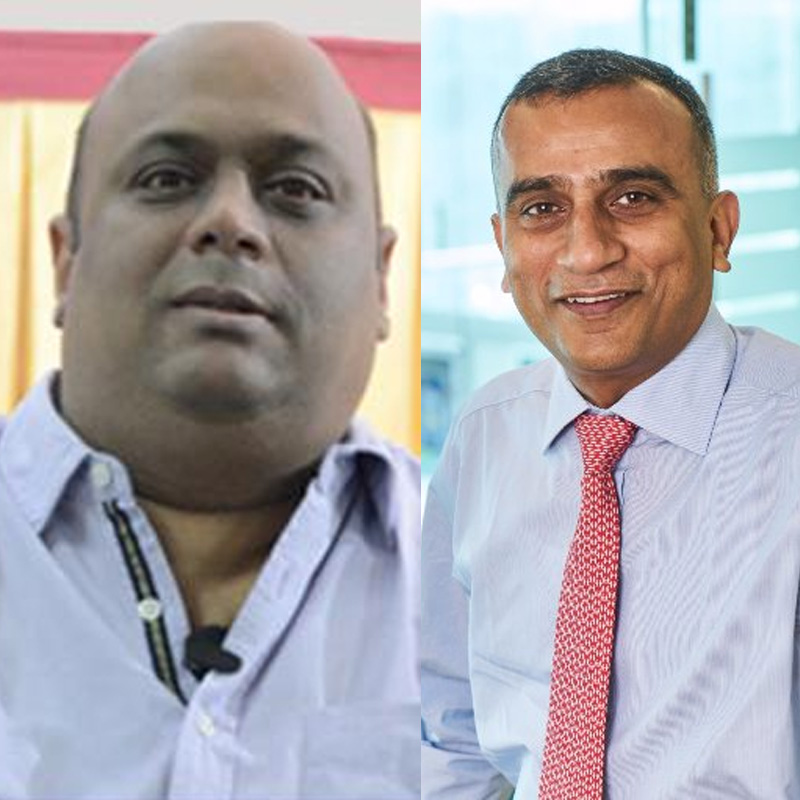
    Speaking to Indiantelevision.com, Viacom 18 group CEO Sudhanshu Vats said, “Owing to lack of preparedness of the industry toward digitisation, it is a good move provided there are no more extensions at all.”

    Questions an investment banker unwilling to be identified: “The cable TV trade has been given four to five years to digitize. And, they have not managed to do the job well over this period. What miracle will they perform in one month and three months? What’s to guarantee that the court cases will be settled and that government will not once again become weak-kneed and go in for a further postponement when these fresh deadlines come up? Investors want certainty, not this joke that the government has made of DAS.”

    Hathway Cable & Datacom’s Delhi distributor Vinod Chauhan said, although the order does not directly impact his operation since he was in the area covered under DAS I, it was a good move, but he questioned the logic behind it. Hathway Cable has been expanding into Phase III markets and had hopes that broadband and this expansion would help it increase its ARPUs.

    Siti Networks Ltd COO strategy & compliances Anil Malhotra said that the MSO’s planning for switching over to digital coincided with the government’s deadline of 31 December 2016. He said that there was pickup in demand for digital STBs of late. “We are not worried at all since we have a huge inventory of imported STBs,” Malhotra said.

    As the brief talk veered toward the effect of demonetisation, he said that entertainment was one of the primary essentials in the hectic lives of people today. “Everyone is ready and prepared to shell out Rs 1000-1100 for good quality STBs,” Malhotra added.

    Star India legal and regulatory affairs president and general counsel Deepak Jacob expresed his disappointment about the government’s decision. “When the DAS IV deadline was finally set for 31 December 2016 as per a government notification approved by Parliament, the ministry ideally cannot and should not extend the deadline at all,” he said emphatically. “Now, the government should stick to its new deadline and not allow any posptonment.”

    Smaller cable TV operators are however pleased about the lifeline they have got. Said Maharashtra Cable Operators Foundation (MCOF) president Arvind Prabhoo: “I think the MIB realised that covering diverse areas in a vast country like India was a challenge. Also, taking into consideration the pending court cases against digitisation, the ministry has rightly extended the deadline. It is a good, welcome move.”

    MSO Den Network CEO S N Sharma pointed out that the decision was not going to play a spoiler. He said, “It is not a six month or a year’s extension. It is just three months. The decision looks fine to me. I think this will give everyone sufficient time to do the seeding.”

    Most small cable networks in DAS IV service very few consumers. They are well below the size to viably provide digital cable TV. Most of these have resigned to the fate of losing their business and only livelihood, opined Hyderabad based Sky Vision MD R.S. Raju . “The currency demonetisation put a further damper. Consumers completely stopped spending on non-essential purchases, and STB deployment has been badly hit in rural areas, where plastic money is not prevalent, and new currency notes are in short-supply,” he said.

    He revealed that the MIB had some none to encouraging facts to reveal at the 18 th task force meeting.

    “The I&B ministry has declared certain (un-encouraging) data on STB deployments, up to 25 October 2016. Between 31 August & 25 October 2016, 1.97 million STBs were seeded in DAS IV areas. In Phase III, 0.876 million STBs were seeded in the same period. Combined, 2.84 million STBs were deployed in these two months. To date, pan-India, 92.4 million STBs have been deployed till 25 October 2016, according to MIB data,” Raju said.

    “As per earlier MIB data till 26 July 2016, 17.8 million STBs were seeded in DAS IV areas. Combined with the new data, this indicates that 19.77 million STBs have been seeded in DAS IV areas. DAS IV covers 61.08 million rural TV households spanning 28 states & 6 union territories (2011 Census),” Raju added.

    Raju further informed, “With very low ARPUs and the high cost of laying long length fibre networks to small pockets of Phase IV areas, most MSOs have only ‘cherry picked’ a few DAS IV areas to expand their operations. Few new headends have been set up or are planned in DAS IV areas. Generally, DAS IV areas are serviced from existing headends in neighbouring DAS III areas.”

    He revealed that a representative of the Consumer Electronics and Appliances Manufacturers Association (CEAMA) mentioned that no major purchase orders were received recently by the indigenous STB manufacturers (from MSOs) at the same task force meeting.

    A representative of the Indian Broadcasting Foundation (IBF) mentioned that very few requests had so far been received by its broadcaster members from MSOs for interconnect agreements for Phase IV areas.

    It would be logical to conclude that rural TV viewers will either shift to Doordarshan’s FreeDish or one of the six private, pay DTH platforms, stated Raju.

    At the same meeting, MIB joint secretary (P&A) Mihir Kumar Singh asked the members to suggest measures to implement Phase IV by the notified cut-off date, added Raju.

    And since none of them could offer logical feasible solutions, the MIB has had to take the stance it has. Additionally, the letter from the Andhra Pradesh chief minister N. Chandrababu Naidu to MIB minister M Venkaiah seeking postponement Naidu could have also forced the government to take the decision.

  • TV industry gives mixed reaction to MIB’s DAS III & IV extension

    TV industry gives mixed reaction to MIB’s DAS III & IV extension

    MUMBAI: Even as recently as a month ago, India’s ministry of information and broadcasting (MIB) and the industry regulator the Telecom Regulatory Authority of India announced that the DAS IV deadline of 31 December 2016 was sacrosanct and that the cable TV industry would have to bite the bullet. So, when the MIB announced on 22 December that it was pushing forward the Phase IV date to 31 March 2017 and the Phase III date to 31 January 2017, eyebrows were raised once again globally.

    Can the MIB ever stand firm on deadlines or can it set realistic ones, asked potential international investors who have been waiting to hear some positive developments about India’s digitizing-in-stops-and-starts cable TV sector?

    But, the response on the ground amongst India’s TV broadcasters and cable TV operators was mixed. Some have welcomed the decision; others have been harshly critical of the MIB’s postponement rationale.

    The MIB said the extension was being done “in lieu of uncertainty in the market due to pending court cases and unsatisfactory progress of installation of set-top boxes (STBs) in Phase IV areas.”

    Speaking to Indiantelevision.com, Viacom 18 group CEO Sudhanshu Vats said, “Owing to lack of preparedness of the industry toward digitisation, it is a good move provided there are no more extensions at all.”

    Questions an investment banker unwilling to be identified: “The cable TV trade has been given four to five years to digitize. And, they have not managed to do the job well over this period. What miracle will they perform in one month and three months? What’s to guarantee that the court cases will be settled and that government will not once again become weak-kneed and go in for a further postponement when these fresh deadlines come up? Investors want certainty, not this joke that the government has made of DAS.”

    Hathway Cable & Datacom’s Delhi distributor Vinod Chauhan said, although the order does not directly impact his operation since he was in the area covered under DAS I, it was a good move, but he questioned the logic behind it. Hathway Cable has been expanding into Phase III markets and had hopes that broadband and this expansion would help it increase its ARPUs.

    Siti Networks Ltd COO strategy & compliances Anil Malhotra said that the MSO’s planning for switching over to digital coincided with the government’s deadline of 31 December 2016. He said that there was pickup in demand for digital STBs of late. “We are not worried at all since we have a huge inventory of imported STBs,” Malhotra said.

    As the brief talk veered toward the effect of demonetisation, he said that entertainment was one of the primary essentials in the hectic lives of people today. “Everyone is ready and prepared to shell out Rs 1000-1100 for good quality STBs,” Malhotra added.

    Star India legal and regulatory affairs president and general counsel Deepak Jacob expresed his disappointment about the government’s decision. “When the DAS IV deadline was finally set for 31 December 2016 as per a government notification approved by Parliament, the ministry ideally cannot and should not extend the deadline at all,” he said emphatically. “Now, the government should stick to its new deadline and not allow any posptonment.”

    Smaller cable TV operators are however pleased about the lifeline they have got. Said Maharashtra Cable Operators Foundation (MCOF) president Arvind Prabhoo: “I think the MIB realised that covering diverse areas in a vast country like India was a challenge. Also, taking into consideration the pending court cases against digitisation, the ministry has rightly extended the deadline. It is a good, welcome move.”

    MSO Den Network CEO S N Sharma pointed out that the decision was not going to play a spoiler. He said, “It is not a six month or a year’s extension. It is just three months. The decision looks fine to me. I think this will give everyone sufficient time to do the seeding.”

    Most small cable networks in DAS IV service very few consumers. They are well below the size to viably provide digital cable TV. Most of these have resigned to the fate of losing their business and only livelihood, opined Hyderabad based Sky Vision MD R.S. Raju . “The currency demonetisation put a further damper. Consumers completely stopped spending on non-essential purchases, and STB deployment has been badly hit in rural areas, where plastic money is not prevalent, and new currency notes are in short-supply,” he said.

    He revealed that the MIB had some none to encouraging facts to reveal at the 18 th task force meeting.

    “The I&B ministry has declared certain (un-encouraging) data on STB deployments, up to 25 October 2016. Between 31 August & 25 October 2016, 1.97 million STBs were seeded in DAS IV areas. In Phase III, 0.876 million STBs were seeded in the same period. Combined, 2.84 million STBs were deployed in these two months. To date, pan-India, 92.4 million STBs have been deployed till 25 October 2016, according to MIB data,” Raju said.

    “As per earlier MIB data till 26 July 2016, 17.8 million STBs were seeded in DAS IV areas. Combined with the new data, this indicates that 19.77 million STBs have been seeded in DAS IV areas. DAS IV covers 61.08 million rural TV households spanning 28 states & 6 union territories (2011 Census),” Raju added.

    Raju further informed, “With very low ARPUs and the high cost of laying long length fibre networks to small pockets of Phase IV areas, most MSOs have only ‘cherry picked’ a few DAS IV areas to expand their operations. Few new headends have been set up or are planned in DAS IV areas. Generally, DAS IV areas are serviced from existing headends in neighbouring DAS III areas.”

    He revealed that a representative of the Consumer Electronics and Appliances Manufacturers Association (CEAMA) mentioned that no major purchase orders were received recently by the indigenous STB manufacturers (from MSOs) at the same task force meeting.

    A representative of the Indian Broadcasting Foundation (IBF) mentioned that very few requests had so far been received by its broadcaster members from MSOs for interconnect agreements for Phase IV areas.

    It would be logical to conclude that rural TV viewers will either shift to Doordarshan’s FreeDish or one of the six private, pay DTH platforms, stated Raju.

    At the same meeting, MIB joint secretary (P&A) Mihir Kumar Singh asked the members to suggest measures to implement Phase IV by the notified cut-off date, added Raju.

    And since none of them could offer logical feasible solutions, the MIB has had to take the stance it has. Additionally, the letter from the Andhra Pradesh chief minister N. Chandrababu Naidu to MIB minister M Venkaiah seeking postponement Naidu could have also forced the government to take the decision.

  • Nick’s Motu Patlu regains top position: BARC week 49

    Nick’s Motu Patlu regains top position: BARC week 49

    MUMBAI: Going by Broadcast Audience Research Council (BARC) India’s all India (U+R) data for week 49  in NCCS All 4-14 Individuals category Viacom 18’s Nick maintained its lead in the genre, as its flagship show, Motu Patlu regains its lead position in the programme list.

    Nickelodeon’s viewership ratings rose to 75907(000s sums) from  69602 (000s sums). It lead the chart by a big margin from Turner International’s Pogo TV, which graced the second spot with 53416 (000s sums) followed by Cartoon Network with 51889 (000s sums).

    public://Rank1.jpg

    Hungama  followed  closely behind with 51119 (000s sums) ratings. Disney Channel came fifth on the list with a rating of 41422 (000s sums).

    NIck’s Motu Patlu In Alien World led the top five kids programmes chart with a rating of 840 (000s sums) closely followed by Pogo TV’s Ganesh with 509 (000s sums) ratings.

    public://RANK2.jpg

    Nick’s Motu Patlu  reappeared on the third spot as Motu Patlu in Double Trouble  with a viewership  rating of 436 (000s sums), as well as on the fourth spot as simply ‘Motu Patlu’ with 431(000s sums) ratings.

    Pogo TV’s Krishna in Vrindavan was the fifth most watched program in the genre in week 39 with 399 (000s sums) ratings.

  • Nick’s Motu Patlu regains top position: BARC week 49

    Nick’s Motu Patlu regains top position: BARC week 49

    MUMBAI: Going by Broadcast Audience Research Council (BARC) India’s all India (U+R) data for week 49  in NCCS All 4-14 Individuals category Viacom 18’s Nick maintained its lead in the genre, as its flagship show, Motu Patlu regains its lead position in the programme list.

    Nickelodeon’s viewership ratings rose to 75907(000s sums) from  69602 (000s sums). It lead the chart by a big margin from Turner International’s Pogo TV, which graced the second spot with 53416 (000s sums) followed by Cartoon Network with 51889 (000s sums).

    public://Rank1.jpg

    Hungama  followed  closely behind with 51119 (000s sums) ratings. Disney Channel came fifth on the list with a rating of 41422 (000s sums).

    NIck’s Motu Patlu In Alien World led the top five kids programmes chart with a rating of 840 (000s sums) closely followed by Pogo TV’s Ganesh with 509 (000s sums) ratings.

    public://RANK2.jpg

    Nick’s Motu Patlu  reappeared on the third spot as Motu Patlu in Double Trouble  with a viewership  rating of 436 (000s sums), as well as on the fourth spot as simply ‘Motu Patlu’ with 431(000s sums) ratings.

    Pogo TV’s Krishna in Vrindavan was the fifth most watched program in the genre in week 39 with 399 (000s sums) ratings.

  • Motu Patlu slips; Nick maintains lead: BARC week 48

    Motu Patlu slips; Nick maintains lead: BARC week 48

    MUMBAI: Going by Broadcast Audience Research Council (BARC) India’s all India (U+R) data for week 48  in NCCS All 4-14 Individuals category, Cartoon Network’s Bhoot and Friends displaced Motu Patlu at the number one position.

    When it comes to the channel rankings however, ‘Bhoot and Friends’ good performance didn’t win Cartoon Network the top spot. Viacom 18’s Nick stayed strong as the leader of the genre with  69602 (000s sums) ratings. Turner International’s Pogo TV was seen at the second spot with  followed by Cartoon Network with 55007 (000s sums) and Disney Channel followed  closely behind with 54226 (000s sums) ratings. Cartoon Network took the fourth spot with a viewership rating of 50955 (000s sums), while Hungama came last amongst the five most watched channels in the genre with a rating of 50341 (000s sums).

    public://barc1_0.jpg
    Cartoon Network’s Bhoot and Friends led the top five kids programmes chart with a rating of 587 (000s sums) closely followed by the all time favourite Motu Patlu 36 Ghantey Race Against  It  with 551 (000s sums) ratings.

    Nick’s Motu Patlu repeated on the third spot as Motu Patlu in Carnival Island  with a viewership  rating of 534 (000s sums), while  Disney Channel’s Doraemon The Movie was fourth most watched programme with 466 (000s sums) ratings.

    public://barc2_0.jpg

    Last but not the least is on the top five program’s list was Pogo TV’s Ek Se Badhkar Ek  with a ratings of 454 (000 sums) . It is to be noted that the top program ranking is based on average rating across all airings in the week, including original telecasts and repeats.