Tag: Viacom 18

  • Nick continues to reign over kids genre with ‘Motu Patlu:’ BARC week 2

    Nick continues to reign over kids genre with ‘Motu Patlu:’ BARC week 2

    MUMBAI: The second week of 2016 sees Viacom 18’s kids channel Nick staying strong in its position at the top as per Broadcast Audience Research Council (BARC) India’s all India (U+R) data in NCCS All 4-14 Individuals category.


    Nick, with 87947 (000s sums) ratings, was followed by Cartoon Network with 69169 (000s sums) at the second spot. On the other hand, Pogo TV trailed closely behind with 65903 (000s sums).


    Hungama took the fourth spot with viewership rating of 53475 (000s sums), while Disney Channel stood at the fifth position in the genre with a rating of 41479 (000s sums).


    When it comes to top five programs in the kids genre, Nick’s Motu Patlu Deep Sea Adventure stole the show with ratings of 670 (000s sums) and was closely followed byMotu Patlu In Carnival Island – Part 1 with 617 (000s sums) ratings. 


    Pogo TV’s Bang Bang With Bheem took the third spot with a slightly lower rating of 594 (000s sums), while the same channel’s Chhota Bheem: Master of Shaolin followed in the fourth spot with 551 (000s sums) ratings.


    Last but not the least on the top five programs’ list was Nick’s latest original show Shivawith ratings of 545 (000 sums). It is to be noted that the top program ranking is based on average rating across all airings in the week, including original telecasts and repeats.

  • ‘Motu Patlu’ regains top spot in kids’ programming

    ‘Motu Patlu’ regains top spot in kids’ programming

    MUMBAI Week 49 saw Viacom 18’s Nick dominating the kids television genre as per as per Broadcast Audience Research Council (BARC) India. The channel continued to retain its top position with a whopping 87947 (000s sums) ratings, followed by Cartoon Network with 57216 (000s sums) and Pogo TV close on its heel with 54604 (000s sums).


    Hungama grabbed the fourth spot with a viewership rating of 48040 (000s sums), while Discovery India was last amongst the five most watched channels in the genre with a rating of 42081 (000s sums).


    It must be noted here that, like last week, this week’s BARC data too is exclusive of Tamil Nadu and Puducherry.


    When it comes to top five programs in the kids genre, Nick’s Motu Patlu Kungfu Kings stole the show with a rating of 805 (000s sums), even overtaking the same network’s new show Shiva that garnered a rating of 631 (000s sums). The latter’s ratings went down by 60 (000s sums).


    Motu Patlu ruled the third sport as well with Motu Patlu Aur Khazaane Ki Race, which has scored a rating of 584 (000s sums). Cartoon Network’s Return of Hanuman took the fourth spot with a slightly lower rating of 549 (000s sums), while Pogo TV’s Mighty Raju took up the fifth spot with 478 (00s sums) ratings.

  • Nickelodeon’s ‘Shiva’ is highest rated kids show in India

    Nickelodeon’s ‘Shiva’ is highest rated kids show in India

    MUMBAI: It’s been a little over a month since its launch and Nickelodeon’s newest original kids show Shiva is already a leader in its genre. Topping the kids’ programming ranks for the last two consecutive weeks as per Broadcast Audience Research Council (BARC) India’s data, Shiva has claimed the title of the most watched kid show in India.


    Viacom18 EVP and business head – kids cluster Nina Elavia Jaipuria shares that she was sure Shiva had the makings of a great show for kids, as the character resonates with millions in the target group.


    “For any show to work in the kids category, the character has to have all the right attributes, which the kids of today want and value. With Shiva, I think we got that perfect winner yet again. Before the launch of Shiva,we had syndicated an Ormax True Value (OTV) study with boys and girls across Delhi, Lucknow, Ahmedabad, Mumbai and Chennai. Shiva ranked highest on the OTV score in comparison to all competitive players. The testament of this character’s success lies in the ratings where Shiva has been leading the charts across the four weeks since its launch,” Jaipuria explains.


    Nickelodeon’s latest gift to their tiny tot audience across the country, Shiva has not just helped in maintaining the channel’s high ratings but has also taken it to a new level. If one was to take out the average of the channel’s weekday ratings for the time slots when the show airs in the last four weeks, Nick leads the category by a large margin.


    Shiva currently airs at 1:30 pm, 4 pm and 6:30 pm on weekdays. 


    Going by the time band of 1:30 pm, Nick’s ratings stand at 584 (Rat 000s), followed by Cartoon Network at 268 (Rat 000s), Pogo TV at 344 (Rat 000s), Hungama TV at 192 (Rat 000s) and Disney Channel at 298 (Rat 000s). Similar is the case with time bands starting at 4 pm and 6:30 pm with Shiva amassing ratings of 440 (Rat 000s) and 807 (Rat 000s) respectively.


    According to BARC India’s week 48 ratings, the show leads the top five kids program list with a rating of 691 (Rat 000s), followed by Nick’s Motu Patlu in Wonderland with a rating of 675 (Rat 000s) and Cartoon Network’s Chain Kulii Ki Main Kulii at third position with 662 (Rat 000s).


    Jaipuria says that Shiva commands 11 per cent of Nickelodeon’s ratings and contributes to eight per cent of the channel’s slots. “In week 48, seven out of the top 10 slots belong to Shiva. With my years of working in this category, there are only a few shows which get such a heartwarming opening. Shiva topped the charts in the first week of its launch itself and continues to lead its slots,” she adds.


    Given the show’s popularity, advertisers are naturally buoyed. “Nickelodeon has been on a strong growth trajectory and we have been clear leaders in the genre. We have seen a huge growth in our ad rates, with advertisers continuing to show great interest in us and our characters,” Jaipuria reveals.


    The growing popularity of the show has also made Shiva a viable character for merchandising. “In the coming financial year, you will see a host of Shiva merchandise in the market. Stating from apparel, bags to even watches and bicycles, we will be launching Shiva merchandise across multiple categories,” Jaipuria informs.


    With ample faith in their home grown content, the channel also plans to take Shiva international. “All our local productions are being syndicated internationally. We presented Shiva this year at MIPCOM and talks of international syndication for our new hero are underway,” she adds in parting.

  • 5 homegrown animated characters we love on TV

    5 homegrown animated characters we love on TV

    MUMBAI: Out of all the things a 90s kid would envy a late millennial for, the joy of rooting for a desi cartoon character will probably be somewhere on top. While international animated series still enjoy a major audience patronage, kids today are increasingly preferring home grown shows where their favourite animated characters not only speak their language, but also belong from relatable cultures.

    Keeping that in mind, Indiantelevision.com compiled a list of five animated characters, which were conceptualised and launched in India.

    Read on…

    Bheem from Chhota Bheem

    When Green Gold Animation gave India Chhota Bheem in 2008, they weren’t prepared for its overwhelming reception by their tiny tot audience. This comedy adventure series that airs on Pogo gave kids their own little super hero, albeit inspired by Bheem from Indian mythology but delivered in a completely new avatar. With over 360 episodes spread across seven seasons and still running, Chhota Bheem became a household name and kids are happy to embrace him in their lives not only through television, but through various merchandising products as well. Add to that the appeal of a fascinating city like Dholakpur, and you have your perfect fiction series for kids!

    Chhota Bheem is easily one of the most popular animated characters for kids on television right now.

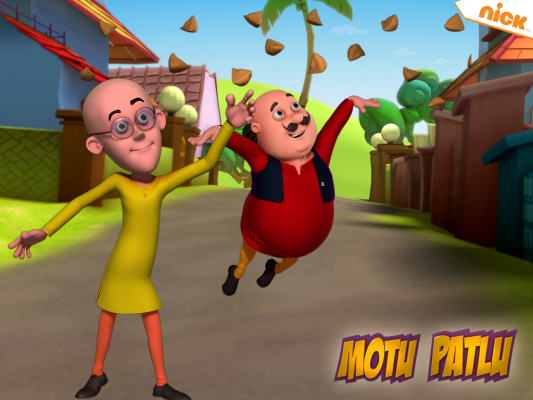
    Motu and Patlu from Motu Patlu

    Adapted from the classic Indian comic strip Lot Pot, this CGI animated series not only raised the bar for animated television series for kids in India but also for slapstick comedy in cartoons. It brought us even closer to the Lot Pot stars Motu and Patlu, whose witty and engaging exchanges would have us in splits in no time.

    Comparatively new to hit the television (2012) on Nickelodeon, the characters have already garnered a massive fan following and market for their merchandise. Today, Motu and Patlu not only command a massive fan base in India but enjoy an audience in Pakistan too, where it is also aired.

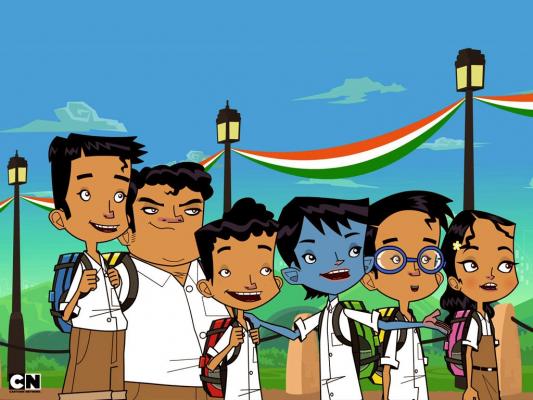
     Kris from Roll No 21

    Another innovative take on mythology from a modern day standpoint, Kris is modelled after Lord Krishna, but his ‘just another kid at school’ vibe is what brings him closer to the target audience. Needless to say, Kris appeals to not just the toddlers but also the preteens in the demography. In fact, the show owns its similarity to the mythology by having Kris as an incarnation of Lord Krishna himself. The story also reflects a modern take in Krishna and Kansa’s rivalry, which is shown through Kris’s continuous struggle to thwart Kanishk’s plan.

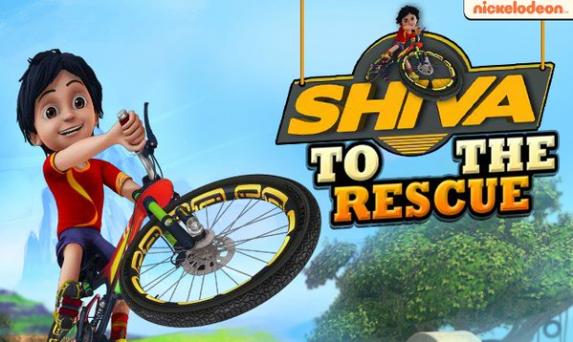
    Shiva from Shiva

    The new kid on the block, Nick’s latest original character Shiva has garnered a considerable fan base in just a month since launch. His character design and story backdrop makes him akin to international teenage superhero shows like Ben 10, which were a huge success worldwide. With his cool gadgets and charming appearance he easily stands out as a teen idol in the kids genre on television.

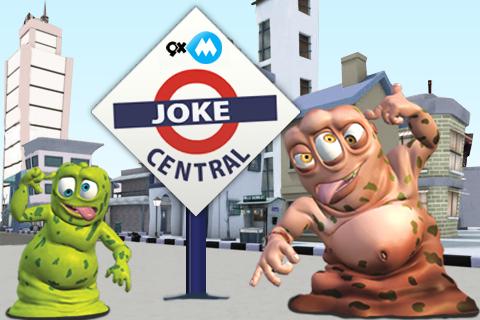
    Chote and Bade from 9XM

    One can argue that Chote Bade don't have a show to themselves but that doesn't change the fact that they are an iconic pair of animated characters that connected with millions of Indian youth through 9XM. In fact, the animated duo, to some extent, form the channel’s identity as its mascots. They are not only popular onscreen but their offline avatars along with their witty screenplay has often entertained us in various on ground marketing events for the channel as well.

    Their concept was an innovative way to keep the audience engaged even during intervals and breaks during segments of show, but eventually Chote and Bade evolved as characters and are considered an important part of the Indian television’s animated character family.

  • Viacom 18 forays into F& B with cafe Flyp@MTV

    Viacom 18 forays into F& B with cafe Flyp@MTV

    MUMBAI: After positioning itself as India’s youth brand and a trendsetter in music and entertainment, Viacom 18’s MTV plans to enter a new sphere of consumer’s lifestyle: food and beverage.

    In order to expand its purview of engagement with consumers, Viacom18 Consumer Products will extend MTV from broadcast and digital space to an always on on-ground experience by introducing the first ever café – FLYP@MTV in association with Funbars Hospitality Pvt Ltd.  While MTV has licensed out the brand and creative content, and will arrange events for Flyp in return for royalties, Funbars will oversee operations of the outlets.

    “A café is yet another ecosystem that we, in partnership with Funbars, are creating as an extension of our iconic youth brand MTV. The launch of FLYP@MTV is a move that further strengthens Viacom18’s bouquet of varied offerings – making us truly unique. Thus for us, FLYP@MTV is about creating an interactive and engaging atmosphere wherein youngsters can interact to work, socialize and party together. The café will continue to set and fuel trends, just the way MTV does, therefore creating a gateway to new experiences for our young consumers,” announced Viacom 18 group CEO Sudhanshu Vats.

    By mid-December, one can have a complete MTV experience at the first Flyp @ MTV cafe at the very happening Kanaut place in New Delhi, with 10 other cafes in the pipeline by 2020 across the country says MTV. “Unlike other major F&B chains, we will not only entertain the metros but will have our presence in the tier II and tier III cities, such as Chandigarh`, Pune etc.,” shared Funbars co founder Neeren Tewari.

    “The company has been looking to enter the Food and Beverage industry for a while now, and only started getting serious two years ago,” informed Viacom 18 Media, consumer products SVP Saugato Bhowmik, while explaining why MTV is the perfect brand to license for this new business venture.

    “As per the FICCI-Grant Thornton report on the industry, F&B is growing at a CAGR of 23 to 24 per cent. By 2017, the industry is estimated to touch $ 58 billion. What is more interesting to note is that 58 per cent of the industry’s consumer base, who go out and eat, is within the age group of 18 to 30 years of age. That’s a bulls eye target group for MTV in India, and self-explanatory of why we want to capitalise on the same,” Bhowmik explained.

    With a concept of work, chill, play, Flyp@MTV will strike as a hangout for young professionals and creatives to work during the day and transform into a place to chill in the evening and a play zone with fun gigs and live events at night. The café will be consistent with MTV’s DNA of being fun, irreverent and entertaining.

    “Our aim is to make FLYP@MTV a cult hangout destination across the country. With exclusively designed entertainment, a bespoke menu by celebrity chef Ranveer Brar and engaging touch points using cutting edge technology, FLYP@MTV is sure to capture the attention of the youth across the nation,” said Funbars Hospitality Pvt. Ltd. business division head and co-promoter Viraj Lamba.

    Aimed at the young demographic, which also includes students, Flyp @ MTv plans to keep the pricing at an affordable range. “While it will vary from city to city based on its respective cost of living, we aim to keep the pricing for a meal anywhere between Rs 800 to Rs 1200,” informed Lamba, adding that there will be unlimited beverage refills and free Wifi access for all guests.

    While the ‘work cum hang out’ space idea has already been tried by popular chains like Social, it is the services that Flyp offers while staying within an affordable range is what gives it its USP.

    MTV says that the space will be high on technology as well. Right from the MTV Virtual Museum that will allow guests to experience the  world of MTV in the previous years through virtual reality with head gear like Oculus and controllers, to the standard mobile app  with the added advantage of a ‘Flyp only’ chat engine to network and identify like-minded people within the place.

    Adding to the fun and entertainment will be the ‘Book Your Bakra’ service allowing one to book a prank or surprise for their friends. World class cuisine on the menu with a local twist or the ‘glocal’ cuisine, with a play on the words ‘global and local’ by celebrity chef Ranveer Brar, will be customised as per the city and individual.       

    “While we can’t say with certainty, but operationally we expect to break even in a year or a half, and over all somewhere close to three year mark. Strategically speaking our target isn’t to start being industry leaders in terms of revenues from day one. It’s a more long term plan keeping in mind a scaled economy in both sourcing and content demand. We are not going to cut corners in providing the best under our brand’s name. Having said that, this is a business venture in the end, and we see this venture being sufficiently profitable,” explained Bhowmik.

    From a marketing standpoint, MTV plans to deploy all its available resources to promote the new food and beverage property, while also engaging the consumers and familiarising them with the concept through social media and engaging campaigns.

    “When we launch you will see a lot of Flyp’s presence in social media, such as Facebook, Instagram, Twitter etc announcing the launch. Post launch too, we have plans to use the digital medium to keep our presence alive, at the same time doing a lot of OOH promotions and on ground activation to engage the youth. Nowadays conventional campaigns like TVCs hardly work with the youth, who are our target group. So we will look into doing our promotions a bit differently,” Bhowmik added.

  • ‘M&E industry’s $100 billion dream remains elusive with choking of investment:’ Star India COO Sanjay Gupta

    ‘M&E industry’s $100 billion dream remains elusive with choking of investment:’ Star India COO Sanjay Gupta

    MUMBAI: Despite the India Shining and Digital India waves that the country has been witnessing, the $100 billion dream has remained elusive for the Indian media and entertainment (M&E) industry.

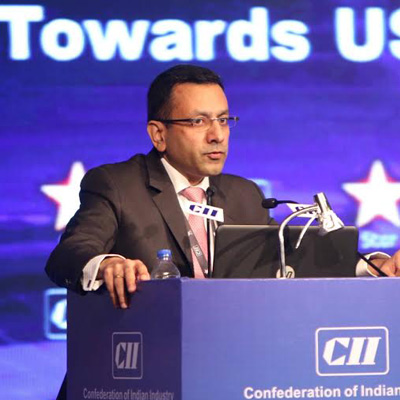
    Speaking at a CII conclave in New Delhi today, Star India COO Sanjay Gupta lamented this fact that saying that from 0.8 per cent of GDP three years ago, the industry had resolved to grow to 1.5 per cent within a decade. However, in the past three years, media as a percentage of GDP has instead fallen by two basis points and the $100 billion dream has continued to remain distant.

    “The biggest hurdle has been the choking of investment. To meet ambitious targets, a business either needs to generate large profits internally, which are then invested back into the business or they grow on the back of external investments – national or international. But the M&E industry boasts of neither,” he said

    CII National Committee on Media and Entertainment and Group CEO, Viacom 18 Group CEO and CII National Committee on Media and Entertainment chairman Sudhanshu Vats, Prasar Bharati CEO Jawahar Sircar, Information and Broadcasting Ministry special secretary JS Mathur and Minister of State for Information and Broadcasting Rajyavardhan Singh Rathore were among those present at the summit.

    During the past 15 years, the M&E sector has barely seen any new entrants and only around $4 billion in foreign direct investment (FDI). To garner $100 billion, the industry needs to invest at least $50 billion over the next decade – something that seems farfetched, given the present circumstances. “With M&E remaining an unattractive destination for investments, investors have no interest to invest in a fragmented and unprofitable business. Despite the 12 per cent year-on-year growth touted for the industry, the sector is paradoxically riddled with a host of unprofitable verticals. For example, sports is a $2 billion industry that could easily grow to around $10 in the next five years. Be it Hockey, Football, Kabaddi or Badminton, the new sporting leagues are being lapped up by the audiences,” Gupta said.

    Yet, the M&E industry has been unable to take off on the back of these investments. “Although Star India has been investing almost Rs 200 crore every season for the past two years, dividends are not commensurate. For this to happen, one needs to scale up the volume of content. In other words, more teams, more players and more days of Kabaddi are required annually to capitalize on this opportunity,” Gupta added.

    “A bizarre challenge confronts us here, however. Although Punjab and Haryana contribute large numbers of Kabaddi players, one cannot add more teams based in either of these two states because they do not have a single indoor stadium that could host a Kabaddi match. In Mumbai, the game is hosted at the NSCI Dome, but the biggest constraint is the availability of this facility for a reasonably long period of time. One venue for a city with more than 1,000 Kabaddi clubs simply does not make sense. In this case, consumer interest and the ability to invest are no hurdles, but the fact that the sporting infrastructure required is simply non-existent. Worse, there are no plans to address this situation,” Gupta continued.

    The movie business is no different. With around 7,000 screens, India has one of the world’s lowest screen densities. Despite breakthrough movies such as Queen, PK or Bajrangi Bhaijaan, revenues are stagnant, although the cost of producing these movies has soared dramatically in the past decade. Therefore, a $2 billion industry that sets a billion hearts racing earns zero profits.

    Even news channels fare no better. Without a robust business model, news channel have no money to invest in their business. Whether English or regional, number one channel or last, none of the channels make any money because none earn any money from subscription. Globally, subscription contributes as much as 60-70 per cent of the total earnings of a news channel.

    Television distribution is roughly a third of the total value of the media industry. In the past few years, immense investments have been made in both direct to home (DTH) and the cable business. But the tragedy of this sector is that even after many years of continued investment not a single company or business makes any money. Since the sector is considered a basic need from a consumer viewpoint, the prices at which content is sold by creators to platforms is regulated – prices frozen in 2003 haven’t changed in the past 12 years. In the same 12-year period, even the price of milk has jumped from Rs 12-15 a litre to Rs 35-40 a litre. 

    “Such anomalies are making the sector bleed. But no one seems to care,” Gupta lamented. “In Delhi, for example, the new government has doubled entertainment tax. Consequently, almost 30 per cent of revenue is paid as entertainment tax. The lack of political alignment and consistency of policy in the sector makes it impossible to plan a sustainable business model.”

    In 2015, where millions across the country receive their daily dose of news from Facebook feed, radio broadcasters can only air news snippets from All India Radio (AIR). “In the US, radio has gone hyper local and people spend an hour daily listening to radio. This gives a fillip to local brands since a quick and cheap platform is available to build their business. In India, conversely, there are a limited number of radio stations and limited content that can be aired – and without any news. It is no surprise then that even in large cities where FM exists, the time spent on radio per person is five minutes. Can any industry on Earth make money in such circumstances?” he asked.

    Gupta concluded by asserting, “Unless we unblock minds, we cannot unblock capital.”

    Accordingly, there is an urgent need to make distribution profitable, position animation as the next wave of export-oriented growth, support a serious scale-up of exhibition screens and sports stadiums and allow content innovation in radio. A hugely attractive pitch for domestic and international investors is required, giving them clarity on the policy environment for the next 10 years and confidence of generating sizeable returns on the investments.

    All stakeholders, businesses, policymakers and regulators need to stop being happy with the status quo and incrementalism. In the new era backed by technology, every sector from automobiles to financial institutions and even grocery shopping have witnessed dramatic growth and serious disruptions on the back of serious flow of capital.

    “M&E too needs to see brave new entrepreneurs, disruptive ideas and unconventional business models but this will only happen if we unblock the capital,” stressed Gupta.

  • Aditya Swamy quits MTV; to join Flipkart as senior director marketing

    Aditya Swamy quits MTV; to join Flipkart as senior director marketing

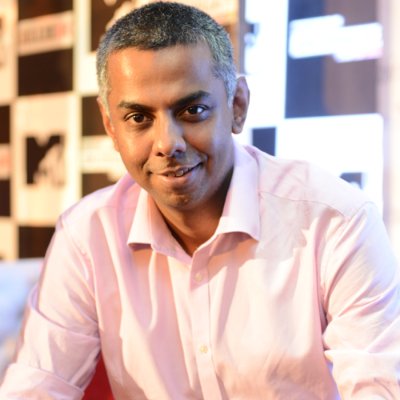
    MUMBAI: After a stint of more than nine years, Viacom 18 EVP and MTV & MTV Indies business head Aditya Swamy has put in his papers.


    Swamy is slated to join Flipkart as senior director marketing in about two months’ time.


    Confirming the same to Indiantelevision.com, Swamy said, “I had a good time with Viacom and I worked there for nine years. The journey has been amazing.”


    On his role at Flipkart, he said, “I will be looking after content marketing and digital media at Flipkart.”


    Swamy joined Viacom18 Media in June 2006 as MTV EVP and business head where was responsible for content, revenue growth, brand building and communication as well as expanding the channel’s footprint across TV, web, mobile and the live space.


    Prior to joining Viacom18, he was with Coca- Cola India as general manager marketing for eight years. 

  • Colors CEO Raj Nayak is new Ad Club president

    Colors CEO Raj Nayak is new Ad Club president

    MUMBAIColors CEO Raj Nayak has been elected as the new president of The Advertising Club. 


    Nayak steps into the shoes of outgoing president Pratap Bose, who is chairman & co-founder of Social Street.


     The new Advertising Club office bearers elected at the Annual General Meeting held in Mumbai are: Zee Media Corporation group CEO Bhaskar Das as the vice president, Madison Media’s Vikram Sakhuja as secretaryAditya Birla Group Financial Services chief marketing officer Ajay Kakkar as joint secretary and  IPG Mediabrands India CEO Shashi Sinha as treasurer


    The other members elected to the Managing Committee are: –


    · Multi Screen Media president, network sales, licensing and telephony Rohit Gupta

    · Google India agency business director Punitha Arumugam

    · Viacom18 Media national head sales, English cluster Namrata Tata 

    · Percept director & strategic brand consultant Ajay Chandwani

    · Dainik Bhaskar group chief corporate sales & marketing officer Pradeep Dwivedi 

    · AIDEM Ventures & Zirca Digital Solutions director Vikas Khanchandani

    · Twitter India head of TV partnerships Viral Jani


    Advertising veteran and industry leader Ramesh Narayan was co-opted to the Managing Committee.


    McCann World Group India CEO and chairman (Asia Pacific) Prasoon Joshi was inducted as special invitee and creative advisor to the Ad Club.


    L’Oreal India consumer product division director Satyaki Ghosh was also inducted as a special invitee.


    Nayak said“I am humbled by the faith and trust that my friends and well wishers in the industry have bestowed on me. It will be my sincere endeavour to work towards strengthening and building upon the foundation on which the club has been built over the last six decades.” 


    Advertising Agencies Association of India (AAA’s of I) president Ambi M G Parameshwaran added, “Ad Club is a wonderful institution with a great legacy of achievements. I am delighted to hear that Raj Nayak is taking over as its next president. I am sure he will bring his own brand of energy, excitement and innovation to take The Ad Club to greater heights. We at AAAI look forward to a great partnership with the Ad Club in all our joint industry efforts.”


    IAA India Chapter president and IAA Asia Pacific Srinivasan Swamy said,  “With Raj Nayak as president, we can expect to see a new phase in Ad Club’s history, which will be more vibrant, more purposeful, more relevant and more classy. IAA India, if invited, would be happy to partner with Ad Club on initiatives that build the competencies of the industry at various levels. There are a few events/properties that are exclusive to Ad Club or IAA, but clearly there are opportunities where cooperation between the two will be synergistic. IAA looks forward to this interesting phase with great enthusiasm.”


    Nayak, an industry veteran, has been on various industry bodies including the Indian Broadcasters Foundation, Advertising Standards Council of India & The International Advertising Association – India Chapter. He was chosen earlier this year to lead the Indian delegation to Ad Asia 2015 to be held in Taipei in November.

  • Colors Infinity experiments with locally developed English reality show ‘The Stage’

    Colors Infinity experiments with locally developed English reality show ‘The Stage’

    MUMBAI: Ever since its launch a little more than a month back, Viacom 18’s new English Entertainment channel Colors Infinity has been invading untouched territories. Continuing to tread on the same path, the channel is now set to launch a locally curated English musical reality show called The Stage.


    The one of a kind reality show will premiere on 10 October and will be aired on weekends from 9 – 10 pm. The channel has roped in celebrated names from the music world like Vishal Dadlani, Monica Dogra, Ehsaan Noorani and Devraj Sanyal as judges. The show will be hosted by Shibani Dandekar.


    The Stage unlike other reality shows will not limit its exposure to the on-air episodes. “We will have on ground activities, live concerts, the winner will get a contract with Universal and a musical single will also be released. Hence its not just about 20 on-air episodes. We will go beyond and will leave no stones unturned,” said Viacom 18 EVP and head of English entertainment Ferzad Palia.


    The talent in the show will be nurtured by a group of experienced musicians. “We have contestants from across the country, and they are highly talented. The Stage will provide them with the platform to become popular and then nurture them to grow as professionals. The Stage will be a show where the winning contestant will be remembered for a long, long time. It is the most real reality show with very little edit,” Palia added.


    “It is not true that English content is consumed only by people in metros. Close to 62 – 65 per cent of English music viewership comes from non-metro areas. So English as a language is spreading across the country and that’s one of the primary reason why we decided to experiment with The Stage. We will target VH1’s audience with the show,” informs Palia.


    The Stage is presented by Renault and powered by the dating app Trulymadly. SOL is the production company on board.


    Renault India marketing head Virat Khullar said, “As a company, we at Renault stand for innovation and passion and The Stage is a fresh new concept in Indian television, which is bound to change the scope of entertainment in this country. This belief in the show is the foundation of our partnership with Colors Infinity. We are glad that we can be a part of this huge transformation of English entertainment in India.”


    Filmmaker and Colors Infinity co-curator Karan Johar said, “When I first heard about The Stage, I was amazed at the introduction of such a novel concept for Indian television. I can see a paradigm shift in the reality TV shows in India.”


    Actor and channel co-curator Alia Bhatt added, “English music is such an important part of our playlists but we don’t get to see it anywhere on our music platforms. So The Stage is an idea whose time has come.”


    Since the IP remains exclusively with Colors Infinity, it is highly possible that the channel will later syndicate the format to a different platform or other territories. “Syndication can be a possibility in the long run but at this stage our focus is to establish The Stage and innovate with other locally created English content,” summed up Palia.