Tag: VFX

  • Watch out for Hyderabads animation booth at Mipcom

    Watch out for Hyderabads animation booth at Mipcom

    other states may do well to borrow a leaf from the Andhra Pradesh government, which is partly sponsoring the participation of Hyderabad’s animation industry at this year’s Mipcom.

    More specifically, the AP government is funding the stand fees for two Hyderabad-based companies – Green Gold Animation and Discreet Art.

    “The government is partly funding our participation at the event. And this goes up to 50 per cent of the total stand fee. It can go up beyond 50 per cent depending on the response we get,” informs Green Gold Animation vice president -business development Govinda Talluri.

    Creator of the popular animated character, Chhota Bheem, Green Gold Animation, has been participating in Mipcom since 2007. “Though we didn’t go in 2011-2012, this year, since the Andhra Pradesh government decided to support the companies based in Hyderabad for events like Mipcom, we, along with Discreet Arts and 20 (approximately) people from the AVCGI association will represent AP at Mipcom this year,” adds Talluri.

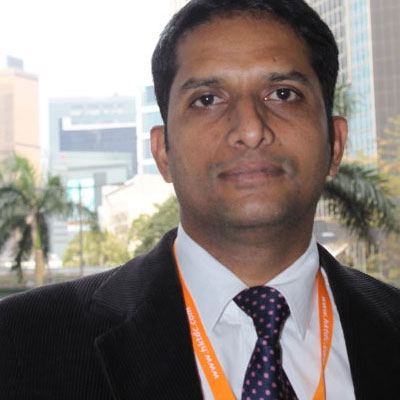
    We will be targeting European and South American countries at Mipcom, says Green Gold Animation vice president -business development Talluri

    AVCGI or Animation, VFX, Comic & Gaming Industry of AP is a recently formed association by the animation industry in Hyderabad with the aim of garnering support from the AP government for its proper functioning.

    Apart from Chhota Bheem, which is Green Gold’s biggest property, it will also take other animated characters Mighty Raju and Arjun to Mipcom. “We plan to come up with a theatrical for Mighty Raju by next year and so, will use Mipcom to create a buzz about the movie. Also Arjun, a show that we have created for Disney, will form part of our offering to buyers,” says Talluri.

     
    For all these years, Green Gold catered to Indian and South East Asian markets and recently sold its content to USA and Canada. The major is now aiming at European countries like France, Germany, Spain and South America. “This is not an exhaustive list, we want to reach out to as many markets as possible,” adds Talluri.

    Enthused by the government’s support, Green Gold aims to present its library of 8,500 minutes of original content to a global audience. “Also, with our 174-episode Chhota Bheem being sold to eight countries, we would definitely want to expand our reach and get noticed,” says Talluri.

    With the largest content sale market cum conference just 15 days away, the company is busy scheduling meetings with buyers. “Though a few meetings have already been fixed, we are also pitching in for more buyers,” he says. The company will primarily target television as the preferred platform. “Once we are there, getting to other platforms will not be difficult,” he rounds off.

  • ABAI: KAVGC 2013 Summit concludes in Bangalore

    ABAI: KAVGC 2013 Summit concludes in Bangalore

    BENGALURU: The Karnataka Animation, Visual Effects, Gaming and Comics (KAVGC) Summit organised by the Association of Bangalore Animation Industry (ABAI), in collaboration with the government of Karnataka concluded on Thursday 29 August 2013, ending two days of power packed sessions by Indian and international experts from the industry and the Karnataka state government.


    The first session on day two: the Business session on Technology was moderated by NVIDIA Country Head Vishal Dhupar and had Arul Moorthy, NVIDIA – GPU in the VFX Workflow Senior Applied Engineer Wil Braithwaite; Autodesk-Mental Ray Lead Animation AE in APAC Prem Moraes; HP – Shared Infrastructure, National Business Development Manager for Cloud Solutions R Balasubramanian and Wipro Technologies CTO of Global Media and Communication Business Jayanta Dey as co-panellists.


    This was followed by a session on AVGC in a Globally Connected World moderated by The Children’s Media Foundation, UK Director Greg Childs. The session had representatives from different parts of the world speaking about the facilities that their territories had to offer to the Indian AVGC industry. This included Consuls, Vice-Consuls and Senior Trade Commissioners from Canada, France, UK and Quebec (Canada).


    The session on Original Content Development moderated by Liquid Comics Founder Suresh Seetharaman had Walt Disney Television International India ex Director Content and Creative Arnab Chaudhuri; Technicolor Animation and Gaming Art Director Manoj Menon and Novo Juris – “How not to lose it” Sharda Balaji as co-panellists.


    One of the most interesting sessions was the Show and Tell Session that had the audience’s undivided attention. Arnab Chaudhuri the director of the Indian animated action film ‘Arjun the Warrior Prince’ (AWP) spoke of the making of the film. Chaudhuri revealed the various real life characters on which every character in his film was based, details about the sets, as well as shared some of the raw footage and sketches that resulted in the final product. One of the best animated products out from India, AWP was produced by UTV motion pictures and Walt Disney Pictures, with Chaudhuri as Director Content and Creative at Walt Disney Television International India.


    The summit culminated with a session on Education moderated by Dreamworks Dedicated Unit at Technicolor India Studio Head Adi Shayan. The other panellists were Dr. Ashish Kulkarni (CEO Reliance Animation) in his capacity as Ficci AVGC Forum, Governing Council Member and Ficci-MESC Initiatives for Skill Development; Asian Institute of Gaming and Animation (AIGA) Founder Hanif Mohammed; Native Puppets – Artists Perspective Founder Anand Baid, Karnataka Chitrakala Parishath, College of Fine Arts Director Dr. R Kulkarni; The Painted Sky Art Based Learning Approaches Executive Coach, Founder and Director Anirban Bhatrtacharya.

  • Will Anil Kapoors 24 be a game changer?

    Will Anil Kapoors 24 be a game changer?

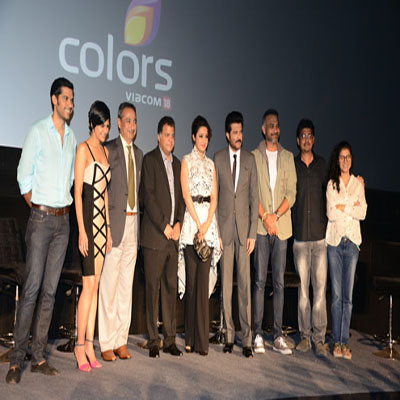
    MUMBAI: Indian viewers are set to witness high octane action drama unraveling on their TV screens soon. The adaptation of the hit American series 24 unveiled its first look last evening. The Indian adaptation of the American thriller is being co-produced by Anil Kapoor Film Company and Ramesh Deo Productions with Delly Belly director Abhinay Deo helming the series.


    “The amount of content we have shot is humongous and is equivalent to seven feature films,” gushed Deo at the launch of the 24 trailer. As creative director and co-producer of the series, he feels that the series will definitely be well received by the audience which has been adapted keeping in mind the Indian sentiments, also giving it a tinge of soap operas. “We could do this as we had the leeway to modify and adapt as per the Indian setting,” Deo added.


    A fresh young crew of 200 people in production and post production were brought on board to navigate this real time series. On normal days, just two cameras were used while on days packed with action sequences five cameras were put into use with VFX being provided by Prime Focus. “We have shot a scene with a brush falling in a bathtub and we placed an underwater camera to capture the scene from below as well,” says co-producer Apurba Sengupta emphasising on the efforts they took to make it look realistic. Red Scarlet X cameras are being used, and everything is shot in HD format in about 100 locations in Mumbai. The two standing set-ups are – ATU (Anti Terrorism Unit) office and the Tulip Star hotel.

    A great ensemble cast has been roped in to set your pulses racing with high octane action


    Looking at the production aspects, the pre production team needed at least  eight to nine months to bring all creative heads to spot perfect locations in the financial capital to shoot. Apart from a thorough recce of locations, the team had to decide on costumes, colour schemes as well as finalise the cast.


    For an episode the team shot for almost eight to ten days, that meant that the end product was seven minutes of content produced per day which the team is very proud of as usually on an average only two and a half minutes of content is created.

    India is a diverse country so we had a lot of meat in it and yes it includes politics too says Abhinay Deo giving a sneak peak into the story


    Up until now, 16 episodes have been shot while the remaining eight will conclude in December. Out of the 24 episodes approximately 16 are shot by Deo and the rest will be done by Rensil D’Silva, who is also co-writing the adaptation, and Nitya Mehra, who was the AD for Life of Pi. “The level of drama needed for Indian audiences is more so we had to mix emotions,” says D’Silva. He also mentioned that scripting was a daunting task as they had to re-work it several times to get it absolutely perfect.


    With an edge of the seat thriller being shot with the best of cameras and a great ensemble cast; it would be natural to believe that the production cost is way beyond the average but Sengupta says the difference isn’t that farfetched either. “It’s promotion for them too. So if they give it to me at a particular price then next year someone else will approach them for it,” D’Silva explains on how the production deals pan out. Industry sources however feel that a show of this level cannot be shot at such a low budget and estimated it to be at a cost of a minimum of Rs 50 lakhs per episode.
    The Anil Kapoor starrer 24 is set to thrill the audiences with never before seen action


    Although only one season is on the cards right now, Colors CEO Raj Nayak is optimistic of seeing all eight seasons being made. Rumors are afloat that the story draws parallels with the Gandhi family but the claims were rubbished by the producers.  “India is a diverse country so we had a lot of meat in it and yes it includes politics too,” says Deo.


    The cast includes Anil Kapoor, Tisca Chopra, Mandira Bedi, Neil Bhoopalam and cameos by Anupam Kher and Shabana Azmi. The trailer showed Anil Kapoor caught in the middle of making time for his family and on the hunt of the to-be PM’s assassin.  It isn’t like the usual series that Indian audiences are used to watching with real time storytelling and split screens to show different people. “I have got a lot of people telling me that they want this to succeed because it will be a success for the industry,” says Nayak.


    The channel is yet to announce the launch date and the time slot for 24. “I signed the deal on 24 October which also happened to be Dassera last year,” said a beaming Nayak.


    It is the first time such a series is being produced in India on such a large scale. “It opens up a world of fiction like never seen before,” says Colors weekend programming head Manisha Sharma.


    But the bigger question here is that will such a show work with the Indian audiences who are tamed to watching saas-bahu serials? Media planners are positive about it. “I would be surprised if the show does not do well in India because if the content is treated keeping Indian sentiments in place then it is a sure shot winner,” says Madison COO Karthik Laxminarayanan.


    “The show is coming after a certain phase of digitisation so it will be interesting to see the ratings that it will get from digital homes. However, it should do well here as well,” says ZenithOptimedia Group CEO Satyajit Sen.


    The industry feels that the show will definitely be a game changer for the channel and the genre as well, but it is up to the audience to give their verdict.

  • Rohit Shetty and Reliance MediaWorks partner again for ‘Chennai Express’

    Rohit Shetty and Reliance MediaWorks partner again for ‘Chennai Express’

    Mumbai 21st August 2013: Reliance MediaWorks (www.reliancemediaworks.com) has again partnered with film director Rohit Shetty for his latest offering ‘Chennai Express” which released in August 2013. Reliance MediaWorks provided solutions for services in visual effects, Digital intermediate (DI) and Digital Cinema Mastering for the film. The Company also worked on SD telecine for the rushes and HD color correction for the promo deliveries in various formats across delivery platforms. The processing lab also worked on negative processing & the final release prints of the film.

    Chennai Express is about a man’s journey from Mumbai to Rameshwaram and what happens along the way after he falls in love with the daughter of a don. The film top lines Shah Rukh Khan and Deepika Padukone and is produced by Red Chillies Entertainment and UTV Motion Pictures.

    The Team at Reliance MediaWorks has delivered 68 minutes of 1300 Visual Effects shots along with an elaborate colour grading Digital Intermediate (DI). The Reliance MediaWorks DI team included colorist Makarand Surte, Sr. Line Producer Dilesh Gupta, who were ably supported by the entire DI team

    Mr. Naveen Paul – Creative Head for VFX, Reliance MediaWorks said “It has been a privilege and a challenge to work with the combination of Rohit Shetty and Shah Rukh Khan, on Chennai Express. The duo gave us a free hand to execute their vision. It has been an absolute honour for us to be associated with such dedicated team of professionals who allowed the free flow and interaction of ideas and creativity.” Naveen credits his team comprising Pankaj Kalbende, Ranadheer Reddy, Abrez Mohammed, Vinoth Ganesh along with others who worked on executing and delivering the result.

    We would like to thank the team at Red Chllies and Rohit Shetty for their support and trust in our capabilities, Added Nishit Shetty, Vice President, Operations, Reliance MediaWorks.

  • India, Hollywood working on ways to collaborate

    India, Hollywood working on ways to collaborate

    MUMBAI: The ball has started rolling for more collaboration and cross pollination of knowledge, technology and talent between two of the world’s largest film communities – Hollywood and India.


    The Motion Picture Association of America (MPAA) chairman, CEO Senator Chris Dodd participated in an event of the LA India Film Council during the 2012 Ficci Frames Convention to discuss how to push this partnership forward.


    The event included the announcement of the Council’s governing body, the premiere of a “sizzle” video highlighting the initiative, and a presentation of the Council’s enhanced website. A special Council publication commissioned from Ernst & Young providing further information about the LA and Indian industries was released and plans for upcoming activities, including film premieres and conference events, were discussed.


    Dodd said, “The LA India Film Council is a natural corollary to the rapidly increasing creative, technological and location partnerships developing between the two countries and promises to set new benchmarks in the world of cinema. On the behalf of the MPAA, and as a big fan of Indian cinema, I wish the Council great success in the future”.


    The LA India Film Council was set up in 2010, as part of a declaration between the city of Los Angeles and the Indian film industry. The initiative aims to explore mutual opportunities in fostering and encouraging partnerships between the two influential film industries.


    Filmmaker and producer Ramesh Sippy said, “We can learn from schools in LA. We should learn from each other. Create and enrich each other‘s knowledge, strengths and experiences. I feel the council can only take us forward. One thing is for sure, it will bring people of two cultures closer together.”


    Hollywood is looking at the growing Indian market even as its threatical revenues from overseas have overtaken that of US. A flood of 3D movies has also made the products popular in tough markets like China.


    “India is a preferred destination for a lot of films, and I think the LA India film council will hugely benefit both countries. We could co-create film schools and schools of technology. The mingling and merging of the two cultures is essentially the desire behind a co-production”, said filmmaker Shekhar Kapur.


    The Council focuses on developing and strengthening motion picture production, distribution, technology, content protection and commercial cooperation between the two filmmaking communities. Members of the Council’s governing body comprise powerful film guilds, government organisations, industry experts and leading companies in the areas of VFX, animation and post production from both Los Angeles and India.


    Actor Anil Kapoor said, “Without a body like this people may get connected with wrong people. A body like this can help and support those who seek guidance”.


    In recent years, the Indian film industry has globalised its reach as producers have improved the international marketability of their films by building partnerships with international domain experts. More and more producers in India are considering foreign locales to shoot their films. Previous big budget Indian productions filmed in Los Angeles include: Kites (2010), My Name Is Khan (2010), Kambakkht Ishq (2009), Kaante (2002) and Pardes (1997)


    Other joint ventures and co-productions between individual Hollywood studios and Indian production houses over the past two years alone include: Ek Deewana Tha (2012), Dum Maro Dum (2011), Stanley ka Dabba (2011), Force (2011) and Engeyum Eppothum – Tamil (2011).


    Indian investment in Hollywood has also been steadily increasing, most notably with Indian entertainment conglomerate Reliance Entertainment’s (A.DAG) acquisition of DreamWorks SKG and the launch of YRF Entertainment in Los Angeles.

  • Prime Focus work among 5 films in Oscar fray

    Prime Focus work among 5 films in Oscar fray

    MUMBAI: Prime Focus has contributed to five of the ten films that are in the running for the 84th Academy Awards.

    The work involved ranges from creating complex VFX shots for Tree of Life and X-Men: First Class to being lead 3D conversion facility on Harry Potter and the Deathly Hallows Part 2, to completing 3D conversion and delivering stereoscopic VFX shots for Transformers: Dark of the Moon and supplying on-set equipment for Hugo.

    The Tree of Life saw the highly anticipated return of acclaimed director Terrence Malick. Prime Focus delivers a number of detailed sequences including the creation of stunningly realistic dinosaurs.

    The film, based on Malick‘s original screenplay, is an impressionistic story of a 1950‘s mid-Western American family. It explores difficult human issues, seeking answers to the origins and meaning of life while questioning the existence of faith. Majority of the visual effects in the film come in the opening creation sequence that features subtle images from the prehistoric era and astronomy.

    The 50-strong Prime Focus team, spanning facilities in Los Angeles and Vancouver, worked closely with VFX Supervisor Dan Glass to determine the species of dinosaurs they would create as well as the environment around them. A huge amount of research was undertaken with specialist biologists and paleontologists brought in.

    The film picked up the prestigious Palme D‘Or at the Cannes Film Festival in 2011 and is expected to fare well in the upcoming awards season.

    Elsewhere, Prime Focus was called in to provide VFX shots for Matthew Vaughn‘s superhero adventure X-Men: First Class, with work on the Marvel and Twentieth Century Fox film being completed in London, Vancouver and Mumbai, using the Prime Focus Global Digital Pipeline.

    "Up against a tight deadline, having this span of resources available enabled the team to deliver a number of high quality shots in a short amount of time, proving that a company with a global reach can offer significant advantages," Prime Focus said.

    Prime Focus delivered stereoscopic 3D visual effects and converted 230 shots into 3D for Michael Bay‘s Transformers: Dark of the Moon.

    2011‘s highest grossing film was the final installment of Warner Bros‘ incredibly successful Harry Potter franchise – Harry Potter and the Deathly Hallows: Part 2. Prime Focus was the lead vendor in the 3D conversion of this film, and working closely with director David Yates and studio stereographer Hugh Murray, the teams in London, LA and India took on the conversion of some of the biggest and most challenging VFX sequences in the movie, delivering 400 3D shots overall.

    The 84th Academy Awards nominations will be announced live on 24 January, with the Awards ceremony taking place on 26 February at Hollywood‘s Kodak Theatre.

  • Intl Press Academy to honour VFX expert Trumbull

    Intl Press Academy to honour VFX expert Trumbull

    MUMBAI: The International Press Academy has decided to honour visual effects artist Douglas Trumbull with its Nikola Tesla Award for ‘Visionary Achievement in Filmmaking Technology‘ at its 16th annual Satellite Awards on December 18.

    Trumbull, who earned a Scientific and Technical Award from the Academy of Motion Picture Arts and Sciences, for his work with the Showscan CP-65 Camera, was the special photographic effects supervisor for 1968‘s 2001: A Space Odyssey.

    The Academy, comprising of foreign and domestic journalists, will present its Mary Pickford Award for outstanding contribution to the entertainment industry to Mitzi Gaynor, whose films range from There‘s No Business Like Show Business to South Pacific. Gaynor also enjoyed a career as a nightclub performer, making her Las Vegas debut at the Flamingo Hotel in 1961.

    He directed 1972‘s Silent Running and 1982‘s Brainstorm. Most recently, he served as special photographic effects consultant on Terrence Malick‘s The Tree of Life.

  • Akshay Kumar starrer Joker to release on 30 Aug

    Akshay Kumar starrer Joker to release on 30 Aug

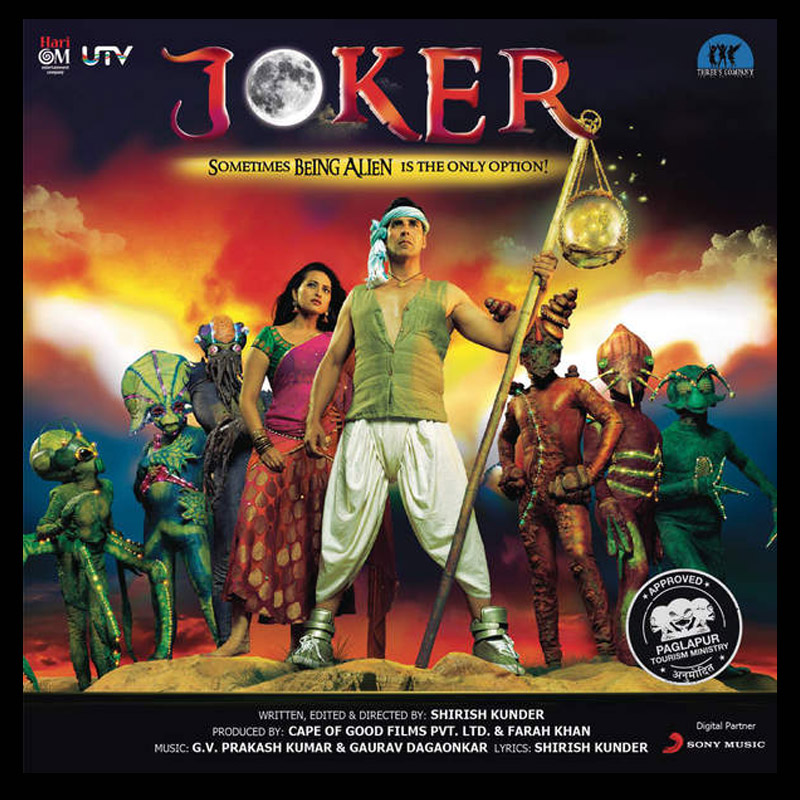
    MUMBAI: The Shirish Kunder-directed Akshay Kumar-Sonakshi Sinha starrer fantasy-adventure Joker will release on 30 August next year.

    Confirming the release date, Kunder said, “We have finalised on the date of release on 30 August next year. In all, we have around five days of shooting left that we would be completing in November. Post that, we would be working on VFX and 3D for around six months and then the last couple of months would go for an all around promotional campaign.”

    Joker had gone on floors early this year.

    The development goes to show that Akshay Kumar would have a film of his releasing almost every second month starting April next year. While Housefull 2 (April) would be first to arrive, Rowdy Rathore (June), Joker (August) and Khiladi 786 – Made In Punjab (November) would follow.

  • FICCI submits its wishlist to Fin Min for M&E sector

    NEW DELHI: National industry body Ficci has demanded that the government must give several tax exemptions and holidays to let the animation, gaming and VFX industries, which is growing faster than the overall entertainment industry, realise its full potential.


    Ficci has demanded in the budget for 2008, the government must give a 10-year tax holiday, removal of service and sales taxes on the software used for production for 10 years, exemption of import duty on hardware for 10 years, and other facilitating measures.

    Interestingly, it says also that as there is no Indian channel with 24 X 7 indigenous animation content, 10 per cent of the time on entertainment channels must be reserved for such content. This will give local content and talent a major boost.

    The memorandum from Ficci says that though the animation, gaming and VFX industry is growing in leaps and bounds, the full potential is yet to be tapped, despite the projection that the industry would grow hugely by next year.

    Ficci estimates show that the animation industry today stands at Rs 13 billion and is expected to grow to Rs 43 billion by year 2009, with a CAGR of 35 per cent.

    Similarly, the gaming industry is expected to grow from Rs 360 million to Rs 13.50 billion by 2009, with a CAGR of 78 per cent.

    “The growth rate in these sectors are much higher than overall media & entertainment sector, which is expected to grow at a rate of 19 per cent,” says Ficci. The industry could be a major export revenue earner as well as provide massive employment.

    Ficci says that after Information Technology, the biggest export earners for India are Animation, Gaming and VFX, but the overall business model existing at present, which is a low-end BPO approach, is stunting its growth.

    The Ficci document stresses: “Exports in this vertical can be looked in two ways: one, a purely outsourcing model in which production houses provide services to overseas studios. This is low-end work in the value chain with more of a BPO approach.

    “The other is revenues earned from exporting the finished product (the intellectual property developed in India for domestic / foreign markets) to global audiences.

    “Both the models have tremendous potential for foreign exchange earning for India. But it is better in the long term if we move up the value chain and have indigenous content with both domestic and foreign appeal.”

    Ficci estimates that in the next five years, India would require more than 30,000 trained animators and gaming professionals.

    “If this industry is nurtured properly, it can meet the government‘s objective of employment generation, and the latter should aid in the setting up of centres of excellence on the lines of IITs and IIMs for the animation and gaming industry,” says Ficci.

    Ficci feels that the other direct impact of aiding these industries would be building Brand India better, by engaging the country‘s massive talent pool in creating content for Indian as well as global audiences by transferring India‘s 5,000-year-old time- tested legends into the new media.

    “Animation could be another way of creating “Brand India” among NRIs / PIOs and other global audiences. Currently when India is increasingly garnering attention in the world arena, it is the right time to reach outwards through this medium,” Ficci says.

    Ficci points out to models of Korea, China, Singapore, etc., which enjoyed their respective government support, so much so that 40 per cent of the animated content in the US is Japanese.

    “The reason for such a pattern is that countries like Japan and Canada have developed very strong domestic markets, and once a domestic market gets enough consumable content, the same can be routed for exports,” says the memorandum.

    Ficci reminds that the Korean government sees animation as the most competitive industry for the 21st century, and has provided massive tax reliefs.

    “(Korean) application guidelines specify that companies whose projects have been accepted by a Korean broadcaster can apply for up to 40 per cent of their production budget,” Ficci says, demonstrating the massive support system there.

    So far as the animation industry is concerned, Ficci says that it is now covered under Software Technology Parks of India.

    The problem, says Ficci, is that this holds good for a BPO nature of work where outsourcing is the main module and most of the studios which are getting benefited from STPI have to make sure of an export commitment of more than 85 per cent.

    “As a result many Indian studios wanting to produce original content based intellectual property and use art and talent from India to produce animation stories do not get any such benefits,” explains the memorandum.

    Creating original content in India attracts custom duty and also the freshly levied sales tax (VAT) on off the shelf software (12.2 per cent, which might increase further) and further also the income tax component.

    “This is leading to more and more studios working on foreign content and a severe lack of animated Indian stories in our domestic television schedules,” laments Ficci.

    Hence Ficci‘s key proposals for the animation, gaming and VFX industries are

    • Tax holiday for 10 (ten) years, so that cost of creating intellectual property (original content) comes down drastically and the industry becomes viable
       
    • Removal of Service Tax
       
    • Removal of Sales Tax on the Software used for Animation, Gaming & VFX production for a period of 10 years
       
    • Exemption of Import duty on hardware for a period of 10 years
       
    • Market Development Assistance for overseas business promotion
       
    • 10 per cent mandatory local content on the networks to began with

    “Finally, we feel there is negligible revenue accruing to the exchequer currently as no new Indian IP is getting created. If a tax holiday is given, revenue will flow into the exchequer funds in a couple of years as the industry will gain impetus and encouragement to grow. In this regard the IT sector can be looked at as a role model,” says the Ficci memorandum.

  • Satyam’s BPO outfit bags $25 million contract, in talks for another $10 million order

    Satyam’s BPO outfit bags $25 million contract, in talks for another $10 million order

    MUMBAI: Nipuna Services Ltd, the BPO subsidiary of IT major Satyam Computer Services, has bagged a $25 million animation outsourcing deal. The company is also in negotiations to work on a $10 million contract for another TV series animation project.

    Earlier in the year, Nipuna signed a $9 million deal to provide services for a movie called First Fear which is set for release by June 2007. “We are expecting to bag a fresh contract for around $10 million. The German company will take a call based on the TV episodes that we come up with. We have already signed with this company for $25 million to produce TV series and a movie,” Nipuna chief financial officer M Satyanarayana tells Indiantelevision.com.

    Nipuna will engage UK-based 4K Animation Ltd for the execution and delivery of these projects along with its own battery of 120 professionals over a period of 18 months. The two ‘iconic’ European animation projects include the third season of “Marvi Hemmer Presents National Geographic World,” an award-winning, 52- episode TV series, and a movie, also featuring Marvi Hammer.

    “We will pay a fee to 4K for their services as they will be sending technical professionals from all over the world to work in India and help us in the project. The exact amount will be finalised when we know how many people and working hours we would need from them,” says Satyanarayana.

    For First Fear, Nipuna had paid 4K around $3.25 million. By partnering with 4K, Nipuna is able to source talent from across the world to execute the projects.

    The delivery period for the TV series will start from now and is expected to finish within nine months. The work for the movie will start from April and stretch over 12 months, according to Satyanarayana.

    The series and movie feature a combination of live action and animation. They include actual studio sets used as animation backgrounds, a furry computer graphics creature and 2D-animated characters. Hamburg-based YOUA Edutainment, National Geographic, and German broadcaster ZDF will co-produce the series and movie.

    Nipuna will provide VFX, CGI, 3D and 2D animation services, including pre-production, production, and post-production, from its studio in Chennai. Other animation artists will also collaborate from Hamburg and Berlin for this project delivery.

    Says Nipuna CEO Venkatesh Roddam, “This partnership reflects a growing trend toward ‘corporatization’ in the animation industry, which is leading to increasingly significant opportunities. Long-term contracts such as this one show that companies recognize Nipuna’s capabilities in an industry where ‘human resources’ are integral to quality, and thereby responsible for the success of creative ventures.”

    Nipuna has built significant VFX, CGI, and 3D animation skills by producing numerous global and domestic films. Among the more than 40 Indian films for which it has handled animation projects are Sainikudu, Stalin, Pokhiri, and Belly Full of Dreams. Nipuna also provides artwork and visualization services involving 2D and/or 3D animation techniques and processes to customers in the engineering, architectural, and medical industries.

    Nipuna expects to close this fiscal with a turnover of $40 million, out of which