Tag: VFX

  • Lower 2020 outlook, review investments, use big data for advertising, says EY M&E report

    Lower 2020 outlook, review investments, use big data for advertising, says EY M&E report

    MUMBAI: Given how things have unfolded in the last three months, media and entertainment companies foresee a lowered outlook for 2020, will have to review their investments and ramp up capacity to address the challenges, as per a new report by EY titled ‘Building a resilient enterprise- Now, Next and Beyond’. It shows that OTT, gaming, eSports, digital subscriptions and VFX will be most benefitted in the near future while live events, films, sports, out of home and print will be hard hit.

    The report adds that digital advertising saw five per cent to 15 per cent growth till 31 May but will drop to under five per cent by 30 June. Additionally, TV subscription will also reduce from minus five per cent to minus 15 per cent in the same time period. However, film will be worse off with minus 50 per cent.

    The media and entertainment sector is facing unprecedented challenges from the spread of Covid2019. Rapid changes in consumer behaviour and consumption, stoppages in content production, cancellation of live events and sports and cuts in advertising spend are impacting companies across the ecosystem.

    Publishers and media companies are benefitting from some marketers seeing the opportunity but face advertising revenue losses. Film and TV producers are under pressure to mitigate the impact of delayed-release schedules, theatre closures and production stoppages. Companies are currently focused on enterprise resiliency and triaging revenue, but will likely need to turn to rapid cost reduction as business models settle into new norms as business models are not on a solid foundation. Bright spots across the industry include digital pure-plays (such as video gaming) and other virtualised production capabilities, the report said.

    The report suggests that for ad revenue, companies should provide ad packages that are “calibrated to the gradual geographical lift of the lockdown as well as reorient ad products and capabilities to build targeted offerings for marketers.” The industry also needs to shift to a big data-based advertising.

    As a way to mitigate costs, companies can develop work-from-home strategies and consider real estate cost reduction strategies, with a focus on utilising purpose-built spaces. It also suggests updating the insurance coverage and contract clauses to provide cover for similar events in the future.

    Going forward, the report stated that segments such as online education, broadband and internet, hygiene, home entertainment and OTT, e-commerce/home shopping, health and wellness and online banking will see a rise.

    For advertisers, EY suggests engaging with marketers to understand changes to media strategy, content and ad placement. Additionally, leverage consumer insights and brand sentiment analyses to better engage marketers and provide targeted packages and offerings. One good source will be to introduce ad spend continuity initiatives.

    For content producers, it suggest coming with precaution-led production schedules to get back to shoot. Companies can repurpose their library or acquire content to serve loyal customers with new things. There needs to be more ways to shoot from home and ideation.

    Content distributers should look at leveraging digital platforms and OTT solutions to engage consumers and potentially serve as alternative channels for planned launches.

     

  • Prime Focus extends service to Netflix, Amazon Prime

    Prime Focus extends service to Netflix, Amazon Prime

    MUMBAI: Prime Focus Ltd (PFL), an independent integrated media powerhouse, has broadened its horizon by expanding its services by providing high-quality post-production services to global leaders and on-demand content providers, Netflix and Amazon Prime.

    Prime Focus recently took on the charge of delivering VFX and DI (Digital Intermediate) work for eight episodes of Netflix India’s first original series for the country, titled Sacred Games.

    Speaking on the new developments, PFL business head Niraj Sanghai said, “With digital content consumption gaining impetus across the globe, it was an exciting opportunity for us to team up with Anurag, Vikramaditya and Netflix on this classic Mumbai noir tale. There is a huge potential in the digital space and with our expertise in movies, we intend to reach out to a wider demographic and content creators. We are looking forward to bring our multiple projects with OTT platforms in the coming year for our audiences.”

    In addition to Sacred Games, Prime Focus has also been working on director Kabir Khan’s first-ever original digital series for Amazon Prime The Forgotten Army, depicting a war epic that will showcase many aspects of the Indian National Army.

  • PFL reports growth in operating revenue

    PFL reports growth in operating revenue

    BENGALURU: Integrated media services player Prime Focus Ltd (PFL) reported 20 per cent year-on-year (yoy) growth in operating revenue at Rs 609.61 crore for the quarter ended 31 December 2017 (Q3 2018, quarter, the quarter under review) as compared with Rs 508.03 crore for the corresponding year ago quarter (Q3 2017). Total income increased by 20.3 per cent yoy in Q3 2018 to Rs 612.21 crore from Rs 508.84 crore. The company, however, reported a net loss of Rs 7.03 crore for the quarter under review as compared with profit after tax (PAT) of Rs 28.18 crore in Q3 2017. The company says finance charges considered for Q3 2018 were higher by Rs 5.5 crore on account of change in accounting treatment towards redemption premium on Standard Chartered PE NCDs–expensed as against capitalised in the balance sheet in earlier quarters.

    Adjusted operating EBITDA for the quarter at Rs 157.34 crore (25.8 per cent of operating revenue) grew by 27.8 per cent yoy from Rs 123.16 crore (24.2 per cent of operating revenue). Adjusted EBIDTA of Rs 157.34 crore for Q3 2018 includes ESOP costs of Rs 4.21 crore, foreign exchange (forex) losses of Rs 2.51 crore and Rs 10 crore of non-operating non-cash forex charges on account of balance sheet translation exposure and approximately Rs 20 crore for certain one-time Montreal setup costs and conservative provisions at PFW/DNEG.

    Total expenditure in Q3 2018 increased by 25.9 per cent to Rs 610.09 crore from Rs 484.43 crore in Q3 2017. Employee benefits expense in Q3 2018 rose by 25.9 per cent to Rs 332.61 crore from Rs 268.74 crore in the corresponding quarter of the previous year. Technician fees more than doubled (2.08 times) to Rs 15.12 crore from Rs 7.27 crore in Q3 2017. Technical services cost in the quarter under review increased by 72.4 per cent to Rs 28.45 crore from Rs 16.50 crore in Q3 2017. Finance cost in Q3 2018 increased 97.6 per cent yoy to Rs 45.32 crore from Rs 22.94 crore in Q3 2017. Other expenditure in the quarter increased 14.9 per cent yoy to Rs 106.08 crore as compared to Rs 92.36 crore in the corresponding quarter of fiscal 2017.

    Commenting on the results, PFL founder, executive chairman and global CEO Namit Malhotra said, “We are pleased to report a strong quarter with continued momentum across businesses. Ourcreative services continued to deliver marquee projects such as recent Hollywood blockbusters – Thor: Ragnarok and Justice League which have grossed over $800 million and $600 million, respectively. Our order book includes good projects like Venom, which is the next movie in the Spiderman franchise. In tech/tech enabled business, we added new clients and invested in new talent to strengthen our reach in North America while India FMS continues to deliver robust profitability in line with our expectations.

    “Given the significant growth we have witnessed in our creative services business and continued momentum visible going forward, the board has decided that Vikas should focus all his energies toward helping manage this growth and maximise the potential at PFW/DNEG. Vikas has relocated to London and will now be fully focused on his role as the CFO of PFW/DNEG. Nishant Fadia has now been re-appointed as the CFO of PFL. As you may know, Nishant has been with Prime Focus for the last 18 years and was the CFO of PFL till 2014 and since then has been the COO for the Group. I wish them both the very best as we look to take the Prime Focus Group to greater heights in the years ahead.

    “We are happy to continue to deliver performance ahead of plans and look forward to ending FY18 on a higher note.”

    Also Read:

    Prime Focus reports flat results for first quarter

    Hotstar tech partner Prime Focus signs deals with Turner & sports broadcasters

  • Prime Focus reports flat results for first quarter

    BENGALURU: After the sale of certain investments and restructuring and integration costs in the previous fiscal (FY-17), including in the quarter ended 30 June 2016 (Q1-17), Prime Focus Limited (PFL) had reported healthy numbers for FY-17. The company has now reported almost flat revenue and EBIDTA numbers for the quarter ended 30 June 2017 (Q1-18, current quarter) as compared to Q1-17. Revenue Income from operations was 2.41 percent lower in the current quarter at Rs 5,135.22 million as compared to Rs 5,262.13 million in Q1-17. Total Income in Q1-18 was 0.82 percent lower year-over-year (y-o-y) at Rs 5,241.89 million as compared to Rs 5,285.09 million in Q1-17.

    EBIDTA including other income in the current quarter was flat (down 0.01 percent) at Rs 1,033.16 million (19.71 percent of Total Income) as compared to Rs 1,033.30 million (19.55 percent of Total Income) in Q1-17. The company says that adjusted EBIDTA was up 9 percent at Rs. 1,118mn (Q1-17: Rs. 1,023 million), with margin at 21.4 percent (Q1-17: 19.4 percent), with significant work being delivered on projects from India. The company reported foreign exchange gain for the period at Rs. 22 million.

    Total Expenditure in Q1-18 declined fractionally by 0.11 percent to Rs 5,239.58 million from Rs 5,245.19 million in Q1-17. Employee benefits expense in Q1-18 reduced 6.18 percent to Rs 2,966.46 million from Rs 3,161.77 million in the corresponding quarter of the previous year. Technician fees in Q1-18 reduced 1.30 percent to Rs 90.51 million from Rs 91.70 million in Q1-17. Technical Services cost in the current quarter fell by 18.86 percent to Rs 134.35 million from Rs 165.59 million in Q1-17. Finance cost in Q1-18 increased 24.08 percent to Rs 376.38 million from Rs 303.32 million in Q1-17. PFL says that Finance costs in the current quarter includes non-operating charges of Rs. 85 millon on account of amortizations of debt like items Other Expenditure in the current quarter increased 9.41 percent to Rs 911.06 million as compared to Rs 832.73 million in corresponding quarter of fiscal 2017.

    In its investor presentation, PFL says that its creative services revenue in Q1-18 was Rs 4,042 million, while in Q1-17 it was Rs 4,052 million. Adjusted EBIDTA for creative services increased in Q1-18 to Rs 804 million (19.9 percent margin) from Rs 682 million (16.8 percent margin) in Q1-17. The company says that EBITDA margin increased as India integration proceeded at a steady pace; significant work continued to be delivered on projects from India, and steps were being taken to upsize and upskill the Indian workforce. PFL launched PFAMES (Prime Focus Academy of Media & Entertainment Studies) for training entry level personnel in India. It claims that it has delivered movies like Transformers: The Last Knight, Wonder Woman, The Mummy, Pirates of the Caribbean: Dead Men Tell No Tales and King Arthur: Legend of the Sword among others. PFL says that it has an order book at in excess of $250 million with projects like M:I 6 – Mission Impossible, Godzilla Sequel, Pacific Rim: Uprising, American Assassin, Justice League, Geostorm, Avengers, Alpha, Blade Runner 2049, Thor Ragnarok and other major unannounced projects.

    PFL’s Tech/Tech Enabled services revenue in Q1-18 was slightly lower at Rs 822 million as compared to Rs 841 million in the corresponding year ago quarter. EBIDTA for Tech/Tech Enabled services increased to Rs 223 million (27.1 percent margin) from Rs 220 million (26.1 percent margin). Its order book for Tech/Tech Enabled services was at $200 million to be executed over next 3 to 5 years.

    ALSO READ :

    Prime Focus reports profit for third quarter of 2017

    Q2-2016: Prime Focus revenue up 47% ;EBIDTA doubles

    Reliance MediaWorks acquires 30 per cent stake in Prime Focus

  • Effective story-telling in India is yet to evolve, says Viacom18 SVP Anu Sikka

    MUMBAI: The animation services market in 2016 mostly continued to be dominated by outsourced projects from television and film sectors, which accounted for around 85 per cent of the total animation services turnover in India. However, there are a few exceptions such as Nick, which has been the leader in the genre for years according to audience measurement data.

    `Motu Patlu’ films on Nick, which is part of the Viacom18 family, have been ruling the roost mostly in the top-five list. `Motu Patlu 36 Ghantey Race Against Time’, `HFF-Motu Patlu In Double Trouble’ and ‘Motu Patlu Kung Fu Kings’ have all been leading in the kids’ genre. The broadcaster along with Viacom18’s movies division also introduced the first 3D theatrical of Motu Patlu i.e. Motu Patlu King of Kings, that was a success.

    “We have always conceptualised our own content allowing us to develop our own IPs. The quality, uniqueness and strength of our concepts and stories have ensured that our content remains relevant and sticky, establishing a strong connect with our young viewers, Viacom18 head, programming & content – kids entertainment cluster Anu Sikka told indiantelevision.com.

    While dwelling on programming strategy for Nick, she added: “With our strategy, we have managed to drive the trend and take on the leadership mantle in the highly under-indexed kids category.”

    Adventure and mystery show `Gattu Battu’, which is the fourth made in India character from Nickelodeon, has been running successfully after an encouraging opening on 1 May, 2017. `Pakdam Pakdai’, `Motu Patlu’, `Shiva’ and `Gattu Battu’ are shows that cater to the discerning entertainment needs of the young viewers.

    “We aim at creating differentiated kids content for the age-group between 2 and 14 years, investing significantly in television movies such as `Motu Patlu’ and `Pakdam Pakdai’,” Sikka informed.

    Apart from boasting of one of the most popular shows in the kids’ category, `Motu Patlu’, which is produced for Viacom18 by its partner Cosmos-Maya, the company also holds a record of having a large homegrown, made in India content bank within a short duration. `Motu Patlu’ followed by Pakdam Pakdai and then `Shiva’, which launched during Diwali last year, has created a new success yardstick for animation content in the Indian market, Viacom18 claimed.

    The Indian animation and VFX industry grew at 16.4 per cent in 2016 to reach a size of INR 60 billion, driven primarily by a 31 per cent growth in VFX, with animation remaining steady at a growth rate of nine percent, as per the KPMG-FICCI Report 2017.

    Dwelling on the investments Viacom18 generally makes for producing an animation show for kids, Sikka said that it could range between Rs 5 million and Rs 20 million, depending on various factors such as the intricacy and complexity of the animation, graphics and the script. “We have focused on creation of IPs allowing us to extend our characters to beyond television into other categories such as consumer products and movies etc., allowing us to create an entire ecosystem and facilitate monetisation,” Sikka said.

    The uptake of domestic / Indian content may be a key growth driver for the animation industry, and the expected uptake of digital consumption through OTT platforms will add to the increasing demand for localized content. The animation IPR production segment, in 2016, grew at a faster rate owing to increasing demand for localised animation content and characters developed for the Indian market across OTT and TV.

    According to Sikka, the ratio of local to foreign content was between 50 and 60 per cent in favour of Indian content.

    “We are the pioneers in owning the intellectual property rights (IPRs) by producing our own shows with the intent of building an ecosystem and in the process, started a trend,” Sikka said. Once Viacom18 has the IPRs in place, it commissions different production houses to execute the projects, preferring to buy out entire rights than get into joint productions.

    The Indian animation and VFX industry is estimated to expand at a CAGR of 17.2 per cent over 2017–21 to reach a size of Rs 131.7 billion, driven by a steady 9.5 per cent growth in animation and a 25 per cent growth in the VFX segment. Although animation in India has come a long way as compared to the situation 10 years ago, Sikka was of the opinion that the audience would lap up stories if those were well told, and that’s why Viacom18 prefers curating its own concepts and owning the IPRs too. “Occasionally, we hear out concepts and stories when some production houses approach us, but there are very few that strike a chord,” she added.

  • Prime Focus turns around

    Prime Focus turns around

    BENGALURU: Prime Focus Limited (PFL) has reported robust financial performance, including consolidated profit after tax (PAT) for the period ended 31 March 2017 (quarter – Q4-17 and current quarter, current fiscal; year FY-17 and current year) as compared to the corresponding year ago periods – Q4-16 and FY-16 respectively. PFL reported consolidated PAT for FY-17 at Rs 1,397.39 million as compared to a consolidated loss of Rs 3,168.29 million in fiscal 2016. For the current quarter, PFL reported consolidated PAT of Rs 457.66 million as compared to a consolidated loss of Rs 2,648,86 million in FY-16.

    The company’s consolidated total revenue from operations (TR) in FY-17 increased 55.7 percent to Rs 21,536.25 million from Rs 13,828.15 million in the previous year. Consolidated total Income in the current year increased 52.5 percent to Rs 21,780.76 million from Rs 14,283.57 million in the previous year.

    In its investor presentation, PFL says that strong growth across businesses drove consolidated income growth of 14 percent primarily led by encouraging growth in Creative Services driven by additional capacity and deliveries from India. Creative and Tech/Tech Enabled services contributed 78 percent and 16 percent, respectively. The company’s three main businesses are Creative Services – it works on Hollywood Blockbusters; Technology Services; and Films and Media Services (FMS) where it works mainly with Indian films.

    PFL’s adjusted EBIDTA for FY-17 increased 50 percent to Rs 5,014 million from Rs 3,348 million in FY-16.

    Total Expenditure in FY-17 increased 29.2 percent to Rs 21,261.99 million from Rs 1,6454,04 million in FY-16. Employee benefits expense in FY-17 increased 41.5 percent to Rs 12,163.23 million from Rs 8,596.69 million in the previous year. Technicians fees in FY-17 increased 49.4 percent to Rs 368.92 million from Rs 246.95 million in FY-16. Technical Services cost in the current year increased by 28.5 percent to Rs 591.61 million from Rs 460.37 million in FY-16. Employee Stock Options or ESOP costs in fiscal 2017 increased by almost six-fold in FY-17 to Rs 256.69 million as compared to Rs 42.83 million in the previous year.

    Finance cost in FY-17 reduced 51.2 percent to Rs 1,278.73 million from Rs 2,620.21 million in FY-16.

    Other Expenditure in the current year increased 54.1 percent to Rs 3,841.70 million as compared to Rs 2,492.55 million in fiscal 2016.

  • Tata Elxsi VFX creates Mt. Everest’s vastness for Bose’s ‘Poorna’

    MUMBAI: Tata Elxsi, a leading design company, has collaborated with filmmaker Rahul Bose, to provide world-class VFX for Poorna – a biographical adventure film based on Poorna Malavath, the youngest girl to climb Mount Everest at the age of 13 years 11 months.

    Tata Elxsi worked closely alongwith the Poorna team to bring their creative visualization and expectations to life. Be it capturing the snowflakes moving on screen, depicting the turbulence and enhancement of snow or capturing the vastness and breadth of the Mt. Everest, every detail was captured intricately to make the shots look realistic.

    Dinesh Kumar, VFX Supervisor – Tata Elxsi says, “It was tough to depict the vastness of Mount Everest. By using technology to perfection, Tata Elxsi’s VFX team broke the creative boundaries and recreated the Mount Everest for many scenes in the movie to the director’s satisfaction. We are honoured that a film such as Poorna is part of our VFX portfolio. Tata Elxsi’s team of experts delivered close to 155 shots in a short span of three months and successfully helped to bring the director’s imagination on screen.”

    Rahul Bose – Director and Producer – Poorna said, “The greatest technical challenge in making ‘Poorna’ was the VFX. If the VFX wasn’t world class we knew the film would suffer immeasurably. The team at Tata Elxsi has worked closely with us to deliver every discussed detail with great quality and precision, and I am glad that this collaboration resulted in seeing my imagination translate successfully into film. We look forward to working with Tata Elxsi on future projects.”

  • Kawamura’s filmmaking, from content and VFX perspective

    HONG KONG: The Digital Entertainment Summit 2017 was held on 15 March as part of the annual HKTDC Hong Kong International Film & TV Market (FILMART) organised by the Hong Kong Trade Development Council (HKTDC) at the Hong Kong Convention and Exhibition Centre from 13 to 16 March.

    The Summit invited industry leaders to discuss the latest developments under the overarching theme of “The Past and Future of Filmmaking, from Content and VFX Perspectives”. The conference opened with Japan’s innovative producer Genki Kawamura providing attendees with a fascinating insight into how he goes about choosing content for his films. The Summit then focused on visual effects (VFX), inviting three leaders in the field to offer their views on the industry.

    Philosophy behind movie-guru’s success

    Kawamura, producer of ground-breaking Japanese animated movie Your Name – a story about body-swapping, took part in a panel with producer Takafumi Yuki, DigiCon6 ASIA Headquarters International Alliance Officer & DigiCon6 Magazine Editorial Office Editor-in-Chief, and Aki Yamada, Festival Director of Digicon6 ASIA Headquarters.

    Internationally acclaimed Kawamura said when it comes to producing films he looks for some fundamental elements – visuals, music and story. “These are the most important elements of the movie and these are things I try to focus on when I produce my films,” said Kawamura. “I often use rock music in my films and sometimes it’s not even from Japanese music but foreign bands such as British group Radiohead.”

    Kawamura said he was inspired to make movies after watching Steven Spielberg’s ET: The Extra-Terrestrial when he was three years old. He said the three elements he described earlier were used effectively by Spielberg in that movie and were fundamental to the movie’s worldwide success.

    “I remember watching that movie and that scene when they fly across the moon on the bicycles, it was something I always remember,” said Kawamura. “I remember when I was three years old and I actually stood up. It was very inspiring.”

    Kawamura, despite his popularity overseas for movies such as Your Name, Confessions and Wolf Children, said he does not consider his audiences preferences when he comes up with ideas for his films. “I make movies that I like to watch,” he said. “I’m from Tokyo and I know what people from Tokyo want and what I want, so I try to produce movies to satisfy what I think is a good movie. I don’t really think about what the people may want.”

    Kawamura related the story of how he once lost his smartphone and it benefited him by allowing him to see the world. “I was on the train and I saw a rainbow and I looked around to see who else could see the rainbow but I was the only one because everyone else was looking at their phones,” said Kawamura. “I realised that sometimes you have to lose something to find something that is more beautiful.”

    Development of VFX

    The second part of the Summit turned to special effects with three executives from top Asian-based VFX companies joining moderator Eddie Leung, Senior Teaching Fellow at the City University of Hong Kong (School of Creative Media).

    The speakers were Zhou Yifu, Executive Director of Digital Domain; Daniel Son, Head of VFX Division for South Korean company Digitaidea; and Felix Xu, CEO of ILLUMINA Technology (Beijing) Co. Ltd. The panel discussed the status of VFX in Asia and the technological advances made by companies in the region, particularly in China.

    Son’s company is South Korean and he talked about his experiences working in China and the cultural differences between the two countries in terms of work practices. “Korea is between Japan and China but we don’t really have any collaborations with Japan,” said Son. “About half of our projects involve cooperation with China. There are cultural differences that result in Koreans and Chinese doing things differently.

    “For instance, China is more interested in fantasy and they are very creative with their ideas. China is more or less following Hollywood and they are quite well-advanced in their technology.”

    Xu agreed that Chinese VFX companies are technologically advanced and are continually working to improve the tools they use to create visual effects. However, he said the pressure to produce movies quickly and on low budgets means quality is sometimes lost. “The Chinese market is booming,” said Xu. “Many Hollywood and international companies are now paying attention to us. But in China, there are special situations. We only have a limited time to produce films so we may not pay that much attention to content.

    “Also, a large share of the investments are paid to actors, so we have to cope with that. On the plus side, the low budgets force us to conduct more R&D to cope with the challenges, make up the gaps, enhance efficiency and hasten the cycle.”

    Zhou’s company has offices in Los Angeles and Beijing and it is known around the world for the initial development of the NUKE compositing software. “We have developed the NUKE software and now a lot of companies are using it,” said Zhou. “I agree that we must perform much R&D to develop our technology and we have been successful in doing that and it has resulted is Digital Domain winning academy awards.”

    The panel came to the conclusion that VFX companies in Asia are gradually catching up with Hollywood and Western production houses in terms of technological advancement and it was now a case of improving the quality of their content in order to produce films and shows that cater to global audience.

  • Service above rule: Life OK’s Maharaja Ranjit Singh starts from 20 Mar

    MUMBAI: It’s a historical appeal. Life OK, in association with Contiloe Pictures, is all set to bring the story of the king who was like none other – a king – who was a true leader and a visionary, a man of intelligence and not just brute strength, Sher-a-Punjab: Maharaja Ranjit Singh.

    The show will be aired at 8.30pm time slot from Monday to Friday.

    Produced by Contiloe Pictures, the show is starting from 20 March. The show is about the founder of the Sikh empire, who is mostly known as the last Indian to hold the famed Koh-i-noor diamond and for gold-plating the Golden Temple.

    The show follows the journey of the exemplary king who placed service above rule, and unity above power. It sets out to discover all the facets of the man whose philosophies endeared him to his countrymen, and whose political acumen struck fear in the heart of his enemies – the British and Afghans.

    The makers of the show got Omung Kumar onboard to design the sets, the name behind the movies such as Black, Saawariya and Yuvvraj. The costumes of the lead actors have been designed by the famous Bollywood costume designers — Manoshi Nath and Rushi Sharma. Bollywood stunt director Allan Amin was brought in to direct the war sequences in the show.

    Doing justice to the complex setting of the show was not an easy task for the production house. Contiloe Pictures CEO Abhimanyu Singh said, “We are very happy to announce the launch of our next historical venture, ‘Sher-E-Punjab Maharaja Ranjit Singh’ in collaboration with Life OK. This show promises to be the biggest historical from our stable. We have worked for over a year and a half on the show and a unit of 500 hundred people are working day and night to translate our vision into reality. We are also working with state-of-the-art VFX supervisors and stylists to give a freshness to this epic saga”.

  • Prime Focus provides VFX, DI & Cameras for ‘Udta Punjab’

    Prime Focus provides VFX, DI & Cameras for ‘Udta Punjab’

    MUMBAI: From Abhishek Chaubey, the critically-acclaimed writer and director of ‘Ishqiya’, comes ‘Udta Punjab’, a gritty, crime thriller exploring the drug abuse in Punjab from a number of perspectives: a rock star, a migrant labourer, a doctor and a cop. Prime Focus provided visual effects (VFX), Digital Intermediate (DI) services and camera rental for ‘Udta Punjab’, which stars Shahid Kapoor, Alia Bhatt, Kareena Kapoor Khan and Diljit Dosanjh.

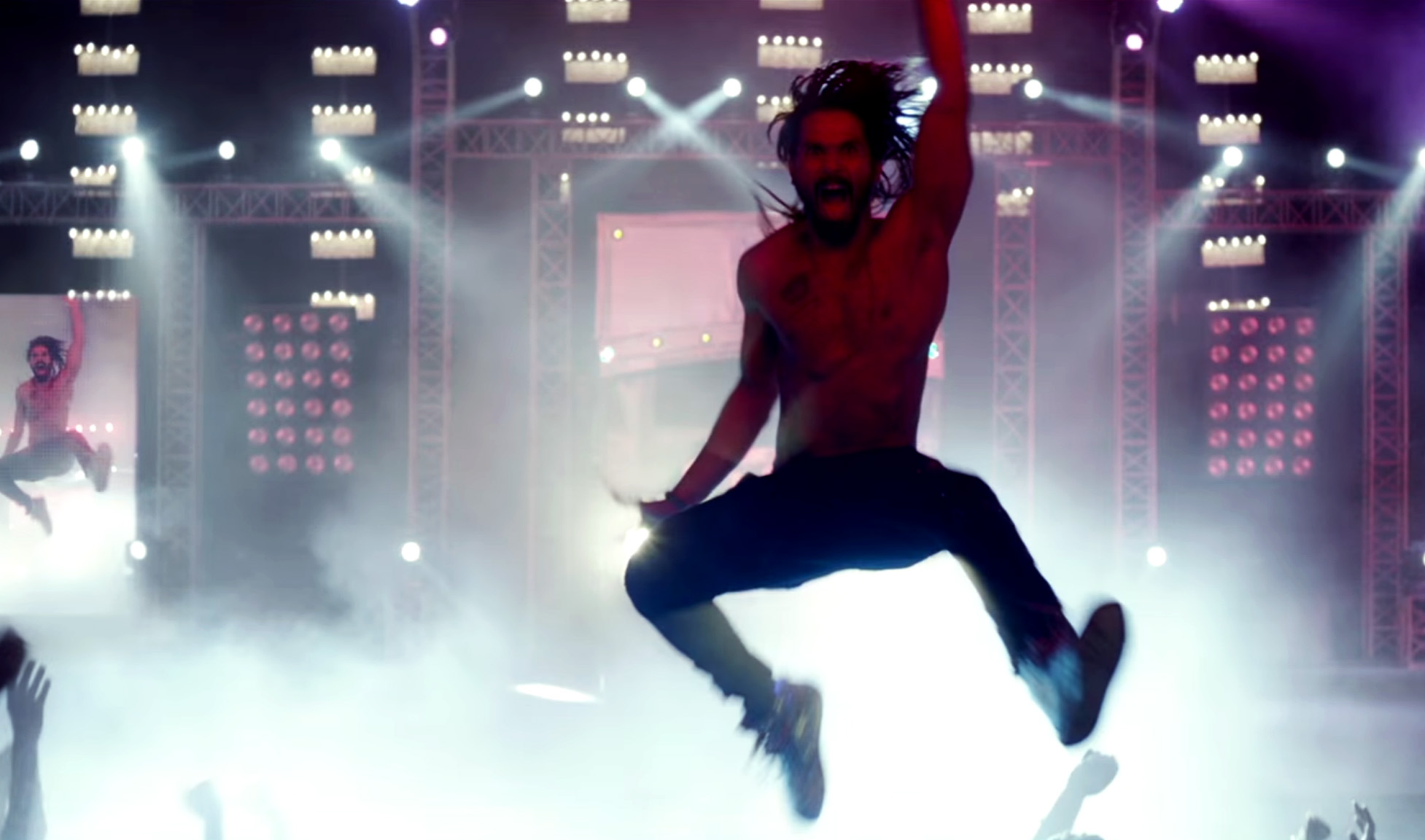
    Prime Focus delivered more than 345 VFX shots for ‘Udta Punjab’, including crowd multiplication and LED screen compositing for the ‘Chitta Ve’ song sequence, set extension and enhancement, picture-in-picture (PIPs) and clean-up work. One of the most challenging VFX sequences was a drug injection sequence which required the creation of a surreal dreamlike environment.

    “In the scene in which Alia can be seen freefalling against a pitch-black backdrop, the idea was to portray the calming and sedating effect of drugs on a junkie,” commented VFX Supervisor Vishal Kapoor. “Even after grading we weren’t quite satisfied with the static look of the frame, so in order to impart more dreaminess to sequence we added subtle transverse wave motions to help bring the sequence to life.”

    The grade of the film varied for each of the main characters – from colourful and vibrant for Tommy (a high-on-drugs, Punjabi rockstar), to earthy and raw for Pinky (a Bihari migrant who works in the fields). A rather cold treatment was given to the scenes featuring Preet and Sartaj – the characters battling the drug menace in the state of Punjab.

    “In addition to the overall dark treatment of the movie a grungy texture was added to the drug sequences to bring about the squalid, drug-fuelled underbelly of the region,” said Prime Focus Colourist Aashirwad Hadkar.

    Produced under the banner of Phantom Films & Balaji Motion Pictures, which was also the distribution company, ‘Udta Punjab’ released on 17th June 2016.