Tag: Vertoz

  • Guest column: Remarketing and its significance for brands

    Guest column: Remarketing and its significance for brands

    MUMBAI: Remarketing is a smart marketing strategy that enables brands to identify and target those specific customers who have visited the brands’ website but may not have made an immediate inquiry or purchase. They do, however, present an opportunity for a possible conversion, as they have already shown interest in the products and services by visiting the website. Remarketing also includes reaching out to the existing customers and retaining them by promoting various offers. It is a widely used strategy and one of the most popular ones in e-commerce today.

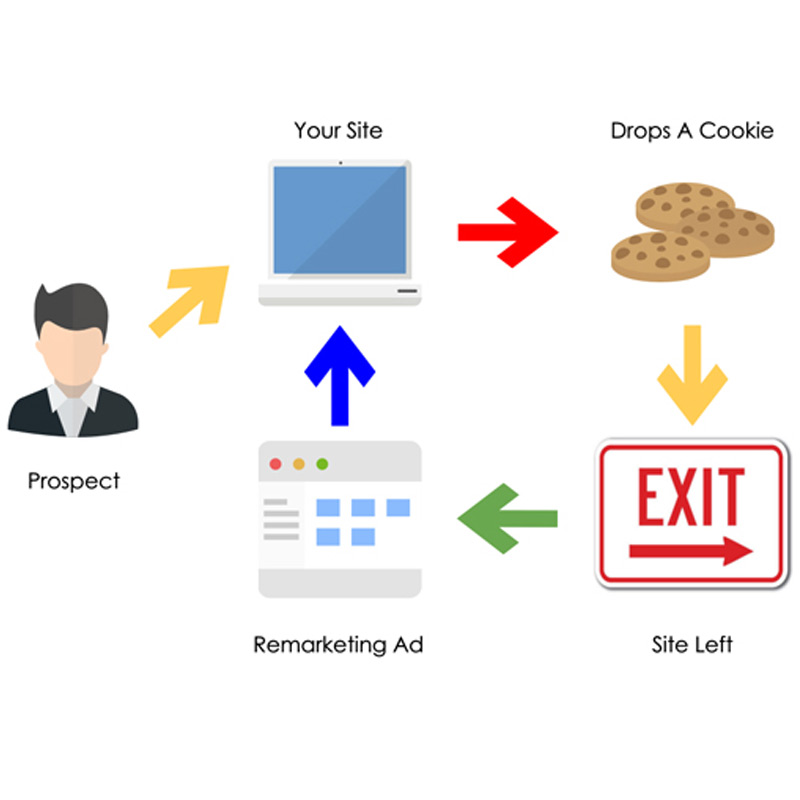
    For this, brands would have to place a remarketing tag on their website. Though it is possible to place these tags on each and every page of their website, it makes more sense to have these tags placed on certain specific pages to target a specific type of customers. For instance, the customers who have abandoned their carts, the ones who have saved the products for later or have had any sort of interaction with the website qualify better for retargeting, as compared to others. When the customers visit these pages, which have the remarketing tag, a cookie will be placed in their browser. This cookie will trigger the ads and display them on other sites where they browse.

    Brands can go a step further by using techniques such as dynamic remarketing and dynamic creative optimisation (DCO). Dynamic remarketing lets them dynamically target the customers as they browse the internet. Dynamically retargeted ads show content based on a customer’s profile, such as the product that has been viewed or added to the cart.

    DCO lets one dynamically change the elements of the ad creatives such as image, price, product description and call to action. It can also switch the ad copy that is being displayed. This increases the chances of customers zeroing in on that particular brand during the time of purchase, increasing the conversion rates.

    In addition to dynamic retargeting and DCO, there are various other techniques for retargeting. One can use cross-device retargeting, which enables displaying the ads to a specific user across multiple digital devices such as mobiles, tablets, laptops and desktops. It enables brands to retarget an ad on one device, knowing that the customer has seen an ad or visited their site on another device. Multi-channel retargeting can also be used for displaying ads via different channels like banner, video or text.

    Advertisers, however, have to be cautious. Retargeting involves the use of consumers’ data and, hence, advertisers have to consider the legal policies and data privacy regulations applicable in various regions across the globe. Thanks to recent developments, data privacy regulations are getting even more stringent in the European Union (EU) and this will affect the way and extent of retargeting that can be done in this region. The EU General Data Protection Regulation (GDPR) is all set to change the previous regulations and will impose more restrictions on companies for using the personal data without the consent of consumers residing in the EU. This can make the situation a bit tricky for advertisers. Brands will have to work their way around this cautiously.

    Remarketing has multiple advantages which will help to boost up the marketing strategy. For instance, a majority of the website visitors leave without converting. But these are valuable customers for the business, and letting them go is a huge blunder. This is where remarketing comes in. It lets brands follow these potential customers on other sites and re-engage with them. Remarketing lets brands display highly relevant ads to an interested audience.

    Instead of delivering ads to everyone, retargeting lets brands show ads only to the people for whom it is sensible. This actually helps to retain money in models like CPM, which are most commonly used. Also, remarketing is one of the best ways for customer retention. Acquiring new customers is always nice. But, it is important to bear in mind that it is also 7 times costlier than retaining the ones who are already aware of the brand.

    Remarketing also helps to create a better brand awareness and brand recall. On an average, one only gets a fraction of a second of the customers’ attention span. It is difficult to make an impact on their minds in such a tiny sliver of time. Therefore, it is crucial that brands retarget them in order to create lasting impressions in their minds. This increases the chances of them coming back to them while actually making the purchase and directly reflects on the brands’ conversion rates. It increases the campaign effectiveness and can also improve the RoI.

    Remarketing helps to target the visitors to a brand’s competitor sites as well. The ads are displayed when the customers are still in their search phase of the purchase cycle. The remarketing ads will be shown to the customers when they search a particular keyword. This also includes people who may visit a brand’s competitors’ websites that have returned results relevant to that brand’s products and services.

    Retargeting is a largely beneficial marketing technique and it is highly recommended that brands employ this in order to obtain the array advantages it brings along. This is a simple technique but offers multi-fold returns.

    public://Ashish-Shah,-Founder-&-CEO.jpg

    The author of the article is founder and CEO of Vertoz. The views expressed here are strictly his own and Indiantelevision.com may not subscribe to them.


    Also Read:

    GUEST COLUMN: From Juggle To Juggernaut: Localising content for India

    Guest column: Taking Indian content to the global market

    Guest Column: The comeback of full-service agencies in India
  • Digital industry celebrates Union Budget 2018

    Digital industry celebrates Union Budget 2018

    MUMBAI: The Union Budget for 2018 that was finally unveiled yesterday turned out to be a rather disappointing one for the industry at large but Digital India and digitisation got prime time attention. The budget focused on the middle class and rural population, guided by the mission to strengthen India’s agriculture, rural development, health, education, employment, MSME and infrastructure sectors.

    With a view to promote digitisation, the government is set to make the necessary investment in robotics, internet of things (IoT), artificial intelligence (AI), digital manufacturing and big data analysis with the NITI Aayog to establish a national programme to direct efforts in artificial intelligence. The government has committed itself to the development of technology along with concentrating on AI and its applications, a revolutionary move for the digital industry. The ministry has decided to double its Digital India budget to around Rs 3073 crore. 

    The Indian media industry seemed to have mix reactions about this year’s budget and while some were disappointed, many seemed cheerful about it and considered it to be a welcome budget. 

    public://apporva.jpg

    Like the last few years, 2018 Union Budget too saw a dry spell for the entertainment industry with no big announcements. However, the government’s Digital India push by proposing to set up 5 lakh WiFi hotspots in the rural areas will pave the way for greater consumption of entertainment and news related content. It will also provide a boost to regional content, which is already expected to grow multifold in the coming years. Overall I would say the biggest positive highlight of this year’s budget was focused on agriculture and healthcare. This initiative will definitely help the marginalised part of our country in the long run.

    Dharma Productions CEO Apoorva Mehta

    public://rahul puri.jpg

    It was an expected budget. I think that it was widely believed the government would focus on the rural economy and so it came to pass. There was not much expected for the media and entertainment industry and there was nothing specific announced. Corporate India would be slightly disappointed though as corporate taxation was not reduced except for small enterprises. Aviation and farming were the big winners.

    Mukta Arts managing director Rahul Puri

    public://Megha-TataCOO-BTVI-3.jpg

    Budget announcements signal a stronger ecosystem for media and broadcast industry. In continuation with my pre-budget expectations, I am happy that FM has kept his promise by reducing corporate tax rate to 25 per cent.

    BTVI COO Megha Tata

    public://anita.jpg

    While the budget largely focuses on the upliftment of agricultural sector, there is an equal focus on technology by introducing national programme in the area of AI & exploring ways for using the blockchain technology for digital transactions. The emphasis on sectors like healthcare, education & skill development is a good step by the govt. Reforms in the education sector encourage more & more private institutions to expand or modernise to give students a more global perspective as part of their learning process, which also helps in tackling brain drain. Overall, the budget seems like a typical socialist one, without much to take-away for the common-man.

    Havas Media Group CEO India and South Asia Anita Nayyar

    public://rajiv.jpg

    I’m glad to see that the budget for digital India has doubled and also the fact that AI and Blockchain technologies will be used by the government. But I’m disappointed that government is looking to put an end to cryptocurrencies. Globally cryptocurrencies is a phenomenon which points towards the future of currencies and maybe a more inclusive view was needed.

    WATConsult founder and CEO Rajiv Dingra 

    public://Ashish-Bhasin.jpg

    The budget has focused on the right areas, particularly the rural and agricultural sector, which is definitely going to spur rural demand in the coming months and years. The rural economy needed a boost. I also like the fact that the Finance Minister has focused on ease of living rather than just ease of doing business and has introduced healthcare benefits which will benefit nearly 50 crore Indians. It is a landmark step. The emphasis on digital, particularly higher-end digital areas like artificial intelligence and usage of blockchain shows that the government is committed to providing a further digital thrust. The steps being taken, like provision of free WiFi and other forms of internet to all parts of the country will be extremely beneficial in the long run for the digital sector. It will help agencies like ours who are partnering clients for digital transformation.

    The introduction of the long term capital gains tax on equities will soon be digested by the industry I’m sure, but in some ways, I see a missed opportunity because the simplification of GST processes for the services sector would have gone a long way to help the advertising industry. The advertising industry doesn’t mind paying the taxes but abhors non-productive, complex procedures including filing of hundreds of returns every year. Overall I think the right sectors have got the incentives and therefore it should be good for the country.  If it is good for the country, it will be good for the economy and once the economy grows, the advertising sector will benefit from it.

    Dentsu Aegis Network chairman and CEO South Asia Ashish Bhasin

    public://deepak lamba.jpg

    The ‘Digital India’ program has received a major boost with double the allocation of  Rs. 3073 Crore for the coming year. Budget 2018 has proposed the set-up of 5 lakh Wi-Fi hotspots in rural areas thereby providing broadband access to 5 crore rural citizens. Much to the delight of digital media players, this move will open extended avenues for them and give a strong push to regional and mainstream digital content in these markets. With extensive broadband penetration, affordable data prices and smartphones, the vision for digital India could well come to fruition in the coming years. Lastly, the estimated over 7% growth for the next fiscal creates a positive sentiment for India’s economic and financial ecosystem.

    Worldwide Media CEO Deepak Lamba  

    public://joy_0.jpg

    In the Union Budget 2018, there has been a significant allocation towards rural development. The proposal of setting up 5 lakh Wi-Fi hotspots in rural areas will give impetus to media penetration in Tier 3 and Tier 4 markets. Media players are increasingly looking at Tier 2, Tier 3 and Tier 4 markets since regional content has begun to drive media growth. So, the infrastructure push in these regions will accelerate media consumption and inadvertently help the advertisers and the advertising business on the whole. I would certainly say it is a good budget, and we will gradually witness the positive results unfold in the future.

    TV18 president- revenue & Forbes India CEO Joy Chakraborthy

    public://ashsisg shah.jpg

    Government’s focus on rural and agriculture development, digitisation and digital education is going be a big demand booster for our sector. The rural demand for FMCG, beverages, automobiles, education and financial products are going to increase, this would increase advertising budgets of our clients from FMCG, education, financial services sectors. Government’s focus on digitisation brings in lots of rich data for us to better targeting for our customers. This focus would make India data rich country and the targeting and conversions on digital marketing front would be much easier and more accurate.

    Vertoz fand CEO Ashish Shah

    public://vivek_1.jpg

    FM Jaitley’s budget this year focuses on investments to be placed in artificial intelligence, machine learning and the Internet of Things with the NITI Aayog establishing a national program to direct efforts in artificial intelligence. The government has committed itself to the development of technology along with concentrating on AI and its applications which is a revolutionary move for the digital industry. Initiatives on infrastructure growth and education expansion have been looked at from a digital perspective, which reflects the significance of the ‘Blackboard to digital board’ movement. Decisions benefiting rural citizens–such as 5 lakh WiFi spots, give it a further impetus. Another game changer mentioned in this budget was the government’s will to proactively explore the use of blockchain technology. The allocation of digital India has been doubled which indicates the government’s emphasis on digital, heralding a stronger digital economy. I believe this was a great budget for the digital ecosystem.

    DAN Performance Group CEO Vivek Bhargava

    public://sahil chopra.jpg

    The much-awaited announcement of Union Budget prompted a gust of anticipation & higher expectations. While the Finance Minister touts the Union Budget as primarily focused on the agricultural sector, it sure reeks of reforms beneficial for numerous other sectors as well.

    The government has always encouraged the digital sector to flourish & the budget rightfully justifies their farsighted approach. This year the allocation to Digital India Scheme has been doubled to Rs 3073 crore which is a worthwhile move for the industry as a whole. Not only that, with the onset of fast-paced technology and AI shaping the new segment of digital World, NITI Aayog will establish a national programme for it. This is a clap-worthy reform which will help organisations diversifying with AI to have a wider scope with vast awareness among everyone.  For a higher internet penetration, 5 Lakh Wi-Fi hotspots will be set up in rural areas, which again is beneficial for the rural dwellers. The need to eliminate cryptocurrencies which are funding illegitimate transactions was also mentioned. The government has proposed to revamp the system of sanctioning loans to SMEs. As per the budget reforms now the information will be linked with GSTN & will be fetched from the same. This comes across as a welcome move as not only will it streamline the process but will enable people to get accustomed to the digital ingress. Corporate companies with a turnover of up to Rs 250 crore will also be highly benefitted from the budget as the corporate tax has been further reduced to 25 per cent.

    As per my opinion, the Union Budget has surely set a benchmark & the year looks promising with excellent reforms leading to growth & development of the economy.”

    iCubesWire CEO and founder Sahil Chopra

    public://chetan.jpg

    This is an excellent budget from the digital perspective. As expected, the government has doubled its allocation to digital India initiative at Rs 3073 crore. This will grow the entire digital economy and the government has shown that this is going to be focus area. Its commitment to exploring blockchain and AI only ratifies its vision for digital India. The other game changer is enhancing rural regions with 5 lakh Wifi hotspots. This would lead to higher adoption, skills upgrade and rural citizens embracing digital quickly. This budget gives me hope that we are on our way to becoming a digital-led economy.

    Tonic Worldwide founder and CEO Chetan Asher

    Also Read :

    Industry holds bright outlook for budget 2018

    Union Budget 2018: Industry expects govt to favour consumption

    Is India ready for the impact of AI on marketing?

    A year after demonetisation: E-payment services emerged winners 

  • Guest column: Cybersecurity in the advertising sector

    Guest column: Cybersecurity in the advertising sector

    Today, the world is experiencing a digital revolution and digital media plays a pivotal role in it. Having the potential to change the way we live our lives, it is the next big thing to watch out for. Digital media is omnipresent and is flooding our lives by leveraging every channel possible. With modern technologies like IoT (Internet of Things), Big Data and Cloud computing penetrating our lives and making way for innovative business ideas, one can sense the global business scenario transform to adapt this digital era. However, with growing possibilities come growing threats. Cybersecurity is globally a major issue across all the digital platforms. It is important to understand the intricacies of cyber security, in order to avert the ongoing spate of digital frauds.

    When “Advertising” went “Digital”…

    Speaking of tech-based innovative business ideas, digital advertising rings a bell. It is one of the outcomes of this digital era. Digital advertising is the future of advertising. It is expected to overtake TV advertising this year. It is a smart technology that will only grow bigger and get smarter, by incorporating futuristic technologies. Programmatic advertising is the newest entrant in this field. It is the next generation technology which helps advertisers to target their desired customers, through the use of algorithms and dynamic tracking of users’ behavioral data. The entire process is automated and is completed withing the blink of an eye.

    Don’t fall victim!

    While wading through this digital world, however, one needs to be cautious. The lack of human involvement, creates certain vulnerabilities. It is prone to attacks by hackers. The system may get infested by viruses, malwares, spywares, ransomware, etc. These could wreck havoc on the system which stores our valuable data. In the world of digital advertising, online threats manifest in the form of click frauds, fake and bot-generated traffics, spamming, brandjacking, identity thefts, data thefts, etc. Such criminal activities pose a looming threat to the digital media sector. If the users end up clicking on malicious links, their system is exposed to great risks by hackers and malicious software.

    Watch your clicks!

    Advertisers were recently hit by two massive advertising frauds – Methbot and Hyphbot. Methbot is claimed to be the “Biggest Ad Fraud Ever”. A group of Russian criminals managed to game the system with the help of fake domain registrations. They tricked the ad-algorithms into buying their fake web space and serving ads on these fraud platforms. They then directed fake traffic at these ads from 5,70,000+ bots who viewed these ads. This drove their revenues to $5M per day by forging 300M video views, with the help of the CPC system they exploited.

    Another such ad fraud operation was “Hyphbot”. It was a bot network that fabricated up to a 1.5 billion fake ad requests per day and generated around $5,00,000 a day. “Hyphbot” is said to have compromised around 5,00,000 machines. It is claimed to be four-times as big as the Methbot operation. Similar to Methbot, the Hyphbot perpetrators generated a slew of fake websites that were designed to mimic the behavior of authenticate human traffic. They consequently managed to trick the ad exchanges and ad networks that these were genuine and premium publishers.

    Build your defense:

    In this world of digitization, it is very important to be aware of the ways to prevent such attacks on oneself and be safe online. To deter frauds like the Methbot and the Hyphbot, publishers can adopt a simple “ads.txt” protocol. By implementing ads.txt, publishers can caution third-party media buyers – which includes even the automated buying platforms – by providing data about exactly which inventory sources legitimately represent them. Simply concatenating the script ‘/ads.txt’ after a genuine premium publisher’s URL will display the list of these third-party media parties.

    Advertisers can use self- serve platforms which enable them to monitor their ad campaigns and its properties in real-time. All members of the supply chain will have to work together to weed out  ad frauds and other cybersecurity issues. Hence, It is important that all advertisers (Brands & Agencies) be watchful any programmatic advertising platforms and SSPs before they are engaging with them in business.

    Governments and major players are taking notice…

    In the UK, the FBI and Metropolitan Police are taking keen interest in ad fraud cases. They are currently gathering intelligence on the technicalities of the “adtech” industry and sources say that summons in these frauds can be expected soon. Also, major advertisers have shown inclinations towards only those publishers and ad tech companies who have a strong commitment to prevent ad frauds on their sites.

    The future of this highly-promising industry lies on the shoulders of these preventive measures and their success ratios. Ad fraud prevention is a vital area that needs a lot of urgent attention. However, this will play a major role in shaping the future of this digital world.

    The author is the founder and CEO of Vertoz. The views expressed are personal and Indiantelevision.com may not subscribe to them.

  • Vertoz shares gain in opening trade

    Vertoz shares gain in opening trade

    MUMBAI: It was a rare sight to witness at the bourse today when Vertoz Advertising became the first programmatic advertising company to be listed on National Stock Exchange this morning. The price for the public issue of 15.84 lakh equity shares was fixed at Rs 108 per share. Within the first 3 hours, the stock skyrocketed 21.6 per cent trading at Rs 129.6 after opening at Rs 116.

    Founded in 2012, Vertoz has offices worldwide with its global headquarter in New York, USA. It offers engaging and innovative advertising and monetisation solutions to clients as a better option to the traditional methods of media buying and selling. The company’s technology, advanced capabilities and programmatic platform makes for a highly scalable software platform that powers and optimises the marketplace for real-time trading of digital advertising inventory between advertisers and publishers.

    Indiantelevision.com got talking to the  company’s founders and CEO Ashish Shah and founders and chairman Hiren Shah where they spoke about the company’s growth, division of funds raised from the IPO, programmatic advertising in India and much more. Excerpts: 

    Why did Vertoz take the IPO route when most agencies prefer private investments or acquisitions?

    Ashish: We believe in doing different things rather than doing things differently. A lot of companies in our sector have gone through a private equity round and we did too had the same option but we chose to have an IPO as it helps in distributing the wealth in a better way. There are a lot of people in the company, investors, M&A, and all of that requires cash. Private equity wouldn’t have helped in solving that problem.

    What was the revenue of the company last year and how much has it grown? What is your projection for next year?

    Hiren: Our net revenue stood at Rs 20 crore in 2016 and at Rs 9 crore in Q1 2017. We are expecting revenue of Rs 30-40 crore in 2018. The way India is growing and with people moving to digital, we are expecting a huge growth in the segment. 

    Will you be looking at acquisitions going forward?

    Hiren: Yes, but we will be looking at acquiring companies and not getting acquired. We have a subsidiary in the US and other European countries for acquiring digital businesses. We will be using the funds raised from this IPO to acquire those businesses. 

    When can we expect that to happen?

    Hiren: Soon! It should happen in the second half of 2018. 

    When will you be listed on NSE completely?

    Hiren: It is mandatory for small and medium-sized enterprises to be listed on NSE Emerge for at least two years or four annual general meetings. Once we are able to comply with that, we will be listed on NSE, maybe in late 2019 or early 2020. 

    How do you intend to use the funds raised for the IPO?

    Hiren: We would be using around 70 per cent of the funds in inorganic growth and acquisition of businesses and the rest 30 per cent at a macro level on working capital of our business.

    Do you think the Indian media industry has understood programmatic advertising and are leveraging it to the best use as opposed to other markets? 

    Hiren: It is a long way to go for India as people here are still not aware about programmatic advertising. They still follow traditional methods of advertising and it was the case with the US as well but they have evolved in programmatic to a greater extent. India on the other hand, still needs to understand the core of it but with prime minister’s Digital India movement, programmatic will see better days. 

    How do you think will programmatic advertising shape up Indian media over the next few years, say by 2020?

    Ashish: India is a growing economy and is rapidly adopting various policies and changes for a future ready industry. We would be able to achieve what western countries have achieved in a quicker time. 

    How much do advertisers spend on programmatic now? How much is it in the west?

    Hiren: Advertisers shell out less than 5 per cent of the advertising spends and a major chunk still goes into traditional media. In western countries, this number is close to 60 per cent.

    When do you think will we be able to use programmatic advertising in radio?

    Hiren: Although programmatic advertising is already happening in radio and television in other counties, it would start in India very soon, maybe by 2019. Some radio players are using programmatic in jingles but that is only limited to online radio. 

    How will programmatic adverting shape up in India going forward?

    Ashish: programmatic is the need of hour and has huge potential in the ad world. Advertisers can take quick decisions on what they should do or change in their marketing communications. Although programmatic advertising will evolve in India, it will also change its form with various technologies coming in place.

    In western countries, in-house teams are created for this. Is it a challenge for agencies to sustain? 

    Ashish: I don’t see it as a challenge for agencies as it is just about economies of scale.Everybody has a room for everything.

  • BARC EKAM: Learning online behaviour & ROI from specific campaigns will be easier, industry says

    MUMBAI: BARC India has announced the phased roll-out of its much-awaited digital measurement service. The digital products will be launched under the brand name EKAM (Sanskrit for “One”). The EKAM suite of products will include: EKAM Pulse, EKAM Beam, EKAM Stream, EKAM Ad-Scan and EKAM Integra.

    EKAM Pulse will measure video ad campaigns and will be the first digital offering to be rolled out by BARC India. EKAM Beam, the next product lined up for release, will measure linear broadcast that is viewed on a Digital device. EKAM Stream, will measure both non-linear and pure play digital video content. BARCIndia will also provide industry with EKAM Ad-Scan – which will be a global first-of-its-kind product.

    EKAM Integra – will help industry with common, robust and independent audience numbers that will give more accurate incremental reach figures. To do this,BARC India’s TV data will be tied with Digital Video data with the help of Single-Source and Digital Booster panels on top of the census measurement and big data.

    www.indiantelevision.com spoke to a cross-section of the industry on the new yardstick. Here are the views of Spuul Global CEO Subin Subaiah and Vertoz CEO Ashish Shah.

    Was it eagerly awaited? How do you see it?

    Subin: Its early days , but here are my thoughts. We’re a media – tech company, and any innovations with regards to technology are always welcome. We have been looking forward to the introduction of a tool that would be a standard in measuring viewership and consumption, since currently different service providers have their own methods of measurement, and everyone’s parameters for a successful campaign are defined differently.

    Which are the other methods you have been using?

    Subin: Currently, we use tools developed internally by our data and R&D teams. It’s been a foolproof system so far, and we rely heavily on this when we schedule our content and advertisements. Having said that, we’re looking forward to standardise the way online impressions are measured.

    How would BARC’s EKAM help? What would be you suggestions?

    Subin: We see EKAM creating a standard of sorts, especially when service providers are in the midst of negotiations with regards to content, or even advertising real estate. We know the value of our content, the value of our real estate, and we would like to know whether the placement of advertisements affect overall viewership or not, and how, and this will help advertisers get on board too. If the parameters are the same across the industry, it leaves no room for doubt with regards to value of real estate, or advertising malpractices.

    How would it give a fillip to the ecosystem?

    Subin: The most important, and most challenging aspect of our business today is knowing our consumer. There is always so much that we do not know about the person we’re trying to provide entertainment for. With EKAM coming in, learning the habits, online behaviour, and other viewership trends of our consumers will become far easier, thereby helping us create a better, more user friendly product, one that the consumer has been looking for.

    Leading programmatic company Vertoz founder & CEO Ashish Shah says: Since 2015, consumption of video content has increased tenfold. This year internet is being consumed maximum for online videos, news, live streaming shows & events, etc. Advertisers are leveraging this change in user behavior to increase brand awareness and brand engagement. As the internet has become much faster compared to a decade ago, advertisers are rolling out video ads more and surprisingly consumers/users are responding positively to these ads by engaging more with these ads compared to image display ads. Video display ads, in-video ads and other engaging video ad formats are very popular among advertisers as CTR and engagement rate is high.

    Current issue – The vital factor of any video advertising campaign is granular reporting. Almost all video advertising platforms give in-depth reports like number of video views, geos, average video watched time, video percentage watch, etc. Sometimes it is difficult to manage multiple platforms as all platforms might be targeting similar audience set, but as a marketer, there is no way to find out or know who has seen the ad from which platform as there is no provision to sync all these platforms together. A major issue for marketers is not online video platforms, but television. Marketers spend 15 to 20 times more on television ads as it is a main ATL medium to reach large audiences at a much lesser time.

    A number of video broadcasting companies are focusing on their platform and audience but EKAM by BARC will help significantly in the growth of the video industry as it focuses on measuring the industrywide trends and industry-specific needs.

    EKAM by BARC will help to measure linear broadcast as well as non-linear broadcast. The suite of products will help marketers to calculate the ROI from specific video campaigns as both linear and non-linear video broadcasting will be measurable now. It will help, not only advertisers but also video content creators to understand the success of their video content. This platform can give insights about audience, geo, reach and frequency which will be a great deal for publisher/content providers.

  • Ad tech company Vertoz appoints Sanjay Dubey

    Ad tech company Vertoz appoints Sanjay Dubey

    MUMBAI: Vertoz, an ad tech company, has announced the appointment of Sanjay Dubey as its senior sales director India. Besides his role of sales and blending business, Dubey will help the company in managing and scaling operations internationally and help develop the brand and product with global technology to Indian operations.

    Among the key areas where Dubey would be actively involved is setting up of the MSME segment business in India.

    “We are proud to have someone on board of Sanjay’s caliber, expertise and perspective joining us. His pan India experience, deep knowledge over building and launching of products, and the unique blend of technological and management skills will strengthen our services and offerings and help to fill void in the Indian market,” said Vertoz founder and CEO Ashish Shah.

    Dubey joins Vertoz from Vubites – Rediff.com where he was director of sales. Prior to Rediff, he was with Network 18 where he held the role of deputy general manager. In the past, he has also worked with Infomedia India as its national product manager. He is an alumnus of the IIM Calcutta and a B.Sc. graduate from the University of Mumbai.

    Vertoz, which has global presence and clients spread across the world, believes that Dubey’s over 20 years of experience in multi-platform brand marketing and business development would further accelerate the growth and momentum of the company.

    “Vertoz possesses all the potential and abilities to spread concept of programmatic advertising aggressively globally as well as in India. Vertoz’s programmatic plex provides the perfect platform and integrated offering to support clients looking to connect with potential and existing customers digitally in India and worldwide,” added Dubey.

  • Ad tech company Vertoz appoints Sanjay Dubey

    Ad tech company Vertoz appoints Sanjay Dubey

    MUMBAI: Vertoz, an ad tech company, has announced the appointment of Sanjay Dubey as its senior sales director India. Besides his role of sales and blending business, Dubey will help the company in managing and scaling operations internationally and help develop the brand and product with global technology to Indian operations.

    Among the key areas where Dubey would be actively involved is setting up of the MSME segment business in India.

    “We are proud to have someone on board of Sanjay’s caliber, expertise and perspective joining us. His pan India experience, deep knowledge over building and launching of products, and the unique blend of technological and management skills will strengthen our services and offerings and help to fill void in the Indian market,” said Vertoz founder and CEO Ashish Shah.

    Dubey joins Vertoz from Vubites – Rediff.com where he was director of sales. Prior to Rediff, he was with Network 18 where he held the role of deputy general manager. In the past, he has also worked with Infomedia India as its national product manager. He is an alumnus of the IIM Calcutta and a B.Sc. graduate from the University of Mumbai.

    Vertoz, which has global presence and clients spread across the world, believes that Dubey’s over 20 years of experience in multi-platform brand marketing and business development would further accelerate the growth and momentum of the company.

    “Vertoz possesses all the potential and abilities to spread concept of programmatic advertising aggressively globally as well as in India. Vertoz’s programmatic plex provides the perfect platform and integrated offering to support clients looking to connect with potential and existing customers digitally in India and worldwide,” added Dubey.

  • Vertoz announces refreshed tagline ‘Ingenious Programmatic Plex’

    Vertoz announces refreshed tagline ‘Ingenious Programmatic Plex’

    MUMBAI: Vertoz, a business of Trunkoz Group, has announced the company’s refreshed tagline Ingenious Programmatic Plex. The brand’s significant business accomplishment over the last three years showcases the healthier, more contemporary aspects of the brand today. The new tagline indicates the growth of Vertoz from an ad network to a programmatic company. This re-branding will encompass all aspects of the brand’s visual identity, bringing in new goals and achievements to the company.


    As a startup, Vertoz is consistently growing and expanding its offerings into the online advertising marketplace. This significant growth and development presented the need to re-evaluate not just the tagline but also the brand positioning and future of the company. These positive changes of re-evaluating the tagline is not just to showcase the brand’s technology but to make people understand that the company has moved on to a whole new level and promises to make a change in the customer experience.


    “The update to our tagline reflects the fresh, technologically evolved company that Vertoz is today. Our new tagline better reveals the new Vertoz – unique, technologically advanced and consumer friendly”, said Trunkoz Group founder and CEO and Vertoz CEO Ashish Shah.


    He further added, “As our customers sought out higher quality products we thrive to bring them something more unique and user friendly. Vertoz’s refreshed tagline is our way of sharing the news of our evolution with the broader ad tech community.”


    “Vertoz has done a lot in the online advertising industry in the past years and now that we are moving towards a technology powered world, Vertoz is moving along with it. With its new tagline, Vertoz has evolved to become a programmatic company where technology is everything. 2016 is the year for Vertoz, we plan on going big and playing it smart to create our own identity among the big players of the online advertising industry,” said Trunkoz Group founder and chairman Hiren Shah.


    With this rebranding, the company ought to provide multiple solutions and bring about a major change in the way online advertising works. Vertoz is also exhibiting at ad:tech New Delhi – an interactive advertising and technology conference and exhibition to be held on 3 and 4 March 2016. At this event, the company will be showcasing itself as an ingenious programmatic plex.