Tag: Vertoz

  • The convergence of digital and physical advertising in a privacy-first world

    The convergence of digital and physical advertising in a privacy-first world

    Mumbai: In the ever-evolving landscape of advertising, the lines between digital and physical mediums are blurring, heralding a new era of integrated strategies. As the founder and CEO of Vertoz, a pioneer in MadTech and CloudTech platforms, I have witnessed firsthand the transformative power of this convergence. Yet, as we embrace these advancements, we must also navigate the complexity of privacy in an increasingly interconnected world. Advertising has been revolutionized in this digital age, giving us more tools for precise targeting and real-time analysis. Even then, traditional forms of advertising – like billboards, print media, and in-store displays remain prominent. The key is to integrate these channels, to create a seamless and engaging customer experience.

    Programmatic Digital out-of-home (PDOOH) advertising is a great example of this convergence. By using data from digital interactions, PDOOH campaigns can adapt messages for specific audiences in real time. Imagine a digital billboard that changes based on the demographics of people walking by, or a store display that syncs with someone’s online browsing history. These innovations show how digital insights can enhance physical advertising.

    However, this integration comes with the need to address privacy concerns. Today’s consumers are more aware of how their data is used and are more protective of it. This shift means we must handle data with transparency, consent, and security.

    At Vertoz, we are dedicated to these principles. Our platforms comply with global privacy regulations as we believe trust is crucial. When consumers feel their privacy is respected, they engage more meaningfully with advertising.

    To succeed in this evolving landscape, advertisers should mainly focus on Transparency, Consent, Data minimization, and security. Advertisers can be transparent by clearly explaining to the customers how they collect and use their data. This in turn builds trust. They must also get explicit consent from consumers before using their data to meet both the legal requirements and consumer expectations. In order to reduce the risk of breaches and to show respect for privacy, advertisers must only collect data necessary for specific purposes. Most importantly, they must employ strong security measures to protect data from unauthorized access.

    The blending of digital and physical advertising offers immense creative and engagement opportunities. Advertisers can create personalized experiences that resonate with consumers by thoughtfully integrating these channels. But these efforts must be grounded in a commitment to privacy.

    The balance between innovation and privacy will determine the success of future advertising strategies. At Vertoz, we’re excited to lead this new era, pushing technological boundaries while maintaining the highest standards of consumer trust.

    The future of advertising lies in harmonizing digital and physical realms. By prioritizing privacy, we can unlock the full potential of this convergence, creating a world where consumers feel valued and engaged. This isn’t just the future of advertising—it’s the future of building trustworthy and respectful audience relationships.

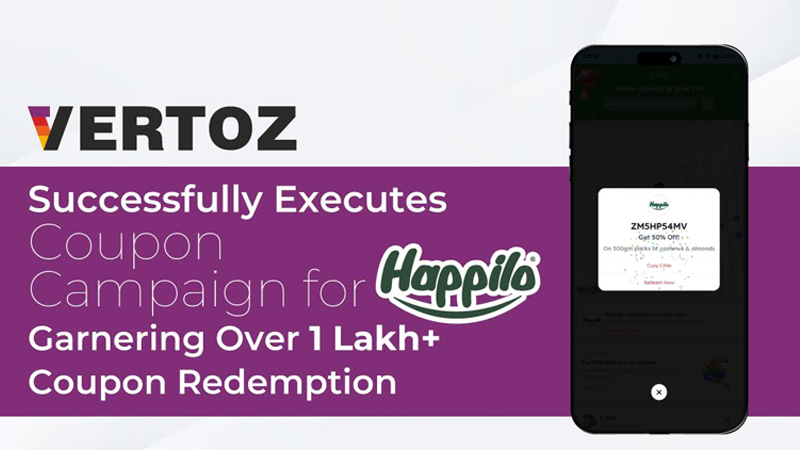
  • Vertoz’s Happilo coupon campaign garners one lakh plus redemptions

    Vertoz’s Happilo coupon campaign garners one lakh plus redemptions

    Mumbai: Vertoz (NSE: VERTOZ), a leading AI-powered MadTech and CloudTech platform is thrilled to announce its successful collaboration with Happilo, a renowned brand in the health food industry, for an innovative coupon campaign on Zomato.

    The campaign, which lasted for 12 days, saw remarkable engagement from consumers, with a total of 1,13,056 coupon scratches counted during the duration. Leveraging Zomato’s extensive reach and Vertoz’s expertise in the digital landscape, the campaign aimed to promote Happilo’s premium range of health foods and encourage customer interaction through exciting coupon offers.

    “We are thrilled with the success of our coupon campaign in partnership with Vertoz on Zomato,” said Happilo founder Vikas D Nahar. “This initiative allowed us to connect with a large audience of health-conscious consumers and showcase the quality and variety of our products. We look forward to continuing our collaboration with Vertoz further to expand our reach and impact in the market.”

    Commenting on the achievement, Vertoz founder & chairman Hiren Shah said, “We are delighted to have collaborated with Happilo for this campaign and are proud of the exceptional results achieved. This successful partnership highlights Vertoz’s commitment to delivering innovative and effective advertising solutions that drive tangible results for our clients.”

    The coupon campaign on Zomato marks another milestone in Vertoz’s journey of delivering impactful digital solutions and fostering successful partnerships with leading brands across various industries.

  • AI-powered personalisation: Crafting tailored experiences for today’s consumers

    AI-powered personalisation: Crafting tailored experiences for today’s consumers

    AI-powered personalisation: Crafting tailored experiences for today’s consumersMumbai: In the ever-evolving landscape of consumerism, businesses are continuously attempting to make meaningful connections with their customers. With technological advancements, the desire for personalized experiences has surged to unprecedented levels. Today’s consumers expect brands to understand their needs and preferences individually, and AI-powered personalization is one of the most effective methods to achieve these expectations.

    AI-powered personalization will be a game-changer in the world of marketing. By analyzing vast numbers of data, AI algorithms will uncover valuable insights into individual preferences, behaviors, and buying patterns. This will enable businesses to deliver highly relevant and personalized experiences across various touchpoints, from product recommendations to targeted marketing campaigns.

    One of the key benefits of AI-powered personalization will be its ability to adapt and evolve. As consumers interact with a brand across different channels and devices, AI algorithms will continuously learn and refine their understanding of individual preferences. This will allow businesses to stay ahead of changing trends and deliver relevant and engaging experiences.

    Moreover, this will enable businesses to break traditional barriers between brands and consumers. Instead of relying on a one-size-fits-all approach, businesses will be able to tailor their offerings to meet the unique needs of each customer. This will not only enhance the overall customer experience but also drive customer loyalty and retention.

    In addition to improving the customer experience, it will also deliver tangible benefits for businesses. By delivering more relevant and targeted experiences, businesses will be able to increase conversion rates, drive sales, and ultimately, boost revenue. Furthermore, it will help businesses optimize their marketing spend by targeting the right audience with the right message at the right time.

    Nonetheless, it’s crucial to acknowledge that AI-powered personalization will pose its challenges. Privacy concerns, data security, and ethical considerations will all play significant roles that businesses must address when implementing these strategies. At Vertoz, we take these concerns seriously and stay committed to upholding the highest standards of data privacy and security.

    In conclusion, AI-powered personalization presents a significant opportunity for all brands and businesses to establish meaningful connections with their customers. By leveraging the capabilities of AI, companies can curate personalized experiences that deeply resonate with modern consumers, leading to increased engagement, strengthened loyalty, and ultimately, heightened business success.

    The author of this article is Vertoz founder & chairman Hiren Shah.

  • Vertoz unveils sweet success with influencer marketing campaign for Bolas Dry Fruits and Sweets

    Vertoz unveils sweet success with influencer marketing campaign for Bolas Dry Fruits and Sweets

    Mumbai:  Vertoz digital advertising and technology Company recently celebrated a sweet collaboration with 50 key influencers for an enchanting Diwali campaign in partnership with Bolas Dry fruits and Sweets. Vertoz, known for its e marketing approaches, joined hands with 50 influential personalities across various domains to spread the joy of Diwali with Bolas Dry fruits and Sweets.

    The heart of this collaboration was the distribution of specially curated sweets boxes to the influencers, aiming to create an authentic and delightful experience. Influencers, in turn, showcased the delightful treats to their followers, endorsing the quality and joy associated with Bolas Dry Fruits and Sweets. The campaign, marked by visually appealing and shareable content, generated a significant buzz on social media platforms, amplifying brand visibility and creating positive sentiment among engaged audiences.

    Early metrics indicate a substantial increase in brand mentions and engagement rates, with a surge in inquiries about Bolas Dry Fruits and Sweets during the festive season. The personalized touch of sending Diwali Gift Boxes created a memorable and shareable experience, enhancing the campaign’s success and setting a unique precedent in influencer marketing.

    Vertoz Founder and Chairman Hiren Shah emphasized the success of the collaboration, stating that, ‘our partnership with Bolas Dry Fruits and Sweets for this Diwali campaign is a testament to the power of influencer marketing done right. By partnering with key influencers and delivering a taste of Diwali joy, we have successfully blended authenticity and celebration, creating a memorable brand experience.’

    Bola Bolas Director Rajat Kamath added, ‘the response to the influencer marketing campaign has exceeded our expectations. Our heritage series of gifting options resonated with influencers and their followers, forging a genuine connection that goes beyond the festive season.’ Both Vertoz and Bolas Dry Fruits and Sweets express enthusiasm for future collaborations, building on the success of this influencer marketing campaign, and highlighting the strategy of combining digital expertise with personalized brand experiences as a recurring theme in their future endeavours.

  • GST cut on advertising & smartphones, focus on AI are M&E industry’s expectations from Union Budget 2019

    GST cut on advertising & smartphones, focus on AI are M&E industry’s expectations from Union Budget 2019

    MUMBAI: The interim budget of 2019 bolstered the preface of a ‘Digital India 2030’ with measures to aid the spread of digital technologies in India, getting positive responses from the industry insiders. With the budget announcement for the year today, the industry is now expecting the Modi government to extend the focus on these technologies and a reduction in the tax slab on electronic products to accomplish the digital-first mission efficiently.

    The ad world is expecting a tax cut on ad spends. Madison World executive director Lara Balsara Vajifdar is expectant of a boost to the economy. “Many sectors of the industry are reporting a slowdown, which is not good for the industry in particular and India in general. Hope the budget proposes active proposals to boost the economy. Whilst sops for the weaker sections are necessary, the only long term and sustainable solution is to have a fast-growing economy,” she said.

    Havas Group India CEO Rana Barua says, “Like all industries the media and entertainment industry is also looking forward to some key announcements that will give it a boost this year, like reduction of GST across mediums. An added focus on schemes to increase digital penetration in India (IT infrastructure improvement, fibre optic cable deployment, so that the last mile village also gets digitally connected). Special incentives for certain categories like automobiles, which are huge advertisers but have been seeing a slowdown for the last many months would also help boost these categories.”

    Dentsu Aegis Network CEO greater south and chairman & CEO India Ashish Bhasin wants the new budget to be growth-oriented, which can put more money in the pockets of the rural and urban consumers to propel spending. “Advertising is a very sentiment-driven business in India. Anything that drives GDP growth drives advertising growth even more. In fact, the rule of thumb is that for every 10 per cent growth in GDP, advertising grows by 1.5 per cent.”

    He adds, “Further, there is an urgent need for tax reforms. Direct tax rates for both corporate and individuals need to be brought down noticeably and immediately. GST on advertising at 18 per cent is just too high. It needs to be rationalised at 12 per cent and the process and procedures need to be simplified as they are cumbersome, unproductive and wasting a lot of time.”

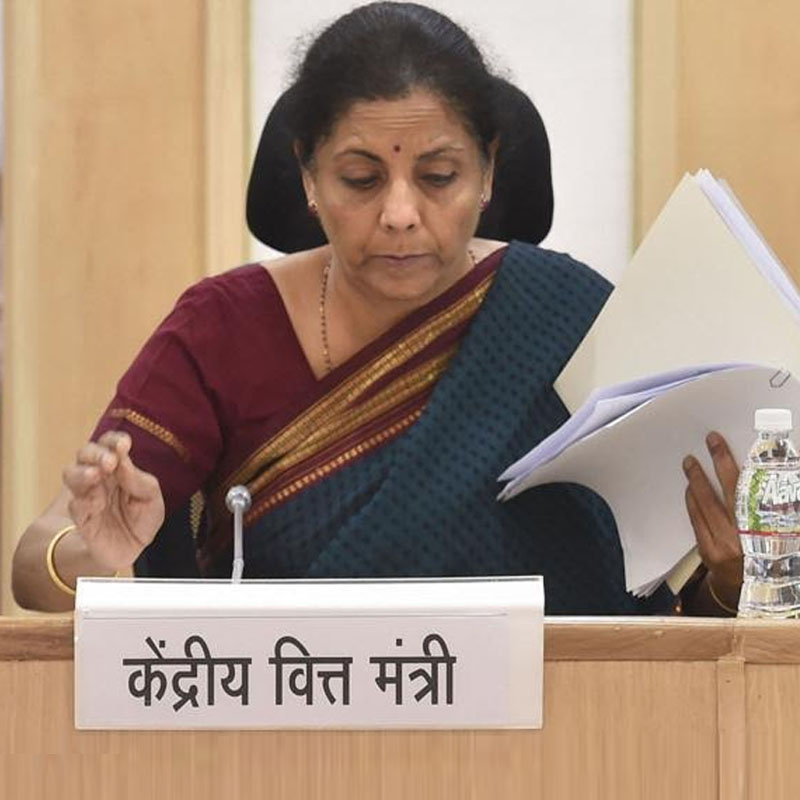
    The broadcasting industry is very positive towards the provisions expected to be announced by Nirmala Sitharaman on 5 July.

    Times Network MD and CEO MK Anand shares, “We expect some clear signals from the government to improve credit growth and investment cycle. There are signs of a slowdown which we expect this budget to address. That includes increased outlay on infrastructure and addressing a distressed farm sector urgently. The new tariff order has a positive impact in the long term. But in the immediate term consumers are complaining of change in price: value equation. There may be a case to look at reducing GST for a year. This will be a great solace to consumers and the industry.”

    BARC India CEO Partho Dasgupta mentions, “Over recent years, the broadcast sector has been experiencing dynamic changes. It has also become an aspirational sector for the youth of this country. Given the nature of the changes and the rising digitisation, we hope the investments by the government will not only result in creating jobs in the M&E sector but will also boost long-term growth for the industry which will also indirectly aide the social fabric of the economy. Additionally, being an insights company that works closely with big data, investments in R&D is an ongoing practice and therefore we are hopeful that provisions for exemptions are made since it will also fuel growth across the sector.”

    9X Media chief revenue officer Pawan Jailkhani says that the overall economic slowdown in the economy for the past 3-5 months calls for rationalisation of GST on advertisers spends, which in turn will help the broadcasting sector. “If the GST (on advertisers’ spends) goes down from 18 per cent to 12 per cent, it will encourage them to spend more,” he said.

    Jaikhani adds, “I also think that there should be some reduction and some relief on corporate tax. Another vertical should be that the government itself should allocate budget for promoting its own schemes and PSUs.”

    He also wants the government to infuse some economic growth steps to turn consumer sentiments positive as advertising is largely based on sentiments.

    Vertoz founder and chairman Hiren Shah is looking forward to newer policies from the government to encourage digital India and smart cities. He adds, “With the current discussions revolving around data security and data localisation, especially the Personal Data Protection Bill 2018 now in the spotlight, India will need to create a better digital infrastructure for the storage of the huge volumes of data. We hope that the upcoming budget encapsulates the importance of better digital infrastructure along with their focus on AI and big data.”

    He expects these moves will directly benefit the digital advertising sector as well, propelling the growth of programmatic as the go-to solution provider for the industry.

    ADOHM chief executive officer Kuldeep Chaudhary also feels the same. “I believe that the presence of technologies based on artificial intelligence can further increase the interaction between consumers and companies. The advertising industry is capable of fostering the growth of other sectors, and they are interconnected. Regarding the 2019 Budget, I hope to see an increase in incentives for the national program in artificial intelligence, at the same time an increase of points of Wi-Fi connection, making it possible to bring new users, then customers, to Indian companies. Also, discuss angel tax provisions in order to bring transparency into the angel funding process, something very important for startups, like us.”

    White Rivers Media chief executive officer and co-founder Shrenik Gandhi adds, “The government has realised the value of investing in digital technology for India to spearhead the ‘Industry 4.0’ globally. Increased fund allocation towards AI, robotics, and machine learning during the interim budget reflected the same. Budget 2019 should now specifically address the application of these accelerators across sectors, be it agri-tech, digi-payments, smart cities or digitised villages. Parallel to Digital India, tax reforms should be looked into to promote mobile manufacturing as it has been a key accelerator of the Make in India program and is also of strategic importance to develop India as a digital superpower."

    Vertoz founder and CEO Ashish Shah is also expecting the GST on mobile phones and laptops to be lowered from 12 and 18 per cent respectively. “Today, a mobile phone is no longer a luxury. It has rather become more of a necessity. Moreover, mobiles and laptops are fundamental digital touchpoints. With the government stressing on transforming India into a “Digital India”, we are expecting the GST rates on these products to be lowered in order to make them more affordable. This will help increase the mobile penetration in rural and semi-urban areas, which will in turn help realise the recently announced vision of digital villages.”

    Gaana CEO Prashan Agarwal is extremely positive of the newly appointed government's vision and efforts to give impetus to the OTT industry in India. “With a greater emphasis on artificial intelligence and lower data costs in the interim budget, this step in the right direction will nudge home-grown brands to launch disruptive products and services. Given the online user-base for music streaming is expected to reach 400 million by 2021, this potential influx of a wider set of internet users will encourage more advertisers to employ OTT platforms for audience segmentation and targeting to drive higher revenue.”

    He too shares the view that provisions to lower GST rates on mobiles, laptops, and related products would translate into more smartphone sales, thus providing significant impetus to Indian entrepreneurs working on digital-first products and boosting our digital economy at large.

    1702 digital group head legal, finance and human capital Aamir Aziz notes, “To make good on the promise of a ‘Digital India’, everyone needs to not only have access to but also be able to afford the services. If the GST rates on mobiles, laptops, as well as other related devices are slashed in this budget, the cheaper prices would be directly proportional to an increase in the sales of these devices and would attract more spending on the digital platforms. Slashing the GST rate is necessary as it would definitely help businesses in times of slow growth rate.”

    Tonic Worldwide CEO Chetan Asher says, “With Modi government’s second term there is hope that the focus on spurring economic growth will be strong. Economic growth will directly affect the growth of the advertising industry. I am also optimistic that we will see a renewed focus on growing digital infrastructure and smart cities. This will lead to faster digital adoption. Lastly, I wish taxation would be further simplified and angel tax is removed completely and there's enough provision to help India become the start-up capital of the world.”

    The industry’s main demand is a GST cut on equipment like mobile phones and laptops to facilitate digital penetration in India and boost growth.

  • WhatsApp ads to test targeted marketing, user readiness and data security

    WhatsApp ads to test targeted marketing, user readiness and data security

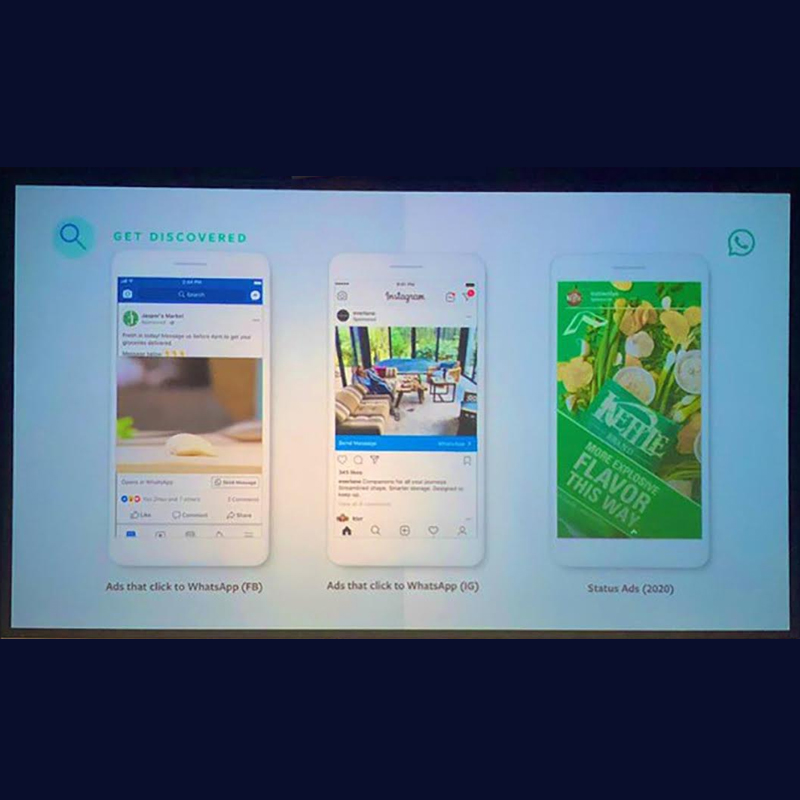
    MUMBAI: Ever since Facebook acquired WhatsApp, people have been expecting the popular chatting app to move towards an ad-based model. Recently, a tweet from an attendee at the Facebook Marketing Summit Rotterdam confirmed that WhatsApp intends to launch ads soon in the status/stories section and will also be connected to its sister sites like Instagram and Facebook.

    This started a fresh conversation around two major topics; are the users ready and what about data security on an ‘encrypted platform’? Indiantelevision.com interacted with some marketing and digital experts and sought answers to these two very pressing questions.

    While users on all social media platforms have become used to seeing ads, a similar pattern on WhatsApp is difficult to follow. As it is a more personalised platform used for chats with close peers, unlike the Facebooks and Instagrams of the world, which people use to follow a global base of users who might not be directly related to them, introducing ads will seem like an intrusion in the personal space.

    ADOHM chief executive officer Kuldeep Chaudhary says, “While the content consuming pattern in the audience is evolving and they are getting used to seeing ads on multiple platforms, having ads on WhatsApp may not be welcomed easily. The reason being WhatsApp has a very large user base in the masses, for whom ads will be an intrusion. This step will see a similar reaction like how it was during the initial days of YouTube ads. While platforms need to take this step from a revenue perspective, audiences are not yet ready for the move as from consumer point of view it is another bombardment from advertisers.”

    Vertoz founder and CEO Ashish Shah also advises brands to be cautious. “Ads showing up on WhatsApp might be looked upon as an intrusion into the users’ private space, considering the highly personal and very private environment of this communication tool. It is imperative for brands to ensure that the ads are non-intrusive in nature and do not irk off the users or disturb their privacy.”

    Though feature ads are going to be a new addition to the chatting platform, WhatsApp has already been active in giving some brands a chance to interact directly with the consumers. Be it delivering e-tickets like MakeMyTrip and BookMyShow do, or sharing timely updates of order deliveries like Ajio does, many brands are active on the platform to offer their customers a more personalised and seamless experience.

    Havas managing director Mohit Joshi notes, “Currently WhatsApp is a great space for two-way communication between the consumer and the brand. Marketers are creating WhatsApp brand profiles and then integrating them with their product/service offering across verticals. Many brands like MakeMyTrip, Ixigo and Milap have already started using this platform as a substitute/addition to email/SMS to connect with consumers once they have interacted with their platform. Currently, there is merit in using the platform more from an ‘owned media’ standpoint.”

    However, any of these activities do not rely directly on the data from the app. But with advertisements from sources that are not connected to the users coming in place, a huge pile of data and information will be required by the advertisers to create a targeted reach. Users, in the past, have moved away from platforms like parent Facebook after cases of data breaches came to light.

    NeoNiche Integrated Solutions Pvt Ltd MD and CEO Prateek Kumar mentions, “WhatsApp has always tried to ensure security between users for their conversations with end-to-end encryption being introduced in 2016. The announcement of ads on the platform seemed inevitable but the true extent of targeted marketing will only be realised after the full release. However, the extent of data shared with companies is probably the most contentious issue in this scenario.”

    Also, getting data out of an encrypted platform seems quite impossible. Carat SVP Mayank Bhatnagar says, “Right now, it (ads on WhatsApp) is just to drive the reach. I will not forward my tickets to anyone else, and thus there is no engagement parameter in place. It is just to help consumers. Once they open the full-fledged advertising solutions, it will be helpful in garnering that reach but I am not sure how will they measure the engagement.”

    However, Chaudhary states that Facebook can access keywords from WhatsApp chats despite encryption being in place. “In spite of the fact that WhatsApp states that they cannot access users’ data due to end-to-end encryption but in order to run targeted ads, access to data specific to individuals is required. Security researchers have pointed out that even with encryption in place, it will be possible for Facebook to derive keywords from people’s messages and use them to impose an ad-targeting model on the app. These ads will be showcased on WhatsApp stories and in-message advertising for WhatsApp business accounts.”

    Kumar further shares, “It seems more likely that while chatting with other users, WhatsApp will showcase ads of particular brands that might be most relevant to you depending on the topic of conversation or particular keywords. One of the best-case scenarios for users would be if sponsored ads were only displayed after the use of keywords or syntax based content to drive clicks where individual, demographic and chat-based data would not be shared. However, understanding the growing prominence of target marketing and its effectiveness in the digital world, the on-ground scenario may differ greatly.”

    Another way to access relevant data could be through telecom companies, as shared by RK Swamy BBDO president and director Sangeetha N. She notes, “Telecom companies do provide data based on gender, age, make of phone, average billing per month, location, post-paid/pre-paid, etc. While we’ve used this data in the past to send out SMS’es, we can surely use the same data to send out WhatsApp messages.”

    Shah vouches on the importance of programmatic methodology to drive successful ads on WhatsApp as he notes, “WhatsApp can build the users’ profile using the information gathered directly from the platform and elsewhere. If WhatsApp is using programmatic advertising, then it will be the smart choice for these requirements. Programmatic advertising uses Data Management Platforms (DMPs) that help advertisers to analyse, process and structure the user’s data. DMPs can be used to get relevant audience profiles and to deliver personalised and relevant ads to them. Further, using the different targeting options like interest-based targeting, behavioural targeting, contextual targeting and many more, advertisers can deliver relevant and targeted ads to their customers on platforms like WhatsApp.”

  • Programmatic advertising and political campaigns: The Mahagathbandhan for general elections 2019

    Programmatic advertising and political campaigns: The Mahagathbandhan for general elections 2019

    MUMBAI: Programmatic advertising is revolutionising the advertising industry. Programmatic ad spends accounted for a whopping 90 per cent of total spends by Fortune 500 brands worldwide in 2017 and has evidently taken centre stage of the digital advertising industry today. The ecosystem is on a steady rise in India as well and a number of brands are leveraging the reach it provides them within the consumer heartland based on efficient integration of their products via automated processes using codes and algorithms.

    With the general elections just a few months away, the political parties are also using this trend to attract the voters to their vote banks. Indiantelevision.com interacted with a few industry insiders to understand what programmatic advertising means to the political parties and what impact it may or may not have on the upcoming polls.

    Why programmatic?

    “Through the use of its unique targeting capabilities and advanced data crunching techniques, programmatic advertising is the perfect solution for politicians to reach the right voters. Voters can be targeted as per different criteria like – gender, age, location, party affiliation, political ideals, financial status, ownership, business, education and so on. Programmatic advertising facilitates crafting a data-driven campaign strategy. This helps to reach only those voters that have a possibility to vote in favour. This helps to reduce inefficiencies and bloated campaign budgets,” says Vertoz founder and CEO Ashish Shah

    He further adds, “Geo-targeting can be used to reach out to the voters of a particular region with a highly relevant and effective message. Dynamic Creative Optimisation (DCO) can enable adjusting the campaign creatives on the go in real-time, dynamically changing the copy as per their interests and affinities or for retargeting them.”

    iCubesWire founder and CEO Sahil Chopra gives the example of the previous general elections in India where current Prime Minister Narendra Modi made exceptional use of Twitter and other digital mediums to connect with his supporters. He said, “During the previous Lok Sabha elections in 2014, the digital medium was touted as an efficient and effective way by most of the political parties of India. In fact, when the election results were out, Mr. Modi didn’t declare his victory over the television, or even before his supporters. He chose to tweet about it. This message became one of the most retweeted messages in India, receiving more than 70,000 retweets. Such is the potential power of digital.”

    Similar thoughts are reflected by Ashish Shah as he notes, “Reaching out to the voters on digital platforms assumes supreme importance and has become a major aspect of political campaigns. Trump’s victory in the 2016 US presidential election was largely attributed to its digital campaigns. Closer home, digital media played a significant role in BJP’s landslide victory in the 2014 Lok Sabha elections.”

    He further adds, “With rising technological advancements, Indians are spending more and more time on digital media surfing the internet. As of 2018, India had about 500 million internet users, as per a report by the Internet and Mobile Association of India (IAMAI) and Kantar IMRB. The number of urban users accessing the internet daily stands at 295 million, while in rural areas the number stands at 186 million. Further, with affordable handset prices and low-cost data penetration, they are spending more and more time on mobile. Thus, reaching out to these voters on digital platforms assumes supreme importance and has become a major aspect of the political campaigns.”

    Highlighting the core benefits of incorporating a programmatic approach to political advertising, Logicserve Digital co-founder and CEO Prasad Shejale notes, “Since programmatic advertising offers hardcore and precise consumer behavioural insights, even politicians have realised the distinctive importance of this and have started implementing the same for their election strategy to target voters based on the analysis done. Political parties target and plan their election campaigns by specifically addressing their issues and pain points analysed through this form of advertising, and increase awareness and influence potential voters. This automates the bidding process and delivers ads to match their voters’ criteria.”

    What role can programmatic play in the upcoming Lok Sabha polls?

    The biggest democracy of the world, India is all set for its Prime Ministerial polls, which are scheduled to happen in April-May. All the political parties will be putting their best feet forward in alluring the voters to their camps.

    According to the contribution report that BJP filed with the election commission post the 2014 polls, the BJP spent Rs 714.28 crore on election campaigning, the major chunk of which went on to media promotions. Digital accounted for a massive chunk of this expenditure and certainly the results reflected the power of effective poll advertising. This year, the expenditures are only expected to grow and with its manifold benefits, programmatic will surely play an important role in the process.

    Speaking about what could be the trend in the upcoming elections, Chopra contends, “It is certain that the digital medium will be used again in a big way during this election period. Industry estimates suggest that there will be a rise of 15-18 per cent of spends in 2019 during elections and cricket period; wherein programmatic will also be a beneficiary amongst other mediums. Precise targeting, wider reach options, and transparency will be one of the reasons advertisers will embrace programmatic as one of the mediums to create awareness and reach out to people.”

    While it definitely is a powerful tool to woo the voters, the trend of programmatic might have some repercussions in maintaining the sanctity of the voting process in a democracy. Fake ads, delusional narratives, and targeted approach might potentially impact the election results. While the industry doesn’t comment much on the greater impact, it contends for the need for transparency and cautiousness while executing such campaigns.

    Shejale says, “Well, it’s difficult to make an exact statement about this. I wouldn't be able to comment on whether programmatic will play a decisive role since multiple factors contribute to the decision when it comes to political campaigns. But yes, programmatic can help enhance the efficiency and efficacy of the campaigns. It's the responsibility of advertisers and agencies to have responsible marketing in mind since the consumers, over time, read through if there is any wrongdoing.”

    Shah continues the same trail of thought as he states, “One needs to be cautious of issues concerning brand-safety and wrong ad placements. If one is not careful, this can wreak havoc on the campaign. Also, problems like transparency and ad frauds have to be considered. These can leech off the campaign budgets and have a detrimental effect on all the efforts. Campaign managers should ensure that they partner with a programmatic platform which has the right mechanisms to protect the campaigns form such problems. It is advisable to on-board a platform that has brand safety, ad fraud detection, and ad fraud protection mechanisms and provides a good level of transparency.”

    “Many parts of our country especially the tier 2 and 3 cities are experiencing digital transformation. Thanks to low data rates and widespread availability, more and more people from smaller parts of our country are getting acquainted with the vast plethora of possibilities of the digital realm. A recent study by Google stated that the consumption of YouTube on mobile devices has increased by almost 400 per cent and 60 per cent of the total watch time is outside the top 6 metropolitan cities. 70 per cent of internet users from these cities are bypassing desktop and are using mobile for accessing the internet. Any strategy which is made in mind keeping a mobile-first approach will definitely be beneficial for the brands (political parties). Like any other medium within the digital portfolio, programmatic needs to be used in a constructive way,” mentions Chopra.

    While political parties and agencies are advised to be watchful in their conduct while creating political ads, platforms like Google and Facebook are taking their own steps to ensure that the election process remains fair. Ashish Shah shares, “Facebook – the social media giant – has taken notice of it and has recently announced a special offline verification policy for the 2019 General Elections. Google also said that it will introduce an India-specific Political Advertising Transparency Report and a searchable Political Ads Library to provide information like who is purchasing election ads on its platforms and the amount of money being spent.”

    Thus, while programmatic is going to be one effective and sought-after tool in poll promotions, the parties, as well as the advertisers will have to be sensitive about what they put online. At the end of it, the voters are smart and can read through the campaigns that might be malicious or false.

  • Ola and Cadbury Dairy Milk Silk join hands with Vertoz for a memorable Valentine’s Day

    Ola and Cadbury Dairy Milk Silk join hands with Vertoz for a memorable Valentine’s Day

    MUMBAI: Every year, Valentine’s Day brings an opportunity for brands to break out their creative sides and create special moments for their customers. With every brand out there trying to outdo each other with special offers, discounts and events, what often is missing is the creation of an experience to celebrate the actual emotion behind the day – Love. Cadbury Dairy Milk Silk (With WAVEMAKER ), Ola and Vertoz, keeping in mind the busy lifestyles their customers lead, have spent this Valentine’s Day creating a romantic experience for lucky couples across the city by taking away the hassle of late bookings and reservations.

    Although a cliché, sometimes there is nothing better than the simplicity of an event filled with chocolates, movie and a long drive. Ola and Cadbury Dairy Milk Silk made sure that select couples get to experience just that and have the most stress-free and easy date. Vertoz, India’s leading programmatic advertising company, came on board for this unique campaign to help reach the couples of Mumbai for a special contest held by Cadbury Dairy Milk Silk before Valentine’s Day. Vertoz being Ola’s preferred advertising partner, planned and coordinated the date along with Dairy Milk Silk and Ola. Lucky couples won a romantic date worthy of the special day. With a personalised car and personal driver arranged by Ola, the couples were taken for a movie with a gift hamper specially curated by Cadbury Dairy Milk Silk. 

    Aided by Vertoz’s programmatic expertise, Cadbury Dairy Milk Silk was able to reach out to people across the digital space giving them visibility with ads on Ola’s advertising platform. The campaign was targeted towards young millennial couples looking to spend the special day with their partners and create memories. The campaign was advertised on the Ola app and Ola Cabs. Vertoz successfully reached multiple couples who entered the contest and tried their luck at winning a beautiful evening.

    Talking about the association Ashish Shah, Founder & CEO, Vertoz says, “Valentine’s Day is a busy time for advertisers with campaigns being run by brands across sectors. What makes a campaign stand out is its uniqueness and Vertoz, Ola & Cadbury Dairy Milk Silk together have managed to create something simple yet memorable which is essential in the digital advertising space. We are proud to be on board with them and be able to offer such a unique experience for each of the winning couples.”

    “Silk has been activating Valentine’s Day for 6 years now, and while Indians have started celebrating the occasion, there is still a majority of people who find it difficult to express their feelings. In that spirit, we wanted to give consumers a way of expressing their true feelings and make their Valentine’s Day celebration truly memorable and special.  What we have managed to do with Ola and Vertoz is to create a very special experience for the day which helps them celebrate their love and have a great time with their partners” says the spokesperson of Cadbury Dairy Milk Silk

  • Countering the industry-wide challenge of digital ad frauds

    Countering the industry-wide challenge of digital ad frauds

    Digital advertising has brought with it an array of unique benefits like precise targeting, measurable and trackable performance indicators, and the ability to provide extremely personalised customer experiences. Advertisers can now practically do things that they could only dream of earlier. However, it has also brought with it the menace of ad frauds. Advertisers are struggling with ad frauds since quite some time. All ad frauds can be loosely defined as any deceitful online activity meant to mislead the advertisers, making them pay for low-quality or fake traffic. Ad frauds wipe out huge chunks of advertising budgets, causing huge losses to the companies. This has created negative connotations about digital advertising solutions in the minds of businesses.

    A few years ago, the advertising industry witnessed two of the greatest ad frauds ever – Hyphbot and Methbot. They decimated gigantic volumes of ad dollars. Methbot churned out revenue of $3 to $5 million each day by targeting premium video advertising ecosystem. Hyphbot was 3-4 times the extent of Methbot and generated up to 1.5 billion ad requests each day. These figures speak for themselves about the urgency to address these problems.

    It is about time to fix this. But, unfortunately, it is easier said than done. As technology evolves, the nature and sophistication of ad frauds evolve with it. It is a game of whack-a-mole, between the industry and the fraudsters, wherein as soon as one problem is addressed, they continuously come up with new and different ways to continue the menace. In order to solve the problem, we first need to understand it well by getting into its nitty-gritty. So let’s take stock of the situation and have a look at the different types of ad frauds advertisers are facing.

    Bot Traffic/Non-Human Traffic (NHT)
    Ad consumption or other online traffic generated by bots or automated websites

    Click Farms
    These consist of a large group of human workers who view or click on the ads on behalf of a third-party, who gain economic benefits from those illegitimate clicks. To do this, these workers are given minimal compensation.

    Sourced Traffic
    It is a way by which publishers acquire more visitors to their sites through third-parties. It is basically artificially generated inorganic traffic.

    Domain Spoofing
    It facilitates passing off a low-quality website as a premium website. Thus, when a user clicks the link, the fraudsters get access to the ads, which are run on the illegitimate site.

    Ad Injection
    It is the practice of inserting ads into any online inventory like a website or an app without the knowledge and consent of the publisher or the owner of that property.

    The ones mentioned above are only a few ways in which ad frauds are perpetrated. The field of digital advertising is highly dynamic. With the addition of new technologies each day it keeps evolving continuously. Fraudsters are constantly coming up with ingenious ways to adapt to these advancements and fulfill their objectives. As a result, brands have to be constantly alert and have to match the pace of technology, in order to be a step ahead of the curve. However, unsurprisingly, it becomes difficult for them to be constantly updated about everything.

    One of the ways to address this problem is to ensure that advertisers partner with the right kind of programmatic platform. A platform which provides a good level of security on-boarding fraud detection and fraud prevention partners, that helps to filter out fraudulent ads and illegitimate traffic in real-time. The platform must also follow the standards set by industry watchdogs like The Internet and Mobile Association of India (IAMAI), Trustworthy Accountability Group (TAG), The Interactive Advertising Bureau (IAB), etc.

    Next, brands must make sure that they measure the conversions and goals instead of measuring clicks.  Measuring clicks as an indicator of performance makes the brand more susceptible to bots and NHT. Also, they must work with publishers who have implemented ads.txt – IAB’s protocol designed to help keep ad frauds in check. It involves publishers hosting a text file on their web servers. This file lists all the authorised dealers of the publisher’s inventory. Also, publishers should be transparent with advertisers about the source of their traffic.

    Ad frauds are a problem not only for advertisers but they also harm publishers. Ad frauds devour a huge chunk of their revenues and also raise a question in the publishers’ credibility. Thus, ad frauds are affecting the entire ecosystem at large. Industry-wide standards are necessary to control this industry-wide challenge. It calls for all the entities across all parts of the advertising ecosystem to launch concerted efforts in fighting-off ad frauds.

    (The author is CEO and Founder, Vertoz. The views expressed here are his own and Indiantelevision.com may not subscribe to them)  

  • Vertoz introduces two new business verticals to its portfolio

    Vertoz introduces two new business verticals to its portfolio

    MUMBAI: Vertoz, a leading programmatic ad-tech and digital media company, recently announced the launch of two new business verticals – ZKraft and PubNX. In addition, it also announced the incorporation of Artificial Intelligence (AI) and Machine Learning (ML) to its proprietary programmatic advertising platform – Ingenious Plex.

    With Zkraft, Vertoz will offer marketers engaging marketing solutions by adding Augmented Reality (AR) and Virtual Reality (VR). It will also focus on providing 360-degree digital advertising solutions for brands and agencies, keeping ad-tech at its centre. It will enable advertisers to boost customer engagement by offering highly immersive real-time experiences.

    PubNX, being the new publisher-centric arm for Vertoz, will look at providing advanced techniques like multi-format out-stream ad units and server-side header bidding, along with other solutions which will help publishers boost their revenues.

    Vertoz is further strengthening the scope of its current offerings by introducing cutting-edge technologies like Artificial Intelligence (AI) and Machine Learning (ML) to enhance the performance of its programmatic platform.

    Ashish Shah, Founder and CEO, Vertoz says, “We have always strived to better our technology offerings, to ensure the best experience and indeed great ROI to our customers. By bringing in innovative marketing mediums through the application of AR and VR, and the inclusion of advanced technologies like AI and ML, we are also opening new revenue streams.”

    “It is important to stay relevant and remain aligned with the new technologies and the changing industry dynamics in the digital advertising space”, he adds.

    The total advertising expenditure in India stood at INR 60,000 Crore, with digital estimated to be around 18% of the total ad spends. In addition, the global AR and VR markets are estimated to reach $27Bn in 2018 based on a growth rate of 91.4%.

    Coupled with the phenomenal Y-o-Y growth of around 82% and its customer-centric approach, Vertoz has launched the new verticals to become an active partner in one of the fastest growing industries in India.