Tag: Verse Innovation

  • VerSe Innovation raises $805 million in latest funding rounds

    VerSe Innovation raises $805 million in latest funding rounds

    Mumbai: Local language technology platform VerSe Innovation has raised $805 million in the latest funding rounds from marquee global investors Canada Pension Plan Investment Board (CPP Investments), Ontario Teachers’ Pension Plan Board (Ontario Teachers’), Luxor Capital, Sumeru Ventures and others. VerSe Innovation owns the family of ‘Bharat-focused’ apps namely Josh, Dailyhunt, and PublicVibe.

    Existing investors Sofina Group, Baillie Gifford and others will also participate north of their pro-rata in this round resulting in VerSe Innovation’s valuation reaching ~$ five billion.

    The fresh round of investment follows close on the heels of a $650 million+ fundraise from Siguler Guff, Carlyle Group, Baillie Gifford, Falcon Edge Capital via Alpha Wave Ventures, Glade Brook Capital, Google, and Microsoft and Qatar Investment Authority taking the total capital raised in the past year to ~$1.5 billion.

    The investment will be focused on strengthening the company’s leadership position as the largest, fastest-growing local language AI-driven content platform in the country.  

    VerSe plans on deepening as well as broadening its AI/ML and data science capabilities to further cement its leadership position across all user, engagement and retention metrics, drive deeper monetisation including influencers, e-commerce and live streaming and forays into Web 3.0 experiences across its local language creator base of over 50 million creators as well as its local language content ecosystem which experiences over 80 billion video plays per month.

    Avendus Capital was the exclusive financial advisor to VerSe Innovation on the transaction.

    “India’s digital content is experiencing phenomenal growth, and VerSe Innovation is well-positioned to be one of the leaders in the fast-growing short video and local language content space,” said CPP Investments MD and head of private equity Asia Frank Su. “This investment aligns with our approach of providing strategic capital to industry leaders in India’s technology sector. We look forward to supporting the next phase of VerSe Innovation’s growth journey, which we believe will deliver strong risk-adjusted returns for the CPP Fund.”

     “We are pleased to make a significant investment in VerSe Innovation through our new Alternative Capital Solutions team, which offers flexible capital to high-quality public and private growth companies,” commented Ontario Teachers’ MD and global group head of high conviction equities Maggie Fanari. “We have been impressed by the company’s innovative local language offerings, market leadership and strong management team, and are excited to be partnering with them in this journey as Ontario Teachers’ continues to build out its portfolio in India.”

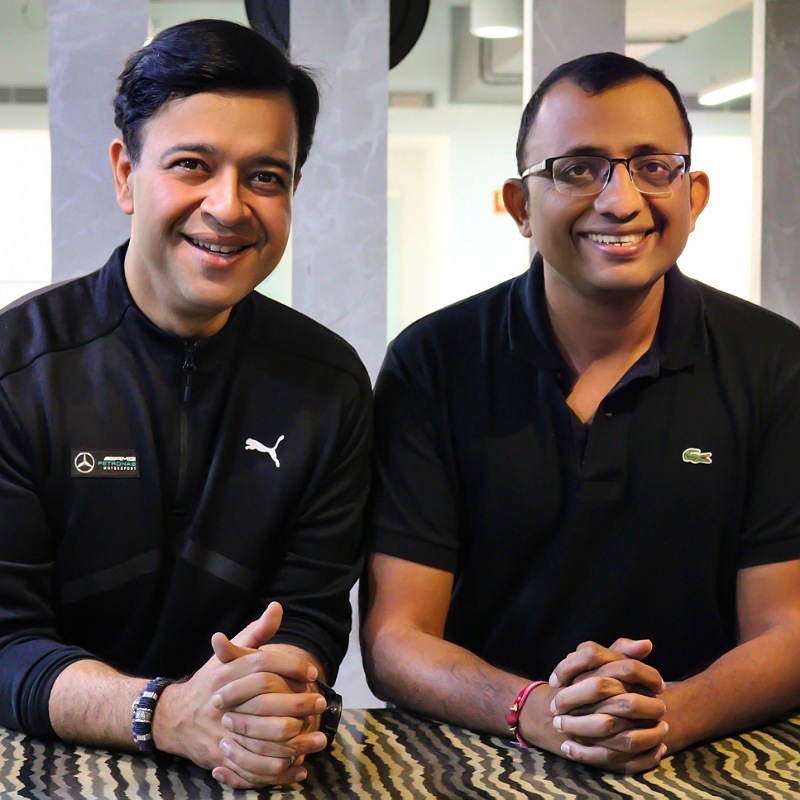
    “We are privileged and honoured to have prominent and stellar long-term partners like CPP Investments, Ontario Teachers’, Luxor Capital and Sumeru Ventures on board with us,” said VerSe Innovation co-founders Virendra Gupta and Umang Bedi.

    “This partnership will strengthen our ability and leadership to deliver on our vision to build the largest AI-powered local language content platform across a family of apps serving the next billion users. With a strategic focus on video content and building for India, we have seen explosive growth emerging from the next billion users coming out of regional India. This investment comes at a time when we’re on a path to further expand our offerings, monetisation models, deliver superlative Web 3.0 experiences for the globe and create an IPO scale business,” they added.

  • Are women able to make their presence felt in M&E industry?

    Are women able to make their presence felt in M&E industry?

    Mumbai: Media and entertainment companies must take deliberate action to foster gender diversity at the workplace. This includes instituting mentorship programmes for emerging leaders, flexible work policies and empowering the female workforce to take up non-traditional roles.

    In the corporate world, women are not just encumbered by low female labour force participation of 27 per cent, they also face deeply embedded biases in leadership roles and emerging disciplines such as technology, product development and data science. Women have always been an integral part of the Indian media and entertainment (M&E) industry since its inception. The sector which employs four million people, both directly and indirectly, has a higher female labour force participation compared to other industries with more women represented in leadership roles every year.

    In the last decade, the M&E industry has seen a transformative shift led by increasing digitisation of workflows and emerging technologies. While women are well represented in creative fields they still lack a presence in management positions. Although this trend is changing, corporates have an outsized role to play in ushering in an era of gender inclusivity and diversity at the workplace. This includes policy changes that engender not just an egalitarian work culture but also encourage women to aspire to leadership roles. For example, the Companies Act 2013 mandated that every board should have at least one woman and today women hold 17.1 per cent of board seats in India.

    “I don’t think any organisation begins by saying ‘I do not want a woman for this role’.  Nor women begin by saying ‘I do not want a challenging role’,” remarked Wunderman Thompson South Asia chief talent officer Roopa Badrinath. “By now, all organisations are aware of the benefits of having more women in their workforce.  I would like to believe that it is not that organisations do not want to hire women, it is just that they do not know where to find them.”

    “With digital becoming mainstream only in the recent past, tech and product are still relatively new roles. However, of late, we have seen the emergence of many women entrepreneurs who are creating their own digital businesses,” observed Josh country manager Rubeena Singh. “We are also seeing more women in management roles today, as compared to a few years ago. It takes years of work and experience to get to the top step and with more women today in middle management roles, there is hope of seeing many more women leaders in the coming future.

    A recent study by Grant Thornton India showed that the percentage of women in senior management roles in India is at 39 per cent versus 31 per cent globally. This pace of change has been aided by changing perception of women in the workplace as well as the shift towards hybrid style of working. “Covid-19 has taught us all to work from home at scale. This has provided women with the luxury of flexibility, a big positive, as it has enabled us to balance work and family responsibilities seamlessly,” explained Singh. “With this increased flexibility, women now have the opportunity to explore more with their careers and experiment with it.”

    In India, women do seven times more unpaid labour, i.e., household chores, as compared to men. This huge disparity was considerably reduced during the lockdown, enforced in 2020, when both men and women were working from home and divided domestic duties more fairly. “Work from home is a blessing for both genders. I see men enjoying it equally as much as women. Women are more challenged to work from home because while working from home, and you are expected to take care of the home chores, cooking, cleaning, kids, exams, tuition, teachers, etc. So, yes, I think work from home or a hybrid model is good, and it should encourage more diverse talent to come into the industry. It is suitable for the companies because A) your infrastructure cost is less and you can hire talent from vast geography,” said Altbalaji SVP marketing partnerships and revenue Divya Dixit.

    “Organisations like ours were quick to understand this and relentlessly emphasized on the importance of an empathy and trust driven leadership.  We encouraged our leaders to course correct their leadership style if need be and be more mindful of such challenges of women and focus on the well-being of their people.  The hybrid workplaces where we do not work 100 per cent from home or 100 per cent from the office will be empowering this under-served population to make choices which will be in their career interest and eventually be beneficial to the organisations,” said Badrinath.

    According to an industry observer, women in M&E have been confined to traditional roles such as HR, creative, media planning, business development, legal, corporate communication and marketing and have shied away from male dominated roles such as distribution, product development, strategy and operations. Strongly disagreeing with this view, Dixit said, “I’ve seen women take up leadership roles and challenges across industries and not just in the M&E sector. I think what needs to be kept in mind is that more women are reinstating themselves in non-traditional roles despite the glass ceiling. Today, I still think the male workforce is paid about 15-20 per cent more than women.”

    Women in corporate roles are judged by different standards by men and often face gender biased appraisals, found a McKinsey study. There is a need to retrain HR managers in the way they evaluate women candidates for leadership roles. “As an industry which almost always works on changing perceptions, attitudes and behaviours of consumers, we have a huge role to play through the work we do in breaking societal stereotypes imposed upon women,” noted Badrinath.

    “Social change takes a long time and we’re in the process of change,” according to Zee Entertainment Enterprises chief creative officer special projects Shailja Kejriwal. “If you’re a business leader you’re expected to be the ‘alpha’ and until you change the concept of a leader being ‘alpha’ a business won’t be run by women leaders who are perceived as empathetic.”

    I think as an industry and society we are heading towards a more empathetic way of working, whether it is flexible working hours or leave policies, and this is brought about by the pandemic,” she added. “It has made people question a lot of embedded beliefs and, therefore, you see things such as ‘The Great Resignation.’ What happens if corporates start realising that you need to nurture talent regardless of whether it is a man or a woman, otherwise your business won’t run? Then there is no choice but to go in the direction of dealing with things differently.”

  • Josh and SVF Entertainment enter strategic alliance

    Josh and SVF Entertainment enter strategic alliance

    Mumbai: Short video app Josh has inked a strategic partnership with East Indian media and entertainment company SVF. The collaboration paves the way for the creation of short video content from Bengali influencers and celebrities on the Josh app, said the statement.

    SVF will enable the production of more regional content by Bengali talent on the short video app Josh with the aim to empower regional creators. SVF will additionally extend its vast Bengali music library of SVF Music ranging from Bengali films, web series, and hit singles from popular artists from India and Bangladesh. This wide range of songs can be accessed by Josh’s 115+ million-strong user base.

    The partnership was announced on the eve of 25 October and was graced by hoichoi co-founder and executive director of SVF Vishnu Mohta; Josh head – creator and content ecosystem Sunder Venketraman, and VerSe Innovation chief marketing officer Samir Vora.

    “Josh and SVF, with the similar intention to create a wider content building ambiance in Bengal, is certain that this partnership will enable a lot of talents to create short format content in their regional language with advanced and easy to use video making features,” said Vishnu Mohta.

    “We at SVF, are delighted to have this avant-garde partnership that will not only enhance the scope of content innovation but also recognise the local talents, thereby supporting the overall growth of the industry,” said hoichoi co-founder and director of SVF Mahendra Soni. “The SVF-Josh tie-up is all poised to make Bengali music library available to all creators across the country, opening up the paradigm beyond mainstream content visibility.”

    “SVF Entertainment is a leader in the Eastern Indian content space and we, at Josh are very excited to have brought this partnership to life that will revolutionise the space of content creation in Bengali language,” said Sunder Venketraman and Samir Vora.

    “We believe that our app will prove to be the perfect destination for budding Bengali creators to share their talent across audiences– bringing visibility to themselves and the plethora of invigorating content that Eastern India has to offer,” they added.

  • Indian short-video platforms score funding from global investors

    Indian short-video platforms score funding from global investors

    KOLKATA: When one door closes, another opens. The ban on TikTok resulted in a wellspring of similar short video format platforms which became home to India’s considerable content creation community. Josh and Roposo are among these homegrown video sharing apps which rode the vocal for local wave and expanded their market shares post the government cracking the whip on Chinese apps. They quickly racked up several million downloads and an active user base within days of launch. Now, their growth trajectory has piqued the interest of top-notch global investors.

    TikTok copycat Josh’s parent company Bengaluru-based VerSe Innovation has raised nearly Rs 740 crore ($100 million) from investors like Google, Microsoft, AlphaWave. VerSe Innovation is valued at more than around Rs 7,400 crore ($ 1 billion) following the investment. Additionally, Roposo’s parent company Glance InMobi has just concluded a Rs 1,070 crore ($145 million) investment round from Google and Mithril Capital.

    Google is optimistic that the investments in leading Indian start-ups will enable them to further scale the availability of relevant and engaging content in different formats across various Indic languages.

    “We’re also eager to support the wider ecosystem in India, particularly local startups innovating in this space. When we shared details of the India Digitization Fund in July this year, we identified enabling affordable access and information for every Indian in their own language, whether it’s Hindi, Tamil, Malayalam, Gujarati, and more as a key pillar in order to drive forward India’s digitisation,” Google said in a blogpost.

    VerSe Innovation has joined India’s unicorn club on the back of this latest round of funding, which will be deployed towards the augmentation of local language content offerings, the development of content creator ecosystem, and innovation in AI and ML along with focusing on Josh. The app currently has more than 77 million monthly active users and 36 million daily active users and plays over 1.5 billion videos per day.

    On the other hand, Glance will use the new investment to deepen its AI capability across Glance and Roposo, expand its technology team, and launch services on the platform. The app has more than 33 million monthly active users and has been downloaded more than 100 million times on Google Play Store.

    Back in September, ShareChat (behind the short video format app Moj) also raised roughly Rs 300 crores ($40 million) from investors including Twitter Inc and Lightspeed Ventures. According to a recent report, short-form videos have emerged as the fastest-growing content category in India with 180 million users in the financial year 2020.