Tag: Verizon

  • IAS expands AI-driven brand safety and suitability measurement to Meta

    IAS expands AI-driven brand safety and suitability measurement to Meta

    Mumbai: Integral Ad Science (Nasdaq: IAS), a leading global media measurement and optimisation platform, today announced that its AI-driven total media quality (TMQ) brand safety and suitability measurement product is now generally available across Facebook and Instagram feed and reels.

    IAS’s new post-bid brand safety and suitability measurement expansion with Meta gives advertisers increased transparency into whether their campaigns are appearing next to safe and suitable content.

    “IAS is steadfast in delivering solutions to help marketers measure and optimise performance in dynamic, user-generated social environments like Facebook and Instagram,” said IAS CEO Lisa Utzschneider. “This expansion allows brands to identify higher-quality media and scale across these platforms, signifying another important milestone in helping brands enhance brand equity across the entire digital ecosystem.”

    Advertisers can now gain access to:

    1.    AI-driven classification: IAS measures adjacent posts to an advertiser’s campaign using its Multimedia Technology to provide unique insight into video content through frame-by-frame analysis of images, audio, and text to provide the most accurate measurement at scale.

    2.    Trust and transparency: The measurement framework is aligned to the Global Alliance for Responsible Media (GARM), providing advertisers with third-party validation with trusted and transparent industry metrics.

    3.    Third-party validation: Advertisers can understand how their Meta inventory filters are performing for their campaign goals and optimise as needed.

    “IAS’s release of Brand Safety and Suitability Measurement across Facebook and Instagram is a meaningful step forward in our continued work to provide transparency and trust across our advertising ecosystem,” said Meta VP client council and industry trades Samantha Stetson. “Responsible marketing is a top priority at Meta – and we are pleased with our continued partnership to bring this important solution to our advertisers.”

    Advertisers can leverage IAS Signal, its unified reporting platform that delivers the data and insights advertisers need to easily manage their digital campaigns.

    “One of the most important things for us as an advertiser is maintaining the gold standard of brand suitability, and IAS plays a key role in protecting our advertisements from being placed in environments where it’s not safe or doesn’t align to our company values,” said Verizon VP of digital marketing Karyn Johnson. “It’s great to see IAS implementing this additional third-party measurement so we can use their tools to ensure we can reach those objectives across all platforms.”

    IAS and Meta’s partnership began in 2016 when IAS launched viewability verification on Facebook. In 2017, IAS expanded its viewability measurement and reporting across Facebook, Instagram, and Facebook’s Audience Network. From 2019, IAS brought its brand suitability offering to Facebook. In 2023, it expanded its measurement capabilities with Meta including Viewability and invalid traffic (IVT) measurement across Facebook and Instagram Reels.

  • OTT conversations to take centre stage at Vidnet 2018

    OTT conversations to take centre stage at Vidnet 2018

    MUMBAI: Indians have now warmed up to over-the-top media services making them even mainstream at times. In the last couple of years, the OTT industry has witnessed rapid growth thanks to several factors like cheaper data and affordable smartphones. Many new players are experimenting in this area leading to higher competition. From high-quality content to high-end technology, marketing OTT players are leaving no stone unturned to grab more eyeballs.

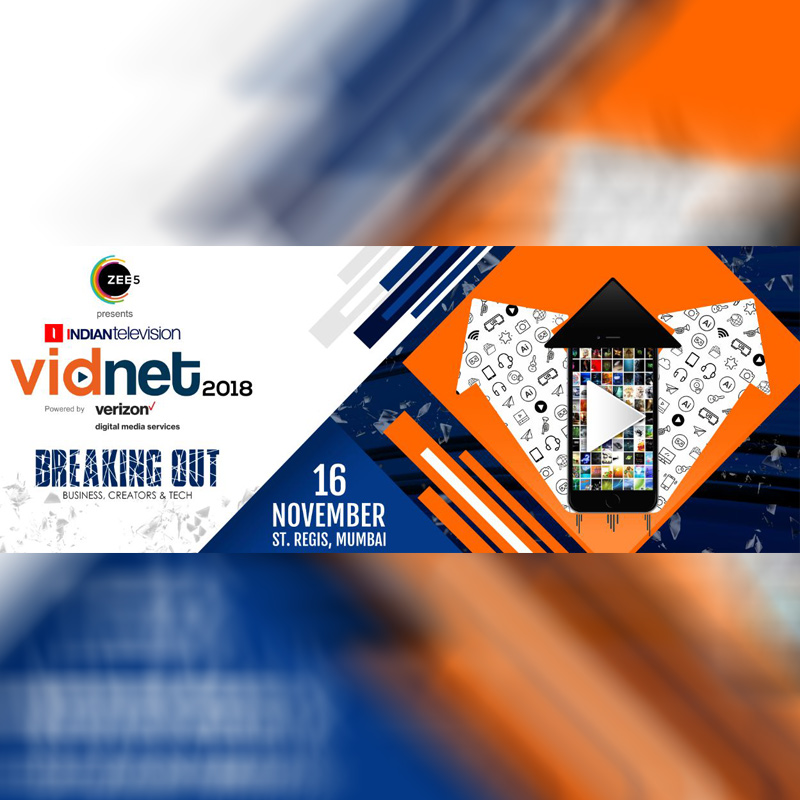
    At a time when the industry is thriving, Indiantelevision.com is again bringing together all the stalwarts in the ecosystem on the stage of Vidnet 2018 at The St.Regis, Mumbai on 16 November. The experts from platforms, production studios, advertising agencies, data analyst firms, creators, technology and investors will discuss the state of the industry, address the issues and find solutions. ZEEL’s digital venture ZEE5 is the title sponsor of Vidnet 2018 and the event is powered by Verizon.

    As the market is at the stage of development right now, there are several questions that need to be answered. The focus of the conference will be on these topics broadly – what could be the leanings from other countries like US, China and Japan; which business models will work out properly; what is the content trend in domestic and international market; how to increase user engagement; uniform data measurement metric; importance of data, AI, machine learning, cloud technology and how to combat piracy.

    Amazon Prime Video India director and country general manager Gaurav Gandhi, Balaji Telefilms group CEO Sunil Lulla, Hulu Japan chief content officer Kazufumi Nagasawa, YouTube entertainment head Satya Raghavan, ZEE5 India CEO Tarun Katial along with many other experts will speak on the compelling issues chalking out the right direction in the ecosystem.

    According to KPMG Media and Entertainment Report 2018, the industry with more than 30 players is expected to grow at a CAGR of 45 per cent to reach Rs 13,800 crore by the end of FY23. Till now advertising revenue is the dominant contributor in the market, subscription revenue is nonetheless expected to be about 33 per cent of the total revenue in the space by end of FY23.

  • Yahoo Messenger to shut operations from 17 July

    Yahoo Messenger to shut operations from 17 July

    MUMBAI: The emergence of new messenger apps in the smartphone era has brought down the closure of decades-old instant messaging application, Yahoo Messenger. Verizon subsidiary Oath, operator of Yahoo, recently announced the wrap up of Yahoo Messenger with its services coming to an end on 17 July. 

    One of the earliest messaging app, it started its journey in 1998. Yahoo Messenger, once a very popular player witnessed its declining user base eventually due to several new services including smartphone chat apps such as Whatsapp, Skype, Facebook Messenger among others. Existing users now have six months in hand to download their chat history before the service becomes unavailable. 

    In a statement issued on Friday, Yahoo said, “There currently isn’t a replacement product available for Yahoo Messenger. However, we are constantly experimenting with new services and apps, one of which is an invite-only group messaging app called ‘Yahoo Squirrel’ which is currently in beta form.”

    While avoiding any specific reason behind the shut down of the Messenger, Yahoo said, “As the communications landscape continues to change over, we’re focusing on building and introducing new, exciting communications tools that better fit consumer needs.”

    Also Read:

    Snapchat partners four IPL teams

    YouTube web series to showcase road safety awareness across India

  • FCC outvotes 2015 net neutrality rules

    FCC outvotes 2015 net neutrality rules

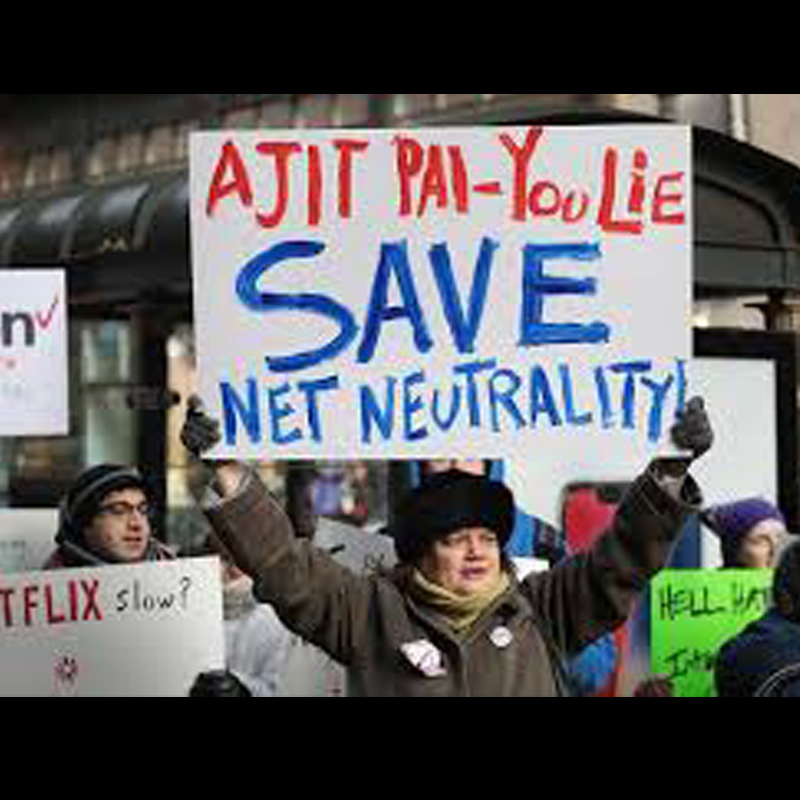
    NEW DELHI: American telecoms and broadcast regulator FCC on Thursday voted out the 2015 Obama government’s regulations relating to net neutrality, which, some critics said, put too much power in the hands of broadband companies to influence consumers’ online experiences.

    According to the FCC, it voted to restore the “longstanding, bipartisan light-touch regulatory framework” that had fostered rapid internet growth, openness, and “freedom for nearly 20 years”.

    Following detailed legal and economic analysis, as well as extensive examination of comments from consumers and stakeholders, the commission reversed the FCC’s 2015 “heavy-handed utility-style regulation” of broadband internet access service, which imposed substantial costs on the entire internet ecosystem.

    “In place of that heavy-handed framework, the FCC is returning to the traditional light-touch framework that was in place until 2015.  Moreover, the FCC today also adopted robust transparency requirements that will empower consumers as well as facilitate effective government oversight of broadband providers’ conduct,” the commission said in a statement, adding, “In particular, the FCC’s action today has restored the jurisdiction of the federal trade commission to act when broadband providers engage in anticompetitive, unfair, or deceptive acts or practices.

    “The framework adopted by the commission today will protect consumers at far less cost to investment than the prior rigid and wide-ranging utility rules. And restoring a favourable climate for network investment is key to closing the digital divide, spurring competition and innovation that benefits consumers.”

    New York Times, which has often criticised FCC chief Ajit Pai’s stand on some issues, including net neutrality, reported Mignon Clyburn, one of the Democratic commissioners who voted against the action, accused the three Republican commissioners of defying the wishes of millions of Americans. She was quoted by the newspaper as saying, “I dissent because I am among the millions outraged. Outraged because the FCC pulls its own teeth, abdicating responsibility to protect the nation’s broadband consumers.”

    Brendan Carr, a Republican commissioner, was quoted as having said it was a “great day” and dismissed “apocalyptic” warnings.

    Before the voting on net neutrality took place, Pai said, “We are helping consumers and promoting competition. Broadband providers will have more incentive to build networks, especially to underserved areas.”

    What do the FCC’s new rules mean, as and when they come into effect? In simple terms: it would allow walled garden of content and also help broadband companies and telcos to prioritise services and have different price structures for services.

    Tech magazine Wired observed that broadband providers say the public has nothing to worry about and that AT&T, Comcast and Verizon, among others, have promised not to block or throttle content. But those promises leave internet providers with quite a bit of room to prioritise their own content, or from their partners, the magazine commented.

    “AT&T, for example, already allows its DirecTV Now video-streaming service to bypass mobile subscribers’ data limits. Verizon does much the same with its Go90 video service. Sling TV and Netflix, on the other hand, still count towards customers’ data caps. The end of the FCC’s current rules will allow companies to expand the ways they prioritise certain services over others,” Wired said.

    However, some observers in the US, including the NYT, also were categorical that in the new year the FCC regulation most likely will be challenged in courts.

    The full text of the FCC statement could be accessed at https://www.fcc.gov/document/fcc-takes-action-restore-internet-freedom.

    ALSO READ:

    TRAI releases recommendations on Net Neutrality

    TRAI & FCC sign agreement on accelerating broadband deployment

    Restoring Net freedom: FCC seeks public participation

  • Now, Comcast in talks to buy 21st Century Fox

    Now, Comcast in talks to buy 21st Century Fox

    According to several reports, 21st Century Fox is on the block and Philadelphia-based cable TV conglomerate Comcast is interested. Comcast has approached Fox about acquiring most of the company. Reportedly, Verizon, the biggest wireless carrier in the US, has also thrown its hat into the ring. Earlier in the month, Disney was also in talks with the Rupert Murdoch company for a possible acquisition.

    Comcast and Verizon have inquired about Fox’s movie and television studios, entertainment cable networks and international businesses. Comcast, which owns NBC Universal, would achieve global reach if it acquires Murdoch’s stake Star and Sky among other 21st Century Fox properties.

    A deal between Comcast and Fox could radically change the media landscape, consolidating some of the biggest entertainment properties in the world.

  • Adspend: Twitter fastest growing, FB & Google control 20%

    MUMBAI: Google and Facebook together accounted for 20% of global advertising expenditure across all media in 2016, up from 11% in 2012, according to the new edition of Zenith’s Top Thirty Global Media Owners. These two companies captured 64% of all the growth in global adspend between 2012 and 2016.

    The Top Thirty Global Media Owners report is Zenith’s unique ranking of the world’s largest media companies, and is being published since 2007. For this edition, it has decided to update its methodology and focus purely on media owners’ revenues from advertising, excluding revenues from all other activities, which gives the true measure of their status in the global advertising market.

    Google (under its holding company Alphabet) is by some distance the largest media owner in the world, attracting US$79.4bn in ad revenue in 2016, three times more than the second-largest – Facebook – which attracted US$26.9bn. The largest traditional media owner is Comcast, which takes third place in our ranking, with US$12.9bn in ad revenue.

    As we stated in our quarterly Advertising Expenditure Forecasts, internet advertising has overtaken television to become the world’s largest advertising medium this year. Accordingly, digital platforms that are funded by internet advertising dominate our top 30 ranking. As well as Alphabet and Facebook, there are five more pure-internet media owners in the top 30: Baidu, Microsoft, Yahoo, Verizon and Twitter. Between them, the seven digital platforms generated US$132.8bn in internet ad revenue in 2016 – that’s 73% of all internet adspend, and 24% of global adspend across all media.

    Verizon became a media owner in 2015 when it bought AOL, and if all goes to plan will become a much larger one when it acquires Yahoo later this year. Verizon takes 21st place in our current ranking; adding Yahoo to AOL would boost it to sixth.

    The fastest-growing media owner in our list is Twitter, which increased its ad revenues by 734% between 2012 and 2016. Tencent is second, having grown by 697% over this period, and Facebook is third, with 528% growth. Two other media owners have more than doubled in size between 2012 and 2016: Baidu, which grew 190%, and Sinclair Broadcasting Group, which grew 171%.

    Most of the media owners in our ranking – 20 out of 30 – are based in the US. The US dominates for several reasons: the US has the biggest ad market, US companies have invested the most in extending their reach abroad, and Silicon Valley innovation has powered the growth of internet advertising. China and Germany each have three media owners in the ranking (Baidu, Tencent and CCTV for China, and Bertelsmann, ProSiebenSat.1 and Axel Springer for Germany). Then there are four countries with one media owners each: France (JCDecaux), Brazil (Grupo Globo), Italy (Mediaset) and the UK (ITV).

    “The scale of the biggest platforms highlights the importance of building strong partnerships between agencies and media owners,” said Vittorio Bonori, Zenith’s Global Brand President. “Brands need to deal with these platforms to communicate with consumers effectively and efficiently, and agencies need to ensure they do so on the best terms available.”

    “Zenith’s new ranking demonstrates just how much the internet advertising platforms are setting the pace for global adspend growth,” said Jonathan Barnard, Head of Forecasting at Zenith. “Google and Facebook alone have accounted for almost two thirds of global adspend growth since 2012.”

    Ranking of Top 30 Global Media Owners 2017

    public://F1_4.jpg

  • 5G TV may rival cable, satellite & IPTV: Report

    5G TV may rival cable, satellite & IPTV: Report

    MUMBAI: TV and video delivery is likely to become a core capability of next generation 5G wireless services, concludes a new report from Strategy Analytics. Recent demonstrations have suggested that 5G will support 1Gbps data throughput rates. Combining 5G with other networking enhancements and technologies would allow operators to support TV-equivalent services which could eat into the $500Bn global TV and video market currently served by cable, satellite, IPTV and terrestrial broadcast service providers.

    Strategy Analytics, Inc. provides the competitive edge with advisory services, consulting and actionable market intelligence for emerging technology, mobile and wireless, digital consumer and automotive electronics companies.

    “Data rates get the headlines, but other network technologies will also make or break the business case for 5G TV services,” says Service Provider Analysis director Sue Rudd. “The efficiency of the end-to-end network will determine whether 5G TV is possible, but we have seen enough from early demonstrations by operators like Verizon, Deutsche Telekom, SK Telecom, AT&T and BT to suggest that it will arrive sooner or later in many parts of the world.”

    The report points out that the number of households and devices supported by a 5G TV service within any cell will make or break the 5G TV business case. The number of termination locations can be increased by a factor of three or more by deploying several network enhancements that deliver ‘trunking’ efficiency in the Radio Access Network (RAN). These include MIMO and beamforming for optimal spectrum use, virtualization of cell sites, dynamic throughput over backhaul networks and network slicing to guarantee data rates to the household.

    “Television is already being transformed by new digital services like Netflix and Amazon,” notes Michael Goodman, Director, TV and Media Strategies. “The arrival of 5G TV wireless services could herald another wave of TV disruption through the 2020s and beyond.”

    “The emergence of 5G TV would represent a further stage in the convergence of media and communications, and wireless and fixed services,” says David Mercer, VP and Principal Analyst. “It would also raise important questions relating to the roles of different ecosystem players and the future structure of the media value chain.”

    Also Read:

    Verizon completes purchase of XO Comm fiber business

    Regulations 2016: Of DeMon challenges, changing goalposts & rampant litigation

    Sports TV 2016: Digital explosion, player consolidation & confusion

    Tata Elxsi to showcase latest innovations & solutions in BroadcastAsia 2016

  • Comcast to launch wireless service using Verizon

    Comcast to launch wireless service using Verizon

    MUMBAI: Here is good news for all Comcast subscribers. The US cable giant’s chief executive Brian Roberts has announced the launch of a wireless service by mid-2017. It plans to create a service that would run on its 15 million WiFi hotspots and use Verizon’s wireless network through a deal struck in 2011. Under that deal, a consortium of cable companies led by Comcast sold nationwide spectrum licenses to Verizon for $3.6 billion and secured wireless-resale rights.

    This new business line will in-turn help the company to better retain its cable customers in the pay-TV market.

    Roberts said that they believed there would be a big payback with reduced churn, more stickiness and better satisfaction. Comcast would market the wireless service inside their footprint, to existing and potential Comcast cable customers, as opposed to nationwide. The company was interested in up-selling customers to a bigger bundle of services.

    Roberts also introduced Comcast’s newly integrated Netflix experience on its next-generation X1 set-top box and guide. It is in discussions with several other video streaming providers to integrate their services into the X1 box.

    Over the past several years, Comcast has been replacing its cable customers’ routers with new ones doubling as public Wi-Fi hotspots. It is also among the potential bidders for wireless airwaves in a current federal auction. With this move, Comcast is trying to be the first successful cable mobile virtual network operator (MVNO), a concept pioneered by Virgin Mobile UK in 1999.

  • Comcast to launch wireless service using Verizon

    Comcast to launch wireless service using Verizon

    MUMBAI: Here is good news for all Comcast subscribers. The US cable giant’s chief executive Brian Roberts has announced the launch of a wireless service by mid-2017. It plans to create a service that would run on its 15 million WiFi hotspots and use Verizon’s wireless network through a deal struck in 2011. Under that deal, a consortium of cable companies led by Comcast sold nationwide spectrum licenses to Verizon for $3.6 billion and secured wireless-resale rights.

    This new business line will in-turn help the company to better retain its cable customers in the pay-TV market.

    Roberts said that they believed there would be a big payback with reduced churn, more stickiness and better satisfaction. Comcast would market the wireless service inside their footprint, to existing and potential Comcast cable customers, as opposed to nationwide. The company was interested in up-selling customers to a bigger bundle of services.

    Roberts also introduced Comcast’s newly integrated Netflix experience on its next-generation X1 set-top box and guide. It is in discussions with several other video streaming providers to integrate their services into the X1 box.

    Over the past several years, Comcast has been replacing its cable customers’ routers with new ones doubling as public Wi-Fi hotspots. It is also among the potential bidders for wireless airwaves in a current federal auction. With this move, Comcast is trying to be the first successful cable mobile virtual network operator (MVNO), a concept pioneered by Virgin Mobile UK in 1999.

  • Telecom giant Verizon buys Yahoo for $4.8 billion; to merge Yahoo and AOL

    Telecom giant Verizon buys Yahoo for $4.8 billion; to merge Yahoo and AOL

    MUMBAI: After much anticipation and speculation, word is out that US based telecommunication giant, Verizon will buy Yahoo for USD 4.83 billion in cash at the end of a closely-scrutinized, six-month sale process.

    Yahoo first put itself up for sale in February and it fielded multiple bids from almost 40 different types of buyers including AT&T; Quicken Loans founder Dan Gilbert with financial backing from Berkshire Hathaway CEO Warren Buffett; and private equity firms TPG and Vector Capital Management.

    But finally Yahoo informed the other bidders on Saturday that it has sealed the deal with Verizon.

    “Yahoo is a company that has changed the world, and will continue to do so through this combination with Verizon and AOL,” said Yahoo CEO Marissa Mayer in a press release. “The sale of our operating business, which effectively separates our Asian asset equity stakes, is an important step in our plan to unlock shareholder value for Yahoo. This transaction also sets up a great opportunity for Yahoo to build further distribution and accelerate our work in mobile, video, native advertising and social.”

    When it comes to how Yahoo, that was the front door to the web for many in the 90s and the early 2000s, and its internal functioning, Verizon has a few plans. It has been decided that Yahoo and AOL will be brought together as a new group that AOL’s CEO Tim Armstrong will supervise. It must be noted that Verizon has earlier bought AOL for USD 4.4 billion last year.

    “Our mission at AOL is to build brands people love, and we will continue to invest in and grow them,” he said in a press release. “Yahoo has been a long-time investor in premium content and created some of the most beloved consumer brands in key categories like sports, news and finance… We have enormous respect for what Yahoo has accomplished.”

    Marissa Mayer is not expected to stay on board, but that has not yet been confirmed by either company.

    Verizon’s acquisition is of “core” Yahoo, which includes search, email, advertising products, and the media business (including Yahoo Finance).

    Verizon has made a string of acquisitions in an apparent effort to move beyond a telecom provider into a media-and-mobile-advertising powerhouse that can compete with Google. Many believe buying Yahoo is a savvy move for Verizon. In addition to getting the fifth-most visited web site in the US, Verizon gets assets like Tumblr, Flickr, Polyvore and digital ad tools Flurry and BrightRoll.

    (Sourced from nytimes.com and Yahoo Finance)