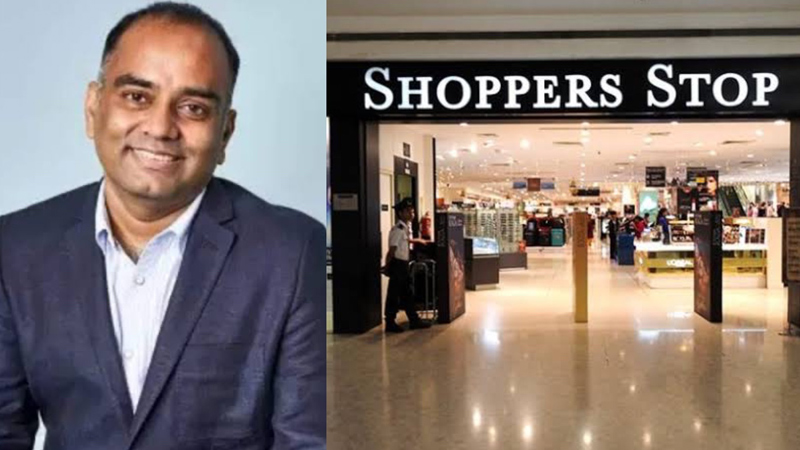
Tag: Venu Nair

  • Shoppers Stop Ltd announces changes in its leadership positions

    Shoppers Stop Ltd announces changes in its leadership positions

    MUMBAI: Shoppers Stop Ltd. today announced the promotion of Homestop, chief commercial Officer and CEO Kavindra Mishra, as its executive director & CEO,aftero the resignation of its managing director & CEO, Venu Nair.

    Kavindra Mishra has been promoted to executive director & chief executive officer – Based on the recommendation of the nomination, remuneration and corporate governance committee, the board of directors of the company (“the Board”), at its meeting held today, i.e. on 24 August 2023, approved the promotion and appointment of Kavindra Mishra (DIN: 07068041) as an additional director of the company w.e.f.  1 September 2023. He has also been appointed as an executive director & chief executive officer of the company for three years effective  1 September 2023, subject to the approval of shareholders of the Company.

    A brief profile of Mr. Kavindra Mishra is given below :

    The chairman of the company, BS Nagesh said “I am delighted that Kavindra Mishra, has been promoted as the executive director and CEO of the company. In the last five months, he has taken over the charge of Homestop and the commercial part of the Shoppers Stop business. His skills as a Business Leader, strategic expertise and overall understanding of the retail industry are an excellent fit for leading the Company as its CEO and setting high standards. Under his leadership and guidance, I am confident about the future growth of the company”

    Managing director and chief executive officer Venu Nair has tendered his resignation from his position, effective from the close of business hours of August 31, 2023, due to personal reasons, to enable him to spend more time with his family and explore other options.

    The board of directors of the company at its meeting held today has accepted his resignation and placed on record their appreciation for the contribution made by him during his tenure. He has been instrumental in strengthening the business in the post-Covid era, by growing its strategic pillars of fashion, and beauty and expanding the company’s retail network. He leaves a much-strengthened Shoppers Stop. To ensure a seamless transition, he will continue to guide and advise the CEO over the next 6 months, in his capacity as a Company official.

    B.S.Nagesh non-executive chairman of the company will handhold during the transition period. He will also mentor and coach the executive director & chief executive officer of the company.

  • Marks & Spencer is ‘Official Fashion Show Partner‘ of Aircel Chennai Open 2013

    CHENNAI: Marks & Spencer, one of the UK‘s leading retailer with 24 stores in India, has come on board as the ‘Official Fashion Show Partner‘ of India‘s only ATP World Tour championship, the Aircel Chennai Open 2013.

    The world of tennis has always had a serious affair with fashion and style both on and off the court. During the upcoming edition of the tournament that attracts the biggest names from the world of sports, business, films and politics, Marks & Spencer, will host a glamorous fashion evening showcasing their on-trend stylish and fashionable pieces.

    Legendary player, Vijay Amritraj will play the master of ceremonies, setting the mood of the evening with his charming personality. The runway will be set ablaze by India‘s leading models, as they adorn Marks & Spencer‘s exclusive collection and create magic on the ramp. And taking a break from making that perfect serve or smashing back a volley, a number of ATP players will hit the runway showcasing M&S‘ stylish range of merchandise.

    The fashion extravaganza will be hosted at The Park Hotel, Chennai on Sunday, 30th December 2012 with an exclusive invite list for the event.

    Venu Nair, Managing Director, Marks & Spencer India said “We‘re absolutely delighted to be the ‘Official Fashion Show Partner‘ of the Aircel Chennai Open 2013. We‘re looking forward to showcase our latest stylish and innovative fashion collection to tennis fans across India. This will be a perfect way to kick off 2013, an exciting year for M&S India.”

    Commenting about the partnership, Mr. Ashu Jindal, COO, IMG Reliance said, “We are pleased to have Marks & Spencer on board as the ‘Official Fashion Show Partner‘. Their uncompromising attitude towards creating stylish and high quality products has made them one of the most iconic brands in the international market.”

    The 18th edition of Aircel Chennai Open has one of the strongest playing fields ever, featuring an impressive line-up of tennis players including top 20 players Tomas Berdych, Janko Tipsarevic, Marin Cilic and Stanislas Wawrinka among others. Both Indian and International participants will compete for the coveted title.

  • ‘The mad race to get cricket rights has created a bubble’ : Venu Nair – WSG South Asia CEO

    ‘The mad race to get cricket rights has created a bubble’ : Venu Nair – WSG South Asia CEO

    With the Indian Premier League (IPL) in its catch, the World Sport Group (WSG) is sitting pretty. Even as it plans to cash in on the new T20 format that is set to change the cricket economy, the sports marketing company has also set its sights on the growing popularity of soccer and golf.

    In an interview with Indiantelevision.com’s Ashwin Pinto, WSG South Asia CEO Venu Nair unveils the dynamics of the sports business.

    Excerpts:

    How far has World Sport Group progressed in India?
    When we set up our office in India two years back, we had a plan to establish a credible business over a three-year period. We looked at cricket, soccer and golf. We decided to develop each of them independently. Cricket and golf has grown phenomenally. However, with soccer it is still an uphill task.

    We changed our football outlook to a five-year plan. We own all the rights and work closely with the Asian Football Confederation (AFC), with whom we have been working since 1992. Our current contract runs till 2011. The fact that we have worked with them for so long to promote soccer across Asia speaks of the fact that we are long term players.

    How have you grown the cricket business?
    We have brought in professionalism into the management of the title and central sponsorship rights. We tell clients what they can avail of over a year. From a brand perspective it works, as they are able to plan forward. This gave us an entry into cricket at the highest level.

    During 2006, the BCCI’s sponsorship rights were available. We paid Rs 1.8 billion for it. Prior to us, these rights were vested with corporates and not with a proper sports marketing company.

    How is this deal with the BCCI working out?
    We work on a margin of 15-20 per cent. When we acquired the rights, we bought it at a premium. Two years down the line we have managed to stay at par with our revenue targets.

    Where are the opportunities for WSG in cricket other than the BCCI and IPL?
    There are opportunities to represent other boards. People are looking inward into India and they see the job we have done for the BCCI. As far as IPL is concerned, we have aggregated the media rights and sold it outward.

    But aren’t sports bodies working directly with broadcasters?
    Broadcasters are limited by the region that they want to serve. They often tend to sell the rights outside their interests to other parties. This puts the broadcaster into an agency position, which is not often a comfortable area to be in as it is not their core expertise. So, to say that sports bodies increasingly work with broadcasters is an anomaly.

    Fifa, for instance, works very closely with sports marketing agency Infront.

    You will have to put higher monies on the T20 format and put the squeeze on Tests and ODIs

    WSG managed a coup with the IPL rights. What targets have you set?
    We expect to start making money by the end of the third year. We have sold rights it to many territories including the US and Canada. We have let some territories sample the product like Sky in Italy. We sold IPL to the Southeast Asian countries including Singapore, Malaysia and Thailand.

    Are these deals long term?
    We have sold everything with the ability to re-look at periodic intervals at the contract. We will see how it is working. It had to be a partnership model. The format was something new.

    How does the IPL build in club loyalty and sustain viewership interest?
    Teams will have to build more local heroes. Catchment areas have to expand. If the IPL franchise owners treat it just as a balance sheet-led proposition, then it may not survive in the long run.

    The IPL will face competition from other boards. England wants to start a league in 2010. Australia, South Africa and New Zealand want to start a joint league in 2011. How does this affect the IPL?
    In soccer different leagues like the EPL, Spanish league, and German Bundesliga are played at the same time. But the EPL is most watched. The IPL is a home grown product and has the first mover advantage. More home grown talent will take centre stage. Foreign players might want to play the IPL to shore up their revenues. They will then reach a stage where they might want to play in another league to enhance their skill. The player migration seen in soccer will happen here as well.

    But when other leagues come up, won’t some monies shift from IPL to them?
    No! 100 per cent of the IPL revenues come from home grown clients. They want the local audience and so they will not invest in an Australian or an English league.

    In India sponsorship revenue is higher than ticketing revenue. In England it’s the reverse. However, a time will come in India where ticketing revenue will grow. Hospitality is another area which, if developed properly, can be a solid, successful revenue stream. Soccer clubs in Spain and England make a huge line of revenue from this area.

    If the revenue potential is so strong, then why are owners already selling stakes so soon?
    They are looking to sell a stake at a premium. They are not looking at funding their working capital needs.

    Will Test cricket and ODIs lose some of their lustre as T20 comes up?
    That is the market reality. Next year there are around 120 games, which include IPL, T20 World Cup, Champions T20 League. And one would not have known about it two years back.

    You will have to put allocated monies on this new format and squeeze monies on the other two formats. Even from a viewer’s experience how many takers are there for a Test Match! The purists are in a minority. Cricket is now more about entertainment. T20 has taken that window; you can watch a game in three hours.


    The PCB got $140 million for its rights. So isn’t there still value in the traditional formats?
    In bilateral events, the icon series will get money. If it is India versus Pakistan, then advertisers and viewers will chip in. The whole value of the deal with the PCB comes from these two series that are present in the contract. At the same time, there is no guarantee that they will get the same value. They will probably get the same monies as in 2004 when India toured Pakistan after a long time.

    However, the acquisition costs have shot up. In advertising you may not see a corresponding incremental value as it could get diverted to T20. The escalation may not happen.


    Is there a danger of some broadcasters going bust due to a huge escalation in rights fees?
    Yes! Ideally, ad rates should double which probably is not going to be the case. The rights fee has gone up disproportionately due to the need for content in a calendar year. The challenge for broadcasters is to figure out where the business is going. You also need to take care of distribution. In India sports channels have to have a certain number of events in a year. Otherwise the cable operator may stop beaming you. Cricket is reaching a saturation level and there will be a tapering down of values.

    The mad race to get cricket rights has created a bubble that will eventually burst. For example, tennis went through this huge bubble a few years back. It also happened with soccer.

    Broadcasters who have bought rights at high rates will have to sit down with their books at the end of next year and strike out the red. Market forces will pull prices down as the high price cannot be sustained. As a sports marketing company, I can bid a certain amount but if it is not in touch with the reality, then I stand to lose.

    Sports bodies, however, have to realise that the value that sponsors attach to the older formats of the game will increasingly be less. A sports body, though, will not lose money as it will get transferred from one format of the game to the other.


    Even the 2010 soccer World Cup rights went for a five-fold rise. Why?
    You cannot underestimate the fact that soccer is catching up. This is especially the case in urban India which has been fed a diet of quality football from world leagues.

    The awareness of global soccer icons due to the media coverage is also high. This is why premier tournaments are time bound. It has the carnival atmosphere. People follow certain teams. Once people watch it, advertisers also want to be in on the action.


    You wanted to do a league around soccer with AIFF and use the franchise model. What happened to that?
    We worked on a plan around a year ago. We did not go anywhere because of a combination of reasons. Firstly there already exists a certain kind of league. The soccer development process in India is not as robust as it should be.

    If the AIFF actually chalks out a 20-year plan to grow soccer at the grassroots level and has a realistic target, it can work. It is not about sending the team to the next World Cup.

    Cricket has been managed well at the administrative level. Cricket has also had periodic highs like winning the 1983 World Cup. This ensures that interest stays. After the 1950s, there has not been a high in soccer. Even followers of the sport do not have role models to look up to. If the AIFF comes up with a proper plan, then I am sure that there are enough corporates out there who are willing to invest.

    Bharti Airtel has committed Rs 100 crore. If it is spent in the right manner, it will give you results in 10-15 years. But thinking about reaching the 2010 World Cup final is a folly when you cannot reach a South Asian tournament.

     
    How has your work with the AFC been progressing?
    It has done well. The Asia Cup is held every four years. The AFC Champions League happens every two years. Everybody plays it. Australia has come through. We work with the Australian Football Association also on their leagues. Australia reaching the soccer World Cup was a culmination of many years of work. The sport has been revived as the body had a long term plan.


    What activities does WSG do in Golf?
    We acquired the rights for the Indian Open which is the most prestigious event. The deal is for six years and slowly we have been able to increase the prize money. The Indian Open is now a million dollar product. Next year we will add $250,000 more to the event.

    Our aim is to take the prize money to $5 million given the fact that Golf is slowly growing in appeal in India. Our goal is to develop another multi-million dollar golf property in the first half of the year. We want to have two Indian Golf events that occupy a prominent position on the Asian Tour calendar.

    What is working in our favour is the fact that marketing managers today want to invest to reach different levels of the strata.


    What are the plans in the player representation business?
    In India cricket is intricately linked to player management. You cannot stay away from this. We figured that small entrepreneurs were running this business. There was no professional marketing company running athletes in India. To a large extent this is still the case.

    We manage Sachin Tendulkar. We have a five-year deal with him so that we can monetise his brand. Since Sachin has aged, we have moved away from brands that he was endorsing in the past. He is a family man; his core values are honesty, integrity and long-term commitment. That is why you have brands like Aviva, Royal Bank of Scotland and Canon. We are looking at brands that can go past his playing days.

     
    Are you looking at more stars?
    Yes, but a decision will only be taken after the second season of the IPL gets over. Player management is a tricky business. We have to be convinced that the player wants a long-term partnership rather than a short term money-making venture.


    What impact will the economic downturn have on the business of sports marketing?
    There will certainly be an impact. What the extent will be is early to say. Numbers will get reduced by 15-20 per cent. It will depend on the extent that the global economic crisis has on India.

    We may have to look at our cost basis. We have to re-look at future acquisitions; we will have to work with experts to get a fix on what the economy might look like three or five years down the line before making another acquisition. Our buys will be made on the basis of market realities.