Tag: VD Wadhwa

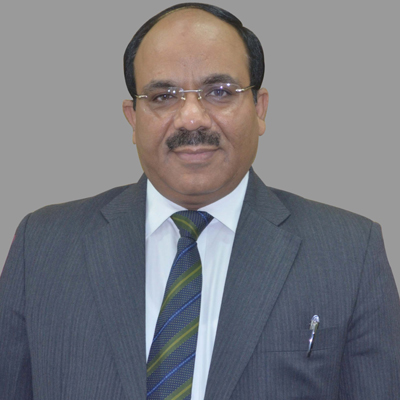
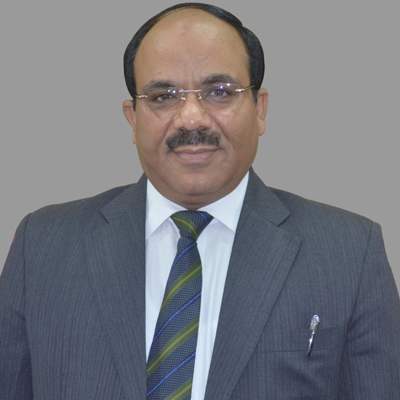
  • Siti Cable CEO VD Wadhwa appointed as president of the new All India Digital Cable Federation

    Siti Cable CEO VD Wadhwa appointed as president of the new All India Digital Cable Federation

    MUMBAI: In a significant move to organise the digital cable industry for the overall benefit of all stakeholders and to facilitate and further create momentum for digitisation for phase III and IV, major Indian multi system operators (MSOs) have come together under the aegis of the All India Digital Cable Federation (AIDCF).


    The newly formed federation held its first meeting on 15 October 2014 in New Delhi, which  was attended by all the leading MSOs i.e. Hathway, Den Network, Siti Cable, In Cable, Digi Cable, Fastway, GTPL, ICNCL and Manthan.  With the formation of new Digital Cable Federation, the earlier forum of MSO Alliance has been dissolved.


    The members have unanimously elected SITI Cable executive director and CEO VD Wadhwa as the president of the federation (AIDCF) for an initial term of two years.


    The federation will work towards the overall growth of this sector and create environment for not only complete digitisation of cable TV under regulatory guidelines but also will deliver the benefits of digital services including broadband and other value added services to the people of India thus fulfilling the dream of ‘True Digital India.’


    AIDCF will be the official voice for the Indian digital cable TV industry and will interact with ministries, policy makers, regulators, financial institutions and technical bodies. It will also provide a platform for discussion and exchange of ideas between these bodies and the service providers, who share a common interest in the development of digital cable TV in the country.


    It will collaborate with other industry associations such as IBF, CII, FICCI, ASSOCHAM association etc., with the objective of presenting an industry consensus view to the government on crucial issues relating to the growth and development of the industry.


    The federation has invited all MSOs who have minimum one lakh digital cable TV subscriber base and who are following TRAI QOS norms to become members, so that entire industry speaks in one voice and works for common objective.


    The members of federation will also work out the business model for phase III & IV digitisation and create the healthy business environment for all stakeholders.


  • IDOS 2014: Industry solutions to distribution dynamics gain momentum

    IDOS 2014: Industry solutions to distribution dynamics gain momentum

    GOA: The India Digital Operators Summit (IDOS) 2014, the largest TV distribution summit in India ended with significant progress and a level of stakeholder unity on the way forward for digitisation in India, embracing voluntary and mandatory DAS, ground level pricing, interconnect and revenue sharing between LCOs, LMOs and MSOs and broadcaster support for standard, uniform pricing based on addressable deployment. Key stakeholders also agreed that it’s critical to further improve hygiene in Phase I and II of DAS while various ecosystem entities, including DTH pay-TV operators, domestic STB manufacturers, alternative TV distribution  platforms (HITS, Free Dish) along with the cable fraternity agreed that ahead of the delayed DAS mandate, voluntary DAS has legs in Phase III and Phase IV.


    IDOS 2014 had a full attendance of the who’s who of the industry with more than 300 professionals from the digital TV landscape making their way to the beautiful picturesque resort of Hotel Leela in south Goa.


    The summit which kickstarted with the biggest opening night party organised by HBO on 25 September, saw some eye opener facts presented by Media Partners Asia executive director Vivek Couto on the current status of Indian cable TV industry. He said, “Out of the 262 million households in the country only 162 million houses have a TV. Of this, 27 million is taken up by the free to air service providers such as Freedish via satellite and 7 million by terrestrial DD, while the rest comes under cable and satellite.”


    He also informed the gathering that over Rs 32000 crore has been invested in digitisation since 2005 with a bulk of the investment coming from the DTH operators followed by the MSOs and LCOs since 2011. Out of this, over Rs 11000 crore in the last 24 to 30 months has been invested by MSOs and LCOs.


    He pointed out that while the cost of all the pay channels on a wholesale basis is Rs 922 to digital platforms, the highest pack price is Rs 550 which is an anomaly and needs correction. “Wholesale channel rates should be reflective of retail  prices,” he highlighted. “The sector needs to move towards retail pricing to foster trust between broadcasters, cable TV operators, and LCOs. Retail pricing will make rates transparent. Competition amongst six DTH, two HITS, five national MSOs and several regional ones and the local cable ops will keep retail rates in check.”


    Another important point that came out during the session was that carriage fees which were declining before the digitisation mandate have now reversed their path following completion of phase of phase I and phase II .  “The carriage fee has gone up by 14 per cent on Q1 of FY15 over the previous corresponding quarter,” he informed.


    Indian Television Dot Com founder CEO Anil Wanvari suggested the way forward for the cable TV fraternity. He said, “The first thing is to look at digitisation and pay TV with a changed mindset that it will be beneficial to all. The government could look at setting up a digitisation transition fund that will help educate, train, provide seed capital to go digital – this is specially relevant in phase III and phase IV areas. The fund could be discontinued once the transition is completed successfully, say in the next four to five years. A mechanism needs to be put in place to reward people who follow the rules and ensure strict penalties for those who don’t.”


    Apart from this, Wanvari also suggested that Subscriber Management System (SMS) should be set up with correct KYC  details and bills be issued to consumers. The government or regulator could also look at laying down standards and tech specifications for set top boxes (STBs) which were in keeping in making the customer technology-future-proofed for at least three to four years and to ensure quality control. That’s if the mandate of made in India set top boxes is to become a reality. “The first wave of digitisation has seen low end zapper boxes being shipped in from China – of maybe not the best quality – and being dumped on to the Indian customer to meet the so-called deadlines in phase I and phase II,” he said. “Which is not fair on the lay customer who may have to go in for a new one in the not to distant future.”


    “On the pricing front, industry could be allowed to price their content based on market demand,” Wanvari added. “The prepaid model as followed by DTH with recharges being made available from your kiranawala (neighbourhood store) or paanwala will allow for more transparent collection from the ground for MSOs and the cable sector. The base pack price could rise; and content costs on cable could be brought on a parity with DTH.  On the other hand, different packages could be made available to the consumer.”


    One key take away from the three day summit was the fact that right from the broadcaster, to the MSOs, DTH operators and also a few local cable operators, no one is happy with the delayed digitisation. The captains of the industry expressed similar opinion  to what the Telecom Regulatory Authority of India chairman Rahul Khullar has been airing on several occasions, that ‘delayed digitisation sends out a wrong message to the world and helps no one.’


    Many also felt that the Average Revenue Per User (ARPU) needs to go up from the current Rs 150 to Rs 250-Rs 300. “ARPUs can see an upward trend only if there is trust amongst the various stakeholders,” said IndiaCast CEO Anuj Gandhi.


    Star India president and general counsel Deepak Jacob during a session suggested putting together a commercial model which is uniform. While Siti Cable CEO VD Wadhwa opined to opt for voluntary digitisation, if the broadcasters and LCOs support the MSOs.


    “IDOS is a great platform for the industry to express their point of view, which for this year was delayed digitisation. I am very pleased with the discussions and the quality turnout at IDOS,” said Wadhwa.


    “As a first timer, I got to learn a lot through all the sessions that were conducted. Given a chance, I will keep coming back,” said Scripps Networks Asia Pacific managing director Derek Chang.


    “The session on STB was very informative and there is no other platform where all the stakeholders can meet and discuss the issues related to the cable TV industry,” said Times Television Network MD and CEO MK Anand.


    The highlight of IDOS 2014 was the closed door interaction with TRAI chairman Dr Khullar via videoconference with the various industry stakeholders.

  • Siti Cable commercially rolls out its DOCSIS 3 broadband service in Delhi NCR

    Siti Cable commercially rolls out its DOCSIS 3 broadband service in Delhi NCR

    GOA: Delayed digitisation is the hottest topic of discussion in the cable TV corridors.


    With digitisation comes the hope of increased Average Revenue Per User (ARPU) and also the realisation that it is broadband that will help the multi system operators (MSOs) to increase their ARPUs.


    Siti Cable is doing just that. The MSO, which for the last two months had been piloting and testing its DOCSIS 3 technology in the Delhi, NCR region, has now officially launched it in the region. Confirms Siti Cable CEO and executive director VD Wadhwa, “Yes, we have commercially launched the service in these areas.” 


    The MSO though has started with Delhi-NCR; it will soon take the service to every city where it has a subscriber base of more than 50,000.


    It is estimated that the MSO is investing anywhere close to Rs 35 lakh to Rs 40 lakh in markets with 50,000 subscribers. According to Wadhwa, as a thumb rule, of every 100 cable TV households, close to 10-15 per cent convert to broadband households. “We are taking the figure at 15 per cent,” he says.


    “Upgradation of homes passed cost close to Rs 500 per subscriber. So if, of the 100 households, 15 per cent opt for broadband, then we are looking at an investment of close to Rs 5000 per subscriber,” he informs.


    The speed for DOCSIS 2 will go up to 40 mbps, while for DOCSIS 3 will go up to 100 mbps. As for the pricing, Wadhwa says, “Our pricing will be highly competitive. We are just in the phase of finalising the tariff plan. We will have different packs for different subscribers.” 

  • Siti Cable to roll out DOCSIS 3 broadband in Delhi and NCR in Q2-2015

    Siti Cable to roll out DOCSIS 3 broadband in Delhi and NCR in Q2-2015

    MUMBAI: Siti Cable, the multi system operator (MSO) from the Essel group is looking at expanding its business in other parts of the country. In a document given to investors, it has asked shareholders for approval to increase its authorised share capital, give authority to the board of directors to create charges/mortgages in respect of borrowings and issuance of equity shares or securities convertible into equity share of up to $100 million.


    The company says that the reason for loss was under declaration of subscriber base and low average revenue per user (ARPU). With digital addressable system (DAS) being implemented, the MSO hopes to generate higher revenue from subscription. Siti Cable also has already become EBIDTA positive this year.


    For digitisation implementation, it has procured and deployed large number of set top boxes (STBs), leading to periodical amortization, leading to inadequate profits.


    In order to improve its situation, the MSO has proposed a few measures. It is looking at expanding its business in north, south and central India, apart from its stronghold of east India. It is preparing strategies for increasing its digital market share and becoming a strong player in DAS areas. The company is rolling out its value added services (VAS) plans across the country in phased manner. Broadband services are intended to be rolled out on advance DOCSIS 3 technology in Delhi and NCR in Q2-2015, besides having broadband subscriber base in eastern region.


    Meanwhile, the increase in productivity will be measured in terms of EBIDTA margin, rationalisation of expenses, standardisation of process and systems to shift focus from individual centric approach to system driven approach and additional incremental profit by rolling out VAS.


    The BOD is asking for approval to “create such charges, mortgages and hypothecations on all or any part of assets or immovable properties of the Company wherever situated, both present and future, and/or whole or part of the undertaking(s) of the Company of every nature and kind whatsoever together with power to take over the management of the business and concern of the Company in certain events, to or in favour of banks, financial institutions, any other lenders or other investing agencies and trustees for the holders of debentures, bonds, other instruments to secure rupee/foreign currency loans hereinafter collectively referred to as “loans”) to secure the amount(s) borrowed or to be borrowed by the company from time to time for due repayment of the principal together with interest, charges, costs, expenses and all other monies payable by the company in respect of such borrowings.”


    It is also seeking approval for authorisation of loan and investments by the company. The BOD is asking approval for “giving any loan to any person or other body corporate, giving any guarantee or providing security in connection with a loan taken by any other body corporate or person; and/or acquiring whether by way of subscription, purchase or otherwise, the securities of any other body corporate; up to financial limit of Rs 1000 crore over and above limits available under Section 186 of the Companies Act, 2013, notwithstanding that the aggregate of the investments and loans so far made or to be made and the guarantees so far given or to be given by the company and securities so far provided and to be provided, exceeds the limits/will exceed the limits laid down under Section 186 of the companies act, 2013 read with companies (meeting of board and its powers) rules 2014.”


    For issuing shares, it is seeking approval to “offer, issue and allot in one or more tranches, to investors whether Indian or foreign, including foreign institutional investors, financial institutions, non-resident Indians, corporate bodies, mutual funds, banks, insurance companies, pensions funds, individuals or otherwise whether shareholder(s) of the company or not, through an issue of equity shares or bonds, debentures and/or any other securities including foreign currency convertible bonds or depository receipts convertible into equity shares of the company at the option of the company or the holder of such security, including by way of qualified institutional placement (QIP) to qualified institutional buyers (QIB) in terms of chapter VIII of the SEBI regulations, through one or more placements of equity shares (hereinafter collectively referred to as ‘Securities’), in domestic and/or one or more international markets whether by way of private placement or otherwise, in one or more tranches, so that the total amount raised through such issue(s) of securities shall not exceed Rupee equivalent of $ 100 million.”


    It has also appointed VD Wadhwa as the executive director for a period of three years from 12 August 2014.

  • Siti Cable Network looks to raise Rs 600 crore

    Siti Cable Network looks to raise Rs 600 crore

    MUMBAI: Essel Group’s subsidiary Siti Cable Network has decided to raise funds worth Rs 600 crore through the issuance of securities. This will be used for operations of the company.


    In a statement to the BSE, Siti Cable has said that it has received in-principle approval from its board of directors to raise funds through “issuance of securities such as Equity or Equity related instruments up to rupee equivalent of US$ 100 millions – through private placement / Qualified Institutions Placement (“QIP”) / External Commercial Borrowings (ECBs) with rights of conversion into Equity Shares / Foreign Currency Convertible Bonds (FCCBs) / American Depository Receipts (ADRs) / Global Depository Receipts (GDRs) or any other securities convertible into or exchangeable for Equity Shares or securities linked to Equity Shares.”


    This is subject to approval from shareholders and other such approvals. The board has also approved the draft of the postal ballot notice for seeking approval from members of the company including issuance of securities.


    The promoters had pumped in Rs 324 crore in three tranches between March 2013 to April 2014. This had increased the promoter shareholding to 72.82 per cent. These funds were being used for business expansion and debt reduction.


    The company’s CEO VD Wadhwa had in an interview to indiantelevision.com in January 2014 said, “Phases III and IV of digitisation has a total universe of about 90 million. Of these, we are targeting 6 to 7 million homes. At a gross level, we will require an investment of Rs 1200 crore. On a net basis, we are expecting an investment to the tune of Rs 600 crore. The funding of phase III will be largely done through warrants’ funding of Rs 243 crore, which is likely to be invested by promoters before March 2014. Balance funding requirement will be met through internal accruals and raising of further equity, as may be required.”

  • Siti Cable gets Rs 140.25 crore investment from promoters

    Siti Cable gets Rs 140.25 crore investment from promoters

    MUMBAI: After getting a shot of Rs 102.75 crore last week, multi system operator (MSO) Siti Cable has now finally received the third and last tranche that its promoters had intended to release.  In an announcement to the Bombay Stock Exchange (BSE), the MSO has said that it has received Rs 140.25 crore today. Within a span of a week, Rs 243 crore has been invested in all.


    The release on the BSE reads: “As per the terms of 16,20,00,000 warrants issued by the company on 19 March 2013 on preferential basis, the allotment committee of the board of directors has upon receipt of balance of  75 per cent consideration aggregating to Rs 140,25,00,000 approved further allotment of 9,35,00,000 equity shares upon conversion of such remaining warrants at an issue price of Rs 20 per share to the allottees: Essel Media Ventures and Essel International.”


    It was in March 2013 that the company got the nod for getting Rs 324 crore, out of which Rs 81 crore flowed in that month itself. Even though, the promoters had time till September 2014 to flush out the rest, the decision to invest it all was taken recently. Following which, the next two tranches have been released for the MSO.


    With this, the total promoter shareholding has risen to 72.82 per cent.


    Not only this, the MSO also claims to have reached a subscriber base of 40 lakh digital customers as on 31 March 2014. “Encouraged by the significant improvement in the performance in FY 13-14 and to support the aggressive growth plan to grow the subscriber base to 1 crore  in FY 14-15, the promoters have invested additional Rs 243 crore in the business,” the MSO said in a release sent today.


    The funds will be utilised primarily for business expansion and to partially reduce debt.


    Essel Group and Zee chairman Subhash Chandra through a statement said, “The Indian television distribution industry is on the cusp of high growth value phase as it marches towards the digitisation of balance phases of cable television in the country. With the change in leadership last year, Siti Cable has driven higher revenue and profitability through relentless focus on operational excellence despite uncertain environment. Our sustained investment in this sector will further accelerate the growth momentum and will serve the digital cable TV viewing needs of many more million Indians on Siti Cable Network.”


    Commenting on this development, Siti Cable CEO VD Wadhwa said, “For the wider digitisation roll out, the company needs to invest in upgrading its digital infrastructure further and enter into newer strategic markets. We plan to seed over six million set-top-boxes in phase III and IV markets through organic and in organic growth. We believe that we are well poised to benefit from the ongoing digitisation implementation and ready to penetrate the market at a faster rate.”


    Package wise billing and collection has already been initiated in the phase I. The company estimates that by beginning of the next quarter, package wise billing and collection will be in line. The MSO claims to have made significant progress on subscriber wise billing and collections in its phase-II markets as well. “The company is far ahead of other operators in terms of subscriber wise billing and collection,” said a statement released by the company.

  • Siti Cable promoters pump in Rs 102.75 crore

    Siti Cable promoters pump in Rs 102.75 crore

    MUMBAI: India’s leading multi system operator (MSO) Siti Cable today announced to the Bombay Stock Exchange (BSE) that it had received an injection of Rs 102.75 crore from its promoters. This is the second tranche after the Rs 81 crore its promoters had pumped in March 2013.


    The announcement to the BSE states that “as per the terms of the 16.2 crore warrants issued on 19 March 2013 on preferential basis the allotment committee of the board of directors has upon receipt of the balance of 75 per cent consideration aggregating to Rs 102.75 crore approved allotment of 6.85 crore equity shares upon conversion of equal number of warrants at an issue price of Rs 20 per share to the allottees – Essel Media Ventures and Essel International.”


    Sources within Siti Cable point out that the promoters led by Zee and Essel group chairman Subhash Chandra is extremely bullish on the MSO’s prospects post completion of cable TV digitisation  nationally.


    The company’s CFO Sanjay Goyal confirms to indiantelevision.com that “the company had received clearances in March 2013 to bring in Rs 324 crore from the promoters in four tranches. As part of that Rs 81 crore flowed in that month itself. Though the promoter group had until September 2014 to bring in the rest, they plan on infusing the remainder of the money before 31 March 2014 to speed up the digitisation push.”


    The company’s CEO VD Wadhwa had in an interview to indiantelevision.com in January 2014 said that “Phases III and IV of digitisation has a total universe of about 90 million. Of these, we are targeting 6 to 7 million homes. At a gross level, we will require an investment of Rs 1200 crore. On a net basis, we are expecting an investment to the tune of Rs 600 crore. The funding of Phase III will be largely done through warrants’ funding of Rs 243 crore, which is likely to be invested by promoters before March 2014. Balance funding requirement will be met through internal accruals and raising of further equity, as may be required.”


    In September 2012, when the company had announced that it was raising Rs 324 crore via warrants to promoter firms, it was reported that after completion of the entire exercise, he total promoter shareholding will rise to 73.08 per cent from 63.43 per cent and that of the public will drop to 26.92 per cent from 36.57 per cent.


    Also read:

    Siti Cable gets Rs 810 mn first tranche from promoters

    WWIL to raise Rs 3.24 bn via warrants to promoter firms

  • Q3: Digitisation pushes up MSOs’ subscription revenue

    Q3: Digitisation pushes up MSOs’ subscription revenue

    MUMBAI: Transparency in subscriber numbers with the digitisation of cable TV services in 42 cities is translating into higher subscription revenues for multi-system operators.


    The benefit of digitisation is still to fully reflect in revenues of MSOs as billing to cable TV subscribers is still to be completed in the 38 cities that were digitised in Phase II.


    Digitisation has had an added impact on the MSOs financials. Their carriage or placement revenue earned from broadcasters is decreasing.

    MSOs expect carriage revenue to rise as new channels get launched.


    Carriage Revenue

    Hathway Cable & Datacom’s income from placement of channels fell 14 per cent to Rs 73.6 crore in the third quarter ended 31 December, 2014. The share of placement revenue in Hathway Cable’s total revenues fell to 31 per cent in the third quarter from 41 per cent a year ago.


    Den Networks too saw softening of its placement revenues to Rs 117.8 crore, down nearly 2 per cent from Rs 119.90 crore a quarter earlier. Den Network’s placement revenues a year ago are not available.


    Subscription Revenues

    Digitisation gains led Den Networks revenues to rise to Rs 105 crore in the third quarter, up 6 per cent from Rs 99.11 crore a quarter earlier.


    The quarter-on-quarter increase in subscription revenues for Hathway Cable was sharper. Its subscription revenues rose to 74 per cent to Rs 119.1 crore in the third quarter from Rs 68.5 crore a quarter earlier.


    Hathway Cable’s subscription revenues rose as it completed billing for a substantial percentage of its cable TV customers in the cities covered under the Phase II of digitisation. As a result, its average revenue per month per subscriber too has increased substantially, an analyst said.


    Hathway Cable says with its focus on collections, the company has witnessed continued traction in the pace of subscription collections into January 2014.


    SITI Cable Network saw its total revenues in the third quarter rise 42 per cent to Rs 177.3 crore from Rs 124.7 crore a year ago.

    SITI Cable CEO V D Wadhwa says, “We gained further momentum in the third quarter of fiscal 2014.”


    Direct-To-Home TV

    Dish TV’s revenues rose 3% quarter on quarter to Rs 6,128 mn in the third quarter but its EBITDA fell 1.6% quarter on quarter to Rs 135.50 crore. The company’s operating profit was down as its content cost rose and selling, general and administrative expenses increased as it tapped benefits flowing from digitisation.

    Dish TV added net 2,20,000 households in the third quarter taking its subscriber base to 11.2 million.

    Analysts expect Dish TV to reap higher benefits of digitisation in Phase III and IV starting 1 October, 2014.


    In the case of Bharti Airtel’s DTH business, the multiplier impact of increased customer additions and higher realisations during the quarter, pushed up revenues by 25.8 per cent to Rs 538.4 crore from Rs 428 crore a quarter earlier.


    Leveraging economies of scale, EBITDA for the quarter increased to Rs 97 crore from Rs 14.7 crore a year earlier. Consequently, Airtel Digital TV’s EBIDTA margin improved significantly to 18.0 per cent in the third quarter from 3.4 per cent a year earlier.


    During the current quarter, the company incurred a capital expenditure of Rs 110.90 crore in DTH services. The cash burn during the quarter at Rs 13.9 million was significantly lower Rs 120.40 crore a year ago.


    Airtel DTH added 2,35,000 net subscribers in the third quarter to take its total subscriber base to 88,07,000. Its average revenue per user in the third quarter was Rs 207.