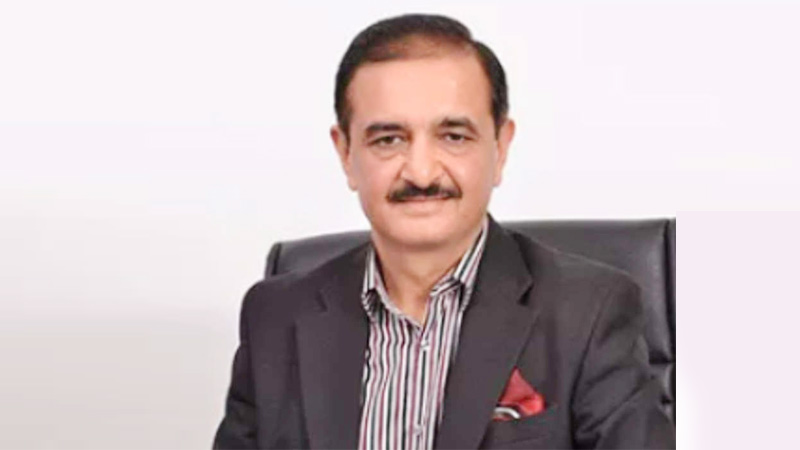
Tag: VD Wadhwa

  • SN Sharma gets AIDCF responsibilities once again

    SN Sharma gets AIDCF responsibilities once again

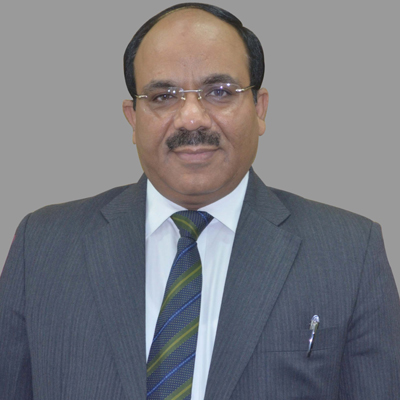
    MUMBAI: It’s back to being president of the All India Digital Cable Federation (AIDCF). DEN Networks CEO S.N. Sharma who led the AIDCF from April 2019 to March 2021 as its president has once again been appointed to that post. His term will continue till March 2025 when a new head will hopefully be selected. 

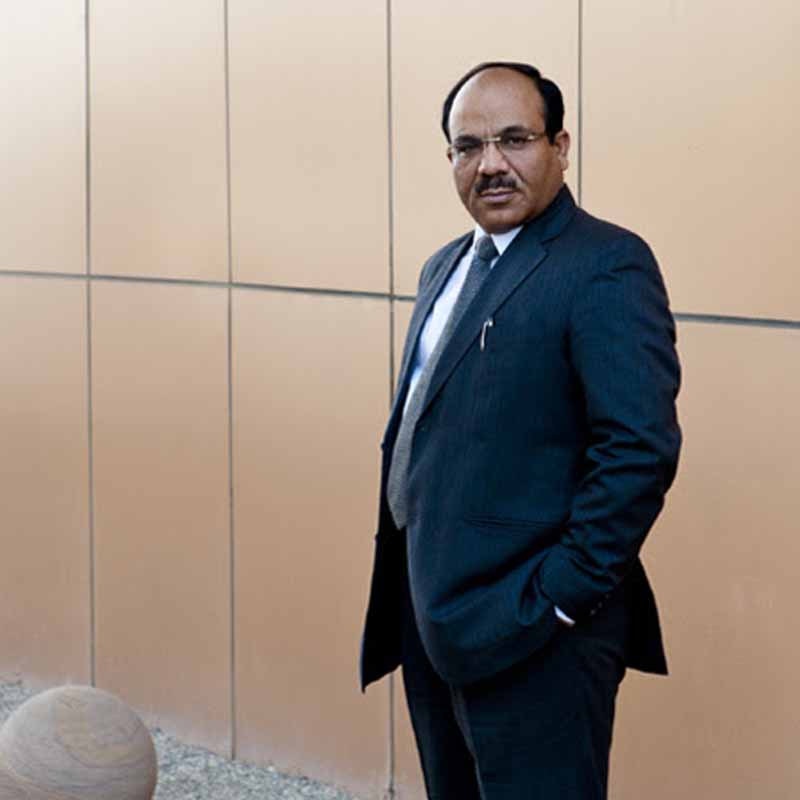
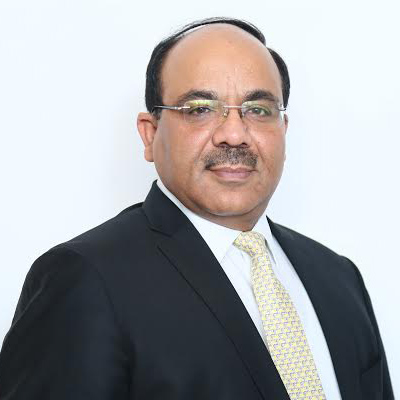
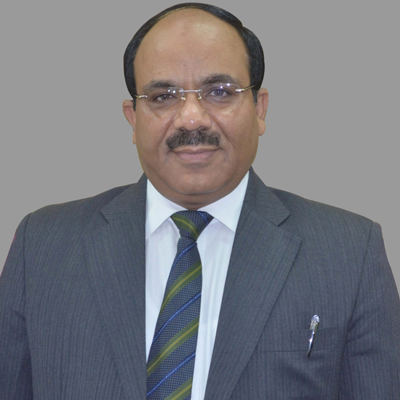
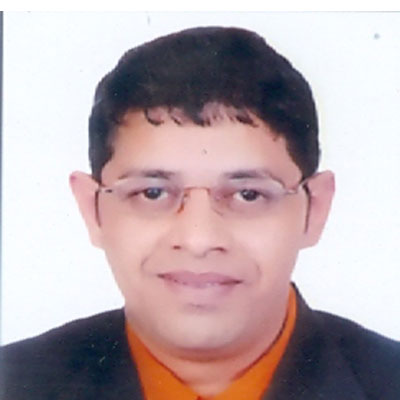
    The AIDCF was set up in 2014 with VD Wadhwa, the then CEO of Siti Networks as its head.

    Sharma, a veteran and popular figure in the cable TV industry, succeeds Fastway CEO Peeush Mahajan, who stepped down from the position in May 2024 due to personal reasons (apparently, he’s migrated to Canada and won’t be coming back). Peeush took over as president in April 2023 and his term was supposed to end in March 2025.

    Sharma had been acting president of the association since then. 

  • Wadhwa says Siti Cable is continually looking for acquisitions

    Wadhwa says Siti Cable is continually looking for acquisitions

    MUMBAI: Siti Cable, part of the Essel group is not going to immediately get the benefits of the 100 per cent FDI relaxation in the TV distribution sector. This was revealed by Siti Cable executive director & CEO VD Wadhwa to TV channel Bloomberg TV a couple of days ago.

    Wadhwa said that the promoters own 71 per cent of Siti Cable Networks; with the non-promoter holding standing at 29 per cent. “At least for the next two to four quarters I don’t see any major benefits coming out to the government in terms of foreign currency inflows into the business,” he told Bloomberg TV.

    He added that the company would continue to grow both organically and inorganically in FY 2017. “The industry is going through a tight cash situation. The industry has largely been fragmented,” he stated. “Now consolidation is happening at the cable operator level, it is happening at the regional level. It is only a matter of time before it starts happening at the national level as well.”

    He revealed that his company was participating in the consolidation as post digitization it was becoming difficult for the cable operator to survive alone. “We are keeping our eye open because we have identified some of the geographies wherever we would like to expand by acquisition and wherever we see a strategic fit,” he explained.

    He pointed out to the network’s acquisitions recently in Maharashtra and Gujarat where Siti Cable was relatively weak.

    “In both these places we have expanded through partnerships. In Mumbai, we acquired 600,000 subscribers by acquiring 76 per cent in a local network Scod18. In Gujarat, we have acquired 700,000-800,000 subscribers by doing a 51:49 per cent joint venture in Gujarat,” he revealed.

    He said Siti Cable had agreed to take a 50 per cent stake in Assam-based Axom Communications as the existing promoter was comfortable in partaking of only that much equity. “The new Companies Act allows us to control an organization either through an equity stake or through the composition of the board. We chose to get a majority on the board and will be consolidating the results with Siti Cable’s financials on account of that,” he disclosed.

    Wadhwa explained that Siti Cable would be more open to taking anywhere between 51 per cent and 76 per cent stakes in cable TV ventures as it makes sense to have a partner who knows the local territory well to still be involved in the business even after acquisition or a partnership.

  • Wadhwa says Siti Cable is continually looking for acquisitions

    Wadhwa says Siti Cable is continually looking for acquisitions

    MUMBAI: Siti Cable, part of the Essel group is not going to immediately get the benefits of the 100 per cent FDI relaxation in the TV distribution sector. This was revealed by Siti Cable executive director & CEO VD Wadhwa to TV channel Bloomberg TV a couple of days ago.

    Wadhwa said that the promoters own 71 per cent of Siti Cable Networks; with the non-promoter holding standing at 29 per cent. “At least for the next two to four quarters I don’t see any major benefits coming out to the government in terms of foreign currency inflows into the business,” he told Bloomberg TV.

    He added that the company would continue to grow both organically and inorganically in FY 2017. “The industry is going through a tight cash situation. The industry has largely been fragmented,” he stated. “Now consolidation is happening at the cable operator level, it is happening at the regional level. It is only a matter of time before it starts happening at the national level as well.”

    He revealed that his company was participating in the consolidation as post digitization it was becoming difficult for the cable operator to survive alone. “We are keeping our eye open because we have identified some of the geographies wherever we would like to expand by acquisition and wherever we see a strategic fit,” he explained.

    He pointed out to the network’s acquisitions recently in Maharashtra and Gujarat where Siti Cable was relatively weak.

    “In both these places we have expanded through partnerships. In Mumbai, we acquired 600,000 subscribers by acquiring 76 per cent in a local network Scod18. In Gujarat, we have acquired 700,000-800,000 subscribers by doing a 51:49 per cent joint venture in Gujarat,” he revealed.

    He said Siti Cable had agreed to take a 50 per cent stake in Assam-based Axom Communications as the existing promoter was comfortable in partaking of only that much equity. “The new Companies Act allows us to control an organization either through an equity stake or through the composition of the board. We chose to get a majority on the board and will be consolidating the results with Siti Cable’s financials on account of that,” he disclosed.

    Wadhwa explained that Siti Cable would be more open to taking anywhere between 51 per cent and 76 per cent stakes in cable TV ventures as it makes sense to have a partner who knows the local territory well to still be involved in the business even after acquisition or a partnership.

  • Siti Cable’s VD Wadhwa nominated for Asia Communication Awards

    Siti Cable’s VD Wadhwa nominated for Asia Communication Awards

    MUMBAI: Siti Cable executive director and CEO VD Wadhwa has been nominated in the Best CEO Category for Asia Communication Awards 2016, along with 11 other leading Asian CEOs. The winner will be determined through an industry vote, assessed through net promoter scoring (NPS).

    Launched in 2011, the Asia Communication Awards (ACA) is a platform that recognizes the outstanding performance and innovation of the companies and individuals driving the success of the Asian based communication industry. The CEO of the Year category sets out to recognize the CEO who has gone above and beyond the call of duty. Past winners in this category have been from esteemed organizations like Tata Communications, Telstra and China Mobile.

    ACA is organized by Total Telecom that meets the information and research needs of the Global Communications industry. The award ceremony will be held in Singapore, Marriott Tang Plaza Hotel on June 1, 2016.


  • Siti Cable’s VD Wadhwa nominated for Asia Communication Awards

    Siti Cable’s VD Wadhwa nominated for Asia Communication Awards

    MUMBAI: Siti Cable executive director and CEO VD Wadhwa has been nominated in the Best CEO Category for Asia Communication Awards 2016, along with 11 other leading Asian CEOs. The winner will be determined through an industry vote, assessed through net promoter scoring (NPS).

    Launched in 2011, the Asia Communication Awards (ACA) is a platform that recognizes the outstanding performance and innovation of the companies and individuals driving the success of the Asian based communication industry. The CEO of the Year category sets out to recognize the CEO who has gone above and beyond the call of duty. Past winners in this category have been from esteemed organizations like Tata Communications, Telstra and China Mobile.

    ACA is organized by Total Telecom that meets the information and research needs of the Global Communications industry. The award ceremony will be held in Singapore, Marriott Tang Plaza Hotel on June 1, 2016.


  • ‘Broadcasters should black out areas where DAS implementation is tardy; Govt should move SC:’ VD Wadhwa

    ‘Broadcasters should black out areas where DAS implementation is tardy; Govt should move SC:’ VD Wadhwa

    An Alumnus of Harvard Business School and a fellow member of the Institute of Company Secretaries of India, V D Wadhwa carries his multifarious responsibilities with a humility and ease that belies the positions he had occupied in the private sector. 


    SitiCable executive director and CEO, Wadhwa has almost 30 years of general management experience in consumer lifestyle and retail industries. Additionally, he has also served on various committees of FICCI and Assocham besides serving as president of the Horological Federation of India.


    His personal interests include – playing squash, adventure sports, and travelling.


    Donning the hat of All India Digital Cable Federation’s president for the past 15 months, Wadhwa is convinced that the move towards digital addressable system (DAS) is in the  right direction. In an interview with Indiantelevision.com, he justifies this and is of the opinion that there should be no let up.


    Excerpts from the interview:


    With cable operators and multi system operators in so many states having got extension orders from the courts, do you feel the government should have given more time before implementing Phase III covering all urban areas?

    No, I feel that the Government has taken the right decision in not extending the date except where Court orders have come. With reports that there are pockets even in the first two phases where analogue signal is still being beamed, any extension by the Government would have made the MSOs and LCOs go slow and this could have gone on for years.


    At least the stakeholders now know they have a deadline that they have to meet. We should not forget that all stakeholders knew since September 2014 that the Government had set a deadline it would stick to, and had enough time to get ready for DAS Phase III.


    What is the way out?

    The Government should go to the Supreme Court and stop all the High Court cases on DAS.


    But there is great shortage of set top boxes, if you go by the pleadings before the High Courts…

    In SitiCable, we have 11 million subscribers on our network and we have already seeded three million STBs in Phase III. I am confident that we will complete five to six million in the next couple of months and reach 10 million by March. Thus we will cover 6.5 million boxes of the first three phases. Other stakeholders had enough time to order STBs if they had acted in time.


    But these are Chinese STBs with little or no service.

    They are Chinese, but they are reliable and when we fit this in any household, we give the requisite service for taking care of any problems.


    What about indigenous STBs?

    It is true that there is very little indigenous production with just two manufacturers. There are less than two per cent indigenous STBs. The Government will have to facilitate more under its Make in India scheme. But that is not our field. We have expertise as the distribution pipe.


    Pricing of STBs is also a problem since there is no fixed rate.

    STBs had initially cost much more, but are now being sold for just around Rs 1200 and even on a rental basis.


    What do you think should be done to speed up the DAS process?

    Implementation on the ground needs support. And the broadcasters should black out areas where implementation is tardy.


    And now the Government is gearing up for Phase IV, which covers the rural areas…

    In my view, Phase III and Phase IV should have been done together as the government had initially planned. In any case, there is a 30 per cent base of direct-to-home (DTH) platforms in Phase IV so a large pocket is already digitised. In fact, the total DTH segment in Phase III and IV is around seventy per cent.


    What are SitiCable’s future plans?

    We are very clear that we now have to concentrate on broadband and add on at least 500,000 subscribers every year.

  • Q1-2016: Cable TV in India – Sequential quarter revenues down, broadband shines

    Q1-2016: Cable TV in India – Sequential quarter revenues down, broadband shines

    Indian Cable TV is a long haul work-in-progress is what we had said last quarter. The results of the four sample companies in the quarter ended 30 June, 2015 (Q1-2016) in that report seem to endorse this fact. All four companies comprising the big three – Hathway Cable and Datacom Limited, Den Networks Ltd, Siti Cable Network Limited and the minnow – Ortel Communication Limited reported a quarter on quarter (QoQ) drop in total income from operations (TIO or revenue) in the current quarter. As expected, broadband subscribers and revenue continues to grow.

    Note: (1) 100,00,000 = 100 lakh = 10 million = 1 crore.

    (2) Some figures are approximate.

    (3) Generally other income has not been factored in for EBIDTA figures in the report.

    Performance

    Though Den Networks’ and Hathway’s YoY results in the current quarter deteriorated, QoQ, both performed better, albeit both the cable companies reported losses. Siti Cable’s loss in Q1-2016 increased YoY and QoQ, and though regional player Ortel returned a profit in the current quarter as compared to a loss in Q1-2015, its Q1-2016 profit was less than half the profit reported in the immediate trailing quarter.

    Over the last few quarters, Den Networks’ financial performance has shown a marked decline. From a company that reported profit after taxes, it has started reporting a loss. Without considering other income, the company reported a negative EBIDTA of Rs 4.67 crore as compared to the operating profit of Rs 57.16 crore in Q1-2015 and a higher operating loss of Rs 5.97 crore in the immediate trailing quarter. However, the company’s Cable TV segment reported a higher QoQ EBIDTA in Q1-2016 of Rs 18 crore (6.9 per cent margin) as compared to the Rs 14 crore (5.3 per cent margin) in Q4-2015, but a lot lower than the EBIDTA of Rs 69 crore (27 per cent margin) in Q1-2015.

    Hathway’s EBIDTA in the current quarter declined 25.4 per cent to Rs 32.73 crore (12.8 per cent margin) as compared to the Rs 43.87 crore (17.5 per cent margin) in the corresponding year ago quarter but was 5.7 per cent more than the Rs 30.98 crore (11.5 per cent margin) in the immediate trailing quarter.

    Siti Cable’s EBIDTA including other income for Q1-2016 increased 5.1 per cent to Rs 38.1 crore as compared to the Rs 36.26 crore in Q1-2015 and was 18.7 per cent more than the Rs 32.11 crore in Q4-2015.

    “Our commitment to improving operational efficiency and streamlining operations continues, leading to EBITDA growth of 18.7 per cent and margin expansion by 501 bps QoQ,” explains Siti Cable executive director and CEO VD Wadhwa.

    Ortel’s EBIDTA in the current quarter improved by 24.1 per cent to Rs 10.84 crore (26.7 per cent margin) as compared to the Rs 8.73 crore (22.1 per cent margin) in Q1-2015, but declined 34.5 per cent as compared to the Rs 16.55 crore (36.9 per cent margin) in the immediate trailing quarter.

    Ortel president and CEO Bibhu Prasad Rath said, “Overall growth was delivered on the back of steady contribution from Cable TV and Broadband segments supported by continued momentum in the Infrastructure Leasing segment. Significant growth in subscriber base, deeper penetration, enhanced product offerings and a strong team, should enable us to notably improve our performance going forward.”

    Total Income from Operations

    Please refer to the figure below. Den Networks, the company with the largest TIO among the four, reported TIO at Rs 265.60 crore, 11.1 per cent less than the Rs 298.81 crore in Q1-2015 and 1.7 per cent lower than the Rs 270.30 crore in Q4-2015. The company’s loss in the current quarter at Rs 51.89 crore was lower than the Rs 61.15 crore reported in the immediate trailing quarter Q4-2015. The company had posted a profit of Rs 1.12 crore (0.4 per cent margin) in the corresponding year ago quarter – Q1-2015.

    Though Hathway reported 5.7 per cent growth in standalone TIO in Q1-2016 to Rs 264,41 from Rs 250.11 crore in Q1-2015 QoQ, its TIO was 2.1 per cent lower than the Rs 270.03 crore in Q4-2015. Hathway’s loss in the current quarter widened to Rs 43.91 crore as compared to the Rs 0.93 crore in Q1-2015, but was considerably lower than the Rs 76.99 crore in Q4-2015.

    Siti Cable reported TIO of Rs 228.09 crore in Q1-2016, which was 9.1 per cent higher than the Rs 209.02 crore in Q1-2015, but was 10.9 per cent lower QoQ than the Rs 256.01 crore in Q4-2015. The company reported a higher loss of Rs 37.11 crore in Q1-2016 as compared to the loss of Rs 31.67 crore and a loss of Rs 34.13 crore in Q4-2015.

    Ortel reported 20.5 per cent growth in TIO at Rs 40.60 crore in Q1-2016 as compared to the Rs 33.69 crore in Q1-2015, but 9.6 per cent lower than the Rs 44.91 crore in Q4-2015. Ortel reported profit after tax (PAT) of Rs 2.44 crore (six per cent margin) as compared to a loss of Rs 1.16 crore in the corresponding year ago quarter, but Q1-2016 PAT was less than half (lower by 56.8 per cent) the PAT of Rs 5.65 crore (12.6 per cent margin) in the immediate trailing quarter.

    Cable TV (Video) Subscription Revenue

    Subscription revenue in the current quarter dropped QoQ in the case of Siti Cable and Hathway, while both Den Network and Ortel saw an increase in YoY and QoQ subscription revenue. At the same time, all the companies have reported higher digitisation numbers in DAS and non-DAS areas. Siti Cable and Ortel have reported a gain in subscription numbers as well. While Den Networks and Hathway have reported flat or slightly higher digital as well as analogue average revenue per user (ARPU), Ortel has reported a slight drop in both ARPUs. 

    According to company sources, Siti Cable, which is the biggest player among the four sample companies in terms of cable TV subscription revenue, had flat QoQ ARPUs in Q1-2016, while YoY ARPUs showed double digit growth. The company claims that its subscriber base has increased by two lakh (all digital) to 107 lakh as it expanded its footprint by entering into 12 new towns across India as a part of the ongoing voluntary digitization process in order to be compliant with the DAS phase III digitisation deadline.

    Despite the flat QoQ ARPUs and higher subscription numbers, Siti Cable’s cable TV subscription revenue fell QoQ because the company had initiated strict measures against erring LCOs and had switched off signals to the extent of about four lakh cable TV consumers, as per industry sources.

    “During the quarter, we have further tightened our credit control measures and started taking strict actions against defaulting operators, which shall result into improved credit discipline and saving in operating cost,” revealed Wadhwa. A source told Indiantelevision.com that Siti Cable’s strict measures seem to have worked and signals have been resumed to the subscribers, but that it would take time to reflect the improved numbers in its financials.

    Ortel’s Rath added, “I am also pleased to share that over and above the 542,217 RGUs (revenue generating users) as on 30 June, 2015, we have signed buy out agreements with multiple LCOs with total estimated RGUs of 33,000, which would be integrated into Ortel’s last mile network going forward. So we remain on track and are confident of achieving our target of one million RGUs by March 2017 backed by our LCO buy out strategy and focus on organic growth both in broadband and cable TV.”

    Pay channel Costs

    Please refer to the figure below that represents the Cable TV costs paid by the four sample companies. 

    The big three reported a QoQ fall in pay channel costs, while in the case of Ortel, pay channel costs rose. This does not mean that a la carte has become a reality and the multi-system operators (MSOs) are only paying for what their subscribers are paying. It’s just that this quarter, balancing amounts have been paid to a broadcast aggregator, since excess payments had been made until Q4-2015. 

    Diverting from the performance for a bit, a source from an MSO says, “As a matter of fact, it’s the big broadcasters that are resisting a la carte. A la carte will affect their overall advertisement revenues for packaged deals across the multiple channels within their fold.”

    Internet subscription revenue

    This is one avenue that most cable companies are looking at as their business and revenue growth alternative. Internet ARPUs in India are much higher – to the extent of 3 to10 times the ARPUs from cable television. All the four sample players in this article reported YoY growth. The big three- Hathway, Den and Siti Cable also reported QoQ revenue growth, while Ortel’s internet subscription revenue remained flat. Higher subscription numbers, higher ARPUs brought in the accelerated revenue growth for Hathway, Den and Siti Cable. Typically, broadband ARPUs for the big three were in the range of Rs 750 in Q1-2016 as Rs against 650-700 in Q1-2015 and Rs 720-750 in the previous quarter.

    Among the four, Hathway with an initial higher internet subscriber base in excess of four lakh plus, reported a growth of 50,000 subscribers to bring its total subscriber numbers to 4.6 lakh in Q1-2016. Already its internet revenue subscription has a reasonably big share in its overall revenue pie. Comparatively, the other three have internet subscribers than number in just tens of thousands, though all have reported reasonable YoY and QoQ growth in subscribers.

    Ortel reported a slight depletion in ARPUs and hence the flat internet subscription revenue despite a higher QoQ subscriber base. Ortel’s broadband RGUs in the current quarter grew 4.1 per cent to 60,900 from 58,519 in Q4-2015. Ortel also launched up to 50 Mbps DOCSIS 3.0 Broadband Internet in Odisha. The company’s broadband ARPUs in the current quarter also declined by Re 1 to Rs 393 from Rs 394 in Q4-2015.

    End Points

    At present, most MSOs have two separate arrangements with broadcasters – one for Digital Addressable System (DAS) areas and another for non DAS areas. Recently the Essel Group that operates both carriage platforms – DTH though Dish TV as well cable TV through Siti Cable – formed a common entity called “COMNET” to help synergize strengths of both entities in dealing with broadcasters. Siti Cable says that the primary reason for forming this venture was to ensure that consumers have access to quality content at affordable prices. This move would assist in keeping content cost in consonance with consumer ARPUs and market realities. 

    Players across mature markets such as the US continue to report a fall in video subscribers – to that extent that most companies there have higher broadband subscribers than video subscribers. Such a scenario is not probable in the near future in India, but cable TV players do face competition from wireless internet players and mobile companies as well as from other devices as a mode of entertainment rather than the idiot box. Carriage or placement fees could continue as bargaining currency in the near future.

    Once a la carte becomes a reality, to some extent, one could infer that if the pay channel costs are down, it’s because subscribers have used the option, and not that the player has lost more subscribers than it gained. In theory, DAS has made it possible for carriers to pay broadcasters if and when the subscriber subscribes for pay channels. It now remains to be seen if the players in the industry allow the theory to be put into practice. Cable TV subscription revenues and ARPUs could fall if players don’t play it right.

    The response to the Hinduja’s HITS (headends in the sky) platform from local cable operators (LCOs) has been tremendous, if one were to go by initial reports. The DTH industry has started making inroads into DAS phase III and IV areas and could grab more than the 30 to 40 per cent of the subscribers that it did in phase I and phase II.

    As has been pointed out by industry experts, just the seeding of set top boxes (often non-BIS compliant STBs) does not mean implementation of DAS as it was truly meant to be. It can be safely reiterated that there’s a lot of work to be done by the industry.

  • Q1-2016: Siti Cable broadband revenue up 64%; Operating income up 9%

    Q1-2016: Siti Cable broadband revenue up 64%; Operating income up 9%

    BENGALURU: Subhash Chandra led Essel Group’s Siti Cable Network Limited (Siti Cable) reported operating revenue (total income from operations, or TIO) of Rs 228.09 crore in the quarter ended 30 June, 2015 (Q1-2016), which was 9.1 per cent higher than the Rs 209.02 crore in Q1-2015, but was 10.9 per cent lower QoQ than the Rs 256.01 crore in Q4-2015.


    Note: 100,00,000 = 100 lakh = 10 million = 1 crore.

    (2) All numbers in this report are consolidated unless stated otherwise.


    Both television and broadband subscription revenue registered YoY growth, broadband reported 63.6 per cent growth at Rs 9 crore in Q1-2016 as compared to the Rs 5.5 crore in the corresponding year ago quarter and was 13.9 per cent more than the Rs 7.9 crore in the immediate trailing quarter.


    Subscription revenue in Q1-2016 at Rs 129 crore was 9.1 per cent higher than the Rs 118.2 crore in Q1-2015, but declined 9.4 per cent as compared to the Rs 142.4 crore in Q4-2015. Activation revenue at Rs 10.9 crore in the current quarter was 25.3 per cent lower than the Rs 14.6 crore in Q1-2015 and was 48.3 per cent lower than the Rs 21.1 crore in Q4-2015. Siti Cable says that effective realisation per subscriber remained flat during the current period.


    Siti Cable’s cable universe increased by 200,000 digital subscribers to 107 lakh in Q1-2016 from 105 lakh in Q4-2015. Digital subscriber base increased in the current quarter to 55.8 lakh from 53.8 lakh in Q4-2015. Net broadband additions in the current quarter were 4400 – the count went up to 74,500 from 70,100 in the previous quarter (Q4-2015).


    Let us look at the other numbers reported by Siti Cable


    Siti Cable reported a higher loss of Rs 37.11 crore in Q1-2016 as compared to the loss of Rs 31.67 crore in Q1-2015 and a loss of Rs 34.13 crore in Q4-2015.


    EBIDTA including other income for Q1-2016 increased 5.1 per cent to Rs 38.1 crore as compared to the Rs 36.26 crore in Q1-2015 and was 18.7 per cent more than the Rs 32.11 crore in Q4-2015.


    Total Expenditure in Q1-2016 increased 12 per cent to Rs 228.21 crore (100.1 per cent of TIO) as compared to the Rs 203.76 crore (97.5 per cent of TIO) in Q1-2015, but was 18.6 per cent lower than the Rs 280.49 crore (109.6 per cent of TIO) in the previous quarter.


    Pay channel costs in the current quarter increased 8.1 per cent to Rs 135.70 crore as compared to the Rs 125.55 crore in Q1-2015 but was 13.6 per cent lower than the Rs 156.98 crore in Q4-2015.


    Siti Cable’s Finance costs in Q1-2016 increased 11.6 per cent to Rs 33.90 crore as compared to the Rs 30.37 crore in Q1-2015 and were 9.2 per cent more than the Rs 31.05 crore in Q4-2015.


    Other expenses increased 13.9 per cent in the current quarter to Rs 43.32 crore as compared to the Rs 38.05 crore in Q1-2015 but were 40.3 per cent lower than the Rs 72.53 crore in Q4-2015.


    “Our commitment to improving operational efficiency and streamlining operations continues, leading to EBITDA growth of 18.7 per cent and Margin expansion by 501 bps QoQ,” said Siti Cable executive director and CEO VD Wadhwa.


    “We managed to grow our Broadband revenues by 13.4 per cent QoQ and are on track to expand our Broadband operations in new cities. Delays in content availability held back STB seeding, however we are well poised to expand aggressively this quarter. During the quarter we have further tightened our credit control measures and started taking strict actions against defaulting operators, which shall result into improved credit discipline and saving in operating cost,” added Wadhwa.

  • Siti Cable and Dish TV join hands to form ‘Comnet’

    Siti Cable and Dish TV join hands to form ‘Comnet’

    MUMBAI: Dr Subhash Chandra led Essel Group believes in innovation and how. The two companies from the group, multi system operator (MSO) Siti Cable Network and direct to home (DTH) player Dish TV have formed a joint venture (JV) to deal with the ever growing content cost. Christened ‘Comnet’, the JV will help synergise the strengths of both the organisations in dealing with broadcasters.


    Essel Group has synergies in broadcast, cable, DTH and over the top (OTT) services. “When we look at either of these platforms, the key to its existence is content. The cost of content today is increasing rapidly and at a pace with which even the connections in the market aren’t growing,” tells Siti Cable CEO VD Wadhwa to indiantelevision.com.


    According to Wadhwa, while the consumer average revenue per user (ARPU) levels is increasing in single digits, broadcasters, who sign one-year deals with distribution platforms, expect the revenues grow anywhere between 20-60 per cent. “This is impractical, unsustainable and is no way any business model will evolve or work,” he adds.  


    The reason both Dish TV and Siti Cable have come together is to be able to make the best use of each other’s advantages and disadvantages. While DTH doesn’t enjoy as much carriage as cable gets, when it comes to content deals, DTH platforms have an upper hand. “While my input cost, which is the content cost is growing at a fast pace, I am not being able to drive the market price. If consumer ARPUs remain low, we can’t allow the content cost to go up. Also considering both the platforms target the same set of consumers in the market, it made more sense for us to join hands to deal with broadcasters,” informs Wadhwa.


    Dish TV CEO RC Venkateish says, “This move will help both the entities to provide quality content at affordable price to consumers.”


    Both, the DTH and cable platform currently is unable to pass on the increased input cost to the customer. “And then there are the additional taxes. The Delhi government recently increased the entertainment tax from Rs 20 to Rs 40, not realizing that it is a price sensitive market. Neither the consumer nor the broadcaster is ready to take the burden of the increasing cost. In order to protect our business model and remain a consumer friendly company and comply with all the rules and regulations, we thought of coming together,” he says.  


    The JV will help the duo in not just controlling deals with broadcasters, but also in sourcing equipments. “Both Dish TV and Siti Cable need set top boxes. There are a lot of synergies if we work together,” he adds.


    Between Siti Cable and Dish TV, the two currently have more than 2 crore subscribers, which in the next two years, according to Wadhwa will go up to 4 crore. “If we are currently present in 2 crore households, we are talking of almost 9-10 per cent of India’s population. This gives us a lot of leverage,” he says.


    According to Wadhwa, while the broadcasters have already come together to work for the advantage of the broadcasting sector, the distribution platforms too need to work in a synergy. “While that is currently not possible, at least the two companies in the group should start working together immediately,” he opines.


    As part of the JV, the duo will hold joint discussions with broadcasters, taking joint call on the deals. “If the broadcaster wants to arm twist Siti Cable, it has to be careful that Dish TV may also react or vice versa,” he informs.  


    Starting 1 July, 2015, it is ‘Comnet’ that will do the negotiations with broadcasters for both the platforms together. Post that, a direct contract between the broadcaster and the distribution platform will be signed. “The benefit will be shared between Dish TV and Siti Cable,” concludes Wadhwa.

  • Siti Cable celebrates International Day of Yoga

    Siti Cable celebrates International Day of Yoga

    MUMBAI: To ‘Embrace a Healthier Lifestyle’, and promote the age old practice of Yoga, which is being endorsed by Prime Minister Narendra Modi, Siti Cable Network, an Essel Group Company celebrated the International Day of Yoga on 21 June by organising Yoga sessions concurrently at 70+ cities across India. The yoga sessions at various locations saw participation from more than 50,000 people, 9000 Business Partners and 1500 SITI Employees.


    Each event that happened at various locations was unique in its own way. To name a few; In Varanasi 500 people performed yoga amid the river Ganga on 25 House boats & 15 steamers, in Hisar, Siti in collaboration with Patanjali organized a yoga session for more than 3,000 people, likewise in Hyderabad & Bangalore the sessions took place under the guidance of renowned Yoga Gurus. In Delhi, Siti’s yoga initiative found huge support from the RSS with more than 800 of its Shakha members taking part in the Siti Yoga drive.


    Siti Cable executive director and CEO VD Wadhwa said, “The Yoga sessions, which took place on account of the International Day of Yoga were well received across India and I would like to extend my vote of thanks to the participants for making this initiative a grand success. I hope this drive endures and does not fade with time.


    The entire event was covered by Siti’s 100+ local channels covering 130+ Cities reaching out to 40 million SITI Cable viewers. For Siti Cable Yoga Day does not end here, it intends to inculcate Yoga into day to day lives of its associates and shall continue doing so through regular Yoga centric programming content on its Local channels.”