Tag: VBS 2019

  • Role of NTO in the rise of FTA channels

    Role of NTO in the rise of FTA channels

    MUMBAI: With New Tariff Order (NTO) coming into force, 2019 has been one of the best years for free-to-air channels. The initial period was dark when people took time to select the channels of their choice. In this transition period FTA channels got an opportunity to be sampled on pay platforms as well. Because of NTO, FTA channels have not only marked their presence there but also made price corrections. Going ahead FTA channels, like 9XM, Fakt Marathi, plan to focus on content.

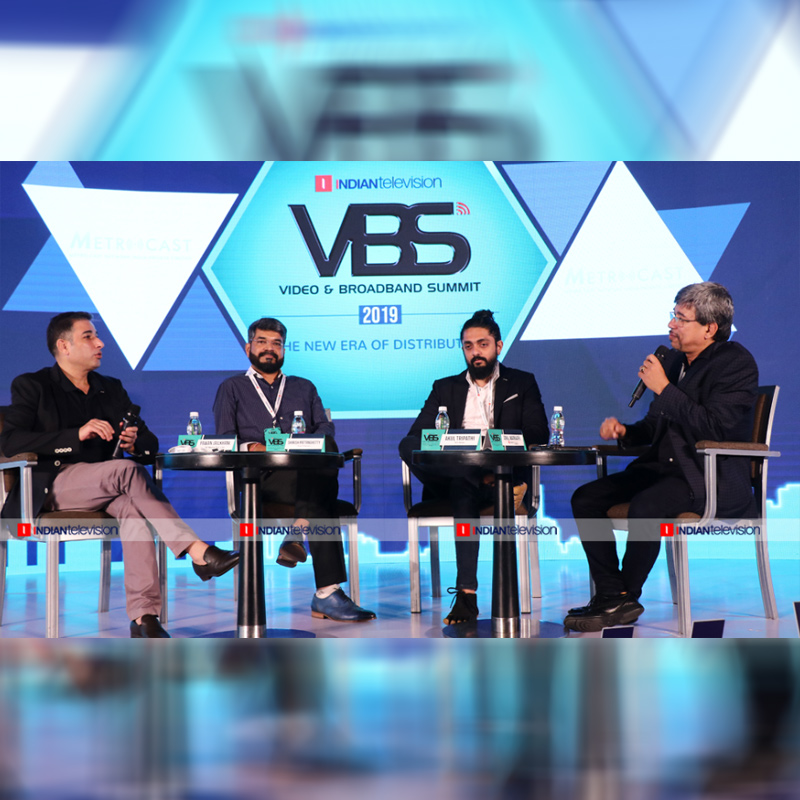
    One of the most interesting sessions of VBS 2019 organised by Indiantelevision.com on 11 December 2019 was ‘FTA: The Roadmap Ahead’. The panel discussed NTO impact, key issues faced by the FTA channels, content focus on FTA channels, how FTA channels are dealing with distribution, carriage issues and the roadmap for next 2 years.

    The panel was moderated by Indiantelevision.com founder, CEO and editor-in-chief Anil Wanvari with 9XM Media chief revenue officer Pawan Jailkhani, Enterr10 Media Fakt Marathi MD Shirish Pattanshetty and IN10 Media COO Akul Tripathi.

    FTA channels largely got their reach because of the distribution but now like any other pay channel they want to focus on content. “There is a possibility that we were running the traditional old content but now we started producing fresh content as well,” said Pattanshetty.

    Jailkhani believes distribution has done a fantastic job whether it is pre NTO or post NTO. Channels have got unimaginable reach and penetration. Earlier FTA channels used to get reach largely because of distribution and not because of content. “But now, FTA platforms are focusing on content not because of TV or competition but largely because OTT is a threat. From a content perspective, it is a threat because time spent is shifting to videos, to those platforms basically. So that’s how TV channels or FTA channels have woken up and said we need to focus on content,” said Jailkhani.

    Tripathi opined, “We never need to produce new content, there is always content available which people haven’t seen even in different eras.  The content also needs to be relevant. Right now, they would be watching it because it is a new thing and they are watching it for the first time. Going forward with the availability of the content and with the way of accessing the content, they are going to find the content that is more relevant.”

    Even FTA music channel 9XM curates fresh music content every Thursday or Friday. There are close to 7-10 movies every week that are released. 9XM runs fresh songs and curates them too. “Curation plays a part but on GECs, the time spent plays a major role. Fresh content with the current theme is very important,” said JailKhani.

    Post NTO, 9XM has gained the number 1 position in terms of reach. It’s also ahead of Star Plus in terms of reach. But what it is not able to convert is the actual viewership. Because it does not have time spent like GECs  as it runs two and a half minutes of song and not half an hour of fiction show.

    Jailkhani said that India is an underdeveloped, undersold advertising market. “We don’t get the ROIs which we should have got as per reach these guys get about channels – 100 million, 150 million reach week on week unduplicated. And it's huge. But we are not able to monetise it as per our expectation. But with NTO some price correction of about 15 to 20 per cent happened on 9XM.”

    The panelists also informed that there is a perception that FTA channels are free channels or will not have viewership in urban cities like Mumbai. But data of channels like Dangal, 9XM or Show Box show they did well on pay platforms and also lead in pay homes.

    Like any other paid channel, FTA channels invest in buying content and even pay premium to buy exclusive content to grab the maximum eyeballs. The channels don't compete with its competitors but overall TV viewership to get the maximum eyeballs.

    Pattanshetty also informed that regional FTA channels do face issues when they get carried. “We recently launched Bangla so it becomes very mandatory that we are available in the Bangla market. And it’s not easy to get carried. The comparison is who is the last guy who launched and what charge he has paid. He has to pay the premium charge and you might not be able to get the required placement that you are looking at,” he said.

    The panelists also revealed their company’s upcoming two-year plans. 9XM plans to bring digital channels. Enterr 10 plans more regional channels and fresh content for the views and IN10 Media intends to launch a new channel.

  • Average time spent on HD channels grew post NTO: BARC India

    Average time spent on HD channels grew post NTO: BARC India

    MUMBAI: It’s taken a while but slowly and steadily the benefits of TRAI’s new tariff order (NTO) is starting to show. Broadcast Audience Research Council (BARC) India data shows that high definition (HD) channels have seen a positive impact and the average time spent (ATS) in the post NTO era.

    In his presentation at the Video and Broadband Summit 2019 organised by Indiantelvision.com on 11 December, BARC chief operating officer Romil Ramgharhia informed:

    –  Exclusive viewers for South Indian HD channels grew from 42 per cent in week 2 to 78 per cent in weeks 25 to 44

    –  Exclusive viewers for Bengali and Marathi HD channels saw an increase from 49 per cent in week 2 to 76 per cent in week 25 to 89 per cent in week 44

    –  Exclusive viewers for Hindi movies HD channels saw an increase from 52 per cent in week 2 to 89 per cent in week 25 to 92 per cent in week 44

    –  Exclusive viewers for Hindi GEC HD channels saw an increase from 61 per cent in week 2 to 88 per cent in week 25 to 89 per cent in week 44.

    Average time spent (ATS)  during the NTO dipped down to 3 hours and 39 minutes but post NTO it has risen to 3 hours and 44 minutes.

    An Indian consumer in the pre NTO era, on average, consumed around 3 hours and 40 minutes of TV, in which he used to watch 10 to 15 channels per day and 25 to 30 channels per week. However, in the post NTO era, an Indian consumer watches around 12 unique channels in a day and around 30 unique channels per week. 

    Total TV viewership over the past four years has grown by 45 per cent from 2016 to 2019. 

    Hindi GEC and Hindi movies are the two largest shareholders in terms of viewership consumption. The two had a 76.5 per cent share in 2018 but in 2019 the share has fallen to 75 per cent. “The reason for the dip is because, in the pre-NTO era, the consumer viewed around four flagship channels on Hindi GEC and the share was 23 per cent, but in the post-NTO era, the consumers made a choice of watching two out of four channels which brought the share down to 13 per cent. Similarly, for Hindi movie channels, consumers have chosen around three out of five channels from pre to post-NTO era and the share has dipped from 35 per cent to 23 per cent,” Ramgharia said.

    Both news and sports have increased their share due to big events that took place in 2019. News genre's growth was driven by Pulwama & Balakot attacks, General Elections and Article 370 while sports' growth was driven by ICC World Cup 2019.

    Ramgharia also informed that among regional channels, Marathi and Tamil were popular.

    Post NTO, infotainment is the only niche genre that saw viewership growth. The viewership increased on Discovery when Indian prime minister Narendra Modi appeared on Man vs. Wild. The channel was operating at 6.9 million impressions with 18.4 million unique viewers and 400 million viewing minutes. Even food & lifestyle during the NTO era had a negative impact, but in the post NTO era, its viewership raised up and stabilised. 

    English entertainment channels (EEC) and English movies channels (EMC) saw a negative impact during the NTO era, but in the post NTO era the viewership on EEC and EMC have increased and stabilised. Viewership on kids’ channels increased when the vacation started in the post NTO era and now is in a stabilised position. Channels for music and youth also saw an immediate increase in viewership, unlike others genres in the post NTO era because these channels are free to air and over a period of time the viewership on music and youth channels is stabilising, Ramgarhia added.

    Viewership has grown for IPL by 53 per cent from 2016 to 2019. In 2016, on Sony, it had 1.03 billion impressions, which grew up to 1.25 billion impressions in 2017 on the same channel. In 2018, when NTO was not implemented, IPL had 1.43 billion impressions on Star Sports channel which grew up to 1.58 billion impressions, on the same channel, even during and post NTO era in 2019. Kaun Banega Crorepati’s (KBC) average impressions per episode in 2018 were 5.75 million, which grew up to 6.26 million impressions per episode on an average basis. 

    Ramgarhia also mentioned that there are around 100 mn households without TVs at their homes. So, there is a long way to go for TV and it will work out in a positive manner.

  • Convergence, consolidation & collaboration to fuel growth of cable, broadcast & OTT sectors

    Convergence, consolidation & collaboration to fuel growth of cable, broadcast & OTT sectors

    MUMBAI: In 2019, the Indian cable, broadcast and OTT industry witnessed many fundamental changes from digital dynamics to behavioural change of broadcasters moving from B2B to B2C model to industry stakeholders adjusting to the new tariff order (NTO). Indiantelevision.com’s VBS 2019 provided a platform to the industry experts to discuss and address the key issues faced them. Industry doyens revealed that convergence, consolidation and collaboration are the three 'C's to fuel the growth of the industry.

    VBS 2019’s panel discussions on ‘Transforming the sector to fuel growth’ included Elara Capital VP-research analyst Karan Taurani, Shemaroo Entertainment chief operating officer Kranti Gada, BBC Global News South Asia distribution head Sunil Joshi, PwC India partner and leader- media, entertainment Raman Kalra along with moderator SBICAP Securities equity research head Rajiv Sharma.

    Sharma set the tone of the discussion by briefing the audience on the major issues faced by the industry's stakeholders like cable, DTH, broadcasters, OTT, consumers and regulators in 2019.

    Kalra said, “We have been talking about convergence for a very long time and consolidation will keep on happening if we are willing to provide relevancy to the consumer. In the entertainment media space it is important to find a model which is relevant at scale. But how do you make relevant at scale? The relevancy for scale will trigger the consolidation because it leverages number on the financial statements and on the balance sheets of the company. It brings about so many synergies to the business models to run profitable, long term and sustainable business.”

    Taurani shared his view on consolidation in the cable space. He said, “Firstly it is important to highlight that business dynamics are changing completely. Broadcasters have been used to the B2B model since inception but now we are moving to B2C kind of a model. Basically everyone is well aware that if we really want to move to next level on digital, scalability is a very big factor and OTT platforms just offering about 10, 15, 20 movies will not help. So, to achieve that scale we need to invest in content. Apart from driving the partnership with other DTH cos or MSOs, achieving the scale on the digital part is needed. So I think it would take some more for them to understand the market and move to the next level.”

    Gada believes it is a great time for the media industry. With the emergence of OTT, the industry has added one and a half hours of screen time on digital front along with the television screen. Therefore the engagement of the end consumer with the content or with media or films has increased multifold.

    Gada says, “With deep-pocketed players cost goes haywire because short-term profitability is not their outlook, maybe their content is not their mainstay investment. It is sometimes just for consumer stickiness."

    Joshi said that convergence is the mantra of the day. “We have broadcasters, DTH, cable, OTT, consumers and a regulator who are the stakeholders of the value chain. If we look at post NTO and market dynamics, OTT is being discussed so widely because of its crispness and on-point approach to the consumers. Most of the broadcasters have direct consumer reach on their OTT to take care of and keep the stickiness on the linear also both compliments.”

    “Going forward, television needs to learn from OTT on what is been offered. So that on a quality level, both competes and at the operational level both collaborate. We have seen the collaboration of distribution platform and OTT because of their synergy and potential to exploit the potential consumers. Though they are competing at some level they are collaborating as well,” added Joshi.

    The panellists also elaborated on the digital monetisation model. They believe that there are three ways to monetise on digital platforms. The first is the business model, second is consumer centricity and third is the experience. Consumer centricity focuses on investing in knowing consumers. The second point of experience focuses on delivering the right experience. With respect to the business model, one has to experiment with multiple business models.

    The panellists also dwelled on the importance of the subscription model as AVOD does not lead to profitability because of the delivery cost, customer acquisition cost etc.  

    Stating an example of TataSky's binge initiative, Gada urged MSOs to become digital distributors and come up with aggregated and discounted offering for the consumer and make it convenient for those who are struggling with five to eight OTT apps. Gada asked MSOs to apply similar principles they used to offer TV channels to come up with bouquets of digital channels.

    The panel also highlighted the surge in term of telcos spending towards OTT. The new emerging game-changers today are e-commerce, smart TV and VMC.

    Sixty per cent of the money on digital advertising spent between Facebook and Google network. But now that is changing and the share is moving more towards OTT. The panel discussion ended on a positive note expecting that share of digital advertising will be 20-30 per cent whereas video advertising will be 40 per cent plus.

  • VBS 2019: Industry stalwarts discuss NTO second phase issues

    VBS 2019: Industry stalwarts discuss NTO second phase issues

    MUMBAI: The sixteenth edition of the Video and Broadband Summit (VBS) organised by Indiantelevision.com has brought together industry doyens under one roof to discuss and understand the impact of the new tariff order (NTO) on the television broadcasting and distribution sector. VBS 2019 marked the presence of leaders from DTH, cable and broadband, broadcast, regulatory bodies and technology segments to discuss the state of the industry, key issues and finding solutions.

    Indiantelevision.com CEO, founder and editor-in-chief set the tone for the day with his welcome speech. "It is the best time for TV industry today. We are in the midst of uncertain times but uncertain times bring a lot of opportunities to build the business and explore the new way of building the cable-TV industry." He also emphasised on initiating a discussion on best practices, case studies on better execution and way forward towards a healthy television ecosystem.  

    The one-day conference began with a special address by TRAI advisor Arvind Kumar. He briefed the audience on the reason behind releasing the consultation paper to review NTO within few months of the regulatory framework. He informed that the consultation paper is only to address some infirmities in the NTO and will not bring any fundamental changes to the regulatory framework.

    “Broadcasters should rest assured that the new consultation paper will not seek to decide their channel prices. The only objective of the new consultation paper is to open a debate on how the NTO is impacting the industry and to address some of the infirmities in the NTO. The main objective of the industry was transparency and to create a level-playing field for everyone. NTO has empowered the consumer by giving him choice,” he said.

    In a fireside chat with Anil Wanvari, JioFiber president Anuj Jain elaborated on the company's plan and partnership.  He says, "Cable is a global technology and our intent is not to bring disruption in the market but add value to the industry. We have to see that television and OTT complement each other and the value that we bring is broadband. With broadband, we bring OTT content and voice services. There is enough space for everyone, there is nothing called overlap. "

    The session was followed by BARC India’s presentation on ‘TV viewership trends-post NTO era’ by chief operating officer Romil Ramgarhia. 

    The first panel discussion of VBS 2019 focused on NTO-The future roadmap. The panel was moderated by Elara Capital VP- research analyst (media) Karan Taurani with panellists IndiaCast Media Distribution president Amit Arora, Star India Distribution distribution and international business president and head Gurjeev Singh Kapoor, Metro Cast Network India promoter Nagesh Narayandas Chhabria, The Remediation Company founder & partner Shyamala Venkatachalam ; IndusInd Media & Communications chief executive officer Vynsley Fernandes and GTPL Hathway vice president Yatin Gupta.

    The objective of the NTO was to bring transparency, freedom of choice and level playing field in the industry. The panellists shared their perspective on the impact of NTO on the media and entertainment ecosystem, pricing, bouquet and ala carte price, and recently released consultation paper to review NTO.  The panellists agreed that the dust of new tariff order has settled down but the NTO 2.0 period might impact pricing again. With the new consultation paper, Gupta expects that there would be price capping on bouquets and ala carte. 

    The next panel discussion highlighted the advertisers’ take on the dynamic pay-TV landscape and how AdEX is likely to fare going forward with more changes anticipated to NTO. The panel ‘The Advertisers’ View’ was moderated by Anil Wanvari. ITC Ltd head media and PR Jaikishin Chhaproo, Havas Media Group West & South managing partner Kunal Jamuar, Godrej Consumer Products VP and head media services Subha Sreenivasan Iyer and Madison Media vice president Vandana Ramkrishna were the panellists.

    After that, Broadpeak business development manager HervĂ© Creff gave a presentation on ‘Keeping control of HDMI1 with Android TV operator Teir – the ‘super – aggregator’ approach’.

    The first half of VBS 2019 successfully ended with a panel discussion on ‘Transforming the sector to fuel growth’. Elara Capital VP research analyst (media) Karan Taurani, Shemaroo Entertainment chief operating officer Kranti Gada, BBC Global News South Asia distribution head Sunil Joshi and PwC India media, entertainment and sports advisory –partner and leader Raman Kalra were the panellists. The session was moderated by SBICAP Securities equity research head Rajiv Sharma.

    For more updates from post-lunch sessions stay tuned.