Tag: Vat

  • MoF assures that GST will be a game changer for M&E and subsume service tax, entertainment tax & VAT

    MoF assures that GST will be a game changer for M&E and subsume service tax, entertainment tax & VAT

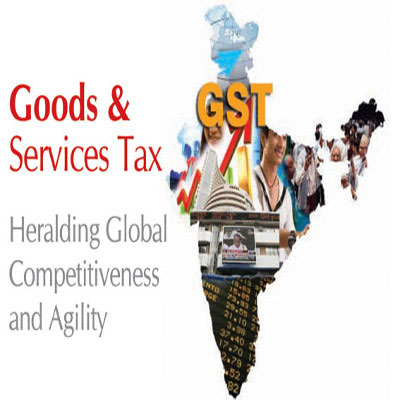
    NEW DELHI: In a major relief to the media and entertainment industry, two senior officials of the Finance Ministry assured the captains of the sector that VAT, service tax and entertainment tax would be subsumed in the proposed Goods and Services Tax.


    Terming GST as a game changer, Revenue Special Secretary Rashmi Verma said the rate was being worked out but she reiterated that it would be one and uniform for the entire country.


    Member Service Tax and GST V S Krishnan added that Infosys had been given the task of creating a special portal for GST collections and the progress was good.


    He said that three processes under way were in the public domain and the stakeholders and citizens could react. As all these were drafts, changes could still be made.


    These were the rate of taxation, the law relating to GST, and the technology. The fourth relating to returns would be put in the public domain today itself. Technology  was being taken care of by Infosys.


    He added that after GST came and the government got time to review its progress, it could be improved over time.


    They were responding to remarks made by some industry leaders on the second and final day of the two-day Big Picture summit organized by the Confederation of Indian Industry.


    Sector representatives included Farokh Balsara of Ernst and Young, Film Federation of India Vice President Ravi Kottarakara, Hinduja Ventures whole time Director Ashok Mansukhani and Zee Network’s legal expert Avnindra Mohan. A P Parigi, advisor to the Chairman of Network 18 moderated the session.


    Verma added that the problem of share of centre and states would be sorted out by the Ministry and need not worry the M and E industry which will just have to pay a single tax.


    There will be slabs, but that would be restricted to just two – higher and lower, she added.


    She said bringing the Centre and 29 states on one table had been difficult but most problems had been ironed out.


    The work of the portion of the state was being worked out but the citizens need have no doubt that he will have to pay just one tax. For the citizen, the apportioning was only of academic interest.


    She said there may be some tax levied by some local bodies in some states, but this would be between half per cent to two per cent. While ways were also being found to sort out this problem, it was clear that this would only relate to the manufacturing industry.


    She also clarified that the GST would apply both to services and goods.


    The M and E industry would benefit as the multiplicity of taxation would vanish.


    The entire information will be out on a GST portal by the third week of November, she said. The transitional problems were being worked out, she added.


    Answering a point made by one of the earlier speakers who asked whether the M &  E sector was being treated at par with sinful industries, she said this was not so. The only sinful industries for the Government were cigarettes and alcohol.


    Parigi suggested creation of a separate secretariat with representatives of industry and bodies like the CII. 

  • Bollywood pins hope on the new Maharashtra government

    Bollywood pins hope on the new Maharashtra government

    MUMBAI: As the new Maharashtra Chief Minister took oath to serve the state, the Film and Television Producers Guild of India has come up with a list of issues and challenges the industry currently faces. 


    The entertainment capital of India – Mumbai has been the centre of the Indian entertainment industry since its inception and this industry provides employment directly or indirectly to almost 5 million people in the country. However, serious implications caused by the various archaic laws and heavy burden of taxation on the Hindi film sector has stunted the growth of this industry and made several stalwarts displeased with the system, said the statement issued by the organisation.


    According to the Film and Television Guild of India, the high taxes imposed on the Hindi film industry in the state, like the Entertainment Tax on films, applicability of VAT on television production business and stamp duty to keep local bodies taxes out of the proposed GST, have cast a dark spell for the ‘Film Guild’.


    The absence of single window mechanism has resulted in systematic harassment and malpractices over the years, and has increased costs for the producers thereby significantly discouraging producers from shooting in the state. In addition to this, the lack of adequate cinema halls in the state (much lower than southern states) has hampered the growth of the film industry and directly resulted in increase in piracy and loss of revenues to the government, as well as the industry, states the guild.


    These issues are not only detrimental to the growth of the industry but will result in an inevitable breakdown of the entire film industry, it added.


    Speaking about the various concerns weighing down the sector, Film and Television Producers Guild of India president Mukesh Bhatt said, “Maharashtra has always been the home for the Hindi film industry. Sadly, we have been made to feel like an orphan in our own home state. Leave aside any support; we are penalized for making films in a language which does not belong to any other state in the country including Maharashtra. The impartial treatment given to Hindi film industry in our own state in the past is obvious when it comes to the high tax structure, archaic laws and multiple complications restricting growth of the film industry in the state.”


    However, showcasing hope in the new chapter of Maharashtra politics, he added, “We are confident that the new BJP government in Maharashtra will address these pending issues and help the film industry achieve newer heights.”


    Mumbai has been the dream city for a lot of Bollywood actors, who have carved their space in the history of cinema and in the hearts of their fans over the years. It’s time that the entertainment industry is rewarded for all these years of service to the people and required changes be made in the system, as they hinge their hope on the newly elected BJP government.

  • Hathway Q3 operating income up 52%

    Hathway Q3 operating income up 52%

    BENGALURU: Indian Multi Systems Operator (MSO) Hathway Cable & Datacom Limited (Hathway) reported a jump of 52.1 per cent in operating income to Rs 234.78 crore  in Q3-2014 from Rs 154.40 crore  in Q3-2013 and up 6.7 per cent from Rs 220.28 crore  in Q2-2013.


    The company’s operating income for 9M-2014 was 62.5 per cent higher at Rs 687.71 crore  compared with Rs 423.14 crore  in 9M-2013. For FY 2013, the company reported operating income of Rs 654.32 crore.


    Hathway’s y-o-y EBIDTA for Q3-2014 at Rs 39.13 crore  was up 6.3 per cent as compared to the Rs 36.82 crore  in Q3-2013, but (2.5) per cent lower than the Rs 40.15 crore  in Q2-2014. YTD, Hathway’s 9M-Q2014 EBIDTA was 79.9 per cent more at Rs 156.4 crore  as compared to the Rs 86.93 crore  in 9M-2013. For FY 2013, Hathway’s EBIDTA was Rs 178 crore.


    Let us look at the other figures reported by Hathway for Q3-2014


    The company’s income breakup for the quarter is: Cable Income:-Rs  191.1 crore ; Placement Income-Rs  73.6 crore :  Activation Income- Rs 2.5 crore : Broadband Income-Rs 36.6 crore. 


    Hathway reported a net loss of Rs (36.86) crore  which was almost five times (4.97 times) the loss of Rs 7.42 crore  in Q3-2013, but 17.1 per cent less than the loss of Rs 44.45 crore  in the immediate trailing quarter. Hathway’s 9M-2014 net loss at Rs 75.99 crore  was triple the loss of Rs 25.25 crore  in 9M-2014. For FY 2013, Hathway reported a profit of Rs 3.20 crore. 


    Total Expense including depreciation and amortization for Q3-2014 at Rs 254.03 cores was 72.1 per cent more than the Rs 147.57 crore  in the corresponding quarter of last year and 8.9 per cent more than the Rs 233.19 crore  in Q2-2014. During 9M-2014, Hathway’s Total Expense was higher by 62.6 per cent at Rs 685.32 crore  as compared to the Rs 421.62 crore  in 9M-2013. For FY 2013, Hathway reported Total expense at Rs 608.5 crore. 


    Hathway paid almost double (1.95 times) towards Pay channel cost in Q3-2014 at Rs 82.73 crore  as compared to the Rs 42.96 crore  in Q3-2013 and 22.6 per cent more than the Rs 68.30 crore  in Q2-2014. In 9M-2014, Hathway paid Rs 210.47 crore  towards this head, which was 74 per cent more than the Rs 120.91 crore  in 9M-2013. For FY 2013, the company paid Rs 170.41 crore  towards this cost. 


    The company’s finance cost for Q3-2014 at Rs 22.41 crore  was almost double (up 1.96 times) the Rs 11.43 crore  I Q3-2013, but (5.5) per cent lower than the Rs 23.71 crore  in Q2-2014. In 9M-2014, Hathway’s finance cost more than double (up 2.11 times) to Rs.67.81 crore  as compared to the Rs.32.07 crore  in 9M-2013. For FY 2013, Hathway paid Rs.46.14 crore  towards finance cost. 


    By the end of December 2013, Hathway claims that it along with its JV partners had deployed 77 lakh boxes. During the quarter the company says that it has laid emphasis on collecting CRF’s from Phase II cities and on focusing for monetization of DAS areas. With this focus on collections it says that it has witnessed continued traction in the pace of subscription collections into January 2014.It says further that gross additions to its Broadband subscriber base was around 27,000 for the quarter.


    Click here for release


    Click here for financials

  • Film industry wants entertainment tax to be subsumed in proposed GST

    Film industry wants entertainment tax to be subsumed in proposed GST

    NEW DELHI: The Film Federation of India has appealed to the Government that entertainment tax imposed by states and local bodies should be subsumed in the proposed Goods and Services Tax (GST).

    On its budget proposals to Finance Minister P Chidambaram, the FFI has said that the service tax on performing artistes should also be done away with.

    In the memorandum submitted to the Ministry, the Federation says the condition on filmmakers to fill a form under Section 52A of the Income Tax Act for all payments above Rs 50,000 should be confined to only cash payments.

    The Federation says the sale, distribution or exhibition of cinematographic films, not regarded as royalty under 9(1)(vi) of the Income Tax Act 1961, is nullified as it is not available under the Direct Tax Code 2010. As it is not regarded as royalty, it does not attract the 10 per cent with-holding tax under Section 194J of the Act. An amendment should, therefore, be made to exclude this from the Code.

    The exemption to digital conversion – and supply to cinemas – may be put in the Mega Exemption List.

    The exemption in customs duty provided for certain goods under the ATA Carnet (a uniform law applicable in 71 countries including India) does not include film equipment. As a result, it discourages foreign filmmakers from coming into India to shoot here. This should be amended to include film equipment so that more filmmakers come into India to shoot. This would also encourage the tourism and related industries.

    Many Indian studios are hired by foreign filmmakers for post-production work. But under the Place of Provision of Service Rules 2012, only material brought in for repairs, reconditioning or re-engineering are covered. The Federation says that post-production is also in many ways repairing and reconditioning, the Rules should be amended to cover post-production work undertaken by Indian studios for foreign filmmakers.

    Cinema theatres and digital distribution should not be subjected to service tax for Business Support Services, the Federation has said.

    Similarly, the service tax on renting of immoveable commercial properties should not include cinema houses or multiplexes.

    The services rendered by a digital cinema distributor were earlier exempted from service tax by the CBEC in March 2007. However, the introduction of the negative list-based service tax did not cover this. The industry, therefore, wants that the exemption of service tax in this regard should continue.

    Meanwhile, Dun & Bradstreet Information Services India Pvt. Ltd has in its pre-budget demands sought a unified tax structure rationalising multiple levies can ease compliance and reduce the existing tax burden from the industry. The media & entertainment industry is presently subject to a host of taxes like service tax, VAT, entertainment tax etc.

    It has also sought more clarity on the potential levy of service tax as well as VAT on activation charges and recharge coupon vouchers is expected.

    Moreover, to enhance digitisation of electronic media, the industry expects abolishing/reducing the import duty on set top boxes. This will also result in reduction of capital expenditure for cable / DTH companies.

    At present, the income tax act considers the subscription revenues earned by the foreign telecasting company as royalty or business income. The income from grant of distribution rights is in the nature of business income and not copyright. Hence, such payments should not be considered as royalty.

  • Rationalise excise duty, Vat on TV, STBs: Planning Commission


    NEW DELHI: Acknowledging that the major hurdle in digitization presently is the absence of digital receiver sets and the fact that about 45 per cent TV sets are Black and White, a sub-group of the Planning Commission has recommended rationalization of the total taxation level to 12 per cent.

    The sub-group on ‘Going Digital’ set up by the Planning Commission and headed by Rajeeva Ratna Shah, member secretary in the Planning Commission and a former CEO of Prasar Bharati, said this will mean the excise duty on digital TV set, set top boxes (STBs) and its inputs be rationalized to 8 per cent and there should be a state VAT of 4 per cent. This will give impetus to the indigenous STB industry, which would generate economic activity and employment in the country.


    The sub-group noted that STBs and the digital Conditional Access System (Cas) act as a catalyst for implementation of digitization. The Consumer Electronics and TV Manufacturing Association (Cetma) has indicated that the cost increase in case of a TV set, capable of receiving digital terrestrial signal in addition to analogue signal would be about Rs 1000 from the existing prices. For the existing analogue TV sets, which are expected to be around 120 million by year 2010, the consumers would need to have Digital Terrestrial Transmission STB to receive the signals. The cost of STB is presently about Rs 2250 and is decreasing every year by 7 to 8 per cent. 

    The industry would require a lead time of six months to meet the demand for the digital TV sets and radio receivers. Similarly, the industry would be in a position to provide STBs in about 16 to 20 weeks from the time the government decides to change over to digital broadcasting.


    “But for successful rollout, the government needs to firm up the transition path and announce timelines so that all the stake holders could put their acts together and make the transition as smooth and successful as possible. The success of DTT depends upon the availability of requisite consumer end equipment and introduction of STB coupled with Cas.”

    The sub-group added that India was a price sensitive market and one solution or product fits all cases is not commensurate with consumer thinking. Hence there may be need to introduce various models of STBs (having digital to analogue converter with addressability of channels with Cas to high-end models) with increasing value added features to meet the requirements of the consumers. The requisite standards need to be put in place for this. 

    Out of 61 million households cable connections all over India , 35 per cent are in rural areas. This service is easily available and affordable in the rural areas. This industry is geared up to meet the challenge of digital broadcasting, the sub-group noted. 

    At present, the signals from uplink station to satellite and from satellite to cable TV head-end are already digital. The signal from cable TV head-end to subscriber is both in digital and analog format. Most of the multi-service operators (MSOs) in the metros and big cities have already gone digital. Thus, only 7000 head-ends required to go digital.
    Furthermore, all franchisees are not affected by digitization as they only pass the signal (analog/digital) received from the head-end to the subscribers and do not process the signal. Digitization of subscribers end depends on introduction of digital TV in the market at affordable prices and immediate digitalization of cable TV head-end. 

    To further galvanize the rollout, all the content producers – Prasar Bharati as well as private operators – should provide agreed and identified channels in the digital/HDTV format to MSO/cable operators under the “Must Carry” clause. 

    Going digital encompasses digital broadcasting, telecom as well as other technologies for access and backbone networks which deploy digital systems. While some of the frequency bands used for broadcasting have exclusive allocations for ‘broadcasting’, most of the bands are shared with other services. 

    For example, the 800/ 900 MHz bands used for cellular services – GSM & CDMA, etc. are available for broadcasting also. The satellite based TV broadcasting is mostly in the frequency bands, which are shared with microwave systems. Hence, while evolving/ modifying the NFAP (National Frequency Allocation Plan), the relative national priorities of various spectrum based services have to be taken into account.

    Normally digital transmissions require larger bandwidth. However, with modern compression techniques, which are improving continuously, it is now possible to accommodate multiple channels in the RF bandwidth of a single existing (analogue) channel. Hence, on complete transition to digital systems in broadcasting, the spectrum requirements should reduce or alternatively, it would be possible to transmit larger number of channels in the bandwidth occupied by existing channels. 

    During the transition phase, existing analogue and new digital systems would need to be broadcast together, requiring larger spectrum bandwidth. The requirements can be assessed once the number of channels for simultaneous transmission is worked out. With digital broadcasting, it is possible to include data, Internet, etc. within the broadcasting channels. 

    During the migration from Analogue to Digital Radio, new frequency assignments have to be identified to facilitate smooth migration and for some time both the existing analogue transmissions as well as new digital transmissions would continue. Hence, there will be spectrum constraint during this transition phase. Also, the spectrum for digital migration may need to be identified for both Prasar Bharati as well as Private FM Broadcasters. 

    The sub-group, comprising 17 members, was set up by the Committee on Information, Communication and Entertainment (ICE) that has been examining the larger issue of convergence and advent of modern technology. Members include the secretaries in Information and Broadcasting and Department of Telecommunications, the Prasar Bharati CEO, the presidents of Cetma, Mait, Nasscom, and ISP Association of India, co-chairman of the Ficci entertainment committee Kunal Dasgupta, chairman of the CII entertainment committee, chairman of the Film & Television Producers Guild of India, president of the Cable TV Operators Association, Rajiv Mehrotra who is the managing trustee of the Public Service Broadcasting Trust, Virat Bhatia from AT&T Communications Services, Zee Telefilms President Abhijit Saxena, Sameer Rao who is vice-president in charge of strategy, planning & regulatory in Star India, and a representative of the Prime Minister’s Office.

  • ‘Rolling out of Cas has been the most significant development’

    ‘Rolling out of Cas has been the most significant development’

    Lots of consumer centric stipulations have been made in the said Regulations which, among other things, include establishment of call centres by DTH operators, redressal of consumer complaints within stipulated timeframes and the concept of Nodal Officers to be appointed by DTH operators.

    Trai has also issued Interconnect Regulations for DTH services mandating the Broadcasters to come out with Reference Interconnect Offer (RIO) for DTH operators and provision of channels on a la-carte basis by broadcasters to DTH operators under the said RIO.

    Trai has also come out with a Tariff Order for non-Cas areas whereby not only the price freeze, which was already in operation, has been continued, but now even the ceiling in respect of cable rates have also been provided at the retail level.

    In addition, Trai has also stipulated the provision of a la carte channels to MSO/Broadcasters in non-Cas areas. The order has created a lot of hulchul in the industry.

    Cross media ownership issue and restriction in holding shares within electronic media and distribution sector may act as an impediment to the overall growth of the sector
    _____****_____

    No previous order/Regulation of Trai had generated as much heat and controversy as the present Tariff order for non-Cas areas. While the MSO and cable operators have welcomed it, the broadcasters on the other hand have severely criticised it, as in their view their commercial interest have not been adequately taken care of by Trai. The broadcasters are arguing that the present tariff order would benefit only one segment – the MSOs as no a la-carte choice can be provided to consumers in non-addressable analog environment because of technological impediments. Their grievance is that the Regulator has not addressed the problem of “under-declaration”. The matter is currently sub judice in the TDSAT.

    The Trai is in the process of issuing its recommendation to the government on IPTV and Mobile TV which would give further impetus to the proposed digitisation.

    The Cable and Satellite Television sector is the only sector where both Service Tax and Entertainment Tax are levied at present which amounts to double taxation. It may be mentioned that levy of both service tax and entertainment tax ultimately make the services costlier for the consumers. It is pertinent to point out that when a movie/ film is shown in a cinema, only entertainment tax is levied and no service tax is charged for screening the movie in a cinema theatre.

    Both DTH services and cable services are at present reeling under the heavy burden of multiple taxation and levies (such as license fee, service tax, entertainment tax, VAT on customer premises equipment which cumulatively add up to as high as 56 per cent) which are acting as an impediment to the growth and development of these services. Such a high multiple taxation and other levies vis-?-vis other sectors has resulted in these services becoming costlier and unaffordable for the masses.

    Accordingly, to ensure proper growth and development of this sector, the multiple levies/ taxation structure needs to be rationalised.

    Similarly, the customs duty structure on STBs and other equipments which are quite crucial for digitization also needs rationalisation in line with IT and Telecom sectors.

    It is imperative that to promote the growth of digital platforms, duty structure/concession applicable to IT and Telecom sector be extended to the broadcasting industry to provide a level playing field
    _____****_____

    All in all, year 2007 has been excellent for the Broadcast, DTH and Cable sector, and would be remembered as the year in which the solid foundations have been laid for digitisation and to create an environment enabling the broadcasting and distribution sector to takeoff and move towards the path of growth and development at an accelerated pace.

    In the present era of convergence the distinction between Broadcasting, Telecommunication and Information Technology is disappearing very fast. It is therefore imperative that in order to promote the growth of digital platforms, duty structure/concession applicable to IT and Telecom sector be extended to the broadcasting industry and it is treated as part of telecom infrastructure to provide a level playing field.

    The need of the hour is to create the same kind of conducive environment by the government by creating level playing field and granting fiscal incentives and concessions to the sector as has been done for the telecom sector and this sector would also register phenomenal growth in coming years.

  • Deposit and rental schemes on STBs to attract VAT

    Deposit and rental schemes on STBs to attract VAT

    NEW DELHI: The controversy over Cas (conditional access system) does not seem to end. If the broadcasters have taken shelter in the various legal courts, consumers expressed heat over the issue of taxes at a forum meeting today with the Telecom Regulatory Authority of India (Trai).

    The broadcast and cable regulator clarified that value added tax (VAT) would have to be paid on the deposit and rental schemes for the set-top boxes (STBs) under Cas. Also, the entertainment tax would have to be paid per TV set.

    This caused a heated discussion at the Trai consumer meeting held today, according to sources. Trai officials also admitted that the issue had come up, adding that clarifications have been sought, without wanting to say anything further.

    In a CAS regime, multi-system operators (MSOs) will have to offer consumers digital STBs at a deposit of Rs 999 or Rs 250 on a monthly rental of either Rs 30 or Rs 45. VAT will have to be added to this.

    The entertainment tax would have to be paid per TV set and not per household, Trai also clarified.

    The meeting saw a lot of dust being kicked up by consumers and lasted for all of two-and-half hours, members who attended the meeting said.

    When asked of this, Trai Advisor (Broadcasting) Rakesh Kakkar told indiantelevision.com: “The issue had come up today.” He refused to comment further on the issue.