Tag: VAS

  • Kolkata MSO GTPL-KCBPL applies for broadband license

    Kolkata MSO GTPL-KCBPL applies for broadband license

    KOLKATA: Kolkata-based multi-system operator (MSO) GTPL-KCBPL, which boasts of having more than five lakh set top boxes (STBs) in West Bengal, has applied for a broadband license to the Ministry of Information and Broadcasting (MIB).

    Since the company is looking to launch broadband services in a big way, once the permission is granted, GTPL-KCBPL is also likely to create awareness through a multi-media campaign. “We shall inform prospective customers through various activities. We will also organize BTL activities and let people know through our distribution network,” said GTPL- KCBPL managing director Bijoy Kumar Agarwal.

    “We are shortly going to roll out the broadband service in Kolkata Metropolitan Area (KMA) to begin with, which will create more opportunities for our business partners and at the same time with state-of-the-art technologies, we will be bringing the best of services. In a digital addressable era, broadband and VAS (value added services) will become important differentiated offerings. We are upbeat about our penetration and growth in eastern region as our pack will be a value addition for the customers,” he said.

    Agarwal also hinted that broadband will be another major revenue source as it has direct control over the customers.

    An Ethernet cable carries the broadband signals between modem, router, computer, and other wired Internet-capable devices.

    Cable analyst Namit Dave said that broadband and VAS, which suppressed revenue streams so far, will get a major boost as the country advances towards the complete era of digitisation of cable TV. MSOs are also rolling out packages in vast scale.

    Another analyst added that broadband is a lucrative business now with less investment, which in turn promises higher revenue.

    In 2005, a group of 160 cable operators in a unique manner turned themselves into shareholders and made KCBPL a successful MSO in KMA. While in 2010, KCBPL entered into a joint venture with GTPL, which has enabled this new entity to gain strong foothold in the state of West Bengal.

    When asked about the company’s technology partners, Agarwal said that Cisco, Skyworth, Nagravision, Newland and Magnaquest among others are in touch with the company on a regular basis so that it can update and offer latent technology to its customers.

    It may be recalled that Indiantelevision.com recently reported that GTPL-KCBPL, which was offering around 22 High Definition (HD) channels until, has now increased the offering to 32 channels.

    “After the rollout of digitization in KMA in the first and second phase of the digitization drive, we believe that our partners and viewers stand to benefit from more opportunities, products and value with digitization,” Agarwal concluded.
  • India ready for 4K & hybrid technology: Broadcom Corp

    India ready for 4K & hybrid technology: Broadcom Corp

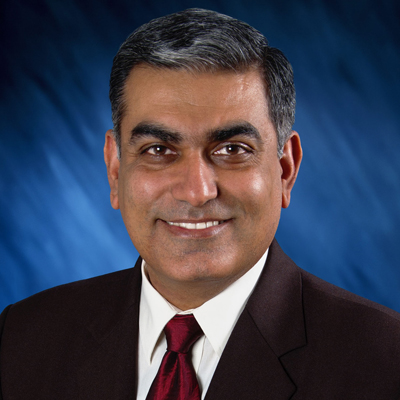
    KOLKATA: Broadcom Corp, one of the market leaders in providing chips for technologies such as enterprise networking, set-top boxes, and mobile connectivity functions, believes that the Indian market is ready for concepts like value added services (VAS), 4K, and hybrid technology.


    Broadcom interacted with more than 50 companies including satellite operators, cable operators, CAF players and OEM (original equipment manufacturers’) at the recently concluded 23rd Convergence India 2015 Expo, largest South Asian platform for Telecom, Broadcast and Digital Media. After participating in the fair, themed ‘Connecting India’, the company said it has got overwhelming response from the industry and trade visitors. 


    “Newer concepts like VAS, 4K, and hybrid technology are of interest across the broader audience,” said Broadcom India managing director Rajiv Kapur.


    “We spent time and discussed about our products and services with top 30 players of the industry apart from interacting with mid-sized companies,” informed Kapur.


    While India is a large market for Pay TV and broadband, till some years ago, the technology platform was almost missing for stakeholders to gather at a platform and address the issues, challenges and scope of working.


    “Broadcom spent quality time with big players. Even small players were interested in using and leveraging our services,” he said.


    Kapur said that the company is eyeing further growth from Indian R&D centre. “Apart from executing ideas gathered from this meet at our global R&D centre, we would execute some ideas at our research centre in India,” he concluded.

  • Delhi HC wants to know if DTH players can run FM channels and VAS

    Delhi HC wants to know if DTH players can run FM channels and VAS

    NEW DELHI: The Delhi High Court has sought a response of the Information and Broadcasting Ministry and six direct-to-home (DTH) operators on a public interest litigation seeking to restrain DTH service providers from carrying any channel or value added service (VAS) which are not registered with or permitted by the government.

    The court passed the order on the plea of Hyderabad-based NGO Media Watch-India (MWI) which alleged that DTH service providers carry self-promotion advertisements in violation of uplinking and downlinking guidelines.

    Listing the matter for 4 March next year, a bench of Chief Justice G Rohini and Justice P S Teji issued notice to the Ministry as well as six DTH providers – Bharti Telemedia, Tata Sky, Dish TV, Sun Direct TV, Reliance Big TV and Bharat Business channel.

    Counsel Gaurav Kumar Bansal said that value added services like ‘movie on demand’ or games are provided without specific licence from the Ministry. The NGO has said that even FM radio channels are being illegally provided and has sought orders restraining the DTH operators from providing these services.

    The petitioner contended that the Ministry instead of taking action against these entities has been playing the role of a spectator while “statutory guidelines are being flouted with impunity by the private DTH operators”.

    Meanwhile, the Telecom Regulatory Authority of India (TRAI) had recently issued a consultation on regulating platform services of service provider including MSOs cable operators and DTH operators and has also given the recommendation on 19 November which are under consideration of the Ministry.


  • South-based independent MSOs come together as South Indian Federation

    South-based independent MSOs come together as South Indian Federation

    MUMBAI: The independent multi system operators (MSOs) from the southern part of the country are working towards getting their act right in order to be able to successfully complete digitisation and also reap maximum benefits from it.

    In the latest, the independent MSOs from Bengaluru, Telangana, Andhra Pradesh, Tamil Nadu and Kerala met in the IT city to discuss issues relating to digitisation, deals with broadcasters and the carriage fees.  

    In the same meeting, the independent MSOs decided to form a South Indian Federation, which will be officially launched in Kerala in December.

    “The broadcasters deal differently with national MSOs and the regional independent MSOs. So, we have decided to come together as one team,” informs Sagar E Technologies executive director Sudhish Kumar.

    The federation will have 20 headends under it, currently catering to 30 lakh subscribers across Bengaluru, Telangana, AP, Tamil Nadu and Kerala.  “We have realised that coming together will not only help us get better deals from the broadcasters, but we can have representation even in the DAS task force,” he says.

    This group of independent MSOs is also looking at getting the value added services (VAS) on one platform, using one middleware. “A technical team has already been formed for this and they are working on getting the service in place,” says Kumar adding that having small number of VAS is not profitable. “If we come together, then we can attract bigger partners for VAS, which is an added revenue stream,” he informs.

    The independent MSOs in the south have realised that broadband is the biggest revenue spinner. “The ultimate goal of coming together is having a strong broadband infrastructure and consumer base,” concludes Kumar.


  • TRAI issues regulations relating to VAS for pre-paid consumers

    TRAI issues regulations relating to VAS for pre-paid consumers

    NEW DELHI: Realising that its earlier regulations relate only to subscription-based value added services, the Telecom Authority of India (TRAI) has directed all access service providers to ensure that the value added service (VAS) for products embedded in the SIM application Tool Kit (STK) of SIM card is provided to the consumer only after obtaining the explicit consent of the consumer in accordance with a procedure specified by the regulator.


    The directive has to be implemented by all access service providers including the Bharat Sanchar Nigam Ltd (BSNL) and Mahanagar Telephone Nigam Ltd (MTNL) within sixty days.


    The new directive has been issued under section 13, read with sub-clauses (i) and (v) of clause (b) of sub-section ( 1) of section 11 of the TRAI Act 1997 and clause 11 of the Telecom Tariff Order 1999 to ensure compliance of terms and conditions of license and to protect the interest of consumers.


    The process of providing value added service for products embedded in the SIM card:


    (a) For obtaining explicit consent through consumer originated SMS:


    Step 1: The consumer explores the VAS link in the SIM Application Tool Kit (STK) of the SIM card and clicks the link.


    Step 2: The service provider after receiving the message/information shall inform consumer through SMS  regarding the  value added service requested; its validity; the  charges thereof and the consumer shall be asked to confirm the request within sixty minutes by sending ‘yes’ to the specified number;


    Step 3: If no confirmation is received from the consumer, the request of the consumer shall not be processed;


    Step 4: If the consumer confirms his   request, the value added service platform of the service provider shall deliver the product on the mobile number of the consumer and the consent logs shall be stored in the system of the service provider in an un-editable format;


    Step 5: The consumer shall receive an SMS immediately after delivery of the product to the consumer, informing the consumer about charges deducted and the balance remaining;


    (b) For obtaining explicit consent through third party consent gateway:


    Step 1: The consumer explores the VAS link in the SIM Application Tool Kit (STK) of the SIM card and clicks the link.


    Step 2: The service provider after receiving the message/information shall inform the   consumer through SMS regarding  the value added service requested; its validity; the charges thereof, and the consumer shall be forwarded to the “Consent Gateway” set up by the service provider and managed by a third party;


    Step 3: The “Consent Gateway” shall seek the second consent of the consumer;


    Step 4: The consumer shall give his consent by pressing the relevant key, and the consent logs shall be stored in the system of the service provider in an un-editable format;


    Step 5: The “Consent Gateway” shall forward the consent of the consumer to the value added service platform of the service provider;


    Step 6: The value added service platform of the service provider shall deliver the product on the mobile number of the consumer;


    Step 7: The consumer shall receive an SMS immediately after delivery of the product to   the consumer, informing the consumer about the charges deducted and the balance remaining.


    TRAI said the genesis of some of the complaints is that a number of value  added  service products are embedded in  the SIM card and in many cases the consumer accidentally or unknowingly clicks these  products and the customer is immediately charged  for the service, without being                                    provided with any information regarding the applicable charges and also without being offered any opportunity to give consent as to whether he wants to proceed or not.


    The regulator said this emerged during its monitoring the compliance of the directions pertaining to the activation and deactivation of value added services and while examining some of the complaints received by the Authority relating to activation of value added services without consent. 

  • TRAI issues data related to activation, deactivation and complaints of VAS

    TRAI issues data related to activation, deactivation and complaints of VAS

    MUMBAI: The Telecom Regulatory Authority of India (TRAI) has issued data related to activation, deactivation and complaints of Value Added Services (VAS) w.e.f.1 January 2014 to 30 September 2014.


    The regulator has taken several measures to protect the interest of consumers from time to time to prohibit activation of value added services without the explicit consent of consumers. TRAI has also issued directions which prohibit activation of value added services without the explicit consent of the consumers and also prescribed the manner in which the explicit consent is to be obtained.


    TRAI has also made it simpler for the customers to deactivate the VAS through a common toll- free number (155223) accessible through SMS or call across all operators. If any value added service is activated without the consent of a consumer, he may request the service provider for deactivation of such service on toll free Number 155223.


    Activation of VAS is continuously monitored by TRAI. The details of total Value Added Services activated, deactivated and complaints received during the year 2014 are given as per Annexure-I.


    The directions issued on VAS from time to time are also available on the TRAI’s website www.trai.gov.in.

  • Siti Cable to roll out DOCSIS 3 broadband in Delhi and NCR in Q2-2015

    Siti Cable to roll out DOCSIS 3 broadband in Delhi and NCR in Q2-2015

    MUMBAI: Siti Cable, the multi system operator (MSO) from the Essel group is looking at expanding its business in other parts of the country. In a document given to investors, it has asked shareholders for approval to increase its authorised share capital, give authority to the board of directors to create charges/mortgages in respect of borrowings and issuance of equity shares or securities convertible into equity share of up to $100 million.


    The company says that the reason for loss was under declaration of subscriber base and low average revenue per user (ARPU). With digital addressable system (DAS) being implemented, the MSO hopes to generate higher revenue from subscription. Siti Cable also has already become EBIDTA positive this year.


    For digitisation implementation, it has procured and deployed large number of set top boxes (STBs), leading to periodical amortization, leading to inadequate profits.


    In order to improve its situation, the MSO has proposed a few measures. It is looking at expanding its business in north, south and central India, apart from its stronghold of east India. It is preparing strategies for increasing its digital market share and becoming a strong player in DAS areas. The company is rolling out its value added services (VAS) plans across the country in phased manner. Broadband services are intended to be rolled out on advance DOCSIS 3 technology in Delhi and NCR in Q2-2015, besides having broadband subscriber base in eastern region.


    Meanwhile, the increase in productivity will be measured in terms of EBIDTA margin, rationalisation of expenses, standardisation of process and systems to shift focus from individual centric approach to system driven approach and additional incremental profit by rolling out VAS.


    The BOD is asking for approval to “create such charges, mortgages and hypothecations on all or any part of assets or immovable properties of the Company wherever situated, both present and future, and/or whole or part of the undertaking(s) of the Company of every nature and kind whatsoever together with power to take over the management of the business and concern of the Company in certain events, to or in favour of banks, financial institutions, any other lenders or other investing agencies and trustees for the holders of debentures, bonds, other instruments to secure rupee/foreign currency loans hereinafter collectively referred to as “loans”) to secure the amount(s) borrowed or to be borrowed by the company from time to time for due repayment of the principal together with interest, charges, costs, expenses and all other monies payable by the company in respect of such borrowings.”


    It is also seeking approval for authorisation of loan and investments by the company. The BOD is asking approval for “giving any loan to any person or other body corporate, giving any guarantee or providing security in connection with a loan taken by any other body corporate or person; and/or acquiring whether by way of subscription, purchase or otherwise, the securities of any other body corporate; up to financial limit of Rs 1000 crore over and above limits available under Section 186 of the Companies Act, 2013, notwithstanding that the aggregate of the investments and loans so far made or to be made and the guarantees so far given or to be given by the company and securities so far provided and to be provided, exceeds the limits/will exceed the limits laid down under Section 186 of the companies act, 2013 read with companies (meeting of board and its powers) rules 2014.”


    For issuing shares, it is seeking approval to “offer, issue and allot in one or more tranches, to investors whether Indian or foreign, including foreign institutional investors, financial institutions, non-resident Indians, corporate bodies, mutual funds, banks, insurance companies, pensions funds, individuals or otherwise whether shareholder(s) of the company or not, through an issue of equity shares or bonds, debentures and/or any other securities including foreign currency convertible bonds or depository receipts convertible into equity shares of the company at the option of the company or the holder of such security, including by way of qualified institutional placement (QIP) to qualified institutional buyers (QIB) in terms of chapter VIII of the SEBI regulations, through one or more placements of equity shares (hereinafter collectively referred to as ‘Securities’), in domestic and/or one or more international markets whether by way of private placement or otherwise, in one or more tranches, so that the total amount raised through such issue(s) of securities shall not exceed Rupee equivalent of $ 100 million.”


    It has also appointed VD Wadhwa as the executive director for a period of three years from 12 August 2014.

  • TRAI extends time on consultation paper on VAS by cable and DTH ops

    TRAI extends time on consultation paper on VAS by cable and DTH ops

    NEW DELHI: The Telecom Regulatory Authority of India today decided to give more time to stakeholders to respond to its consultation paper on regulatory framework for platform services.


    Stakeholders can now respond by 29 July with counter-comments by 5 August following request by stakeholders.


    Some of the issues the paper issued on 23 June had raised include questions on whether services issued by TV channels should be defined as broadcast channels or value-added services. TRAI is also seeking the stakeholders’ opinion on issues such as the kind of content that platform services should be allowed to transmit. Issues, registration process, security clearances, limits on geographical reach of these channels, compliance with advertising and content code, and conditions of imposing penal provisions in case of violations have also been raised.


    All cable TV and DTH operators offer different kinds of programming services that are only shown on their platform but not obtained from broadcasters. These are called platform services. These include movies, music or local news channels offered by the cable operator as well as value-added services such as ‘movie on demand’ and ‘pay per view’ services offered by the DTH players.


    The Regulator’s move to regulate platform services comes after the Information and Broadcasting Ministry expressed concern about the transmission of these local channels over a wide geographical area, like any other national or regional channel, without obtaining any permission from the Ministry.


    The Ministry note said it believed that a proper regulatory framework is required to govern these channels and value-added services since programming is similar to the programmes transmitted by regular TV channels. 

  • “A holistic viewing experience with VAS will enlist consumer loyalty, moving forward”

    “A holistic viewing experience with VAS will enlist consumer loyalty, moving forward”

    MUMBAI: Having spent nearly 25 years in this industry, if there is one thing that has been constant over these years is the fact that there has never been a single dull moment! It’s a memorable journey which I live, learn and grow with every passing day.


    Whilst I have actively represented many genres in entertainment what comes naturally to me is movies, and so to be part of an iconic brand like HBO, is not only an honour but a dream come true! The path-breaking work HBO has done globally is truly a benchmark we aspire to match and go beyond in this part of the world as well.


    With growing fragmentation of this genre in India coupled with the tall challenge of not having much content differentiation between one channel and the other, it clearly calls out the need to bring something different to the consumer. In fact, the harsh reality of the day is that if one were to put their hand on the logo of a movie channel, one would never know which channel they were watching! Hence, I strongly believe that in the current context where lines of consumer loyalty are blurring, offering a holistic viewing experience with value added services would most certainly enlist consumer loyalty, moving forward. And this is exactly what we at HBO are currently doing and possibly paving a way for others to follow as well.


    Over the years, HBO has graduated from being a leading ‘Hollywood channel’ to one of the most celebrated ‘Premium Entertainment Experiences’. HBO has redefined television viewing in India through its latest offering of two 100% ad-free Premium Channels- HBO Defined and HBO Hits. Our vision is to create a cinema-like experience in the comfort of your home. In terms of content, we at HBO aim to strike a fine balance between blockbuster titles that rate year after year and our “differentiators” – critically acclaimed ‘HBO Original’ shows and movies.  Now with innovative services like ‘HBO on demand’, the subscription video on demand (SVOD) service offered for free exclusively to subscribers of the HBO Premium Channels- HBO Defined and HBO Hits- on Tata Sky, we are taking the premium experience a step further. ‘HBO on demand’ provides flexibility, choice, and convenience to subscribers, putting them in complete control of what they watch, when they watch, and how they watch. ‘HBO on demand’ will give HBO Premium Subscribers access to a wide selection of HBO original content with the convenience to watch what they like, when they like. Indian audiences no longer want to be limited to viewing content at specific times and want great flexibility and choice. The HBO Premium offering is aiming to fill that need.


    Having said that, we have to also admit that unfortunately, it’s not such a walk in the park and in hindsight, I guess it was never meant to be! Whilst digitisation has paved the way for players like us to come out with new revenue models, the on-ground reality with the cable fraternity leaves much to be desired. Until the marriage of MSOs and LCOs doesn’t get sorted in an amicable way, it would be testing our strengths for making these revenue models work. The need of the hour is for digital cable platforms to adopt learnings from DTH platforms and apply the same to fix some of the on-ground challenges. There definitely exists an opportunity for all platforms to address their growth against the backdrop of the ARPU challenge and I think, we all believe revenue-sharing models can be one of the ways forward. However, to make that happen, we need some tangible steps taken on the ground.


    Being an eternal optimist and seeing the glass always half full, I sincerely hope that these problems will fade away soon and I do see some baby steps being taken in that direction which will surely pave the way forward.


    If I had a genie asking me two wishes; firstly, I would ask for DTH platforms to have more bandwidth and secondly, I would ask for digital cable platforms to be more technology-ready and have a stronger customer value proposition.


    Some may argue that genies don’t exist so these wishes may not come true, but I believe the bottle has been opened and it’s just a matter of time before he comes out and grants me these wishes!


    (Monica Tata, managing director of HBO South Asia, was the Guest Editor Of the Day at Indiantelevision.com and the views expressed are her own.)

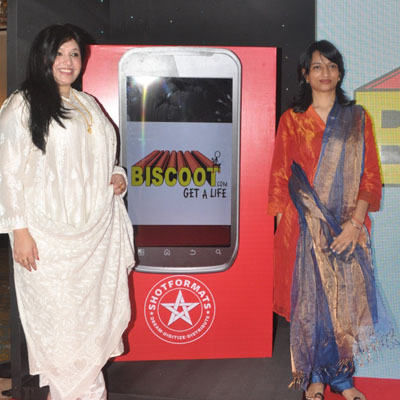
  • Shotformats launches digital prepaid wallet  Biscoot

    Shotformats launches digital prepaid wallet Biscoot

    MUMBAI: Shotformats, a digital entertainment and VAS companies, has launched the world’s first offline application store and India’s first online digital currency – ‘Biscoot Digital Prepaid Wallet’.


    Combined together, the two offerings promise to change the way the digital entertainment industry markets its offerings across the rapidly growing smartphone users’ universe acrossth e country.


    On the initiatives, Shortformats MD and CEO Niyati Shah said, “As per our research, 95 per cent of mobile users in  India are prepaid users of which around 30-40 per cent visit mobile recharge shops at least twice a  day for getting recharges. Our distribution chain will comprise of such mobile recharge shops across India for testers. We aim to expand this network to 30,000 retail outlets in one year and sell one million such apps in the next six months. The current ARPUs of a mobile user voice + VAS would be approximately Rs 95 and we are bullish about taking that to Rs 150 in the first year of its launch on Biscoot Offline Store.”


    While low cost, big screen and feature-loaded smartphones are now a craze in tier II and tier III cities, the fact remains that majority of the users do not know how to operate such phones beyond basic calls and messages. The shocking surveys reveal that only 15 per cent of the total smartphone users have ever downloaded one or more apps on their mobiles. This situation is tailor-made for offline app stores where a consumer can fully utilise other features of his/her phone without the complexity of data usage and app downloads.


    For consumers who prefer consuming data online, the apps are available on the Biscoot website and will be offered with the ‘Biscoot Digital Wallet’.


    The offline app store will distribute digital content – movies, music, games and apps across more than 10,000 mobile recharge and telephone accessory stores in the next six months. This will prove to be a legal, good quality and reliable source of content for consumers in comparison to pirated and low quality content available from unreliable sources in the country currently.


    The company is focusing on creating utility applications across languages especially for Indian users. The range covers devotional, regional calculators, cookery, dress design apps for women and many more.


    Explaining the details further, Shah added, “Shotformats will bring high quality content based offline apps to the nearest shop of the consumer. You can load a movie for Rs 30 or a song for a price as low as Rs two. Games and apps can be purchased for Rs 10. The content applications can be transferred on the consumer’s mobile at the outlet and the consumer can use this content as long as he/she requires, without the internet/data connection on their mobiles. This application or the content cannot be copied to or shared with any other device, thus helping create a stream for content owners to monetize their content better, curb piracy and give the entertainment industry its due share of revenues. ‘The Biscoot Digital Wallet’ on the other hand, facilitates online transactions. The ‘Biscoot Digital Wallet’ will allow the consumers to create a digital wallet called ‘Biscoot Batua’ with their personal login account. These consumers can simply get Biscoot credits in exchange of rupees from retailers and use it for online transactions.”


    Disclosing the distribution plans, Shah said that Shotformats will focus on the Indian market and market Indian content for the next few years. “In India, we love our movies and we adore our music. The appetite for Indian content is so huge that we do not need to look elsewhere.”


    Offline application stores are being launched in a staggered manner and the initial phase will cover Mumbai, Pune, Aurangabad, Nagpur, Ahmedabad, Baroda, Rajkot, Jaipur, Jaisalmer, Surat, Chandigarh, Bhopal, Indore, Rewa, Jabalpur, Lucknow, Kanpur, Allahabad, Guwahati and Siliguri. The content will be available in eight languages – Hindi (Bollywood), Malayalam, Tamil, Telugu, Kannada, Bhojpuri, Marathi and Assamese.


    This digital wallet is the ultimate solution for those who shy away from using their credit/debit cards for online transactions. This currency will be available at retail mobile recharge and telephone accessory shops at the currency unit of Re 1. The Biscoot currency will be available as scratch cards at denominations of Rs 1000, Rs 500, Rs 100 and Rs 50.