Tag: Varun Grover

  • Rajkummar Rao & Patralekha challenge household norms in Vim’s Equal Vows

    Rajkummar Rao & Patralekha challenge household norms in Vim’s Equal Vows

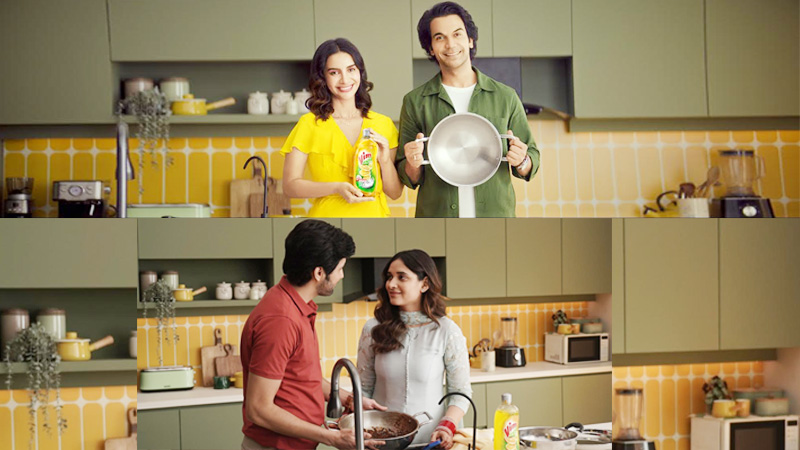
    MUMBAI : Vim’s latest campaign, Equal Vows, takes a fresh look at household equality with film couple Rajkummar Rao and Patralekha Paul Rao. Tackling the age-old divide in domestic chores, the campaign challenges traditional gender roles and encourages couples to share responsibilities as true partners.

    The campaign’s ad film follows a young couple, Isha and Nimit, who host Rajkummar and Patralekha for dinner. When Isha’s mother questions why Nimit is washing dishes, the conversation shifts to the true meaning of partnership in marriage. The film ends with Isha and Nimit pledging to share household duties equally.

    HUL head of home & hygiene Ashwini Rao  said, “Household chores, especially after marriage, often fall disproportionately on women. Through ‘Equal vows,’ we aim to challenge these ingrained perceptions and promote true partnership in relationships.”

    Rajkummar and Patralekha, who embody these values in their own lives, expressed their support for the campaign. “We believe in sharing responsibilities at home Patralekha enjoys cooking, and I do the dishes. It’s a simple yet important way to show mutual respect,” said Rajkummar.

    The campaign extends beyond television and digital platforms, with Vim partnering with Bharat Matrimony to engage soon-to-be-married couples. Celebrities such as Tanvi and Rohan, along with comedian Varun Grover, have also joined the movement, sharing their commitment to equal partnerships.

  • Superboys of Malegaon film shines at the 68th BFI London Film Festival

    Superboys of Malegaon film shines at the 68th BFI London Film Festival

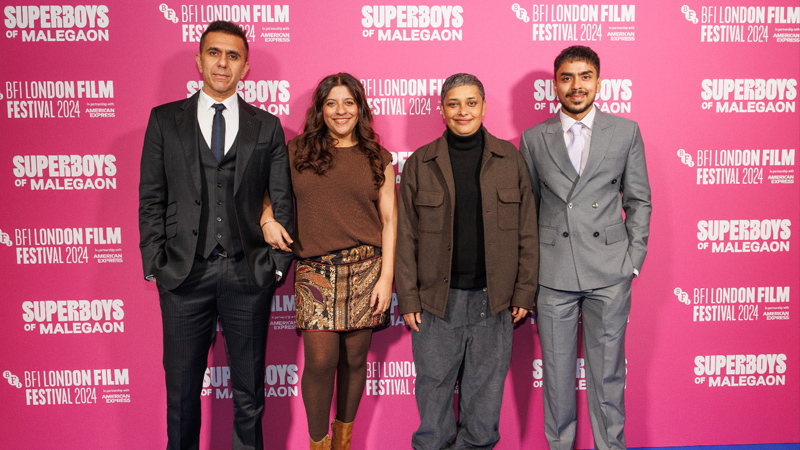
    Mumbai: Amazon MGM Studios, Excel Entertainment, and Tiger Baby Production took the spotlight at the 68th BFI London Film Festival with their much-anticipated film Superboys of Malegaon. Following its successful world premiere at TIFF, the film garnered a strong positive response from a full audience in London. It was screened on 10 October at Vue West End.

    Directed by Reema Kagti and written by Varun Grover, Superboys of Malegaon is a lighthearted look into the unique filmmaking culture of Malegaon, India. The story follows a group of amateur filmmakers in a small town as they create parody films, capturing themes of community, resilience, and the magic of cinema. The film highlights the determination and creativity of the town’s residents while offering a heartfelt portrayal of their filmmaking journey.

    The screening saw the attendance of key team members, including Ritesh Sidhwani, Zoya Akhtar, Reema Kagti, and Adarsh Gourav, alongside several international celebrities, critics, and cinema enthusiasts. Superboys of Malegaon was widely praised at the festival for its authentic narrative, blending humour, creativity, and emotion.

    The BFI London Film Festival, known for featuring innovative and diverse films, welcomed the movie, which resonated with audiences worldwide through its portrayal of friendship and filmmaking in a small town. Following the festival, excitement has grown for its upcoming release.

    Produced by Ritesh Sidhwani, Farhan Akhtar, Zoya Akhtar, and Reema Kagti, Superboys of Malegaon stars Adarsh Gourav, Vineet Kumar Singh, and Shashank Arora. It will be released in Indian theatres in January 2025, followed by a global theatrical release, and will stream on Prime Video across India and in 240 countries and territories worldwide.

  • My Music, My Rights: A deep dive into culture, music and rights with Varun Grover & Mayur Puri

    My Music, My Rights: A deep dive into culture, music and rights with Varun Grover & Mayur Puri

    Mumbai: Music is deeply ingrained in India’s rich cultural history, reflected in ancient texts and mythology. With roots tracing back to the celestial chants of the Sāma Veda, our musical heritage is intertwined with spirituality and culture. The divine pantheon, including deities like Brahma, Vishnu, Shiva, and Saraswati, emphasises the integral connection between music, wisdom, and artistic expression.

    Despite the global celebration of India’s musical diversity, the challenges faced by music creators persist. Aiming to spark a dialogue on music’s intrinsic value and the crucial support needed for creators, The Indian Performing Right Society (IPRS) launched its nationwide campaign, “My Music, My Rights” around the auspicious occasion of Vasant Panchami. A recent EY study reveals that while India produces over 20,000 original songs annually, generating substantial revenues, many creators struggle financially.

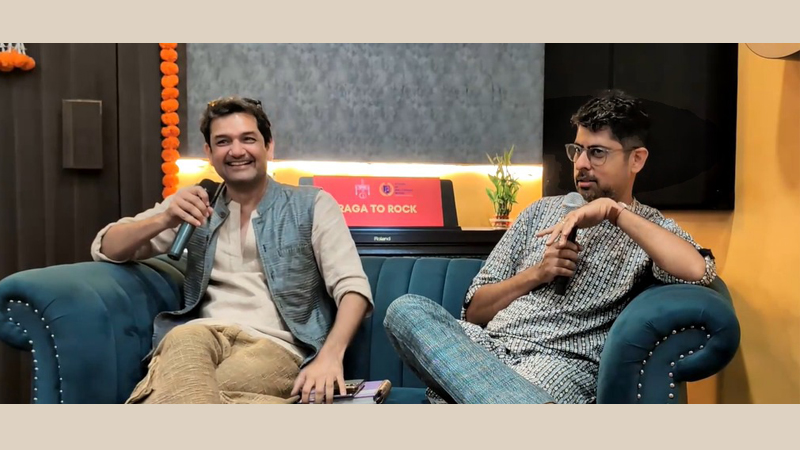
    Adding significance to the same, an event titled “Raga to Rock” was held on 15 Jan wherein eminent author, poet, actor, and film director Varun Grover and leading songwriter, film director, and IPRS board member Mayur Puri, shed light on India’s rich musical heritage and its evolution to the present day. Additionally, a captivating musical drama, ‘Suro Mein Lipate Kisse’, curated by the very versatile writer and storyteller Ulka Mayur offered a visual depiction of this musical journey.

    On the sidelines of the event, Indian Television caught up with Varun Grover and Mayur Puri to gain more insights regarding the campaign and much more…

    Edited Excerpts:

    On inspiration that fuels Varun’s creative process as a multifaceted artist

    Varun: Curiosity! I am just curious about a lot of things. I want to do comedy which can only cover certain topics. Then there is poetry which can be written for children but can’t be written for a film. Then I write that separately. But I love music because it’s very easy to connect with music. You don’t have to learn an instrument or sing but still you’re a very key part of the music album. Becoming a part of the music world was the only skill I had to try it. So it is curiosity and a sense of wonder that I have about lots of things, that is, music, comedy, screenwriting and cinema. I love to be a part of all of these and I had a hope that I could be. So that is why I do multiple things. I’m just a hungry kid in a supermarket.

    On Varun’s directorial debut

    The film is titled – All India Rank and it is my first film as a director. It’s a very personal story, set in the 90s. That is roughly the same time I went to an IIT coaching in 1998. At that age, there are confusions about life and things and people want you to sort out your entire life in those years. Those are the years when you are not allowed to vote, consume alcohol, or marry but people want you to get your life sorted or the society terms you as a loser. So that pressure and the age where you’ve just hit puberty, there’s so many other things to explore in life. That confusion was the core of the film and the core of the story and I wanted to make it my first film because it’s a personal story. The film is set to release on 23 Feb. It’s a bittersweet comedy-drama with lots of music. Everything in the films is very indie in terms of new cast and new composer. Also according to me, for every situation in the film, there should be a song like the legacy we have in Hindi cinema. So the film originally has five songs and then we acquired three songs, out of which one is and original and two of them are old songs (Title track of Rangeela & Papa Kehte Hain from Qayamat se Qayamat Tak). Five of them are written by me. In total, the film which is of 90 mins, has eight songs.

    On the goals and significance of the ‘My Music, My Rights’ campaign in empowering music creators and preserving our musical heritage

    Mayur: A lot of music is being created, especially independent music. Traditionally it has been that music companies would invest in music or producers would invest in music and would let people create music input and then monetise and utilise it in different ways and exploit it wherever possible. The word exploit is literally used for the monetisation of music and creators have been receiving only a very small or trickled-down portion of it. But lately, we are seeing, with the advent of digital mediums, what has happened is, the data in the music industry has become transparent. So numbers of the consumption through digital mediums are very clear nowadays. That is why independent music that has been made without the help of any bigger support is growing and making money.

    Yet, some creators remain unaware of their rights. These encompass eight categories: recording, copying, selling, publicising, translating, adapting from the original master, and recording in a distinct manner. So creators should first know about ‘My Music, My Rights’. People need to recognize the effort behind creative work and acknowledge the associated rights. Are we truly investing in listening to music, considering the lack of subscription models in India? Subscribing to a service ensures the creator receives compensation, a crucial aspect absent in the freemium model. People need to grasp that creating a piece of music involves investing one’s life. Last year we had ‘Fair Play, Fair Pay’ and now ‘My Music, My Rights’.

    On rights that singers/composers have vs lyricists

    Mayur: The rights that singers and composers have are quite similar. Their rights fall under the category of performing rights. Singers have more avenues compared to lyricists. They receive more love as compared to us. Their struggles are distinct; ours, however, revolves around the challenge of gaining recognition. Without recognition, there’s no remuneration, and for the recognition we need representation. The legal structure for royalties has existed for years, but execution has been a challenge. Digital platforms have brought transparency, ensuring singers and composers receive royalties. However, the concern lies in the inadequacy of the amount received.

    On a favorite era or genre in Indian music that holds a special place in their heart, and how has it influenced your work

    Varun: I love all eras of music, so to say, starting from the 50s. For example, there’s been RD Burman in the 80s whom I highly admire. Then there used to be a TV show on Doordarshan called ‘Bharat Ek Khoj’ which had an amazing title track. It was a fusion of Western music along with the lyrics which were derived from the Vedas. So I love and listen to all sorts of music, be it Hindustani classical music or songs like ‘Tandoori Nights’ (smirking).

    Mayur: I appreciate the current era for its remarkable creativity, with outstanding lyricists like Varun, Irshad bhai, Swanand bhai, and, of course, Amitabh. The youth is producing remarkable work. However, I have reservations about the mastering and compression in today’s music. The warmth present in 80s music recorded on quarter-inch or two-inch tape has diminished due to digitalisation, resulting in a shrill sound. Technically, we’ve taken a different path, not necessarily negative, just different. Despite this, composition and lyrics-wise, I don’t think this generation is any less than the 50-60s era.

    On the importance of having a foundation in Indian classical music before pursuing a career in other music genres, and its benefit to aspiring musicians in India

    Mayur: We possess Indian classical music, but what we label as folk music here is distinct. While other countries’ folk music tends to be rudimentary, Indian folk music stands out with its complexity. It features various beats and patterns, making it on par with classical music. It’s rare to find an Indian without some internal understanding of our classical music. The need is actually to teach an instrument to each child in every school and college in India which foreign countries do. The problem is we don’t have enough music schools and we don’t have a centralised music education system. Every Indian naturally develops an inherent sense of classical music.

  • Raga to Rock: Launching the My Music, My Rights campaign by IPRS

    Raga to Rock: Launching the My Music, My Rights campaign by IPRS

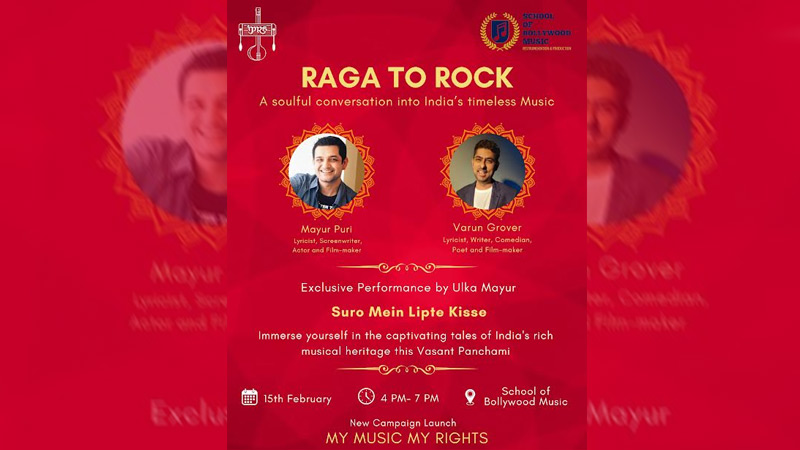
    Mumbai: IPRS is set to launch its nationwide campaign, “My Music, My Rights,” through an engaging and insightful event titled, “Raga to Rock,” on 15 February 2024. This initiative seeks to spark a national dialogue on the inherent value of music and the necessity of supporting the creators and their creativity for a sustainable music industry.

    Music holds an integral place in India’s cultural tapestry, with references to it found in ancient texts. Tracing back to ancient times, India’s profound musical heritage is deeply rooted in its sacred texts. Brahma, the creator deity, is credited with deriving music from the celestial chants of the Sāma Veda, symbolizing the heavenly world itself. Alongside Brahma, deities such as Vishnu, the preserver, and Shiva, the destroyer, are revered as patrons of music, underscoring its intrinsic connection to spirituality and culture. In the divine pantheon, Sarasvati, the goddess of music and knowledge, occupies a central role. Consort of Brahma, she is depicted as being well-versed in playing the Veena, a stringed instrument, and is revered as the embodiment of artistic expression and wisdom.

    While India’s musical heritage is celebrated worldwide, music creators and those envisaging a full-time career in music often face significant challenges in earning a sustainable livelihood from their craft.

    According to the recent study by EY titled ‘The Music Creator Economy: The Rise of Music Publishing in India’, India generates over 20,000 original songs annually contributed by 40,000 music creators, directly or indirectly generating over INR 12,000 crore in revenues each year. However, many in their career as a creator find themselves grappling with financial challenges. Out of 500 creators surveyed, 87 per cent of respondents would have liked to make a living off their music alone, but only 60 per cent were able to do so. A majority strongly believed that they needed to learn more about music production and how to better monetise their music. Only 56 per cent of respondents had access to the equipment and infrastructure required to produce music. While India consumes more music per capita than the world average, it ranks 14th in recorded music revenues. In contrast, publishing revenues are ranked 23rd due to various issues like lack of legal clarity and consequently, low compliance. The significant disparity between the vast volume of music produced and the limited earnings of many creators within the industry, exacerbated by a widespread lack of understanding about the music business, underscores the urgent need to bridge this gap, a mission at the heart of the campaign.

    The campaign “My Music, My Rights” seeks to bridge this divide by raising awareness and providing support to music creators across the nation. The report also highlighted that 33 per cent of music released, comprises regional content, indicative of India’s diverse musical landscape. Yet, challenges such as accessibility, copyright awareness, and publishing rights hinder the rightful recognition and compensation of artists. Through a series of workshops, and seminars, both online and offline sessions, amongst other activities conducted nationwide, IPRS endeavours to address these hurdles and empower creators to navigate the intricacies of the industry effectively.

    The “Raga to Rock” event, scheduled on the auspicious occasion of Vasant Panchami, dedicated to the goddess Sarasvati, symbolizing music and knowledge, takes on added significance against the backdrop of India’s profound musical heritage. The program will feature enlightening narratives by eminent author, poet, actor, and film director Varun Grover and leading songwriter, film director, and IPRS board member Mayur Puri, shedding light on India’s rich musical heritage and its evolution to the present day. Additionally, a captivating musical drama, ‘Suro Mein Lipate Kisse’, curated by the very versatile writer and storyteller Ulka Mayur will offer a visual depiction of this musical journey.

    Commenting on the initiative, author, poet, actor, and film director Varun Grover, present at the event said, “As we gather to celebrate the rich tapestry of Indian music at ‘Raga to Rock,’ it’s a poignant reminder of the profound impact music has on our lives and culture. This event is not just about songs and melodies; it’s a platform to ignite vital conversations about recognizing and supporting creativity and those behind the creation. Let’s harmonize our voices to elevate the value of music and nurture it as a cornerstone of our nation’s cultural identity.”

    Sharing his views,  IPRS CEO Rakesh Nigam mentioned, “As the music industry reaches new heights, songwriters, composers, and independent creators must be well-versed in their rights and equipped to build sustainable careers. At IPRS, we prioritize empowering music creators through education and expertise. Recognizing the rich musical heritage and the immense value of music in our lives, let’s acknowledge our collective responsibility as a nation to support, nurture and foster the music of our land towards a thriving and enduring future.”

    The climax of the event will be the unveiling of the “My Music, My Rights” campaign elaborating its objectives and strategies through a short presentation. This launch event not only signifies a crucial step towards empowering music creators but also underscores the collective commitment to preserving and nurturing India’s diverse musical landscape for generations to come.

    This exclusive event is specifically designed for music creators and professionals in the industry, providing them with valuable knowledge and resources to navigate today’s evolving landscape of music and royalties.

  • TakeTen is back for its second edition, but with a twist!

    TakeTen is back for its second edition, but with a twist!

    Mumbai: The first successful edition of the Take Ten initiative, a workshop and competition by Netflix and Film Companion to discover and support emerging Indian creators from varied backgrounds, provided a stage for 10 new filmmakers to shine.

    This year, we are again partnering up with the aim of finding and nurturing the talent of five new series creators.

    The new batch of storytellers will be given an exciting opportunity to:

    • Attend exclusively curated workshops by some of the best creative talent in the industry like Prashant Nair, Raj Nidimoru, Gazal Dhaliwal, Varun Grover, Utsab Nath, Tanuj Chopra, Sanyukta Kaza, Pranav Thakkar and Sidharth Meer.
    • Make a fully funded pilot for a series with a grant of Rs.12 Lakhs each.
    • Get a chance to be featured on Netflix India’s Youtube channel

    The competition is open for submissions at the official Take Ten website: https://www.taketen.in/  

  • Screenwriters, broadcasters, and digital freedom: ISC’2016

    Screenwriters, broadcasters, and digital freedom: ISC’2016

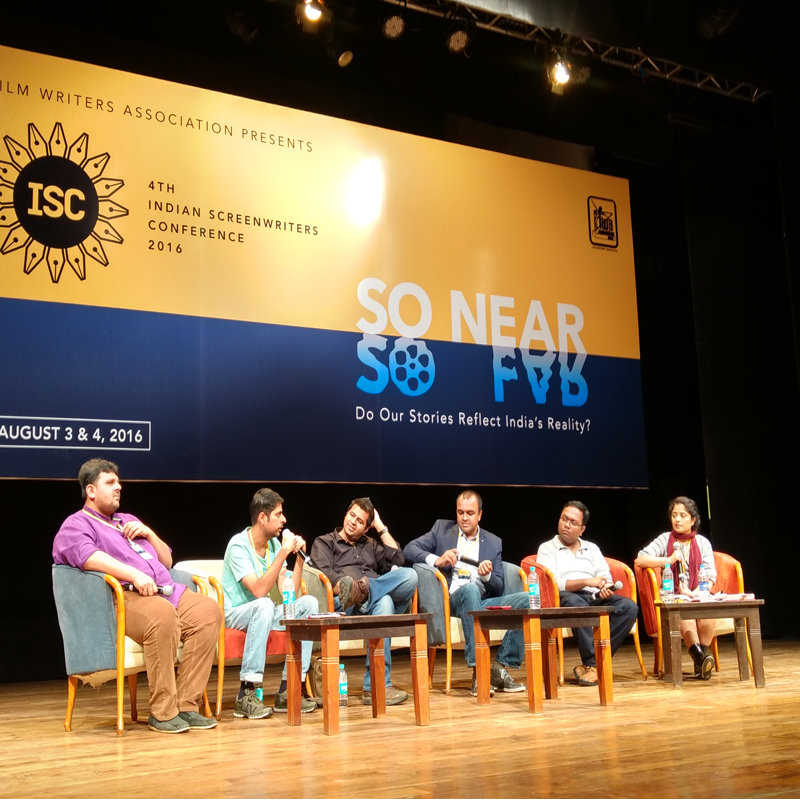
    MUMBAI: What do we really mean by digital media? When did it start? Why did it start? If you too are concerned about these questions and wanted a detailed insight, the Fourth Indian Screenwiters’ Conference 2016’s session on ‘The Digital Explosion’ was the place to get all your answers. Held last week, it saw writers, producers, film makers, broadcasters get together to discuss the issues plaguing the writing community today.

    The panelists included ‘newcomers’ such as the screenwriter of Masaan, standup comedian and National award winning lyricist Varun Grover, The Viral Fever (TVF) creative director Biswapati Sarkar and Y-Films senior manager Nikhil Taneja, with 16 years experience across broadcast media Youtube India operations head content Satya Raghvan and Mukta Arts strategy vice president and Whistling Woods International business development vice-president Chaitanya Chinchlikar.

    Session moderator and FWA activist and Malamal Weekly and Bhool Bhulaiyya screenwriter Manisha Grover set the ball rolling by asking when did digital writing really start in the Indian context and what sparked it off.

    “We initiated the web series Jay Hind when the internet was in its early stages here but it has grown so rapidly that now we have vanished, says Grover. Jay Hind was a popular Indian stand-up comedy show made exclusively for the internet platform and was launched in 2009.

    Grover recalls the day when he pitched the show to NDTV Imagine. “In those time there were only two comedy shows – Movers and Shakers and Aisi Taisi Democracy – which were also written by me. The broadcasters were very excited about the script. We made the pilot and they loved it and sent it to their focus group. The focus group didn’t like our host as they couldn’t relate to him. The channel asked us to shoot the pilot again with a different host. But it was my arrogance that didn’t allow me to do what the broadcaster wanted me to do.”

    Other writers on the panel to narrated how rejection by broadcasters led them to move on to digital. A move that turned out to be a boon for them as it allowed their ideas to come to fruition as completed episodes for the web.

    “My seniors were pitching a show for which I wrote a few episodes,” recollected Biswapati. “We went to MTV and after reading the script, they said the content is too intelligent for Indian audiences. We didn’t understand what they meant but i guess our timing was better at that time because YouTube was growing and it slightly became easy to make the series. For me digital is not a ‘also’ medium.”

    In the digital world, Youtube is pioneer, which has given a creative platform to many writers, was the consensus of the panel. “I think the big conclusion that we have drawn that digital Youtube is a ‘writers’ first’ platform. It’s probably the only medium where the writer can dictate the entire product that will come out,” added Raghvan.

    Raghvan went on to explain that in the Youtube ecosystem the web series revolution was sparked off over a year and half ago and the biggest series we saw was Permanent Roommates season one which is a TVF product. The latter has also produced some formats but Permanent Roommates was the first finite story. “Till now we have seen 40 series on the platform in different shapes and sizes not only in Hindi but also in Tamil,and Telugu,” revealed Raghvan. “We are also waiting for some Marathi productions this year and people are working on it. We will also start doing this in Bengali in couple of months.”

    Till 2014, in India some 150 million internet connection were there that too from the big metros. Between 2014 -2015 we saw a lot of growth in south India, expounded Raghvan.

    “We are doing shows for a certain kind of audience that is there on the internet. The question that arises is what what can we give to them on the internet that they can’t find on television and in films. Digital is mostly about good writing,” adds Taneja.

    The panel concluded that writers need to hone the fine art of writing for digital, as in the future, it is going to emerge as the medium and not as an “also” medium.

  • Screenwriters, broadcasters, and digital freedom: ISC’2016

    Screenwriters, broadcasters, and digital freedom: ISC’2016

    MUMBAI: What do we really mean by digital media? When did it start? Why did it start? If you too are concerned about these questions and wanted a detailed insight, the Fourth Indian Screenwiters’ Conference 2016’s session on ‘The Digital Explosion’ was the place to get all your answers. Held last week, it saw writers, producers, film makers, broadcasters get together to discuss the issues plaguing the writing community today.

    The panelists included ‘newcomers’ such as the screenwriter of Masaan, standup comedian and National award winning lyricist Varun Grover, The Viral Fever (TVF) creative director Biswapati Sarkar and Y-Films senior manager Nikhil Taneja, with 16 years experience across broadcast media Youtube India operations head content Satya Raghvan and Mukta Arts strategy vice president and Whistling Woods International business development vice-president Chaitanya Chinchlikar.

    Session moderator and FWA activist and Malamal Weekly and Bhool Bhulaiyya screenwriter Manisha Grover set the ball rolling by asking when did digital writing really start in the Indian context and what sparked it off.

    “We initiated the web series Jay Hind when the internet was in its early stages here but it has grown so rapidly that now we have vanished, says Grover. Jay Hind was a popular Indian stand-up comedy show made exclusively for the internet platform and was launched in 2009.

    Grover recalls the day when he pitched the show to NDTV Imagine. “In those time there were only two comedy shows – Movers and Shakers and Aisi Taisi Democracy – which were also written by me. The broadcasters were very excited about the script. We made the pilot and they loved it and sent it to their focus group. The focus group didn’t like our host as they couldn’t relate to him. The channel asked us to shoot the pilot again with a different host. But it was my arrogance that didn’t allow me to do what the broadcaster wanted me to do.”

    Other writers on the panel to narrated how rejection by broadcasters led them to move on to digital. A move that turned out to be a boon for them as it allowed their ideas to come to fruition as completed episodes for the web.

    “My seniors were pitching a show for which I wrote a few episodes,” recollected Biswapati. “We went to MTV and after reading the script, they said the content is too intelligent for Indian audiences. We didn’t understand what they meant but i guess our timing was better at that time because YouTube was growing and it slightly became easy to make the series. For me digital is not a ‘also’ medium.”

    In the digital world, Youtube is pioneer, which has given a creative platform to many writers, was the consensus of the panel. “I think the big conclusion that we have drawn that digital Youtube is a ‘writers’ first’ platform. It’s probably the only medium where the writer can dictate the entire product that will come out,” added Raghvan.

    Raghvan went on to explain that in the Youtube ecosystem the web series revolution was sparked off over a year and half ago and the biggest series we saw was Permanent Roommates season one which is a TVF product. The latter has also produced some formats but Permanent Roommates was the first finite story. “Till now we have seen 40 series on the platform in different shapes and sizes not only in Hindi but also in Tamil,and Telugu,” revealed Raghvan. “We are also waiting for some Marathi productions this year and people are working on it. We will also start doing this in Bengali in couple of months.”

    Till 2014, in India some 150 million internet connection were there that too from the big metros. Between 2014 -2015 we saw a lot of growth in south India, expounded Raghvan.

    “We are doing shows for a certain kind of audience that is there on the internet. The question that arises is what what can we give to them on the internet that they can’t find on television and in films. Digital is mostly about good writing,” adds Taneja.

    The panel concluded that writers need to hone the fine art of writing for digital, as in the future, it is going to emerge as the medium and not as an “also” medium.