Tag: Varun Alagh

  • Honasa Consumer chief business officer Zarius Master puts in his papers

    Honasa Consumer chief business officer Zarius Master puts in his papers

    MUMBAI: It’s time for Zarius Master. to say goodbye. The chief business officer of D2C FMCG innovator  Honasa Consumer Ltd resigned from  the company on 2 January.  His resignation becomes effective 28 February 2025.

    Zairus, according to his linkedin profile, was responsible for lower funnel management to capture demand and translate to revenue; for  leading the evolution of an omni channel, multi brand organisation to drive profitable growth by gaining shares across categories in beauty and personal care and  for creation of a business plan through investment allocation choices across categories, brands, and channels to optimise for growth and profitability.

    Honasa co-founder & CEO Varun Alagh,  like Zarius, cut his teeth in FMCG with Hindustan Unilever and  this is what encouraged the latter to join him.

    Zarius joined the company in August 2021 from recruitment portal Shine.com where he worked for nearly eight years and rose to become its CEO. Prior to that he had stints in sales, marketing, and category leadership with some of the crème de la crème of corporations: Hindustan Unilever, Nokia, and Airtel.

    An  economic arts graduate, Zarius completed his diploma in marketing and topped that with an MBA in marketing from IIM, Lucknow.

    Honasa which counts MamaEarth, The Derma Co, BBlunt, Dr Sheth’s, Aqualogica, Staze9to9 and the Bblunt Salons in its brand portfolio was founded in 2016 by Ghazal and Varun Alagh. It reported revenues of Rs 462 crores in Q2 FY 2025 while the half year 2025 revenues were at Rs 1016 crore. It reported a loss of Rs 19 crore in the quarter and a profit of Rs 22 crore for the half year. 

  • ‘NSE: Enabling a Billion Dreams’ set to premiere on HistoryTV18

    ‘NSE: Enabling a Billion Dreams’ set to premiere on HistoryTV18

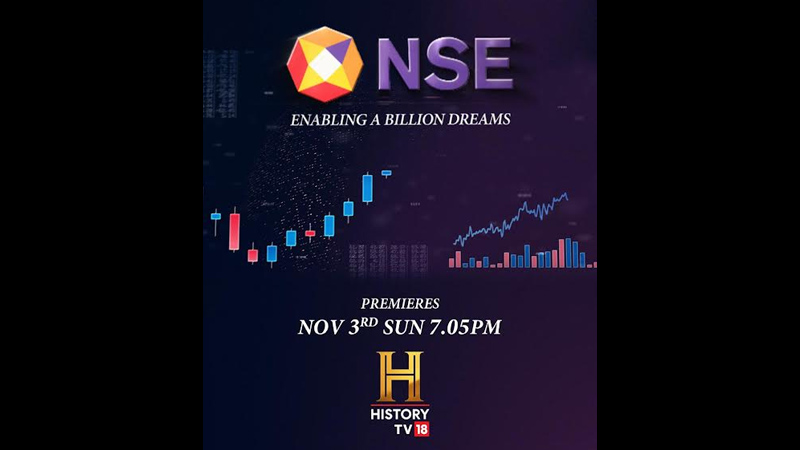
    Mumbai: HistoryTV18 is set to premiere an exclusive, hour-long documentary that offers an unprecedented look into the National Stock Exchange’s (NSE) remarkable journey over the past 30 years. Titled NSE: Enabling a Billion Dreams, the documentary will air on 3 November at 7:05 PM on HistoryTV18, providing viewers with a detailed exploration of the NSE’s evolution from its inception in 1992, start of operations in 1994 to becoming one of the largest and most influential stock exchanges in the world.

    India’s stock markets have undergone a significant transformation over the decades, evolving from traditional open-outcry trading floors to sophisticated electronic platforms. The establishment of the NSE marked a watershed moment in this evolution, setting new standards for transparency and efficiency in the capital markets. NSE was incorporated on November 27, 1992. It started operations for the debt segment in June 1994 and in the equity segment on Diwali day on November 3, 1994. NSE has now completed 30 years of operations.

    Since its launch, the NSE has revolutionised India’s capital markets by introducing electronic trading and fostering fairness, efficiency and transparency. Today, it NSE stands as the world’s largest stock exchange in terms of number of orders and number of trades for any exchange. On many days NSE handles more than 50% of all trades across all exchanges in the world put together. NSE is also the largest derivatives exchange by the number of contracts traded and 3rd largest globally in cash market trades. The NSE has contributed to India’s market capitalisation soaring to over Rs. 440 lakh crore (i.e. $ 5.24 trillion) from about Rs 4 lakh crore 30 years ago, growing about 110 times and, underscoring its impact on the global financial stage.

    The documentary highlights the NSE’s innovative strides in transforming India’s capital markets, showcasing how the exchange introduced electronic trading, brought transparency, and democratised market access, reshaping the nation’s economic trajectory. With over 10.5 crore investors having over 20 crore accounts registered with the Exchange, the NSE has significantly broadened investor participation, making stock markets accessible to people across the country.

    “At HistoryTV18, our mission is to bring impactful stories that resonate with our viewers,” said Network 18 and MD A+E Networks | TV 18 CEO – broadcast, Avinash Kaul. “Our documentary NSE: Enabling a Billion Dreams highlights the NSE’s role in transforming India’s financial landscape. By chronicling 30 years of the NSE’s journey, we aim to show how it democratized wealth creation, fostered innovation, and empowered millions to contribute to India’s economic growth. We hope to inspire viewers to understand how such institutions shape our country’s future.”

    The film examines technological milestones such as the introduction of NEAT (National Exchange for Automated Trading), setting up of Clearing Corporation giving settlement guarantee, the dematerialisation of shares, which eliminated physical trading barriers, reduced settlement times from weeks to just one day, and enhanced market efficiency. The NSE’s implementation of T+1 settlement cycles places India among the few markets globally to achieve such rapid transaction settlements, boosting investor confidence and market liquidity.

    Featuring insights from industry stalwarts and experts, the documentary offers exclusive perspectives from leaders across the financial and technological spectrum. Viewers will hear from NSE’s MD and CEO Ashishkumar Chauhan who was a part of the founding team at NSE. Viewers will also hear and visionaries like Uday Kotak, Raamdeo Agrawal of Motilal Oswal Financial Services, former SEBI chairman U.K. Sinha, and former NSE and RBI board member Y.H. Malegam. Other contributors include Ghazal and Varun Alagh, S. Ramadorai, Vineet Nayar, and seasoned journalists Lata Venkatesh and Shereen Bhan. The documentary is further enriched with contributions from academic experts like Dr. Tadashi Endo and market experts like Deven Choksey.

    “We are pleased to collaborate with HistoryTV18 on this documentary that encapsulates our 30-year journey,” said NSE MD & CEO Ashishkumar Chauhan. “In these 30 years, NSE has more than fulfilled its vision of creating a vibrant and growth-oriented stock market ecosystem to channelise savings of Indian households into productive capital in the most cost-effective, fair, efficient, transparent and orderly ways and help in wealth creation and job creation. By sharing our story, we hope to highlight the collective efforts that have shaped India’s financial ecosystem. It is our hope that this film will inspire future generations to engage actively with India’s financial markets, driving inclusive growth and contributing to the country’s continued prosperity.”

    NSE: Enabling a Billion Dreams premieres on 3 November at 7:05 PM on HistoryTV18. The film will also be broadcast across multiple platforms, including CNBC TV18, CNBC Awaaz, CNBC Bajar, CNN News18, and will be available for streaming on moneycontrol.com and HistoryTV18’s YouTube channel, ensuring it reaches a wide and diverse audience. Subsequently, many re-runs of the same will be done on these channels. Regional language versions will also be run on various regional channels of Network 18 Group several times.

  • Mamaearth rolls out new campaign featuring its founders

    Mamaearth rolls out new campaign featuring its founders

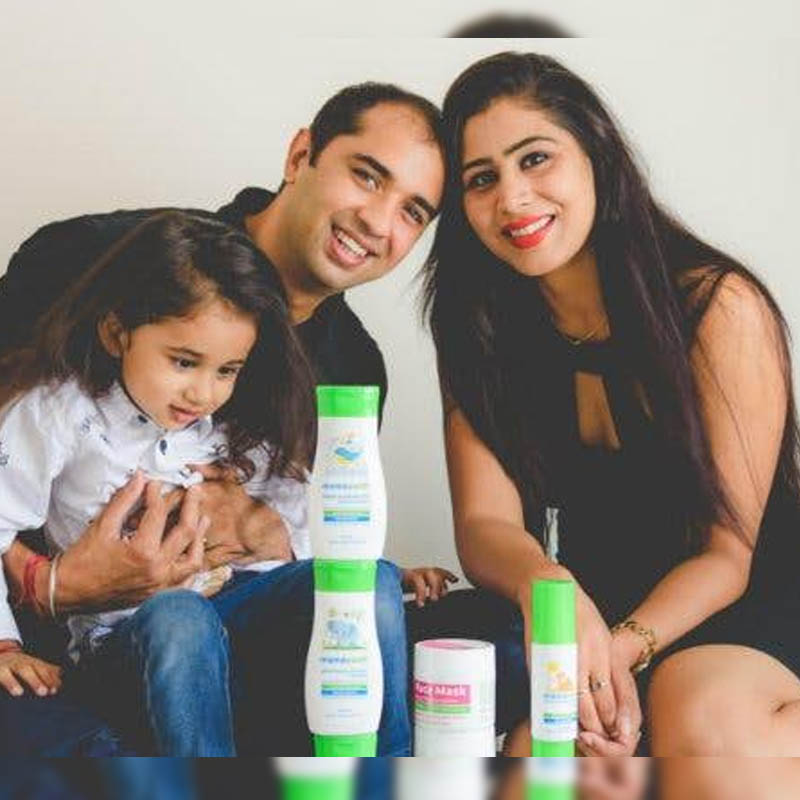
    Mumbai: Mamaearth has launched a digital video campaign, #SkinHealthywithCocoHaldi, featuring the brand founders, Varun Alagh and Ghazal Alagh.

    The campaign follows the launch of the new range, CocoSoft, which has been crafted with the goodness of coconut and turmeric (haldi).

    Conceptualised by Momspresso, the campaign video highlights the proof of safety of the Mamaearth baby care range with its no-toxins and safe proposition, along with Made Safe certification.

    Set up with the premise of a day in the Alagh household, the film starts with Ghazal and Varun Alagh in the middle of a family portrait shoot. In between the shoot, some questions are directed to the second-time parents, asking them whether the birth of their first child, Agastya, led to the birth of Mamaearth. What follows the birth of their second child? The founders respond, saying that this time they are bringing forward age-old miracle ingredients that were used by our Dadi-Nani: coconut and turmeric (haldi). Ghazal recalls how, as a child, her mother used to blindly trust coconut for her skin. Varun added that his grandmother used to trust turmeric (haldi) for its antiseptic and antibacterial properties. With the winters approaching, they thought of creating a range for babies that would nourish and preserve their skin while still being safe owing to the goodness of coconut and turmeric (haldi).

    The film closes with a great message stating that the ancient propositions have been tried and tested through generations. The film is a simple and endearing representation of the brand’s philosophy of goodness inside.

    Commenting on the campaign, Mamaeath co-founder and chief information officer Ghazal Alagh said, “As a brand that was launched with the vision of making parenting hassle-free and providing home remedies in safe and certified formulations, we have been committed to bringing back age-old recipes to parents so that they can get the benefits of the recipes that our grandparents trusted in hassle-free formats. Hence, we created the CoCoSoft range with tried and trusted ingredients like coconut and turmeric. With this campaign, we are highlighting the goodness of coconut and turmeric in the CocoSoft Range, which has been tried and tested by our grandmothers.We hope that the millennial generation will be moved by this idea and decide to pick up nature’s goodness with us and our products.”

    “Young parents today are extremely conscious about the products they choose for their children. As per the insight gained through our platform, moms prefer natural ingredients to address the skin-care requirements of their children. We are extremely delighted that Mamearth partnered with us to create the launch film for CocoSoft. I am confident that this video, #SkinHealthywithCocoHaldi will resonate strongly with young parents,” said Momspresso co-founder Prashant Sinha while talking about the creative side of the campaign.

  • Mamaearth targets word of mouth through moms for marketing

    Mamaearth targets word of mouth through moms for marketing

    MUMBAI: When 26-year-old Ghazal Alagh was to deliver her first child, she learnt that there was no cure to her morning sickness other than to pop pills. Soon after delivering her baby, Ghazal and her husband realised that the market was full of toxic products for babies and new mothers. India does not have any baby care regulation like in other countries such as the US, UK, Japan or Canada. The only regulation Indian baby care manufacturers abide by is that baby skin is three times softer than adult skin so the products should be formed accordingly.

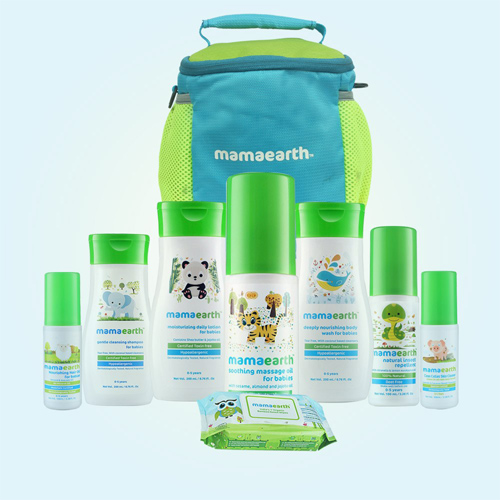
    It was then the husband-wife duo decided to take it upon themselves to create toxin-free and natural products for new born babies and their moms in India. Launched only in December 2016, Mamaearth claims to disclose all its ingredients on product labels. Run by Honasa Consumer, it is the first company in Asia that has been certified by Made Safe – a US-based non-profit organisation that provides a comprehensive human health-focussed certification for making non-toxic products. The brand has unique products for kids such as easy tummy roll-on, SLS-free natural toothpaste, talc-free dusting powder, cleansing shampoos, diaper rash creams, mineral based sunscreen lotions, insect repellents, soothing massage oils, body washes, and daily moisturising lotions for babies.
    public://happy.jpg

    Mamaearth co-founder and a proud father Varun Alagh says, “We are a generation of Google parents, and every choice that we make for our child, right from feeding bottles, shampoos to the paediatrician, is made after thorough research and Mamaearth is a solution to parents who are globally connected, ever evolving and want to make the safest choices for their child.”

    With over 35 products in its kitty for moms and babies, people can shop on the company’s website along with Firstcry, Nykaa, Flipkart and Amazon. Over 90 per cent of the sales are through online channels, and a mere 10 per cent through offline stores. As of March 2018, the company had a customer base of over 100,000, which it plans to expand to 250,000 by the end of the year.

    The company has its own lab in Gurgaon, and an R&D team which consists of scientists and doctors. Mamaearth’s first round of funding was led by Kanwaljit Singh and the promoter couple along with some of their friends who invested the seed capital in 2016. The company raised $1 million in the second round of funding led by Fireside Ventures and other investors in 2017. Last week, the company got a celebrity boost when actor Shilpa Shetty invested $250,000 and also came on board as an equity investor and brand ambassador.

    With this partnership, Shetty will be completely involved in the process of creating new products and marketing the existing line of products. Digital will be its advertising target since the company does not believe in advertising on television. Alagh says, “Today, everyone is on digital and we are targeting mothers and parents who wouldn’t mind spending some extra money on toxic free products for their child’s well-being.”

    Apart from using Shetty’s digital presence to reach the target audience, the company will also leverage social media through influencer marketing. It already uses influencers on social media who are mothers themselves and works with over 500 mom bloggers.

    With baby care products in India being available for as less as Rs 50, Mamaearth products are priced at a slightly premium price of Rs 399 onwards. But it will also look at launching products priced at Rs 99 to target middle class consumers.

    Mamaearth in a period of mere 16 months since its launch, is today present across 125 cities in India. Mamaearth co-founder Ghazal Alagh mentions, “When we started, we imagined Gurgaon, Delhi, Bangalore and Mumbai would be our primary markets, but we are present across 125 cities today. Although the metro skew remains higher but we have received phenomenal response from mini metros and tier 2 cities.”

    Mamaearth products are available in over 300 stores across Delhi, Mumbai, Bangalore, Ahmadabad, Surat and Pune and plans to reach over 10,000 stores in the next two years, including chemists and modern trade outlets.

    While launching a new product especially in the category of baby care, brands generally tend to partner with doctors or chemists who recommend the products to mothers and parents. But Ghazal says they believe in ‘mum-power’ and want to target mothers directly and are a strong believer in the power of word of mouth through them.

    In addition to its small manufacturing set up in Delhi, the company’s primary manufacturing unit is based in Himachal Pradesh which was chosen due to the state’s clean water quality and easy availability and accessibility of essential oils, herbs and flowers.

    Although the company has an array of unique products including baby wipes made from bamboo, it still does not have diapers, which is the most sold item in baby care category. On this, Alagh says, “Manufacturing eco-friendly diapers is difficult as its requires a large amount of investment and R&D. We are actively looking at it and will hopefully be able to get it right soon.”

    Though India will continue to remain the primary market, Mamaearth is also available on Amazon’s global website amazon.com to cater to Indian moms living in other countries.

    The company faces stiff competition from Johnson & Johnson, Piegon, Mom&Me, Huggies, Pampers, Himalaya baby care among others. But Mamaearth’s organic and natural route may help the brand to carve a niche for itself as today’s consumers are careful about choosing natural and safe products. But that’s the case only among the educated urban youth. The company will have to push itself hard in smaller pockets of India where local players still hold a majority of the market share and it will be difficult to get people to understand the importance of organic products and the higher price they command.

    Also Read :

    The ins and outs of femvertising

    'Sanskari' India wants condom ads off primetime

    'Sanskari' India wants condom ads off primetime

    Kids' candy segment: Communication sees a shift