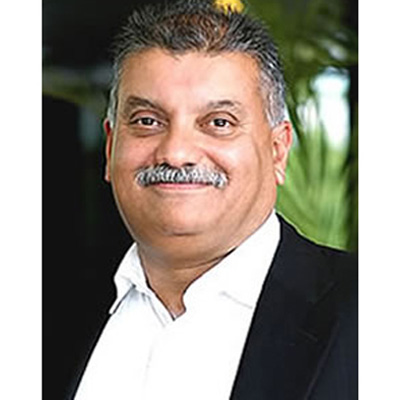
Tag: Vanita Kohli

  • Viacom CEO Tom Freston to deliver valedictory address at Frames

    Viacom CEO Tom Freston to deliver valedictory address at Frames

    MUMBAI: The sixth edition of Frames, the convention for the Indian media and entertainment industry takes place in Mumbai from 22 to 24 March 2006. It will have several tracks and high profile speakers.

    Viacom CEO Tom Freston will deliver the valedictory address on the final day. Frames will have three tracks – film, television and animation.

    In the television track one session will see Star COO Samir Nair talking about Attraction in an age of Distraction. He will dwell on the challenges of creating programming for a mass audience. This audience has multiple options in an increasingly fragmenting environment.

    Another session will look at the emerging television platforms like DTH, digital cable, IPTV and the options these will offer consumers. Business World associate editor Vanita Kohli will moderate the session. The speakers will include Zee’s Jawahar Goel and Abhijeet Saxena, Reliance Entertainment president Rajesh Sawhney and HTMT executive VP Ashok Mansukhani.

    On the radio fornt there will be a session called Radio: Tuning in Again. The oldest electronic medium in the world is one of the newest in India. Radio will be the hottest thing to
    hit the media industry in the next few years. Radio Tuning In Again talks to the key players who will make or break the industry, from broadcasters to advertisers to content providers.

    The speakers include WorldSpace COO Andy Raswork, Entertainment Network India MD A P Parigi and Win Radio CEO Gautam Radia. A plenary session deals with Digital Entertainment Living. In the emerging convergence paradigm, the boundaries between tech and media companies are getting increasingly blurred. Entertainment – anytime, anywhere is the new mantra.

    In advanced countries such as the US, we are already witnessing cable, telecom companies and broadcasters going beyond their traditional roles and offering triple play of voice, data and video. A similar situation is inevitable in India.

    Digital technology is driving the development of new types of content, a variety of media distribution options and innovative digital devices, all of which point to the emergence of a new digital entertainment industry. The speakers include Federal Communications Commission chairman Kevin Martin and Essel Group chairman Subhash Chandra.

  • In-film placement in Indian movies scoffed at Frames

    In-film placement in Indian movies scoffed at Frames

    MUMBAI: The opening statement, “It’s a win-win situation for advertisers if they pitch in their products in films,” set the tone of the session: ‘Untapping Opportunities between Movies and Marketing.’ The point that came forth was that brand placements are surprisingly far lesser than what the potential of the market really is.
     

    The session was hosted by Businessworld Senior Editor-Media Vanita Kohli and the panel comprised Mindshare Fulcrum Central Asia MD Vikram Sakuja, Reliance Infocomm head marketing Kaushik Roy and Leo Entertainment general manager Sanjay Bhutiani.

    The need was highlighted by stressing that advertisements on television need not necessarily work, because the viewers invariably switch over channels or mute the sound when commercials crop up during shows and even cricket matches. On the other hand, a viewer is glued to his theatre seat no matter what the situation in the film.

    Through the session it was opined that India has not come a long way in brand placements in films. Considering that one of the successful placements – Rajdoot GTS came in Raj Kapoor’s Bobby, way back in the early 70s. Questions that were dwelled on were that how could we make a laughing stock of ourselves in a film like Yaadein by showing Jackie Shroff dancing with a Coke can in his hand? Does anybody hold a Coke can and start dancing for ten minutes, it was queried.

    Some movies where successful in film placements would have worked were Baghban and Jism. Clever thought process could have brought a placement ad of ICICI Life Insurance when Amitabh Bachchan and Hema Malini walk on the beach with sadness in their eyes, hand in hand, their sons having deserted them. A condoms ad could have been well placed in a movie like Jism, it was argued.

    There could be certain barriers in such cases, because of uncertainties whether a film would run or not, unrealistic pricing, exaggerated expectations from the advertiser and lack of professionalism (like scenes being written at the eleventh hour, delay in release, etc). But if both – filmmakers and advertisers – take one step towards each other and realise that this relationship could be symbiotic, it would make a lot of sense.

    Realising the win-win situation, if film-makers can allow 
    subtle advertising in their projects, there is no need why this 
    market would not flourish in Bollywood – like it does in Hollywood.

    A slow beginning has been made in films like Khakee (Thums Up), Baghban (ICICI), Road (Tata Safari), but a long journey remains to be traversed.

    Bollywood and brands can create magic, the panel concluded.

  • Frames to examine in film placement opportunities

    Frames to examine in film placement opportunities

    MUMBAI: Frames, the convention for the entertainment industry kicks off a week from now in Powai. On 17 March, a session will look at the opportunities available to marketers in the area of film.

    The session will look at how in-film placement, promotion-publicity tie ups and movie merchandising can unlock value for both brands and movie makers. A case study approach will be taken in order to set targets for the film industry for each of these three opportunities. The session will also identify a framework for doing deals, and the right pricing.

    The session will be hosted by Businessworld senior editor media Vanita Kohli. The speakers include Mindshare Fulcrum Central Asia MD Vikram Sakuja, Reliance Infcomm’s marketing head Kaushik Roy, Leo Entertainment GM Sanjay Bhutiani.

    An important session will tackle the issue of digital rights management. Digital technology is reshaping the entire value chain of content creation, distribution and exhibition. The protection of content in such a scenario poses a huge challenge to the IP holder. The session will focus on ways of managing content in the digital world. The host will be Amarchand & Mangaldas managing partner Shardul Shroff. The speakers are Digital Media Solution Asia Pacific’s Quentin Staes Polet, IBM’s Jeffrey Johnson and the HRD Ministry’s joint secretary Bela Banerjee.

    Trai chairman Pradip Baijal will deliver a special address on 16 March. He will dwell on the role of the regulator in the future of Indian television.

  • Book review of Vanita Kohli’s ‘The Indian Media Business’: Tidy, terse, almost there

    Book review of Vanita Kohli’s ‘The Indian Media Business’: Tidy, terse, almost there

    The Indian Media Business penned by Business World senior editor Vanita Kohli, published recently by Sage Publications, treads territory few Indian writers have ventured into – exploring the vast field that is Indian media.

    Vanita Kohli fulfils a long felt need – finally, a tome that can be used as a textbook by students of Indian media.

    A volume that brings together the latest available statistics (neatly laid out in charts and graphs) on the various segments that make up mass media in the country, culls opinions from the best of the players and threads it all together with neat, accurate conclusions and some cautious crystal ball gazing. A laudable effort, as not many have bothered to gather the scattered information available and attempt to put it all in perspective.

    For students who trawl scattered sources on the Internet, wade through assorted newspaper articles and scan available books on the subject, Vanita‘s attempt is a godsend. For the rest, however, it may not be as compelling a read, as apart from a few insightful nuggets, the rest is just neat compilation. But that‘s no matter. Vanita has specified in the preface that her target is not people within the industry, but the people outside who want to get a sense of it, the student who needs a glimpse of what has been happening in the dynamic, often haphazardly regulated and erratically monitored media industry.

    As Star India CEO Peter Mukerjea too rightly points out in the foreword, if ever media studies find place in Board studies in India, Vanita‘s book could be rated as a good text.

    As a veteran reporter with over a decade of journalistic experience behind her, Vanita has put her skills to good use. She has culled from the memories of veterans like Ameen Sayani, Bhaskar Ghose, G P Sippy and Harish Bhimani, traced archives that give an insight into how various media developed in the country(it was in August 1921 that the TOI in collaboration with the Posts and Telegraph department broadcast from its Bombay office a special programme of music which the governor listened to in Pune), garnered expert comments from analysts, media observers and put the whole in the right perspective, as a good reporter should. Also noteworthy are the kind of candid comment she has fished out (Mid-day Multimedia MD Tariq Ansari opining that the entry of Samir Jain in the business was the big milestone in the newspaper business in India).

    Credit is definitely due to Vanita for helping to demystify the workings of the various factions that make up media in India, the various interconnections and the idiosyncrasies of each, for the benefit of those not in the know.

    A book like this, if it has to interest media professionals, could have been peppered with more anecdotal information and the quirks and twists that have shaped Indian media, making it a more interesting read. Apart from a few, mostly in the chapters on radio, however, Vain sticks to her agenda of presenting a treatise on her subject. Even the process of policy making, which defined the growth of Indian media, does not come through very clearly.

    The language, good reportorial style, does not experiment much, and does not attempt at being great literature. The sub- headings, used to separate the topics, are prosaic – ‘First there was terrestrial‘ begins the chapter on television, ‘What is…‘ says another in the same chapter, and one has to wait for the next section to say ‘….Broadcast‘ to know what we are reading.

    But these are minor matters. Vain has effectively woven together all necessary information on media buying and selling, overseas markets, regulations and policies that govern various media.

    The chapter on the film industry is comprehensive, and painstakingly takes readers through the way films are financed, produced, distributed and now, sold for their satellite telecast rights. It traces the changes that have mauled the industry, speaking to veterans, new players and experts, getting figures in an industry where figures are hard to come by but strangely, the underworld, which figured big time in film financing a few years ago, and continues to figure in a substantial way today, does not find mention. Nor does the influence of politics on Indian media, a significant factor that has shaped the way most media have evolved in this country and elsewhere too, for that matter.

    On the whole, however, The Indian Media Business is a good primer on the media for the information starved student.

  • Indian Telly Awards first round of judging completed

    Indian Telly Awards first round of judging completed

    MUMBAI: The first of the juries to decide the 63 programming, technical and trade categories of The Indian Telly Awards 2003 finished their deliberations late this evening in Mumbai. In their third year, The Indian Tellies, instituted by Anil Wanvari the founder of indiantelevision.com, seek to reward excellence in Indian television.

    After a hectic schedule of three days, the jury comprising Lekh Tandon, Rakesh Sharma, Shailaja Bajpai, Vanita Kohli-Khandekar, Sabira Merchant, Rathikant Basu, Shanta Gokhale and Kiran Juneja, finished shortlisting five nominees for all the 20 Popular Awards categories. They viewed showreels and episodes covering more than 400 entries before zooming in on the Top Five in each category.

    The consensus at the end of it all was: ‘The Indian Telly Awards are the most credible and transparent awards in the country today.’

    “We have been very objective while deciding the nominees for all the categories. It has been a Herculean task because there were a lot of entries for each category,” said Sharma when asked about his experience as a member of the jury. “By the way things are going, I’m sure that a couple of years down the line, The Indian Telly Awards will be the top most awards for the television industry in our country,” he added.

    Promoter of Broadcast Worldwide Pvt Ltd Rathikant Basu expressed his opinion on the awards by saying, “I have been on a lot of other juries prior to this but most places there are nominees and winners are pre decided and a jury is just a formality. But I can tell you that The Indian Telly Awards are probably one of the most transparent and honest awards in our country.”

    Actress Kiran Joneja said, “The categories have been increased this year but there is still some scope for improvisation. Some categories can be broadened so as to give equal and fair opportunities to everyone.”

    Veteran director Lekh Tandon said, “The team behind the Telly Awards is very hardworking and diligent. The awards give due recognition to the people in the television industry and are unbiased.”

    “Today there are so many award functions for the Indian film industry but there are hardly any awards for the television industry. The Indian Telly Awards has really grown from the time of its conception three years back and I can only see it going further,” said Businessworld magazine’s senior editor- Media Vanita Kohli-Khandekar.

    At the end of the three days, the jury members were very satisfied with the way things had turned out. Although there were times when they did not reach a unanimous decision at first go, but after some critical analysis and discussions a consensus was finally reached.

    The second round of judging through another jury is slated to commence on 15 September and will continue over two days in Mumbai. The jury will decide on whose work is good enough to figure amongst the nominees for the technical awards categories.

  • Indian Telly Awards 2002 on 1 November

    Indian Telly Awards 2002 on 1 November

    MUMBAI: The Indian Telly Awards, the first and the biggest awards programme to recognize the talent and achievements of the people in television industry, will be presented in Mumbai on Friday, 1 November 2002.

    Into its second year, The Indian Telly Awards 2002 has received tremendous response from the television industry with more than 750 entries from various production houses, television channels, studios, technicians, actors, writers, musicians and others associated with the industry.

    The awards will be presented at a gala presentation ceremony which is to be held at The Tulip Star (formerly Juhu Centaur), Juhu Poolside in Mumbai on Friday, 1 November 2002 at 6:00 pm.

    Anil Dharker (left) makes a point as does Ashutosh Gowarikar with Dolly Thakore to his right and jury members Rakesh Sharma to his left and Rekha Nigam to his extreme left

    The large number of entries has been whittled down to about 250 after being vetted by various juries comprising eminent personalities associated with the television industry such as Ashutosh Gowarikar, Anil Dharker, Kiran Deohans, Lekh Tandon, Dolly Thakore, Rekha Nigam, Rakesh Sharma, Vanita Kohli, Vinod Ranganath, Ravi Kiran, Amit Khanna, Rajesh Pant, Markand Adhikari,Vikram Sakhuja, Nandan Maluste and Mohan Nair.

    Says Indian Television Dot Com CEO Anil Wanvari: “The Indian television industry has responded extremely well to The Indian Telly Awards this year going by the number of entries we received and the eminent personalities and professionals who agreed to be on our juries and help us recognize and select excellence in each of the categories. I expect and hope that The Tellies will only grow in stature from hereon.”

    The Indian Telly Awards jury and event partners Opus Events’ Tarun Chopra and Kunal and TV production partner UTV’s Fazilla, along with the Band Of Boys at the Press Conference at Mumbai’s Taj Mahal Hotel on 14 October 2002 , and Optymystix’s Sanjiv Sharma and Vipul D Shah share some thoughts with indiantelevision.com’s Anil Wanvari

    The crme de la crme of television in India will be present at The Indian Telly Awards 2002. The presentation ceremony will feature performances by eminent television and film personalities.

    The special jury to decide the Lifetime contribution to Indian Television Award (from left to right): Percept Advertising CEO Rajesh Pant, MindShare’s Vikram Sakhuja, Reliance Group’s Amit Khanna, Doordarshan Mumbai station director Mukesh Sharma, Indian Television Dot Com CEO Anil Wanvari, BusinessWorld media editor Vanita Kohli, Kotak Mahindra’s Nandan Maluste, and Asianet’s Mohan Nair

    The ground management on the day of the presentation will be in the hands of Opus Events, while UTV has been commissioned for the television production. Discussions are on with Indian television channels for telecast rights to the event.

  • Indian Telly Awards jury meets to vet entries

    Indian Telly Awards jury meets to vet entries

    MUMBAI: The judging process of The Indian Telly Awards 2002 got underway at Mumbai’s Holiday Inn Hotel today. Instituted by television services company Indian Television Dot Com (which runs this portal), The Indian Telly Awards are into their second edition and cover more than 50 television categories classified under the Trade, Technical and Popular heads.


    The popular jury, which is meeting over three days, includes noted film maker Ashutosh Gowariker, writer, producer and director Lekh Tandon, Percept Advertising CEO Rajesh Pant, former Sony programming head and writer Rekha Nigam, columnist Anil Dharker, media personality Dolly Thakore, documentary film maker and former Star Plus programming head Rakesh Sharma, scriptwriter Vinod Ranganathan, cinematographer Kiran Deohans, Rajtaru Videosonic CMD Ramesh Aggarwal, Crest Communications production head Charles Jacob and BusinessWorld media editor Vanita Kohli.

    The jury is slated to watch nominations and entries sent in by more than 70 production houses and television channels which are to be screened for them. A large part of the award categories are to be decided by the jury while some of them will be put up for public polling in the coming weeks.


    Watch this space on indiantelevision.com for further announcements!!