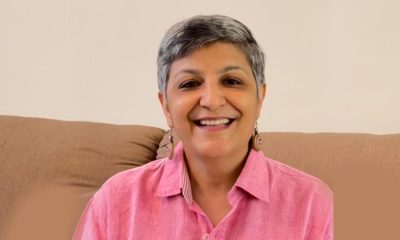
Tag: Vanita Keswani

  • TV’s desi power play: How regional storytelling is uniting a billion hearts

    TV’s desi power play: How regional storytelling is uniting a billion hearts

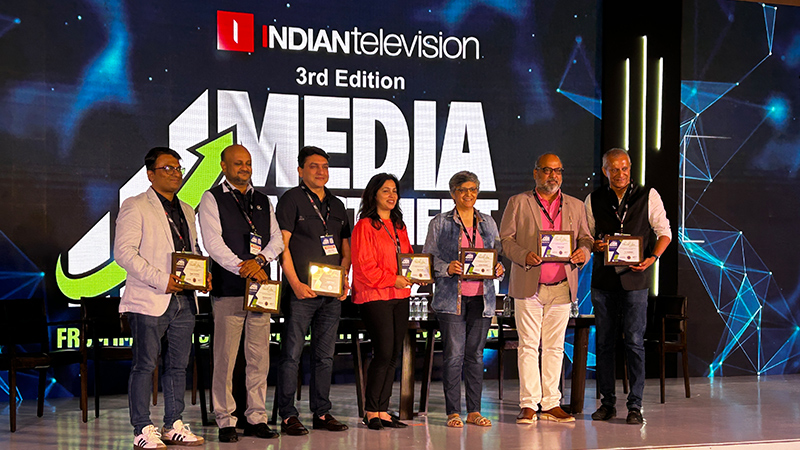
    MUMBAI: At the 2025 edition of the Media Investment Summit by Indiantelevision.com, a potent mix of data, drama and desi sensibilities took centre stage. In a session titled ‘From Regional to National: How Television Unites & Influences Billions’, top executives from insurance, FMCG, media, and broadcast peeled back the layers of India’s most underrated soft power—television.

    Chaired by Tam Media Research CEO L V Krishnan the panel drove home a core truth: in a country as complex as India, regional is not a stepping stone to national—it’s the soul of it.

    Zee Entertainment chief growth officer Ashish Sehgal opened the session with a clear stance on storytelling. “We’re looking at a command-level segmentation exercise in a vast, culturally diverse country. The same storyline can vibrate differently across states, languages and values”, he said. The key, he noted, was not translation—but transcreation. What works in Maharashtra needs rethinking for Manipur.

    Sehgal highlighted how television continues to command trust, “People spend more time watching TV in the living room than browsing online in isolation. That communal screen-time is where influence breeds”.

    Britannia GM – media Riya Joseph added flavour with paint ads and biscuits. “If we use one ad template for Rajasthan and another for Karnataka, we’ve already lost the battle. Paint colours, biscuit flavours—even the tone of a jingle—need localisation”, she said. In Joseph’s world, the biscuit is serious business. “The challenge isn’t just shelf space—it’s shelf recall in a noisy media universe”, she added.

    Britannia’s hyperlocal campaigns often start as social experiments and end up earning massive engagement with minimal media spends. “When we celebrated pronunciation quirks around ‘croissant’, it went viral. Because it came from their lives, not ours”, she quipped.

    For insurance brands, the entry barrier isn’t price—it’s comprehension. “In a culturally vibrant and diverse country like India, where every corner celebrates its own festivals and traditions across different languages and cultures, marketers have a unique opportunity to connect deeply with consumers through festive storytelling. These festivals, rich with emotion, symbolism, and values, offer a goldmine of inspiration— but to create an impact that lasts, the story must not only reflect the festive spirit but also stay true to the brand’s core message.”, said Edelweiss Life Insurance CMO Abhishek Gupta.

    Gupta pushed for story-first advertising. “Across India, every region holds real stories of loss, hope, aspiration and renewal. These aren’t fictional narratives—they’re lived realities. Marrying those with brand promise creates resonance and trust”, he said, adding that regional storytelling builds both loyalty and local advisory networks.

    Shemaroo Entertainment business head – Hindi GEC Sagar Hosamani leaned into faith-based programming as a vehicle for localisation. “Every festival must reflect the cultural nuance of its origin. Devotion isn’t one-size-fits-all”, he said.

    Hosamani highlighted that storytelling isn’t just about language but ritual, colour, iconography and emotional pace. “If we shoot a Navratri segment in Mumbai and call it pan-Indian, we miss the mark. It must feel local to be loved nationally”, he said.

    Madison Media Sigma CEO Vanita Keswani offered a sharp media planner’s take, “There’s no ‘national vs regional’ anymore. It’s both. Every brand plan today has multi-layered targeting—regional, hyperlocal, and mass”.

    Measurement, she stressed, is now possible down to the taluka level. “We can measure Sun TV’s performance in Madurai versus Chennai versus Coimbatore. From search queries to WhatsApp bot data, the tools are in place”, she added. Keswani emphasised that regional content is increasingly outperforming national content in engagement-led metrics.

    Live Times founder Dilip Singh closed the discussion with a rousing pitch for television’s credibility. “There are 400-plus channels in India, yet audiences still turn to TV for breaking news. During high-stakes events, TV rooms become war rooms”, he said, citing the post-India-Pakistan strike coverage where mobile viewership dipped but TV soared.

    Singh called for fact-first newsrooms. “It’s not about being the fastest. It’s about being the most accurate. Truth is our only product”, he said.

    All panellists agreed that India’s complexity demands cultural fluency, not marketing convenience. As Sehgal concluded: “You speak my language, my brain listens. You speak my culture, my heart responds”.

    At a time when digital fragmentation is rising, the session underscored how television—through regional storytelling—remains India’s most unifying screen.

  • Welspun appoints Madison Media Sigma as its Media AOR

    Welspun appoints Madison Media Sigma as its Media AOR

    MUMBAI: Madison Media has been appointed as the Media AOR for home textile solutions provider, Welspun. The agency will handle the entire media mandate including print, TV, radio, digital, OOH, and activation. The account was won in a multi-agency pitch and will be handled by Madison Media Sigma in Mumbai.

    Welspun retail business CEO Nemisha Ghia says, “Welspun is very aggressive in its expansion plans in domestic business and we aim to be the market leader in branded home linen market in a short span of time. To take this journey forward, we have selected Madison Media as our media partner. Madison is one of the oldest and respected names in the media business in India, and we are confident that this partnership will really help our brands in their accelerated growth path."

    Madison Media & OOH Group CEO Vikram Sakhuja says, “The Home has become an even more important place in today’s new normal. And Welspun has been adding inspiration to Bedrooms and Bathrooms all these years. We are excited about partnering Welspun to create even more magic inside Consumers’ homes.”

    Madison Media Sigma CEO Vanita Keswani says, “We’re excited to be a part of Welspun’s journey, providing home textile solutions in India and across the globe. Looking forward to strengthening this partnership for years to come.”

  • Regional markets to fuel English entertainment channels’ growth: ZEEL’s Kartik Mahadev

    Regional markets to fuel English entertainment channels’ growth: ZEEL’s Kartik Mahadev

    MUMBAI: The Covid2019 pandemic has given a boost to indoor activities such as TV viewing but specific genres such as English GECs, lifestyle and infotainment channels have been immensely impacted as their limited audience switched to streaming platforms. ZEEL premium channels business head Kartik Mahadev says that television came across as a trusted medium during the lockdown and the audience finds content on television compelling and comforting.

    Mahadev says that the channel saw significant growth in TV viewership, led by more walk-ins as well as more time spent on television. Data shared by the network show that Zee English cluster of channels grew by 93 per cent (Week 12 – week 22 vs week 1 to week 11 as per BARC data). &flix had 56 mins (week 12 – week 22 as per BARC data) average weekly time spent on the channel.

    For English GECs, the similarity of content on OTT platforms is a concern. Mahadev says, “There is no doubt that digital video platforms are here to stay. However, today we live in an AND world, not an OR world. Studies reveal that consumption of overlapped content between TV and OTT grew on television from 59 per cent pre-NTO to 82 per cent contribution post-NTO for sitcom, drama, reality genres. It naturally follows that navigation between screens is seamless and consumption on TV and digital is complementary in nature.”

    According to Madison Media Sigma CEO Vanita Keswani, English GECs losing their audiences to OTT platforms is not a recent phenomenon. “They have been largely impacted due to the disruptions caused by Covid2019. Apart from that there is profitability pressure. Covid2019 is putting a lot of pressure on broadcasters and English niche is the first under scrutiny for survival,” she says.

    Mahadev believes that regional markets will continue to fuel new user growth for English entertainment channels. This also includes a whole set of audience moving from regional to English content as they become more comfortable with English as a professional, conversational language.

    He adds, “We have designed unique offerings such as multi-language block on &flix and locally nuanced content on Zee Café, that will stand out as enablers of bringing an aspirational, English-comfortable audience onboard. Recently, for the premiere of Jumanji: The Next Level on &flix and a simulcast in Hindi on Zee Cinema, we successfully reached a wider audience by providing access through language.”

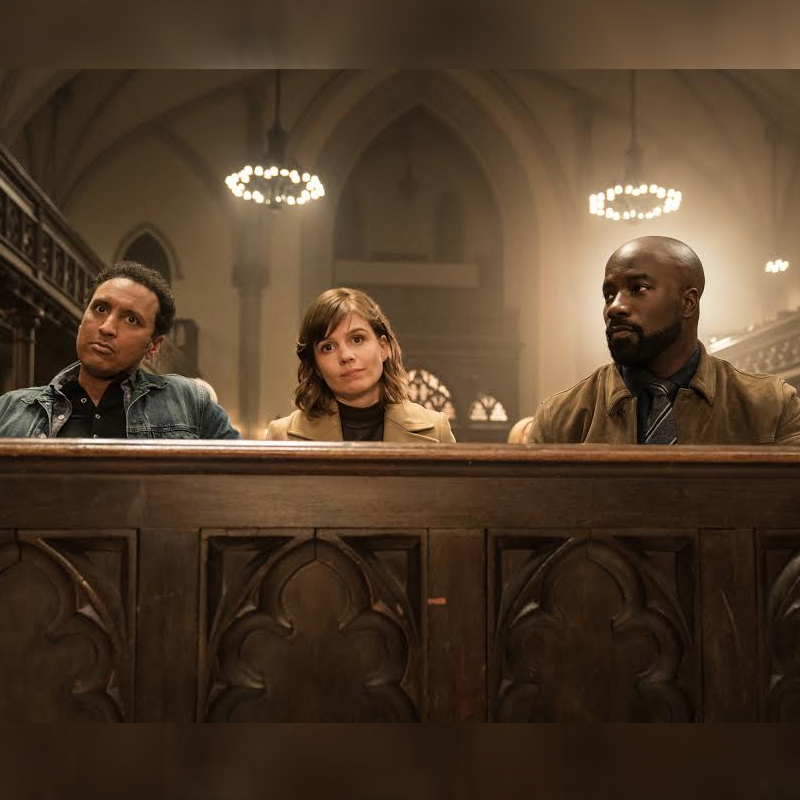
    Post lockdown, Zee Café has added 256 hours of content to cater to the growth in walk-ins within the genre, including latest dramas such as Nancy Drew and Evil, popular sitcoms such as Seinfeld and I Dream of Jeannie along with the original airings of the celebrity chat show Starry Nights GEN Y.

    “Television provides youth-focused brands and premium brands the opportunity to associate with a premium subscriber base that is defined on the basis of their content choice. This sort of content and platform synergy for brands to associate with is not available on OTT platforms where English content is behind a paywall,” he points out.

    Some of the brands that came on board as a partner for the property on &flix were Kia Motors, Ariel, Amazon, Airtel 4G, Xiaomi, Protinex and ITC along with Bingo Potato chips, Hyundai Creta, Behrouz Biryani, Bharat Matrimony and Cinthol. These brands were on board for the Hindi simulcast also. The channel has a new slate of premieres like Bad Boys For Life and Fantasy Island to entertain audiences.

    Mahedev finds that while marquee international shows bring the best of the world to Indian viewers, locally-produced content allows adding a new dimension from the Indian point of view. “With India’s first-ever English fiction show Bombay Talking, Zee Café brought in relevance with content that is locally nuanced for the Indian viewer. What followed was the introduction of successful properties such as Look Who’s Talking with Niranjan, Not Just Supper Stars and Starry Nights that truly added a unique flavour to Zee Café’s wide repertoire of content,” he shares.

    According to Samsika Marketing Consultants founder chairman and MD Jagdeep Kapoor, family viewing pushes down the priority of English GEC. “English GEC channels will now have to work on their programming. The nature of the show and specialisation will help them to stay in the business. The channels that are currently in the business will not only have to look at original content but also relevant content and solid programming. The ones who were not able to do that have lagged behind.”

    In the coming months, Mahadev expects the trend in audience preferences towards light-hearted content, superhero flicks and adventure to pick up. With out-of-home entertainment options being limited in the new normal, he feels television will continue to be the entertainment destination for individuals and families. This immediate context is an opportunity for growth.

  • Create value wherever life places you: Madison’s Vanita Keswani

    Create value wherever life places you: Madison’s Vanita Keswani

    MUMBAI: During lockdown, we may not be living life like monks, but we are certainly living under restrictions. For us, the lack of hustle and bustle is quite unsettling. We’re so accustomed to this fast-paced life that when it ceases, we may feel anxious and uneasy. In this quietness, our minds are occupied by this constant chatter which refuses to go. At this moment, when our lives are at risk, there is a concern of job security and financial stability; it is easy for negative thoughts to emerge. Under this situation, what is the role of spirituality? Why is it important? To answer all these questions Indiantelevision.com spoke to Madison Media Sigma CEO Vanita Keswani who through her poem invokes the underlying emotion that every human needs to address, especially during these testing times.

    Excerpts:

    What is the importance of spirituality in your life?

    Spirituality has helped me discover meaning and purpose in all areas of my life. It drives me towards constant self-improvement and plays a pivotal role in polishing innate humane qualities like trust, sense of responsibility and empowerment.

    How can entrepreneurship and spirituality go together?

    Japanese reformist Makiguchi suggests that work can provide three kinds of value – Beauty (work that we like), Benefit (financial security) and Good (value to society). Entrepreneurship can help build either or each of these values depending on the entrepreneur’s objectives.

    Please tell us about your love for poetry?

    I am fascinated by the rhyme and rhythm in which poetry flows and appeases our senses. This passion of mine has its roots in school activities of elocution and poetry writing.

    Has your inclination to spirituality helped you get through the lockdown?

    Certainly, spirituality has helped me elevate my fundamental life state and manifest high vitality and stamina amidst challenging circumstances. These trying times have given me the opportunity to apply spiritual concepts like “oneness of life and environment” and “changing poison to medicine.”  Rather than being at the mercy of the environment, I am learning to influence my environment inside out through positivity.

    What advice would you like to give others who may be exploring this?

    Constantly unearth the jewel of your life and polish it. Seek your own entity and unique purpose in life.

    Who or what has shaped who you are?

    I have been blessed to find greater meaning in my life through the life-transforming philosophy of Nicherin Daishon in Buddhism. My family and my workplace have played a major role in the evolutionary process.

    What is your greatest fear, and how do you manage fear?

    My greatest fear is of not being in control and not knowing what to do in certain challenging situations. For managing my fear, I work on building the tenacity of my mind through meditation and chanting and act by working harder and giving my absolute best. I truly believe that each such fearful situation that I successfully overcome, which makes me stronger and wiser.

    If you had the chance to start your career over again, what would you do differently?

    I am a firm believer in the mantra, “From this moment onwards now”.  I like to live the drama of life regret-free. So, no retakes.

    If you were to write a book about yourself, how would you name it?

    The name of my book would be ‘pH balance’. The foreword would describe the relevance of the title – discovering my purpose and happiness in life

    What business-related book has inspired you the most? (or, What is your favorite book?)

    Stories at Work – Unlock the secret to Business storytelling by Indranil Chakraborty. It inspires me to use storytelling to create a lasting impact among audiences that I address.

    What mindsets helped make you successful?

    When work is a pleasure, life is a joy.

    Create value wherever life places you.

  • The psychology behind the making of TV ads vs digital

    The psychology behind the making of TV ads vs digital

    MUMBAI: There was a time not so long ago when TV was the main medium to consume content. All that one had to do was create a TV commercial and voila! It was watched by millions. But recently, more and more youth and millenials are gravitating toward platforms like from Facebook to YouTube to Twitter to Whatsapp to Tiktok to Instagram to OTT, to consume video. How are brands engaging with them? What format of video ads are they creating to communicate their brand message?  And have TV commercials evolved in their journey from TV to OTT and digital?

    However, according to some industry experts, there is just a shift in the trend and format of advertising. In earlier days TVCs were the only content that was created but today it is much beyond that. Today it is more about creating ads for different platforms and of different durations rather than creating one single commercial.  Experts also believe that the slump in the economy has resulted in the decline of creating long format advertisements.

    Says Jigsaw Pictures founder and creative producer Rajnish Lall:  “I think there is a bit of similarity in creating both a TV and digital commercial. The difference is not about reach. Both are catering to a product or a brand and are done keeping in mind the brand proposition. People usually make a brand film which is 59 seconds so that it could also be put on Instagram. Content that we make is usually three and five minutes, depending upon client requirements.  Television costs a lot more. And to run on Facebook, WhatsApp or Instagram or any other digital platform it’s much more reasonable and people go for the longer version of it. Having said that, both the platforms are representing a brand and have more seriousness about it. When it comes to making a TVC the client is more precise about the output. The production quality cannot be down it has to be good, very good or great. However, in digital, people could make content in all sorts of budgets.”

    According to Havas Media Group CEO India and South East Asia Anita Nayyar, TVCs shot for television are normally for 30 seconds to 60 seconds and when they want to make an edit to run on television 60 sec is pretty long. Generally, ads are shot for 60 seconds so that it could run on cinema. When they run the campaign for other platforms they have the adaptation of 30 seconds to 20 seconds to 10 seconds depending upon the storyline.

    She adds: “There are two ways of putting a commercial on YouTube where you can do a long edit of a commercial that runs for one or half a minute but whereas when you look at advertising on digital media the ads are pretty short because according to reports the average attention span is three to five seconds. The creativity and the thinking in digital are done on that basis.”

    "Unlike a TVC which is based on a traditional story arc – beginning middle and end; the making of digital ads involves adapting to the media platform format and context,” points out Madison Media Sigma CEO Vanita Keswani. “The digital video creatives span from five to six seconds short format videos as well as long format 60-120 seconds storytelling ones. Tech innovative creatives on digital have a two-way communication with consumers" She adds.

    The advertising costs related to producing content for TV is expensive as compared to digital format. In fact, as per the reports of Magna, the research arm of  IPG Mediabrands, digital ad spending in 2017 reached $209 billion worldwide that is  41 per cent of the overall market. While television brought in $178 billion which tots up to 35 percent of the total market.

    If one were to estimate about 9 per cent of that going towards buying space and inventory on the different media platforms, that leaves us with digital ad production totting up to around $20 billion worldwide, whereas TV commercials production spend would be around $17 billion. The figures would be much lower for India, though as spends on creative and TV are much lower here compared to more developed markets in Europe, the US and Latin America.

    Says an ad industry veteran:  “A large part of the production budget is kept aside for paying celebrities as endorsers (even as high as 25 per cent sometimes) as lazy creative’s from advertising agencies and not savvy enough marketing executives look for short cuts to create their communication. My estimate is that almost 30 per cent of TVCs are relying on celebrity endorsements. What this means is that the quantum of TVCs being made by a brand is falling each year or if they want to produce the same number, they have to slash the production side of the budget,” says an industry expert. And this is being felt even more in these tough economic times where brands have slashed their spending. There is a huge squeeze on TV commercial makers.”

    Lall echoes this. “Before the digital era, they used to make two to three films in that budget. Now what is happening, the budget hasn’t gone up because economically we are a little down as a country so things are not taking off. The client has limited money, his expectation is not to make two or three films but to make eight films. So, the money you invested in making a television ad has gone low.”

    He also points out to another problem. According to him, advertisers are anyway even today more inclined towards putting aside higher budgets for making TV and cinema spots as compared to digital, though he would like this to change.“Normally you will not see a good quality digital film because of the lower budgets. Digital spots can be shot on any kind of camera, it could be on their phones as well. So basically it can be done at a very basic budget. So the output is not great. However, very established brands don’t mess around it because they are conscious and particular about every piece of communication they are providing to the brand. It should match the brand's personality, image and aura in the market and in the mind of the consumer also which the upcoming brands are not paying much attention to.”

    Says Nayyar:  “If you have a long format TVC they are normally done on a high budget which is done for Rs 1 crore to Rs 3 crore and Rs 5 crore. Whereas, in digital ad creation they usually don’t look for a long life piece of communication. While for television you produce one commercial for a longer period of time and for a digital you make multiple commercials. I don’t think so for digital money spend is as much as spent on creating TV or cinema commercials they are long format. TV spots also get adapted to suit digital. In digital you have to look at short duration, collaborations, what will grab the attention of audiences within the span three to five seconds as they have been provided with the option of skipping ads.”

    Keswani’s view is that brands and agency creatives should reduce their dependence on celebrities in TVCs. Says she: “Celebrity mass advertising is not as authentic, relevant and relatable today. The authenticity is being questioned. What works better is turning the spotlight on consumers in TVCs. Ad agency creative’s and brand managers could consider having real and relatable faces in TVCs, which will help the masses connect with the brand and its messaging.”

    “What it will also do is free up budgets towards creating a greater number of TVCs or putting in more VFX, animation, or a greater number of locations or better sets or bringing in better directors and videographers so that more impactful ads can be created for both digital and TV,” says the anonymous executive quoted earlier.

  • Madison Media promotes Keswani as Sigma CEO and Banerjee as Infinity COO

    Madison Media promotes Keswani as Sigma CEO and Banerjee as Infinity COO

    MUMBAI: Madison Media has announced a few changes in its top management that start with the promotion of Madison Media Sigma COO Vanita Keswani to CEO of Madison Media Sigma. Further, current Pinnacle SVP Shekhar Bannerjee has been elevated to COO of Madison Media Infinity.

    Commenting on the new appointments, Madison Media & OOH, Group CEO, Vikram Sakhuja said, “This is a great recognition for Vanita and Shekhar. Vanita has brought solidity to a diverse portfolio and has driven consistent client value. Shekhar in his most recent avatar had driven Mondelez to a world class account. Both these promotions are truly deserved and I wish them the best in their new challenges.”

    Keswani has been with Madison Media for the last 18 years and donned various key roles and today heads a large portfolio of clients including Raymond, Piramal, McDonald’s, Shaadi.com, Pidilite, Indian Oil, Lodha, DHFL, Omkar, etc.


    Bannerjee joined Madison Media as a management trainee in 2004 and has risen to the top over the last 11 years. He will be responsible for Godrej, Asian Paints and Marico businesses of the Mumbai office.
     

    These promotions are part of Madison Next, an all-encompassing programme launched by Madison three months ago, that gets the agency future ready, focus on digital, empower youngsters, promoting internal talent to senior level management roles across units and focus on research, insights and big data.

  • Why unconventional advertising is on the rise

    Why unconventional advertising is on the rise

    MUMBAI: In May last year, what started as a wager between Virgin Atlantic boss Sir Richard Branson and Air Asia owner Tony Fernandes, ended up with Branson serving drinks on an Air Asia flight, sporting lipstick and a red skirt.


    The British billionaire had laid a bet with Fernandes that if his Grand Prix team finished ahead of Fernandes’ team, Fernandes would work as a flight attendant on-board Virgin Atlantic and vice-versa. With the Virgin team losing, Branson had to fulfil his part of the deal.


    Not only did the stunt garner world-wide publicity, it helped raise over $300,000 for the charity, Starlight Foundation, supported by both Virgin Australia and Air Asia.


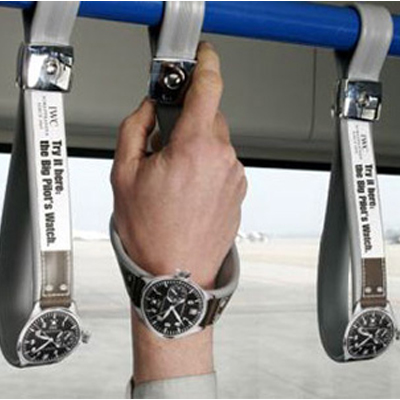
    In Germany, Big Pilot’s Watches were attached to the hanging straps of buses ferrying passengers between the airport and airplane to encourage them to try them on.


    Closer home, Jet Airways came up with a print ad seven years ago saying, “We’ve Changed”. No sooner, rival Kingfisher Airlines came up with an ad above the Jet one saying, “We made them change!”


    All instances go to show that marketers are increasingly adopting unconventional means of advertising. And why not, for given the plethora of options, consumers’ attention spans are only heading south. In such a scenario, advertisers are compelled to come up with ‘out-of-the-box’ ways to get their brands noticed.


    Newly-appointed regional head of Posterscope APAC, Haresh Nayak, puts it as: “The ultimate goal of the advertiser is to sell things, but the necessary preliminary goal is to get the attention of the public. Advertisers will go to great lengths to get this attention, as the pay-off for a truly successful advertising campaign can be enormous.”


    Of the many triggers for unconventional advertising, Madison Media Sigma COO Vanita Keswani enlists some. “The need to target a niche audience and to avoid spill-over from mass media. The need for a lead brand in a competitive category to add unconventional to conventional to beat the clutter. The need for a small brand which does not have adequate monies to compete in traditional media,” she says.


    Big Cinemas’ marketing and sales head Shirish Srivastava adds, “Advertisers and marketers have to use unconventional methods to target consumers at the opportune time and sell them the service at the Zero Moment of Truth. This is where non-traditional, out of the box, clutter-breaking ideas and media come into play. For instance, look at the way in-cinema advertising has evolved in the wake of a rise in multiplexes.”


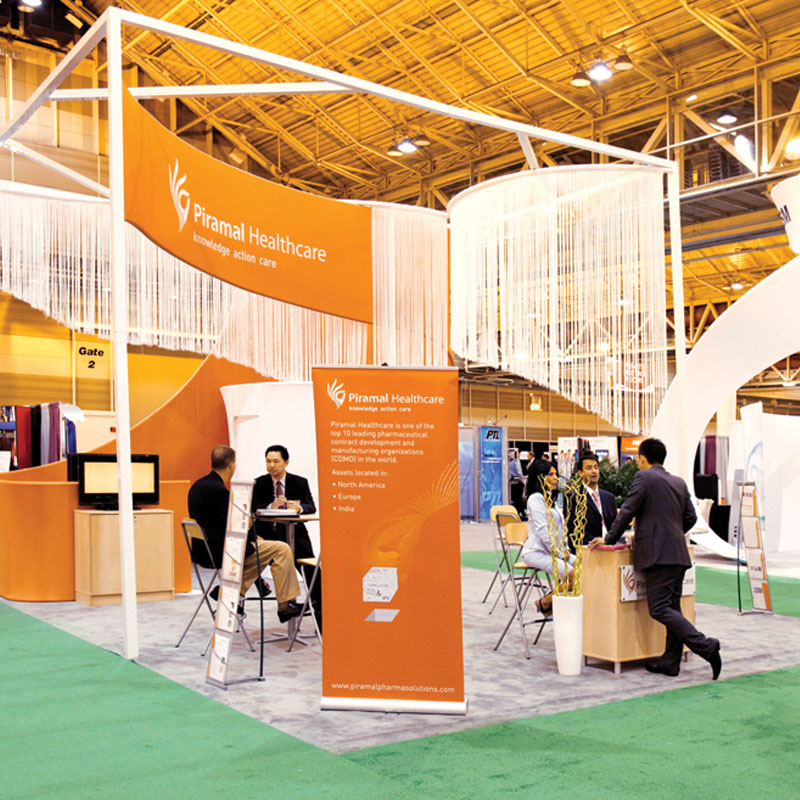
    For example, the HDFC Life ad in cinemas a couple of years ago was played right after the national anthem and this helped the brand get the attention it wanted. Similarly, Piramal Healthcare’s ad for its iSure ovulation kit was plastered across doors, mirrors and hand dryers of washrooms at Big cinemas. This was followed by a feedback camp with two promoters stationed at cinema exits, gathering feedback from women about the activation.


    Says Amit Sinha of Piramal Healthcare, “Washroom advertising is effective as it gives you a one-on-one moment of impact for a range of products like i-Sure in the intimate space, while ensuring it is gender-targeted and thus very relevant. We are glad to have chosen BIG Cinemas as one of our media vehicles on this one, since the brand provided us a significant reach to connect with our customers, at the right time.”


    Unconventional advertising is often referred to as guerrilla marketing and consists of creative, low-cost marketing methods used by businesses to temporarily promote their products or services. According to Srivastava, “Brands need to search for these convenience factors, create communication, create POS and convenient touch-points to generate business. Like traditional paan shops which have now become mini convenience shops where so many more products are available.”


    Nayak recalls an innovation which encouraged immediate action on the part of consumers. The bespoke ad for Skoda Rapid, which was played in theatres, had a patron appear on the screen, take a test drive and return back to his/her seat to continue watching the movie. It created a lot of buzz on YouTube and facebook. HDFC Ergo did the same thing to promote car insurance through mobile.


    Sometimes, unconventional media channels are to be found within the traditional ones. For instance, HD and DTH on TV or catching consumers at relevant touch-points like out of home screens or multiplexes or activations or stunts.


    Coming to which is better, unconventional or traditional advertising? Media experts say that the biggest risk in unconventional advertising is that the insurgent stunts can flop and ultimately become a PR nightmare. However, smaller businesses don’t run as much risk as most people would just write it off as another failed stunt. There are other risks in unconventional advertising too like misrepresentation of brand image, vague communication creating false rumours about the brand and so on. As Keswani says: “There are risks of not having measurement metrics like traditional media, but then brands need to derive learnings through their own internal research and create measurement criteria for success.”

  • Piramal Healthcare hands over media AOR to Madison Media Sigma

    Piramal Healthcare hands over media AOR to Madison Media Sigma

    MUMBAI: On a winning spree, Madison Media has added Piramal Healthcare‘s media AOR to its kitty. The account was won in a multi agency pitch where other agencies like OMD and MPG also participated. The estimated size of the account is Rs 70 crore.

    Lodestar handled Piramal‘s account previously.

    On winning the account, Madison Media Sigma COO Vanita Keswani says, “We are delighted with this new win and are looking forward to a long and mutually beneficial relationship”.

    Piramal Healthcare has aggressive plans for OTC category and has recently launched skin creams under its Lacto Calamine brand name. The company also plans to launch several other brands as well in the healthcare space.

    Piramal Healthcare consumer products COO Kedar Rajadnye says, “Given our ambitious plans, we wanted to enhance our current capabilities in media strategy & buying front and hence looked out for partners who could create a higher value on this aspect. Madison Media fitted very well in the requirement & our scheme of things as we were very happy to see their approach being very similar to our mindset.”

    Madison Media has recently won a host of new businesses including Raymond, Epic Channel, Maxx Mobile, McCain Foods, Ruchi Soya, Max India‘s corporate account, Café Coffee Day, Radikal Rice and Crompton Greaves.

    With the media agency handling media planning and buying for blue chip clients including Airtel, Godrej, Cadbury/Kraft, ITC, General Motors, Marico, McDonald‘s TVS, Levis, SpiceJet, Domino‘s, Bharti AXA, Max Life Insurance, Asian Paints, Pidilite, Tata Salt, Acer, Crompton Greaves, Dish TV, Times Television Network, Indian Oil, Enamor Lingerie, Gowardhan Dairy, Café Coffee Day and many others, the gross billing of Madison Media is about Rs 3000 crore.