Tag: Vamshi Reddy

  • Telcos are great partners for OTT discoverability and monetisation

    Telcos are great partners for OTT discoverability and monetisation

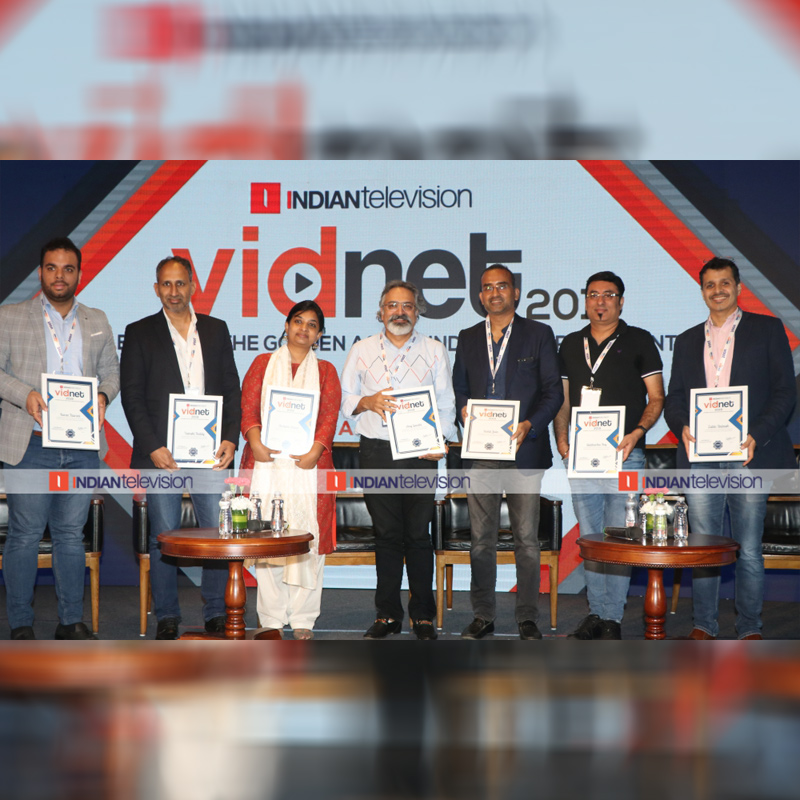
    MUMBAI: With an explosion in the smartphone market and rise in the number of OTT channels operating in India, telco-OTT partnerships are well-strategised and the most beneficial for content platforms to gain eyeballs and drive monetisation asserted a panel speaking on the topic of “Captive Audiences of the Telecom Trace” at the recently concluded Business and Tech Track of Indiantelevision.com Vidnet 2019 summit.

    Sitting on the panel, moderated by Elara Capital VP – research analyst (Media) Karan Taurani, were ZEE5 Global chief business officer Archana Anand, IndiaCast Media Distribution group CEO Anuj Gandhi, Apalya Technologies founder & CEO Vamshi Reddy, Lionsgate South Asia MD Rohit Jain, Shemaroo Entertainment COO digital Zubin Dubash, and Hungama Digital COO Siddhartha Roy.

    Roy mentioned that as aggregators, telecom companies are greatly positioned as single payment option for most of the OTT channels and Zubin Dubash vouched for the ability of telco partners to get greater traction on content sites and drive up numbers.

    Taking the example of Ditto TV, the VOD service from ZEE, Archana Anand shared that partnerships with telecom companies have always been fruitful for the ZEE network’s OTT offerings, for both consumer acquisition and marketing.

    She said, “I think, back then, we were the first ones to go across and do partnerships with the telcos and we created quite a stir in the market because of the lovely sachet pricing we were offering. The telecom partners ensured that they are paying on behalf of the consumers and it gave us brilliant traction. I believe, we managed to get the highest subscriber base in those days.”

    Anand added that there can’t be a better distribution network than telcos as it also translates into a ‘fantastic payment mechanism’. “With all the hesitancy around credit card payment, etc., the direct carrier billing is something that the consumer can be confident about and adapt easily.”

    Vamshi Reddy seconded her thoughts as he quipped that telcos can become the easiest ways for the industry to build a monetisation model around the whole content consumption. He noted that with fragmentation happening in the OTT space, the telecom partners can provide a universal experience to users in a seamless manner.

    Gandhi, however, highlighted that in the long run, the issue of ownership of the consumer can arise. “This challenge will take some time to settle, but from a pure bundling perspective, the discoverability on TV is extremely easy, and that is something that the OTT platforms are struggling with. Telcos can help in solving that.”

    To this, Anand noted that today there is a great symbiotic relationship between the OTT platforms and the telcos as the former wants to own the content and the latter, the consumer. But the platforms need to be mindful of the fact that it gets constant data from its partners and also keeps on communicating with the consumers through in-app notifications to ensure scalability of the partnerships in the long run.

    Jain added another dimension to the conversation as he noted that while telecoms are great in helping the OTT content reach the smaller screen, there is a wide array of opportunities lying in the big-screen space, which the OEMs can latch on to.

    He said, “In some ways, this is life coming to a full circle as all of these (telcos, OEMs, etc.) are actually (equivalent to) DTH and cable companies. All we need now is an ecosystem to emerge and thrive and whoever does a good job of aggregating content will eventually become the winner.”

  • Guest Column: Race to the bottom(line) – From consumption to subscription

    Guest Column: Race to the bottom(line) – From consumption to subscription

    It’s been a quick and busy 36 months since the advent of the very first OTT services and between all of the media-owning majors, the flush-with-money global players and the battling aggregators and the ever-growing flock of Indie hot-shops, it’s a whole load of original and aggregated content that has been unloaded on the Indian consumer. Complemented by falling data costs, average consumption (data) has shot up 6 times with video being the clear driver.

    One thing is for sure. 100 million+ video consumers on OTT (predominantly the phone) within the year is a certainty and a target of 200 Mn+ in the coming 24 months seems a very realistic possibility. And to get to that goal, almost everyone is working to make the consumption process from app download to sign-ups to browse and watch to recommend and return an almost frictionless experience. The question of payment and monetization is a reality for everyone with the only variable being ‘when is the right time to bring it up?’

    With all the tentative attempts so far, and piecing together a lot of disparate data, and depending on how optimistic a view you would like to take, it looks like we may have anywhere between two to three million viewers paying something for their OTT video. And these payments range from Rs.500/- at the highest end (admittedly an exception) to Rs.20/- at its friendliest, and with an average possibly in the early triple figures. Now, admittedly this is small change compared to the investments in content that is being witnessed.

    From the wildly astronomical figures witnessed in recent sporting acquisitions to the scarily exuberant movie acquisitions by global majors to even the more measured investments from the original content creators, it all adds up to a serious amount of investment that is all being gussied up to make these 100 million and the next 100 million users default to their connected devices for video. Everyone realizes the habit has to come before the money. And, the majors opening that tap in full force and running it mostly for free makes it pretty difficult for the others to push the monetisation button on the subscription front.

    Having said that, the move towards subscription has begun in earnest over the last year with all major services. The likes of Netflix and Amazon Prime have always been pay. And, arguably while Hotstar’s conversion of free to pay was pretty low, this has to be seen in the light of the monstrous funnel of free users that they have been able to create. From hereon, one could assume that the subscription push will begin to intensify, already in evidence through the live cricket feed versus delayed cricket feed as a strategy to push conversions. Bolder new launches like ALTBalaji and SunNxt have started off with a paid model. 

    So, is there still a question about whether a subscription model will work in India where content has famously been sold cheap historically? There is no data that shouts an emphatic NO to that question but emerging models are clearly making it less of an unknown. 

    To my mind, among all the things happening, two aspects that pretty much decide the issue of subscription success are:

    a. Distinctive content – without a doubt, this seems to be the most crucial factor in your ability to find a core audience that will evangelise your stories. Youtube is crawling with a lot of me-toos with a phone-cam, hastily pulling together half-baked stories of clichéd youth issues presented sensationally with a liberal dash of promiscuity and abuse. As a way to make people sit up and take notice, promiscuity and abuse did show promise but as a means to create a distinctive and engaging story-telling equity, they don’t take you much past the gate. And that’s where a lot of the focus will need to be, if you hope to ever get even a part of your audience to pay. A frequently asked question is how many apps/ services is a user going to have on their devices. Well, everyone cannot and will not have everything. It’s a country of a billion different people with demographic, ethnographic and psychographic variations. 

    Finding a meaningful core audience will probably become the most critical skillset for survival. A case in point is the south-focussed offering of a SunNxt. 

    b. Charging (payments) – for a long time since the advent of e-commerce we have bemoaned the low credit card penetration and how cash on delivery is still a reality of our market. Neither helps the small-ticket digital products business. However, the one tsunami of payment enablement rapidly bubbling up is the rise of wallets. From telcos to transporters and banks to Google, everyone will have one and a significant part of their customer base can be expected to adopt. Pricing, for almost all the Indian services, is at a very realistic level. It was charging where a bulk of the problem lay. And the wallets in this context can only be good news. This can and will change the charging and subscription scenario. Examples like the Vodafone Play service with a single gate-pass for a wide ranging content offering will showcase the difference that frictionless charging can make. Thus also making the case for more charging platforms/ wallets to offer aggregated media services. 

    As this drama unfolds over the next 24 months and as the majors, minors and everyone in between tries out various strategies to bring you into their subscription net, sit back (or stand), pop the screen of your choice, choose your poison and hit Play. 

    public://vamsi.jpgThe writer is the founder and CEO of Apalya Technologies. The views expressed here are of the writer’s, and Indiantelevision.com may not subscribe to  them.
     

  • Ronnie Screwvala’s Arré acquires video streaming venture Apalya

    Ronnie Screwvala’s Arré acquires video streaming venture Apalya

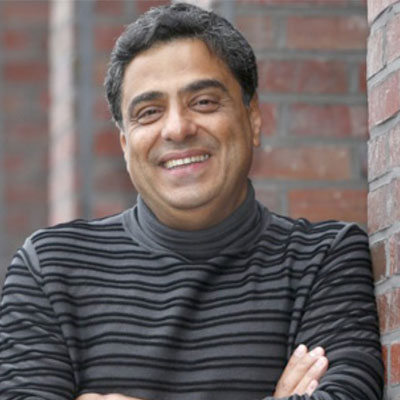
    MUMBAI: In a bid to strengthen its video play capabilities, Ronnie Screwvala’s digital media brand Arré has acquired a 100 per cent stake in Apalya Technologies, founded by Vamshi Reddy and Shiva Bayyapunedi.


    Reddy, who heads the company as CEO and Bayyapunedi, who is the chief technology officer, will join the founding team of Arré with immediate effect.


    With this acquisition, Arré aims to be the country’s leading digital content and platform brand, combining its multi-genre, multi-format content plans with a formidable technology platform.


    Apalya is a technology company with a proprietary video platform, strong engineering talent as well as content access relationships with telecom operators. This transaction will be effected via a 100 per cent buy out of shares from all investors including IDG, Kalaari, Cisco, Mumbai Angels and the founders among others.


    Apalya runs the OTT platform in partnership with more than 10 mobile operators across four countries, reaching 10 million subscribers annually and currently earning Rs 40 crore in revenue with positive EBITDA margins.


    With the telecom ecosystem and service offerings in India undergoing a rapid change with the 4G rollout coupled with the rapidly growing appetite for video, Apalya is rightly positioned to leverage this opportunity.


    The company has also made in-roads in various international markets and plans to expand and launch services in the Middle East/Africa and some parts of South-east Asia over the next six months.


    Screwvala said, “The OTT space is throwing up massive opportunities that brings together the twin forces of scale and creativity. We’ve already seen this space take off in the US and in other mature markets and we will partner with many and work closely with some on co-creating the next level of digital content. We are a digital-first and digital-only company and our focus is and will remain creating original content in all forms and these will differentiate us and yet allow us to be complimentary to many of our peers.”


    Arré co-founder and MD B Saikumar added, “This acquisition gives us wings to move rapidly from being a content player to a ‘content & platform’ player. We aim to operate at the intersection of creativity and technology and the Apalya acquisition is a key move in that direction. Besides, content will need tremendous distribution focus and Apalya’s telecom relationships will add power to our pursuit of reach and access. Digital advertising and Digital payments are seeing seismic growth shifts and Arré will be well positioned to exploit these twin revenue lines for its content offerings.”


    Reddy said, “Arré and its founders represents the next wave of digital innovation and disruption in Asia and with all our expertise of the past decade we are happy to join in on this vision and work together to create a true blue digital content and platform company, a strong consumer base and at scale.”