Tag: V C Khare

  • No going back on DAS despite difficulties in P-IV: MIB

    No going back on DAS despite difficulties in P-IV: MIB

    NEW DELHI: Even as he admitted the fourth phase of digital addressable system for cable television was the most difficult, advisor (DAS) in the information and broadcasting ministry Yogendra Pal has said there is “no going back on the deadline of 31 March 2017.”

    Pal said that there were difficulties because several MSOs were reluctant to set up headends in far out rural areas, as the fourth and final phase only covers rural areas. He said the 60-plus cases pending in Delhi High Court relating to Phase III had been disposed of with the exception of three which challenged section 4A of the Cable Television Networks (Regulation) Act 1995, and all stay orders had been vacated.

    However, Pal admitted that a new case had been filed in Telengana to the effect that while there was clear reference to switching to DAS in Section 4A, there was no reference to switching off analogue signals. He said this case had been filed by a party not involved with the cable TV business.

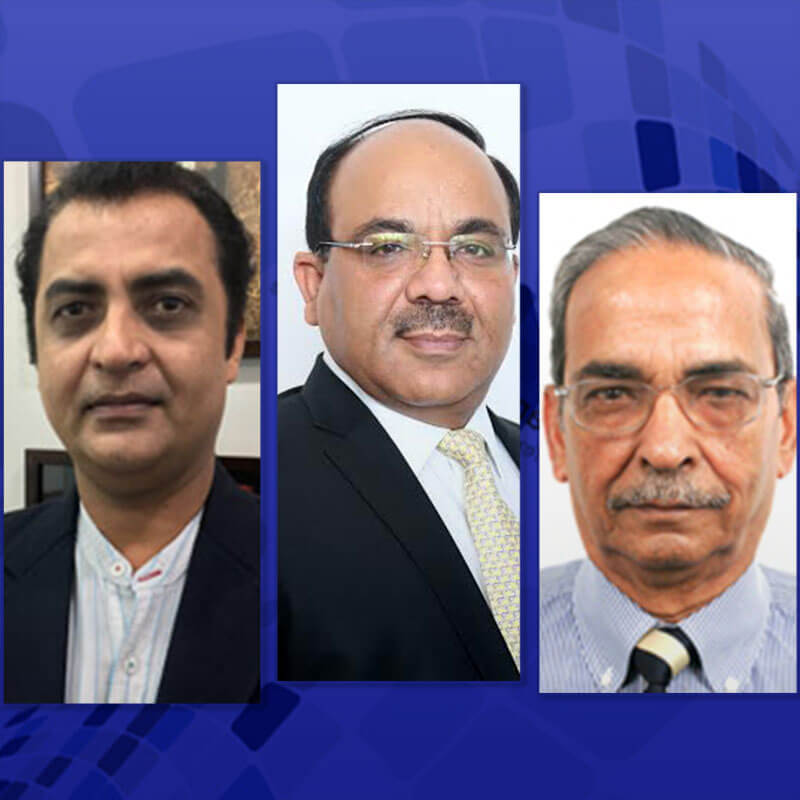
    However, cable TV veteran Lt. Colonel V C Khare (retired) who chaired the session on ‘DAS implementation – miles to go before we sleep?” claimed that just around 22 per cent seeding of set-top boxes had been achieved in the third phase as against government claims of almost total seeding.

    Siticable Networks CEO V D Wadhwa also agreed that there were ‘gaps’ in Phase III, and Siticable had yet to seed another 2,50,000 STBs. But, he welcomed DAS, though he felt monetisation was still a challenge.

    Wadhwa said that while the objective of the consumer getting channels of his choice had been achieved, the industry was cable of overcoming soon the problems about SMS or receipts not being issued which had been raised by Khare in a presentation earlier in the day when he showed various loopholes in the DAS legislation.

    Khare had also pointed out that DAS in effect was aimed at involving only the broadcaster and the multisystem operator, conveniently keeping out the LCO who had built the industry.

    Other speakers in the session were unanimous that the cable TV industry had achieved in four years something that the direct to home industry had not been able to do in twelve years.

    In a session on “Business Model and Regulations”, there was general unanimity that the industry needed regulation but it did not have to come from a government regulator. The speakers favoured industry-led regulation.

    Eminent lawyer Kaushik Moitra of TMT Practice who moderated the session said that the Telecom Regulatory Authority of India (TRAI) had been given the additional burden of broadcasting only till a Broadcasting Regulatory Authority of India is set up but this had not happened. He said there was a certain need to move towards self-regulation. He also raised the question of whether TRAI was working to unite the LCOs.

    However, he applauded the growth of the industry with the last five years showing the growth of the highest number of television channels.

    Indiacast EVP Amit Arora said regulation was welcome, but it should not mean “jumping in at all times – this kills enterprise”. Even as no other country had achieved the kind of growth that local cable operators had shown in India, the regulator had to show greater responsibility towards the last mile operator. He also wondered why the MSOs and LCOs could not handle broadband while dealing with cable TV.

    Prag News CMD Sanjive Narain said that the regulator was only mean t to “ease movement” and not strictly regulate. It should solve problems before waiting for them to arise. He said that though TRAI consulted stakeholders, everything was often’pre-decided’.

    He said the primary problem before the industry was one of revenue sharing. Once that was out of the way, things would move smoothly.

    VuClip consultant Sisir Pillai said a regulator is needed, particularly in view of newer technologies like OTT. Referring to the growth of OTT, he said that the aim was to deliver content in whatever manner the subscriber wanted and find revenue for this.

    Answering a question later, he said that wired delivery was still the best medium even if video had to be sent to mobiles or other platforms.

    InDigital senior VP – operations and head of regulatory Subhashish Mazumdar said there was no regulator when the LCO began with VCRs and built the industry. This meant that the last mile operator and multi-system should be capable of solving their own problems. The industry was now geared up for this, he said.

    Agreeing that the primary problem was one of revenue sharing, Mazumdar said that the issue of unity among stakeholders to solve such problems had to come from the top.

    Earlier, Dr A K Rastogi of Aavishkaar which was among the organizers said that the primary problem was one of unity among stakeholders and a step had been taken in this direction with the formation of the Media Club of India.

    A session later on “Significance of wireline operation in Digital India” moderated by Castle Media ED Vinsley Fernandes was unanimous that there was no better technology than wireline.

    The session was addressed by Cisco CTO Gulshan Khurana, Siti Networks COO Anil Malhotra, Ortel Communications President and CEO Bibhu Rath, Suresh Sethiya of ICNCL of Kolkata, and StoreSay founder and CEO Raman Kalra.

  • Fix basic tier rate above Rs 100: Cable ops to Trai

    Fix basic tier rate above Rs 100: Cable ops to Trai

    MUMBAI: The basic tier monthly rate of Rs 77 (excluding taxes) in conditional access system (CAS) areas is unrealistic and should not be below Rs 100, cable TV operators told the Telecom Regulatory Authority of India (TRAI).

    Six stakeholders have posted their views to the broadcast and cable regulator. Trai had sought views from the industry on the draft tariff amendment order notification for fixing the basic tier rate.

    The common argument laid down by the cable operators was that the price for the 30 FTA channels did not take into account the distribution cost through franchisee operators.

    According to clause 3B in the Telecommunication (Broadcasting and Cable) Services (Second) Tariff Order, 2004 (6 of 2004), “The maximum amount, which a cable operator may demand from a subscriber for receiving the programmes transmitted in the ‘basic service tier’ provided by such cable operator shall not exceed Rs 77 per month exclusive of taxes, for a minimum of 30 FTA channels. Free-to-air channels, over and above the basic service tier, would also be made available to the subscribers within the maximum amount mentioned above.”

    The views posted by New Delhi-based Cable Operators Federation of India (COFI) said, “Only one multi-system operator (MSO) headend was considered and not the distribution cost through franchisee operators who maintain their own offices, technical maintenance staff, collection staff etc. Quality of service was not considered while calculating number of subscribers and the number of subscribers was based on extended network of the MSO prevailing at that time.”
    “The cost of FTA channels has to be reworked. Even as per our calculations submitted to the Ministry in 2003 the cost was Rs.180. One option is to use the benchmark of Rs 125, which was the charge for 15 to 20 channels in 1994 when there were no pay channels.”

    Pointing out the need for reworking the cost of FTA channels, the Federation said, “Even as per our calculations submitted to the Ministry in 2003 the cost was Rs.180. One option is to use the benchmark of Rs 125, which was the charge for 15 to 20 channels in 1994 when there were no pay channels.”

    A minimum of Rs 150 should be charged for the basic tier considering the fact that TRAI does not want last mile operators to pay for the FTA package to the MSOs. An amount of Rs 30 to Rs 50 is being paid at present to MSOs, the Federation added..

    Hathway Cable and Datacom has suggested a basic tier price of Rs 100 per month (excluding taxes). This will work out to not less than Rs 150 a month.

    “The cost of materials like cable, amplifier, and electronics have gone up significantly. And other components such as power and fuel in delivery of the services have also risen sharply in the last one to two years,” the MSO expressed to Trai.

    According to cable TV industry observer Col V.C Khare, “The rate was arrived at for a network spectrum 47-550 MHz transporting 62 channels, with a customer base of 32000 and a radius of operation of 7.5 kms on coaxial cable.”

    “Technically, head ends using 500 series trunk cable over 47-862 M Hz and transporting 90 channels cannot deliver signal quality per IS 13420 beyond 4.8 kms cable length, with a cascading limit of 16 amplifiers. The subscriber base of 32000 was high as independent head ends were having 18000 subscribers on an average. On the other hand, networks have consolidated with fiber, 120 digitally compressed signals, encryption and SMS hardware installed. If the upward and downward adjustment in cost for the above factors is taken into account the cost of Rs.72 as prorated would give at least a minimum cost of Rs.100 (exclusive of taxes),” he argued.

    National Cable & Telecommunications Association (NCTA) president Vikki Choudhry has suggested a monthly subscription rate of Rs 180. “A price below this level will result in deficiency in quality of service for the consumers, non-conformity with the provisions of CAS and Standards of BIS, no investment in network upgradation or maintenance, loss of employment, incentives most broadcasters to keep (or convert) their channels into pay, loss of revenue to the Indian Government and encourage under declaration by the cable service providers of FTA subscribers.”