Tag: UTV

  • Makers of Rowdy Rathore resort to hand painted posters

    Makers of Rowdy Rathore resort to hand painted posters

    MUMBAI: Reminiscing the olden days when posters of every film used to be hand painted, Sanjay Leela Bhansali and UTV, the makers of the Akshay Kumar starrer Rowdy Rathore, have roped in painters to hand paint the first posters of the film.

    The filmmakers are bringing back the style by roping in painters to make the first look of their film.

    The action-oriented film, starring Sonakshi Sinha, is directed by Prabhu Deva.

  • Bombay HC gives relief to Lankan makers of ‘A Wedneday’

    Bombay HC gives relief to Lankan makers of ‘A Wedneday’

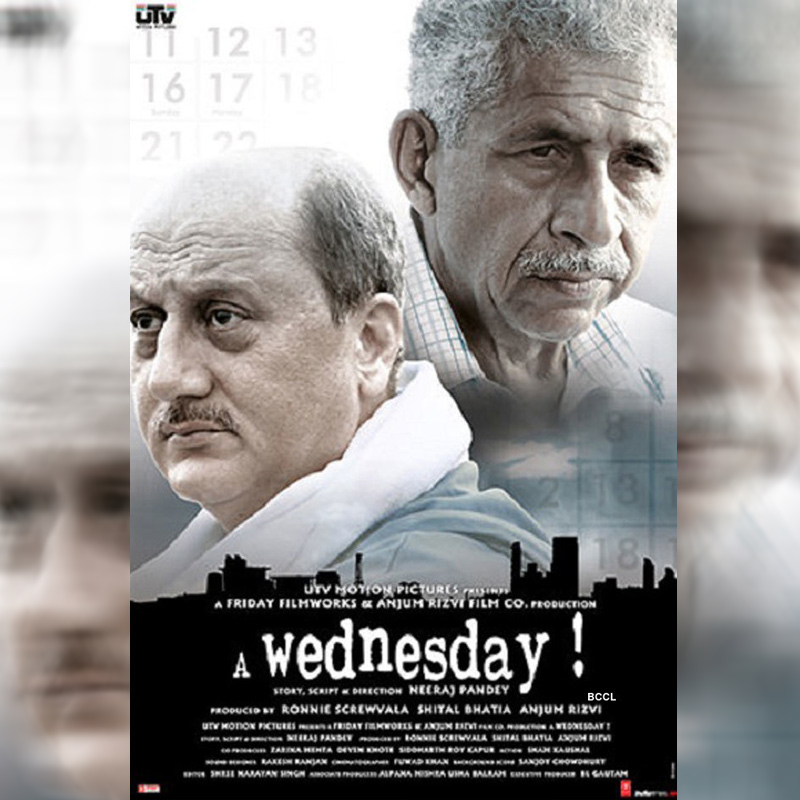
    MUMBAI: In a major relief to the Sri Lankan producers of their version of ‘A Wednesday‘, a division of the Bombay High Court rejected a petition demanding the stay on the release of the film due to a contractual dispute.

    The application seeking the stay on the film’s release was made by UTV Software Communications which had given the making rights to Asia Digital Entertainment and Gemini Nation Digital of that country.

    The dispute was regarding the insertion of a clause by UTV that stipulated that non-Sri Lankan actors should not be used in the film.

    The application was rejected earlier by a single Bench of Justice S.J. Vajifdar in July last after which the production house appealed again to the Division Bench of Chief Justice Mohit Shah and Justice Roshan Dalvi that upheld the decision.

    In the first edition of JIAFF, 10 awards will be presented: Best Animation, Best Animated Film, Best 2D, Best 3D, Best VFX, Best Sound Track, Best Modeling & Texture, Best Lighting & Compositing, Best Student Film & Best Critic Film.

    The film starring Ben Kingsley and Ben Cross has been directed by Chandran Rutnam.

  • Madhur Bhandarkar to make sequel of Fashion

    Madhur Bhandarkar to make sequel of Fashion

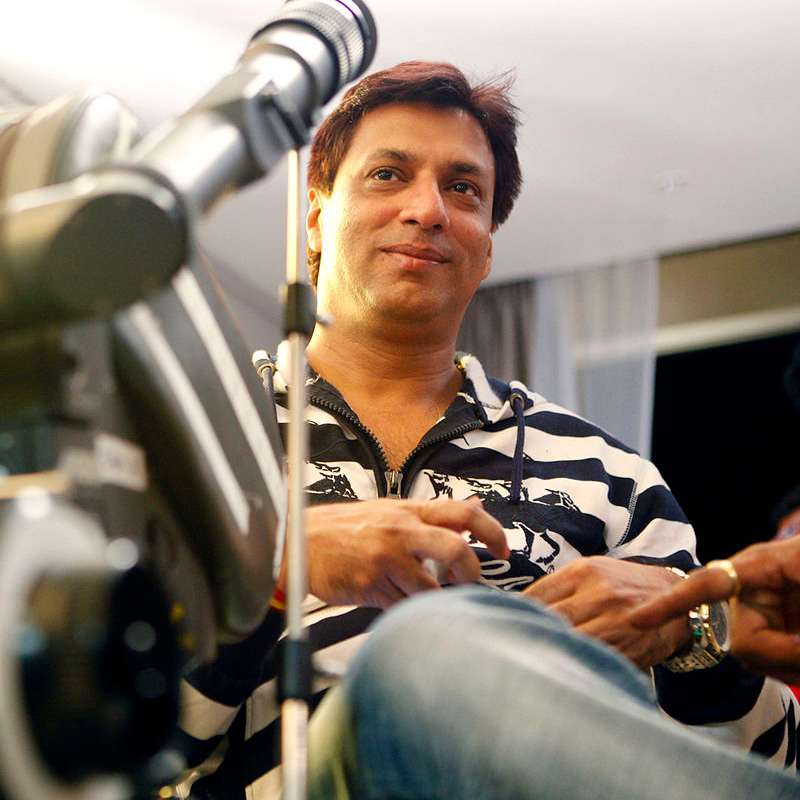
    MUMBAI: Madhur Bhandarkar is making a sequel of Fashion that had Priyanka Chopra in lead role.


    Though many felt that Bhandarkar’s portrayal of the fashion world was very clichéd and showcased models and their lifestyles in a poor light, the film went on to win awards and bagged more than a dozen trophies for both Chopra and Kangna Ranaut.
     
    Both Bhandarkar and UTV head honcho Ronnie Screwala were keen to make the second part of Fashion. After a lot of head scratching, they have finally decided to launch the second part of Fashion in 2012.


    Bhandarkar will start work on the film after he finishes Heroine.

  • Padmanabhan joins Neo Cricket as national ad sales head

    Padmanabhan joins Neo Cricket as national ad sales head

    MUMBAI: Manoj Padmanabhan has joined Neo Sports broadcasting as Neo Cricket national head of ad sales.

    Padmanabhan will report to Neo Sports Broadcasting executive VP – network sales Raju Udupa.

    He moves in from Somerset Entertainment Ventures (Singapore), where he was senior sales advisor for nearly 10 months. During his stint there, he was instrumental in setting up and creating a business model for the Sri Lanka Premier League.

    Padmanabhan said,”Neo is in an interesting growth phase. With the best cricket content for the next few years, I look forward to creating value for the advertisers and maximising revenue for the organisation.”

    Before Somerset, Padmanabhan was working at Bloomberg UTV as VP sales for a period of 10 months. Prior to that, he worked at Ten Sports for a period of over four years as director of ad sales.

    Udupa added,”We have an action packed season lined up and I am glad to have Manoj on board. He is known for his sharp acumen and sales expertise and I am confident of Neo achieving greater heights.”


  • Tamil, Telugu version of Chillar Party in offing

    Tamil, Telugu version of Chillar Party in offing

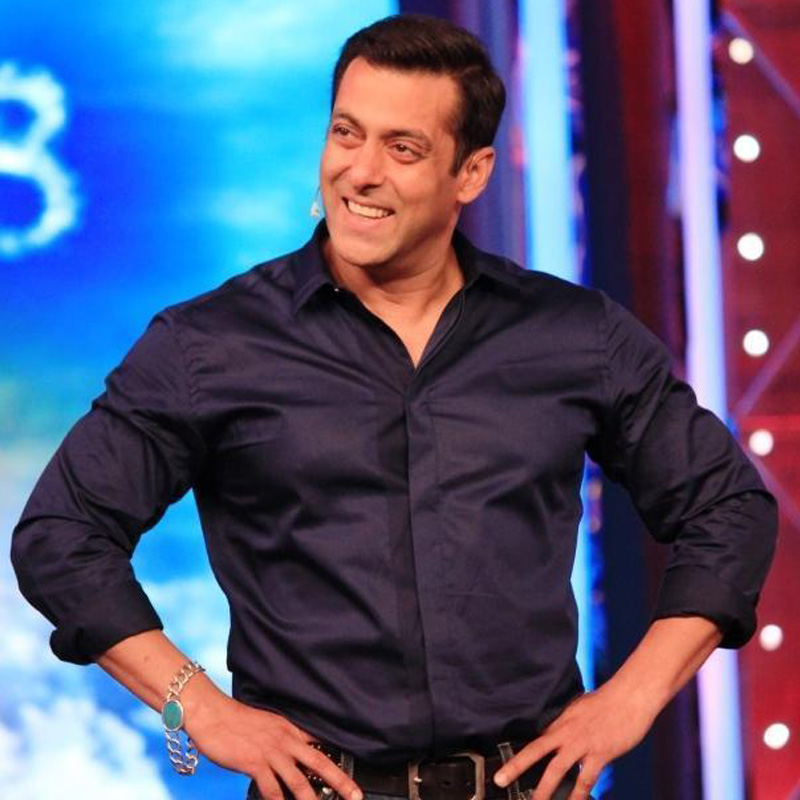
    MUMBAI: Though Chillar Party didn’t do well at the box office, the UTV Motion Pictures and Salman Khan film has found takers.

    It is now heard that Madhu Mantena, who had earlier made Ghajini, wants to remake the film in Tamil and Telugu.

    Mantena has reportedly approached co-writer, director Vikas Bahl and has almost finalised the deal.
     
    Said Bahl, “Chillar Party is a universal story and after the great response in Hindi, it is now attracting the Tamil and Telugu markets as well. They have approached us for the rights. My talks with Madhu Mantena are in a nascent stage right now. While it‘s interesting, we have to just wait and watch to see where this is headed.”

    It is now to be seen if Salman Khan will be a part of the South Indian language

  • UTV’s verticals profitable in FY’11, movie dominates

    UTV’s verticals profitable in FY’11, movie dominates

    MUMBAI: The movie business is still UTV Software Communications’ leading vertical, but the television and gaming segments have supported the company’s growth in FY’11.

    UTV has achieved its movie revenue guidance for the fiscal, posting a turnover of Rs 4.54 billion. while all the verticals have turned operationally profitable.

    For the full-fiscal, the company with varied interests in movie production, broadcasting and gaming has posted a a consolidated net profit (after minority interest) of Rs 1.35 billion, a 154.03 per cent jump from Rs 533.32 million a year ago.

    UTV’s operating revenue for the fiscal jumped 40 per cent to Rs 9.29 billion, from Rs 6.64 billion in the earlier year. Television business aided 38 per cent of the topline during the fiscal.

    The company has consolidated the financials of UTV Communications (USA) LLC, IG Interactive Entertainment, UTV Global Broadcasting, UTV TV Content, UTV Games, First Future Agri & Developers, UTV New Media, Indiagames and the group’s stepdown subsidiaries -Ignition Entertainment, True Games Interactive, Genx Entertainment, UTV Entertainment Television, UTV Tele-Talkies, RB Entertainment Ltd & Vikatan UTV Content and the JV Screenshot Television Limited.

    Movie Segment:

    Aided by films like Rajneeti, No One Killed Jessica, Saat Khoon Maaf, and Dhobi Ghat among others, the movie business revenue jumped 44 per cent to Rs 4.54 billion, from Rs 3.15 billion a year ago. Operating profit went up 60 per cent to Rs 1.53 billion, from Rs 951 million.

    UTV was largely de-risked with a combination of pre-sales and committed revenues on account of music, home video, TV and ancillary revenues prior to the release of the movies.

    Television Segment:

    The television segment revenue jumped 43 per cent to Rs 3.56 billion, up from Rs 2.49 billion a year ago.

    The company posted operating profit of Rs 309 million from the segment compared to an operating loss of Rs 2 million in the earlier year.

    Games and Interactive division:

    UTV’s gaming and new media business raked in Rs 1.2 billion, contributing to 13 per cent of UTV’s total revenue. The company had registered a revenue of Rs 1.07 billion from the segment in the previous fiscal.

    The segment saw an operating profit of Rs 141 million, as against an operating loss of Rs 148 million in FY’10.

    The segment comprises Ignition, Indiagames, True Games, web and mobile foray of the company.

    As of 31 March 2011, UTV had a net debt of Rs 8.19 billion.

    Shares of UTV jumped 4.01 per cent to close at Rs 654.55 on the BSE.

  • UTV Bindass aims at strong growth in FY’11

    UTV Bindass aims at strong growth in FY’11

    MUMBAI: After consolidating its position among the youth entertainment channels, UTV Bindass, the UTV Global Broadcasting (UGBL) channel, is now gearing up to monetize its position.

    “All our efforts are paying in the expansion of the brand and we are seeing a significant jump in the revenues this year,” says UTV Bindass business head Nikhil Gandhi.

    Bindass fights in a market which is too cluttered with youth and music channels including MTV, Channel [V], Mastiii, and 9XM.

    So far, MTV gets the lion’s share of the revenue in the genre. So will Bindass come closer to MTV?

    Answers Gandhi, “We will end the fiscal very close to our nearest competitor.”

    Bindass was launched in September 2007, touted as the first 360 degree entertainment brand for Indian youth. Bindass adopted the brand values of youth – fun, frank, and fearless – and built it as a platform to cath its target audience using TV, movies, web, mobile, ground and campus activities.

    “We have grown to become the number one channel in the genre, because we understood the need of the youth. It is a result of extensive research and planning,” claims Gandhi.

    Gandhi is also pinning hopes on the upcoming shows, which the channel will launch in the coming six months, to take its share further.

    “The next four months are very important for us. You will see new format shows, one reality show in dating space, one more relationship based. We will also launch a action reality show and a youth-based fiction show in the fourth quarter of the fiscal,” Gandhi adds.

    Further, the channel is also looking at advertiser funded programming (AFP) as a major revenue stream. “We have set up a special team, which will take care of the AFPs. We are taking this very seriously,” Gandhi said.

    Interestingly, 15 per cent of MTV’s revenue comes from Viacom Brand Solutions (client lead stuff, events and advertiser funded programming). The channel has done some AFP shows like Pulsar MTV Stunt Mania, and MTV Force India The Fast and The Gorgeous.

  • Bloomberg UTV targets the growth aspirants with bluntness

    Bloomberg UTV targets the growth aspirants with bluntness

    MUMBAI: Bloomberg UTV, the English business news channel, is eyeing a wider set of audiences with its new makeover.

    The channel, which has changed its tagline to ‘Blunt and Sharp’, claims that going forward, its focus will be on a larger audience who are growth aspirants, and not just on the stock markets.

    Talking to Indiantelevision.com, UTV Global Broadcasting (UGBL) CEO MK Anand affirmed that he is looking at an overhaul by practically measuring the way business news is being presented in India. “After a detailed eight-week survey of our SEC AB 25+ male audiences, we have come to know that only nine per cent viewers invest actively in the stock market. The business news should be much more than that and thus, we believe our focus should be on catering to the needs of the remaining 91 per cent audience.”

    The channel has been correcting its distribution post IPL, and changed its look and feel during May-end. Recently, it had also launched a new advertising campaign to promote its new programming strategy.

    Via the new ‘blunt and sharp’ campaign, the channel is addressing its various stakeholders, including viewers, traders and advertisers. The campaign is done by TapRoot India, the channel’s creative agency.

    Talking about content, Bloomberg UTV business head Deepak Lamba said that within the next three months, the channel will launch new shows with a complete refreshed perspective.

    “We will be using simpler terms, and launching new shows on smart money, real estate etc. Our aim is to simplify the things for our viewers,” Lamba said.

  • UTV plans to own 49% in UTVi holding firm

    UTV plans to own 49% in UTVi holding firm

    MUMBAI: UTV Software Communications, an integrated media company owned 59.9 per cent by The Walt Disney Company, plans to buy a 49 per cent stake in a special purpose vehicle, which would own UTVi, the business news channel owned and founded by Ronnie Screwvala and his affiliates.

    The decision follows the amendments to the foreign direct investment (FDI) guidelines in February 2009 on calculation of direct and indirect foreign shareholding in Indian companies. The changed guidelines consider investment by a company registered in India in a subsidiary as domestic shareholding as long as the company is majority owned by Indian shareholders.

    Screwvala and his affiliates will own the balance 51 per cent in the Indian Special Purpose Vehicle Company as the resident Indian and founder promoter of the business news channel.

    The board of UTV Software has taken an in principle decision to invest up to 49 per cent in the special purpose vehicle, the company said in a notice to the Bombay Stock Exchange. It will immediately get an independent valuation done of UTVi and have it submitted to the board within four weeks.

    Screwvala had earlier told Indiantelevision.com that UTV Software would acquire a 20 per cent stake in UTVi for $10 million. “The business news channel will get funding from UTV Software Communications and the promoter group,” Screwvala had said.

    However, it could not be confirmed if UTVi had gone ahead with the transaction. The new FDI guidelines would allow The Walt Disney to own up to a maximum of 26 per cent in UTVi in addition to a 49 per cent stake in the special purpose vehicle.

  • ‘Media and entertainment sector has lost a whopping Rs 640 billion of market value since last year’ : Sadanand Shetty – Kotak Securities vice president

    ‘Media and entertainment sector has lost a whopping Rs 640 billion of market value since last year’ : Sadanand Shetty – Kotak Securities vice president

    Media and entertainment companies have been riding the market boom to expand and fund their diversified ventures. But the tide has turned against them and they are faced with a scarce capital situation.

    Being in the equitties market for over 14 years, Kotak Securities vice president Sadanand Shetty knows best how rough the path is going to be for media companies to tide over the slowdown phase. Managing money on behalf of investors, he is one of the few fund managers to have caught early the trends across verticals within the media and entertainment sector.

    In an interview with Sibabrata Das, Shetty talks candidly about the massive erosion of values media companies have seen over the last one year and how grim the real world is for most of them.

    Excerpts:

    Aren’t these companies seeing a massive skid in valuations?
    The media and entertainment sector has lost a whopping Rs 640 billion of market value since last year due to the global economic meltdown. There is a massive collateral damage to the wealth of media owners. Valuation corrections for most of these companies are far greater than the broad market.

    Most media companies fall under mid cap and small cap categories. These categories have lost much more in stock value than the large cap companies. September ’08 has been the worst quarter in recent times for most media companies that are part of the broad-based BSE 500 Indices. The profits of aggregate listed companies are down by 60 per cent for the said quarter, including losses of new Hindi GECs (general entertainment channels). Slowdown in revenue and rising costs have hit earnings.

    The market has not even spared large companies like Zee Entertainment Enterprises Ltd and Sun TV Network Ltd; they together have lost market value of close to around Rs 160 billion (as of 10 January 2009 over the year ago period). The broadcasting space has alone lost market value of nearly Rs 280 billion. Economic slowdown in general has impacted the advertising revenues of the sector. Subscription revenues, to some extend, provide the much needed cushion to falling profitability of the broadcasting companies.

    Why were media valuations so unrealistic?
    Being emerging businesses, the Indian media and entertainment companies commanded higher valuations. Most media companies have demonstrated robust sales, expanding margins and rapid growth in profits in recent times. The stock market rewards high growth with high valuations. A favourable equity market has also helped companies to raise large funds and command these valuations.

    Weren’t companies stretching themselves too thin in a market hype situation?
    Still, I wouldn’t call these moves as mistakes. Expansions were planned in a growth environment, which now, though, is hitting the speed breakers. But certainly in some cases large capacities have been created ahead of demand curve and investors are suffering in those ventures.

    The industry also witnessed entry of new players with other objectives. For some it was pure market capitalisation as easy money poured into the sector. Investors – foreign and local – have jumped the gun and funded some of the unviable projects. Shortsighted foray into ‘new media’ business verticals that some companies have ventured into will be hard hit.

    What are the lessons to be learnt from this?
    This is the first true slowdown that the industry is witnessing today. It would be interesting to see how managements of the media companies respond to the situation. In general, business plans built on easy liquidity do not sustain for long. Vision, commitment and excellent execution do. Media, like any other services business, is people driven. Backing the right talent with appropriate incentives will yield large gains.

    ‘Economic slowdown will force companies to focus on few verticals. They will have to maintain their market share without burning too much cash

    Have media companies become dependent on foreign capital?
    Global media companies except perhaps News Corp. were late to react to opportunities in India. But today almost all the top studios of the world have their presence in India across different media verticals. Favourable economic growth and rapid rise of domestic companies have compelled the global media giants to look at India. For some of these companies, Indian operations have started contributing majorly to their profits in the Asian region.

    We are also witnessing rapid rise in FDI (foreign direct investments) and portfolio investments in media companies. You, after all, can’t ignore the second fastest growing economy of the world. India is also in a sweet spot today because of its huge youth population.

    What are the challenges the Indian media companies face due to slowdown?
    Slowing ad spend, increase in operating costs (specially distribution), and tight liquidity will impact the industry in the medium term. The sector will also have to grapple with excess inventories that have been created in the last few years. Most importantly, economic slowdown will force companies to rethink on their expansion plans and focus on few verticals. Companies will have to maintain their market share without burning too much cash in the process.
    The process of consolidation will also accelerate. I expect incumbents with sound financials to take advantage of the current dismal valuations to further their business interests. Venture capital and private equity participation can’t also be ruled out. We have already seen certain GECs feel the heat. Consolidation in regional markets is also happening and expansion plans have been put on hold in some cases.

    Overall, the economic slowdown will impact the growth plans of most of the companies. Priorities have shifted to consolidating the existing businesses; expansion can wait.

    It is testing time for media companies. There will be no better time to demonstrate the strength of their respective market/channel shares as we expect ad spend to consolidate towards the top.

    TV content companies have suffered for long due to their fractured business model. Lack of revenue visibility and pricing power have impacted them. There is also lack of long term relationship between content and broadcasting companies

    Will news channels have a free fall as they operate in a highly cluttered environment?
    News channels in India have grown significantly over the last few years. But for most companies, it has not significantly added to their profitability due to high operating costs (including distribution). Lack of robust subscription revenues have also impacted the bottom lines of many of these companies. Noise value has gone up due to entry of players with other objectives. We have witnessed the entry of so many non-serious players in the market that I think most of them will fold up in the next two years.

    Only few news channels with strong brand equity and distribution network would be able to make reasonable profits. Companies with strong balance sheets will survive. Rest all will fade away.

    What do you think of the television content companies?
    TV content companies have suffered for long due to their fractured business model. Lack of revenue visibility and pricing power have impacted them. There is also lack of long term relationship between content and broadcasting (who own the IPR) companies. The benefit of new distribution platforms has not reached most of these companies.

    Unless there is substantial change in the current business model, I do not see real scalability coming to companies. TV content companies also suffer from fragmentation. Having said that, this year has been particularly good for content companies as some of the dominant incumbent players have witnessed loss of market. New players have emerged and done well. I expect few credible players to emerge in the future.

    Do you find the cable industry attractive?
    Institutional investors have shown interest in the sector in recent times. Investments have flown into the large incumbents and fledging entrepreneurial-led companies. Investors are betting on eventual consolidation and digitalization of last mile to unlock huge value in the sector. Investors seem to be willing to wait for the interim painful process to unlock long term value. We expect increased investments will go into infrastructure creation and customer acquisition.